
家用电器

Search documents
2026大消费:看不清的市场,藏不住的增长
Tai Mei Ti A P P· 2026-01-05 00:40
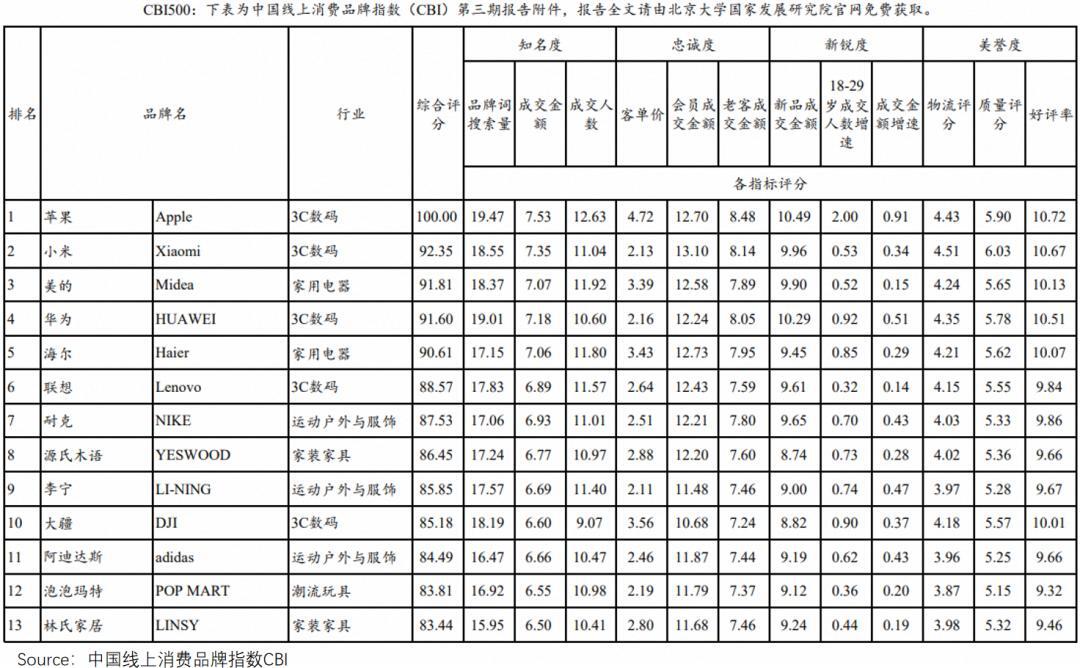
Group 1 - The consumer market in China is viewed as one of the biggest investment opportunities by 2026, but there are differing opinions on where and how to invest [1] - Traditional consumption sectors like liquor, apparel, and beauty have faced challenges, yet some brands have managed to achieve stock price increases of 30% to 50% [2] - The complexity of the consumer market requires investors to connect macro trends with micro behaviors to identify structural opportunities [3] Group 2 - The "China Online Consumption Brand Index" (CBI) and the "Global Brand China Online 500" list reveal significant shifts in consumer preferences, with traditional liquor brands like Moutai and Wuliangye declining while newer brands like Pop Mart are rising [3][4] - The CBI index reflects the performance of brands based on real consumer behavior, including sales, price, search volume, and reputation [4] - The liquor industry is undergoing a transformation, with brands like Jian Nan Chun and Shanxi Fenjiu adapting to new consumer preferences, particularly among younger demographics [6][7][13] Group 3 - The outdoor apparel market is shifting from niche enthusiasts to mainstream consumers, with brands like Berghaus gaining traction due to their stylish and affordable offerings [17] - Emerging brands in the cosmetics sector, such as Huazhi Xiao, are capitalizing on specific consumer trends and achieving significant growth in brand rankings [20][22] - The CBI index serves as a lens to identify changes in consumer demand and potential growth opportunities across various sectors [24] Group 4 - Pop Mart's financial performance shows a significant increase in overseas revenue, yet the stock has faced volatility due to market sentiment rather than fundamentals [26][28] - The brand maintains a leading position in the industry despite short-term fluctuations, indicating strong brand loyalty and potential for future growth [29][30] - The luxury gold market is experiencing challenges as competition increases, impacting customer loyalty and market positioning for brands like Laopufeng [40][35] Group 5 - The beauty industry is witnessing a resurgence for brands like Chanel and YSL as they adapt to new marketing channels and consumer preferences [22] - The investment landscape is influenced by varying investor strategies, with short-term traders reacting differently than long-term investors to market signals [34][41] - The Chinese consumer market is complex and requires a multifaceted approach to uncover hidden opportunities [42]


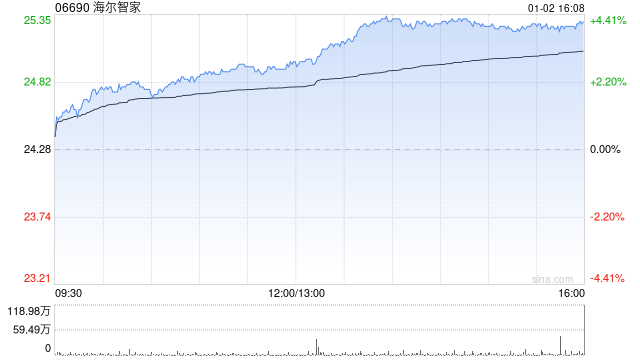
海尔智家截至12月末累计回购A股股份4282.57万股
Xin Lang Cai Jing· 2026-01-05 00:15
热点栏目 自选股 数据中心 行情中心 资金流向 模拟交易 客户端 热点栏目 自选股 数据中心 行情中心 资金流向 模拟交易 客户端 海尔智家(06690)发布公告,2025年12月当月,公司通过集中竞价交易方式已累计回购A股(下同) 股份192.32万股,占公司总股本的比例为0.021%,购买的最高价为27.54元/股、最低价为26.02元/股,支 付的金额为5163.83万元(不含手续费等,下同);本次回购实施起始日(2025年4月7日)至2025年12 月底,公司已累计回购股份4282.57万股,占公司总股本的比例为0.457%,购买的最高价为27.54元/股、 最低价为23.60元/股,支付的金额为10.8亿元。 海尔智家(06690)发布公告,2025年12月当月,公司通过集中竞价交易方式已累计回购A股(下同) 股份192.32万股,占公司总股本的比例为0.021%,购买的最高价为27.54元/股、最低价为26.02元/股,支 付的金额为5163.83万元(不含手续费等,下同);本次回购实施起始日(2025年4月7日)至2025年12 月底,公司已累计回购股份4282.57万股,占公司总股本的比例为0 ...

国补落地及2026年消费趋势判断
2026-01-04 15:35
Summary of Conference Call Notes Industry Overview - The conference call primarily discusses the **automobile** and **home appliance** industries in China, focusing on government subsidy policies and their implications for market dynamics and consumer behavior [1][2][20]. Key Points on Government Subsidies - **2025 National Subsidy Funding**: The funding mainly comes from special government bonds, with a total government debt of **14 trillion RMB**. The narrow deficit is **5.66 trillion RMB**, and special bonds amount to **1.8 trillion RMB** [2][3]. - **Subsidy Strategy Changes**: The automobile industry will see a shift to a high-price, high-subsidy and low-price, low-subsidy model, which is expected to reduce demand. The subsidy for electric vehicles and traditional vehicles will be adjusted based on vehicle price [2][14]. - **Impact on Tax Revenue**: Consumer subsidies are expected to increase sales and tax revenues, but the tax revenue growth rate is projected to be **2%**, lower than the nominal GDP growth rate of **4%**, indicating fiscal pressure [9]. Automobile Industry Insights - **Market Trends**: The automobile sector is expected to face a decline in domestic demand by **3-4%** in 2026, but the penetration rate of new energy vehicles is anticipated to increase by **4-5%**. Exports are expected to grow by **15%**, with new energy vehicle exports increasing by **35%** [14][19]. - **Investment Opportunities**: Key growth areas include international expansion, high-end market development, and smart technology integration, particularly in L4 autonomous driving [15][17]. - **Consumer Behavior**: There is a significant consumer wait-and-see attitude, with **40-60%** of consumers hesitant to make purchases, leading to inventory buildup [19]. Home Appliance Industry Insights - **Subsidy Policy Changes for 2026**: The number of subsidized categories will be reduced from **12 to 6**, focusing on energy-efficient products. The maximum subsidy per product will decrease from **2000 RMB to 1500 RMB** [20]. - **Market Performance**: The home appliance sector showed mixed results in 2025, with overall sales growth in the first half but a decline in the second half due to tightening policies and high base effects [21]. - **Future Outlook**: If the government continues to provide **80 billion RMB** in subsidies, the home appliance market is expected to see modest growth, with air conditioning sales projected to increase by **4.7%** under reduced subsidy effectiveness [22]. Competitive Landscape - **Market Dynamics**: The competitive landscape in the home appliance industry is shifting towards larger companies like Midea and Haier, which are enhancing shareholder returns through dividends and stock buybacks. Emerging markets and new product exports are becoming crucial for growth [24]. - **Investment Potential**: The two-wheeler market and emerging products like robotic vacuums are highlighted as having strong investment potential due to resilient demand and low valuations [23]. Conclusion - The conference call emphasizes the cautious approach of the government in adjusting subsidy policies to stabilize investment and consumption while addressing fiscal pressures. The automobile and home appliance industries are adapting to these changes, with a focus on innovation and international expansion as key growth strategies.
超1100亿元,深市公司回购增持彰显信心,真金白银护航市场稳定
Zheng Quan Shi Bao· 2026-01-04 12:19
Core Insights - Since 2025, companies listed on the Shenzhen Stock Exchange have actively engaged in share buybacks and increases, with a total of 424 disclosed plans amounting to a maximum of 114.25 billion yuan, reflecting their confidence in long-term development and enhancing investor trust [1][3]. Group 1: Overall Trends - The overall trend in 2025 shows a significant increase in willingness for share buybacks and increases, characterized by high intent, considerable scale, and industry concentration [2][3]. - Out of the 424 disclosed plans, 288 were buyback plans with a maximum amount of 82.725 billion yuan, while 136 were increase plans with a maximum of 31.521 billion yuan [3]. Group 2: Industry Focus - Key industries leading the buyback efforts include electronics, biomedicine, machinery, and power equipment, accounting for 40.97% of total buybacks, while biomedicine, machinery, basic chemicals, and home appliances lead in increases, making up 37.78% [3]. - The buyback and increase activities are seen as mechanisms for companies to optimize their equity structure and enhance shareholder returns, contributing to market stability and liquidity [3]. Group 3: Leading Companies - Leading companies in various sectors have played a pivotal role in guiding market trends through substantial buybacks and increases, establishing benchmarks and stabilizing expectations [4][5]. - Midea Group has executed a buyback plan exceeding 10 billion yuan, aimed at reducing registered capital and implementing employee stock ownership plans, thereby enhancing shareholder equity [5]. - Contemporary Amperex Technology Co., Ltd. (CATL) plans to buy back shares totaling between 4 billion and 8 billion yuan, reflecting its commitment to value creation [5]. Group 4: Market Dynamics - The buyback activities of leading companies are seen as a reflection of rational recognition of their value and the gradual emergence of long-term investment value in the capital market [6]. - The ongoing market reforms and regulatory improvements are expected to sustain the positive momentum of buybacks and increases, providing robust support for the high-quality development of the capital market [6].
深市2025年回购增持计划超400单,龙头企业引领市场风向
Bei Ke Cai Jing· 2026-01-04 12:01
【#深市上市公司回购增持活跃# 2025年披露计划超400单】#去年深市披露回购增持计划超400单# 近年来,在政策推动、企业积极向市场传递发展信心等因素下,深市上市公司回购股份、重要股东增持 等行为持续常态化。 据统计,2025年全年深市共披露回购与增持计划424单,其中回购计划288单,回购金额上限达827.25亿 元;增持计划136单,增持金额上限达315.21亿元。 自回购增持专项贷款落地以来,383家公司及主要股东取得股票回购增持专项贷贷款承诺函,贷款额度 共计829.81亿元。 从行业分布看,电子、生物医药、机械设备、电力设备领域公司成为回购主力军,合计占比达 40.97%,生物医药、机械设备、基础化工、家用电器领域公司成为增持先锋队,合计占比达37.78%, 充分体现了相关实体产业对发展前景的乐观预期。 各行业龙头企业充分发挥"压舱石"作用,以大额回购、持续增持的实际行动引领市场风向。 家用电器龙头企业美的集团基于对公司未来发展前景的信心和公司价值的认可,先后推出二期回购计 划,用于注销减少注册资本、实施股权激励或员工持股计划,截至目前,公司累计回购超100亿元,既 提升股东权益,又绑定核心团队 ...




超1100亿元!深市公司回购增持彰显信心,真金白银护航市场稳定
证券时报· 2026-01-04 11:48
整体态势:意愿持续高涨 重点行业聚力 2025年,深市上市公司回购增持计划不断涌现,整体呈现"意愿高涨、规模可观、行业集 中"的鲜明特征。 截至2025年12月31日,深市上市公司共披露的424单回购增持计划中,回购计划288单,回 购金额上限达827.25亿元;增持计划136单,增持金额上限达315.21亿元。自回购增持专项 贷款落地以来,383家公司及主要股东取得股票回购增持专项贷贷款承诺函,贷款额度共计 829.81亿元。 从行业分布看,电子、生物医药、机械设备、电力设备领域公司成为回购主力军,合计占比 达40.97%,生物医药、机械设备、基础化工、家用电器领域公司成为增持先锋队,合计占比 达37.78%,充分体现了相关实体产业对发展前景的乐观预期。 2025年以来,深市上市公司积极回应号召、立足自身发展,持续掀起"真金白银"的回购 增持热潮。数据显示,截至2025年12月31日,深市上市公司共披露回购增持计划424 单,回购增持金额上限达1142.46亿元。 这不仅彰显了公司对自身价值的认可、对长期发展前景的坚定信心,更向市场传递出积极稳 健的信号、增强投资者信心,为资本市场健康发展注入强劲动力。 2 ...

424单、超1100亿资金:深市去年掀回购增持热潮
第一财经网· 2026-01-04 10:44
Core Viewpoint - The active share buyback and increase in holdings by listed companies since 2025 reflect their recognition of intrinsic value and confidence in long-term development, sending positive signals to the market and enhancing investor confidence, thus injecting strong momentum into the healthy development of the capital market [1][2]. Group 1: Share Buyback and Increase in Holdings - In 2022, a total of 424 share buyback and increase plans were disclosed by listed companies in the Shenzhen market, including 288 buyback plans with a maximum amount of 82.725 billion yuan and 136 increase plans with a maximum amount of 31.521 billion yuan [2]. - Major companies such as CATL, Midea Group, Weichai Power, and Lens Technology have announced their buyback progress, with CATL repurchasing 15.9908 million shares for a total of 4.386 billion yuan, Midea Group repurchasing 20.5646 million shares for 1.51 billion yuan, Weichai Power repurchasing 50.2525 million shares for 0.761 billion yuan, and Lens Technology repurchasing 740.96 million shares for 0.215 billion yuan [1]. Group 2: Industry Trends and Insights - The buyback and increase plans are concentrated in key industries, with electronics, biomedicine, machinery, and power equipment companies accounting for 40.97% of the total, while biomedicine, machinery, basic chemicals, and home appliances account for 37.78% of the increase plans, indicating optimistic expectations for future development in these sectors [2]. - Leading companies in various industries are playing a stabilizing role in the market, with significant buybacks and continuous increases guiding market trends [2][3]. - Cross-border buybacks have emerged as a new highlight, as demonstrated by China International Marine Containers Group's simultaneous buyback of A-shares and H-shares, reflecting recognition of company value [3].

深市公司回购增持彰显信心 “真金白银”护航市场稳定
Zheng Quan Ri Bao Wang· 2026-01-04 10:32
Core Insights - Share buybacks and increases are important market mechanisms for listed companies to convey development confidence, stabilize stock prices, optimize capital structures, and protect shareholder rights [1] Group 1: Market Activity - In 2025, companies listed on the Shenzhen Stock Exchange (SZSE) disclosed a total of 424 buyback and increase plans, including 288 buyback plans with a maximum amount of 82.725 billion yuan and 136 increase plans with a maximum amount of 31.521 billion yuan [1] - Since the introduction of special loans for buybacks and increases, 383 companies and major shareholders have obtained commitment letters for these loans, with a total loan amount of 82.981 billion yuan [1] Group 2: Industry Trends - The electronics, biomedicine, machinery equipment, and power equipment sectors are the main contributors to buybacks, accounting for 40.97% of the total [1] - The biomedicine, machinery equipment, basic chemicals, and home appliances sectors lead in increases, making up 37.78% of the total [1] Group 3: Company Examples - Midea Group (000333), a leader in home appliances, has launched a second buyback plan based on confidence in its future development, with a total buyback exceeding 10 billion yuan [2] - Contemporary Amperex Technology Co., Ltd. (300750), a leader in power equipment, plans to buy back shares totaling no less than 4 billion yuan and no more than 8 billion yuan, with a cumulative buyback amount of 4.386 billion yuan [2] - CIMC Group (000039) has engaged in cross-border buybacks, simultaneously repurchasing A-shares and H-shares to demonstrate recognition of its value [2] Group 4: Market Outlook - The buyback and increase activities reflect a rational recognition of company value and the gradual emergence of long-term investment value in the capital market [3] - With ongoing market reforms and improved regulatory systems, leading companies are expected to continue driving positive trends in buybacks and increases, supporting high-quality development in the capital market [3]
深市上市公司回购增持活跃 2025年披露计划超400单
2 1 Shi Ji Jing Ji Bao Dao· 2026-01-04 09:37
Core Insights - The trend of share buybacks and major shareholder increases among Shenzhen-listed companies has become normalized due to policy support and corporate confidence in market development [2][4] - In 2025, a total of 424 buyback and increase plans were disclosed in the Shenzhen market, with buyback plans accounting for 288 and a maximum buyback amount of 82.725 billion yuan, while increase plans totaled 136 with a maximum amount of 31.521 billion yuan [2] - Since the launch of special loans for buybacks and increases, 383 companies and major shareholders have obtained loan commitment letters totaling 82.981 billion yuan [2] Industry Distribution - Companies in the electronics, biomedicine, machinery, and power equipment sectors have become the main force in buybacks, accounting for 40.97% of total activities [2] - The biomedicine, machinery, basic chemicals, and home appliances sectors lead in shareholder increases, making up 37.78% of the total [2] Company Actions - Leading companies are acting as "ballast stones" in the market through significant buybacks and continuous increases [2] - Midea Group (000333) has launched a second buyback plan based on confidence in its future development, with total buybacks exceeding 10 billion yuan, enhancing shareholder equity and binding core team interests [2] - Contemporary Amperex Technology Co., Ltd. (300750) plans to repurchase shares totaling between 4 billion and 8 billion yuan, with a cumulative buyback amount of 4.386 billion yuan, reflecting its industrial ambitions [3] - Mindray Medical (300760) saw its chairman increase shares by 200 million yuan, demonstrating recognition of the company's intrinsic value [3] Cross-Border Buybacks - Cross-border buybacks have emerged as a new highlight, with China International Marine Containers (000039) disclosing simultaneous buybacks of A-shares and H-shares, showcasing recognition of company value [3] Market Outlook - The buyback and increase activities of listed companies reflect a rational recognition of their own value and the gradual emergence of long-term investment value in the capital market [4] - With ongoing market reforms and regulatory improvements, leading companies are expected to continue exerting a strong "driving effect," supporting the sustained positive trend of buybacks and increases in the Shenzhen market [4]

2026年国补落地,关注政策接续效果:家用电器
Huafu Securities· 2026-01-04 06:05
Group 1 - The core viewpoint of the report emphasizes the implementation of the 2026 national subsidy policy for large-scale equipment updates and the trade-in of consumer goods, which is expected to stabilize the domestic consumption market and stimulate demand, particularly in offline channels and rural areas [2][3][5][14]. - The 2026 subsidy policy introduces changes compared to 2025, including a more concentrated subsidy range, with the number of household appliance categories reduced from 12 to 6, retaining only core categories such as refrigerators, washing machines, televisions, air conditioners, computers, and water heaters [4][15]. - The subsidy standards have been optimized, with a 15% subsidy on the sales price for energy-efficient or water-efficient products, and a maximum subsidy of 1,500 yuan per item for household appliances [4][15]. Group 2 - The report indicates that the 2026 policy aims to enhance the efficiency of fund utilization by focusing on core categories and avoiding imbalances in funding distribution, which is expected to positively impact leading companies in the household appliance sector such as Midea Group, Haier Smart Home, Hisense, and TCL Electronics [5][14]. - The report highlights the recent performance of the home appliance sector, noting a weekly increase of 0.7%, while specific segments like white goods and small appliances experienced declines [6][17]. - The report provides insights into raw material prices, indicating a week-on-week increase in LME copper and aluminum prices by 2.05% and 1.23%, respectively, which may impact the cost structure of household appliance manufacturers [6][17].