
数据中心

Search documents
2连板大位科技:张北数据中心项目不涉及算力租赁业务
Mei Ri Jing Ji Xin Wen· 2026-02-10 10:12
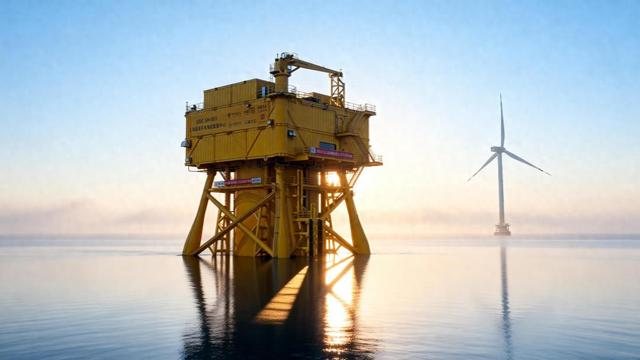
每经AI快讯,2月10日,大位科技(600589)(600589.SH)公告称,公司股票于2026年2月6日、2月9日和 2月10日连续三个交易日收盘价格涨幅偏离值累计超过20%,属于股票交易异常波动的情况。公司近期 关注到部分媒体报道公司涉及算力租赁概念,公司自2024年通过自采和租赁服务器及芯片,向十余名客 户提供租赁服务,前三季度收入1,123.20万元(自采占比52.46%,租赁占比47.54%),占营业收入的比例 为3.59%,相关业务对公司业绩影响较小。公司张北数据中心项目首期于2025年10月份完工并交付, 2025年收入贡献较小。该项目主要为客户提供定制化标准机房环境、可用机架和区域以及配套设备设施 等资源,与现有主营业务模式相同,不涉及算力租赁业务。 ...

海底数据中心机房优势与全球关注
Sou Hu Cai Jing· 2026-02-10 09:36
Core Insights - The underwater data center in Shanghai represents a significant advancement in green computing, utilizing offshore wind energy to power its operations, thus reducing reliance on traditional fossil fuels [1][3] - This project addresses the challenges faced by large cities like Shanghai regarding land and energy consumption, providing a solution that allows for the establishment of data centers without occupying valuable land [3][5] - The successful implementation of this concept demonstrates the commercial viability of innovative technologies in the green infrastructure sector, positioning China favorably in the global dialogue on sustainable development [5][6] Group 1: Technological Innovation - The Shanghai Lingang project connects directly to an offshore wind farm, allowing it to operate primarily on clean energy, significantly reducing its carbon footprint and energy costs [3][6] - The data center boasts an energy efficiency ratio of below 1.1, which is considerably better than the industry average, leading to annual savings of 61 million kilowatt-hours [3][8] - The use of seawater for cooling not only reduces operational costs but also minimizes equipment failure rates, enhancing overall reliability [3][5] Group 2: Market Implications - The project is seen as a benchmark for future developments in other coastal provinces such as Guangdong, Zhejiang, and Shandong, with industry experts closely monitoring its first full-year operational report [8] - The competitive landscape is shifting as global tech giants like Google and Amazon seek to lower data center energy consumption, with China's underwater model potentially influencing other countries with extensive coastlines and wind resources [6][8] - The project has sparked interest in the entertainment industry, with studios exploring underwater data center services for data security and privacy, indicating a growing market for such innovative solutions [9] Group 3: Future Prospects - The initial high investment costs of underwater data centers must be justified by long-term energy savings and land use efficiency for widespread adoption [8] - Ongoing challenges include managing extreme marine weather conditions and long-term corrosion resistance, which will require continuous technological advancements [8][9] - The concept of "underwater computing tourism" has emerged, suggesting potential for public engagement and interest in these advanced infrastructures [9]


北交所周报:指数震荡调整,可持续发展信披指南修订发布
ZHONGTAI SECURITIES· 2026-02-10 07:25
Investment Rating - The report maintains an "Accumulate" rating for the industry, indicating a forecasted increase of over 10% relative to the benchmark index in the next 6 to 12 months [27]. Core Insights - The overall market performance of the Beijing Stock Exchange (BSE) shows a decline, with the BSE 50 index dropping by 3.59% to close at 1531.55 points as of January 30, 2026. In comparison, the Shanghai and Shenzhen indices showed minor fluctuations [4][10]. - The average market capitalization of the 292 constituent stocks on the BSE is 3.207 billion yuan, with a total industry market value of 936.302 billion yuan and a circulating market value of 580.261 billion yuan [4][10]. - The report highlights the top-performing sectors for the week, including Oil and Petrochemicals (33.99%), Media (4.97%), Agriculture, Forestry, Animal Husbandry, and Fishery (4.69%), Transportation (2.28%), and Communications (2%) [4][17]. Summary by Sections BSE Market Overview - As of January 30, 2026, the BSE has 292 constituent stocks, with an average market capitalization of 3.207 billion yuan. The BSE 50 index experienced a decline of 3.59% during the week, while the Shanghai Composite Index and other indices showed minimal changes [4][10]. - The average daily trading volume for the BSE was 28.731 billion yuan, reflecting a 7.20% increase from the previous week, with a turnover rate of 5.88% [15]. New Stocks on BSE - One new stock, Meidele (920119.BJ), was issued during the week. Additionally, several companies are at various stages of the IPO process, including Huadian Guangda, which has been accepted for review [5][22]. Key News from BSE - The BSE released a revised guideline for sustainable development reporting on January 30, 2026, aimed at enhancing the quality of information disclosure among listed companies. This includes new application guidelines focusing on pollutant emissions, energy use, and water resource utilization [6][24]. - The first IPO of the year was accepted for Beijing Huadian Guangda Environmental Co., which specializes in new catalytic materials for air pollution control, aiming to raise approximately 260 million yuan [6][24]. Investment Strategy - The report suggests focusing on sectors expected to perform well in 2026, including Data Centers, Robotics, Semiconductors, Consumer Goods, and Military Information Technology. Specific companies highlighted include KLT, Suzhou Axis, and Hualing Co. [25].
KT(KT) - 2025 Q4 - Earnings Call Transcript
2026-02-10 07:02
Financial Data and Key Metrics Changes - Operating revenue increased by 6.9% year-on-year, reaching KRW 28,244.2 billion [25] - Operating profit surged by 205% year-on-year to KRW 2,469.1 billion, driven by core business performance and one-off gains from real estate projects [25] - Net income rose by 340.4% year-on-year to KRW 1,836.8 billion, while EBITDA increased by 35.5% year-on-year to KRW 6,349.3 billion [27] - Operating expenses remained flat year-on-year at KRW 25,775.1 billion, attributed to lower labor costs and efficient spending [29] - Debt-to-equity ratio at the end of 2025 was 120.7%, with net debt-to-equity ratio decreasing by 0.4 percentage points year-on-year to 37.4% [31] Business Line Data and Key Metrics Changes - Wireless revenue grew by 2.8% year-on-year to KRW 7,155.4 billion, driven by subscriber expansion in 5G, with 5G penetration at 81.8% by the end of 2025 [35] - Broadband revenue increased by 1.9% year-on-year to KRW 2,533.5 billion, supported by GiGA subscriber growth [37] - Media business revenue rose by 1.7% year-on-year, driven by higher IPTV subscriber additions [37] - B2B service revenue grew by 1.3% year-on-year, with AI and IT business growing by 3.1% year-on-year [41] - KT Cloud revenue surged by 27.4% year-on-year to KRW 997.5 billion, reflecting increased data center usage and AI cloud demand [43] Market Data and Key Metrics Changes - The company reported a flat revenue for content subsidiaries year-on-year, despite the divestment of PlayD, due to growth from StudioGenie, Nasmedia, and Millie's Library [41] - KT Estate revenue increased by 15.9% year-on-year to KRW 719.3 billion, driven by strong hotel business and new property developments [43] Company Strategy and Development Direction - The company is focusing on enhancing its fundamentals and regaining customer trust following a data breach incident, with a commitment to cybersecurity improvements [3][12] - Plans include a KRW 250 billion share buyback and cancellation as part of the Corporate Value Enhancement Plan [7][21] - The company aims to solidify its leadership in the AI cloud market with the launch of new products and partnerships with global tech companies [4] Management Comments on Operating Environment and Future Outlook - Management expressed confidence in achieving better performance in 2026 compared to 2025, despite the financial impact of customer compensation related to the data breach [57][61] - The new CEO is expected to maintain the company's shareholder return policy and growth strategy, with a focus on AX-driven innovation [69][70] Other Important Information - The year-end dividend for 2025 is set at KRW 2,400 per share, a 20% increase from 2024 [6] - The company is investing around KRW 1 trillion in security over five years to enhance its information security system [19] Q&A Session Summary Question: What is the financial impact of the customer compensation package regarding the data breach incident? - The estimated benefit for customers is about KRW 450 billion, but not all will be booked as costs, depending on usage [57] Question: Will the new CEO maintain the previous shareholder return stance? - The DPS has been increased by 20% for 2025, and future plans will be finalized by the new CEO and the Board of Directors [65][66] Question: What is the outlook for the wireless business growth following the data breach incident? - Approximately 230,000 subscribers left during the cancellation fee waiver period, but net additions were still positive [79] Question: Why is B2B growth slower compared to peers, and what is the outlook? - B2B growth is influenced by various segments, and when combined with KT Cloud, the growth rate is 6% year-on-year, with KT Cloud showing a 27.4% increase [85][87]

KT(KT) - 2025 Q4 - Earnings Call Transcript
2026-02-10 07:00
Financial Data and Key Metrics Changes - Operating revenue increased by 6.9% year-on-year, reaching KRW 28,244.2 billion [26] - Operating profit surged by 205% year-on-year to KRW 2,469.1 billion, driven by core business performance and one-off gains [26] - Net income rose by 340.4% year-on-year to KRW 1,836.8 billion, with EBITDA increasing by 35.5% to KRW 6,349.3 billion [28] - Operating expenses remained flat year-on-year at KRW 25,775.1 billion due to lower labor costs and efficient spending [30] - Debt-to-equity ratio at the end of 2025 was 120.7%, with net debt-to-equity ratio decreasing to 37.4% [32] Business Line Data and Key Metrics Changes - Wireless revenue grew by 2.8% year-on-year to KRW 7,155.4 billion, supported by subscriber expansion in 5G, which reached a penetration rate of 81.8% [36] - Broadband revenue increased by 1.9% year-on-year to KRW 2,533.5 billion, driven by growth in giga subscribers and value-added services [38] - Media business revenue rose by 1.7% year-on-year, attributed to higher IPTV subscriber additions [38] - B2B service revenue grew by 1.3% year-on-year, with AI and IT business growing by 3.1% [42] - KT Cloud revenue increased by 27.4% year-on-year to KRW 997.5 billion, reflecting strong demand for data center services [44] Market Data and Key Metrics Changes - The company is focusing on enhancing its market position in the AI and IT sectors, with significant investments planned for security and infrastructure [19][48] - The overall B2B market growth is projected to be stable, with KT Cloud's growth expected to continue at a high rate [86] Company Strategy and Development Direction - The company aims to solidify its fundamentals and regain customer trust following a data breach incident, with a focus on cybersecurity and network resilience [3][13] - KT plans to implement a corporate value enhancement plan, including a KRW 250 billion share buyback and increased dividends [6][22] - The new CEO is expected to maintain the company's growth strategy while potentially introducing tactical changes reflecting his philosophy [69] Management's Comments on Operating Environment and Future Outlook - Management expressed confidence in achieving better performance in 2026 compared to 2025, despite challenges from the data breach [61] - The company is committed to improving operational efficiency in the wireless business and expects stable growth in B2B services [80][83] Other Important Information - The company has set a year-end dividend of KRW 2,400 per share, a 20% increase from the previous year [6] - A new CEO has been appointed, expected to bring expertise in B2B and future technologies [11] Q&A Session Summary Question: Financial impact of customer compensation package and future shareholder return stance - The financial impact of the customer appreciation package is estimated at KRW 450 billion, but not all will be booked as costs [56] - The company plans to maintain a progressive shareholder return policy, with the new CEO and board finalizing future plans [65][67] Question: Outlook for wireless business growth and B2B performance - Approximately 230,000 subscribers left during the cancellation fee waiver period, but net additions were still positive [78] - B2B growth is slower compared to peers, but combined revenue growth, including KT Cloud, shows a 6% increase year-on-year [85][86]
“蓝海绿算”!全球首个“海风直联”海底数据中心在沪启用
Huan Qiu Wang· 2026-02-10 06:08
Core Viewpoint - The world's first underwater data center utilizing "offshore wind direct connection" technology has officially commenced operations in Shanghai Lingang, marking a significant breakthrough in the integration of artificial intelligence infrastructure, marine energy utilization, and marine engineering in China [1][3]. Investment and Project Overview - The total investment for the Shanghai Lingang underwater data center project is 1.6 billion yuan, with a total construction scale of 24 megawatts planned in two phases. The first phase, now operational, has a construction scale of 2.3 megawatts [3]. - The project innovatively combines "offshore wind power direct connection" and "natural seawater cooling" technologies, achieving a PUE (Power Usage Effectiveness) of no more than 1.15 and a green electricity supply rate exceeding 95% [3]. Design and Engineering Innovations - This underwater data center is the first of its kind to integrate "offshore wind power direct connection" and "natural seawater cooling" technologies, facing complex marine conditions that traditional designs cannot accommodate [4]. - The design team has created a new structural model for the underwater data center, utilizing a "cylindrical vertical structure" for the data cabin, which enhances internal usable space and reduces wave impact, significantly improving overall stability [6]. Construction and Installation Achievements - The construction team employed innovative welding techniques, achieving a one-time pass rate of 98.6% during the welding of the conduit frame, demonstrating high precision and quality control [8]. - The installation process involved a complex underwater operation, where the data cabin was successfully submerged and precisely aligned with the underwater steel piles, achieving "zero deviation" during the critical installation phase [11].
北交所周报:指数震荡调整,可持续发展信披指南修订发布-20260210
ZHONGTAI SECURITIES· 2026-02-10 05:44
Investment Rating - The industry investment rating is maintained at "Overweight" [1][27]. Core Insights - The report highlights that the overall performance of the Beijing Stock Exchange (BSE) is expected to show significant results in 2026, with a focus on high-quality development and investment opportunities in various sectors [6][25]. Summary by Sections BSE Market Overview - As of January 30, 2026, the BSE has 292 constituent stocks with an average market capitalization of 3.207 billion [4][10]. - The BSE 50 Index experienced a decline of 3.59%, closing at 1531.55 points, while the Shanghai and Shenzhen indices showed minor fluctuations [4][10]. - The average daily trading volume for the week was 28.731 billion, an increase of 7.20% from the previous week, with a turnover rate of 5.88% [4][15]. Sector Performance - The top five performing sectors on the BSE for the week were: - Oil and Petrochemicals: 33.99% - Media: 4.97% - Agriculture, Forestry, Animal Husbandry, and Fishery: 4.69% - Transportation: 2.28% - Communication: 2% [4][17]. New Stocks - One new stock was issued during the week, Meidel (920119.BJ), with updates on the status of other companies in the review process [5][22]. Key News - The BSE released a revised "Guidelines for the Preparation of Sustainable Development Reports" to enhance the quality of sustainability disclosures among listed companies [6][24]. - The first IPO of the year was accepted, with Beijing Huadian Guangda Environment Co., Ltd. aiming to raise approximately 260 million by issuing up to 32.2 million shares [6][24]. Investment Strategy - The report suggests focusing on the following sectors for investment in 2026: 1. Data Centers: KLT and Shuguang Data Creation 2. Robotics: Suzhou Axis, Audiwei, JunChuang Technology, and Fuheng New Materials 3. Semiconductors: Hualing Co. and Kaide Quartz 4. Consumer Goods: Taihu Snow, Boshenglong, Lusi Co., Kangbiter, and Thunder God Technology 5. Military Information Technology: Chengdian Guangxin and Xingtuzhihui [6][25].
1分钟直线封板!A股上演涨停潮!重磅利好突袭
Xin Lang Cai Jing· 2026-02-10 04:03
Core Viewpoint - The resurgence of the IDC sector is driven by the increasing demand for computing power due to the rapid growth of AI models and their applications, particularly highlighted by the recent launch of ByteDance's AI video generation model, Seedance 2.0 [1][2][6]. Group 1: Market Reaction - On February 10, A-share computing power concept stocks surged, with notable gains including a two-day consecutive rise for Dazhi Technology and a limit-up for TeFa Information [1][2]. - The cultural media sector also experienced a significant uptick, with multiple stocks reaching their daily limit, including Light Media and Huace Film [1][2]. - The explosive market reaction is attributed to the recent emergence of popular AI applications, which are expected to benefit the IDC sector [1][2]. Group 2: AI Model Impact - The IDC boom is linked to the massive consumption of tokens driven by large AI models, with ByteDance's daily token consumption reaching 50 trillion, significantly increasing the demand for computing power [1][2]. - Seedance 2.0 can generate high-quality videos from text or images in just 60 seconds, showcasing the capabilities of advanced AI models [2][6]. Group 3: Future Expectations - The market anticipates the upcoming release of new open-source large models, such as Qwen 3.5, which could further stimulate the sector [3][8]. - The commercial urgency of large models is expected to accelerate, with projections indicating substantial revenue growth for companies like OpenAI, which is expected to generate $4.3 billion in revenue by mid-2025 [4][9]. Group 4: Industry Trends - The IDC sector is expected to maintain high growth due to the increasing commercialization of AI models, with significant investments planned for data center construction [4][10]. - The ongoing development of domestic AI chips and models is likely to enhance the computing power of cloud service providers, creating a closed-loop commercial ecosystem [5][10].


2026年AIDC年度策略-智算风起-启航未来
2026-02-10 03:24
2026 年 AIDC 年度策略:智算风起,启航未来 20260205 预计到 2026 年下半年,服务器电源 PSU 功率将提升至 8 千瓦甚至 12 千瓦,带动碳化硅和氮化镓用量增加。塞达卡(SAD CAR)方案也将在 2026 年实现渗透率提升,通过 HVDC 高压直流架构降低线路损耗、提 高能源效率。 液冷技术已成为数据中心必不可少的解决方案,目前基本上能够实现 100%的全液冷方案,全液冷设计可使散热效率提高约 40%。单机柜液 冷成本约为 8 万至 10 万美元,其中 CDU 和冷板占据主要成本,Ruby 有望在今年下半年实现规模化应用。 北美数据中心储能需求快速增长,预计到 2028 年将达到 30-40 吉瓦时, 到 2030 年有望达到 100 吉瓦时。阳光、阿塔斯等公司已接到北美数据 中心储能项目订单,这将进一步提振储能行业的发展。 摘要 数据中心行业正处于快速发展前期,受益于下游大模型训练与推理需求 提升,GPU 快速迭代推动机柜功率密度增加,人工智能数据中心耗电量 快速增长。北美四大云厂商 2025 年资本开支同比增长约 86%,国内头 部企业同比增长超 80%,表明对数据中心建设的积 ...
数据港股价涨5.51%
Xin Lang Cai Jing· 2026-02-10 02:21
Group 1 - DataPort's stock increased by 5.51%, reaching 41.73 CNY per share, with a trading volume of 2.89 billion CNY and a turnover rate of 9.97%, resulting in a total market capitalization of 29.978 billion CNY [1] - Shanghai DataPort Co., Ltd. was established on November 18, 2009, and went public on February 8, 2017. The company primarily engages in data center server hosting services and network bandwidth services, with 99.31% of its revenue coming from IDC services and 0.69% from IDC solutions [1] Group 2 - Among DataPort's top ten circulating shareholders, a fund under Huatai-PineBridge ranked first. The China Securities Shanghai State-owned Enterprise ETF (510810) reduced its holdings by 383,800 shares, now holding 2.9837 million shares, which accounts for 0.42% of circulating shares [2] - The China Securities Shanghai State-owned Enterprise ETF (510810) was established on July 28, 2016, with a latest scale of 6.747 billion CNY. Year-to-date returns are 2.63%, ranking 4041 out of 5569 in its category, while the one-year return is 16.53%, ranking 3399 out of 4295 [2] - The fund manager of the China Securities Shanghai State-owned Enterprise ETF (510810) is Wu Zhenxiang, who has a tenure of 16 years and 9 days, managing total assets of 18.598 billion CNY. The best fund return during his tenure is 210.53%, while the worst is -31.53% [2]
