
碳交易

Search documents
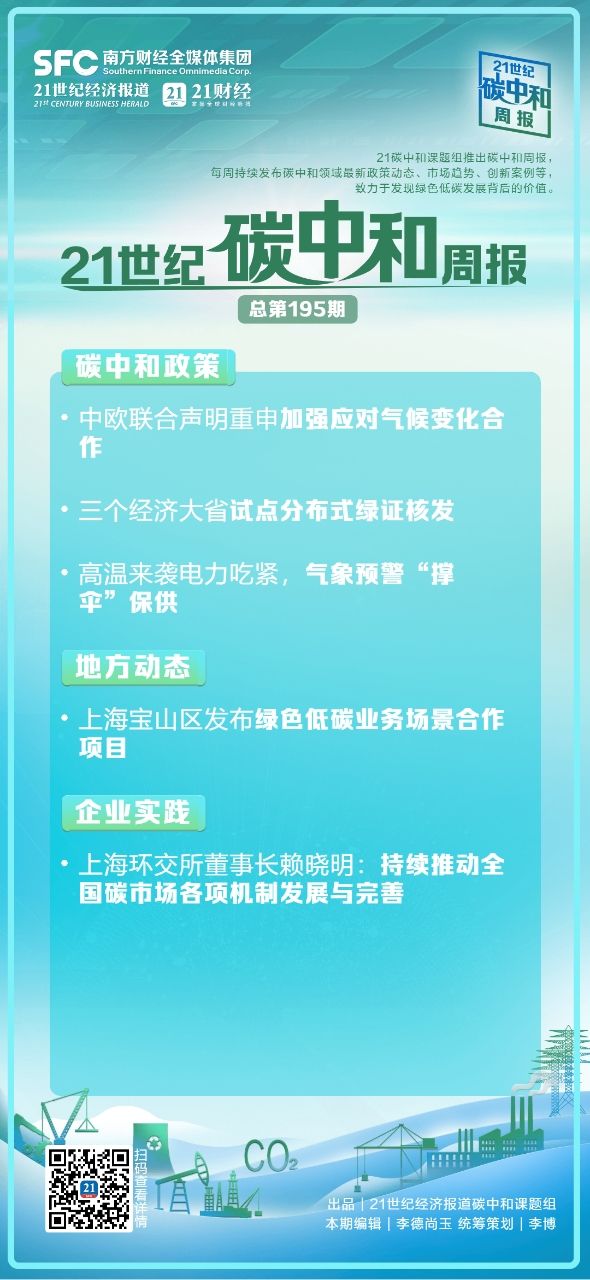
中欧加强应对气候变化合作;三省试点分布式绿证核发
2 1 Shi Ji Jing Ji Bao Dao· 2025-07-28 08:51
Policy Insights - China and the EU reaffirmed their commitment to strengthen cooperation on climate change, emphasizing the importance of the Paris Agreement and the principle of "common but differentiated responsibilities" [4] - The joint statement outlines seven cooperation directions, including the implementation of climate agreement goals, support for the 2025 COP30 conference, and acceleration of renewable energy deployment [4] Local Developments - Three major provinces in China (Zhejiang, Henan, Guangdong) are piloting the issuance of green certificates for distributed renewable energy projects, aiming to establish a framework for nationwide implementation [5] - The pilot program focuses on project registration, measurement management, and data collection, which are crucial for enhancing the green value of renewable energy enterprises [5] Industry Practices - The national carbon market in China has been operational for four years, with a cumulative trading volume exceeding 670 million tons and a transaction value of 46 billion yuan, indicating a healthy and orderly market development [7] - The market is set to expand in 2025 to include high-carbon industries such as steel, cement, and aluminum, which are also affected by the EU's carbon border adjustment mechanism [7][8] - Companies are urged to enhance green electricity applications and conduct comprehensive carbon footprint assessments to improve competitiveness in response to international trade rules [8]


中国碳中和(01372.HK):碳信用稳定币协定Carbon Coin完成数据对接 二十万吨碳信用成功上链
Ge Long Hui· 2025-07-25 10:25
Core Viewpoint - The completion of data integration for the Carbon Coin agreement marks a significant step for the company in the digitalization of carbon credits, enabling effective management and trading through blockchain technology [1][2][3] Group 1: Carbon Credit Digitalization - The Carbon Coin agreement has successfully integrated data with carbon credit sources, facilitating the on-chain representation of 200,000 tons of carbon credits [1] - The integration allows for real-time synchronization, information exchange, and verification of carbon credit data, ensuring accuracy and consistency during transactions [1][2] Group 2: Technological Advancements - The dual-chain model of "Green Trust Chain (alliance chain) + public chain" enhances decentralization, security, immutability, and traceability throughout the carbon credit lifecycle [2] - Smart contracts automate the registration, confirmation, and management of carbon credits, reducing transaction cycles from weeks to minutes [2] Group 3: ESG Commitment and Market Impact - The initiative reflects the company's commitment to Environmental, Social, and Governance (ESG) principles and showcases its technological innovation in carbon asset digitalization [3] - The on-chain confirmation of carbon credit data is expected to promote transparent trading, market pricing, and healthy development of green asset financing, benefiting the overall financial ecosystem for green assets [3]
郭元强主持召开市委专题会议强调:全力支持中碳登建设发展,加快建设绿色低碳的美丽城市
Chang Jiang Ri Bao· 2025-07-23 09:30
Core Points - The meeting emphasized the importance of supporting the construction and development of the national carbon emissions registration and settlement system (China Carbon Registration) to better serve the national "dual carbon" strategy and promote a comprehensive green transformation of economic and social development [1][2] Group 1 - The China Carbon Registration is identified as a crucial infrastructure platform for the national carbon market, with a focus on enhancing its core functions and expanding the national carbon market [2][3] - The meeting highlighted the need to accelerate the construction of a national carbon market big data center and to attract a carbon market clearing institution to strengthen the registration and settlement capabilities of the China Carbon Registration [2] - There is a strong emphasis on developing a carbon financial market and establishing a comprehensive climate investment and financing service platform in Wuhan, encouraging financial institutions to innovate carbon financial products and services [2][3] Group 2 - The meeting called for the promotion of green technology innovation and the establishment of joint innovation laboratories with universities and leading enterprises to advance key core technology breakthroughs and result transformations [2][3] - The development of a green low-carbon economy is prioritized, with plans to build a low-carbon economic belt and promote industries such as new energy vehicles, hydrogen energy, and energy conservation and environmental protection [2] - There is a push for advocating green low-carbon lifestyles among the public, encouraging habits such as green travel, water and electricity conservation, and waste sorting to foster a culture of ecological civilization [2][3] Group 3 - The meeting stressed the importance of strengthening organizational leadership and coordination to address major issues in the construction and development of the China Carbon Registration, ensuring support in terms of talent, capital, and scenarios [3] - There is a call for reform and innovation in expanding industry coverage, implementing total control, and establishing market stability mechanisms to provide valuable experience for the national carbon market [3] - Increased efforts in publicity and promotion are necessary to enhance the visibility of the China Carbon Registration and the Wuhan carbon market, encouraging active participation from enterprises and individuals in carbon trading [3]
专访赖晓明:持续推动全国碳市场各项机制发展与完善
2 1 Shi Ji Jing Ji Bao Dao· 2025-07-23 08:44
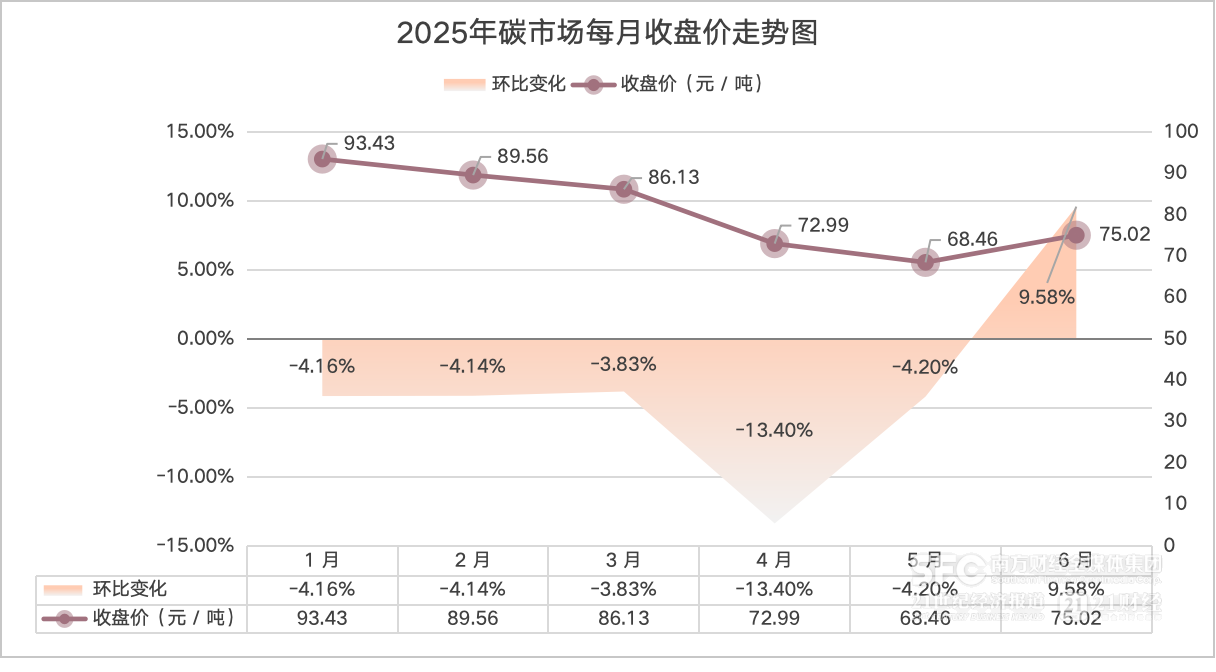
Core Insights - The national carbon market has been operating for four years, showing a healthy and orderly development with a cumulative trading volume exceeding 670 million tons and a transaction value of 46 billion yuan [1][2][3] - The introduction of the "Interim Regulations on Carbon Emission Trading Management" in 2024 provides a strong legal framework for the market, with the first expansion planned for 2025 to include steel, cement, and aluminum industries [2][3][9] - The market price has shown a positive trend, with the average closing price surpassing 100 yuan per ton in April 2024, and recent prices fluctuating between 70-80 yuan per ton [3] Market Development - The national carbon market has seen accelerated development in 2024, with the introduction of new trading methods such as single-direction bidding to enhance trading efficiency [2][3] - The trading system's continuous improvement has positively impacted market activity and price formation mechanisms, with trading prices remaining within a reasonable range [2] Regional Market Coordination - The implementation of the regulations on May 1, 2024, clarifies the boundaries between national and local carbon markets, preventing overlapping controls [4] - Shanghai's carbon market has introduced various carbon financial products, significantly increasing green electricity consumption and achieving a 72% growth in carbon reduction credits used for compliance [5][6] Financial Products and Innovations - Shanghai has launched multiple innovative carbon financial products, including carbon pledges, carbon repurchase, and carbon insurance, effectively mobilizing over 800 million tons of carbon assets [6][7] - The introduction of the carbon neutrality index and the upcoming capital market transformation index aims to enhance the synergy between carbon markets and financial markets [7] International Context and Challenges - The EU's Carbon Border Adjustment Mechanism (CBAM) poses challenges and opportunities for Chinese export enterprises, particularly in high-carbon industries [8] - Companies are encouraged to track domestic and international policies, build carbon data management systems, and enhance their low-carbon management practices to adapt to evolving trade rules [8][9]
双碳周报:全国碳市场碳排放配额成交量下降-20250722
GUOTAI HAITONG SECURITIES· 2025-07-22 04:01
Report Summary 1. Report Industry Investment Rating No information provided in the given content. 2. Core Viewpoints The report tracks important dynamics in the domestic and international "dual carbon" fields from July 14 to July 18, 2025, mainly focusing on the carbon quota trading sector. It shows that carbon quota prices and trading volumes in different markets have different trends, and there are also significant events in the green development field [2][5]. 3. Summary by Relevant Catalogs International Carbon Trading Market Tracking - **European Carbon Quota Price and Volume**: EUA spot price dropped from 69.68 EUR/ton on July 14 to 69.18 EUR/ton on July 18, a weekly decline of 0.72%. The EUA spot trading volume last week was 250,000 tons, a 21.95% increase from the previous week. EUA futures price decreased from 70.43 EUR/ton on July 14 to 69.89 EUR/ton on July 18, a weekly decline of 0.77%. The EUA futures trading volume last week was 3.331 million tons, a 3.25% decrease from the previous week [6]. - **US Carbon Quota Price and Volume**: EUA futures price fell from 70.42 EUR/ton on July 14 to 69.89 EUR/ton on July 18, a weekly decline of 0.75%. The total EUA futures trading volume last week was 11.946 billion tons, a 0.99% decrease from the previous week. UKA futures price rose from 48.15 GBP/ton on July 14 to 49.21 GBP/ton on July 18, a weekly increase of 2.20% [9]. - **South Korean Carbon Quota Price and Volume**: KAU24 spot price increased from 8,600 KRW/ton on July 14 to 8,660 KRW/ton on July 18, a weekly increase of 0.70%. The trading volume of KAU24 spot in the South Korean market last week was 1.1412 million tons, a 2.82% decrease from the previous week [15]. Domestic Carbon Market Tracking - **National Carbon Market Carbon Quota Volume and Average Transaction Price**: The cumulative trading volume of carbon quotas (CEA) in the national carbon market last week was 155,700 tons, and the cumulative transaction amount was 114.0725 million yuan. Both the cumulative trading volume and transaction amount decreased compared to the previous week, with declines of 20.88% and 22.74% respectively. As of July 18, the average daily transaction price of CEA last week was 73.94 yuan/ton, a 1.67% decrease from the previous week [19]. - **Weekly Average Transaction Price of Carbon Quotas in Domestic Pilot Provincial and Municipal Carbon Markets**: Except for HBEA in Hubei Province and GDEA in Guangdong Province, the weekly average transaction prices of carbon quotas in domestic pilot carbon markets showed an upward trend, with the largest increase of 2.75% in SHEA in Shanghai. Compared with the same period last month (from June 16 to June 20, 2025), the weekly average transaction prices of carbon quotas in each pilot carbon market showed a downward trend except for SZA in Shenzhen, with the largest decline of 8.80% in SHEA in Shanghai [23]. - **Trading Volume and Transaction Amount of Carbon Quotas in Domestic Pilot Provincial and Municipal Carbon Markets**: The carbon quota trading in domestic pilot carbon markets last week was mainly concentrated in the carbon markets of Guangdong, Shenzhen, and Hubei provinces. Their weekly trading volumes accounted for 99.21% of the total weekly trading volume of all pilot carbon markets. The transaction amounts of the carbon markets in Guangdong, Shenzhen, and Hubei provinces accounted for a relatively high proportion, accounting for 98.65% of the total weekly transaction amount of all pilot carbon markets. The total weekly trading volume of domestic pilot carbon markets last week was 52,990 tons, a significant increase of 290.82% from the previous week [25]. Dual Carbon Frontier Technology Tracking - **Three Departments Issue Green Finance Support Project Catalog**: The People's Bank of China, the Financial Regulatory Administration, and the China Securities Regulatory Commission jointly issued the "Catalogue of Projects Supported by Green Finance (2025 Edition)", which will come into effect on October 1, 2025. The catalogue integrates existing standards, delineates eight categories of supported projects such as energy conservation and carbon reduction, and environmental protection, providing a unified basis for various green financial products [2][27]. - **New Records Set for New Energy Power and Electricity in Ningxia**: On July 11, the maximum output of new energy in Ningxia reached 28.41 million kilowatts, and the daily maximum power generation reached 382 million kilowatt-hours, both setting new historical records. In the first half of 2025, the proportion of new energy power generation in Ningxia increased to 34.66%. With over 8 million kilowatts of new energy connected to the grid in the first half of the year and an expected increase of over 17 million kilowatts in the second half of the year, Ningxia will provide strong practical support and technical demonstrations for China's construction of a new power system dominated by new energy [29].
全国碳市场四年累计成交462亿 湖北47家企业纳入市场引领绿色转型
Chang Jiang Shang Bao· 2025-07-16 23:49
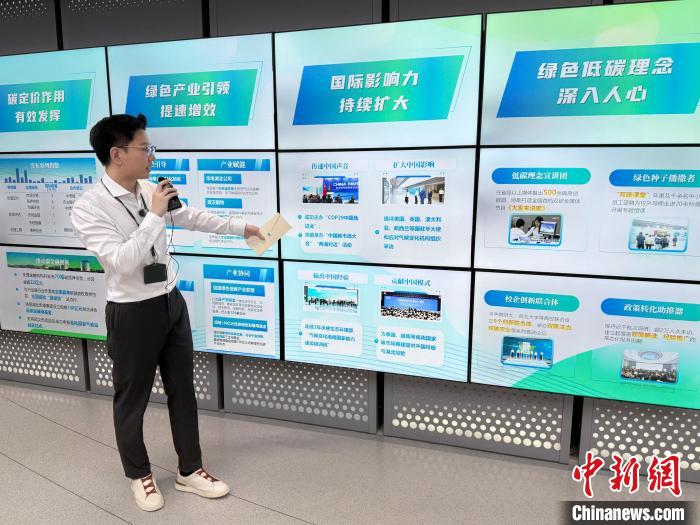
Core Insights - The national carbon market in China is celebrating its fourth anniversary, marking significant progress in its development and public engagement efforts [1][2][3] Group 1: Market Development - As of July 15, 2025, the national carbon market has achieved a cumulative trading volume of 673 million tons and a total transaction value of 46.246 billion yuan [1] - The market has successfully included high-energy-consuming industries such as steel, cement, and aluminum smelting, covering an additional 3 billion tons of CO2 emissions, alongside the previously covered 5 billion tons from the power sector, totaling over 8 billion tons, which represents more than 60% of the national CO2 emissions [5] - The Hubei carbon market is recognized as the most active in the country, accounting for a significant portion of the total trading volume and daily transaction value [5] Group 2: Public Engagement and Education - The "Carbon Asset Brain" building in Wuhan serves as a hub for carbon market activities and public education, hosting events to raise awareness and encourage participation in carbon trading [2][3] - The open day event featured interactive experiences, allowing citizens to engage with the carbon market through simulated trading, enhancing their understanding of market mechanisms [3] - Hubei's innovative carbon-inclusive mechanisms allow citizens to convert low-carbon behaviors into carbon credits, promoting daily participation in carbon reduction efforts [2][3] Group 3: Future Outlook - The national carbon market aims to continue its development towards a more mature and regulated system with enhanced price discovery and financial attributes [5] - Future expansions will include additional key emission enterprises, further integrating regional data with national carbon management [6]
全国碳市场上线四周年 中碳登累计交易额超462亿元
Zhong Guo Xin Wen Wang· 2025-07-16 16:58
Group 1 - The national carbon emission trading market has been operational for four years, with a total trading volume of 673 million tons and a trading value of 46.249 billion yuan as of July 15 [1][4] - The carbon market has included approximately 3,700 key emission units across four major industries: power generation, steel, cement, and aluminum smelting, covering an annual greenhouse gas emission volume of about 8 billion tons [4] - The establishment of the carbon registration and settlement institution, known as "Zhongtan Dengdeng," in Wuchang District has positioned it as the "carbon asset brain" and "carbon trading hub" for the national carbon market [4] Group 2 - The open day event attracted representatives from communities, schools, environmental organizations, and enterprises, showcasing the achievements of the carbon market and allowing participants to engage in simulated carbon trading [2][3] - Wuchang District is actively developing a dual-carbon economic belt centered around the Zhongtan Dengdeng building, attracting over 90 companies and research institutions in carbon trading, management, finance, and technology [4]
中国碳中和:碳信用稳定币协议完成测试
Zhi Tong Cai Jing· 2025-07-16 13:32
Core Viewpoint - China Carbon Neutral (01372) has successfully completed the technical testing of its Carbon Coin, which is pegged to 1 kilogram of carbon credit, utilizing blockchain and smart contract technology to enhance the efficiency, transparency, and automation of carbon credit trading [1][2] Group 1: Carbon Coin and Technology - Carbon Coin is a carbon credit-backed stablecoin that aims to create a unified tokenized carbon ecosystem, facilitating the seamless transfer of carbon credits between buyers and sellers [1] - The application system includes carbon accounts, carbon reduction projects, and lifecycle management systems for carbon credits, enhancing the compatibility and functionality of carbon asset trading [1] - The technology is expected to improve information and price transparency, ultimately increasing market liquidity [1] Group 2: Global Carbon Market Challenges - The global carbon market faces challenges such as reduced efficiency, lack of standardization, insufficient transparency, and market fragmentation [1] - A tokenized carbon ecosystem can address these issues, supporting the development of global carbon trading [1] Group 3: Stablecoin Impact on Cross-Border Payments - Stablecoins can significantly enhance cross-border payment efficiency, reducing costs to one-tenth of traditional systems and achieving transaction speeds in seconds [2] - It is projected that by 2024, 10% of global cross-border payments will be completed using stablecoins [2] Group 4: Strategic Implications for the Company - The successful testing of Carbon Coin and the carbon credit anchoring protocol is expected to improve the quality tracking and transparency of carbon reduction projects, benefiting carbon market service providers [2] - The company believes that participation in digital technology will lead to sustainable business growth and financial returns, laying a solid foundation for further business expansion and enhancing overall shareholder interests [2]
全国碳市场四周年:首次扩围纳入钢铁等行业,覆盖80亿吨排放量
2 1 Shi Ji Jing Ji Bao Dao· 2025-07-16 12:28
Core Insights - The national carbon emissions trading market in China is set to expand its coverage to include the steel, cement, and aluminum smelting industries, which are significant carbon emitters, with an estimated total emissions coverage of approximately 80 billion tons [1][3][4] - The market has seen a cumulative trading volume of about 673 million tons and a total transaction value exceeding 46.2 billion yuan as of July 15, 2025, indicating a growing trading scale and stable price trends [1][6][12] - The introduction of the voluntary carbon emissions reduction trading market (CCER) has begun, with the first certified voluntary reduction units officially issued, further enhancing market activity [1][12] Market Expansion - The national carbon market is recognized as a major institutional arrangement to address climate change and promote green low-carbon transformation in the economy [2][4] - The expansion plan was outlined in the government work report for 2025, emphasizing the need to broaden the industry coverage of the carbon emissions trading market [2][4] - The newly included industries are expected to add around 1,500 key emission units, increasing the total to approximately 3,700 units, which will cover over 60% of the national carbon emissions [3][4] Trading Mechanism and Performance - The carbon trading system has adopted a single-sided bidding method to enhance trading efficiency [3] - The carbon price has fluctuated within a reasonable range, with the market price recently stabilizing between 70-80 yuan per ton after reaching a peak of over 105 yuan per ton in November 2024 [7][9] - The completion rate for the 2023 carbon quota was approximately 99.98%, indicating a strong compliance culture among key emission units [6][11] CCER Market Development - The CCER market has seen a cumulative trading volume of about 237,800 tons and a total transaction value of 200 million yuan as of July 15, 2025, reflecting its growing importance [13][12] - Various stakeholders, including national and local key emission units, project developers, and financial institutions, are participating in the CCER market, which is expected to further stimulate market activity [13][14] - The CCER price has remained higher than the carbon emissions allowance (CEA) price, indicating strong market demand and the potential for future price adjustments as supply increases [10][14]
全国碳市场行情简报(2025年第115期)-20250715
Guo Tai Jun An Qi Huo· 2025-07-15 09:52
Report's Investment Rating - No information provided Core Viewpoints - The report suggests that enterprises with a quota gap should make phased low - cost purchases before the end of August. The depletion of the mandatory circulation quota may support the carbon price reversal. With less than half of the 2025 mandatory circulation quota released, it's expected to be exhausted by mid - October. Anticipatory trading may lead to a carbon price reversal in Q3. Before August, the carbon price may fluctuate due to slow quota release and low trading willingness. From September, the price may rise as compliance pressure mounts, but price volatility may intensify in the second half of the year [4] Summary by Related Catalogs Market Quotes - CEA: The main targets showed mixed trends and were generally weak. The listed volume was 3.1 thousand tons, and the bulk volume was 0.0 thousand tons. The closing prices of CEA19 - 20, CEA21, CEA22, CEA23, and CEA24 were 71.34 yuan/ton, 71.00 yuan/ton, 74.50 yuan/ton, 74.11 yuan/ton, and 74.50 yuan/ton respectively, with the CEA23's price dropping by 0.86% and CEA24 rising by 0.04%. The total trading volume of CEA23 was 2.11 thousand tons, and that of CEA24 was 1.00 thousand tons [3][6] - CCER: The listed agreement trading volume was 0.15 thousand tons, the average trading price was 83.05 yuan/ton (down 0.51%), the trading amount was 124,700 yuan, and the cumulative trading volume was 237,660 tons [3][8]