Semiconductors

Search documents
Will Micron Be the Next Nvidia -- or the Next Intel?
The Motley Fool· 2026-02-15 08:54
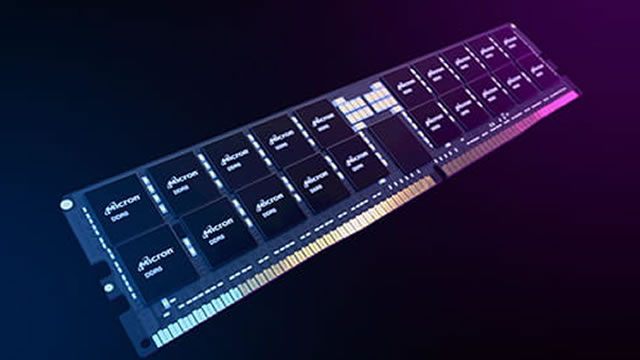
Core Viewpoint - Micron Technology is currently experiencing a cyclical upturn that may last longer than previous cycles, raising questions about its future position in the semiconductor industry compared to Nvidia and Intel [1][2]. Group 1: Company Performance - Micron's revenue increased approximately 57% year-over-year in the first quarter of fiscal 2026, ending November 27, 2025, with adjusted earnings soaring 169% year-over-year to $5.5 billion [5]. - The company has sold out its high-bandwidth memory (HBM) supply for all of 2026, indicating strong demand similar to Nvidia's challenges in meeting GPU demand [4]. Group 2: Market Position and Competition - Micron's market capitalization stands at $463 billion, with a current share price of $411.48, reflecting a significant increase in value over the past year, where its stock price has more than quadrupled [7]. - The competitive landscape includes significant threats from Samsung and SK Hynix, which have substantial market shares in memory chips, raising concerns about Micron's ability to maintain its position [7][8]. Group 3: Future Outlook - There are concerns about Micron's cyclical nature, with fears that a memory supply-demand imbalance could lead to a rapid decline in share price, as evidenced by its forward earnings trading at only 11.8 times [9]. - Despite cyclical concerns, there is speculation that the demand for AI applications will sustain the need for Micron's HBM longer than previous memory chip cycles, potentially positioning Micron more like Nvidia than Intel in the future [12].


1 Unstoppable Stock to Buy Before It Soars 332%, According to a Certain Wall Street Analyst
The Motley Fool· 2026-02-15 08:02
Core Viewpoint - Nvidia has experienced significant growth due to its adaptation to artificial intelligence (AI), but recent concerns about market conditions have led to a mixed outlook, despite an analyst doubling their price target and predicting a $20 trillion market cap by 2030 [2][4][13]. Financial Performance - For fiscal Q3 2026, Nvidia reported record revenue of $57 billion, a 62% year-over-year increase and a 22% sequential increase, with earnings per share (EPS) rising 67% to $1.30 [6]. - The data center segment, which includes AI-related GPUs, saw sales surge 66% to $51.2 billion, indicating strong ongoing demand for AI technologies [6]. - Nvidia is guiding for fourth-quarter revenue of $65 billion, reflecting a year-over-year growth of approximately 66% [7]. Future Outlook - Nvidia's backlog has reportedly increased to over $500 billion, suggesting continued revenue growth potential in the coming years [8]. - The current market cap of Nvidia is about $4.6 trillion, and to reach a $20 trillion market cap, the stock would need to increase by 332% [9]. - Wall Street forecasts annual revenue growth of over 34% for Nvidia over the next five years, potentially leading to revenue of $939 billion by 2030 [10]. Analyst Insights - Beth Kindig, a prominent analyst, has doubled her estimates for Nvidia, predicting a $20 trillion market cap by 2030, supported by expected annual growth in data center revenue of 36% [11]. - Kindig's previous predictions have proven accurate, as she forecasted Nvidia would surpass Apple in market value when it was valued at $550 billion [12]. Market Position - Despite fears of an AI bubble and slowing adoption, Nvidia is trading at less than 25 times forward sales, with expectations of a 65% revenue increase to $326 billion in the coming year [13]. - The evidence suggests that Nvidia's stock will likely be worth significantly more than its current valuation, regardless of reaching the $20 trillion benchmark [14].
3 Cheap "Magnificent Seven" Stocks to Buy Hand Over Fist
The Motley Fool· 2026-02-15 05:00
Core Viewpoint - The "Magnificent Seven" stocks, including Nvidia, Alphabet, Apple, Microsoft, Amazon, Meta Platforms, and Tesla, are approaching attractive valuations compared to their historical prices, with some stocks potentially being undervalued [1][2]. Valuation Analysis - All stocks in the "Magnificent Seven" trade at a premium to the market, but using forward earnings for valuation is more appropriate due to the rapid growth driven by the AI boom [4]. - The valuations of these stocks have converged to a typical range, with Tesla excluded due to its high forward earnings multiple of nearly 200 times [5]. - The focus is on stocks trading between 22 to 24 times forward earnings, specifically Nvidia, Microsoft, and Meta Platforms, which are considered good bargains [7]. Market Comparison - The S&P 500 trades at approximately 21.8 times forward earnings, indicating that the "Magnificent Seven" stocks are valued similarly to the market average despite their superior growth potential [8]. Individual Stock Insights - **Nvidia**: Currently trading at a low price, with a projected revenue growth of 52% for FY 2027, making it a strong buy opportunity [9]. - **Microsoft**: Experienced a decline post-earnings announcement, despite strong performance and 39% year-over-year growth in its Azure cloud platform, presenting a buying opportunity [11]. - **Meta Platforms**: Trading at 22.2 times forward earnings, it is the cheapest among the group, with expected revenue growth of 25% this year, indicating it is undervalued compared to its growth rate [13].



昆仑芯春节后路演,优先百度股东
是说芯语· 2026-02-15 04:01
Core Viewpoint - Kunlun Core, a subsidiary of Baidu, is set to launch an IPO on the Hong Kong Stock Exchange, with a post-investment valuation of 21 billion yuan after its D-round financing in July 2025 [2] Group 1: Company Overview - Kunlun Core was established from Baidu's AI chip and architecture department, with technology development dating back to 2011 when Baidu began developing AI accelerators [2] - The company officially launched its AI chip "Baidu Kunlun" in July 2018, marking its entry into the AI chip market [2] - Kunlun Core completed independent financing in April 2021, with a first-round valuation of approximately 13 billion yuan [2] Group 2: Product Development - Kunlun Core has developed the Kunlun XPU architecture for general AI computing, focusing on practical AI application needs [3] - The company has successfully launched two generations of AI processors and multiple AI accelerator cards, with ongoing development of new products [3] Group 3: Market Position and Growth - Kunlun Core has achieved large-scale deployment of its products across various sectors, serving hundreds of clients and reaching billions of end users [5] - Approximately 40% of Kunlun Core's customers are external, including internet giants and state-owned enterprises [5] - Baidu's founder emphasizes the rapid iteration of large model technology as a key competitive advantage, with ongoing investments in advanced models [5] Group 4: Future Product Plans - Kunlun Core plans to launch the M100 chip in early 2026, optimized for large-scale inference scenarios, and the M300 chip in early 2027 for ultra-large-scale multi-modal model training and inference [6] - The company aims to provide powerful, low-cost, and self-controlled AI computing power for Chinese enterprises, highlighting its strategic position in ensuring domestic AI computing autonomy [6]

国产车载SerDes龙头冲刺上市!
是说芯语· 2026-02-15 04:01
Core Viewpoint - Ruifake Semiconductor (Tianjin) Co., Ltd. has officially launched its initial public offering (IPO) and listing guidance, marking its entry into the capital market as a leading domestic player in the automotive SerDes field [1]. Company Overview - Established in July 2009, Ruifake has a registered capital of 70 million yuan and is classified under the manufacturing industry of computers, communications, and other electronic devices. The company is recognized as a national high-tech enterprise and a specialized and innovative small and medium-sized enterprise in Tianjin [2][4]. - The company was founded by several returnee semiconductor technology experts from Silicon Valley and local seasoned marketing professionals, supported by leading industry capital such as Junlian Capital and Sequoia Capital, providing it with inherent advantages in R&D and market layout [2]. Business Structure - Ruifake has established a national layout with its headquarters in Tianjin and sales and customer support nodes in Shenzhen, Chongqing, and Shanghai, creating a complete business loop from chip R&D and design to market promotion. Its business scope includes manufacturing electronic components and software, technology development and transfer, and wholesale and retail of products [3]. - The shareholding structure is clear, with the controlling shareholder, Wang Yuanlong, directly holding 21.36% of the shares and indirectly controlling 16.76% of the voting rights through other entities, totaling 38.11% of the voting rights [3][4]. Competitive Advantages - Ruifake's core competitiveness lies in technological independence, high-end product offerings, and comprehensive scene coverage. The company insists on self-research of core IP, with all products utilizing proprietary IP cores, avoiding reliance on third-party IP and establishing a complete domestic supply chain from chip design to packaging and testing [5]. - The company focuses on high-speed analog circuits, SoC circuit design, and embedded software, having developed PHY IPs for USB3.0, SATA1/2/3, PCIE, HDMI, and MIPI, creating significant technical barriers. It is also a member of the HSMT (China Automotive High-Speed Multimedia Transmission) industry standard drafting unit [5]. Product Matrix - Ruifake targets three core areas: automotive-grade, industrial-grade, and consumer-grade products. Its automotive-grade SerDes chips are its core business, being one of the only two companies globally to mass-produce SerDes chips exceeding 12G PAM4, with over 20 products in mass production and transmission rates ranging from 2Gbps to 12.8Gbps [6]. - The company has successfully entered the supply chain of major manufacturers like Changan Automobile and aims to rank among the top three in the Chinese market for intelligent auxiliary driving domain control (NOA) SerDes chips by the end of November 2025, with plans to launch products with a transmission rate of 25.6Gbps for 8K automotive display needs [6]. Future Prospects - The launch of the IPO guidance is expected to broaden the company's financing channels, enhance R&D investment, and expand its product line, solidifying its leading position in the automotive SerDes field. It is anticipated that with the advancement of the listing process and the popularization of HSMT standards, Ruifake will leverage domestic substitution policies and market demand growth to achieve dual breakthroughs in technology and business [8].
Líderes tecnológicos globales lanzan Trusted Tech Alliance
Prnewswire· 2026-02-15 03:30
Core Viewpoint - The Trusted Tech Alliance (TTA) has been launched by 15 leading global technology companies from 10 countries to promote a reliable technology ecosystem based on shared principles of transparency, security, and data protection, addressing the growing skepticism towards digital technologies and their societal impacts [1][2]. Group 1: Alliance Formation - The TTA was announced at the Munich Security Conference, with members including Anthropic, AWS, Google Cloud, Microsoft, and others, aiming to collaborate across borders [1]. - The alliance is formed in response to unprecedented technological changes and increasing demands for reliability and resilience in technology services [1]. Group 2: Principles of the Alliance - The TTA members have agreed on five specific principles: 1. Respect for the rule of law and data protection 2. Open, cooperative, inclusive, and resilient digital ecosystem 3. Strong supply chain and security oversight 4. Operational transparency, secure development, and independent assessment 5. Transparent corporate governance and ethical conduct [1][2]. - These principles emphasize the need for robust corporate governance and ethical behavior, ensuring technology is developed and managed responsibly throughout its lifecycle [1]. Group 3: Commitment to Collaboration - The alliance aims to work with governments and clients to enhance public trust in emerging technologies, thereby fostering job creation and economic growth [1]. - Members are committed to adhering to strict global security standards and supporting an open and cooperative digital environment that encourages innovation [1][2]. Group 4: Industry Perspectives - Leaders from various member companies expressed their commitment to the alliance, highlighting the importance of collaboration in building a secure and reliable digital infrastructure [2]. - Statements from executives emphasize that no single company or country can build a secure digital infrastructure alone, and that trust and security must be achieved collectively [2].



深度|黄仁勋对话Cisco CEO:未来十年算力将提升100万倍;写代码只是打字,领域知识才是你的“超级力量”
Z Potentials· 2026-02-15 03:06
Core Insights - The article discusses the transformation from explicit programming to implicit programming, emphasizing the need for companies to adapt to AI technologies and integrate them into their processes to enhance efficiency and innovation [6][10][19]. Group 1: Transition to Implicit Programming - Companies are moving from explicit programming, where specific instructions are given, to implicit programming, where the intent is communicated to the computer, allowing it to solve problems autonomously [6][10]. - AI advancements are expected to increase computational capabilities by a factor of one million over the next decade, compared to the traditional Moore's Law, which predicts a tenfold increase in the same period [6][25]. - Organizations should foster a culture of experimentation with AI, allowing employees to explore various models in a safe environment, as innovation often occurs outside of strict control [21][22]. Group 2: AI Integration and Enterprise Transformation - The concept of "AI in the loop" is introduced, suggesting that AI should be integrated into business processes to capture employee experiences and enhance company knowledge [49]. - Companies must identify their core competencies and focus on impactful work rather than getting bogged down by the initial ROI of new technologies [21][22]. - The collaboration between Cisco and NVIDIA aims to create a new computing stack that integrates AI capabilities while maintaining control, security, and manageability [19][20]. Group 3: The Future of AI and Business - The future of AI is seen as generative rather than retrieval-based, where software adapts to different contexts and user needs in real-time [33][39]. - The article highlights the importance of understanding the physical world and causal relationships in developing next-generation AI, termed "Physical AI" [42][43]. - Companies are encouraged to leverage their domain expertise and knowledge to effectively communicate their needs to AI systems, thus enhancing their competitive edge [44][45].


Built For What’s Next | Modern Enterprises Choose AMD
AMD· 2026-02-15 02:30
Don’t just add to your workflow, multiply it. AMD Ryzen™ PRO processors provide a dedicated AI Neural Processing Unit (AI NPU) and multi-layered security that your team needs to innovate without limits. Visit https://amdhub.in/ *** Subscribe: https://bit.ly/Subscribe_to_AMD Join the AMD Gaming Discord Server: https://discord.gg/amd-gaming Visit the AMD Gaming Community Website: https://www.amdgaming.com/ Like us on Facebook: https://bit.ly/AMD_on_Facebook Follow us on Twitter: https://bit.ly/AMD_On_Twitter ...


三大晶圆厂,巅峰之战
半导体行业观察· 2026-02-15 01:37
Core Viewpoint - The global semiconductor industry is crucial for modern technology, with TSMC, Samsung Foundry, and Intel Foundry as the three major players driving innovation and competition in advanced chip manufacturing [2][4][6]. Group 1: Company Profiles - TSMC is the absolute leader in pure foundry services, focusing solely on wafer manufacturing and avoiding competition in chip design, which has fostered strong relationships with companies like NVIDIA, AMD, Apple, and Qualcomm [2]. - Samsung Foundry represents a vertically integrated alternative, producing both chips and consumer electronics, and is investing heavily in advanced process nodes like 2nm GAA technology [3]. - Intel Foundry is a strategic newcomer, transitioning from a vertically integrated model to opening its fabs to external customers, with a roadmap that includes advanced nodes like Intel 18A [3]. Group 2: Competitive Dynamics - Competition among these companies drives technological advancement, as the need for innovation in transistor architecture and manufacturing processes is fueled by competitive pressure [5]. - The presence of multiple strong competitors enhances supply chain resilience, reducing risks associated with geopolitical tensions and natural disasters [5]. - Customers benefit from increased choice and bargaining power, allowing for better pricing and capacity allocation, which encourages foundries to respond actively to customer needs [5]. Group 3: Industry Implications - The competition among TSMC, Samsung, and Intel is not merely a commercial issue but has structural significance for the semiconductor ecosystem, ensuring innovation, resilience, and sustainable growth [4][6]. - The semiconductor industry is recognized as one of the most strategically important sectors globally, underscoring the necessity of these three companies for its success [6].

暴降 90%!英伟达 Blackwell 压缩 AI 推理成本至1/10
是说芯语· 2026-02-15 01:30
Core Insights - Nvidia has made significant progress in AI inference with its Blackwell architecture, achieving a milestone in "token economics" [1] - The company has implemented an "extreme hardware-software co-design" strategy, optimizing hardware efficiency for complex AI inference workloads, reducing the cost of token generation to one-tenth compared to the previous Hopper architecture [1] Industry Applications - Several inference service providers, including Baseten, DeepInfra, Fireworks AI, and Together AI, are utilizing the Blackwell platform to host open-source models [2] - These companies have successfully achieved cross-industry cost reductions by combining cutting-edge open-source intelligent models, Blackwell's hardware advantages, and their own optimized inference stacks [2] - For instance, Sentient Labs, focusing on multi-agent workflows, reported a cost efficiency improvement of 25% to 50% compared to the Hopper era, while companies in the gaming sector, like Latitude, have achieved lower latency and more reliable responses [2] Technical Specifications - The core of Blackwell's efficiency lies in its flagship system, the GB200 NVL72, which features a configuration of 72 interconnected chips and up to 30TB of high-speed shared memory [6][7] - This design is well-suited for the current mainstream "Mixture of Experts (MoE)" architecture, allowing for efficient splitting and parallel processing of token batches across multiple GPUs [6][7]