
科技

Search documents
美国万通证券宣布完成其客户Next Technology Holding Inc. 900 万美元的注册直接发行
Huan Qiu Wang Zi Xun· 2025-09-04 05:34
Group 1 - The company Next Technology Holding Inc. has completed a registered direct offering of $9 million, selling a total of 60,000,000 shares at a purchase price of $0.15 per share [1][2] - The offering was conducted under a shelf registration statement that became effective on September 16, 2022, with the SEC [2] - Univest Securities, LLC acted as the sole placement agent for this offering [2] Group 2 - Univest Securities has been registered with FINRA since 1994, providing a range of financial services including brokerage, investment banking, and wealth management [3] - Since 2019, Univest Securities has successfully raised over $1.3 billion for global issuers and completed approximately 100 transactions across various investment banking services [3]

港股午间收盘,恒生指数跌1.21%,恒生科技指数跌1.66%,芯片股普跌
Mei Ri Jing Ji Xin Wen· 2025-09-04 04:21
Group 1 - The Hang Seng Index closed down 1.21% and the Hang Seng Tech Index fell by 1.66% [1] - Semiconductor stocks experienced a broad decline, with SMIC, Shanghai Fudan, and Huahong Semiconductor each dropping over 6% [1] - Major technology stocks mostly declined, with Alibaba down nearly 4% and Xiaomi and Kuaishou each falling over 2% [1]




全球科技进入扩张周期,创业板50ETF嘉实(159373)近5日“吸金”超9200万元,规模创近半年新高!
Xin Lang Cai Jing· 2025-09-04 03:13
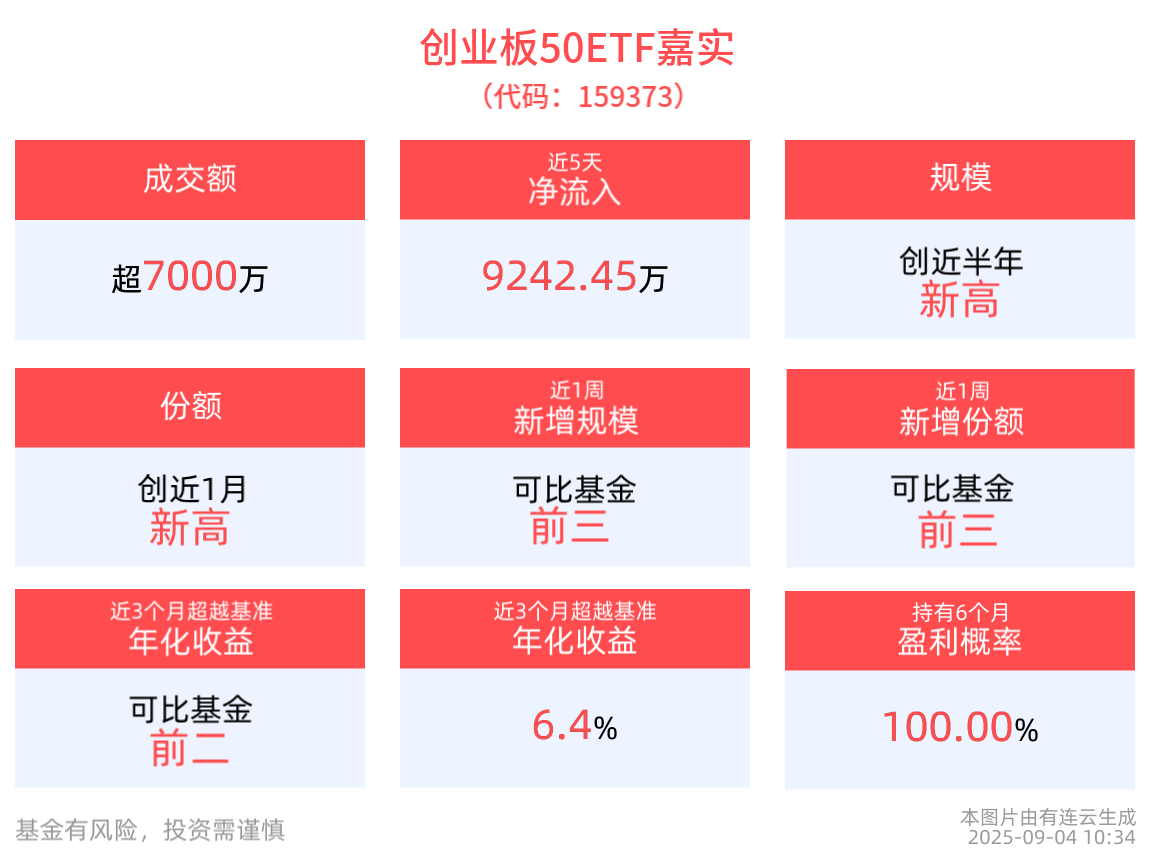
Group 1 - The core viewpoint of the articles highlights the strong performance and growth potential of the ChiNext 50 ETF, driven by favorable market conditions and key industry trends [2][4][5] - The ChiNext 50 ETF has seen a recent trading turnover of 13.85% with a transaction volume of 71.38 million yuan, indicating active market participation [2] - As of September 3, the ChiNext 50 ETF's latest scale reached 515 million yuan, marking a six-month high, with shares totaling 357 million, also a one-month high [2] - The net inflow of funds into the ChiNext 50 ETF was 2.87 million yuan, with a total of 92.42 million yuan net inflow over the past five trading days [2] - The ChiNext 50 ETF has achieved a net value increase of 40.25% over the past six months, ranking in the top 3 among comparable funds [2] - The top ten weighted stocks in the ChiNext 50 Index account for 68.14% of the index, with notable companies including Ningde Times and Dongfang Wealth [2][4] Group 2 - The ChiNext 50 Index is supported by three main driving factors: clear expectations for U.S. Federal Reserve interest rate cuts, a favorable environment for the AI industry, and strong internal growth dynamics of core assets [4] - The index includes growth-oriented blue-chip companies across key sectors such as information technology, new energy, fintech, and pharmaceuticals, presenting good long-term investment value [4] - The issuance of the "Artificial Intelligence +" action plan is expected to promote the integration of AI across various industries, supporting the development of intelligent robotics and other technologies [5]


美股三大指数涨跌不一 谷歌大涨9%
Xin Lang Cai Jing· 2025-09-03 20:20
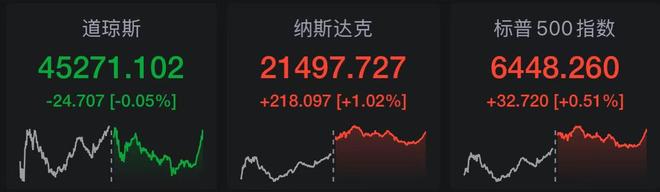
Core Viewpoint - The U.S. stock market showed mixed performance with the Nasdaq rising by 1.02% and the S&P 500 increasing by 0.51%, while the Dow Jones experienced a slight decline of 0.05% [1] Group 1: Major Technology Stocks - Google saw a significant increase of over 9% [1] - Apple rose by more than 3% [1] - Tesla experienced a modest gain of over 1% [1] - Meta, Amazon, and Microsoft had slight increases [1] - Nvidia, Intel, and AMD faced minor declines [1]



市场环境因子跟踪周报(2025.09.03):市场或有颠簸,但牛市不变-20250903
HWABAO SECURITIES· 2025-09-03 10:55
Quantitative Factors and Construction 1. Factor Name: Market Style Factor - **Construction Idea**: This factor tracks the relative performance and volatility of different market styles, such as large-cap vs. small-cap and value vs. growth styles, to understand market preferences and dynamics[10][12] - **Construction Process**: - **Style Performance**: Measure the relative returns of large-cap vs. small-cap stocks and value vs. growth stocks over the week - **Style Volatility**: Calculate the weekly changes in the volatility of these style returns - **Evaluation**: The factor effectively captures the market's preference for growth over value and the balanced performance between large-cap and small-cap stocks during the observed period[10][12] 2. Factor Name: Market Structure Factor - **Construction Idea**: This factor evaluates the dispersion of industry returns, the speed of industry rotation, and the concentration of trading activity to assess market structure and dynamics[10][12] - **Construction Process**: - **Industry Return Dispersion**: Compute the standard deviation of excess returns across industry indices - **Industry Rotation Speed**: Measure the rate of change in leading industries over the week - **Trading Concentration**: Calculate the proportion of total trading volume contributed by the top 100 stocks and the top 5 industries - **Evaluation**: The factor highlights an increase in industry return dispersion and trading concentration, indicating a more focused market structure[10][12] 3. Factor Name: Market Activity Factor - **Construction Idea**: This factor tracks market volatility and turnover rates to gauge overall market activity levels[11][12] - **Construction Process**: - **Volatility**: Measure the weekly changes in index-level volatility - **Turnover Rate**: Calculate the weekly changes in market turnover rates - **Evaluation**: The factor shows a rise in both market volatility and turnover, reflecting heightened market activity during the week[11][12] 4. Factor Name: Commodity Market Factor - **Construction Idea**: This factor monitors the strength of trends, basis momentum, volatility, and liquidity in commodity markets to understand their dynamics[19][25] - **Construction Process**: - **Trend Strength**: Assess the directional movement of commodity indices - **Basis Momentum**: Measure the changes in the basis (spot price vs. futures price) for energy and precious metals - **Volatility**: Calculate the weekly changes in commodity price volatility - **Liquidity**: Track the weekly changes in trading volume and bid-ask spreads - **Evaluation**: The factor indicates a decline in trend strength and volatility, while basis momentum for energy and precious metals increased, and liquidity showed a downward trend[19][25] 5. Factor Name: Option Market Factor - **Construction Idea**: This factor evaluates implied volatility, skewness, and discount rates in the options market to assess market sentiment and hedging activity[28] - **Construction Process**: - **Implied Volatility**: Track the implied volatility levels of the SSE 50 and CSI 1000 indices - **Skewness and Discount Rates**: Measure the skewness of put options and the implied discount rates for these indices - **Evaluation**: The factor reveals high implied volatility levels, with an increase in put skewness and discount rates for the CSI 1000 index, suggesting rising hedging activity and market divergence[28] 6. Factor Name: Convertible Bond Market Factor - **Construction Idea**: This factor examines the premium rates and trading activity in the convertible bond market to understand its dynamics[30] - **Construction Process**: - **Premium Rates**: Analyze the average premium rates for bonds with low conversion premiums - **Trading Activity**: Measure the weekly changes in trading volume - **Evaluation**: The factor shows an increase in the proportion of low-premium bonds and stable trading activity, indicating potential short-term adjustments in the market[30] --- Factor Backtesting Results 1. Market Style Factor - **Large-Cap vs. Small-Cap Performance**: Balanced[10][12] - **Value vs. Growth Performance**: Growth outperformed value[10][12] - **Style Volatility**: Large-cap/small-cap volatility decreased; value/growth volatility increased[10][12] 2. Market Structure Factor - **Industry Return Dispersion**: Increased[10][12] - **Industry Rotation Speed**: Peaked and then declined[10][12] - **Trading Concentration**: Increased for both top 100 stocks and top 5 industries[10][12] 3. Market Activity Factor - **Volatility**: Increased[11][12] - **Turnover Rate**: Increased[11][12] 4. Commodity Market Factor - **Trend Strength**: Declined[19][25] - **Basis Momentum**: Increased for energy and precious metals[19][25] - **Volatility**: Declined[19][25] - **Liquidity**: Declined[19][25] 5. Option Market Factor - **Implied Volatility**: High for SSE 50 and CSI 1000[28] - **Skewness and Discount Rates**: Increased for CSI 1000[28] 6. Convertible Bond Market Factor - **Premium Rates**: Low-premium bonds increased[30] - **Trading Activity**: Stable[30]
Interbrand发布《2025中国最佳品牌排行榜》
Zheng Quan Ri Bao Wang· 2025-09-03 08:48
Core Insights - The report by Interbrand highlights that the total brand value of the top brands in China for 2025 is 34,278.02 billion yuan, reflecting a year-on-year growth of 1.68% [1] - The distribution of brands across industries remains consistent with 2024, with 23 brands from the finance and consumer sectors and 9 from the technology sector [1] - The report identifies three key dimensions driving brand value enhancement: AI technology, multi-brand combinations, and international expansion [1][2] AI Technology - Companies are transitioning AI from a symbolic representation to a strategic application, enhancing core value identification and differentiation [1] - AI empowers brands in content and marketing, utilizing user profiling and consumer behavior analysis to uncover latent user needs [1] - The integration of AI facilitates a comprehensive approach from demand insight to product development and automated brand marketing [1] Multi-Brand Combinations - The traditional logic of brand matrices focused on price and category coverage, but the current approach emphasizes user-centric collaboration [2] - Brands are now addressing specific user pain points through a "scene-composite" strategy, optimizing overall matrix efficiency and maximizing brand potential in niche markets [2] - This shift allows brands to deepen their engagement in segmented scenarios and target precise demographics [2] International Expansion - Chinese brands are moving away from a "one-size-fits-all" strategy in internationalization, focusing on localized approaches while maintaining global brand consistency [2] - The report emphasizes the importance of integrating into local ecosystems to achieve symbiosis with local markets [2] - Brands are developing targeted strategies based on the significance of target markets, competitive landscapes, and opportunity spaces [2] Future Outlook - Despite external challenges and uncertainties, Chinese brands are positioned at a critical juncture for transformation from quantitative to qualitative growth [2] - AI capabilities are expected to enhance brand precision, while multi-brand strategies will solidify market presence [2] - The report anticipates that Chinese brands will showcase diverse brand profiles in increasingly segmented markets in the foreseeable future [2]
南向资金年内净买入突破万亿港元,港股科技主线迎高光时刻
Mei Ri Jing Ji Xin Wen· 2025-09-03 08:06
Group 1 - The Hong Kong stock market has seen a strong inflow of southbound funds, with net purchases exceeding 1 trillion HKD as of September 2, setting a new historical record and significantly surpassing last year's total [1] - The technology sector has emerged as a leader in the revaluation of Chinese assets, driven by its valuation advantages and clear growth prospects, attracting global capital allocation towards Chinese technology [1] - Alibaba's impressive earnings report led to an 18% surge in its stock price, boosting market sentiment and strengthening the overall Hong Kong technology sector [1] Group 2 - The National Securities Research report indicates a historical alternating relationship between the ChiNext Index and the Hang Seng Technology Index, suggesting potential for significant rebound in the latter as the yield gap has widened to 25% [1] - Factors supporting the positive outlook for the Hong Kong stock market include attractive valuations, expected foreign capital inflow, continuous southbound fund inflow, and the representation of emerging industries like AI and innovative pharmaceuticals [2] - The launch of the Hong Kong Stock Connect Technology ETF (159101) provides investors with a convenient tool to invest in the technology sector, tracking the National Securities Hong Kong Stock Connect Technology Index and focusing on major tech companies [2]



瑞银:美国之外,何处寻觅投资机遇?
贝塔投资智库· 2025-09-03 04:14
Core Insights - Global stock markets have rebounded approximately 28% since April, driven by various agreements and legislation in the U.S. However, recent concerns over large tech companies' valuations may increase market uncertainty and volatility [3][10] - The "Six Investment Paths in Europe" theme includes defensive companies benefiting from rising market volatility, firms gaining from increased German fiscal spending, and those profiting from expanded defense budgets [4][10] - High-quality dividend stocks in Switzerland are viewed as beneficial for enhancing portfolio yield [5][10] Asia Market Opportunities - The Chinese tech sector is expected to benefit from the growing application of artificial intelligence, improving fundamentals, and supportive domestic policies [6][10] - India's relatively closed economy makes its stock market less sensitive to recent U.S. tariff policies, with projected double-digit earnings growth over the next two years [6][10] - Singapore's stock market is attractive due to strong local currency performance, high dividend yields, and ongoing market reforms [6][10] Investment Strategy - Short-term market volatility is anticipated due to economic, political, and technological uncertainties. However, there are selective investment opportunities for those looking to increase exposure to markets outside the U.S. [10]


蔚来绩后一度涨超4%,恒生科技指数ETF(513180)上涨
Mei Ri Jing Ji Xin Wen· 2025-09-03 02:23
Group 1 - The Hong Kong stock market indices collectively rose, with the gold sector showing volatility and the robotics concept being active [1] - NIO reported its Q2 2025 earnings, with total revenue reaching 19.009 billion yuan, a year-on-year increase of 9%, and an adjusted net loss of 4.127 billion yuan, a year-on-year reduction of 9% [1] - NIO's vehicle delivery volume reached 72,100 units, a year-on-year increase of 25.6%, with Q3 revenue expected to be between 21.8 billion and 22.9 billion yuan [1] Group 2 - Southbound funds have net bought over 100 billion Hong Kong dollars this year, primarily flowing into Hong Kong's AI core assets [2] - Southbound funds have continuously net bought Alibaba for eight consecutive days [2] - The Hang Seng Technology Index ETF (513180) includes 30 leading Hong Kong tech stocks, focusing on the AI industry chain [2]

瑞银:10月底或为A股行情分水岭,可关注两大投资主线
2 1 Shi Ji Jing Ji Bao Dao· 2025-09-03 01:48
Group 1 - The core viewpoint is that there is no need for excessive concern about the overheating risks in the technology sector in the short term, and there is optimism for growth stocks in the future [1][2] - The A-share market has experienced a strong rebound since July, primarily driven by liquidity, with average daily trading volume exceeding 2 trillion yuan in August [1][2] - The upcoming Politburo meeting at the end of October is expected to be a pivotal moment for the A-share market, with liquidity likely to continue driving growth until then [1][2] Group 2 - Investors are advised to focus on policy signals related to consumption, industry de-involution, and real estate from the Politburo meeting [2] - The Hong Kong stock market is currently in a correction phase, with the Hang Seng Index and Hang Seng Tech Index showing modest gains of 1.23% and 4.06% respectively in August [2] - A-share market has greater upside potential in the short term, especially if more retail investors enter the market [2] Group 3 - The technology and growth stock sectors are experiencing significant volatility and differentiation, making stock selection crucial for investors [3] - Investors should pay attention to the industry position of companies, particularly focusing on leading firms with strong scale effects in the technology sector [3] - Comparing potential leading companies in China with established leaders in the U.S. can help identify promising investment opportunities [3]