医美

Search documents
化妆品医美行业周报20260125:化妆品12月社零高增,Q4需求端景气度明显提升-20260125
Shenwan Hongyuan Securities· 2026-01-25 14:44
Investment Rating - The report maintains a "Positive" outlook on the cosmetics and medical beauty industry, indicating strong performance compared to the market [2]. Core Insights - The cosmetics and medical beauty sector has outperformed the market recently, with the Shenwan Beauty Care Index rising by 2.0% from January 16 to January 23, 2026, surpassing the Shenwan A Index by 0.8 percentage points [4][5]. - December 2025 saw a significant increase in social retail sales for cosmetics, reaching 38 billion yuan, with a growth rate of 8.8%, indicating robust demand even in the off-season. The overall growth rate for Q4 was 9.9%, significantly higher than the annual growth of 5.1% for 2025, driven by promotional events like Double 11 [10][17]. - The report anticipates continued high consumer demand in Q1 2026, supported by new product launches and regulatory approvals in the medical beauty sector [10]. Summary by Sections Industry Performance - The cosmetics and medical beauty sector has shown strong performance, with the Shenwan Cosmetics Index increasing by 2.6% and the Shenwan Personal Care Index rising by 4.2%, both outperforming the Shenwan A Index [4][5]. Key Company Reviews - Lin Qingxuan (2657HK) is highlighted as a benchmark in the high-end domestic skincare market, with revenue projected to grow from 690 million yuan in 2022 to 1.21 billion yuan in 2024, representing a CAGR of 32.7%. The company is expected to turn a profit of 187 million yuan in 2024, a 120% increase year-on-year [11][12]. - Langzi Co., Ltd. (002612.SZ) forecasts a net profit of 900 million to 1.05 billion yuan for 2025, reflecting a year-on-year growth of 245.25% to 302.80% [4]. - Qingsong Co., Ltd. (300132.SZ) anticipates a net profit of 130 million to 165 million yuan for 2025, with a growth rate of 137.73% to 201.74% [4]. Market Trends - The report notes that the high-end skincare market is expanding, with the market size expected to reach 218.5 billion yuan by 2029. The concept of "oil-based skincare" is becoming mainstream, driving growth in the facial oil segment, which is projected to grow at a CAGR of 42.8% from 2019 to 2024 [12][14]. - E-commerce channels are increasingly important, with Lin Qingxuan achieving a 65.4% online revenue share in H1 2025, leveraging platforms like Douyin and Tmall for growth [13]. Sales Data - In December 2025, the total retail sales of cosmetics reached 38 billion yuan, with a year-on-year growth of 8.8%. The overall retail sales for cosmetics in 2025 were 465.3 billion yuan, reflecting a 5.1% increase [17][21].





商贸零售行业周报:老铺黄金SKP活动开启,关注春节销售超预期催化-20260125
KAIYUAN SECURITIES· 2026-01-25 09:14
Investment Rating - The industry investment rating is "Positive" (maintained) [1] Core Insights - The total retail sales in China for 2025 reached CNY 501,202 billion, with a year-on-year growth of +3.7%. December's retail sales showed a modest increase of +0.9% [25][34] - The retail sector is experiencing a gradual recovery, with service retail outperforming goods retail. Online sales are rebounding, while offline supermarkets, convenience stores, and specialty shops are performing relatively steadily [4][27] - The high-end traditional gold market is expanding, with brands like Laopu Gold gaining traction among high-net-worth consumers, supported by strong sales during promotional events [34][38] Summary by Sections Retail Sector Overview - The retail and social service indices reported increases of 2.16% and 3.20% respectively from January 19 to January 23, 2026, with the retail index ranking 16th among 31 sectors [6][15] - The jewelry sector has shown the highest growth, with an increase of 8.66% in the past week and 11.51% year-to-date [18][20] Consumer Trends - Essential consumer goods are stable, with food and oil products performing particularly well. In contrast, optional consumer goods show mixed results, with cosmetics and jewelry performing better than clothing and home appliances [31][33] - The online retail market for physical goods reached CNY 130,923 billion in 2025, growing by +5.2%, accounting for 26.1% of total retail sales [27][30] Investment Recommendations - Focus on high-quality companies in high-demand sectors driven by emotional consumption themes, particularly in gold and jewelry, with recommendations for brands like Laopu Gold, Chao Hong Ji, and Chow Tai Fook [7][41] - Emphasize offline retail companies adapting to market changes and AI-enabled cross-border e-commerce leaders, recommending companies like Yonghui Supermarket and Aiyingshi [7][39] - Highlight domestic beauty brands that innovate in emotional value and safety, recommending brands like Mao Ge Ping and Proya [7][39] - Consider differentiated medical beauty product manufacturers and expanding chain medical institutions, with recommendations for companies like Meili Tianyuan and Aimeike [7][39]
连续36个季度重仓贵州茅台!公募的白酒坚守与困境,如何突围?
券商中国· 2026-01-25 07:54
Core Viewpoint - The latest public fund top ten heavy stocks show a significant shift, with AI technology and new energy stocks occupying nine positions, leaving only one for Kweichow Moutai, indicating a divergence in the consumer sector [1][2]. Group 1: Changes in Fund Holdings - As of 2025, only Kweichow Moutai remains among the top ten heavy stocks in public active equity funds, with the other nine being tech and new energy companies like Zhongji Xuchuang and Ningde Times [2]. - In Q4 2021, three liquor stocks were among the top ten heavy stocks, including Moutai and Wuliangye, which were key players in the previous structural market [2]. - By the end of 2025, 1,048 funds held Kweichow Moutai, with a total market value of 118.203 billion yuan, ranking fourth among the top ten heavy stocks [2]. Group 2: Performance of Traditional Consumer Funds - Some funds have been loyal to traditional liquor stocks, with E Fund Blue Chip Select holding Kweichow Moutai for 29 consecutive quarters and Invesco Great Wall New Growth for 36 quarters [3]. - Many funds focusing on traditional consumption have seen poor performance, with some funds losing over 30% since inception and others reporting negative returns for four consecutive years [3]. - Fund managers focusing on traditional consumption often neglect to analyze their heavy holdings, instead discussing macroeconomic factors, which may indicate a disconnect from their investment strategies [3]. Group 3: Emergence of New Consumption Trends - New consumption trends, such as collectible toys and the "millet economy," have gained traction, with funds increasingly investing in these areas, while traditional consumer funds remain unresponsive [4][5]. - For example, Pop Mart has 123 funds holding it, with significant positions taken by active equity funds that are not traditional consumer funds [5]. - The divide between new and old consumption is perceived as non-existent, with both being products of changing market demands and technological advancements [5][6]. Group 4: Future Consumption Opportunities - Consumption remains a vital driver of economic growth, with expectations for service consumption in entertainment, gaming, and tourism to provide new investment opportunities [6][7]. - Fund managers suggest that the previous optimism surrounding traditional consumption stocks may be misplaced, advocating for a focus on emerging sectors like gaming and sports as new growth areas [7]. - The integration of technology and manufacturing is expected to create synergies, particularly in the robotics sector, which is becoming increasingly relevant across various industries [7].



数十万网友涌入,李亚鹏带货登总榜第一,90分钟销售额破5000万元,热度远超与辉同行!他关闭打赏,鞠躬致谢,提醒大家“理性购物”
新浪财经· 2026-01-24 10:06
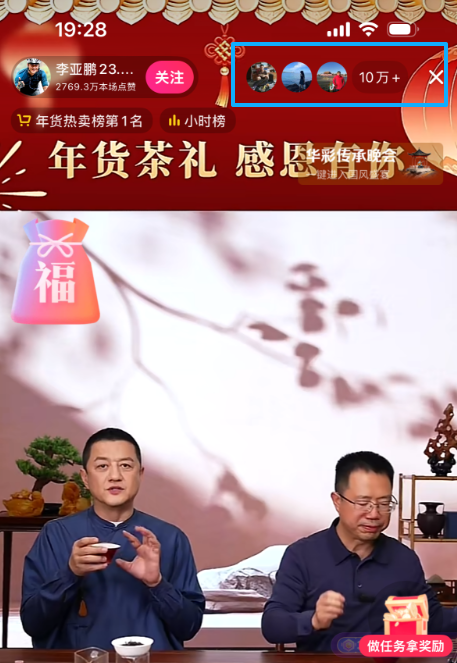
Group 1 - Li Yaping's recent live streaming event attracted significant attention, with over 10 million viewers and a total view count of 34.125 million, indicating strong consumer interest in his products [2][4] - During the live stream, Li Yaping emphasized rational shopping and closed the gift-giving feature, showing a focus on customer engagement and gratitude [5] - The live stream achieved a sales figure exceeding 500 million yuan within an hour and a half, positioning Li Yaping as a leading figure in the Douyin e-commerce space during the New Year shopping season [8] Group 2 - Zhang Yi, the landlord of the Yanran Angel Children's Hospital, is confirmed to be the founder of the well-known medical beauty institution, Meiyuanli, although he has no current ties to the organization [11][13] - Meiyuanli operates 163 high-end beauty service outlets and 19 medical beauty clinics across 48 major cities in China, indicating a robust presence in the beauty industry [12] - Concerns have been raised regarding Li Yaping's management capabilities, with suggestions for him to transition from a manager to a spokesperson role, allowing a professional team to handle operations [18]

李亚鹏带货登总榜第一,90分钟销售额破5000万元,热度远超与辉同行!
新华网财经· 2026-01-24 03:39
Group 1 - The article discusses the recent activities of Li Yapeng and the Yanran Angel Children's Hospital, highlighting the significant attention and engagement generated by Li's live streaming sales events [1][20]. - On January 23, Li Yapeng conducted a live stream that attracted over 10 million viewers, achieving a peak viewership of 3412.5 million and generating sales exceeding 50 million yuan within 90 minutes [2][4][8]. - Li Yapeng's live stream topped the Douyin sales leaderboard with a heat score of 1683.8 million, significantly surpassing the second-place competitor [7]. Group 2 - The article mentions the confirmation of the landlord's identity for the Yanran Angel Children's Hospital, revealing that Zhang Yi, the founder of a well-known medical beauty institution, was previously involved but has since exited the company [11][12]. - The medical beauty institution, established in 1996, operates 163 high-end beauty service outlets and 19 medical beauty clinics across 48 major cities in China, with a significant acquisition of its shares occurring in 2025 [13][14]. - Concerns were raised regarding Li Yapeng's management capabilities, with suggestions for him to transition from a manager to a spokesperson role, allowing a professional team to handle operations [15][19].

数十万网友涌入 李亚鹏带货登总榜第一 90分钟销售额破5000万元 热度远超与辉同行!
Mei Ri Jing Ji Xin Wen· 2026-01-23 23:45
Group 1 - Li Yaping's recent live streaming event on January 23 attracted significant attention, with over 10 million viewers and a peak viewership of 3412.5 million [1][3][5] - The live stream generated sales exceeding 50 million yuan within an hour and a half, making Li Yaping one of the most popular live streamers during the New Year shopping festival [5] - Li Yaping closed the gift feature during the live stream and emphasized rational shopping to his audience, thanking them for their support [3][5] Group 2 - Zhang Yi, the landlord of the Yanran Angel Children's Hospital, is confirmed to be the founder of the well-known medical beauty institution, Siyuanli, although he has no current ties to it [8] - Siyuanli operates 163 high-end beauty service stores and 19 medical beauty clinics across 48 major cities in China, with a significant acquisition of its shares in 2025 [8] - The assistant to Zhang Yi declined to comment on rumors regarding his intentions to reclaim the hospital property for medical beauty purposes, stating that there are many speculations in the media [8] Group 3 - Xiang Huaqiang commented on Li Yaping's management capabilities, suggesting that he should transition from a manager to a spokesperson role, leveraging his celebrity influence while leaving operations to a professional team [9][11] - Despite praising Li Yaping's character and responsibility as a father, Xiang highlighted shortcomings in his operational management, attributing the current rental crisis of the Yanran Angel Fund to poor financial planning and lack of transparency [11]
关于美妆医美公司的最近观点如何
2026-01-23 15:35
Summary of Key Points from the Conference Call Industry Overview - The conference call discusses the beauty and medical aesthetics industry, focusing on two companies: 毛戈平 (Mao Ge Ping) and 美丽田园 (Meili Tianyuan) [1][2][3]. Mao Ge Ping (毛戈平) Customer Engagement and Sales Strategy - Mao Ge Ping enhances customer loyalty through counter experiences and makeup services, with online channels attracting new customers and driving them to offline stores, achieving brand rejuvenation. Online new customer consumption accounts for over 75%, with 25%-30% converting to offline repeat purchases [1][2]. - The membership system is differentiated, with online members enjoying points and discounts, while offline members receive personalized beauty services, effectively guiding high-spending customers to offline stores and increasing overall sales. Same-store growth rate reached 18% in the first half of 2025, with a repurchase rate of 30% [1][2][6]. Product Line Expansion - Mao Ge Ping has expanded its product line to include skincare products (caviar masks, black cream) and perfumes, targeting younger consumers. The skincare category is developing steadily, with the caviar series performing exceptionally well [1][4][9]. Online and Offline Development - As of the first half of 2025, online channels surpassed offline for the first time, accounting for 25% of sales. The company aims to use online channels to attract younger customers, with the 25-30 age group increasing from 12% to 19% [5][6]. Meili Tianyuan (美丽田园) Growth Strategy - Meili Tianyuan is expanding through both organic growth and acquisitions, acquiring leading brands in the industry and adopting a "dual beauty and health" model to drive customers from lifestyle beauty to medical aesthetics, increasing average transaction value and customer lifecycle [1][3][16]. - The company has a remarkably low customer acquisition cost of about 1%, significantly lower than the industry average of 30-40%, attributed to membership asset acquisitions and cross-selling strategies [1][16][17]. Membership and Customer Retention - The company enhances membership assets through acquisitions of related businesses (e.g., yoga studios, gyms) and refined operations to improve member engagement. They have implemented over 200 standard operating procedures (SOPs) to enhance service quality and customer satisfaction [3][18]. Market Position and Future Goals - Meili Tianyuan aims to double profits in the next three years and revenues in five years, relying on both internal growth and external acquisitions to achieve these targets [20][21]. - The current landscape of the lifestyle beauty industry shows low chain penetration, with 90% of companies operating only one store, which presents opportunities for Meili Tianyuan to consolidate its market position through acquisitions [22]. Challenges and Market Dynamics - The collagen market faces challenges such as increased competition and market saturation, with many brands entering the space and consumer sensitivity to product differentiation decreasing [14]. - The profit distribution between upstream medical material suppliers and downstream medical institutions is changing, with suppliers relying more on institutions for sales, leading to a decrease in their control over pricing [15]. Conclusion - Both Mao Ge Ping and Meili Tianyuan are leveraging unique strategies to enhance customer engagement, expand product lines, and optimize membership operations, positioning themselves for growth in the competitive beauty and medical aesthetics market.

华东医药:2026年国内医美板块将上市多款新品,含重组A型肉毒毒素及Ellansé®M型
2 1 Shi Ji Jing Ji Bao Dao· 2026-01-23 09:44
Core Viewpoint - The company anticipates that its domestic medical aesthetics segment will have several products approved for market launch by 2026, indicating a strategic focus on expanding its offerings in this growing industry [1] Product Launch Expectations - The company plans to launch the following products in the domestic medical aesthetics market by 2026: - YY001, a recombinant type A botulinum toxin for injection - Ellansé® M-type, aimed at improving temporal hollowing - A multifunctional platform machine combining V30 radiofrequency, intense pulsed light, and Nd:YAG laser technology - MaiLi® Precise, a new hyaluronic acid filler containing lidocaine for the treatment of infraorbital hollows [1]

医药生物行业双周报(2026、1、9-2026、1、22):部分地区取消医院用药数量限制-20260123
Dongguan Securities· 2026-01-23 06:52
Investment Rating - The report maintains a "Market Perform" rating for the pharmaceutical and biotechnology industry, indicating that the industry index is expected to perform within ±10% of the market index over the next six months [4][26]. Core Insights - The SW pharmaceutical and biotechnology industry underperformed the Shanghai and Shenzhen 300 index, with a decline of 0.75% from January 9 to January 22, 2026, lagging behind the index by approximately 0.46 percentage points [11]. - Most sub-sectors within the industry recorded positive returns during the same period, with offline pharmacies and raw materials leading the gains at 3.14% and 2.34%, respectively. In contrast, the pharmaceutical distribution and chemical preparation sectors experienced declines of 3.26% and 2.87% [12][13]. - Approximately 66% of stocks in the industry recorded positive returns, with the top performer, Baolait, showing a weekly increase of 60.88%. Conversely, Luyan Pharmaceutical had the largest decline at 39.07% [13][16]. Summary by Sections 1. Market Review - The SW pharmaceutical and biotechnology industry index showed a decline of 0.75%, underperforming the Shanghai and Shenzhen 300 index by 0.46 percentage points [11]. - Most sub-sectors achieved positive returns, particularly offline pharmacies and raw materials, while pharmaceutical distribution and chemical preparations faced declines [12]. 2. Industry News - Recent policy changes in Hebei Province have lifted restrictions on the quantity of drugs that hospitals can stock, allowing for more flexibility in drug procurement and usage [24]. 3. Company Announcements - Enhua Pharmaceutical announced the approval of its drug registration certificate for a new injection, which is expected to enhance its market position [25]. 4. Industry Outlook - The report suggests a focus on investment opportunities in the brain-computer interface sector, which is highlighted as a key area for future growth. Specific companies to watch include Mindray Medical, Yuyuan Medical, and others across various segments [26][28].
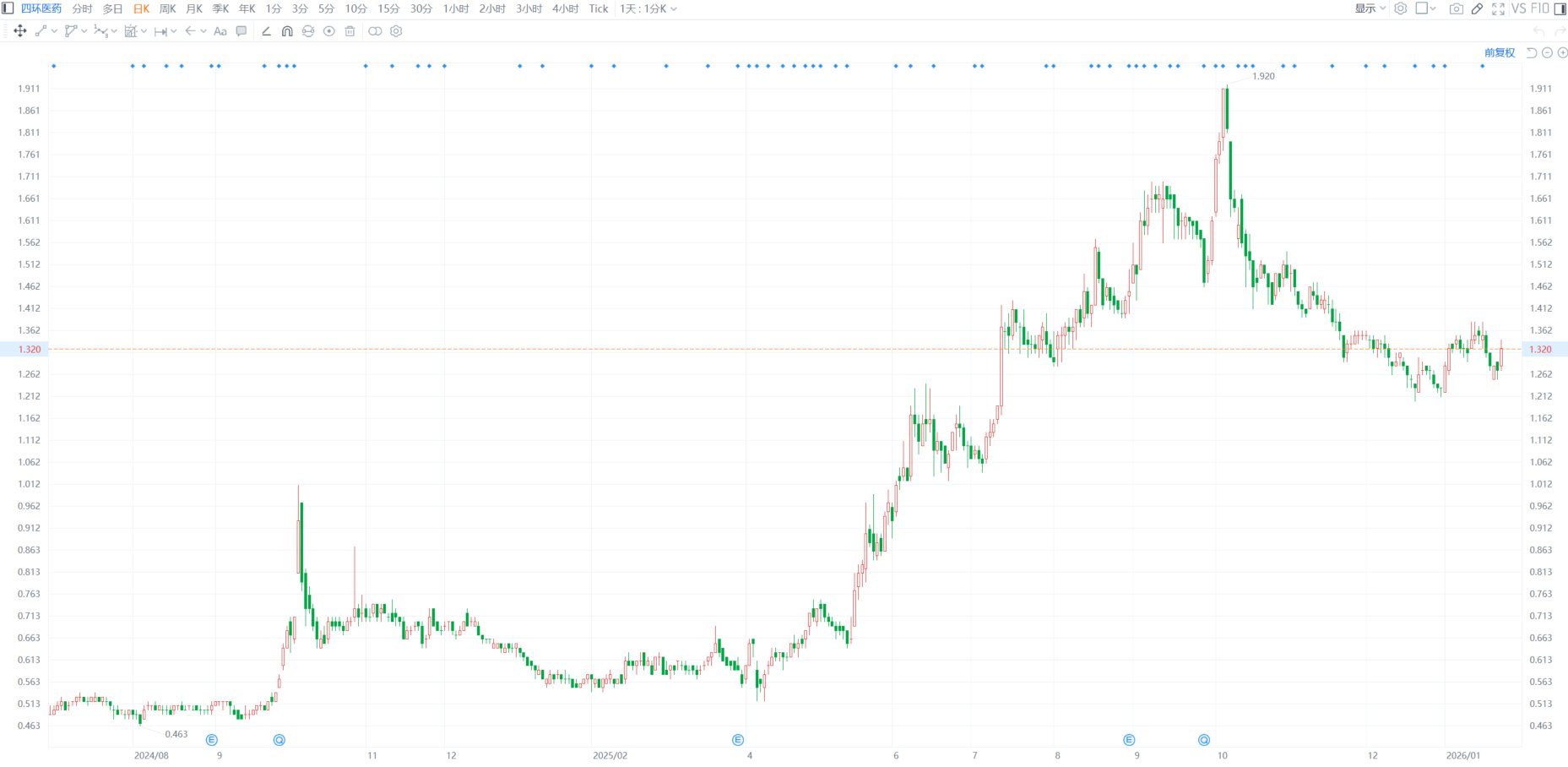
港股异动丨四环医药涨超5% 童颜针新增规格获国家药监局批准上市
Ge Long Hui· 2026-01-23 06:05
Core Viewpoint - Four Seasons Pharmaceutical (0460.HK) has seen a significant stock price increase following the approval of new specifications for its self-developed polylactic acid facial filler, known as "Tongyan Needle," by the National Medical Products Administration of China [1][2] Group 1: Product Development - The newly approved specifications for the Tongyan Needle include 60mg/bottle, 80mg/bottle, 100mg/bottle, 110mg/bottle, 120mg/bottle, and 130mg/bottle, enhancing the product range [1] - Four Seasons Pharmaceutical is the only company in China to hold compliant products in both "少女针" (Girl Needle) and "童颜针" (Tongyan Needle), along with other significant medical aesthetic products such as botulinum toxin, water light needle, and golden microneedle [1] Group 2: Market Performance - The sales of the new regenerative products, Tongyan Needle and Girl Needle, have exceeded expectations, with institutions actively purchasing [2] - The medical aesthetic business is expected to continue its rapid growth due to the synergy of multiple products and integrated solutions aimed at medical aesthetic institutions [2] Group 3: Investment Outlook - Citic Securities maintains a "Buy" rating for Four Seasons Pharmaceutical, setting a target price of 1.6 HKD [2]