可再生能源

Search documents
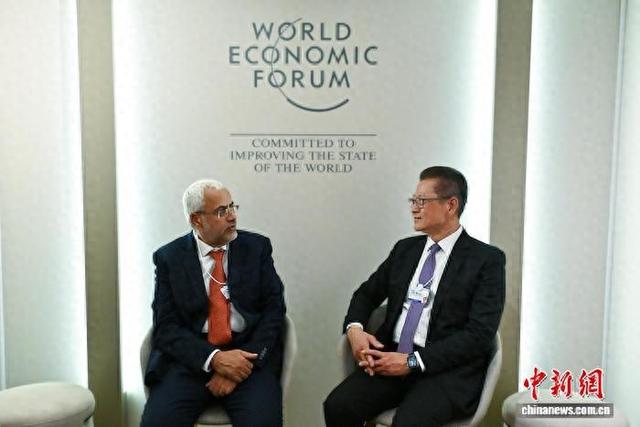
香港财政司司长陈茂波与阿曼经济部部长讨论深化合作
Xin Lang Cai Jing· 2026-01-20 14:47
Core Viewpoint - The meeting between Hong Kong's Financial Secretary and Oman's Minister of Economy focused on enhancing mutual cooperation in finance, trade, green transition, and industrial development [1][3] Group 1: Economic Cooperation - Oman is transitioning towards a more diversified economic structure, actively promoting green transition and renewable energy, while strengthening trade and investment ties with China [3] - Hong Kong is positioned as a "super connector" to assist mainland Chinese enterprises in investing in Oman, supporting its infrastructure and industrial development [3] Group 2: Financial Services - As an international financial center in Asia, Hong Kong can provide an ideal fundraising platform for Omani enterprises, along with offshore RMB investment and risk management products [3] - There is an invitation for both regions' stock exchanges and regulatory bodies to explore mutually beneficial cooperation, allowing for dual listings or secondary listings in each other's markets [3]

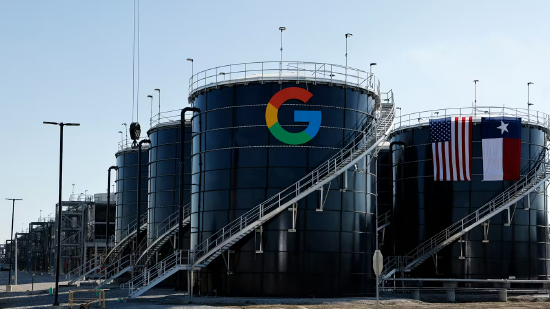
谷歌缘何领跑数据中心能源争夺战
Xin Lang Cai Jing· 2026-01-20 09:03
Core Insights - The necessity for technology companies driving artificial intelligence to engage in the production of additional electricity has been emphasized, with the U.S. government and several state governors calling for these companies to build more power generation facilities [1][9] - Google's acquisition of Intersect for $4.75 billion is significant as it aligns with the need for self-sustaining energy solutions for data centers, which Google acknowledges as essential for market competitiveness [1][9] Group 1: Intersect's Business Model and Strategic Advantages - Intersect has explored substantial land resources over the past decade, suitable for clean energy projects and accommodating industrial users like data centers, holding an estimated 8 to 10 gigawatts of in-construction project capacity [2][13] - The company has prioritized procurement rights for critical products in the energy supply chain, such as transformers and solar panels, which have long delivery times, enhancing its operational efficiency [1][2] - Intersect's operational model focuses on large-scale projects rather than numerous small ones, maintaining ownership of energy assets to secure higher premiums from industrial users [5][16] Group 2: Project Developments and Energy Solutions - Intersect has secured a grid connection capacity of 1 gigawatt in Texas, allowing for both purchasing and selling electricity, which is crucial for the viability of renewable energy projects [4][15] - The company initially planned to use renewable energy for green hydrogen production but shifted focus to developing data center projects, indicating adaptability in its strategy [4][15] - The operational strategy includes utilizing a combination of solar, wind, and battery storage, supplemented by on-site natural gas for peak power generation, which is seen as a cost-effective and clean solution for meeting AI energy demands [6][18] Group 3: Market Context and Competitive Landscape - The construction costs for renewable energy projects in resource-rich areas are currently lower than fossil fuels, with shorter construction timelines, making them attractive for investment [6][18] - Texas is highlighted as a unique market with a deregulated independent grid, facilitating easier project development compared to regions with strict regulatory frameworks [7][18] - Intersect's competitive edge is further supported by its experienced team, priority in procurement, and existing regulatory approvals, making it a valuable asset for Google [6][17]

哈萨克斯坦国际电力能源展:见证中亚能源转型的专业平台
Sou Hu Cai Jing· 2026-01-20 08:11
Core Insights - Kazakhstan is undergoing a significant energy transformation, reducing reliance on traditional coal power and focusing on renewable energy as part of its commitment to sustainable development [1][2] - The POWEREXPO ALMATY exhibition serves as a key platform for innovation, knowledge sharing, and collaboration in the energy sector [1][7] Kazakhstan's Energy Transition: Goals and Progress - Kazakhstan's renewable energy capacity has increased over 17 times in the past decade, reaching 3,082 megawatts, with renewable energy generation's share in total electricity rising from approximately 3% in 2020 to 6.43% in 2024 [1][2] - The government plans to commission over 50 renewable energy facilities by 2026 and aims for renewable energy to account for 15% of total capacity by 2030, with a total installed capacity target of 10 gigawatts [2] China-Kazakhstan Energy Cooperation: From Investment to Technological Collaboration - China has become a crucial partner in Kazakhstan's energy transition, moving beyond trade to co-develop a technology-intensive industrial ecosystem [4] - As of 2025, 30 renewable energy projects involving Chinese enterprises are underway in Kazakhstan, with a total capacity of 1,700 megawatts [4] POWEREXPO ALMATY Exhibition Value - The POWEREXPO ALMATY 2026 exhibition is positioned at the intersection of profound regional energy transformation and deepening international cooperation, serving as a strategic observation and networking platform for industry professionals [7][8] - The exhibition reflects the market demand generated by Kazakhstan's renewable energy goals, covering the entire industry chain from large-scale generation to smart grids and industrial energy efficiency [8]

绿发电力:截至2025年末,公司全年已累计收回可再生能源补贴资金22.82亿元
Zheng Quan Ri Bao Wang· 2026-01-19 13:40
Group 1 - The core point of the article is that Green Power (000537) has announced that by the end of 2025, it will have cumulatively recovered renewable energy subsidy funds amounting to 2.282 billion yuan [1]

阿联酋持续巩固全球可持续能源领先地位
Shang Wu Bu Wang Zhan· 2026-01-19 11:25
Group 1 - The core viewpoint of the article highlights that the UAE's renewable energy installed capacity has exceeded 7.7 GW and is expected to surpass 23 GW by 2031 [1] - Cumulative investments in clean energy have exceeded 190 billion dirhams, positioning it as a significant driver for low-carbon economic growth [1]
透过外贸成绩看中国绿色产业全球贡献
中国能源报· 2026-01-19 08:27
Core Viewpoint - China is increasingly playing a critical role as a driver in the global green transition, with exports of electric vehicles, photovoltaics, and lithium batteries surging 3.5 times over the past five years, approaching 1.3 trillion yuan [1] Group 1: Export Growth and Industry Transformation - The export of lithium batteries and wind turbine generators is projected to grow by 26.2% and 48.7% respectively in 2025, reflecting a deep transformation in China's manufacturing base and its commitment to sharing advanced technology in renewable energy [1][2] - China's efforts have led to an over 80% reduction in global photovoltaic generation costs over the past decade, with similar trends observed in wind energy, driven by scale, technological innovation, and service optimization [2] Group 2: Wind Power Expansion and Localization - The export of wind turbine units from China has seen a continuous high growth trend, with a 60.2% increase in 2023 and a projected 71.9% increase in 2024, demonstrating the effectiveness of ongoing technological innovation and localized services [2] - Goldwind Technology has transitioned from a "nomadic model" chasing orders to a "deep cultivation model" rooted in local markets, enhancing energy autonomy in project countries and gaining international trust for Chinese technology [2] Group 3: International Projects and Collaboration - Envision Energy secured 15.2 gigawatts of wind turbine orders in international markets in 2025, showcasing China's green technology empowering global needs [3] - Projects like the 600 MW wind power project in Laos and the 500 MW project in Egypt exemplify China's commitment to responsible development and the successful application of advanced wind turbine technology in challenging environments [4] Group 4: Global Infrastructure and Shared Development - The global projects are not isolated but serve as links for building green infrastructure and sharing development outcomes, highlighting the essence of China's green energy industry's international expansion as a cooperative endeavor [5] - The relationship between China and the world is evolving from a traditional "factory-market" model to a "development community" characterized by deep integration of innovation and green supply chains, providing certainty and growth in a volatile global landscape [5]
专访丨中国高质量发展为世界经济注入稳定性——访世界经济论坛执行董事马尔万·凯鲁兹
Xin Hua She· 2026-01-19 07:41
Group 1 - The core viewpoint is that China's transition from high-speed growth to high-quality development injects stability and momentum into the global economy amid increasing geopolitical conflicts and economic fragmentation [1] - The shift towards high-quality development is strategically significant for China, aiming for more sustainable and resilient growth, with a strong focus on innovation, productivity, and long-term stability [1] - China has become a major contributor to global renewable energy capacity, attracting $818 billion in clean energy investments in 2024, a 20% increase from the previous year [1] Group 2 - China is recognized for its investments in advanced manufacturing and green technologies, with nearly 40% of the world's "lighthouse factories" identified by the World Economic Forum located in China, showcasing its leadership in applying Fourth Industrial Revolution technologies [2] - As the world's largest manufacturing nation, China's development has global implications, particularly in addressing climate change and supply chain instability through its green technology and advanced manufacturing advantages [2] - The importance of utilizing multilateral mechanisms to promote healthy competition and mutually beneficial cooperation is emphasized, especially in the context of rising trade protectionism [2] Group 3 - The World Economic Forum's 2026 annual meeting will be held in Davos, Switzerland, focusing on the theme of "the spirit of dialogue," highlighting that dialogue is essential for building trust, which is the foundation for global economic growth and stability [3]
全社会用电量首破10万亿千瓦时说明什么?
Bei Jing Qing Nian Bao· 2026-01-19 05:57
Group 1 - In 2025, China's total electricity consumption is projected to exceed 10 trillion kilowatt-hours for the first time, reaching 10.4 trillion kilowatt-hours, marking a 5% year-on-year increase, which is unprecedented for a single country globally [1][2] - The growth in electricity consumption reflects the active state of economic activities, with significant contributions from high-tech industries, digital economy, and green energy sectors, indicating a profound transformation in the structure of electricity consumption [2][3] - The electricity consumption in the manufacturing sector continues to rise, demonstrating the resilience and expansion of China's manufacturing capabilities, while the electricity demand from computing centers is expected to outpace overall electricity consumption growth [3] Group 2 - By the end of October 2025, China's renewable energy capacity is expected to reach 2.22 billion kilowatts, accounting for 59.2% of the total power generation capacity, with hydropower, wind, and solar power leading globally [4] - The increasing electricity consumption is supported by the rapid growth of high-tech and equipment manufacturing, as well as the deepening of green development concepts, showcasing China's commitment to economic transformation and sustainable growth [4]
阳光电源中东首座10GWh工厂落地
起点锂电· 2026-01-18 11:25
Core Viewpoint - The signing of an $18 billion agreement marks the launch of one of the world's largest integrated clean energy projects in Egypt, involving a 1.7GW solar power plant and a 4GWh energy storage system [2][3]. Group 1: Project Overview - The Energy Valley project in Egypt's Minya province will feature a solar power plant and energy storage system, making it the first solar + storage project in the region capable of providing stable power around the clock [3]. - Scatec, a Norwegian renewable energy developer, is responsible for the project's development, while Sungrow will supply the energy storage systems [3]. - The project will include new substations and dedicated transmission lines to ensure a stable supply of clean electricity to the Wadi El-Sereiriya industrial area [3]. Group 2: Manufacturing and Local Impact - Sungrow plans to build a 50,000 square meter battery storage system manufacturing facility in the Suez Canal Economic Zone, which will serve as a manufacturing base for the Middle East and Africa [4]. - The factory is expected to create approximately 150 direct jobs and aims to start production by April 2027, with an annual capacity of 10GWh [4]. - The Egyptian Prime Minister emphasized that localizing renewable energy manufacturing will enhance energy security and support the green transition in Egypt [4]. Group 3: Financing and Economic Implications - The project has received strong support from multilateral development financial institutions, with preliminary financing agreements signed with the European Investment Bank, the European Bank for Reconstruction and Development, and the African Development Bank [5]. - The establishment of the factory in Egypt represents a strategic foothold for Chinese companies in the Middle East and Africa, allowing for localized production and reduced transportation costs [5]. Group 4: Strategic Importance for Egypt - The project is expected to significantly increase Egypt's clean energy share and enhance energy security while attracting more companies in the renewable energy supply chain [6]. - The Egyptian government views these initiatives as critical steps in the country's energy transition, anticipating an influx of international capital and technology into the renewable energy sector [7].


IRENA国际可再生能源署:2025年可再生能源拍卖报告
Sou Hu Cai Jing· 2026-01-17 04:41
Core Insights - The report by IRENA focuses on the design of renewable energy auctions, emphasizing risk allocation strategies to optimize outcomes for emerging markets and developing economies (EMDEs) [1][2] - Auctions are projected to drive nearly 60% of global installed capacity growth from 2025 to 2030, highlighting their significance in renewable energy deployment [1][29] - The report identifies a common risk transfer model where risks are shifted from private developers to governments and off-takers, which can lead to short-term benefits but may impose long-term fiscal pressures [1][30][31] Risk Types and Allocation - The report categorizes risks into national-level risks (political, policy, currency) and project-level risks (resource, construction, site preparation), which can impact project performance at various stages [1][61] - It emphasizes the need for a balanced auction design that considers both competitive pricing and the sustainability of public finances, aiming to match risk with the capacity of stakeholders to manage it [2][41][44] Auction Design Framework - A multi-dimensional optimization framework is proposed for auction design, which includes setting appropriate auction volumes and frequencies, defining site and technology specifications, and establishing qualification criteria [2][39] - The report advocates for a flexible approach to auction design that adapts to the macroeconomic context and policy goals of each country, rather than a one-size-fits-all model [2][38][41] Long-term Sustainability - The report stresses that while current auction designs may attract investment, they could hinder the development of local supply chains and sustainable energy capabilities in EMDEs [1][33][45] - It calls for a shift in focus from merely achieving low prices to fostering local value creation and ensuring that renewable energy serves as a catalyst for sustainable socio-economic development [1][36][52]