
新型显示

Search documents
全部为TCL华星自有技术 TCL科技8代OLED将开启新增长曲线
Zheng Quan Shi Bao Wang· 2025-09-14 09:41
Group 1 - TCL Technology and its subsidiary TCL Huaxing signed a project cooperation agreement with the Guangzhou government to jointly invest in a new 8.6-generation printed OLED display panel production line, with an estimated total investment of approximately RMB 29.5 billion [2][5] - The new production line aims to process glass substrates measuring 2290mm × 2620mm, with a capacity of about 22,500 sheets per month, targeting applications in flat panels, laptops, and monitors [2] - The printed OLED technology involves high-precision spraying of liquid luminescent materials onto substrates, which is expected to enhance the efficiency and quality of OLED display panel manufacturing [2][3] Group 2 - The global AMOLED panel shipment is projected to reach 1.01 billion units in 2024, with a market share of 27%, and is expected to exceed 1.33 billion units by 2030, increasing its market share to 35% [3] - The compound annual growth rate (CAGR) for laptops is expected to be 33%, for automotive displays 27%, and for desktop monitors 19% by 2030, indicating strong growth in the AMOLED segment [3] - The t8 project will leverage TCL Huaxing's proprietary technology, positioning the company to capture market demand and enhance its share of high-end products [3][4] Group 3 - TCL Huaxing has been engaged in printed OLED research since 2013 and is set to achieve mass production with its G5.5 generation line starting in November 2024, marking a significant milestone in its development journey [4] - The t8 project represents a strategic opportunity for TCL Huaxing to surpass foreign competitors in the high-generation AMOLED field and establish itself as a leader in new technology [5] - The company has built a robust global patent portfolio, holding over 9,700 OLED patents, including more than 1,200 in printed OLED technology, which provides a strong technical barrier [3][4]


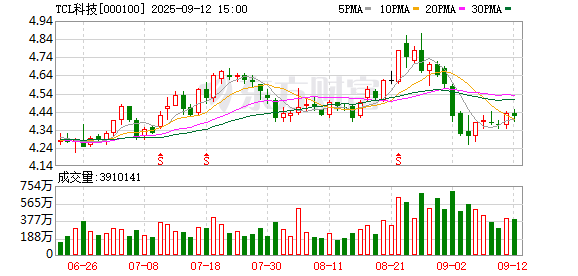
TCL科技拟投建一条8.6代印刷OLED产线,月产能2.25万片,总投资额295亿元
Ge Long Hui· 2025-09-12 14:54
Core Insights - TCL Technology Group Co., Ltd. has signed a project cooperation agreement with the Guangzhou Municipal Government and the Guangzhou Economic and Technological Development Zone Management Committee to build an 8.6-generation printed OLED display panel production line with a monthly processing capacity of approximately 22,500 glass substrates measuring 2290mm x 2620mm, with a total investment of about RMB 29.5 billion [1] Company Summary - TCL Huaxing has over ten years of technical research and exploration in the OLED field and possesses mass production capabilities and key patents for printed OLED technology [1] - The G5.5 generation printed OLED production line located in Wuhan is expected to achieve mass production and product delivery starting from November 2024 [1] Industry Summary - The global new display industry has entered a relatively stable phase, with OLED technology expected to become mainstream in high-end display technology due to the growth of foldable screens, increased demand for automotive displays, and wearable devices [1] - The construction of this project will help TCL Huaxing capture market growth demand, enhance its share of high-end products, and continuously optimize operational efficiency, positioning China strategically in the global new display industry [1]
总投资额295亿元,TCL科技拟投建一条8.6代印刷OLED产线
Xin Lang Ke Ji· 2025-09-12 13:59
Core Viewpoint - TCL Technology Group has signed a project cooperation agreement to build an 8.6-generation printed OLED display panel production line with a monthly processing capacity of approximately 22,500 glass substrates, with a total investment of about RMB 29.5 billion [1] Company Summary - TCL Technology Group and its subsidiary TCL Huaxing have been engaged in OLED technology research for over a decade and possess mass production capabilities and key patents in printed OLED technology [1] - The G5.5 generation printed OLED production line located in Wuhan is expected to achieve mass production and product delivery starting from November 2024 [1] Industry Summary - The global new display industry has entered a relatively stable phase, with OLED technology anticipated to become mainstream in high-end display technology due to the growth of foldable screens, increased demand for automotive displays, and wearable devices [1] - The construction of this project will help TCL Huaxing capture market growth demand, enhance its share of high-end products, and continuously optimize operational efficiency [1]
魔飞光电:预计2028-2030年,全球AR眼镜年出货量将达数千万
Tai Mei Ti A P P· 2025-09-12 07:09
Core Insights - The AI/AR glasses market is experiencing significant growth, with a projected shipment of 262,000 units in the first half of 2025 in China, representing a 73% year-on-year increase, and an expected total shipment of 900,000 units for the year, a 133% increase [2] - The market is expected to exceed 100 billion yuan in three years, driven by advancements in technology and cost reductions [2] Industry Trends - Light guide AR glasses are anticipated to become the dominant form due to their lightweight and integrated design, gradually replacing heavier models [3] - The BirdBath technology is positioned for the budget segment, while light guide technology is gaining traction among manufacturers, spurred by AI advancements [3] - Major suppliers like GoerTek and Lens Technology are increasing investments in the supply chain to support the growth of AR glasses [3] Market Opportunities - The global new display industry is projected to grow by 17% in 2024, reaching $219.8 billion, with China accounting for approximately half of this market at around $108 billion [3] - Morphotonics, a Dutch company specializing in large-area nanoimprint technology, has established a subsidiary in Suzhou, China, to enhance its local presence and focus on cost reduction, capacity increase, and rapid response [3] Technological Challenges - Current wafer-level technology faces challenges such as high costs and low production capacity, while roll-to-roll nanoimprint technology struggles with precision and yield [4] - The roll-to-plate nanoimprint technology combines advantages of both methods, offering higher production capacity while meeting precision requirements [4] Production Capacity - Morphotonics has commercialized products like the Portis series for small-scale production and the Aurora series for large-scale manufacturing, with plans to introduce a new device, 'Cypris', capable of producing 6 million light guides annually [4] - A recent production run achieved a yield of 93%, with a target of maintaining yields between 90%-95% for large-scale production [4] Future Projections - The global annual shipment of AR smart glasses is expected to reach tens of millions by 2028 to 2030, contingent on reducing production costs [5] - Initial price increases of 20%-40% may be acceptable, but long-term market acceptance will require further price reductions [5]
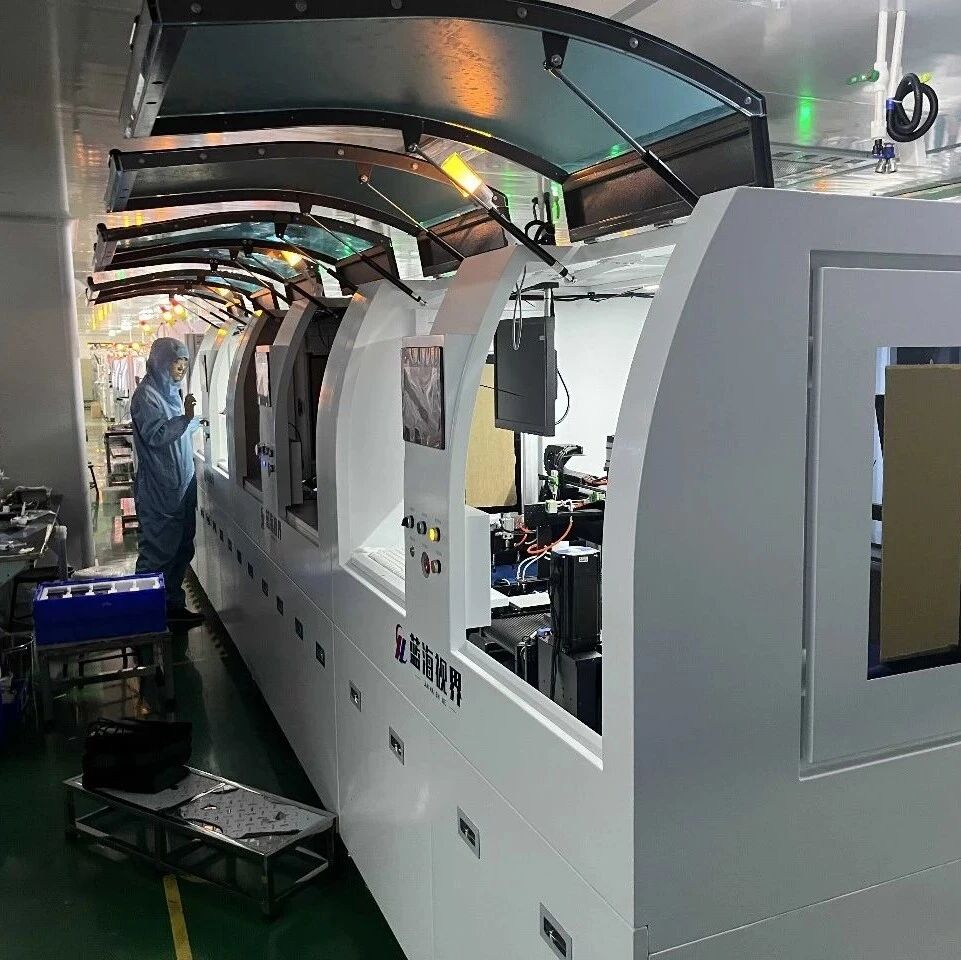
年产70万片,湖南柔性OLED屏项目预计11月完工
WitsView睿智显示· 2025-09-04 09:17
Core Viewpoint - Hunan Chuangpu Open Technology Co., Ltd. is advancing its Phase III project construction, expected to be completed by the end of November 2023, which includes new production lines for flexible OLED and electronic paper displays [2][3]. Company Overview - Chuangpu Open was established in 2020 and focuses on the new display industry, with main business activities including the R&D, manufacturing, and sales of TFT-LCD modules, flexible OLED displays, touch screens, backlight sources, and related electronic components [3]. - The company also provides industrial automation equipment and import-export trade services, with applications in mobile phones, smart wearables, automotive, smart home, and digital products [3]. Production Capacity and Financial Growth - Since its establishment in Xiangxiang, the production capacity of Chuangpu Open has expanded significantly, increasing from 8 production lines to over 200 lines, and annual output value has risen from 400 million to 3.8 billion yuan [6]. - The expected annual production capacity after the completion of the new project is 700,000 pieces for flexible OLED displays and 1.8 million pieces for electronic paper displays [3].
总投资10亿,TFT-LCD光学膜项目签约南京
WitsView睿智显示· 2025-09-03 09:59
Core Viewpoint - The article highlights the signing of a new TFT-LCD optical film production project by Changbao New Materials in Lishui, Nanjing, with a total investment of 1 billion yuan and fixed asset investment of 800 million yuan, marking Nanjing's first project in the new display industry [2]. Company Overview - Changbao New Materials, established in 2014, is a Sino-Korean joint venture located in Suzhou Wujiang Economic and Technological Development Zone [5]. - The company specializes in the research, production, and sales of optical films for TFT-LCD displays, which are widely used in televisions, laptops, and tablets [5]. - Changbao New Materials is currently the only company in the market capable of producing optical films in various sizes and is one of only two suppliers globally of composite (laminated) prisms [5]. - The company's products are primarily sold in mainland China, Europe, America, and Southeast Asia, with major clients including LG, BOE, TCL, Skyworth, and Konka [5].

最高1000万元扶持!广州黄埔“人工智能 + 机器人”产业闭门研讨会邀请您参加
机器人大讲堂· 2025-09-03 04:19
Core Insights - The article discusses the launch of a series of policies aimed at promoting the development of the "Artificial Intelligence + Robotics" sector in Huangpu District, Guangzhou, with a focus on high-quality industrial growth and innovation [2][6][24]. Policy Initiatives - Huangpu District has introduced four major policy areas with nearly 40 specific measures to support the development of artificial intelligence, embodied intelligence, integrated circuits, and new display technologies, with financial support reaching up to 10 million yuan for qualifying projects [2][10][14]. - The policies aim to activate industrial momentum through innovation and provide substantial financial incentives for companies engaged in AI and robotics [24][20]. Industry Development Focus - The article highlights Huangpu's strategic positioning in the AI sector, emphasizing its complete industrial chain, abundant computing resources, and rich application scenarios [6][16]. - The new policies are designed to foster collaboration between supply and demand sides of the robotics industry, enhancing the integration of AI technologies into various sectors [1][6]. Event Highlights - A significant press conference was held on July 3, where over 300 participants, including media, enterprises, and investors, gathered to discuss the new policies, which were also broadcasted live, attracting over 30,000 viewers [2][4]. - The event marked a novel approach by bringing policy announcements directly to the business community, facilitating immediate engagement and feedback [22]. Financial Support Mechanisms - The policies include various financial support mechanisms such as "computing vouchers," "model vouchers," and "scenario vouchers," with a total of 30 million yuan allocated to assist qualifying AI enterprises [12][23]. - Specific measures include support for R&D expenses, with up to 1% of research costs reimbursed, and direct financial assistance for projects that meet certain criteria [20][24]. Industry Ecosystem Development - Huangpu District is committed to building a robust ecosystem for AI and robotics, focusing on data resource development, infrastructure enhancement, and the establishment of public service platforms [23][13]. - The district aims to create a favorable business environment that encourages innovation and attracts investment, thereby enhancing the overall competitiveness of its industrial sectors [24][22].

广东4.4万多家企业设首席质量官
Shen Zhen Shang Bao· 2025-09-02 23:32
Group 1 - The core event is the launch of the "Quality Month" in Guangdong Province, which aims to enhance quality management across industries [1] - Guangdong has established a system of Chief Quality Officers (CQOs) in over 44,000 enterprises, covering all 21 cities above the prefecture level, fostering a talent pool that is technically proficient, management-savvy, and innovative [1] - The "Chief Quality Officer Partner Program" was introduced to promote collaboration among key industries, focusing on high-end equipment manufacturing, new displays, and industrial robotics [2] Group 2 - The program aims to create a collaborative mechanism among upstream, midstream, and downstream enterprises in the supply chain, addressing common technological challenges and promoting advanced quality management methods [2] - The initiative seeks to enhance the resilience and safety of the industrial supply chain, ensuring that quality requirements are deeply integrated [2] - The program is designed to support the development of new productive forces by solidifying the foundation of quality management [2]
首次聚焦三条重点产业链!广东推粤企质量官“伙伴计划”
Nan Fang Du Shi Bao· 2025-09-02 10:09
Core Viewpoint - The article highlights the launch of the "Quality Month" in Guangdong, emphasizing the establishment of Chief Quality Officer (CQO) systems in over 44,000 enterprises to enhance quality management and brand development [2][3]. Group 1: Chief Quality Officer System - Guangdong has implemented the CQO system as a means to transition products from "manufacturing" to "quality manufacturing," thereby enhancing the competitive quality of enterprises and supporting the construction of a quality-driven province [2]. - The CQO is seen as the "quality first person" in enterprises, responsible for leading quality management and ensuring accountability for quality safety [2]. Group 2: Quality Chain Partnership Program - The "Key Industry Chain CQO Partnership Program" was launched, focusing on high-end equipment manufacturing, new displays, and industrial robots, aiming to create a collaborative mechanism among enterprises along the industry chain [3]. - This program seeks to break down barriers between companies and promote cooperation in key technology challenges, advanced quality management methods, supply chain risk management, and quality talent development [3]. Group 3: Quality Culture Promotion - A series of thematic activities will be conducted by the Guangdong Provincial Market Supervision Administration and 25 other departments, including the "Quality Culture Tour" and "Quality Financing Enhancement" initiatives [3]. - These activities aim to strengthen quality support, improve public quality services, and promote advanced quality culture, fostering an environment where government, enterprises, and society prioritize quality [3].

福建省唯一国家级新区设立十周年做成了哪些事?
Ren Min Wang· 2025-09-02 09:02
Core Insights - Fuzhou New Area has achieved significant economic growth and development over the past ten years, with a total investment of nearly 500 billion yuan and an average annual GDP growth rate of 8.4% [1] Economic Development - The total economic output of Fuzhou New Area reached 333.1 billion yuan, with average annual growth rates of 8.4% for GDP, 13.1% for fixed asset investment, and 8.4% for industrial added value [1] - The area has established a modern industrial system focused on digital economy, new materials, new energy, new displays, food storage and health, and cultural tourism [1] Infrastructure and Industry - Major infrastructure projects include the completion of significant transportation networks and public facilities, enhancing the urban landscape and quality of life [4] - Fuzhou New Area has nurtured several large enterprises, including those with over 50 billion yuan in output, and has developed a comprehensive new display industry park [2] Green Development - The area has made strides in green energy, with the world's largest 26 MW offshore wind turbine being produced, capable of generating 100 million kilowatt-hours of clean energy annually [2] - Investments of 3.4 billion yuan have been made in coastal protection and ecological restoration projects [4] Cross-Strait Cooperation - Fuzhou New Area has promoted cross-strait integration by establishing a capital project facilitation system for Taiwanese enterprises and enhancing service frameworks for Taiwanese residents [3] - The area has signed 21 cooperation projects with a total investment exceeding 10 billion yuan, focusing on various advantageous industries [3] Future Outlook - The management team plans to continue fostering innovation and optimizing governance structures to align with strategic goals for the next decade [5]