
茶产业

Search documents
茶香飘出新韵味
Jing Ji Ri Bao· 2025-06-02 22:05
Core Insights - The Chinese tea industry is experiencing significant growth, with tea production expected to reach a historical high in 2024, continuing a 30-year growth trend [1] - The total output value of the tea industry is projected to be approximately 1.13 trillion yuan, with tea garden area surpassing 53 million mu [1] - The Beijing International Tea Expo showcased new business models and applications in the tea industry, emphasizing the integration of tea culture, technology, and industry [1][4] Industry Development - The tea industry in China is evolving towards a full-category, full-scenario, and full-ecological value chain upgrade, driven by the younger consumer demographic [3] - Companies are focusing on product innovation to meet the diverse and health-conscious preferences of consumers, with examples including the development of matcha products and automated production lines [2][3] - The tea industry is also expanding into new business models, such as "tea culture + research" and "tea culture + health," enhancing the integration of tea with tourism and cultural experiences [5][6] Technological Integration - The integration of technology in the tea industry is becoming a highlight, with advancements in digital technology, smart pest monitoring, and IoT applications in tea cultivation [7][8] - Companies are developing a rich product matrix through deep processing technologies, including tea beverages and food products, which are essential for the industry's transformation [8] - The use of blockchain technology for traceability in tea production is being implemented, enhancing the transparency and safety of tea products [8] Cultural Promotion - The tea culture is being enriched and promoted through various events and exhibitions, showcasing traditional tea-making techniques and innovative tea-related products [4][5] - The integration of tea culture with other cultural elements, such as ceramics and floral arts, is being explored to enhance consumer engagement and experience [5][6] - The recognition of Chinese traditional tea-making techniques as a UNESCO intangible cultural heritage is contributing to the global appreciation of tea culture [4]
国潮茶消费的破圈密码
Zhong Guo Chan Ye Jing Ji Xin Xi Wang· 2025-05-28 06:55
Core Insights - The tea consumption landscape in China is undergoing a transformation driven by "Guochao" (national trend), with innovative tea products and cultural experiences attracting younger consumers [1][2] - The essence of this transformation is the reinterpretation of traditional culture through contemporary language, requiring the tea industry to shift from being mere "tea suppliers" to "cultural translators" [1][3] Group 1: Cultural Deconstruction - The integration of traditional cultural elements into modern contexts is essential, as seen in the transformation of literary spirits into aesthetic experiences in places like the Shunan Bamboo Sea [2] - Operators are encouraged to create a cultural elements database, modernizing traditional tea poetry, utensils, and rituals to resonate with younger audiences [2] Group 2: Consumer Experience Reconstruction - Successful examples like the Anji tea garden illustrate the concept that "scene equals product," where tea gardens are transformed into interactive and shareable experiences [2] - The use of technology, such as AR, enhances storytelling and engagement, creating memorable experiences that surpass traditional advertising [2] Group 3: Value Chain Reinvention - Tea companies are urged to move beyond linear thinking of "agricultural products to beverages" and instead create an ecological loop of "cultural experience, social currency, and derivative consumption" [3] - The shift from tea culture as a "cultural heritage" to a "lifestyle" is crucial for breaking category boundaries and attracting consumers [3]
茶产业要跳出传统农产品思维
Jing Ji Ri Bao· 2025-05-26 22:11
Core Insights - The future of the tea industry lies not only in the cup but also in the broader ecosystem, emphasizing a market-oriented approach that integrates tea industry, culture, and technology [1][2] Group 1: Industry Overview - The tea industry is a significant global sector, with over 60 countries producing tea and more than 2 billion people consuming it. China accounts for over half of the world's tea production, with a historical growth trend expected to continue into 2024 [1][2] - The establishment of May 21 as "International Tea Day" by the 74th UN General Assembly marks a significant recognition of tea-producing countries, particularly China [1] Group 2: Challenges and Opportunities - Despite its advantages, the Chinese tea industry faces challenges such as low brand development, inadequate product standardization, and a weak social service system. Many tea farmers experience low production efficiency and rising labor costs [2] - Recent changes in consumer behavior show a shift towards younger demographics favoring new tea drinks, while traditional distribution channels are evolving with the rise of e-commerce and live-streaming sales [2] Group 3: Innovation and Development - To enhance the tea industry, there is a need for quality assurance through improved varieties and product innovation. Young consumers prefer fruit teas and cold brews, prompting a focus on suitable tea varieties [3] - The integration of tea culture with modern experiences, such as "tea culture + research" and "tea culture + health," is gaining traction, creating new business opportunities [3] Group 4: Technological Advancements - The tea industry is increasingly adopting advanced technologies, including digital platforms for monitoring and managing tea production. Examples include smart pest monitoring stations and IoT-enabled tea gardens [4] - Zhejiang Anji has developed a national digital platform for the tea industry, focusing on the development of derivative and functional tea products, showcasing the potential for innovation in this sector [4]

中国茶产业杭州指数(2025春茶季)发布
Xin Hua She· 2025-05-24 11:41
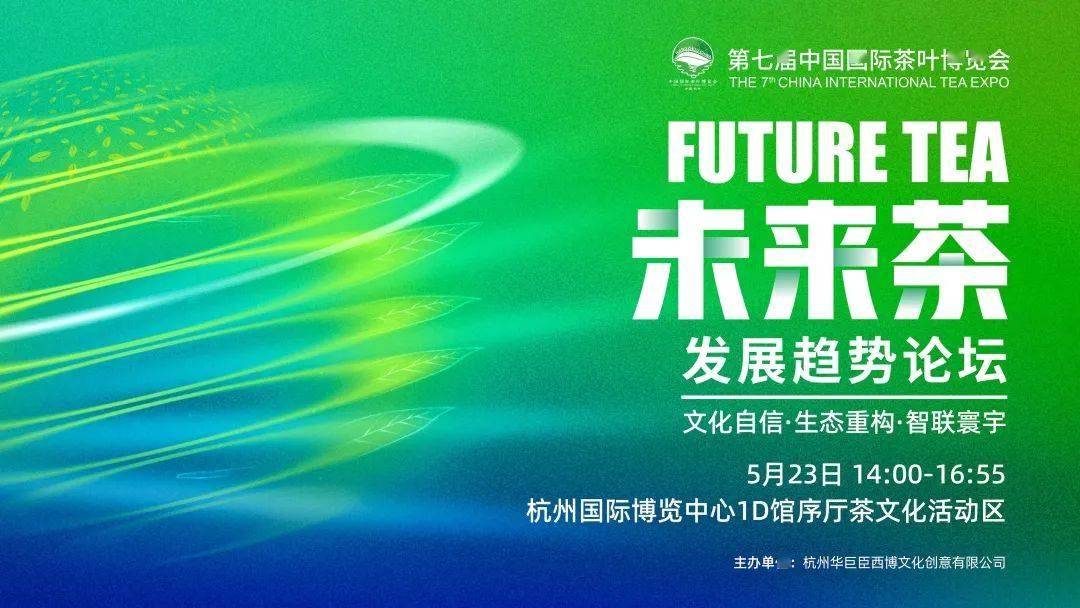
Core Insights - The "China Tea Industry Hangzhou Index (Spring Tea Season 2025)" was officially released during the "Future Tea Development Trends Forum" held in Hangzhou, marking it as the first national comprehensive index for the tea industry in China, serving as a barometer for the industry's development [1][2] - The index data is collected from 16 major tea-producing provinces, covering 118 main tea-producing counties and 19 wholesale markets [1] - The report indicates that the price index for tea buds in the sample area is 101.6, reflecting a year-on-year increase of 1.6%, while the trading volume index is 87.3, showing a year-on-year decrease of 12.7% [1] - For dry毛茶, the wholesale price index is 99.0, indicating a year-on-year decrease of 1.0%, and the trading volume index is 94.0, with a year-on-year decrease of 6.0% [1] - The spring tea production in 2025 faces challenges due to abnormal weather conditions affecting major tea-producing areas, leading to a slight decrease in production year-on-year [1] - High-quality tea in the wholesale market maintains price resilience, while consumer demand for tea is diversifying, prompting production areas to establish flexible pricing mechanisms and small-batch custom production lines [1] Industry Trends - The tea industry is undergoing a significant transformation from "scale growth" to "value enhancement," as indicated by the analysis of the index [2] - The index aims to improve the price formation mechanism in the tea market and guide reasonable value distribution across various segments of the industry chain [2] - There is an expectation that this index will become a "universal language" for the tea industry in the future [2]
聚焦!“中国茶产业杭州指数(2025)”正式发布
Sou Hu Cai Jing· 2025-05-24 03:15
Core Insights - The "Future Tea Development Trends Forum" was held as a significant event of the 7th China International Tea Expo, where the "Hangzhou Index for the Tea Industry (2025)" was officially released [2][4] Industry Overview - The Hangzhou Index report is the first national comprehensive index for the tea industry in China, serving as a barometer and compass for the development of the tea industry [8] - The report was guided by the organizing committee of the China International Tea Expo and hosted by the Hangzhou Municipal Government, with contributions from various institutions including China National Tea Corporation and Zhejiang Gongshang University [4] Market Data - The sample area for tea prices showed a year-on-year price index of 101.6, indicating a 1.6% increase, while the trading volume index decreased by 12.7% to 87.3 [6] - For dry毛茶, the wholesale price index was 99.0, reflecting a 1.0% year-on-year decline, and the trading volume index was 94.0, down 6.0% [6] Challenges and Trends - The spring tea production in 2025 faced challenges due to abnormal weather conditions, leading to delayed harvesting and a slight decrease in yield compared to the previous year [6] - High-quality tea maintained price resilience in wholesale markets, while low-quality tea sales faced stagnation, indicating a shift in consumer demand towards diversified preferences [6] Strategic Implications - The release of the Hangzhou Index provides precise data for government policy formulation and corporate strategy adjustments, addressing information asymmetry and promoting efficient supply-demand matching [8] - The tea industry is transitioning from scale growth to value enhancement, with technology playing a crucial role in high-quality development [8] Future Outlook - The release of the Hangzhou Index is seen as a starting point for collaborative efforts across various sectors to build a digital, innovative, and value-driven landscape for the tea industry [12]

杭州都市圈撬动新茶饮产业区域联动破局出圈
Mei Ri Shang Bao· 2025-05-22 23:56
Core Insights - The event "Tea Charm Hangzhou: Connecting the Future" aimed to promote the integration and development of the tea industry in the Hangzhou metropolitan area, focusing on the transformation and upgrading of traditional tea industries to meet modern consumer demands [1] Group 1: Traditional Tea Enterprises - Traditional tea enterprises are facing dual challenges of cultural preservation and innovation, with representatives sharing successful practices at the conference [2] - Huang Li from the Mogan Mountain Guangming Tea Farm emphasized the combination of traditional craftsmanship with modern products, developing over 20 derivative products such as yellow tea milk tea and tea ice cream to attract younger consumers [2] - Hu Huiling from Anhui Dongjiangmao Agricultural Development Co., Ltd. highlighted the integration of digital management systems to enhance traditional tea production while promoting ecological agriculture [2] - Qingting Tea House serves as a model for blending traditional tea culture with innovation, significantly increasing the proportion of younger customers through new experiences [2] Group 2: Regional Collaboration - The Hangzhou metropolitan area is leveraging regional collaboration to address the homogenization of the new tea beverage market, aiming to create a new model for tea industry development in the Yangtze River Delta [3] - The conference facilitated the signing of four cooperation projects, covering the entire chain from technology research and development to brand building, indicating a shift from geographical proximity to integrated development [3] - The establishment of an open research platform between research institutions and tea enterprises aims to promote the transformation of tea technology achievements [3] Group 3: Integrated Supply Chain - The Hangzhou Development and Reform Commission proposed an integrated supply chain approach, emphasizing direct sourcing from tea gardens to ensure raw material quality and utilizing e-commerce platforms for online expansion [4] - The event showcased the potential for extending the tea industry chain through visits to innovative tea enterprises, highlighting the integration of traditional culture with modern management systems [4] Group 4: Cultural and Technological Synergy - The Hangzhou metropolitan area is positioning itself as a model for traditional renewal, regional collaboration, and consumer leadership in the tea industry, driven by technology and cultural branding [5] - The integration of cultural heritage and modern innovation is reshaping the tea industry landscape, infusing new energy into the sector while contributing to the broader regional integration efforts in the Yangtze River Delta [5]
粤桂合作生态茶园科研示范基地揭牌
Nan Fang Nong Cun Bao· 2025-05-22 13:02
Core Viewpoint - The establishment of the "Yuegui Cooperation Ecological Tea Garden Research and Demonstration Base" aims to empower the tea industry through technological innovation and collaboration among academia, industry, and research institutions [3][4][10]. Group 1: Project Overview - The project is a collaboration between the Guangdong Academy of Agricultural Sciences, Wuzhou University, and Guangxi Xinfeng Public Investment Co., Ltd., officially signed on May 21 [2][3]. - The initiative is part of the "Belt and Road" cultural mission and is recognized as a key pillar for rural revitalization in Guangxi, with a focus on the Liubao tea industry [9][10]. Group 2: Objectives and Strategies - The project leader, Dr. Li Jianlong, emphasized a "six-in-one" collaborative model of production, education, research, and innovation to promote the transformation and upgrading of the Liubao tea industry [10][12]. - The collaboration aims to explore a "technology + industry + talent" innovation model to inject new momentum into the Liubao tea industry [17][18]. Group 3: Economic Impact - The project is expected to directly benefit around 3,000 local tea farmers, with an average annual income increase of over 10,000 yuan [19][20]. - It is projected to attract over 20,000 tourists annually through the establishment of ecological planting demonstrations and tea cultural tourism integration [20][21]. Group 4: Broader Implications - The initiative aligns with national rural revitalization strategies and regional coordinated development, focusing on ecological industrialization and the dual transformation of industry and ecology [22][23]. - The implementation of the project is anticipated to contribute to poverty alleviation and the realization of common prosperity in revolutionary old areas, creating a new vision for rural revitalization characterized by prosperous industries, livable environments, and affluent communities [24][25].

通讯|中国茶室“圈粉”巴黎
Xin Hua Wang· 2025-05-22 08:31
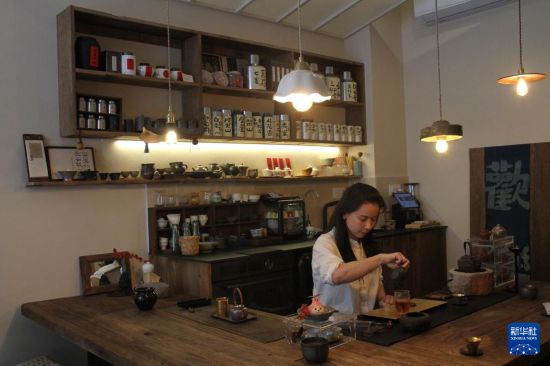
Core Perspective - The article highlights the efforts of Zhang Le in promoting Chinese tea culture in France, emphasizing the growing interest and appreciation for Chinese tea among the French population [2][3]. Group 1: Background and Motivation - Zhang Le, originally from Chongqing, moved to France in 2008 and noticed the limited awareness of Chinese tea compared to Japanese tea among locals [2]. - The Chinese tea industry has flourished domestically, but its international promotion remains insufficient, prompting Zhang to focus on increasing visibility for Chinese tea abroad [2]. Group 2: Development and Achievements - Initially, Zhang faced challenges in promoting Chinese tea, with few attendees at her free lectures. However, the rise of "Guochao" culture and the establishment of International Tea Day on May 21 have helped increase interest [2][3]. - Zhang opened a tea house named "Yile Ye" in Paris, which operates on a reservation basis and attracts tea enthusiasts, including experts in various beverage industries [2][3]. Group 3: Cultural Significance and Market Potential - French customers often discover the rich cultural heritage of Chinese tea, which offers a diverse range of six major tea types and thousands of varieties, contrasting with the more singular focus of teas from other countries [3][4]. - Zhang's tea house serves as a learning hub for local tea merchants, who seek to understand the high quality of original Chinese tea and its unique characteristics [4]. Group 4: Innovation and Collaboration - Zhang collaborates with French businesses to integrate Chinese tea into French cuisine, creating innovative products like tea-flavored cocktails and ice creams [4]. - The appreciation for Chinese tea is growing among French consumers, with some Michelin-starred restaurants beginning to offer Chinese tea as an alternative to wine [4].
南农晨读 | 美“荔”到泉城
Nan Fang Nong Cun Bao· 2025-05-22 06:36
Group 1 - Guangdong Provincial Committee has issued 28 reform measures to promote the "Hundred Counties, Thousand Towns, and Ten Thousand Villages High-Quality Development Project" [3][5][6] - The measures focus on enhancing county-level development mechanisms, industrial development systems, new urbanization, rural revitalization, and urban-rural coordination [4][5][6] Group 2 - China has added three new globally significant agricultural cultural heritage systems, bringing the total to 25, maintaining its leading position worldwide [9][10][12] - The newly recognized systems include the Gansu Gaolan Shichuan Ancient Pear Garden, Zhejiang Deqing Freshwater Pearl Composite Breeding System, and Fujian Fuding White Tea Culture System [9][10][11] Group 3 - The 2025 Guangdong "Consumption Assistance Summer Action" has officially launched, aiming to promote agricultural products and cultural tourism [24][25][26] - The event features a two-day product selection meeting showcasing nearly 200 quality products from across the country [27][28] Group 4 - The 2025 Maoming Lychee Carnival has commenced, with major procurement and logistics platforms promoting Maoming lychees nationwide [35][36][48] - The event includes a display area for Maoming agricultural products, facilitating interaction and sales connections [49][50] Group 5 - The first Lufeng Tea Culture Tourism Promotion Season and Tea King Competition will be held to promote tea culture and support high-quality development of the tea industry [53][55] - Lufeng tea has a long history and is known for its unique "rock fragrance" [56][57]
湖南益阳品牌建设领域实现新突破 三品牌跻身2025中国品牌价值榜
Zhong Guo Zhi Liang Xin Wen Wang· 2025-05-22 06:22
Group 1 - The core viewpoint of the articles highlights the significant progress made by Yiyang City in brand building, with three local brands recognized in national evaluations, indicating a strong competitive advantage in regional branding, traditional industries, and the pharmaceutical health sector [1][2] - The three brands that made the list are Anhua Black Tea, Hunan Shali Socks, and Hunan Hansen Pharmaceutical, showcasing Yiyang's differentiated competitive strengths in their respective fields [1] - Anhua Black Tea ranked 7th in the regional brand category, becoming one of the 36 regional brands with a value exceeding 10 billion yuan, and is positioned as a key player in rural revitalization [1][2] Group 2 - Yiyang's government has implemented a brand-strengthening strategy as a key driver for high-quality economic development, establishing a collaborative mechanism involving government guidance, departmental coordination, enterprise participation, and social involvement [2] - The market regulatory department in Yiyang has focused on enhancing brand value for enterprises by simplifying brand registration processes and providing one-on-one guidance, significantly improving efficiency in brand building [2] - Yiyang has actively promoted quality improvement initiatives, encouraging enterprises to pursue various certifications and providing comprehensive quality management support, which has strengthened brand awareness and contributed to the city's economic development [2]
