啤酒

Search documents
百威亚太上半年净利下滑24.4% 中国市场份额正被喜力蚕食?
Mei Ri Jing Ji Xin Wen· 2025-07-31 05:58
Core Viewpoint - The Chinese market remains weak for Budweiser APAC, with declining sales and profits, while Heineken is experiencing strong growth in the same market, particularly in high-end products [2][5][6]. Group 1: Budweiser APAC Performance - Budweiser APAC reported a total sales volume of 4.363 billion liters for the first half of 2025, a year-on-year decrease of 6.1% [3]. - Revenue for the same period was $3.136 billion, down 5.6% year-on-year, with a net profit attributable to shareholders of $409 million, reflecting a 24.4% decline [3]. - In the second quarter, revenue was $1.675 billion, a decrease of 4.6% year-on-year, and net profit fell 31.1% to $175 million [3]. - The company faced challenges in the Chinese market due to weak channel performance and regional layout, with sales volume down 8.2% and revenue down 9.5% in the first half of 2025 [3][4]. Group 2: Heineken's Growth - Heineken reported a revenue of €16.9 billion for the first half of 2025, with a net profit of €744 million, marking a turnaround from previous losses [6]. - In China, Heineken's high-end products saw sales growth exceeding 30%, driven by strong performances of Heineken Classic and Heineken Silver [6][7]. - The partnership with China Resources Beer has significantly enhanced Heineken's market presence and distribution, allowing it to gain market share in the high-end beer segment [6][7]. Group 3: Market Dynamics - Budweiser APAC is undergoing organizational restructuring and channel strategy adjustments, facing three core challenges: channel transformation pressure, management efficiency improvement, and external environment risks [4]. - Heineken's rapid growth in China is attributed to effective localization strategies and collaboration with local partners, which have allowed it to adapt to changing consumer preferences [7].


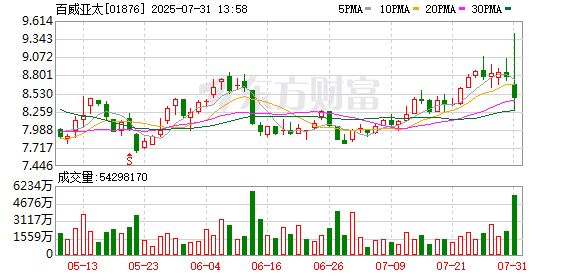
百威亚太(01876)下跌2.28%,报8.57元/股
Jin Rong Jie· 2025-07-31 05:20
Group 1 - Budweiser APAC's stock price decreased by 2.28% on July 31, reaching HKD 8.57 per share with a trading volume of HKD 3.61 billion [1] - Budweiser APAC Holdings Limited is the largest beer company in the Asia-Pacific region, employing over 31,000 full-time staff, operating 62 breweries, and managing 74 distribution centers [1] - In 2018, the company was one of the highest profit-making beer companies based in Asia, with a unique and diversified business model, leading in high-margin markets and showing stable growth in high-growth and profit-expanding markets [1] Group 2 - As of the first quarter of 2025, Budweiser APAC reported total revenue of HKD 10.487 billion and a net profit of HKD 1.68 billion [2] - On July 31, Budweiser APAC disclosed its mid-year report for the fiscal year 2025 [3]
百威亚太下跌收窄 新掌门“纠偏”进行时
2 1 Shi Ji Jing Ji Bao Dao· 2025-07-31 05:08
Core Viewpoint - Budweiser APAC shows signs of recovery under new leadership, with a focus on brand revitalization and channel expansion in the Chinese market [1][3][4]. Financial Performance - For the first half of 2025, Budweiser APAC reported revenue of $3.136 billion, normalized EBITDA of $983 million, and sales volume of 4.363 million kiloliters, all showing declines compared to the previous year [2]. - Despite year-on-year declines of 5.6%, 8%, and 6.1% in revenue, EBITDA, and sales volume respectively, there is a noticeable improvement in the second quarter compared to the first quarter, indicating a potential stabilization [2][7]. Leadership Changes - In April, Cheng Yanjun took over as CEO, marking a strategic shift aimed at revitalizing Budweiser APAC's performance, particularly in the core Chinese market [3][8]. Market Strategy - The company is focusing on enhancing its core brands, Budweiser and Harbin Beer, and shifting towards non-immediate consumption channels to adapt to changing consumer preferences [3][11]. - Budweiser has introduced a new brand image and marketing strategies targeting younger consumers, including collaborations with sports events and social media campaigns [9][11]. Channel Expansion - Budweiser is increasing its investment in non-immediate consumption channels, such as supermarkets and e-commerce platforms, to counteract the decline in immediate consumption sales [12]. - The company has reported growth in sales and revenue from non-immediate channels, indicating a successful adjustment to market trends [12]. Competitive Landscape - Budweiser faces stiff competition in the Chinese market, where rivals are capturing market share with more localized strategies and appealing pricing [17]. - The company aims to regain market share in China, which is critical for its overall performance, as it continues to experience declines that exceed industry averages [17][18]. Future Outlook - The company’s ability to achieve positive year-on-year growth in key performance indicators in the second half of the year will be crucial for restoring investor confidence [18]. - Budweiser's headquarters remains optimistic about the Chinese market's recovery, with expectations for improved market conditions in the summer [18].
百威亚太下跌收窄 新掌门“纠偏”进行时|酒业财报观察
2 1 Shi Ji Jing Ji Bao Dao· 2025-07-31 04:49
Core Viewpoint - Budweiser APAC shows signs of stabilization under new leadership, with a focus on improving performance in the Chinese market despite ongoing declines in revenue and profit [2][5][15]. Financial Performance - For the first half of 2025, Budweiser APAC reported revenue of $3.136 billion, normalized EBITDA of $983 million, and sales volume of 4.363 million kiloliters, all showing declines compared to the same period last year [2]. - Revenue, profit, and sales volume all decreased by 5.6%, 8%, and 6.1% respectively on a year-over-year basis, but there are signs of recovery compared to the first quarter of 2025 [2][5][11]. - In Q2 2025, normalized EBITDA decline narrowed to single digits, with revenue decline also improving, and revenue per hectoliter showing a year-over-year growth of 2.4% [5][13]. Strategic Initiatives - The new CEO, Cheng Yanjun, has continued the strategy initiated at the beginning of the year, focusing on Budweiser and Harbin beer brands while enhancing consumer engagement [6][15]. - Budweiser has launched a new brand image "Budweiser Red" and engaged in marketing campaigns linked to major sports events to attract younger consumers [7][10]. - The company is shifting resources from the ultra-premium market to the "core++" market to align with current consumer trends [7][15]. Market Dynamics - Budweiser is increasing its focus on non-immediate consumption channels, which have shown growth in both sales and revenue contributions [11]. - The company has partnered with convenience stores and online platforms to promote its products, responding to the shift in consumer behavior towards more cost-effective non-immediate consumption options [8][9][10]. - Despite the challenges, Budweiser's performance in the Indian market remains strong, with double-digit growth in high-end and ultra-high-end products [12]. Future Outlook - Budweiser aims to regain market share in China, which has been a key area of concern, as the company reported a 9.5% year-over-year decline in revenue and an 8.2% decline in sales volume in the first half of 2025 [15][16]. - The company's ability to turn key performance indicators positive in the second half of the year will be crucial for restoring investor confidence [15].
港股异动 | 百威亚太(01876)涨超3% 中期股东应占溢利同比减少24.4% 国内实现除息税折旧摊销前盈利率扩张
智通财经网· 2025-07-31 02:21
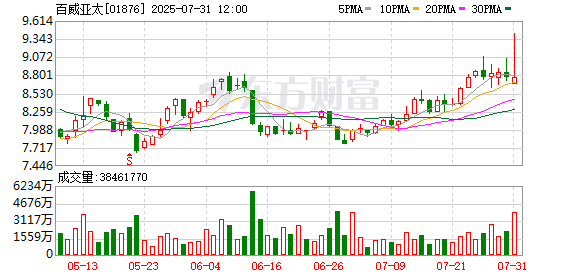
于2025年第二季度,由于集团的主要运营地区及渠道疲弱,集团在中国的销量表现低于行业水平。尽管 表现疲弱,集团仍在中国实现除息税折旧摊销前盈利率扩张。在韩国,集团的销量受到提前发货安排所 影响,但集团在即饮及非即饮渠道中的表现持续优于行业水平。在印度,由于集团持续引领该市场的高 端化发展,集团加速了增长动能。 消息面上,7月31日,百威亚太发布截至2025年6月30日止6个月业绩,该集团期内取得总销量43.63亿公 升,同比减少6.1%;收入31.36亿美元,同比减少5.6%;百威亚太股权持有人应占溢利4.09亿美元,同 比减少24.4%;正常化每股盈利3.59美分。 智通财经APP获悉,百威亚太(01876)涨超3%,截至发稿,涨2.74%,报9.01港元,成交额2.4亿港元。 ...
百威亚太涨超3% 中期股东应占溢利同比减少24.4% 国内实现除息税折旧摊销前盈利率扩张
Zhi Tong Cai Jing· 2025-07-31 02:19
于2025年第二季度,由于集团的主要运营地区及渠道疲弱,集团在中国的销量表现低于行业水平。尽管 表现疲弱,集团仍在中国实现除息税折旧摊销前盈利率扩张。在韩国,集团的销量受到提前发货安排所 影响,但集团在即饮及非即饮渠道中的表现持续优于行业水平。在印度,由于集团持续引领该市场的高 端化发展,集团加速了增长动能。 消息面上,7月31日,百威亚太发布截至2025年6月30日止6个月业绩,该集团期内取得总销量43.63亿公 升,同比减少6.1%;收入31.36亿美元,同比减少5.6%;百威亚太股权持有人应占溢利4.09亿美元,同 比减少24.4%;正常化每股盈利3.59美分。 百威亚太(01876)涨超3%,截至发稿,涨2.74%,报9.01港元,成交额2.4亿港元。 ...
7月30日【港股Podcast】恆指、中石油、華潤啤酒、騰訊、美團、人壽
Ge Long Hui· 2025-07-31 02:09
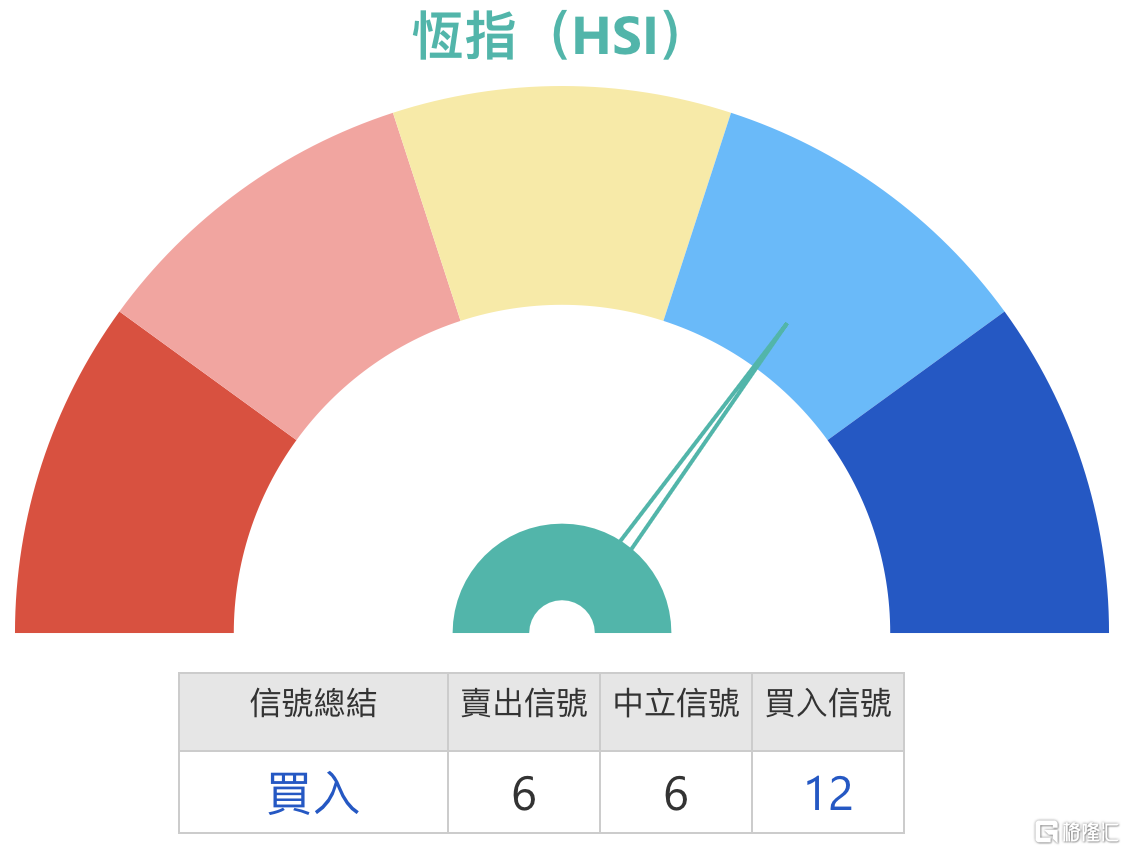
Group 1: Market Sentiment and Technical Analysis - The Hang Seng Index (HSI) shows a mixed sentiment with bullish investors expecting a rebound and bearish investors anticipating a drop to the 24,900 heavy load area [1] - Technical analysis indicates a primary buy signal for HSI, with a resistance level at 25,748 and a suggested recovery price for bearish options at 25,688, which is close to the resistance level [1] - For China Petroleum (00857.HK), a strong buy signal is noted, with the first resistance level at 8.18, indicating potential for further upward movement [3] Group 2: Individual Stock Analysis - China Resources Beer (00291.HK) is showing a buy signal with a closing price of 27.25, and resistance at 28.1, suggesting potential for a rebound [6] - Tencent Holdings (00700.HK) has a buy signal with 14 buy and 5 sell signals, and a resistance level at 560, with support levels at 529 and 510 for potential low-price entry [9] - Meituan-W (03690.HK) has a short-term buy signal with a closing price of 127.4, and support levels at 122.1 and 116.1 [11] - China Life Insurance (02628.HK) is on a strong upward trend with a buy signal, resistance levels at 24.6 and 27, both below the 30 mark [13]





啤酒销量一跌再跌,为啥人们如今不爱喝了?背后原因残酷却很现实
Sou Hu Cai Jing· 2025-07-31 02:05
Core Insights - The beer industry in China is experiencing a significant decline, with beer sales dropping year after year, particularly among younger consumers who prefer alternatives like milk tea [1][3]. Industry Performance - In June 2023, beer production decreased by 1.7% year-on-year, and sales during the Dragon Boat Festival holiday fell by 3.2% compared to 2022 [3]. - China Resources Beer saw its stock price hit a 52-week low in May 2023, with a market value loss of nearly 40%, while its basic beer line experienced an 18% drop in sales despite the Heineken series maintaining double-digit growth [3]. - Chongqing Beer reported an 8.3% decline in overall sales but an 11.6% increase in revenue, indicating a shift in product structure [5]. - The total beer production from January to July 2023 fell by 4.9%, marking the largest decline in non-pandemic years [7]. Consumer Behavior - The proportion of beer consumption among the 18-30 age group has dropped below 50%, with non-alcoholic beverages and low-alcohol drinks seeing a 76% increase in orders [9]. - Young consumers are increasingly critical of traditional beer, referring to it as "industrial water beer," with few domestic brands making it onto lists of popular craft beers [9][11]. - The consumption of craft beer has surged by 41% in 2023, with consumers under 35 accounting for 78% of this growth [11]. Health Trends - Research indicates that fitness enthusiasts have reduced their alcohol intake by 29%, with educational content highlighting the caloric equivalence of beer to rice [13]. - Young consumers are seeking healthier alternatives rather than just substitutes for alcohol, with a preference for products priced between 8-15 yuan for craft beers [13]. Industry Adaptation - Major breweries are innovating to adapt to changing consumer preferences, with Qingdao Brewery focusing on non-alcoholic beer and Yanjing Beer allocating 30% of its marketing budget to esports platforms [15]. - China Resources Snow Beer has partnered with Meituan for a rapid delivery service, achieving a record of 120,000 orders in one day during high temperatures [15]. - Qingdao Beer has launched limited edition collaborations with domestic IPs, selling out quickly despite some consumer criticism regarding pricing [17]. Market Forecast - Predictions suggest that by 2025, the market share of traditional industrial beer may shrink to below 60%, down from 82% five years ago [19]. - The number of craft breweries is increasing, with 2,143 new craft-related businesses registered in 2023, a 39% rise from the previous year [19].
百威亚太中期股东应占溢利4.09亿美元 同比减少24.4%
Zheng Quan Shi Bao Wang· 2025-07-31 01:22
于2025年第二季度,中国市场销量表现低于行业水平,但除息税折旧摊销前盈利率有所扩张。韩国市场 销量受提前发货安排影响,但渠道表现优于行业水平。印度市场则因持续引领高端化发展,增长动能加 速。 百威亚太发布截至2025年6月30日止6个月业绩。期内,集团总销量为43.63亿公升,同比减少6.1%;收 入为31.36亿美元,同比减少5.6%;股东应占溢利为4.09亿美元,同比减少24.4%;正常化每股盈利为 3.59美分。 ...
包装越小,生意越大?拆解食品饮料“迷你化”的产品逻辑
3 6 Ke· 2025-07-31 00:19
规格是食品饮料重要的产品策略之一。 我们分析过东方树叶的产品规格策略,通过三次产品规格的升级(330ml、900ml和1.5L装),不断巩固自己在无糖茶市场的龙头地位。我们也写过,即饮 咖啡近一年走红的9.9元/1升的产品,是通过包装和价格的性价比优势,来争夺过去被外卖抢走的咖啡消费市场份额。 饮料规格很多都是越变越大,相反的是,冰淇淋却越来越"迷你"了。不仅越卖越小,小雪糕还在努力地"成团",经常以"mini多支装"的组合出现,吸引消 费者的注意。 "变小"不只是在冰淇淋行业,货架上的薯片、啤酒、方便面也悄悄加入,和大瓶装饮料的性价比不同,小包装的食品正在卷起行业另外一种"精致萌"的潮 流。 一、"小"趋势从何而来? 伊利旗下的巧乐兹,在2019年推出了mini的巧乐兹小V筒,开始布局迷你类冰品的细分市场。而甜筒冰淇淋的代表可爱多,推出迷你版的时间更早,在 2017年就已经推出。 根据我们的观察,更多品牌的加入是在最近几年,单支份量显著缩小,取而代之的是多支装的组合产品。 梦龙在2023年4月推出迷你梦龙,将单支雪糕的克重从65g减少为42g左右,一上市便受到欢迎。随后,和路雪旗下品牌千层雪,也加入"迷你家 ...