
新材料

Search documents
20cm速递|科创板100ETF(588120)飘红,科技或支撑指数韧性
Mei Ri Jing Ji Xin Wen· 2025-11-17 05:39
科创板100ETF(588120)跟踪的是科创100指数(000698),单日涨跌幅达20%,该指数从科创板市场 中选取市值较大、流动性较好的100只证券作为指数样本,以反映科创板代表性上市公司证券的整体表 现。成分股覆盖了信息技术、生物医药、新材料等多个高科技领域,具有较强的创新性和成长潜力。 (文章来源:每日经济新闻) 野村东方国际证券指出,在科技转型过程中,由于指数行业权重的持续转变,历史相对估值的参考意义 下降,电子等行业在内的盈利增长持续带动科技领域的估值上修。估值分化加剧的现象将在A股市场持 续,指数的下行空间有限。中美贸易摩擦出现缓和,但双方都已展开中长期自主可控的产业链安全建 设,自主可控等题材将长期受益。科技题材中的医药等先于市场调整,可能成为科技内部轮动的首选。 此外,在"十五五"规划中,对安全韧性的描述(自主可控的投资加码)和新兴产业的商业化(商业航 天、卫星、6G、低空机器人)有望对A股形成积极影响。建议投资者同步增加对中美两国自主可控题材 的关注度,在中国资产中加大对军贸、AI基建、商业航天与6G基建、工控/办公/AI软件等题材的关注。 ...
思泉新材股价涨5.17%,金鹰基金旗下1只基金重仓,持有1.45万股浮盈赚取13.22万元
Xin Lang Cai Jing· 2025-11-17 02:35
Group 1 - The core viewpoint of the news is that Siquan New Materials has seen a significant stock price increase of 5.17%, reaching 185.39 yuan per share, with a total market capitalization of 14.971 billion yuan as of the report date [1] - Siquan New Materials, established on June 2, 2011, specializes in the research, production, and sales of thermal management materials, magnetic materials, and nano-protective materials, with thermal management materials accounting for 88.60% of its main business revenue [1] - The company was listed on October 24, 2023, and has a trading volume of 3.38 billion yuan and a turnover rate of 3.91% [1] Group 2 - Jin Ying Fund holds a significant position in Siquan New Materials, with the Jin Ying Minfeng Return Mixed Fund (004265) owning 14,500 shares, representing 1.92% of the fund's net value, making it the fourth-largest holding [2] - The Jin Ying Minfeng Return Mixed Fund has a total scale of 181 million yuan and has achieved a year-to-date return of 19.34%, ranking 4481 out of 8213 in its category [2] - The fund manager, Lin Longjun, has been in position for 7 years and 187 days, with the best fund return during his tenure being 71.77% [3]
深化合作 同题共答 加快提升武汉都市圈发展能级
Chang Jiang Ri Bao· 2025-11-17 02:11
Core Points - The article emphasizes the importance of enhancing collaboration and development within the Wuhan metropolitan area to drive high-quality growth in the Yangtze River middle reaches urban agglomeration [1][3] Group 1: Economic Development - The Wuhan metropolitan area aims to deepen cooperation in industrial park construction and resource sharing to promote high-quality development [1] - The city of Xiantao has shown significant economic and social development, particularly in intelligent manufacturing and biomedicine [1][2] - Tianmen has made progress in high-quality development, particularly in the textile and apparel industry, and is encouraged to expand cooperation with neighboring areas [1][2] Group 2: Infrastructure and Projects - In potential projects, the focus is on the construction of the Hanjiang Xinglong Hub and the operations of Hubei Dinglong Huisheng New Materials Co., indicating a solid industrial foundation in Qianjiang [2] - The construction progress of the Yangtze River high-speed rail in Tianmen is being monitored, highlighting the region's advantageous transportation position [1][2] Group 3: Policy and Strategic Goals - The article references the Central Committee's proposal to accelerate urban agglomeration integration and metropolitan area development as a strategic goal [3] - The commitment to enhance collaboration in planning, transportation, technology, industry, and public welfare is emphasized as essential for the metropolitan area's high-quality development [3] - The article outlines the need for a comprehensive reform of market mechanisms and the promotion of shared public services to improve the quality of life for residents [3]
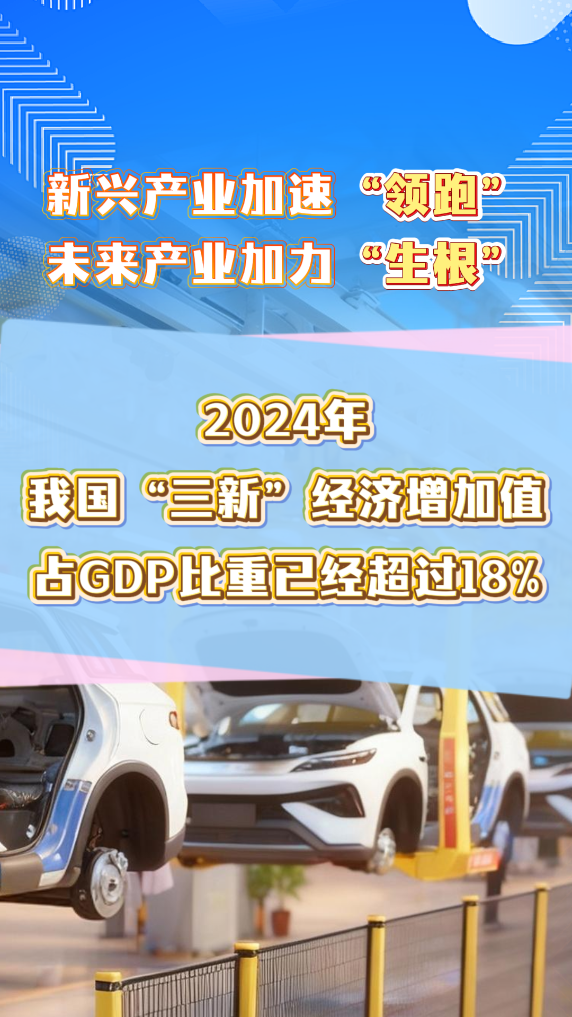
热词看未来|培育壮大新兴产业和未来产业
Xin Hua Wang· 2025-11-17 02:05
Core Insights - The central viewpoint emphasizes the cultivation and expansion of emerging and future industries in China, with a target for the "three new" economy's contribution to GDP exceeding 18% by 2024 [1] Group 1: Emerging Industries - The proposal highlights the acceleration of strategic emerging industries such as new energy, new materials, aerospace, and low-altitude economy, aiming for large-scale development through innovation and technology [4] - China has maintained its position as the global leader in new energy vehicle production and sales for ten consecutive years, with solar and wind power equipment production ranking among the highest in the world [4] - Over 60 national advanced manufacturing clusters in emerging industries have been cultivated, along with the establishment of 23 national independent innovation demonstration zones [4] Group 2: Future Industries - The proposal advocates for the advancement of future industries including quantum technology, biomanufacturing, hydrogen energy, nuclear fusion energy, brain-computer interfaces, embodied intelligence, and sixth-generation mobile communications as new economic growth points [7] - The biomanufacturing industry in China has reached a scale of nearly 1 trillion yuan, with the embodied intelligence market expected to reach 5.295 billion yuan by 2025, accounting for approximately 27% of the global market [7] Group 3: Economic Impact - The cultivation and expansion of emerging and future industries are projected to generate a new scale equivalent to recreating China's high-tech industry over the next decade, providing continuous new momentum for high-quality economic development [9]

“十五五”建议加快新材料领域集群发展
Mei Ri Jing Ji Xin Wen· 2025-11-17 01:55
Core Insights - The New Materials 50 ETF (516710) increased by 0.29%, with significant gains in constituent stocks such as Tianhua Xinneng rising over 10%, Nanda Optoelectronics over 6%, and Jinfatech over 5% [1] Industry Overview - The "14th Five-Year Plan" suggests the development of emerging pillar industries, accelerating the growth of strategic emerging industry clusters in areas such as new energy, new materials, aerospace, and low-altitude economy, which could create several trillion-yuan markets [1] - According to Guoyuan Securities, new materials are crucial for new industrialization, and during the "14th Five-Year" period, materials like rare earth magnetic materials and tin-tungsten minor metals, which are critical, will receive policy support amid increasing international competition [1] Market Potential - These critical materials are not only essential for aerospace but also meet the demands of new energy batteries and high-end equipment industries, indicating that the market size will continue to expand alongside the development of downstream clusters [1] - The New Materials 50 ETF closely tracks the CSI New Materials Theme Index, which selects 50 listed companies involved in advanced steel, non-ferrous metals, chemicals, inorganic non-metals, and other key strategic materials to reflect the overall performance of new materials theme stocks [1]


盛阅春赴仙桃天门潜江调研 深化合作 同题共答 加快提升武汉都市圈发展能级
Chang Jiang Ri Bao· 2025-11-17 01:00
Core Points - The article emphasizes the importance of collaborative development within the Wuhan metropolitan area, highlighting the need for deeper cooperation among cities to enhance economic growth and quality of development [1][3]. Group 1: Collaborative Development - The Wuhan metropolitan area aims to become a national high-quality development growth pole, with a focus on integrating urban clusters and promoting coordinated development [3]. - The leaders from various cities, including Xiantao, Tianmen, and Qianjiang, are encouraged to strengthen communication and collaboration in areas such as industrial park construction and resource sharing [1][2]. Group 2: Economic and Industrial Insights - In Xiantao, the focus is on the development of intelligent manufacturing and biomedicine, with a strong cultural and resource foundation supporting economic growth [1]. - Tianmen is recognized for its advantageous transportation and distinctive industrial characteristics, particularly in textiles and apparel, which have shown significant progress in high-quality development [1]. - Qianjiang's industrial base and ecological advantages are highlighted, with an emphasis on exploring beneficial experiences in industrial innovation and development [2]. Group 3: Strategic Planning and Implementation - The article references the central government's call for accelerated urban integration and metropolitan area development, positioning this as a necessary step for high-quality growth [3]. - Key strategies include planning integration, transportation networking, technological collaboration, industrial chain alignment, and ensuring public welfare [3]. - The article outlines a commitment to enhancing the metropolitan area's role in regional development through collaborative efforts on major projects and reforms [3].
德阳九邦新材料有限公司成立 注册资本200万人民币
Sou Hu Cai Jing· 2025-11-16 17:05
天眼查App显示,近日,德阳九邦新材料有限公司成立,法定代表人为唐铖,注册资本200万人民币, 经营范围为一般项目:建筑材料销售;建筑材料生产专用机械制造;矿物洗选加工;非金属矿物制品制 造;非金属矿物材料成型机械制造;水泥制品制造;水泥制品销售;销售代理;贸易经纪;技术服务、 技术开发、技术咨询、技术交流、技术转让、技术推广;废旧沥青再生技术研发;非金属矿及制品销 售;机械设备租赁;资源再生利用技术研发;新材料技术推广服务;新材料技术研发。(除依法须经批 准的项目外,凭营业执照依法自主开展经营活动)(涉及国家规定实施准入特别管理措施的除外)。 ...
国常会部署“促消费稳投资”,新一轮降准降息有望实施
第一财经· 2025-11-16 15:48
Core Viewpoint - The article discusses the fluctuations in major economic indicators in China due to external demand slowdown, weakened domestic demand, and high base effects from the previous year, emphasizing the need for stronger macroeconomic policies to stabilize growth [3][4]. Economic Indicators - In October, the industrial added value for large-scale enterprises grew by 4.9% year-on-year, slowing down by 1.6 percentage points from September [3]. - The total retail sales of consumer goods increased by 2.9% year-on-year, a slight decline of 0.1 percentage points from September [3]. - From January to October, fixed asset investment (excluding rural households) reached 408,914 billion yuan, a year-on-year decrease of 1.7% [3]. Government Response - The State Council, led by Premier Li Qiang, held a meeting to discuss the implementation of "two major" constructions aimed at enhancing consumption and investment [3][4]. - The government plans to enhance the adaptability of supply and demand in consumer goods to stimulate consumption and achieve a dynamic balance [3][4]. Investment Trends - Despite a decline in overall investment, emerging industries such as digital manufacturing and smart equipment are showing significant growth, with the digital industry manufacturing value-added increasing by 9.5% year-on-year [7][8]. - The investment in fixed assets has seen a historical decline, particularly in infrastructure, manufacturing, and real estate sectors [9]. "Two Major" Construction - The "two major" construction initiative is set to allocate 800 billion yuan to support 1,459 projects, focusing on strategic areas such as ecological restoration and major infrastructure [11][12]. - This initiative aims to optimize project reviews and enhance the quality of investments, promoting new productive forces [11][12]. Consumer Trends - Service consumption is becoming a significant growth point, with retail sales in services growing by 5.3% year-on-year [7]. - Digital and green consumption are expanding, with online retail sales increasing by 9.6% year-on-year, indicating a shift towards a more diversified consumption structure [8][14]. Supply and Demand Adaptability - Enhancing supply and demand adaptability is crucial for releasing consumption potential and ensuring economic circulation [13][15]. - The article highlights the need for a balance between supply and demand, with a focus on quality and personalized consumption [14][15].

军工与新材料行业每周研究汇总
2025-11-16 15:36
Summary of Military Industry and New Materials Weekly Research Report Industry Overview - The military industry in China is experiencing a fluctuating upward trend in 2025, with a year-to-date increase of 14.63% from January to October, although it underperformed compared to the Shanghai Composite Index by 4.64 percentage points [1][3] - Public fund holdings in the military sector have significantly increased, indicating growing institutional interest [1][3] Financial Performance - From Q2 2025 onwards, revenue and net profit have shown a clear year-on-year recovery, with overall revenue growth of 16.99% and net profit up by 14.01% [1][4] - Various sub-sectors are showing signs of bottom recovery, with notable growth in defense information technology (73.6%), aviation (26%), aerospace (21%), shipbuilding (26.14%), and commercial aerospace (14.84%) [1][4] - Profit growth is evident in several sub-sectors, including ground weaponry (110%), aerospace (106%), and defense information technology (3.98%) [1][4] Industry Dynamics - The midstream sector saw a slight increase of 6%, with subsystem revenue growing by 73.77% and downstream machinery increasing by 25.7% [5] - Downstream machinery and midstream subsystems experienced significant net profit growth of 48.92% and 89.71%, respectively [5] - The upstream electronic components and chips saw a reduction in profit decline from -40% to -1.75% [5] Geopolitical Context - The long-term strategic situation between China and the U.S. remains unchanged, with the U.S. defense budget reaching a record high of $1.01 trillion for FY 2026, a 13% increase [6] - The European Union's defense spending is also on the rise, reaching €800 billion [6] - Geopolitical uncertainties are increasing, and China is expected to maintain a high defense budget during the 15th Five-Year Plan, outpacing overall GDP growth [6] Strategic Directions - The core direction of domestic military construction is "building a system," transitioning from platform-to-platform to system-to-system, emphasizing cross-domain collaboration to create asymmetric advantages [1][7] - The 93rd National Day parade showcased advanced weapon systems, including hypersonic weapons, nuclear strike capabilities, air defense systems, and AI-enabled unmanned systems [1][7] Military Trade and Global Market - The military trade market in China is poised for growth, particularly after the 2025 India-Pakistan conflict, which validated China's weaponry capabilities [2][11] - China has developed comprehensive military product research and development capabilities, with an increasing share in the global military trade market, expected to rise post-2025 [2][12] Civilian Applications of Military Technology - The "military-civilian integration" strategy is crucial for expanding enterprise scale, with emerging industries such as commercial aerospace, low-altitude economy, and deep-sea technology expected to create trillion-level market opportunities [2][13] - Military new materials are rapidly gaining traction in the consumer electronics sector, with significant demand growth noted [2][15] Emerging Material Trends - Superhard materials, particularly diamond, are gaining attention for their thermal conductivity and potential applications in military observation windows and nuclear fusion [16] - Ceramic matrix composites are becoming essential in aerospace engines, gradually replacing some high-temperature alloys due to their superior heat resistance [18] Future Development Landscape - The military industry is transitioning from a single domestic demand model to a three-pronged growth strategy: domestic demand foundation, expanding military trade, and civilian technology spillover [19][20] - This new structure is reshaping the military industry landscape and significantly enhancing growth potential [19][20]
深圳市恒晟新材料有限公司成立 注册资本10万人民币
Sou Hu Cai Jing· 2025-11-16 11:50
Core Viewpoint - Shenzhen Hengsheng New Materials Co., Ltd. has been established with a registered capital of 100,000 RMB, focusing on various manufacturing and sales activities related to plastic and composite materials [1] Company Overview - The legal representative of the company is Huang Zicong [1] - The registered capital is 100,000 RMB [1] Business Scope - General business activities include: - Sales and manufacturing of plastic products [1] - Manufacturing and sales of fiberglass reinforced plastic products [1] - Manufacturing and sales of engineering plastics and synthetic resins [1] - Sales of synthetic materials and packaging materials [1] - Sales of rubber products and high-quality synthetic rubber [1] - Sales of metal products and hardware [1] - Processing and sales of mechanical parts [1] - Sales of electronic products and internet sales (excluding licensed products) [1] - Research and development of new material technologies [1] - There are no licensed business activities listed [1]