服装

Search documents
理性消费当下,江南布衣们的溢价挑战 | 服饰系列
Sou Hu Cai Jing· 2025-10-11 15:20
Core Insights - Jiangnan Buyi reported a total revenue of 5.548 billion yuan for the fiscal year 2025, representing a year-on-year growth of 4.6%, with a profit of 899 million yuan, up 6.0% [2] - The company aims to achieve a revenue target of 10 billion yuan for the fiscal year 2026, indicating a need for nearly double growth within a year [2] - The multi-brand strategy has allowed Jiangnan Buyi to cover a wide range of consumer demographics, from mainstream to niche markets [14] Financial Performance - The main brand JNBY generated 3.013 billion yuan in revenue, accounting for 54.3% of total revenue, with a year-on-year growth of 2.3% [5] - The growth brands collectively generated 2.174 billion yuan, a slight decline of 0.5%, representing 39.2% of total revenue [7] - Emerging brands saw a significant revenue increase of 107.4%, reaching 361 million yuan, which is 6.5% of total revenue [9] Store Expansion - As of June 30, Jiangnan Buyi operated 2,117 stores, an increase of 92 stores from the previous year [11] - The distribution of stores includes 961 for JNBY, 1,082 for growth brands, and 52 for emerging brands [12] Sales Challenges - Same-store sales declined by 0.1%, indicating challenges in maintaining customer traffic [15] - The company reported a 24.2% increase in inventory, reaching 932.6 million yuan, raising concerns about high inventory levels [21] Membership Economy - Active membership accounts increased to over 560,000, contributing more than 80% of retail revenue [23] - High-value members, defined as those with annual purchases exceeding 50,000 yuan, numbered over 330,000, contributing 4.86 billion yuan to revenue [24] Growth Strategies - Jiangnan Buyi is exploring external acquisitions to accelerate growth, including the acquisition of a 51% stake in Hangzhou Huiju and the fashion brand B1OCK [31] - The company plans to increase the proportion of direct sales in first- and key second-tier cities while relying on distributors in lower-tier cities [32] Industry Context - The apparel industry is facing challenges due to a shift in consumer preferences towards practicality and long-term value, impacting traditional designer brands [34] - Increased competition from both high-value basic brands and emerging designer brands is intensifying market pressures [36]

高梵造“鹅绒壳”外套:想打破传统硬核户外的男性向审美|科技赋能新消费
Jing Ji Guan Cha Bao· 2025-10-11 12:52
(原标题:高梵造"鹅绒壳"外套:想打破传统硬核户外的男性向审美|科技赋能新消费) 户外赛道的玩家有很多,有的与专业运动绑定,比如滑雪、登山等;有的则更加硬核,产品旨在帮助户 外玩家应对极寒天气;有的与时尚、潮流挂钩。而从羽绒服赛道诞生,逐步在鹅绒服领域建立心智的高 梵也在切入户外赛道,不过高梵的定位以及切入的角度有些不一样。 依托在鹅绒领域积累的技术优势,高梵研发推出"黑金壳鹅绒服"、"超级壳"等户外产品,赋能消费者 对"户外运动场景+日常美学穿搭"的新需求。这种布局本质上是高梵"保卫财富"的关键策略:一方面, 通过拓展产品线打破品类局限,覆盖多场景需求;另一方面,依托技术创新打造差异化,以切中市场空 白、吸引新兴消费群体,通过扩大用户基数为长期财富积累提供动力。 高梵通过收腰设计等版型创新,巧妙地解决了这一痛点。这种看似简单的设计改进背后,是对目标客群 生活场景的深刻理解:现代女性需要的是既能应对寒冷天气,又不失时尚风格的服饰。 以鹅绒品类切入细分空白市场 在消费者认知中,高梵的爆款黑金鹅绒服已占据一定心智地位。2021年,该产品正式推出,随后在2023 年至2024年的"双十一"大促中表现持续优异。202 ...
高梵造“鹅绒壳”外套:想打破传统硬核户外的男性向审美
Jing Ji Guan Cha Wang· 2025-10-11 12:08
Core Insights - The article discusses the strategic positioning of Gaofan in the outdoor apparel market, particularly focusing on its innovative products like the "Black Gold Shell Goose Down Jacket" and "Super Shell" that cater to both outdoor activities and daily aesthetics [1][4][6] Market Positioning - Gaofan has successfully established a strong market presence with its flagship product, the Black Gold Goose Down Jacket, which achieved over 100 million yuan in sales within just 4 hours during the 2024 Double Eleven shopping festival, ranking third in Tmall's Super Down Jacket list [2][4] - The overall goose down jacket market grew by 34% in 2022, with high-end products priced above 800 yuan experiencing a remarkable growth rate of 70%, indicating a shift towards consumer preference for high-quality and high-performance products [2][3] Product Development - Gaofan's approach to product development is characterized by a focus on user lifestyle insights, leading to the creation of shell-type products that blend functionality with fashion, addressing the traditional pain points of winter apparel [4][5] - The company has invested three years in developing a comprehensive product matrix for shell-type products, balancing warmth, functionality, and protection through innovative design and material technology [5][6] Technological Innovation - Gaofan has implemented advanced technologies in its products, such as the fifth-generation Black Stone Yarn, which addresses the heaviness of traditional outdoor fabrics, and the "Zhongke Heat Storage Technology" that enhances thermal efficiency [6][7] - The company has also focused on improving the quality of goose down through proprietary processing techniques that maintain fluffiness and warmth, even after washing, and has collaborated with top research institutions to develop antibacterial and anti-mite technologies [5][6] Consumer Insights - Gaofan's success is attributed to its deep understanding of core consumer needs, particularly among female users who seek stylish yet functional winter wear, leading to design innovations that enhance both aesthetics and practicality [4][5][7] - The brand recognizes the importance of lifestyle integration, exemplified by its "after ski" concept, which caters to consumers' social and lifestyle needs beyond just functional outdoor activities [6][7]
均价3千的户外品牌迪桑特,把目光瞄向了体制内
3 6 Ke· 2025-10-11 11:50
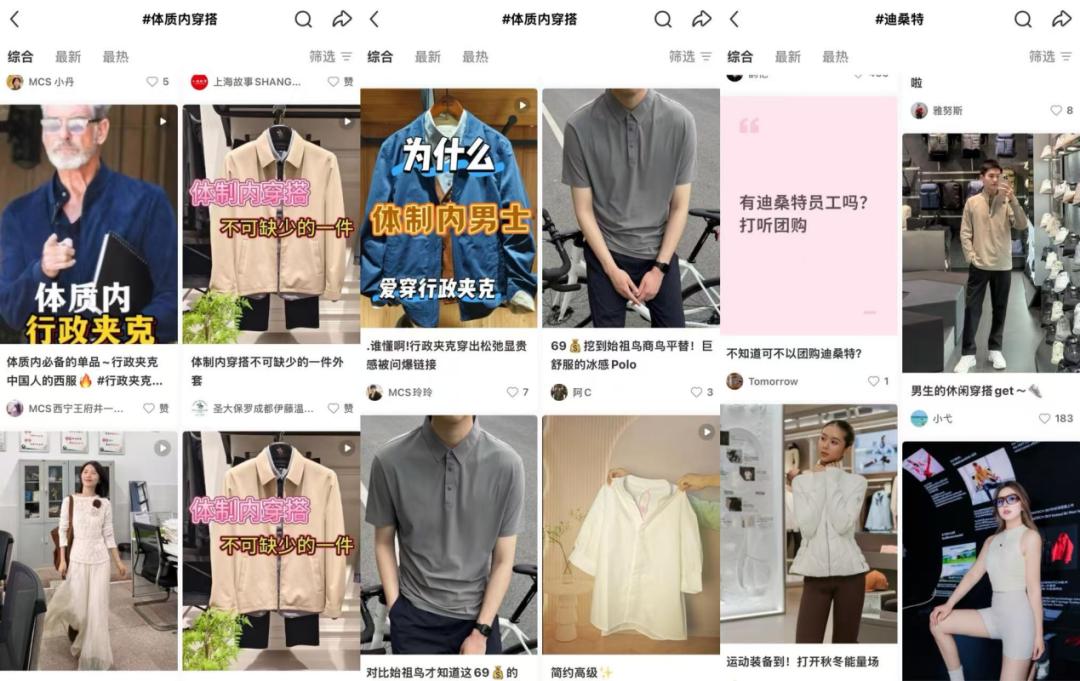
Core Viewpoint - The article discusses the contrasting marketing strategies and market positioning of two brands under Anta Sports: Descente and its high-profile marketing campaign that faced backlash due to environmental concerns, leading to a significant loss in market value for Anta Sports [1][2]. Group 1: Brand Positioning and Marketing Strategies - Descente, a high-end brand originating from skiing, has shifted its focus towards the "institutional dressing" market, appealing to civil servants and employees in state-owned enterprises who prioritize comfort and understated style [2][3]. - The brand's design philosophy emphasizes functionality and quality over visual impact, aligning with the conservative dressing culture of the target demographic [3][5]. - The recent marketing efforts of Descente have successfully linked the brand to the "institutional dressing" trend, with social media discussions highlighting its products as suitable for this consumer group [5][7]. Group 2: Market Trends and Consumer Behavior - The demand for clothing that balances professional appearance with comfort has grown, as the lines between work and casual wear blur, creating opportunities for functional sports brands like Descente [3][8]. - Descente's pricing strategy, around 3000 yuan, positions it as a more accessible option compared to competitors like Arc'teryx, which often has higher price points, thus appealing to middle-class consumers in the institutional sector [9][12]. - The brand's evolution from specialized outdoor gear to everyday functional wear reflects a natural progression in response to market demands, allowing it to tap into a broader consumer base [9][12]. Group 3: Expansion and Brand Identity Challenges - Descente is rapidly expanding its presence in China, with a significant increase in store numbers, which raises concerns about maintaining a high-end brand narrative amidst broader market penetration [11][12]. - The brand faces a challenge in balancing its identity as a technical outdoor brand with its new positioning in the institutional market, as it risks diluting its core values and appeal to both professional athletes and everyday consumers [12]. - The future growth of Descente may be limited if it continues to rely solely on the institutional dressing label, necessitating a broader appeal to younger consumers and maintaining its technical credibility [12].
七匹狼辟谣代言人活动信息
Ge Long Hui· 2025-10-11 11:25
Core Viewpoint - The company emphasizes the importance of relying on official announcements regarding brand endorsements and marketing activities, warning against misinformation circulating online [1] Group 1 - The company has issued a statement addressing the emergence of false or unverified information about brand ambassador activities on the internet [1] - The company stresses that all information related to brand ambassadors, collaborations, and marketing activities should be confirmed through official accounts [1] - The company reserves the right to pursue legal action against unauthorized dissemination or fabrication of brand information [1] Group 2 - The company urges the public to be vigilant and not to trust unofficial channels to avoid misunderstandings or losses [1] - On September 9, the company officially announced that Yu Shi has become the brand ambassador for Seven Wolves jacket expert [1]

日赚1.3亿,创始人光靠卖衣服,八次成为首富
创业家· 2025-10-11 10:10
Core Insights - The article highlights the success story of Uniqlo, a company that has thrived in Japan's economic downturn and has replicated its success in China, generating hundreds of billions from the Chinese market annually [2][3][4]. Company Background - Uniqlo is recognized as the most successful company in Japan over the past 30 years, founded by Tadashi Yanai [3]. - The company was established in 1984 during Japan's economic collapse, aligning its brand positioning with the consumer shift towards minimalism and cost-effectiveness [7][8]. Business Strategy - Uniqlo's growth can be attributed to several key strategies: - **High Cost Performance**: In a trend of consumer downgrading, Uniqlo emphasizes the value-for-money aspect of its products [9][10]. - **Versatile Basics**: The brand focuses on easy-to-wear, basic clothing that appeals to a wide audience, from high-income urban dwellers to budget-conscious consumers [11][12]. - **Hit Product Marketing**: Uniqlo excels at creating popular products that enhance brand visibility and drive sales across its product range [13][17]. Market Presence - As of 2023, Uniqlo operates over 900 stores in China, with an annual opening rate of 80 to 100 new stores, contributing to 40% of its global revenue from the Greater China region [8]. Innovation and Adaptation - Uniqlo's ability to frequently launch hit products is supported by a collaborative approach where all departments contribute to product planning, and store managers have significant input on customer feedback [17]. - The company leverages technology and consumer insights to drive product development, ensuring that its offerings resonate with market demands [25][42].

东莞市鑫润鞋业有限公司成立 注册资本20万人民币
Sou Hu Cai Jing· 2025-10-11 10:01
Core Viewpoint - Dongguan Xinrun Footwear Co., Ltd. has been established with a registered capital of 200,000 RMB, indicating a new player in the retail and wholesale sectors of various consumer goods [1] Company Summary - The legal representative of Dongguan Xinrun Footwear Co., Ltd. is Liu Jianbing [1] - The company is engaged in a wide range of business activities including retail and wholesale of footwear, clothing, bags, and various consumer products [1] Industry Summary - The company operates in the general retail and wholesale market, covering categories such as shoes, clothing, jewelry, cosmetics, home appliances, and more [1] - The business model allows for internet sales, expanding its reach in the e-commerce sector [1]
优衣库中国,改革“蓄力”
Sou Hu Cai Jing· 2025-10-11 06:05
Core Insights - Fast Retailing Group, the parent company of Uniqlo, reported record-high performance for the fourth consecutive fiscal year ending in 2025, with significant contributions from both domestic and overseas operations [1][2] Financial Performance - In fiscal year 2025, Uniqlo's total revenue reached 3,400.5 billion yen, a 9.6% increase from the previous year, maintaining a leading position in the global apparel retail industry [2] - Operating profit rose by 13.6% to 551.1 billion yen, while net profit attributable to the parent company increased by 16.4% to 433.0 billion yen, indicating a stronger profit growth compared to revenue [2] - Uniqlo's inventory turnover days decreased to 118 days, down by 10 days from the previous fiscal year, alleviating inventory pressure and enhancing the efficiency of new product launches [2] Business Segments - Uniqlo remains the core brand of Fast Retailing, generating 2.9 trillion yen in revenue, accounting for approximately 86.4% of total revenue [2] - The GU brand contributed 330.7 billion yen (9.7%), while global brands accounted for 131.5 billion yen (3.9%) [2] Market Position - Uniqlo secured a 1.4% share of the global apparel market, ranking third, driven by stable sales of functional products like HEATTECH and AIRism [3] - The brand's competitive advantage stems from continuous fabric research and data-driven operations, balancing cost-effectiveness and brand strength [3] Domestic Market Performance - Uniqlo's domestic business in Japan achieved a record revenue of 1.03 trillion yen, marking a 10% year-on-year increase, making it the first Japanese apparel brand to surpass the trillion-yen mark in domestic sales [5] - The company has strategically reduced the number of stores by over 30 in the past five years, focusing on enhancing the quality of individual stores [6] International Market Growth - Uniqlo's overseas revenue reached 1.9102 trillion yen, an 11.6% increase, surpassing 55% of total revenue, solidifying its role as a key growth driver [7] - The North American market saw a revenue increase of 24.5% to 271.1 billion yen, while Europe experienced a 33.6% growth to 369.5 billion yen [9] Challenges in Greater China - The Greater China market faced a revenue decline of 4% and a profit drop of 10%, prompting Fast Retailing to implement structural reforms [9][11] - The company is shifting its focus from rapid store expansion to improving the profitability of individual stores, with plans to close or renovate about 50 stores annually [11] Product and Cultural Strategy - Uniqlo is enhancing its product strategy by focusing on functional innovation and local cultural integration, launching customized products to meet diverse consumer needs [12][14] - Collaborations with local cultural institutions and artists have been part of Uniqlo's strategy to strengthen its brand appeal and connect with consumers [15] Future Outlook - The management anticipates a cautious outlook for the Greater China market, expecting revenue and profit to decline by approximately 10% in the latter half of fiscal year 2025 [18] - Despite challenges, there are signs of positive developments as the company continues to refine its operational strategies to adapt to market conditions [18]

东南亚要“装不下”出海的国产服装品牌了
Hu Xiu· 2025-10-11 03:07
Core Viewpoint - The trend of A-share companies listing in Hong Kong is increasing, with 11 companies having done so this year, and over 50 more in the pipeline. The primary motivation for this move is to pursue global strategic expansion, as exemplified by the clothing brand HLA [1]. Group 1: Market Expansion - HLA has opened 50 stores in Malaysia since its first store in 2017, with a total of 78 stores across Southeast Asia as of January this year [2]. - Semir, another clothing brand, has also accelerated its overseas strategy, with 70 stores by the end of 2023 and plans to exceed 100 stores in 2024 [2][3]. - Major Chinese brands, including Anta and Li Ning, are also focusing on Southeast Asia for their international expansion, with Anta planning to establish 1,000 stores in the region over the next three years [5]. Group 2: Challenges in Overseas Markets - Despite the growth in overseas revenue for brands like HLA, the contribution to total revenue remains low, with HLA's overseas revenue accounting for only 1.76% in 2024 [7][8]. - Many traditional Chinese clothing brands struggle to achieve significant overseas market penetration, with most having less than 2% of their revenue coming from international sales [8][9]. - The slow urbanization process in Southeast Asia limits the effectiveness of the business models that have worked in China, as brands primarily target major cities, leaving smaller cities underserved [12][13]. Group 3: E-commerce and Retail Dynamics - The rise of e-commerce in Southeast Asia poses a challenge for traditional retail, as online platforms like Shopee and TikTok Shop gain traction [15][16]. - HLA has seen an increase in online sales, but overall revenue has declined, indicating difficulties in adapting to the online market [16]. - The reliance on physical stores in major cities may not be sustainable if e-commerce continues to grow, potentially impacting the profitability of brands that do not adapt [17].

东南亚“装不下”出海的国产服装品牌了
Xin Lang Cai Jing· 2025-10-11 02:42
Core Viewpoint - The trend of A-share companies listing in Hong Kong is increasing, with 11 companies having done so this year, including Haier Home, which plans to list in Hong Kong as part of its global strategy [1] Group 1: Company Expansion - Haier Home has opened 50 stores in Malaysia since its first store in 2017, with a total of 78 stores in Southeast Asia as of January this year [2] - Semir, another Chinese brand, has also accelerated its overseas expansion, with 70 stores by the end of 2023 and plans to exceed 100 stores in 2024 [2] - Other brands like UR, E-PRANCE, and Anta are also expanding aggressively in Southeast Asia, with Anta planning to open 1,000 stores in the region over the next three years [3] Group 2: Market Challenges - Despite the growth in store numbers, the overseas revenue for many Chinese apparel brands remains low, with Haier Home's overseas revenue accounting for only 1.76% of total revenue by 2024 [6] - Semir's overseas revenue is projected to be less than 1% of its total revenue in 2024, indicating a common struggle among Chinese brands to penetrate the Southeast Asian market [6][7] - The traditional business model that worked in China may not be effective in Southeast Asia, where brands are primarily targeting large cities, leaving smaller cities underserved [8] Group 3: E-commerce Impact - The rise of e-commerce in Southeast Asia, exemplified by platforms like Shopee, poses a challenge to traditional retail models, as many consumers are shifting towards online shopping [10][11] - Haier Home has seen an increase in online sales, but overall revenue has decreased, highlighting the difficulties in transitioning to an online model [11][12] - The potential for e-commerce growth in Southeast Asia could undermine the current strategy of Chinese brands that focus heavily on physical stores [12]