全屋定制

Search documents
尚品宅配发布前三季度业绩,归母净亏损7948.14万元
Zhi Tong Cai Jing· 2025-10-28 09:54
Core Viewpoint - The company reported a decline in revenue and incurred a net loss for the first three quarters of 2025 [1] Financial Performance - The company's operating revenue for the first three quarters was 2.55 billion yuan, representing a year-on-year decrease of 6.66% [1] - The net loss attributable to shareholders of the listed company was 79.48 million yuan [1] - The net loss attributable to shareholders, excluding non-recurring gains and losses, was 91.27 million yuan [1] - The basic loss per share was 0.35 yuan [1]

柏菲伦全屋定制实战特训营:以AI新媒体赋能经销商获客
Sou Hu Cai Jing· 2025-09-26 11:27
Core Insights - The training camp aimed to address customer acquisition pain points and build a capability loop for dealers in the AI and new media era [3][19] - The event focused on practical training for dealers to enhance their understanding and confidence in utilizing new media for customer engagement [3][19] Group 1: Training Objectives - The training camp was designed to help dealers overcome challenges in starting self-media initiatives by providing a comprehensive knowledge system and practical tools [4] - It included a focus on the logic of customer acquisition, emphasizing actionable learning that can be directly applied [12][13] Group 2: Content and Methodology - The training utilized a combination of theoretical explanations and case studies, particularly through platforms like Douyin, to help dealers understand the entire process from content creation to conversion [8] - Special emphasis was placed on Xiaohongshu as a key channel for precise targeting and efficient conversion, with dedicated training courses for dealers [12][13] Group 3: Brand Engagement - The training camp also aimed to deepen brand recognition and create a positive feedback loop by connecting dealers emotionally with the brand [16] - Dealers participated in an immersive experience at the Qian Nian Zhou Wood Museum, enhancing their understanding of the brand's cultural essence and providing them with richer content for self-media creation [16] Group 4: Long-term Growth and Incentives - To ensure the transition from short-term training to long-term growth, the camp included a recognition segment that evaluated and rewarded outstanding teams based on various performance metrics [18] - This approach aimed to establish a positive cycle of learning, growth, and motivation among dealers [18] Group 5: Future Directions - The company plans to continue enhancing its empowerment system by offering more targeted brand support and resources, collaborating with dealers to achieve mutual success in the AI and new media landscape [21]


南京我乐家居股份有限公司关于2025年半年度业绩说明会召开情况的公告
Shang Hai Zheng Quan Bao· 2025-09-25 21:29
Core Viewpoint - The company held a half-year performance briefing on September 25, 2025, to discuss its growth strategies and competitive advantages in the custom home furnishing market during an industry adjustment period [1]. Group 1: Performance and Growth Strategies - The company aims to maintain its growth momentum by enhancing product premiumization through original design and craftsmanship innovation, optimizing channel layout, and implementing refined cost management to ensure stable profitability [2]. - Key initiatives include expanding high-value product sales, building flagship stores in core cities, and improving operational efficiency through centralized procurement and lean production [2]. Group 2: Market Competition and Advantages - The custom home furnishing market is transitioning from scale expansion to deep integration, leading to increased market differentiation, with top brands consolidating their market share [3]. - The company focuses on the mid-to-high-end market with three main competitive advantages: strengthening original design capabilities, proactive channel strategies in core cities, and lean management practices to ensure profitability [3]. Group 3: Flagship Store Strategy - The flagship store initiative involves significant upfront investment but is designed to enhance consumer experience and improve terminal competitiveness [3]. - The company supports dealers in opening flagship stores by providing policies to reduce costs and enhancing their operational capabilities to increase profitability [3].

2025北京商报家居智库沙龙丨飞美家具总经理周凯军:企业只有前期备货做好做足,才会获得更多“种草”客户的机会
Bei Jing Shang Bao· 2025-08-29 21:43
Core Insights - The annual forum by Deep Blue Think Tank focused on "Omni-channel Marketing Reshaping the New Landscape of Home Furnishing" and discussed how home furnishing companies can leverage omni-channel strategies and AI technology to achieve precise positioning and differentiated competition in the context of a "consumption grading" era [1][3] Group 1: Market Environment - The home furnishing market has transitioned from a simple "upgrade" or "downgrade" linear development model to a diverse and coexisting "consumption grading" era, presenting both challenges and opportunities for home furnishing companies [3] - Companies need to address the era's demands through "precise positioning" and "differentiated competition" [3] Group 2: Company Strategies - Feimei Furniture's General Manager, Zhou Kaijun, emphasized the importance of digital systems and market research data analysis in their full-house customization services, which help in accurately understanding customer needs [3] - The company collects data and feedback to adapt its production systems, software, hardware, and materials to meet the evolving demands of customers, highlighting the need for flexibility and preparedness [3] - Feimei Furniture maintains a stock of over 20,000 imported boards and more than 200 color options to enhance customer engagement and increase opportunities for attracting new customers [3]

财面儿丨索菲亚:2025年上半年净利润3.19亿元
Cai Jing Wang· 2025-08-26 14:53
Core Insights - The company reported a revenue of 4.551 billion yuan, a year-on-year decrease of 7.68% [1] - The net profit attributable to shareholders was 319 million yuan, down 43.43% year-on-year [1] - Basic earnings per share were 0.3316 yuan, reflecting a decline of 44.03% compared to the previous year [1] Business Strategy - The company is focusing on the "whole case design delivery" under the iteration of the "Custom 5.0" strategy and has introduced the 5A standard to lead quality upgrades in the industry [1] - The Milan brand is targeting the blue ocean market and has released the "2025 Full Value Chain Quality Assurance White Paper" to build a sustainable development ecosystem [1] - The Simi brand is committed to providing high-quality home solutions globally, advancing its strategic upgrade from overall kitchens to high-end whole-house customization [1] - The Huaher brand emphasizes "Eastern aesthetics, starting from woodwork," creating a high-end whole-house customization model with integrated door and wall cabinets [1] International Expansion - The company is actively expanding its overseas market presence through high-end retail, engineering projects, and distributors [1] - Currently, the company has 26 overseas distributors covering 23 countries/regions, including Canada, Australia, Singapore, Vietnam, and Thailand [1] - Collaborations with quality overseas developers and contractors are in place to provide one-stop whole-house customization solutions for approximately 219 engineering projects across 31 countries/regions [1]

尚品宅配2025年上半年净利润同比改善
Zheng Quan Shi Bao Wang· 2025-08-26 10:33
Core Viewpoint - Shangpin Home Collection (300616) reported a revenue of 1.55 billion yuan for the first half of 2025, with a net profit improvement of 23.83% year-on-year, indicating resilience in a challenging industry environment [1] Group 1: Financial Performance - The company achieved a revenue of 1.55 billion yuan in H1 2025 [1] - Net profit improved by 23.83% compared to the previous year [1] Group 2: Strategic Initiatives - The company is focusing on AI technology application, integrated design of doors, walls, and cabinets, channel optimization, and innovation in whole-house solutions to build development momentum [1] - The self-developed "AI + Shangpin Home Collection" intelligent platform integrates various core technology modules to support the home furnishing industry [1] Group 3: Product and Service Innovations - The launch of "Whole House Star Customization" aims to elevate home quality by integrating design elements from luxury hotels, achieving a comprehensive design delivery [1] - The "door-wall-cabinet integration" design allows for full-space planning and category matching, enhancing comfort and user experience [1] Group 4: Channel Development - The company is innovating its channel structure through a "study tour" approach to enhance franchisee confidence and optimize store structure [2] - The overseas business is accelerating with the Sunpina brand, leveraging AI design factories to improve design efficiency and response to customer needs [2] Group 5: Service Quality Enhancement - The company is implementing a "two-time decoration, good quality" strategy through BIM digitalization to enhance service quality [2] - The "Instant Housing" platform offers a complete living solution with a delivery cycle reduced to 45 days, allowing buyers to move in immediately [2]
顾客断崖减少,卖场关灯省电:中国家居行业正经历三十年未有巨变
第一财经· 2025-08-09 08:18
Core Viewpoint - The Chinese home furnishing industry is undergoing significant changes due to shifts in consumer behavior and the real estate market, leading to a transformation in business strategies among key players [5][22]. Group 1: Market Changes - The home furnishing industry is experiencing a major transformation not seen in the past thirty years, driven by changes in real estate dynamics and evolving consumer habits [5][22]. - Traditional retail spaces are seeing decreased foot traffic, prompting businesses to adapt by targeting new housing developments and utilizing "community model homes" for customer acquisition [5][10]. - The shift towards online channels for customer engagement is evident, with over 95% of customer acquisition for some businesses now coming from online platforms [13]. Group 2: New Business Strategies - Companies are increasingly focusing on creating model homes in new residential areas to attract customers, with some businesses reporting up to 30-40 orders from a single community [10]. - The rise of direct factory sales is changing the landscape, as consumers seek lower prices by purchasing directly from manufacturers rather than through traditional retail channels [18][21]. - Some businesses are rethinking their physical locations, with the potential to move to less expensive areas while still maintaining customer engagement through online marketing [16]. Group 3: Industry Concerns - Major incidents involving leading home furnishing brands have raised concerns about the industry's future, as many companies expanded too aggressively during a time when they should have been consolidating [22]. - There is a growing apprehension among industry leaders regarding their understanding of younger consumers, who may not be attracted to traditional home furnishing stores [24]. - The need for comprehensive transformation in home furnishing retail is emphasized, as consumer preferences shift towards more personalized and fragmented shopping experiences [24].
家居从业者迎战行业大变局:抢滩新盘样板间,工厂下场拓客
Di Yi Cai Jing· 2025-08-08 09:09
Core Insights - The home furnishing industry is undergoing significant changes due to shifts in consumer behavior and the real estate market, leading to a transformation not seen in the last thirty years [1][10] - Traditional retail spaces are experiencing a decline in foot traffic, prompting companies to adapt by exploring new customer acquisition strategies, such as entering new residential developments with model homes [1][4] - The rise of online shopping and direct factory ordering is reshaping how consumers purchase home furnishings, with many opting for lower prices and better deals through online channels [6][7] Group 1: Market Dynamics - The home furnishing market is facing a dual challenge from changing real estate conditions and evolving consumer preferences, resulting in a need for companies to adapt quickly [1][10] - Many companies that previously expanded during optimistic times are now struggling as customer footfall has drastically decreased, leading to a "cliff-like" drop in sales [10][11] - The demand for home furnishings remains, but the way consumers engage with the market has shifted, particularly among younger generations who prefer online interactions [10][11] Group 2: New Business Strategies - Companies are increasingly focusing on new residential developments by creating "model homes" to attract customers directly within communities [4][5] - The competition for model homes has intensified, with multiple companies vying for the same residential projects, leading to a saturated market in new developments [5] - Some companies are leveraging social media platforms to drive customer engagement, with a significant portion of their sales now coming from online channels [6][11] Group 3: Consumer Behavior - Consumers are increasingly favoring direct factory orders over traditional retail purchases, often finding significant cost savings by bypassing retail markups [7][9] - The experience of visiting factories has become appealing to consumers, as they seek transparency in production processes and better pricing [9] - The shift towards online platforms for product discovery and purchasing is leading to a decline in the relevance of traditional home furnishing showrooms [11]
家居从业者迎战“行业大变局”:抢滩新盘“样板间”,工厂也下场拓客
Di Yi Cai Jing· 2025-08-08 08:29
Core Insights - The home furnishing industry in China is undergoing significant changes due to shifts in consumer behavior and the real estate market, leading to a transformation not seen in the past thirty years [1][10][11] Group 1: Market Dynamics - Many industry players have become overly optimistic about future growth, failing to adapt to rapid market changes, resulting in a stark decline in customer footfall [1][10] - Traditional retail spaces are experiencing decreased traffic, prompting businesses to explore new customer acquisition strategies, such as entering new residential developments with "community model homes" [1][4][10] Group 2: New Business Strategies - Companies are increasingly focusing on creating "model homes" in new residential areas to attract customers, with some businesses reporting up to 30-40 orders from a single community [5][10] - The rise of online channels for customer acquisition is evident, with one company reporting that over 95% of their customers come from online platforms, indicating a shift in consumer purchasing behavior [6][8] Group 3: Consumer Preferences - Younger consumers are gravitating towards online shopping and factory direct purchasing, often finding significant cost savings compared to traditional retail [8][9] - The demand for personalized and unique products is increasing, leading to a decline in the appeal of one-stop shopping experiences offered by large retail stores [11] Group 4: Industry Challenges - Major incidents involving well-known companies in the home furnishing sector have highlighted vulnerabilities in the industry, particularly for large retail formats that were closely tied to real estate development [10] - The industry is facing a critical need for transformation, as traditional business models are becoming less viable in the current market landscape [11]
实探广州建博会,四大消费趋势不容错过!
Sou Hu Cai Jing· 2025-07-11 13:14
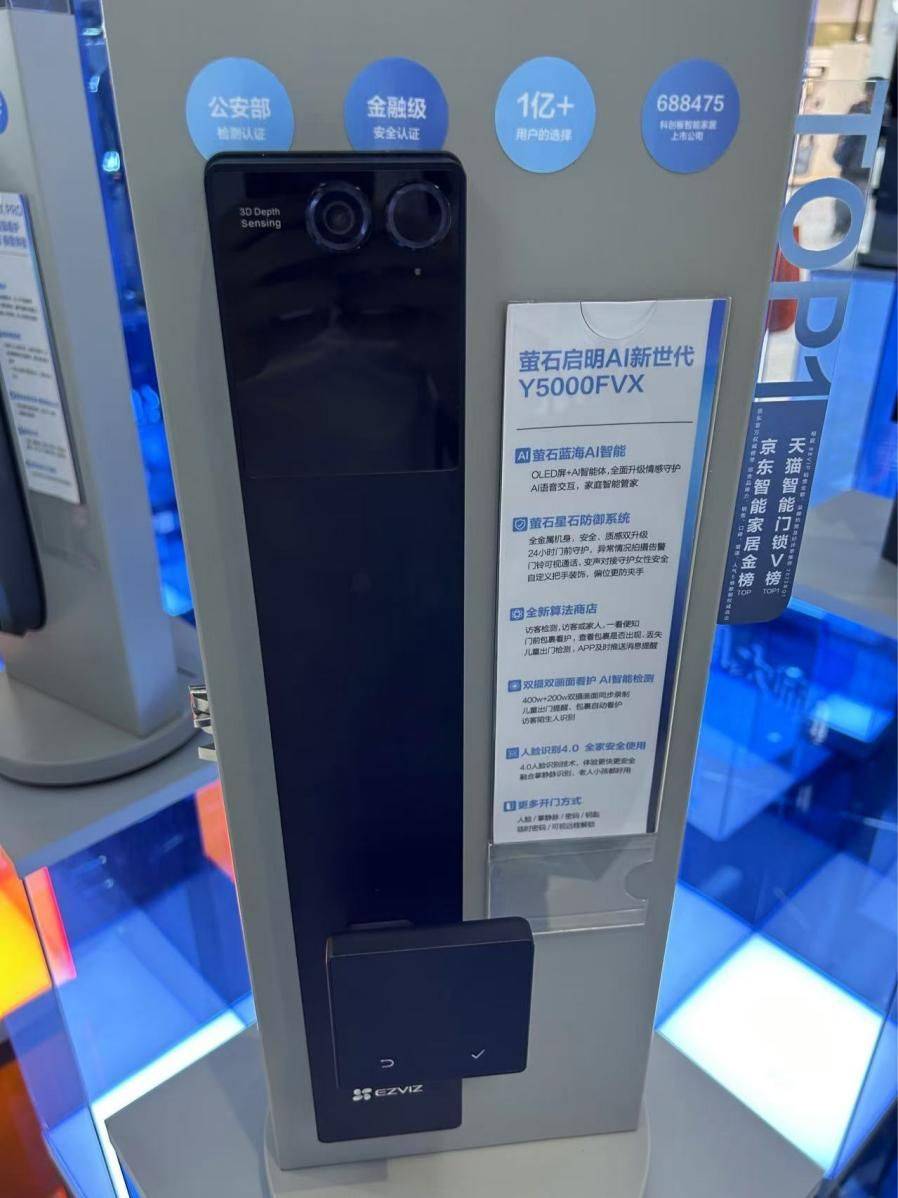
Core Insights - The 27th China (Guangzhou) International Building Decoration Expo showcases advancements in smart home products, emphasizing intelligence, proactivity, and environmental sustainability [1][20] - China holds a dominant position in the smart security market with nearly 50% market share, driven by technological breakthroughs and increased consumer awareness [1] Smart Security - Smart locks are highlighted as key products, with brands like萤石 and乐橙 entering the market alongside traditional appliance manufacturers like Bosch and Sharp [1] -萤石 Y5000FVX smart lock features AI voice interaction and advanced detection capabilities, allowing for nuanced recognition of family members and visitors [1][3] -乐橙's collaboration with China Mobile has led to the development of a "Super Flash Link Phone" that enhances user experience by eliminating reliance on app background operations [3] Smart Cameras - Smart cameras are gaining popularity, with萤石 showcasing a new 4G camera that operates without wires and features a long-lasting battery [4] - The AOV (Always On Video) technology allows for proactive monitoring, significantly improving detection accuracy compared to traditional PIR technology [4][6] - New products also incorporate solar charging and night vision capabilities, enhancing their functionality and reducing energy costs [4][6] Smart Lighting - The CBD Lighting exhibition introduces intelligent lighting systems that not only illuminate spaces but also provide therapeutic benefits for various health conditions [6][10] - AI-enabled lighting systems can create personalized lighting environments based on user commands, showcasing a shift from functional to emotional-driven lighting solutions [10] Home Automation - The integration of IoT and AI technologies is enabling seamless connectivity among smart home devices, addressing challenges such as interoperability and user experience [12] - Companies like三翼鸟 are developing comprehensive home automation solutions that respond to user commands and optimize home environments automatically [12] Sustainable Materials - The expo features innovative building materials, such as low-formaldehyde options, catering to health-conscious consumers [12] - Lamett's stone crystal boards demonstrate durability and environmental benefits, appealing to modern renovation needs [12][14] Custom Furniture - The trend towards aluminum custom furniture is gaining traction, with consumers appreciating its aesthetic and environmental advantages [15][17] - This shift reflects a broader movement towards high-end, eco-friendly home decor solutions [15][20]