农副食品加工业

Search documents
【新华解读】PPI环比加速上涨 多方面因素或将促成工业生产持续复苏
Xin Hua Cai Jing· 2026-02-12 01:49
Core Viewpoint - The Producer Price Index (PPI) in China showed a positive trend in January, with a month-on-month increase of 0.4%, marking the fourth consecutive month of growth, while the year-on-year decline narrowed to 1.4% [1] Group 1: PPI Trends - The PPI reflects a gradual improvement in industrial production demand and market vitality, indicating a potential positive cycle of "production recovery - demand increase - stable prices" [1] - Key industries such as cement manufacturing and lithium-ion battery production saw a month-on-month price increase of 0.1%, continuing their upward trend for four months [1] - The price of photovoltaic equipment and components shifted from a 0.2% decrease to a 1.9% increase, while basic chemical raw materials saw a price increase of 0.7% [1] Group 2: Sector-Specific Insights - The digital economy sector is experiencing strong growth, with prices in computer communication and other electronic device manufacturing rising by 0.5% due to increased demand for digital technologies [2] - Seasonal demand ahead of the Spring Festival contributed to price increases in the arts and crafts sector (4.1%) and agricultural products processing (0.3%) [2] - The price of winter clothing and down products also increased due to heightened demand for cold weather apparel [2] Group 3: International Influences - International prices of non-ferrous metals have remained strong, significantly impacting domestic prices in the non-ferrous metal industry, with PPI for this sector rising by 5.7% month-on-month [3] - Specific increases in metal refining prices were noted, with silver refining up by 38.2% and copper refining by 8.4% [3] - The rise in oil prices is expected to have a more pronounced effect on domestic PPI in February, with a notable reduction in the decline of petroleum product manufacturing prices [4] Group 4: Future Outlook - The PPI is expected to continue rising in February, but at a slower rate of around 0.2%, with a year-on-year decline projected to narrow to approximately 1.0% [3] - Marginal upward momentum for basic raw materials and industrial prices may weaken, as indicated by the slower growth in January compared to December [3] - Domestic demand is anticipated to become a more significant factor influencing PPI trends moving forward, with expectations of narrowing declines in the coming months [4]
核心CPI温和上涨 PPI环比继续上涨
Xin Lang Cai Jing· 2026-02-11 19:48
Group 1 - In January, the Consumer Price Index (CPI) increased by 0.2% year-on-year and month-on-month, indicating a continued recovery in consumer demand [1] - The Producer Price Index (PPI) decreased by 1.4% year-on-year, but the decline was narrower compared to the previous month, with a month-on-month increase of 0.4%, marking the fourth consecutive month of increase [1][3] - Food prices fell by 0.7% in January, contributing to a decrease of approximately 0.11 percentage points in the year-on-year CPI, while service prices rose by 0.1%, contributing an increase of about 0.05 percentage points [1] Group 2 - The core CPI, excluding food and energy prices, rose by 0.8% year-on-year and 0.3% month-on-month, reaching the highest level in six months, indicating a moderate increase in consumer demand [2] - The increase in PPI is attributed to the ongoing construction of a unified national market and rising demand in certain industries, such as cement manufacturing and lithium-ion battery production, which have seen price increases for four consecutive months [3] - The demand for digital technologies and artificial intelligence is driving price increases in the computer and communication equipment manufacturing sector, with a month-on-month rise of 0.5% [3]
永平东方希望饲料有限公司成立,注册资本500万人民币
Sou Hu Cai Jing· 2026-02-11 16:52
Core Viewpoint - Yongping Dongfang Hope Feed Co., Ltd. has been established with a registered capital of 5 million RMB, primarily focusing on feed production and related activities [1] Company Summary - The legal representative of Yongping Dongfang Hope Feed Co., Ltd. is Zhang Yafei [1] - The company is owned by two shareholders: Dongfang Hope Baotou Bioengineering Co., Ltd. (99.99%) and Shanghai Dongxing Jinlv Trading Co., Ltd. (0.01%) [1] - The company is classified under the manufacturing industry, specifically in the agricultural and sideline food processing sector [1] Business Scope - The business scope includes feed production, feed additive production, veterinary drug operation, and road cargo transportation (excluding hazardous goods) [1] - Additional activities include sales of livestock and fishery feed, feed additives, feed raw materials, grain acquisition, primary agricultural product acquisition, and research and development of biological feed [1] - The company is also involved in the sale of grains, agricultural by-products, import and export of goods, and various technical services [1]
1月份CPI同比上涨 PPI同比降幅收窄
Zheng Quan Ri Bao· 2026-02-11 16:29
Group 1: Consumer Price Index (CPI) Insights - In January, the Consumer Price Index (CPI) increased by 0.2% month-on-month and year-on-year, indicating a moderate recovery in consumer demand [1][2] - The core CPI, excluding food and energy, rose by 0.3% month-on-month, marking the highest increase in six months [3] - Food prices decreased by 0.7%, contributing to a decline in the CPI year-on-year by approximately 0.11 percentage points, while service prices increased by 0.1% [2][3] Group 2: Producer Price Index (PPI) Insights - The Producer Price Index (PPI) rose by 0.4% month-on-month, marking the fourth consecutive month of increase, with a year-on-year decline of 1.4% [4] - Key industries showed price increases due to improved supply-demand structures and the effects of capacity governance [4][5] - Domestic prices in the non-ferrous metal and petroleum sectors exhibited divergence due to international price fluctuations, with non-ferrous metal mining prices increasing significantly [6]
国家统计局:1月份CPI环比上涨0.2% PPI同比下降1.4%
Guo Jia Tong Ji Ju· 2026-02-11 12:51
Group 1: CPI Analysis - In January, the Consumer Price Index (CPI) increased by 0.2% month-on-month and year-on-year, with the core CPI (excluding food and energy) rising by 0.8% year-on-year [1][4] - The year-on-year CPI growth rate declined mainly due to the high base effect from the previous year's Spring Festival, with food prices decreasing by 0.7%, impacting the CPI by approximately 0.11 percentage points [1][6] - Energy prices fell by 5.0% in January, contributing to a 0.34 percentage point decrease in the year-on-year CPI, with gasoline prices down 11.4% [1][6] Group 2: Core CPI and Consumer Demand - The core CPI continued to rise, with a month-on-month increase of 0.3%, the highest in six months, driven by higher prices for air tickets and travel services [2] - Prices for essential consumer goods remained stable, with fresh vegetable prices down 4.8% and pork prices up 1.2% [2][8] - The demand for various services, including household services and entertainment, showed moderate price increases, indicating a recovery in consumer demand [2][8] Group 3: PPI Analysis - The Producer Price Index (PPI) rose by 0.4% month-on-month, marking the fourth consecutive month of increases, while the year-on-year decline narrowed to 1.4% [3][11] - The increase in PPI was influenced by the ongoing development of a unified national market, leading to price rises in sectors such as cement and lithium-ion battery manufacturing [2][3] - Input factors, including international metal prices, significantly affected domestic prices, with non-ferrous metal mining prices up 22.7% year-on-year [3][18] Group 4: Price Changes by Category - In January, food and beverage prices decreased by 0.2% year-on-year, with significant declines in egg and meat prices impacting the CPI [6][11] - Other categories showed mixed results, with prices for household goods and services rising by 2.6% year-on-year, while transportation and communication prices fell by 3.4% [6][11] - The prices of industrial producer goods varied, with production materials experiencing a year-on-year decline of 1.3%, while living materials saw a decrease of 1.7% [13][15]

1月核心CPI温和上涨 节前重要民生商品量足价稳
Bei Jing Shang Bao· 2026-02-11 11:01
Group 1 - In January, the national consumer price index (CPI) increased by 0.2% year-on-year, with core CPI (excluding food and energy) rising by 0.8% [1][3] - The CPI increase was influenced by the Spring Festival timing and a significant drop in energy prices due to international oil price fluctuations [1][3] - The new base year for CPI and producer price index (PPI) is set to 2025, with the impact of this base year change on CPI and PPI monthly year-on-year indices averaging approximately 0.06 and 0.08 percentage points, respectively [1][8] Group 2 - Food prices decreased by 0.7%, contributing to a 0.11 percentage point decline in the year-on-year CPI, while non-food prices increased by 0.4% [4][5] - Core CPI showed a moderate increase, with a 0.3% month-on-month rise, marking the highest level in six months, driven by rising prices in travel and household services [5] - The PPI decreased by 1.4% year-on-year but increased by 0.4% month-on-month, marking four consecutive months of month-on-month increases [6][7] Group 3 - The new base year CPI classification includes adjustments to better reflect changes in consumer spending, with new categories added such as home security devices and internet medical services [8][9] - The overall weight changes in the CPI categories are minimal compared to the 2020 base year, with an increase in service weights and a decrease in consumer goods weights [9]

中国PPI环比连续4个月上涨
Zhong Guo Xin Wen Wang· 2026-02-11 08:48
Core Viewpoint - In January, China's Producer Price Index (PPI) increased by 0.4% month-on-month but decreased by 1.4% year-on-year, influenced by the ongoing construction of a unified national market, increased demand in certain industries, and the transmission of international commodity prices [1][2] Group 1: Monthly PPI Changes - The PPI rose by 0.4% month-on-month in January, marking a positive trend [1] - Key industries such as cement manufacturing and lithium-ion battery manufacturing saw prices increase by 0.1% month-on-month, continuing a four-month upward trend [1] - Prices for photovoltaic equipment and components shifted from a 0.2% decrease in the previous month to a 1.9% increase in January [1] Group 2: Sector-Specific Price Movements - The rapid development of digital technologies, including artificial intelligence, has led to a 0.5% month-on-month price increase in the computer communication and other electronic equipment manufacturing sector [1] - Specific price increases in this sector included electronic semiconductor materials and external storage devices, which rose by 5.9% and 4.0%, respectively [1] - Increased demand for gifts and food ahead of the Spring Festival contributed to a 4.1% increase in the price of arts and crafts and ceremonial goods, and a 0.3% increase in the agricultural and sideline food processing industry [1] Group 3: Impact of International Prices - The prices in China's non-ferrous metals and petroleum-related industries showed divergence due to external factors [1] - International prices for non-ferrous metals rose, leading to a 5.7% increase in the domestic non-ferrous metal mining and selection industry and a 5.2% increase in the non-ferrous metal smelting and rolling industry [1] - Conversely, fluctuations in international crude oil prices resulted in a 3.1% decrease in domestic oil extraction and a 2.5% decrease in refined petroleum product manufacturing prices [1] Group 4: Year-on-Year PPI Trends - Year-on-year, the PPI decreased by 1.4%, with the decline narrowing by 0.5 percentage points compared to the previous month [2] - The effectiveness of capacity governance in key industries is evident, with reduced year-on-year price declines in non-metallic mineral products, black metal smelting and rolling, and computer communication and other electronic equipment manufacturing [2]
国家统计局:2026年1月份CPI同比上涨,PPI同比降幅收窄
Jin Rong Jie· 2026-02-11 07:43
Group 1 - In January, consumer demand continued to recover, with the Consumer Price Index (CPI) rising 0.2% month-on-month and 0.2% year-on-year, while the core CPI, excluding food and energy, increased by 0.8% year-on-year [1] - The year-on-year increase in CPI was affected by the timing of the Spring Festival, leading to a high base comparison from the previous year, particularly in food and service prices [1] - Food prices decreased by 0.7%, contributing to a 0.11 percentage point decline in CPI year-on-year, while energy prices fell by 5.0%, impacting CPI by approximately 0.34 percentage points [1] Group 2 - The core CPI continued to rise, with a month-on-month increase of 0.3%, marking the highest level in six months, driven by higher prices in air tickets and travel services [2] - The Producer Price Index (PPI) rose 0.4% month-on-month, marking the fourth consecutive month of increase, with significant contributions from sectors like cement manufacturing and lithium-ion battery production [2] - Year-on-year, PPI decreased by 1.4%, but the decline was narrower by 0.5 percentage points compared to the previous month, with notable price increases in non-ferrous metal mining and manufacturing sectors [3]
2026年1月份CPI同比上涨 PPI同比降幅收窄
Sou Hu Cai Jing· 2026-02-11 02:46
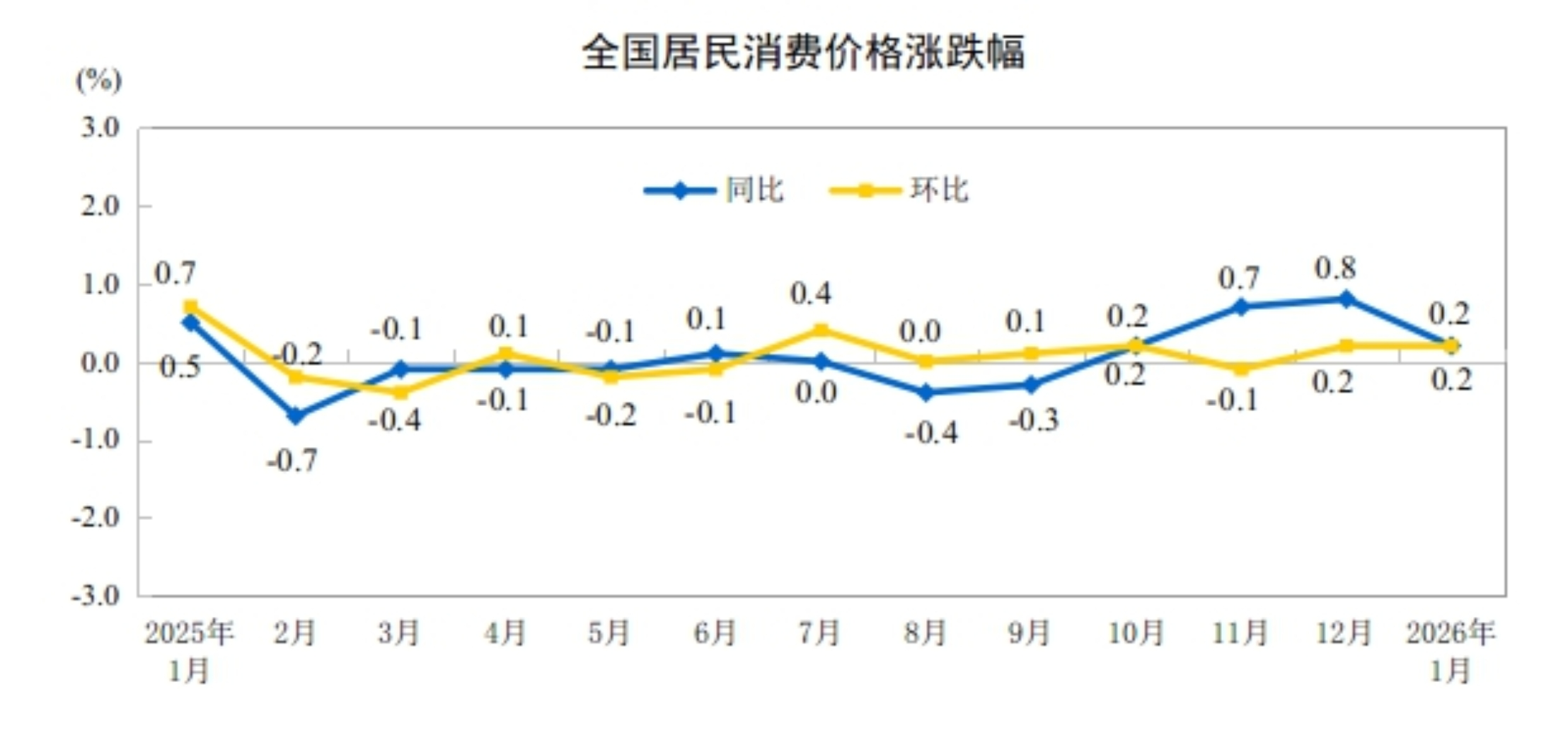
中新网2月11日电 据国家统计局网站消息,国家统计局城市司首席统计师董莉娟解读2026年1月份CPI和 PPI数据。1月份,居民消费需求持续恢复,居民消费价格指数(CPI)环比上涨0.2%,同比上涨0.2%,扣 除食品和能源价格的核心CPI同比上涨0.8%。受全国统一大市场建设持续推进、部分行业需求增加及国 际大宗商品价格传导等因素影响,工业生产者出厂价格指数(PPI)环比上涨0.4%,同比下降1.4%。 节前重要民生商品量足价稳。食品价格环比持平,其中鲜菜价格下降4.8%,粮食和食用油价格分别下 降0.1%和0.2%,猪肉和禽肉类价格分别上涨1.2%和0.2%,水产品和鲜果价格均上涨2.0%。 二、PPI环比继续上涨,同比降幅收窄 PPI环比上涨0.4%,连续4个月上涨,涨幅比上月扩大0.2个百分点。本月PPI环比运行的主要特点:一是 全国统一大市场建设持续推进带动部分行业价格上涨。水泥制造、锂离子电池制造价格环比均上涨 0.1%,均连续4个月上涨;光伏设备及元器件制造价格由上月下降0.2%转为上涨1.9%,基础化学原料制 造价格由下降0.1%转为上涨0.7%,黑色金属冶炼和压延加工业价格由下降0.1%转为 ...
国家统计局:1月CPI同比上涨0.2%,PPI环比上涨0.4%,涨幅比上月扩大0.2个百分点
Jin Rong Jie· 2026-02-11 02:38
Group 1 - The core viewpoint of the articles indicates that consumer demand is recovering, with the Consumer Price Index (CPI) showing a slight increase of 0.2% month-on-month and year-on-year in January 2026, while the core CPI, excluding food and energy, rose by 0.8% year-on-year [1][6][20] - The CPI's year-on-year growth rate has declined primarily due to the high base effect from the previous year's Spring Festival, with food prices decreasing by 0.7%, impacting the CPI by approximately 0.11 percentage points [2][8] - The core CPI continues to show a moderate increase, with a month-on-month rise of 0.3%, the highest in six months, driven by price increases in air tickets and travel services [3][6] Group 2 - The Producer Price Index (PPI) increased by 0.4% month-on-month in January 2026, marking the fourth consecutive month of growth, with the year-on-year decline narrowing to 1.4% [4][20] - The increase in PPI is attributed to the ongoing construction of a unified national market and rising demand in certain industries, with notable price increases in sectors such as cement manufacturing and lithium-ion battery production [4][5] - Year-on-year, the prices in the non-ferrous metal mining industry rose by 22.7%, while the prices in the education, culture, and entertainment products manufacturing sector increased by 21.2% [5][29]