
制鞋

Search documents
波黑知名企业家将出任波黑塞族共和国政府新任经济与创业部长
Shang Wu Bu Wang Zhan· 2026-01-21 14:41
Core Viewpoint - The appointment of Radenko Bubić as the Minister of Economy and Entrepreneurship in the Republika Srpska is expected to strengthen the connection between the business sector and government, potentially improving the business environment and accelerating economic development in the region [1] Group 1: Government Changes - The new government composition in the Republika Srpska includes significant personnel changes, notably the appointment of Radenko Bubić to replace the current minister, Vojin Mitrović [1] - Bubić is recognized as one of the most important entrepreneurs in Bosnia (Republika Srpska), having built a career in the local footwear industry [1] Group 2: Company Profile - Bubić owns the "Dermal" company, which is one of the largest shoe manufacturing enterprises in Bosnia, operating for over twenty years [1] - The Dermal company employs over 1,100 workers in the towns of Kotor Varoš and Knežavo, making it a key player in the local economy [1] - The company has been actively investing in capacity building and expanding its business scope, with products exported to international markets [1] Group 3: Political Involvement - Bubić is politically active as a member of the Alliance of Independent Social Democrats (SNSD) and a significant local leader in Kotor Varoš [1] - His political involvement includes participation in public affairs and local politics, which may enhance the collaboration between the business sector and administrative bodies [1]

“男鞋第一股”奥康国际,再发巨亏预警!
Shen Zhen Shang Bao· 2026-01-21 13:08
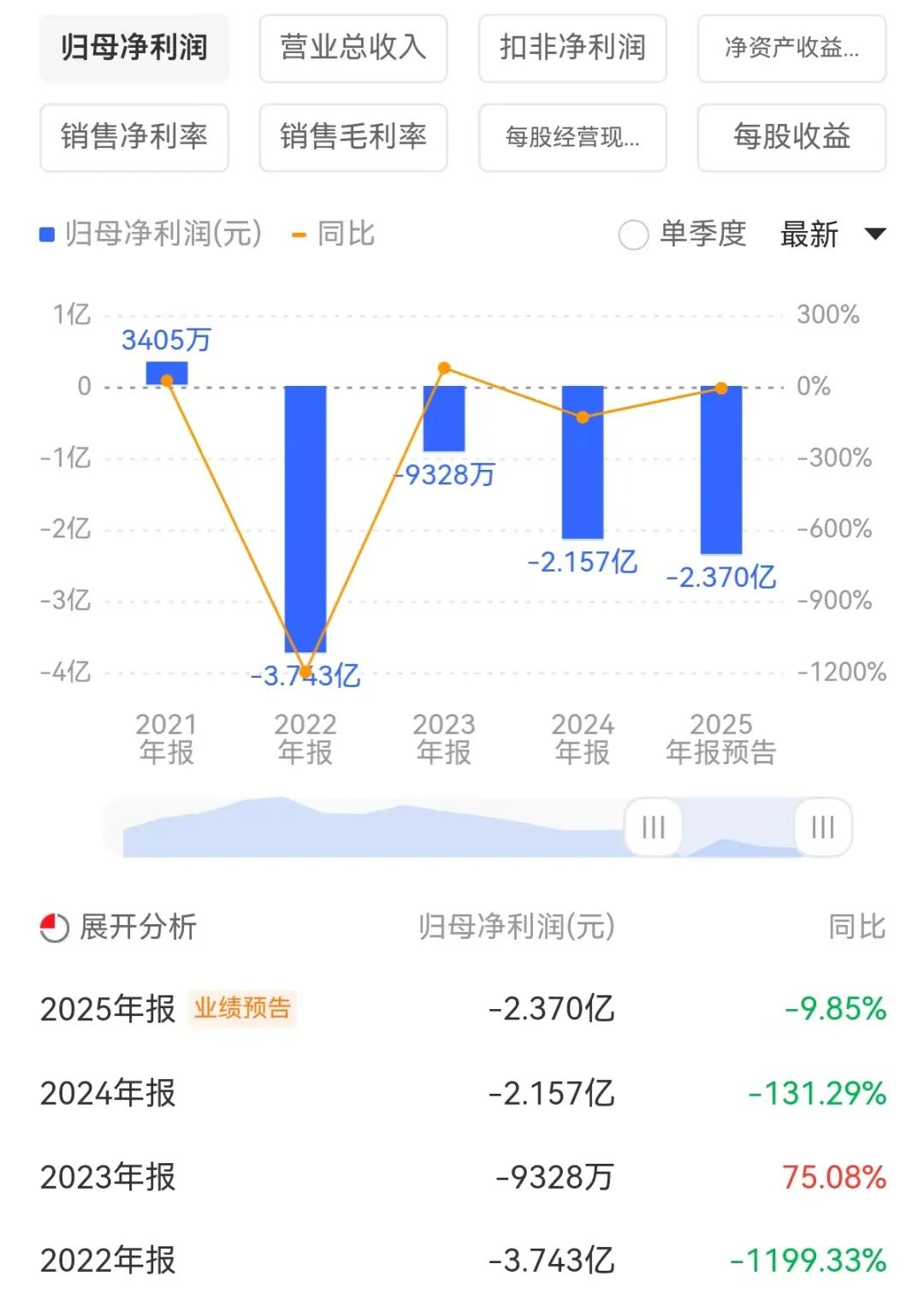
Core Viewpoint - Aokang International (603001) is expected to report a net loss of approximately 237 million yuan for the year 2025, marking the fourth consecutive year of losses since 2022, with a cumulative loss exceeding 900 million yuan [1][2]. Financial Performance - The company anticipates a revenue of 1.923 billion yuan for 2025, representing a decline of about 24.55% compared to the previous year [1]. - The projected net profit attributable to shareholders is approximately -237 million yuan, with a non-recurring net profit of about -264 million yuan [1]. Reasons for Performance Changes - Aokang International attributes its performance decline to intensified industry competition and weak market demand, which have pressured sales in its main footwear business [2]. - Despite efforts to control costs and expenses, the decline in revenue has further strained the company's profitability [2]. Company Background - Founded in 1988, Aokang International is a well-known operator and retailer of leather shoes in China, listed on the Shanghai Stock Exchange since April 26, 2012 [3]. - The company owns two brands, Aokang and Kanglong, and has partnerships with international brands such as SKECHERS and PUMA, along with a strategic collaboration with INTERSPORT [3]. Shareholder Activity - Recently, significant shareholders have been reducing their stakes in Aokang International, with shareholder Xiang Jinyu reducing holdings by 4.87 million shares, representing 1.21% of the total share capital [3]. - Prior to this, Xiang Jinyu had also reduced holdings by 1.78 million shares, accounting for 0.45% of the total share capital [3]. - Additionally, from September 2 to December 1, 2025, Xiang Jinyu sold 11.39 million shares, which is 2.84% of the total share capital [3].


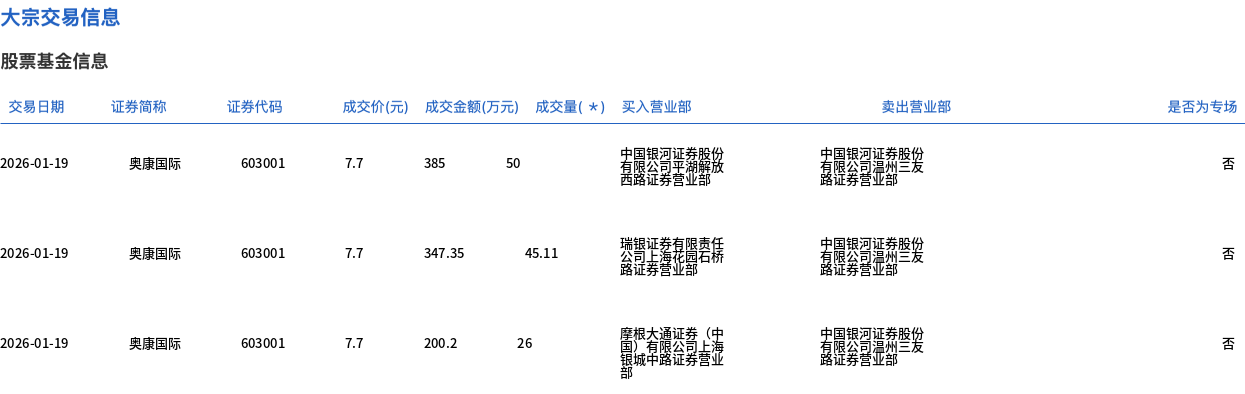
奥康国际今日大宗交易折价成交121.11万股,成交额932.55万元
Xin Lang Cai Jing· 2026-01-19 09:31
Group 1 - The core point of the article highlights the trading activity of Aokang International, with a focus on the stock price and transaction details on January 19, 2026 [1] - Aokang International's stock price was recorded at 7.7 yuan, with a total transaction amount of 382 million yuan and a trading volume of 20 [1] - Additional transactions for Aokang International on the same date included amounts of 347.35 million yuan and 200.2 million yuan, with respective trading volumes of 45.11 and 26 [1]
“广货行天下”春季行动启动!“惠州制造”“惠州品牌”等你来pick
Sou Hu Cai Jing· 2026-01-16 20:02
Group 1: Overview of "Guanghuo Goes Global" Spring Action - The "Guanghuo Goes Global" Spring Action was launched on January 15, aiming to enhance the exposure and market influence of high-quality Guangdong products through promotional platforms and product showcases [1] - The initiative involves over 6,000 enterprises across various categories, including home appliances, electronics, clothing, food, and automotive, supported by more than 10 major commercial platforms [1] - The campaign aims to drive online sales of high-quality products from Guangdong, marking a significant promotional effort [1] Group 2: Huizhou's Industrial Strength - Huizhou is recognized as a key city in the Guangdong-Hong Kong-Macao Greater Bay Area, with a robust industrial foundation and a focus on modern industrial clusters [2] - The city has been awarded as a national model city for the "Three Products" strategy in consumer goods, showcasing a complete range of consumer goods industries [2] - Huizhou's manufacturing sector has seen significant growth, with brands like TCL and others gaining popularity both domestically and internationally [2] Group 3: Key Industries in Huizhou - The ultra-high-definition television industry in Huizhou accounts for 30% of the province's smart TV production, with major companies like TCL and others leading the market [3] - The automotive electronics sector includes products such as central control screens and HUDs, with companies like Desay SV and Huayang Group being prominent players [5] - Huizhou's new energy battery industry is recognized as one of China's top 100 industrial clusters, with a projected output value exceeding 100 billion yuan by 2024 [7] Group 4: Specialty Products from Huizhou - Huizhou is known as a major production base for women's shoes, with over 6,000 shoe manufacturing enterprises and an expected output of 910 million pairs in 2024 [9] - The guitar industry in Huizhou has developed into a global hub, producing a significant portion of the world's guitars and ukuleles, with an annual output value of 405 million yuan [11] - The city has a strong presence in sports equipment manufacturing, particularly in skateboards and bicycles, with a substantial share of the global market [14]
产业带迈入“AI共生”时代,厂二代成转型主力军
Xin Lang Cai Jing· 2026-01-14 10:21
Group 1 - The core viewpoint of the report is that China's industrial belts are transitioning from digitization to intelligence, with AI becoming a crucial infrastructure for industrial upgrades [2] - The report predicts three stages of AI evolution in business processes: "AI add-on" from 2024-2025, "AI symbiosis" from 2026-2027, and "AI native" starting in 2028 [1] - By December 30, 2025, over 290,000 merchants on the 1688 platform are expected to use AI products and technologies daily, indicating a significant rise in AI tool adoption among businesses [1] Group 2 - The report identifies four core challenges facing the B2B industry: extreme fragmentation on the supply side, high non-standardization on the demand side, lengthy and inefficient transaction decision chains, and the difficulty in reusing industry experience [2] - AI2B is highlighted as a new generation of digital infrastructure that supports the transition from traditional experience-based models to AI-driven intelligent business systems [2] - In terms of regional development, Eastern regions lead in digitalization, while Central regions show the fastest growth, and Western regions are expanding their digital coverage [2]
AI蝴蝶掀起产业带上新一轮风暴
虎嗅APP· 2026-01-13 08:14
Core Insights - The article discusses the transformative impact of AI on small and medium-sized manufacturing enterprises in China, highlighting how these companies are leveraging AI to enhance efficiency, reduce costs, and adapt to market demands. Group 1: AI Implementation in Manufacturing - A plastic storage cabinet factory in Taizhou has doubled its profit target for 2026, attributing this confidence to AI, which has revolutionized its design team from 50 to 10 members while increasing design output by four times compared to the same period in 2025 [4] - A stationery manufacturing company in Ningbo adopted AI for product selection and consumer trend analysis, significantly reducing the time needed to understand market trends from monthly to just minutes [5] - A leading toy company's core factory in Dongguan has implemented a "sketch to mold" process using 3D AI technology, allowing rapid production-ready designs from initial sketches [6] Group 2: Global AI Trends in Manufacturing - Japanese toy companies have seen an 80% increase in inspection efficiency and a 65% reduction in defect rates after implementing AI-based quality control systems [6] - An American footwear company reduced labor costs by 80% and increased production capacity nearly fivefold by introducing AI-driven semi-automated production lines [6] Group 3: AI Adoption Challenges and Opportunities - The article identifies four key stages of AI capability for small manufacturers, including product design, marketing, and data analysis [8][9] - 1688, a platform with over 1 million merchants, is actively promoting AI upgrades among small manufacturers, addressing common pain points such as severe competition and fragmented buyer demands [10] - The initial focus on single-point AI tools has evolved into a need for comprehensive AI systems that can work collaboratively, reflecting the complexity of modern manufacturing challenges [11] Group 4: Future Directions for AI in Manufacturing - As competition intensifies, manufacturers are increasingly seeking AI solutions for trend and user insights to make informed production decisions [12] - The emergence of AI tools that assist in decision-making is seen as a critical future trend, with expectations for a significant shift in organizational structures by the end of 2026 [21] - The article emphasizes the importance of user-friendly AI interfaces and the need for continuous adaptation to meet the diverse requirements of small manufacturers [19]

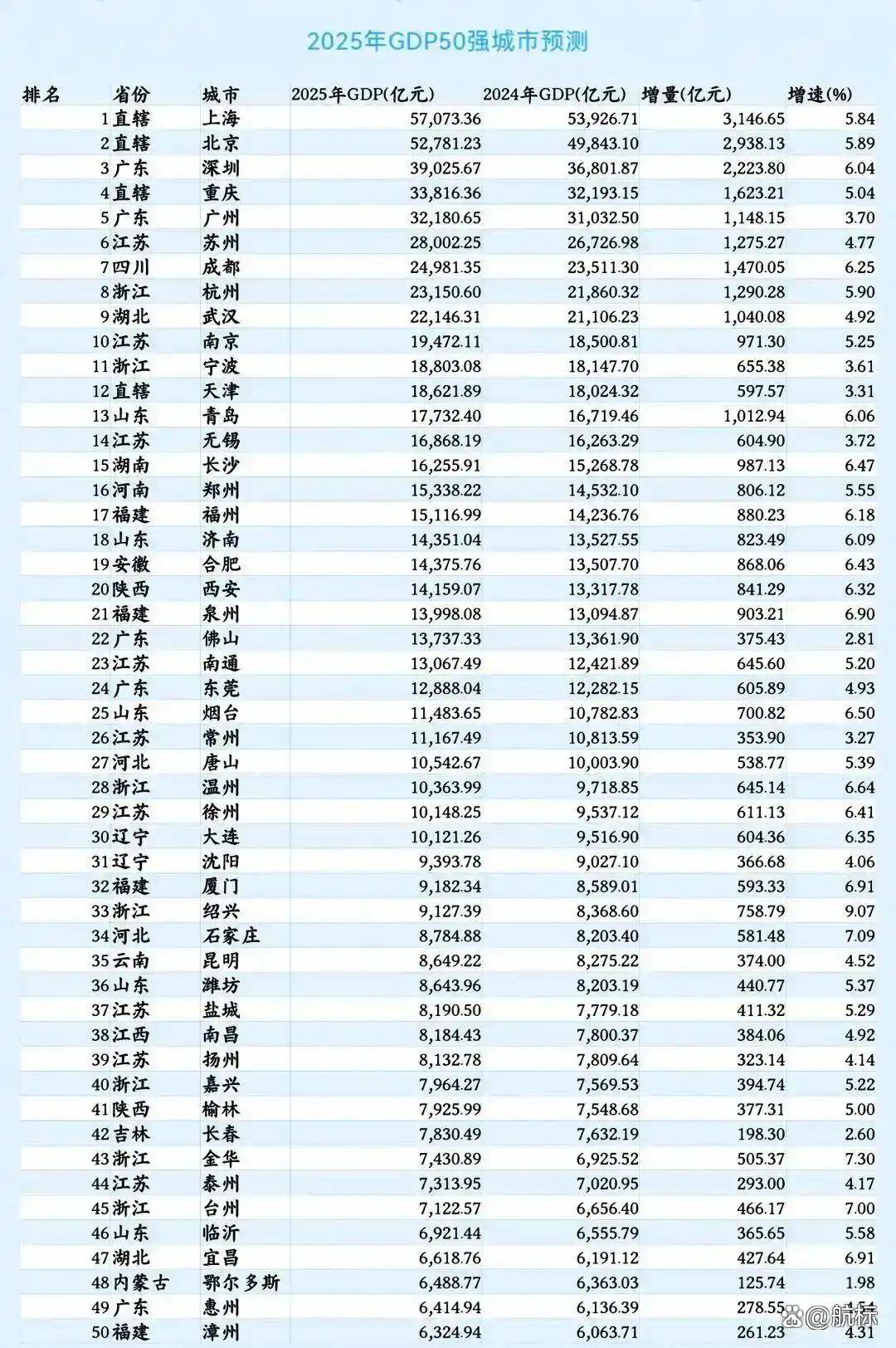
2025年我国GDP50强城市预测出炉:谁在领跑?谁在突围?
Sou Hu Cai Jing· 2026-01-11 16:05
Core Insights - The forecast for the top 50 cities by GDP in 2025 reveals a competitive landscape in China's urban economy, with over 20 trillion yuan in the "head tier" and a rapid expansion of trillion-yuan cities, highlighting the true development capabilities across various regions [1] Group 1: GDP Rankings and Growth - In 2025, nine cities including Shanghai, Beijing, and Shenzhen are projected to have GDPs exceeding 2 trillion yuan, accounting for nearly 40% of the total top 50 GDP [4] - Shanghai's GDP is expected to surpass 5.7 trillion yuan, with an increase of 314.66 billion yuan, driven by the dual engines of chip manufacturing in the Lingang New Area and financial openness in Pudong [4] - Chengdu is projected to achieve a growth rate of 6.25%, entering the "2 trillion yuan club" due to policy benefits from the Chengdu-Chongqing economic circle, with significant growth in the biopharmaceutical industry [4] Group 2: Emerging Cities and Growth Drivers - In 2025, there will be 32 cities with GDPs between 1 trillion and 2 trillion yuan, an increase of three from 2024, including Tangshan, Wenzhou, and Xuzhou [6] - Wenzhou's GDP is expected to exceed 1.03 trillion yuan with a growth rate of 6.64%, attributed to the combination of digital economy and traditional manufacturing [6] - Hefei is projected to reach a GDP of 1.43 trillion yuan with a growth rate of 6.43%, driven by advancements in the semiconductor industry [8] Group 3: Notable Growth Rates - The top three cities in terms of growth rate are Shaoxing (9.07%), Xiamen (6.91%), and Quanzhou (6.90%), each leveraging unique local advantages such as AI in traditional industries and international trade [8] - Shaoxing's textile industry has seen an 8% increase in profit margins due to AI design integration [8] - Xiamen's trade with BRICS countries is expected to rise by 22%, contributing significantly to GDP growth [8] Group 4: Economic Challenges - Foshan's growth rate is only 2.81%, primarily due to inventory pressures in the traditional home appliance sector [8] - Changchun's growth rate is 2.60%, reflecting challenges in the transition of the automotive industry to new energy [8] Group 5: Entry Threshold for Top 50 - The threshold for entering the top 50 cities is set at 632.49 billion yuan in 2025, an increase of nearly 9% from 2024, indicating the need for substantial pillar industries [10] - Zhangzhou's food processing industry is projected to exceed 150 billion yuan, contributing to its entry into the top 50 [10]
豫西小城偃师年关产业忙 “一镇一业”绘出乡村新图景
Zhong Guo Xin Wen Wang· 2026-01-09 07:22
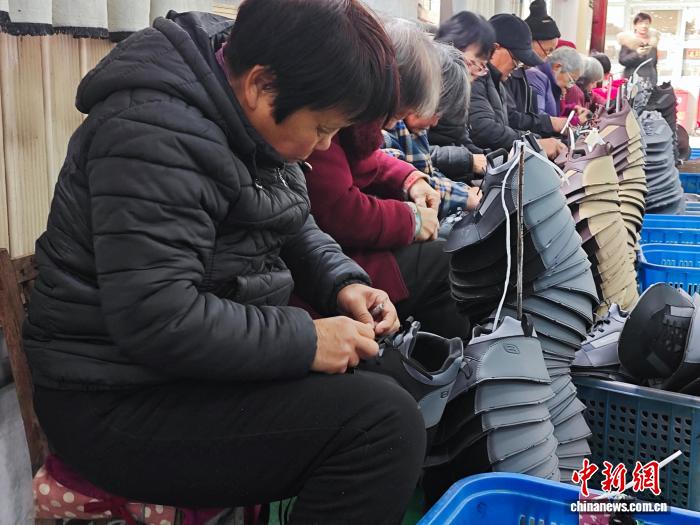
Core Insights - The article highlights the economic development in Yanshi District, Luoyang, where the "One Town, One Industry" model has led to significant job creation and local economic stability, particularly through traditional industries like shoe manufacturing and knitting [1][2]. Group 1: Industry Overview - Yanshi District has over 1,500 shoe and related enterprises, employing approximately 100,000 people and producing over 400 million pairs of cloth shoes annually, with online sales exceeding 2.6 billion yuan [2]. - The district is recognized as "China's Capital of Cloth Shoes," with a strong local workforce contributing to the stability of many families [2]. - The knitting industry in Zhaizhen Town employs around 20,000 people, producing over 300 million hats annually, with a thriving e-commerce market [4]. Group 2: Employment and Community Impact - Local factories, such as the Luoyang Guanghui Shoe Factory, provide employment opportunities close to home, allowing workers to care for family and maintain community ties [2]. - The "One Town, One Industry" model has transformed rural areas into hubs of specialized economic activity, fostering a sense of community and stability [6]. - The emergence of new industries, such as aluminum-based materials, offers higher-level job opportunities for younger generations, enhancing the quality of employment [6]. Group 3: Economic Transformation - The industrial landscape in Yanshi has evolved from small township enterprises to a distinctive block economy, deeply integrating industries with local communities [2]. - The rise of specialized industries has attracted younger individuals back to their hometowns, contributing to local economic growth and innovation [6]. - The clustering of industries has created a unique competitive advantage for the region, reshaping its economic landscape [6].
高龄创始人的苦恼:双星“宫斗”事件背后的代际困境
Tai Mei Ti A P P· 2026-01-08 04:26
Group 1 - The core issue revolves around the public letter from Wang Hai, chairman of Qingdao Double Star Celebrity Group, announcing the severance of ties with his son Wang Jun and daughter-in-law Xu Ying, indicating doubts about Wang Jun's succession capabilities [1][3] - The Double Star Celebrity Group, originally a state-owned enterprise, has transformed into a leading brand in the sports shoe industry, but has faced increasing competition in recent years, leading to a decline in its market presence [3][4] - Wang Hai's public letter reflects broader challenges in the succession of private enterprises in China, highlighting the emotional and operational struggles faced by aging founders [3][4] Group 2 - Similar succession conflicts have occurred in other major consumer companies, such as Shuanghui Group, where founder Wan Long had a public dispute with his son over differing business philosophies [4][5] - The founders of these companies, including Wang Hai, Wan Long, Zhu Xinli, and Zong Qinghou, share common traits of having built their businesses during China's economic reforms, yet they now face difficulties in transitioning leadership to the next generation [5][6] - The aging founders are often reluctant to step back, leading to internal conflicts as they grapple with the future of their brands amidst changing market dynamics [10][11] Group 3 - The companies led by these founders have historically excelled in product quality, market channels, and scale, establishing strong brand identities in their respective sectors [10][11] - As the market evolves from scarcity to abundance, these once-dominant brands are encountering significant challenges, with some heirs willing to take over but facing resistance from their founders [11][12] - The ongoing legal disputes within Double Star indicate a deepening struggle for control, reflecting the complexities of succession planning in family-owned businesses [12]

侵占养老金,安装窃听器 百年鞋企“家族内斗”再升级
Jing Ji Guan Cha Wang· 2026-01-07 03:37
Core Viewpoint - The internal family conflict within the Double Star Celebrity Group has escalated publicly, with founder Wang Hai officially severing ties with his son Wang Jun and daughter-in-law Xu Ying, accusing them of various misconducts related to corporate governance and control [1][2]. Group 1: Family Conflict and Corporate Governance - Wang Hai's statement details accusations against Wang Jun and Xu Ying, including organized attempts to seize company seals, forging signatures, and misappropriating funds [1]. - The conflict has roots in the company's privatization in 2009 and subsequent changes in shareholding structure, leading to a significant shift in control from Wang Hai to Xu Ying and Wang Jun [2]. - The family dispute has highlighted issues within the company's governance model, including outdated systems and management complexities, raising concerns about its ability to adapt to modern corporate governance practices [1][2][3]. Group 2: Shareholding Changes and Legal Proceedings - In 2022, a critical shareholding change occurred, with Xu Ying increasing her stake to 69.48%, effectively becoming the largest shareholder and diminishing Wang Hai's control [2]. - The conflict escalated to legal proceedings in August 2025, with Wang Hai filing a lawsuit to confirm his shareholder status against Xu Ying and Wang Jun, marking a shift from public accusations to judicial intervention [3][4]. Group 3: Company Challenges and Market Position - The company faces not only internal disputes but also external pressures related to brand marketing and product innovation, struggling to keep pace with evolving consumer demands in the sportswear market [5][6]. - Double Star's product pricing is primarily targeted at lower-tier markets, with a significant decline in brand influence and sales volume compared to its historical performance [6]. - The company has not established a strong online presence, lacking certified flagship stores on major e-commerce platforms, which may hinder its market competitiveness [6]. Group 4: Historical Context and Brand Legacy - Double Star has a rich history dating back to 1921, originally as a state-owned enterprise, and was once a leader in the shoe industry before transitioning to tire manufacturing in 2008 [6]. - The ongoing family dispute threatens to destabilize this century-old brand, which has already faced challenges related to brand aging and market relevance [6].
