
家装厨卫

Search documents
二〇二六年 “国补”将继续
Ren Min Ri Bao Hai Wai Ban· 2025-12-19 01:40
Core Viewpoint - The continuation of the "national subsidy" policy for large-scale equipment updates and consumer goods trade-in programs is confirmed for 2026, aimed at stimulating consumption and investment growth in the economy [2][3]. Group 1: Policy Implementation - The central economic work conference emphasized the optimization of the "two new" policies, which include large-scale equipment updates and consumer goods trade-in programs [2][5]. - The Ministry of Finance plans to utilize various government bond funds and issue ultra-long-term special bonds to support these initiatives [2][3]. - The scale of funding for the "two new" policies will increase to 500 billion yuan in 2025, with 300 billion yuan allocated for consumer goods trade-in, marking a 150 billion yuan increase from the previous year [3]. Group 2: Economic Impact - The "two new" policies have significantly contributed to consumption, investment, and economic stability, promoting high-quality development [3][4]. - In the first three quarters, investment in equipment and tools increased by 14% year-on-year, contributing 2 percentage points to overall investment growth [4]. - The consumer goods trade-in program has driven sales exceeding 2.5 trillion yuan, benefiting over 360 million people, with notable increases in the trade-in of automobiles and home appliances [6]. Group 3: Future Directions - The "national subsidy" policy will continue to evolve, with new categories of products added to the trade-in program, including digital devices and various home appliances [8]. - The implementation of personal consumption loans and service industry loans will be supported to enhance consumer demand and service supply [8]. - Future optimization of the "two new" policies may include expanding subsidies to the service consumption sector to further stimulate economic growth [8].
日照|1-11月日照以旧换新带动消费超46亿元
Da Zhong Ri Bao· 2025-12-16 02:01
Group 1 - The core viewpoint of the news is the successful implementation of the "old for new" policy in Rizhao, which has significantly boosted consumer spending and market vitality [1] - From January to November, the "old for new" policy has driven a total sales volume of 4.628 billion yuan in automobiles, home appliances, and other goods, indicating a strong consumer market [1] - The Rizhao Municipal Bureau of Commerce, in collaboration with other departments, has established detailed implementation rules for six categories of goods, including automobiles and home appliances, to promote the "old for new" initiative [1] Group 2 - The "old for new" policy has resulted in the sale of 13,900 scrapped vehicles and 11,800 replacement vehicles, along with 284,400 home appliances and 170,400 3C digital products, showcasing the policy's effectiveness [1] - A total of 801 enterprises have participated in the "old for new" initiative, and the subsidies applied for have reached 657 million yuan, reflecting the tangible benefits of the policy [1] - In addition to the "old for new" policy, Rizhao has launched a "combination punch" to stimulate consumption, including the innovative "ticket root economy" model, which has generated over 5.6 million yuan in consumer spending [2]
好消息!明年“国补”继续
Sou Hu Cai Jing· 2025-12-15 10:55
Group 1 - The central economic work conference held in Beijing on December 10-11 outlined the economic work for 2026, emphasizing the need to optimize the implementation of the "Two New" policies, which include large-scale equipment updates and the consumer goods trade-in policy [1] - The consumer goods trade-in policy, referred to as "national subsidies," will continue in 2026 with optimized specifics, indicating ongoing government support for consumer spending [1] - In 2024, China will issue 150 billion yuan in long-term special government bonds for the consumer goods trade-in program, with the amount increasing to 300 billion yuan in 2025, doubling the subsidy compared to 2024 [1] Group 2 - From January to November this year, the consumer goods trade-in program has driven sales exceeding 2.5 trillion yuan, benefiting over 360 million people [2] - The trade-in program has seen significant participation, with over 11.2 million cars, 12.844 million home appliances, and 9.015 million digital products being replaced [2] - Experts suggest that the subsidy amount for 2026 may see a moderate increase from 2025, with a focus on optimizing funding allocation to enhance service consumption and further stimulate economic growth [2]


确认了,“国补”不会结束!但有大调整
猿大侠· 2025-12-13 04:11
Core Viewpoint - The "National Subsidy" policy has significantly boosted consumption, benefiting over 360 million consumers and generating over 2.5 trillion yuan in consumption from January to November 2025 [1]. Group 1: Policy Impact - The "National Subsidy" has led to substantial exchanges, including over 11.2 million old cars, 12.844 million old home appliances, and 9.015 million digital products [1]. - The official deadline for the 2025 "National Subsidy" is set for the end of this month, with no extensions or additional budgets available once the funds are exhausted [1][2]. Group 2: Future Expectations - The "National Subsidy" policy is expected to continue into 2026, with potential adjustments to its core rules [3][6]. - The funding for the "National Subsidy" increased from 150 billion yuan in 2024 to 300 billion yuan in 2025, with expectations for a slight increase or maintenance of this scale in 2026 [8][9]. Group 3: Changes in Subsidy Categories - The 2025 policy expanded to include three new digital product categories and four new home appliance categories, indicating a shift towards more diverse consumer goods [13]. - Future policies may focus more on service consumption, targeting areas such as cultural tourism, sports, and health care, while also emphasizing green and smart products [13][14]. Group 4: Regulatory Adjustments - Due to issues like scalping and fraudulent transactions in 2025, the 2026 "National Subsidy" may implement stricter eligibility criteria and smarter regulatory measures to ensure funds reach genuine consumers [16].

2026年国补政策将优化升级 惠民扩围助力内需增长
Sou Hu Cai Jing· 2025-12-12 11:02
Group 1 - The core viewpoint of the article emphasizes the continuation and optimization of the "Two New" policy, which includes large-scale equipment updates and the trade-in of consumer goods, to stimulate domestic consumption in 2026 [3] - The "Two New" policy, particularly the trade-in program for consumer goods, is widely recognized for its significant impact on the public and is referred to as "National Subsidy" [3] - In 2024, a special long-term bond fund of 150 billion yuan was allocated to support the trade-in program, which was doubled to 300 billion yuan in 2025, indicating a strong commitment to enhancing consumer spending [3] Group 2 - The policy's scope has been expanded to include new categories such as smartphones, tablets, smartwatches, and household appliances like microwaves and water purifiers, making the subsidy program more relevant to daily consumer needs [3] - From January to November 2025, the trade-in program generated over 2.5 trillion yuan in sales, benefiting more than 360 million people [4] - Specific figures include over 11.2 million vehicles traded in, more than 128.44 million home appliances updated, and 9.015 million digital products receiving subsidies, showcasing the program's extensive reach [4]
中央定调明年继续“国补” 具体政策将优化
Di Yi Cai Jing· 2025-12-11 14:16
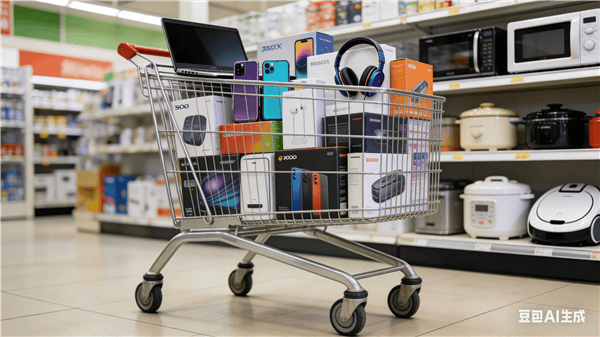
商务部数据显示,今年1~11月,消费品以旧换新带动相关商品销售额超2.5万亿元,惠及超3.6亿人次。 其中,汽车以旧换新超1120万辆,家电以旧换新超12844万台,手机等数码产品购新补贴超9015万件, 电动自行车以旧换新超1291万辆,家装厨卫"焕新"超1.2亿件。 多位接受第一财经采访的专家表示,2026年"国补"额度可能在2025年基础上适度增加,并继续优化资金 投向领域,增加服务消费等,以进一步发挥财政资金带动消费,带动产业转型升级、提振经济。 (文章来源:第一财经) 所谓"两新"政策,是指大规模设备更新和消费品以旧换新政策。其中与老百姓利益直接相关的消费品以 旧换新政策又备受关注,被称为"国补"。此次会议明确2026年优化"两新"政策实施,意味着明年会继续 实施国补政策,但具体政策会有所优化。 为了促进消费,中国在2024年发行了1500亿元超长期特别国债资金用于消费品以旧换新,也就是老百姓 口中的"国补"。由于当年实施效果不错,2025年中国发行3000亿元超长期特别国债资金用于消费品以旧 换新,"国补"额度较2024年增长一倍。 "国补"政策也在不断优化。2025年"国补"领域在2024年基础 ...
专家建言明年继续实施“国补”,额度可增至5000亿元
Di Yi Cai Jing· 2025-12-05 03:25
Core Viewpoint - The continuation of the "National Subsidy" policy for consumer goods in 2024 is strongly recommended by experts, with suggestions to increase the funding from 300 billion to 500 billion yuan to further stimulate consumption and support economic growth [1][3][4]. Group 1: National Subsidy Policy - The "National Subsidy" for replacing old consumer goods is set to end this year, and experts advocate for its continuation next year, potentially increasing the budget to 500 billion yuan [1][3]. - In 2024, 150 billion yuan of special long-term bonds will be issued to support the "National Subsidy" program, with the amount increasing to 300 billion yuan in 2025 [1]. - The Ministry of Finance allocated 69 billion yuan for the fourth quarter of this year as part of the "National Subsidy" funding [1]. Group 2: Impact on Consumer Behavior - From January to November this year, the "National Subsidy" program has driven sales of related products exceeding 2.5 trillion yuan, benefiting over 360 million people [2]. - The program has led to significant sales in various categories, including over 11.2 million cars and over 12.8 million home appliances being replaced [2]. - Due to high consumer enthusiasm, the subsidy funds have been rapidly consumed, with at least 20 cities suspending or adjusting their subsidy applications [2]. Group 3: Future Recommendations - Experts suggest that the funding for the "National Subsidy" should be increased to 800 billion yuan in 2025 to address ongoing consumer demand [3]. - Recommendations include shifting the focus of subsidies from goods to service consumption and introducing cash and digital currency subsidies [3][4]. - The current economic environment indicates a need for continued support for consumer spending to avoid a significant decline in retail sales growth [4][5].
扩张、增长、突破……透过多维经济数据看中国经济的“稳”与“进”
Yang Shi Wang· 2025-12-03 16:08
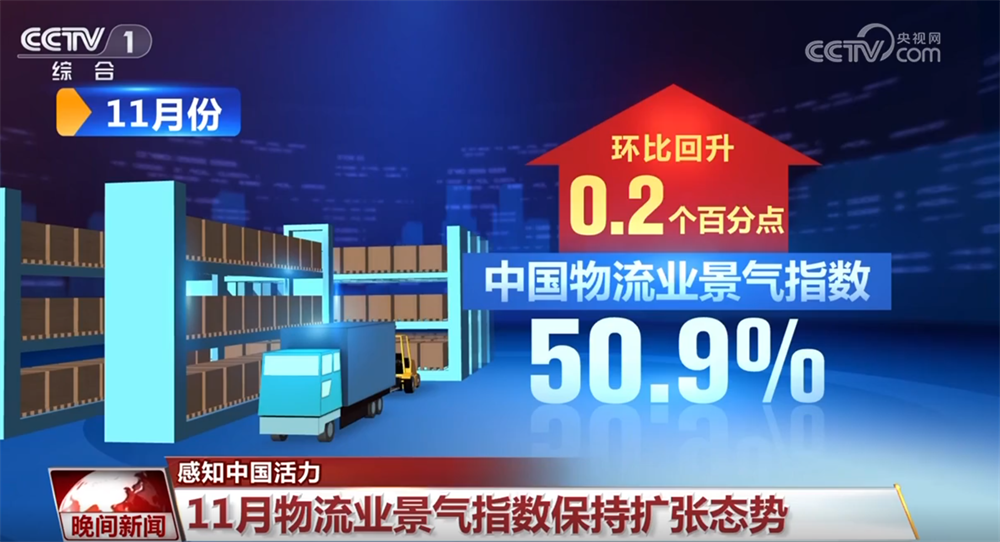
Economic Overview - China's economy shows a steady growth trend, with the logistics industry maintaining an expansionary stance in November [1] - The logistics industry prosperity index for November is reported at 50.9%, reflecting a month-on-month increase of 0.2 percentage points [3] Logistics Industry Insights - The logistics business volume index across eastern, central, and western regions of China is relatively balanced [3] - Demand sectors indicate a rebound in manufacturing, a slowdown in energy, and stable consumption [3] - Key industries such as transportation equipment, home appliances, smart devices, and automotive parts are experiencing strong demand [3] - The postal and express delivery business volume index for November stands at 70.2%, with offline entities, social e-commerce platforms, and comprehensive e-commerce platforms performing steadily [3] Service Trade Performance - In the first ten months, China's service trade imports and exports totaled 65,844.3 billion yuan, marking a year-on-year growth of 7.5% [5] - Service exports reached 29,090.3 billion yuan, growing by 14.3%, while the service trade deficit decreased by 2,693.9 billion yuan [5] - Knowledge-intensive service trade continues to grow, with imports and exports amounting to 25,121.5 billion yuan, a 6.4% increase [5] - The surplus in knowledge-intensive services expanded by 1,036 billion yuan compared to the previous year, reaching 4,254.3 billion yuan [5] Consumer Goods Market - From January to November, the "old-for-new" consumption policy has driven sales of related goods exceeding 25,000 billion yuan, benefiting over 360 million people [7] - The automotive sector saw over 11.2 million vehicles replaced, while home appliances and digital products also experienced significant upgrades [7] - The government has allocated 300 billion yuan in special long-term bonds to support the "old-for-new" consumption initiative [7] Telecommunications Sector - The telecommunications industry has shown overall stability in the first ten months of the year [9] - The user base for 5G, gigabit broadband, and the Internet of Things continues to expand, with 5G mobile phone users reaching 1.184 billion, accounting for 64.7% of mobile phone users [9] - Mobile internet traffic has seen a robust growth, exceeding 320 billion GB, with a year-on-year increase of 16.8% [9]
超2.5万亿元,惠及超3.6亿人次
中国能源报· 2025-12-03 13:23
Group 1 - The core viewpoint of the article highlights that the old-for-new consumption policy in China has significantly boosted sales, exceeding 2.5 trillion yuan in the first eleven months of the year, benefiting over 360 million people [1] Group 2 - The old-for-new program has led to the replacement of over 1.12 million vehicles [1] - The program has facilitated the replacement of more than 12.84 million home appliances [1] - Subsidies for new purchases of mobile phones and digital products have exceeded 9.015 million units [1] - The initiative has resulted in the replacement of over 1.29 million electric bicycles [1] - The home renovation and kitchen and bathroom upgrades have seen over 120 million items renewed [1]

前11个月消费品以旧换新带动销售超2.5万亿元
Yang Shi Wang· 2025-12-03 12:28
Core Insights - The core message highlights the significant impact of the "trade-in" policy on consumer goods sales in China, with a total sales amount exceeding 2.5 trillion yuan and benefiting over 360 million people [1] Group 1: Sales Impact - The trade-in program for consumer goods has driven sales exceeding 2.5 trillion yuan from January to November this year [1] - The automotive sector saw over 11.2 million vehicles traded in, while home appliances accounted for over 12.844 million units [1] - Digital products, including mobile phones, received subsidies for over 9.015 million units, and electric bicycles saw over 1.291 million units traded in [1] Group 2: Policy Support - The Chinese government has allocated 300 billion yuan in special long-term bonds to support the trade-in program across four batches this year [1] - The acceleration of policy effects is fostering the development of new consumption patterns, particularly in digital and green sectors [1] Group 3: Industry Transformation - The trade-in initiative is promoting the green transformation of related industries, indicating a shift towards more sustainable consumption practices [1]