新能源与智能网联汽车

Search documents
“内陆腹地”如何变“开放高地”?湖北省政协委员建言:“枢纽经济”或成“破题之钥”
Zhong Guo Jing Ying Bao· 2026-01-29 15:30
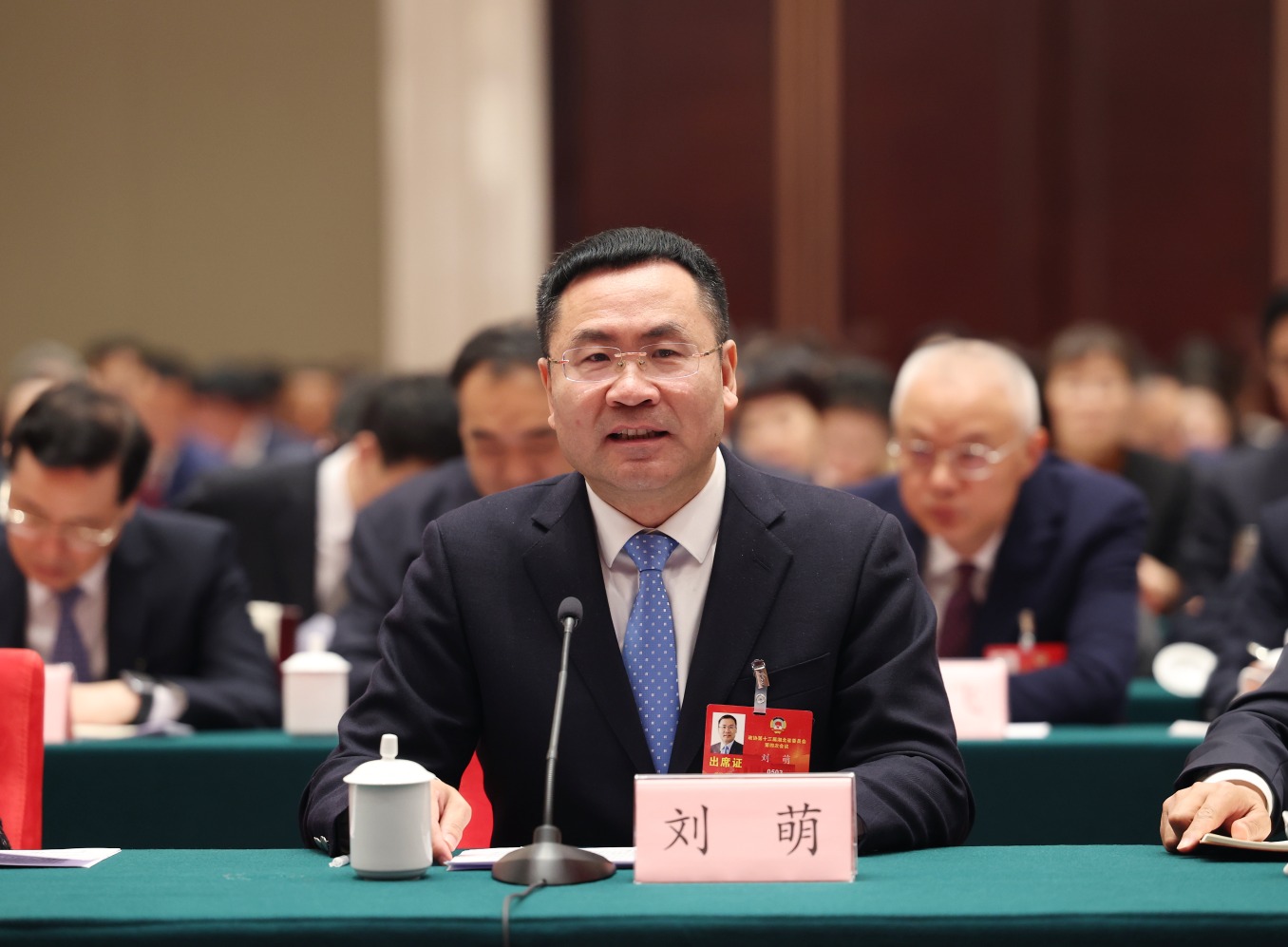
Core Viewpoint - Hubei Province aims to leverage its geographical advantage as a transportation hub to enhance both domestic and international openness, transforming its position from an "inland hinterland" to an "open highland" through strategic initiatives and infrastructure development [1][3]. Group 1: Economic Development Strategies - The "14th Five-Year Plan" for Hubei emphasizes a dual approach to openness, focusing on enhancing logistics systems and expanding the scale of the open economy [1]. - Liu Meng, a member of the Hubei Provincial Political Consultative Conference, highlights the need to develop a "hub economy" to improve the resilience and competitiveness of the open economy [3]. - Recommendations include strengthening "hard connectivity" by planning rapid freight corridors and smart transfer systems to resolve logistical bottlenecks [3][4]. Group 2: Infrastructure and Logistics - The construction of a central hub system for the China-Europe Railway Express (Wuhan) is proposed to optimize cargo organization and route planning, transitioning Wuhan from a transit station to a regional destination and pricing center [4]. - Enhancements in the integration of the Yangtze River middle reaches port cluster are suggested, promoting collaboration among ports to improve operational efficiency [4]. Group 3: Institutional and Regulatory Improvements - Liu Meng advocates for upgrading the Hubei Free Trade Zone to serve as a testing ground for greater reform autonomy, aligning with international trade standards [5]. - The establishment of standardized foreign investment service systems is recommended to mitigate external uncertainties and enhance the business environment [5]. Group 4: Industry and Market Expansion - Hubei is encouraged to focus on internationalizing its advantageous industrial clusters, particularly in sectors like optoelectronic information and high-end equipment, by providing tailored support for overseas expansion [6]. - The integration of cross-border e-commerce with local industrial strengths is proposed to help traditional foreign trade enterprises expand their market reach [6]. Group 5: Regional Cooperation and Development - Liu Meng suggests fostering collaboration among cities in the Yangtze River middle reaches to enhance overall regional openness and participate in the Belt and Road Initiative [7]. - The development of a comprehensive open framework is recommended, with a focus on building international communication and financial centers in Wuhan and supporting other cities to leverage their unique advantages [7].

以资本、生态和校友“三驾马车”驱动湖北新质生产力跃升
Zhong Guo Fa Zhan Wang· 2026-01-28 06:01
Core Viewpoint - The article emphasizes the strategic importance of Hubei Province during the "14th Five-Year Plan" period, highlighting the need for a shift in investment strategies from project-based to ecosystem-focused approaches to foster new productive forces and enhance industrial competitiveness [1][2]. Investment Strategy - Investment in Hubei should transition from "quick investments" to "precise investments," focusing on long-term and systematic approaches that link laboratories, industry chains, and application scenarios [1]. - Key areas for investment include foundational research in hard technology, enhancing industrial chains, and early-stage incubation of future industries [1][2]. Capital Structure - A dual ecosystem of "patient capital + industrial capital" should be established to attract social capital to early-stage innovation projects, encouraging major enterprises to set up corporate venture capital (CVC) funds [2]. - Long-term capital should be introduced to support major technological infrastructure projects through specialized financial tools [2]. Post-Investment Services - A platform for "investment + empowerment" should be created, providing deep services such as technical iteration and market access to invested companies [2]. - The establishment of a "returning alumni" venture capital fund aims to attract local talent back to Hubei, enhancing the connection between talent and capital [2]. Global Business Ecosystem - The establishment of the Yangtze River International Chamber of Commerce serves as a global business ecosystem, facilitating connections between domestic and international resources [3][4]. - This platform plays a crucial role in reducing transaction costs and enhancing the resilience of domestic and international supply chains [4]. Alumni Economy - The "alumni economy" is identified as a strategic resource for Hubei, promoting the integration of talent, innovation, and industry [5][6]. - The province has initiated actions to develop the alumni economy, focusing on overcoming challenges such as resource fragmentation and incomplete service chains [6][7]. Talent Development - A "three-dimensional driving" model is proposed to convert top-tier academic resources into industrial advantages, emphasizing the need for a flexible talent circulation system and innovative institutional reforms [7][8]. - The establishment of a "new engineering education and industry integration base" aims to align talent supply with industry demand [10][12]. Technology and Innovation - The article suggests implementing a "launch empowerment" project to create a seamless connection between research, education, and industry [10]. - A focus on building a "virtual industrial cluster" platform is recommended to facilitate online connections and collaborative innovation across the supply chain [12].

武汉出台政策加快培育研发型企业,单个项目最高2000万元支持
Chang Jiang Ri Bao· 2026-01-16 09:23
Group 1 - The core objective of the "Implementation Plan for Accelerating the Cultivation of R&D Enterprises and Promoting R&D Industrialization" is to strengthen the innovation role of enterprises and support the establishment of a nationally influential technology innovation center in Wuhan by 2027 [1] - By 2027, the plan aims to establish 30 city-level concept verification centers, 200 pilot test platforms, and exceed 1,200 city-level enterprise R&D centers, with over 300 R&D enterprises and more than 30 foreign-funded R&D centers [1][2] - The plan emphasizes the creation of 3-5 R&D industrial clusters in key sectors such as optoelectronic information, health, and biotechnology [1] Group 2 - The plan includes a "Seedling Plan" for startups, providing up to 500,000 yuan in R&D support for selected high-growth enterprises over three years, and rewards for high-tech enterprises upon initial and re-certification [2] - For leading enterprises, the "Gazelle Plan" and "Leading Plan" offer annual R&D subsidies of 300,000 yuan and support for establishing industry innovation joint laboratories with a total funding of 20 million yuan per year for three years [2] - The plan also proposes that R&D institutions within enterprises can register as independent legal entities, receiving up to 5 million yuan annually for three years based on their incremental R&D investment [2] Group 3 - The plan provides rewards of up to 1 million yuan for enterprises purchasing technological achievements and accelerates the construction of verification centers and pilot platforms in cutting-edge fields like quantum technology and advanced semiconductors [3] - It emphasizes the importance of talent, finance, and intellectual property protection, offering various support measures for innovative talent, including housing guarantees, project support, financial rewards, and housing subsidies [3]
“车药芯智”强力驱动 深圳坪山区稳居中国工业百强区前列
Zhong Guo Jing Ji Wang· 2026-01-08 08:09
Core Insights - Shenzhen Pingshan District has significantly improved its ranking in the 2025 China Industrial Top 100 list, moving from 49th in 2022 to 19th, reflecting its rapid advancement in new industrialization [1] - The district focuses on developing its economy through the real economy, emphasizing emerging industries such as new energy, smart connected vehicles, biomedicine, and semiconductors [1][2] Group 1: Industrial Development - Pingshan has established a modern industrial system centered around the "vehicle, medicine, chip, and intelligence" cluster, with industrial output exceeding 600 billion yuan during the 14th Five-Year Plan [1] - The region has over 500 biopharmaceutical companies, with significant achievements such as the record-setting $16.4 billion licensing deal for innovative drugs [2] - The first integrated land-air testing ground in the Greater Bay Area has been launched, supporting a production value exceeding 400 billion yuan [2] Group 2: Innovation and Technology - Pingshan has implemented a comprehensive innovation ecosystem, introducing policies to support the entire cycle from research to industrial application [3] - The district has seen breakthroughs in key technologies, including BYD's blade battery and advanced medical devices, supported by a high R&D investment of 11.8% of GDP in 2024 [3] - The number of national high-tech enterprises has surpassed 1,000, with significant growth in specialized and innovative small giant enterprises [5] Group 3: Government Support and Infrastructure - The government has facilitated industry development by organizing supply-demand matching events, leading to preliminary cooperation agreements that are expected to generate over 10 million yuan in industrial synergy [4] - Pingshan has developed a 2.68 square kilometer contiguous industrial land area and established 4,165 5G base stations, enhancing infrastructure for AI industry development [4] - A comprehensive enterprise service platform has been created to address business needs, with 1.41 billion yuan in support funds allocated to benefit over 2,200 enterprises during the 14th Five-Year Plan [4]

发布“产业人才政策八条”,成都东部新区加快构建产才融合新生态
Mei Ri Jing Ji Xin Wen· 2025-12-26 06:11
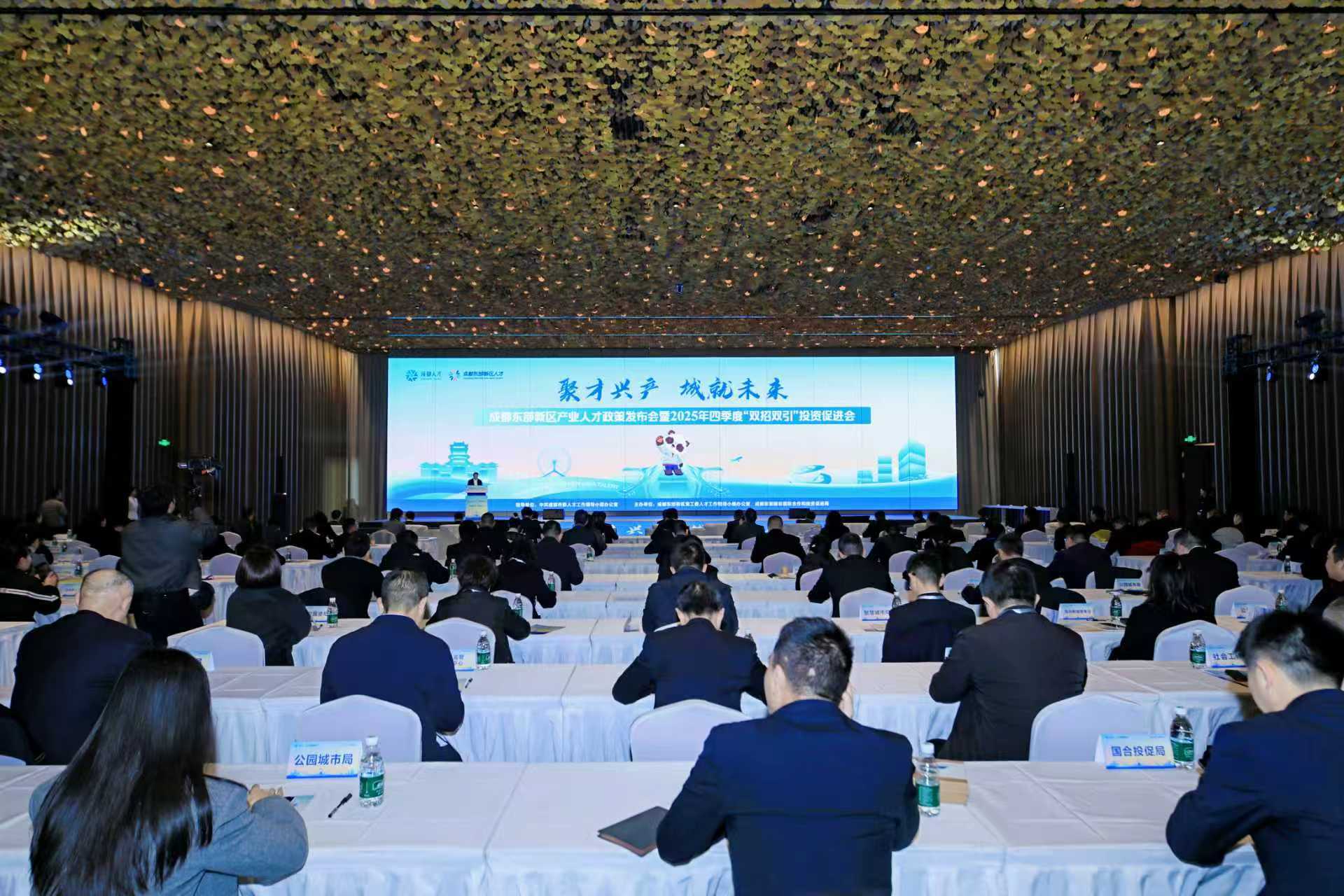
Core Viewpoint - The Chengdu Eastern New Area has launched the "Eight Measures for Industrial Talent Policy" to enhance the integration of talent and industry, aiming to create a nationally influential innovation talent hub [5][4]. Group 1: Policy Announcement - The "Eight Measures for Industrial Talent Policy" includes a comprehensive policy framework that covers talent introduction, cultivation, project support, and living guarantees [5][4]. - The policy shifts from a universal support model to a precision empowerment model, focusing on industry needs [5][4]. - A key breakthrough is the restructuring of the talent evaluation system, emphasizing actual performance and contributions over traditional metrics like education and titles [5][4]. Group 2: Talent Evaluation and Support - The policy introduces a multi-channel approach for talent evaluation, allowing parks and enterprises to participate in the recognition process [6]. - The support measures have been adjusted from fixed subsidies to more flexible options like housing funds and consumption vouchers [6]. - The policy is tailored to key industries such as sustainable aviation fuel, life health, and low-altitude economy, ensuring comprehensive coverage of critical areas [7]. Group 3: Talent Service System - The Chengdu Eastern New Area has established a talent service call center to enhance the efficiency of talent services, transitioning from passive responses to proactive support [8]. - High-level talent representatives have been issued "Talent Green Cards," which provide access to various services and rewards, enhancing their sense of belonging [10]. - A series of talent-intensive projects have been signed, covering key sectors like low-altitude economy and intelligent manufacturing, showcasing the results of the "Double Recruitment and Double Introduction" initiative [10]. Group 4: Future Development and Industry Focus - The Chengdu Eastern New Area is focusing on a "345+9" industrial system, targeting sectors such as air economy, high-end equipment manufacturing, and biotechnology [11]. - Experts from leading universities are providing intellectual support for the collaborative development of talent and industry [12]. - The area aims to create a vibrant and opportunity-rich environment, attracting talent to transform from transient visitors to integral contributors to the region's development [13].
中共武汉市委关于制定全市国民经济和社会发展第十五个五年规划的建议
Chang Jiang Ri Bao· 2025-12-22 08:49
Core Viewpoint - The "14th Five-Year Plan" period has seen significant achievements in Wuhan's development, with a focus on high-quality growth and resilience against challenges, setting the stage for the "15th Five-Year Plan" to further enhance the city's modernization and strategic position in the region [2][5]. Group 1: Achievements During the "14th Five-Year Plan" - Wuhan has experienced a remarkable economic recovery, with its GDP surpassing 2 trillion yuan, and key economic indicators maintaining leading growth rates among peer cities [2][5]. - The city has made substantial progress in establishing itself as a national center for technological innovation, with a notable increase in the number of academicians and significant breakthroughs in major independent innovations [2][5]. - Urban infrastructure and environmental quality have improved, with a successful reduction in major pollutants and the establishment of Wuhan as the world's first international wetland city with a population exceeding 10 million [2][5]. - Social welfare has been enhanced, with increased public service accessibility and a steady rise in per capita disposable income for residents [2][5]. Group 2: Strategic Opportunities and Challenges in the "15th Five-Year Plan" - The "15th Five-Year Plan" period is characterized by a critical phase for Wuhan, aiming to build five key centers and achieve significant advancements in modernization [4][5]. - The city is positioned to leverage strategic opportunities amid complex global changes, including technological revolutions and shifts in the geopolitical landscape [5][6]. - Despite the opportunities, challenges such as insufficient effective demand and the need for industrial transformation remain prominent [5][6]. Group 3: Development Goals and Principles for the "15th Five-Year Plan" - The guiding ideology for Wuhan's development emphasizes the integration of Marxist principles with Xi Jinping's thoughts, focusing on high-quality growth and comprehensive reforms [7][9]. - Key goals include achieving a GDP of over 3 trillion yuan, enhancing innovation capabilities, and establishing a modern industrial system [10][11]. - Principles such as maintaining party leadership, prioritizing people's needs, and fostering high-quality development are central to the city's strategy [9][10]. Group 4: Economic and Industrial Development Strategies - The plan emphasizes the importance of a modern industrial system, focusing on the integration of traditional industries with emerging sectors and future industries [13][14]. - Strategies include enhancing the competitiveness of existing industries, fostering new and future industries, and promoting the development of modern service sectors [15][16]. - The city aims to become a leader in the digital economy, with initiatives to integrate artificial intelligence across various sectors [16][18]. Group 5: Infrastructure and Urban Development - Urban development will focus on optimizing spatial layouts, enhancing infrastructure, and promoting sustainable urban renewal [34][35]. - The city plans to improve its transportation network, including the construction of high-speed rail and international logistics hubs [38][37]. - Efforts will be made to enhance the quality of urban management and public services, ensuring a high standard of living for residents [36][37].
锚定建设现代化大武汉,把美好蓝图化为实景——市委十四届十二次全会引发热烈反响
Chang Jiang Ri Bao· 2025-12-05 04:19
Group 1: Economic Development and Planning - The Wuhan Municipal Party Committee held a meeting to approve the "15th Five-Year Plan" for economic and social development, focusing on building a modernized Wuhan and creating "five centers" [1] - The meeting emphasized the importance of historical perspective and comprehensive deployment for Wuhan's economic and social development during the "15th Five-Year" period [1][4] - The city aims to achieve an industrial output value of 3 trillion yuan by the end of the "15th Five-Year" period, focusing on the development of trillion-level industrial clusters in optoelectronic information, new energy, and intelligent connected vehicles [5][6] Group 2: Technological Innovation and Industry Upgrading - The city plans to create a national-level new industrialization demonstration zone, integrating technological and industrial innovation to enhance new productivity [6][9] - The focus will be on breakthroughs in core technologies and the cultivation of foundational enterprises in fields such as integrated circuits and humanoid robots [5][9] - The "555X" advanced manufacturing system will be established to rejuvenate traditional industries and promote the growth of emerging industries [5] Group 3: Financial Support and Investment - Wuhan Financial Holding Group aims to provide financial support for over 150 major projects, with a target of investing more than 140 billion yuan by 2026 [6][7] - The group will enhance financial services to support stable growth, transformation, and increased momentum in the economy [6][7] - The city is positioned as a national financial center, with a focus on innovative financial mechanisms to support high-quality development [6] Group 4: Urban Development and Infrastructure - The city will implement a comprehensive urban renewal strategy, focusing on high-quality urban development and improving living conditions [11][12] - The "Five Reforms and Four Improvements" strategy will guide urban renewal efforts, enhancing urban functionality and quality [11][12] - The city is currently promoting 80 small-scale urban renewal projects, exploring new models for urban development [12] Group 5: International Engagement and Trade - The city aims to enhance its international influence and connectivity through strategic international engagement initiatives [13][14] - The focus will be on building a national trade and logistics center, positioning Wuhan as a key hub for international trade and commerce [10][14] - The city will support enterprises in expanding their international presence and optimizing the business environment for foreign investments [14][15]
锻造具有全球竞争力的湖北特色现代化产业体系
Sou Hu Cai Jing· 2025-11-11 00:39
Core Viewpoint - The article emphasizes the importance of building a modern industrial system in Hubei, focusing on advanced manufacturing as the backbone to enhance global competitiveness and drive economic growth [5][6][8]. Group 1: Advanced Manufacturing - Advanced manufacturing is identified as a critical area for global economic competition and technological innovation, serving as the main focus for constructing a modern industrial system [6][9]. - Hubei aims to implement the "51020" advanced manufacturing cluster strategy to leverage its educational and ecological advantages, transforming them into developmental strengths [6][7]. - The province is focusing on key sectors such as optoelectronic information, new energy vehicles, and high-end equipment to enhance its manufacturing capabilities [8][12]. Group 2: Industrial Upgrading - The article discusses the need to upgrade traditional industries like mining, metallurgy, and textiles through intelligent, green, and integrated transformations [10][11]. - Hubei is promoting smart manufacturing and digital transformation across traditional sectors, particularly in the automotive industry, to enhance efficiency and competitiveness [10][11]. - The province is also focusing on green transformation by adopting low-carbon technologies and promoting sustainable practices in high-energy-consuming industries [11]. Group 3: Emerging Industries - Hubei is encouraged to develop strategic emerging industries such as new energy, new materials, aerospace, and low-altitude economy, leveraging its existing strengths and innovation platforms [12][13]. - The province's unique advantages include a solid foundation in optoelectronic information and green battery technologies, supported by national laboratories and high-level innovation platforms [12][16]. - Hubei aims to adopt a focused development approach, concentrating resources on areas where it can excel, such as green circular batteries and high-end electronic chemicals [13][17]. Group 4: Future Industries - The article highlights Hubei's potential in future industries like quantum technology, biomanufacturing, and hydrogen energy, with significant investments and policy support [15][16]. - Hubei has established a provincial quantum technology investment fund of 2 billion yuan to foster innovation and application in this field [15]. - The province's strong educational and research infrastructure is positioned to support the development of future industries, ensuring a continuous supply of talent and innovation [16][17].
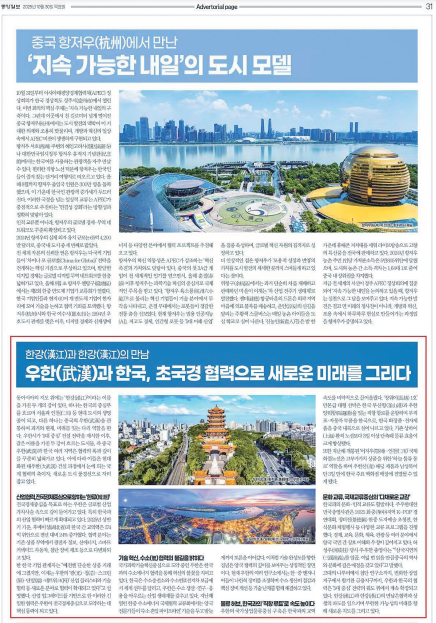
韩国中央日报聚焦武汉汉江与汉江相遇:武汉与韩国跨国合作共绘新图景
Chang Jiang Ri Bao· 2025-10-31 14:59
Core Insights - The article highlights the deepening cooperation between Wuhan, China, and various regions in South Korea, focusing on the development of a modernized Wuhan as a national economic center through international collaboration [3][4]. Economic Cooperation - Wuhan aims to become a national economic center by integrating into global industrial chains, with bilateral trade between Hubei Province and South Korea projected to reach 17.4 billion yuan by mid-2025, marking a 24% year-on-year increase [3][4]. - The collaboration has shifted from traditional trade to new sectors such as optoelectronics, new energy, smart connected vehicles, and high-end equipment manufacturing [4]. Technological Innovation - The partnership in technology innovation is emphasized, with Wuhan and South Korea collaborating on hydrogen energy, where South Korea leads in hydrogen stations and fuel cell vehicles [4]. - Wuhan has established a comprehensive hydrogen energy industry chain, and joint efforts in research and development are evident, as seen in the discussions at the China-South Korea Hydrogen Energy International Cooperation Conference [4]. Logistics and Trade - The logistics capabilities of Wuhan as a national commercial logistics center have significantly improved, exemplified by the direct shipping route between Busan and Wuhan, which saves three days compared to previous routes [5]. - The introduction of the "Ezhou-Incheon" international cargo route has further enhanced the efficiency of transporting high-value goods, allowing for rapid market response [5]. Cultural Exchange - Cultural interactions between Wuhan and South Korea are increasingly vibrant, with various events promoting mutual understanding and friendship, including K-POP competitions and ceramic art exhibitions [6]. - The activities span multiple sectors, including economy, education, culture, sports, and tourism, enriching the relationship between the two regions [6].
向上向新向优向好 武汉前三季度活力升腾
Chang Jiang Ri Bao· 2025-10-30 00:48
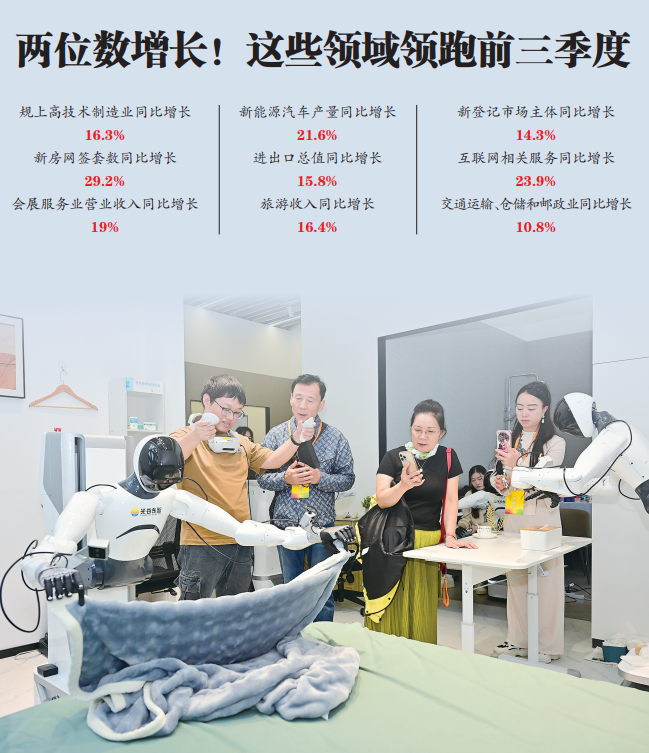
Economic Growth - Wuhan's GDP growth rates for the first quarter, first half, and first three quarters of the year are 5.4%, 5.5%, and 5.6% respectively, maintaining a leading position among sub-provincial cities [1] - The city's economic growth has been steady for five consecutive quarters, with no significant fluctuations [4] Industrial Performance - The production of industrial robots in Wuhan surged by 70.4% in the first three quarters [3][5] - High-tech manufacturing value added increased by 16.3%, contributing over 60% to industrial growth [5] - The total fixed asset investment in Wuhan reached 6,656.38 billion yuan, with a growth rate of 2%, ranking first among sub-provincial cities [5] Business Environment - The number of newly registered businesses in Wuhan increased by 14.3% in the first three quarters, with over 250,000 new enterprises, a growth of 37.23% [6][7] - The city attracted 884 investment projects, with nearly half in the industrial sector, indicating a strong investment climate [7] Consumer and Living Standards - The per capita disposable income for residents in Wuhan reached 46,107 yuan, a year-on-year increase of 4.8% [8] - The consumer price index (CPI) in Wuhan rose by 0.3%, indicating overall price stability [8] Innovation and Development - Wuhan is focusing on becoming a national hub for technological innovation, with significant investments in high-tech sectors [5][9] - The city has seen the emergence of new enterprises, with four new companies listed and nine recognized as top AI technology firms [5]