
燃气及水生产和供应业

Search documents
促进有效投资,更多举措落地
Ren Min Ri Bao Hai Wai Ban· 2026-02-10 03:56
Group 1 - The core viewpoint of the article emphasizes the need for innovative and effective investment policies to stabilize and promote investment, particularly through the use of central budget investments, special bonds, and new policy financial tools [2][7]. - In 2025, national fixed asset investment (excluding rural households) reached 48,518.6 billion yuan, a decrease of 3.8% from the previous year, indicating downward pressure on fixed asset investment due to various factors [3]. - Key sectors such as industrial investment grew by 2.6%, contributing 0.9 percentage points to overall investment growth, with significant increases in electricity, heat, gas, and water supply sectors, which saw a 9.1% increase [3][4]. Group 2 - Infrastructure investment in key areas showed robust growth, with pipeline transportation investment increasing by 36.0% and internet-related services growing by 23.8% in 2025 [4]. - Equipment and tool purchase investment rose by 11.8%, contributing 1.8 percentage points to total investment growth, with a focus on supporting over 8,400 equipment renewal projects through special bonds [5][6]. - The government aims to enhance the effectiveness of investment by optimizing the structure of government investments, particularly in social welfare projects, and by utilizing new policy financial tools to stimulate private investment [8].

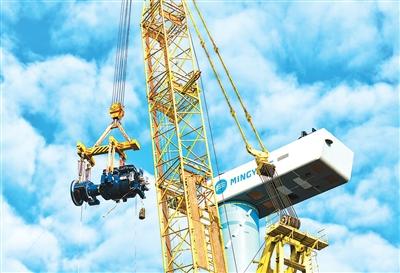
加力提效用好相关资金和新型政策性金融工具——促进有效投资,更多举措落地
Sou Hu Cai Jing· 2026-02-10 01:20
Core Viewpoint - The recent State Council meeting emphasized the need to innovate and improve policy measures to promote effective investment, aiming to stabilize investment and enhance its role in expanding domestic demand, optimizing supply, and benefiting people's livelihoods [3]. Investment Trends - In 2025, China's fixed asset investment (excluding rural households) reached 48,518.6 billion yuan, a decrease of 3.8% from the previous year, indicating downward pressure on investment due to local government debt and economic transition factors [4]. - Key sectors showed rapid investment growth, with industrial investment increasing by 2.6%, contributing 0.9 percentage points to overall investment growth [4]. - Infrastructure investment in key areas saw significant increases, such as pipeline transportation investment growing by 36.0% and internet-related services investment increasing by 23.8% [5]. Equipment Investment - Equipment and tool purchase investment rose by 11.8% in 2025, contributing 1.8 percentage points to total investment growth, with a focus on supporting over 8,400 equipment renewal projects through special bonds [6]. - The government plans to continue large-scale equipment renewal policies into 2026, with an initial allocation of 93.6 billion yuan in special bonds for various sectors [7]. Government Investment Strategy - The State Council meeting highlighted the importance of precise government investment to avoid inefficient and redundant construction, emphasizing the need for high-quality project planning and collaboration between investment, fiscal, and financial policies [8]. - The government aims to enhance support for private investment through a comprehensive policy package, addressing financing costs and barriers for private enterprises [9]. - The focus will be on increasing government investment in livelihood projects and utilizing new policy financial tools to attract more private and social capital [9].
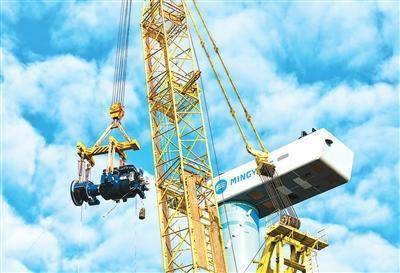
促进有效投资,更多举措落地(锐财经)
Ren Min Ri Bao Hai Wai Ban· 2026-02-09 22:48
Group 1 - The core viewpoint of the article emphasizes the need for innovative and effective investment policies to stabilize and promote investment growth in China, particularly through the use of central budget investments, special bonds, and new financial tools [2][7] - The State Council's recent meeting highlighted the importance of optimizing government investment to avoid inefficient and redundant construction, focusing on improving project quality and readiness [7][8] - The article notes that private investment is crucial for economic growth, with new policies aimed at reducing financing costs and barriers for private enterprises [8] Group 2 - In 2025, China's fixed asset investment (excluding rural households) was reported at 48.5186 trillion yuan, a decrease of 3.8% from the previous year, indicating downward pressure on investment [3] - Industrial investment grew by 2.6% in 2025, contributing 0.9 percentage points to overall investment growth, with significant increases in sectors such as electricity and water supply [3][4] - Infrastructure investment in key areas showed rapid growth, with pipeline transportation investment increasing by 36.0% and internet services by 23.8% in 2025 [4] Group 3 - Equipment and tool investment saw an 11.8% increase in 2025, contributing 1.8 percentage points to total investment growth, highlighting its importance in driving overall investment [5][6] - The government plans to support approximately 8,400 equipment renewal projects with over 1 trillion yuan in total investment, indicating a strong push for modernization [6] - The implementation of policies to lower investment thresholds and enhance project management is aimed at improving the efficiency of equipment renewal projects [6]
2019年-2025年全年全国电力、热力、燃气及水生产和供应业累计产能利用率统计分析
Chan Ye Xin Xi Wang· 2026-02-07 05:36
Core Insights - The capacity utilization rate for the national electricity, heat, gas, and water production and supply industry in Q4 2025 was 74%, a decrease of 0.8 percentage points compared to the same quarter last year [1] - For the entire year of 2025, the cumulative capacity utilization rate for the industry was 73.4%, which represents an increase of 0.4 percentage points compared to the previous year [1] Summary by Category - **Quarterly Performance** - In Q4 2025, the single-quarter capacity utilization rate was recorded at 74%, showing a decline of 0.8 percentage points year-on-year [1] - **Annual Performance** - The cumulative capacity utilization rate for the entire year of 2025 reached 73.4%, indicating a recovery with an increase of 0.4 percentage points compared to the previous year [1]

信用债市场周度回顾 260201:信用债修复下半场:票息主导,攻守兼备
GUOTAI HAITONG SECURITIES· 2026-02-01 05:50
Market Overview - The credit bond market has transitioned from a "continuous recovery" phase to a "consolidation" phase, with marginal momentum weakening[7] - The overall yield of credit bonds has shown fluctuations, supported by configuration demand, leading to a flattening of the credit bond curve[7] - The net financing for major credit bond varieties was 1,497.8 billion CNY, remaining stable compared to the previous week[11] Investment Strategy - The investment strategy suggests a return to a focus on coupon income, emphasizing 2-3 year maturity products while ensuring manageable credit quality[8] - For long-term funds with excess allocation needs, attention should be given to 5-year and longer maturities during market fluctuations[8] Market Dynamics - In the secondary market, total transactions decreased to 8,813.3 billion CNY, down 498.47 billion CNY from the previous week[14] - The 3-year AAA medium-term note yield decreased by 0.05 basis points to 1.85%, while the 3-year AA+ and AA medium-term note yields fell by 2.05 and 4.05 basis points, respectively[14] Credit Rating Adjustments - Seven issuers had their ratings upgraded, including Shaoxing City Shangyu Water Group and Wuxi Huaguang Environmental Energy Group[21] - No new defaults were reported, but one bond, H20 Yuzhou 1, was extended, with a balance of 846 million CNY[23] Risk Factors - Potential risks include unexpected changes in fundamentals, monetary policy not meeting expectations, and possible data inaccuracies[23]
【每周经济观察】民间投资向新向优势不可挡
Sou Hu Cai Jing· 2026-01-30 23:06
Group 1 - The core focus of the recent policy package is to stimulate private investment, particularly through measures such as loan interest subsidies for small and micro enterprises, special guarantee plans for private investment, and risk-sharing mechanisms for private enterprise bonds [2] - The overall trend of private investment in China has shown a decline in growth and low performance since 2025, largely influenced by macroeconomic factors like the deep adjustment of the real estate market [2] - Despite the pressure on total private investment, there is a significant structural optimization, with a shift from traditional investment in real estate and general manufacturing to new technologies, new infrastructure, new services, and new livelihoods [2] Group 2 - Private investment is increasingly embracing new productive forces and modern industrial systems, with a 0.6% growth in manufacturing investment despite a 3.8% decline in overall fixed asset investment in 2025 [3] - Key sectors such as railway, shipbuilding, aerospace, and other transportation equipment manufacturing saw substantial investment growth, with increases of 17.5%, 12.3%, 11.7%, and 9.1% respectively [3] - The participation of private capital in infrastructure projects has deepened, with significant projects in transportation and energy being promoted to private investors, indicating that private capital is becoming a crucial force in construction [3] Group 3 - High-tech services and consumer sectors are emerging as new hotspots for private investment, with notable growth in information transmission and water management sectors, achieving increases of 28.4% and 16.9% respectively [4] - The structural transition in private investment is a result of precise macro policies and market opportunities, with various measures aimed at reducing barriers and enhancing the investment environment [4] - Recent policies, including the implementation of the Private Economy Promotion Law and measures to further promote private investment, have provided unprecedented support for private investment [4] Group 4 - To achieve high-quality development of private investment, deeper structural reforms are necessary, focusing on ensuring fair competition and innovative financial supply models [5] - The current market has seen a reduction in explicit barriers to entry, but hidden requirements and regulatory challenges still exist, necessitating a shift in policy focus to guarantee fair competition [5] - Innovations in financial supply and the establishment of profitable models are essential for overcoming obstacles faced by private capital, particularly in long-term investment projects [5]

2025年工业企业盈利情况有所改善 | 高频看宏观
Sou Hu Cai Jing· 2026-01-29 13:36
Economic Activity Index - The China High-Frequency Economic Activity Index (YHEI) reached 1.15 on January 27, 2026, an increase of 0.10 from January 20 [1][3] - Key contributors to the YHEI increase include the Coastal Coal Freight Index and the Imported Dry Bulk Freight Index, which rose by 0.32 and 0.11 to 1.26 and 1.28, respectively [1][3] Industrial Sector Performance - In 2025, the total profit of industrial enterprises above designated size was 73,982 billion yuan, a year-on-year increase of 0.6%, marking the first positive growth since 2022 [2][18] - Revenue and cost for the same period grew by 1.1% and 1.3%, respectively, both lower than the growth rates from January to November [2][18] - The operating profit margin for 2025 was 5.31%, slightly higher than the previous month but lower than the same period in 2024 [2][18] - Profitability varied across industries, with the mining sector's profit margin at 15.91%, down 3.16 percentage points from 2024, while manufacturing and utilities saw slight increases [2][18] Monetary Policy and Interest Rates - The central bank injected a net 2,621 billion yuan into the market through open market operations as of January 27 [6] - The overnight interbank rate rose by 4 basis points to 1.48%, while the seven-day repo rate increased by 7 basis points to 1.63% [9][10] - The one-year government bond yield increased by 2.91 basis points to 1.3%, while the five-year and ten-year yields decreased slightly [13][15] Real Estate Market - In the week ending January 27, new and second-hand home transaction areas in second-tier cities increased by 13.18% and 2.51%, respectively [31] - First-tier cities showed mixed results, with new home transactions down by 0.95% and second-hand home transactions up by 2.7% [31] Commodity Prices - The price of cement decreased by 0.77% in the week ending January 27, with a 3.15% decline over the past month [19][21] - The price of thermal coal fell by 1.44% month-on-month and 2.28% year-on-year [19][22] Global Economic Indicators - The US dollar index fell by 2.77 points to 95.77, while the RMB appreciated by 27 basis points to 6.9576 against the dollar [37][39] - The S&P Commodity Index rose by 2.26% to 4,197.00, with increases in energy, industrial metals, and agricultural indices [37]

中国工业利润三年跌势扭转,今年稳增长行动思路明确
第一财经· 2026-01-28 06:01
Core Viewpoint - In 2025, China's industrial profits showed a positive growth of 0.6%, reversing a three-year decline, with significant contributions from equipment manufacturing and high-tech industries, indicating an improvement in the industrial economic structure and quality [3][5][10]. Industrial Profit Improvement - The total profit of industrial enterprises above designated size reached 73,982 billion yuan in 2025, marking a 0.6% increase year-on-year, with a notable recovery in December where profits grew by 5.3% compared to November's decline of 13.1% [3][5]. - The profit growth trend was characterized by a "low first, high later" pattern, with significant policy effects from growth stabilization measures and "anti-involution" policies contributing to improved inventory and capacity utilization [5][10]. Cost and Expense Analysis - In 2025, the cost per 100 yuan of revenue for industrial enterprises was 85.31 yuan, an increase of 0.16 yuan year-on-year, while expenses decreased to 8.62 yuan, down 0.02 yuan [6]. - The average accounts receivable collection period decreased to 67.9 days by the end of December 2025, reflecting improved cash flow due to government actions to clear debts [6][10]. Profit Structure Improvement - In 2025, profits from small and medium-sized enterprises, as well as foreign-invested enterprises, turned positive, growing by 1.4% and 4.2% respectively, while state-owned and joint-stock enterprises also saw significant profit improvements [8]. - The manufacturing sector's profits increased by 5.0%, with equipment manufacturing and high-tech manufacturing being the main drivers, contributing 2.8 percentage points to overall profit growth [8][9]. High-Tech Manufacturing Growth - High-tech manufacturing profits rose by 13.3%, significantly outpacing the overall industrial profit growth, with smart electronic products and semiconductor-related industries showing remarkable profit increases [9]. - Specific sectors such as smart unmanned aerial vehicles and semiconductor manufacturing saw profits grow by 102.0% and 172.6% respectively, highlighting the rapid development in these areas [9]. Outlook for 2026 - Industrial profits are expected to continue their recovery in 2026, supported by stable domestic consumption, gradual investment recovery, and improved export quality [10]. - The "anti-involution" policies are anticipated to alleviate cost pressures and enhance profit margins, while ongoing industrial modernization efforts will further improve the operating environment for industrial enterprises [10][12].
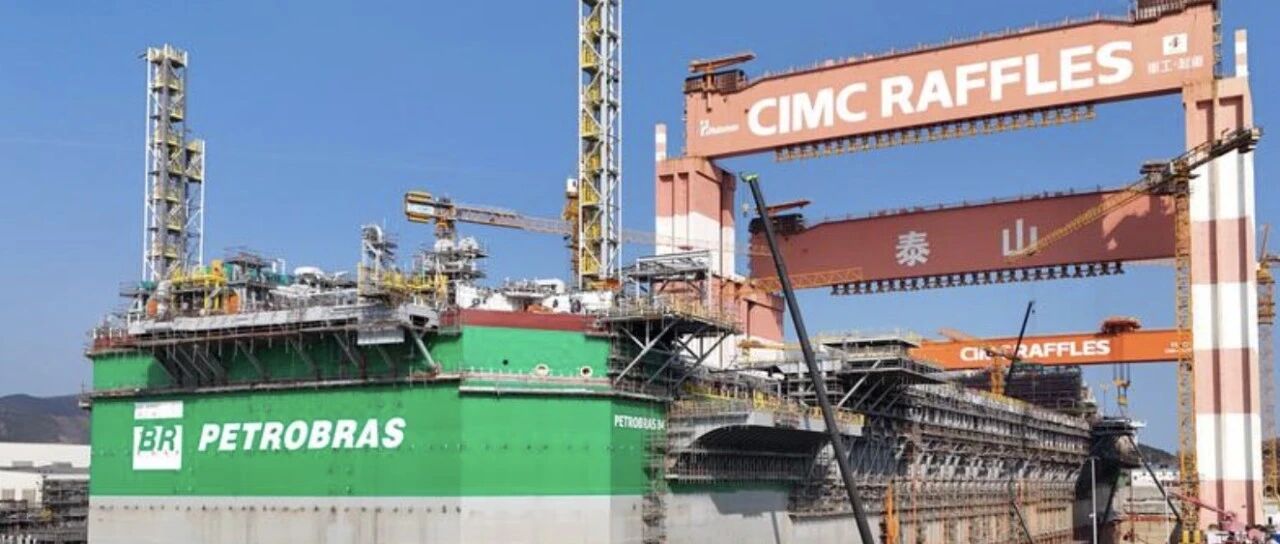
首次突破14万亿元!江苏省2025年经济数据公布
Xin Lang Cai Jing· 2026-01-28 04:17
Economic Overview - The overall economic operation in Jiangsu Province is stable with progress, achieving a GDP of 142,351.5 billion yuan in 2025, a year-on-year growth of 5.3% [1] - The primary industry value added is 5,369.7 billion yuan, growing by 3.5%; the secondary industry value added is 60,038.2 billion yuan, increasing by 4.7%; and the tertiary industry value added is 76,943.7 billion yuan, rising by 5.8% [1] Agriculture - The total output value of agriculture, forestry, animal husbandry, and fishery is 9,526.1 billion yuan, with a year-on-year growth of 4.0% [1] - Grain planting area is 82,303,000 acres, with a total grain output of 763.05 billion jin, an increase of 1.03 billion jin [1] Industrial Production - The industrial added value above designated size increased by 6.5%, with the manufacturing sector growing by 6.7% and equipment manufacturing increasing by 8.8% [2] - The profit of industrial enterprises above designated size increased by 8.8% from January to November [2] Service Sector - The tertiary industry added value grew by 5.8%, with significant contributions from wholesale and retail, transportation, and information technology services [2] - The revenue of the service industry above designated size increased by 8.3% from January to November [2] Consumer Market - The total retail sales of social consumer goods reached 46,394.2 billion yuan, growing by 3.3% [3] - Sales of green and smart products showed strong growth, with new energy vehicles increasing by 21.2% [3] Fixed Asset Investment - Fixed asset investment decreased by 12.7%, with the first industry investment increasing by 1.7% while the second and third industries saw declines [4] - Equipment purchase investment grew by 9.1%, accounting for 21.0% of total investment [4] Price Trends - The consumer price index decreased by 0.2%, with food prices dropping by 1.1% [5] - The industrial producer price index fell by 2.6%, consistent with the previous year [5] Income and Employment - Per capita disposable income reached 57,971 yuan, a growth of 4.6% [6] - The urban survey unemployment rate averaged 4.6%, slightly up from the previous year [6] Emerging Industries - High-tech industries accounted for 52.1% of industrial output, with a growth rate of 11.9% [7] - Online retail sales reached 1,373.91 billion yuan, growing by 7.8% [7] Conclusion - The economic performance in Jiangsu Province demonstrates resilience and vitality, with ongoing challenges and the need for strategic adjustments to ensure sustainable growth [8]
2025年1—12月份仪器仪表制造业利润同比增长3.1%
Guo Jia Tong Ji Ju· 2026-01-28 03:46
Core Insights - In 2025, the total profit of industrial enterprises above designated size in China reached 73,982 billion yuan, a year-on-year increase of 0.6% [1] - The manufacturing sector saw a profit increase of 5.0%, while the mining sector experienced a significant decline of 26.2% [4] - The equipment manufacturing industry played a crucial role in supporting industrial upgrades, with profits rising by 7.7% [4] Summary by Category Overall Industrial Performance - The total revenue of industrial enterprises above designated size was 139.20 trillion yuan, up 1.1% from the previous year [2] - Operating costs increased by 1.3% to 118.75 trillion yuan, resulting in a profit margin of 5.31%, a slight decrease of 0.03 percentage points [2] - By the end of 2025, total assets reached 188.41 trillion yuan, a 4.3% increase, while total liabilities grew by 4.2% to 108.58 trillion yuan [2] Sector-Specific Performance - The profits of the black metal smelting and rolling industry surged by 300%, while the non-metallic mineral products industry saw a decline of 1.7% [2] - High-tech manufacturing profits increased by 13.3%, significantly outpacing the overall industrial growth [5] - The profits of the equipment manufacturing sector accounted for 39.8% of total industrial profits, marking a 2.6 percentage point increase from the previous year [4] Emerging Trends - The smart electronics sector drove a 48.0% profit increase in smart consumer device manufacturing, with specific industries like smart drones and vehicle devices seeing profits rise by 102.0% and 88.8%, respectively [5] - Traditional industries are also showing improvement, with sectors like biochemical pesticides and cultural information chemicals achieving profit growth above the industry average [6] - Small and medium-sized enterprises, as well as foreign-invested enterprises, reported profit growth of 1.4% and 4.2%, respectively, reversing previous declines [6]