
现代服务业

Search documents
广东“两业协同发展”不是选择题而是必答题
Xin Lang Cai Jing· 2026-02-22 00:25
Core Viewpoint - The integration of advanced manufacturing and modern service industries is essential for building a modern industrial system and achieving high-quality development in Guangdong Province [1][2][3] Group 1: Policy and Strategic Initiatives - Guangdong has introduced measures to promote the deep integration of manufacturing with productive services, including technology services, design services, modern logistics, and e-commerce [2] - The "14th Five-Year Plan" emphasizes enhancing the quality and capacity of the service industry, promoting the deep integration of modern services with advanced manufacturing and modern agriculture [1][2] Group 2: Economic Context and Industry Dynamics - Guangdong's manufacturing sector is robust, with all 31 major manufacturing categories and 10 trillion-yuan industrial clusters, providing ample application scenarios for the service industry [1] - The rise of productive services injects core momentum into the upgrading of manufacturing, highlighting the interdependence of both sectors [1][2] Group 3: Implementation and Progress - Initiatives such as Guangzhou Huangpu's "R&D + Testing + Design" actions and Foshan Shishan's "Yiqitong" platform demonstrate practical steps towards embedding services deeply into the manufacturing process [2] - The collaborative development of both sectors is seen as a key pathway to overcoming development bottlenecks, particularly in the face of challenges like land resource constraints and rising labor costs [2] Group 4: Future Outlook - The transition from "Guangdong Manufacturing" to "Guangdong Intelligent Manufacturing" signifies a shift towards ecological empowerment and higher value chains in global competition [3] - The commitment to collaborative development is expected to enhance Guangdong's contributions to building a strong manufacturing nation [3]
第179个国家高新区来了!雄安高新区正式升级,助力打造京津雄地区创新三角
Xin Lang Cai Jing· 2026-02-16 10:55
Core Viewpoint - The upgrade of Hebei Xiong'an High-tech Industrial Development Zone to a national high-tech zone is a significant development for the Beijing-Tianjin-Hebei region, aiming to enhance technological innovation and economic collaboration among the three areas [2][5]. Group 1: Upgrade of Xiong'an High-tech Zone - The State Council approved the upgrade of Hebei Xiong'an High-tech Industrial Development Zone to a national high-tech zone, making it the 179th national high-tech zone in China and the 6th in Hebei province [2]. - The planning area for the upgraded Xiong'an High-tech Zone is set at 20.84 square kilometers, divided into two blocks: Block One covers 16.37 square kilometers and Block Two covers 4.47 square kilometers [3][4]. - The core positioning of the Xiong'an High-tech Zone is to create a significant non-capital function area, an international first-class high-tech industrial development zone, and a green intelligent innovation development demonstration area [4]. Group 2: Industrial Development and Innovation - The industrial layout will focus on a "1+3" system, primarily developing aerospace information, modern life sciences and biomanufacturing, new materials, and modern services [4]. - As of August 2025, over 800 enterprises have registered in the Xiong'an High-tech Zone, including 45 high-tech enterprises and 17 specialized and innovative small and medium-sized enterprises [4]. - The Xiong'an High-tech Zone aims to support the integration of innovation resources and promote efficient transformation and landing of technologies, contributing to the construction of a modern city in Xiong'an [5][6]. Group 3: Policy and Future Directions - The upgrade process was conducted rigorously, adhering to national high-tech zone criteria, including metrics such as the proportion of high-tech manufacturing value added and the number of patents granted per ten thousand people [4]. - The Xiong'an High-tech Zone is expected to attract international organizations in the technology innovation sector and become a significant source of independent and original innovation [5]. - Strict regulations will be enforced regarding land use and project construction, prohibiting commercial real estate development to ensure sustainable land resource utilization [6].


中国十大最具幸福感城市排名
泽平宏观· 2026-02-15 16:06
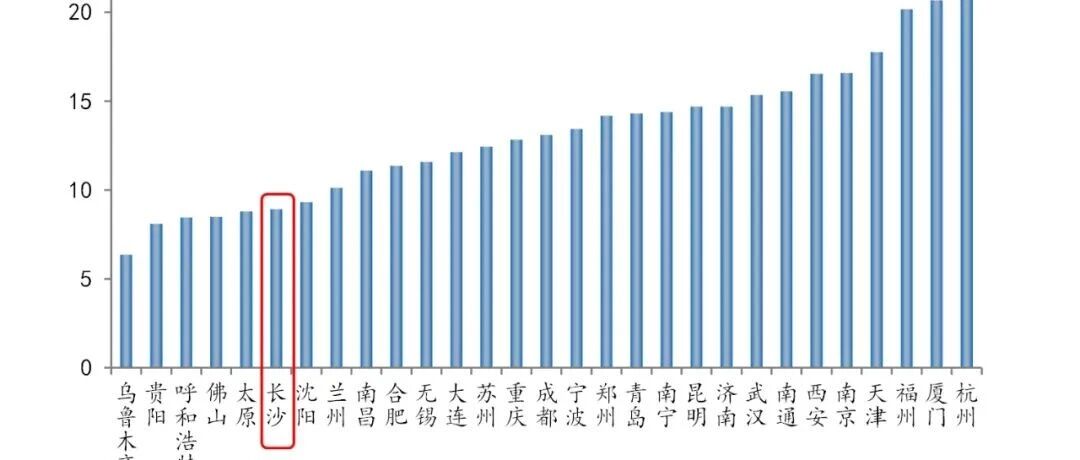
Core Viewpoint - The article emphasizes that high-quality development is the primary task for building a modern socialist country, with a focus on enhancing residents' happiness index as a crucial aspect of achieving this goal. The research ranks the happiness index of 337 cities in mainland China, identifying Nanjing, Hangzhou, and Changsha among the top ten happiest cities in 2023. Group 1: Nanjing - Nanjing is recognized for its rich historical background, excellent transportation network, and abundant educational resources. The city has a favorable climate and high urban greenery, with a green coverage rate of 45.0% and a green land rate of 40.8% [8][9] - In 2022, Nanjing's GDP per capita reached 179,000 yuan, ranking first among provincial capital cities in China. The city has a diverse industrial structure, primarily driven by modern services and advanced manufacturing [9][10] - Nanjing boasts a concentration of higher education institutions, including 8 211 universities and 12 double first-class universities, and is a significant transportation hub with a well-developed public transport network [10] Group 2: Hangzhou - Hangzhou is characterized by its blend of historical heritage and modern vitality, with a strong emphasis on ecological civilization. The city has an air quality rate of 83.3% and a forest coverage rate of 65.3% [15][16] - The digital economy is a key driver of Hangzhou's growth, with the core industry value added exceeding 507.6 billion yuan in 2022, accounting for over 27.1% of the city's GDP [16][17] - The city maintains a strong population attraction, with a total population of 12.376 million by the end of 2022, and a continuous improvement in urbanization rate [17] Group 3: Changsha - Changsha is known for its vibrant night economy and balanced urban-rural development, with the night economy retail sales accounting for about 60% of the city's total retail sales in 2022 [21][22] - The city has a low cost of living among second-tier cities, with a housing price-to-income ratio of 8.9, making it attractive for young talents [22] - Changsha's urban-rural income disparity is minimal, with a ratio of 1.7, and the average disposable income for urban residents reached 35,481 yuan in 2023 [22] Group 4: Hefei - Hefei is recognized as the first "China Climate Comfortable City" provincial capital, with an air quality rate of 86.0% and a favorable climate for living [23][24] - The city has experienced rapid economic growth, with a GDP growth rate of 7.4% in the first half of 2023, entering the top 20 cities in China [24][25] - Hefei's population growth rate is the highest in the country, supported by its strong educational resources and innovation capabilities [25] Group 5: Zhoushan - Zhoushan is the only fourth-tier city in the top ten happiest cities, known for its beautiful island scenery and rich marine resources [27][28] - In 2022, Zhoushan's GDP per capita reached 167,000 yuan, ranking first in Zhejiang Province, with a low housing price-to-income ratio of 7.7 [28][29] - The city has a strong focus on ecological protection and sustainable development, with a PM2.5 annual average concentration of only 14 micrograms per cubic meter [29] Group 6: Wuhu - Wuhu is recognized as the second city in Anhui, with a strong focus on high-end manufacturing and a GDP of 450.21 billion yuan in 2022 [32][33] - The city has a low housing price-to-income ratio of 8.4, making it attractive for residents and contributing to stable population growth [33][34] - Wuhu's population growth rate was 1.6% in 2022, ranking third in the country, supported by favorable economic conditions and talent attraction policies [34] Group 7: Suzhou - Suzhou is an industrial powerhouse with the highest economic strength in Jiangsu Province, achieving a GDP of 2.4 trillion yuan in 2022 [36][37] - The city has a reasonable housing price-to-income ratio of 12.4, making it more affordable compared to other cities with similar economic strength [36] - Suzhou's urban construction and transportation infrastructure are well-developed, providing residents with a high quality of life [37] Group 8: Ningbo - Ningbo is a historical port city with a GDP of 1.57043 trillion yuan in 2022, showing a growth of 3.5% [41][42] - The city has a balanced urban-rural development, with a disposable income ratio of 1.7, indicating a narrowing income gap [42] - Ningbo's transportation infrastructure is highly developed, with an average commuting time of 31.3 minutes, contributing to residents' satisfaction [42] Group 9: Dalian - Dalian is known as the "Northeast Window," with a GDP of 843.09 billion yuan in 2022, ranking first in Liaoning Province [47][48] - The city has the highest population growth rate in Northeast China, supported by its quality education and healthcare resources [48] - Dalian's air quality is among the best in the country, with a high number of days with good air quality [46] Group 10: Zhuhai - Zhuhai is recognized for its excellent ecological environment, with a per capita GDP of 164,000 yuan in 2022 [49][50] - The city has a strong talent attraction capability, with a population growth of 58.8% from 2010 to 2022 [51] - Zhuhai's economic structure is diverse, focusing on high-end manufacturing and high-tech industries [50][51]
创维集团发盈警,预期2025年度溢利同比减少约30%
Zhi Tong Cai Jing· 2026-02-12 09:20
Core Viewpoint - The company expects a profit decline of approximately 30% for the fiscal year ending December 31, 2025, compared to the fiscal year ending December 31, 2024, primarily due to the ongoing downturn in the Chinese real estate market and sluggish sales [1] Group 1: Financial Performance - The anticipated profit decline is significantly influenced by impairment provisions related to certain regional properties in the modern services sector, reflecting the current market environment [1] - The company has increased its real estate inventory impairment provisions in accordance with accounting standards, indicating a response to market changes [1] Group 2: Business Segments - The performance of the smart systems technology segment is also expected to impact overall results, with a decline in profitability and product gross margins year-on-year due to competitive market conditions [1]
创维集团(00751)发盈警,预期2025年度溢利同比减少约30%
智通财经网· 2026-02-12 09:19
Core Viewpoint - Skyworth Group (00751) anticipates a profit decline of approximately 30% for the fiscal year ending December 31, 2025, compared to the fiscal year ending December 31, 2024, primarily due to the ongoing downturn in the Chinese real estate market and sluggish sales [1] Group 1: Financial Performance - The expected profit decline is significantly influenced by impairment provisions in the construction development segment of the modern services business, reflecting poor performance in certain regional properties [1] - The company has increased its real estate inventory impairment provisions in accordance with accounting standards, which mainly reflects changes in the current market environment [1] Group 2: Market Conditions - The overall performance and product gross margin of the intelligent systems technology segment are also expected to be impacted due to competitive market conditions, leading to a year-on-year decline [1] - The company will continue to closely monitor market dynamics and may make timely adjustments to reflect asset values based on market changes [1]
省战新基金集群总规模跃升至2756亿元
Xin Hua Ri Bao· 2026-02-11 22:04
Core Insights - The provincial strategic emerging industry fund cluster held its first meeting of 2026, signing agreements for five specialized funds with a total scale of 69.1 billion yuan, raising the total scale of the fund cluster to 275.6 billion yuan [1][2] Group 1: Fund Details - The Long Triangle Venture Capital Guidance Fund, with a scale of 55.1 billion yuan, is a key highlight of the signing, aimed at supporting the integration development strategy of the Yangtze River Delta region [1] - The provincial fund for high-quality development of new industries, initiated by the High Investment Group, has a scale of 10 billion yuan and focuses on sectors such as biomedicine, new energy, integrated circuits, artificial intelligence, and robotics [1] - The Jiangsu Province Suhao Modern Service Industry Innovation Development Fund aims to promote the deep integration of modern service industries with strategic emerging industries, with a target scale of 10 billion yuan and an initial phase of 2 billion yuan [1] Group 2: Fund Cluster Achievements - The provincial strategic emerging industry fund cluster has established a total of 46 specialized funds with a cumulative scale of 176 billion yuan, completing decision-making processes for 50 sub-funds totaling 49.6 billion yuan [2] - The fund cluster has invested in over 200 projects, leading to direct equity investments exceeding 20 billion yuan, with two direct investment projects achieving IPO listings [2]
天眼查报告:我国AI相关企业近230万家,去年新增超55万家,同比增长32.6%
Xin Lang Cai Jing· 2026-02-11 05:02
Group 1 - As of 2025, the total number of small and micro enterprises in China with registered capital of less than 5 million yuan has exceeded 130 million, accounting for 66% of all operating entities, with an annual increase of 7.68 million enterprises, averaging over 20,000 new enterprises daily [1][3] - The artificial intelligence sector is showing robust innovation capabilities, with nearly 2.3 million AI-related enterprises by 2025, including over 550,000 newly established enterprises in 2025, representing a 32.6% increase compared to the same period in 2024, covering over 20 fields such as smart manufacturing, smart transportation, and smart healthcare [1][3] - The low-altitude economy is emerging as a new industrial blue ocean, with a 135.6% increase in registered low-altitude economy enterprises in 2025, reaching a total of 157,000 enterprises, and financing for smart unmanned aerial vehicle manufacturing companies exceeding 17.4 billion yuan, a 45.9% increase from 2024 [1][3] Group 2 - The new energy vehicle industry has achieved a "qualitative leap," with the number of related enterprises reaching 1.079 million by 2025, and an increase of 381,000 enterprises in 2025, representing a year-on-year growth of 5.5% [2][4] - In the modern service industry, there are over 2.599 million existing tourism-related enterprises nationwide, with the cultural and tourism industry becoming a new growth engine for regional economic growth. In 2025, only in the four sectors of cultural and entertainment, leasing and business services, accommodation, and catering, Heilongjiang added 361,000 enterprises, accounting for 25% of all new enterprises in the province, meaning that for every four new enterprises, one is related to the cultural tourism industry [2][4]
培育经济内生增长新动能
Ren Min Ri Bao· 2026-02-11 01:27
Core Viewpoint - The Chinese government emphasizes the importance of expanding domestic demand as a strategic foundation for economic development, highlighting the need for a consumption-driven growth model that enhances the quality of economic circulation and strengthens domestic economic dynamics [1]. Group 1: Youth Consumption and Economic Dynamics - Youth consumption is recognized as a vital force in driving supply innovation, promoting industrial upgrades, and enhancing the internal dynamics of economic growth [1]. - The role of youth consumption is evolving, serving not only to meet the needs of a better life but also to stimulate supply-side innovation and facilitate the restructuring of economic factors [1]. Group 2: The Interdependence of Production and Consumption - According to Marxist political economy, production and consumption are interdependent, with consumption playing a crucial role in shaping productivity and driving innovation [2]. - Youth consumption exemplifies new growth momentum and innovation facilitation, particularly through service outsourcing that optimizes human capital allocation and enhances overall productivity [2]. Group 3: Innovation through Youth Consumption - Youth are often early adopters of new products and technologies, which accelerates the iteration of technology and fosters innovation through demand-driven signals [3]. - The emergence of "third spaces" such as cafes and cultural salons serves as venues for knowledge exchange and creative collaboration, further stimulating urban economic development [3]. Group 4: Data as a Key Economic Factor - In the digital economy, youth act as data producers, generating valuable data through their online interactions, which can be utilized to optimize production processes and enhance supply-demand matching [4]. - The accumulation of data from youth consumption behaviors supports the digital economy by enabling companies to achieve precise research and personalized services, thereby improving resource allocation efficiency [4]. Group 5: Policy Recommendations for Enhancing Youth Consumption - To maximize the innovative potential of youth consumption, it is essential to integrate encouragement for youth consumption into the broader strategy of expanding domestic demand, focusing on efficiency, innovation, and value transformation [5]. - Recommendations include improving service supply systems, optimizing new consumption environments, and enhancing data governance to support the healthy development of new business models and cultural offerings [5].
天津经开区:从能源破局到百亿投建 传统园区的零碳转型样本
Xin Lang Cai Jing· 2026-02-10 23:13
Core Viewpoint - The Tianjin Economic and Technological Development Zone (TEDA) is advancing towards becoming a national-level zero-carbon park by 2030, focusing on transforming its existing industrial energy systems to achieve low-carbon goals while maintaining economic stability [1][2][3]. Group 1: Zero-Carbon Park Development - TEDA has been selected as one of the first national-level zero-carbon parks, with a construction plan to be completed by 2030 [1][2]. - The park will implement a five-year plan to guide the development of the zero-carbon park, emphasizing the need for a systematic energy supply-side transformation [4][5]. - The core indicator for the zero-carbon park is to achieve a carbon emission of no more than 0.2 tons per ton of standard coal consumed, alongside a clean energy consumption rate exceeding 50% [7][8]. Group 2: Energy System Transformation - The transformation will focus on upgrading the existing energy supply system rather than starting from scratch, which presents unique challenges due to the complexity of the current industrial ecosystem [3][6]. - The park plans to close existing coal-fired boilers to significantly reduce carbon emissions, which is a key strategy to meet the core indicator [5][6]. - Investment for the low-carbon transformation is projected to reach a scale of around 100 billion yuan, targeting the "source, network, load, and storage" aspects of the energy system [8][9]. Group 3: Corporate Participation and Support - Corporate engagement is crucial for the success of the zero-carbon park, with varying motivations among companies, such as compliance with international carbon regulations and customer demands for low-carbon supply chains [10][12]. - The park has established a management mechanism that combines incentives and constraints to encourage companies to meet energy-saving targets, with support for those exceeding their goals [12][13]. - Companies are encouraged to build energy management centers and connect to online monitoring systems to enhance energy efficiency and carbon management [12][13].
天津经开区:从能源破局到百亿投建,传统园区的零碳转型样本
2 1 Shi Ji Jing Ji Bao Dao· 2026-02-10 09:45
Core Viewpoint - The Tianjin Economic and Technological Development Zone (TEDA) is advancing towards becoming a national-level zero-carbon park by 2030, focusing on transforming its existing industrial energy systems to achieve low-carbon goals while maintaining economic stability [1][2][3]. Group 1: Zero-Carbon Park Development - TEDA has been selected as one of the first national-level zero-carbon parks, with a construction plan to be completed by 2030 [1][3]. - The park will implement a five-year plan to guide the development of the zero-carbon park, emphasizing the need for a systematic energy supply-side transformation [4][5]. - The core indicator for the zero-carbon park is to achieve a carbon emission of no more than 0.2 tons per ton of standard coal consumed, alongside a clean energy consumption rate exceeding 50% [7][8]. Group 2: Energy System Transformation - The transformation will focus on upgrading the existing energy supply system rather than starting from scratch, which presents unique challenges due to the complexity of the current industrial ecosystem [2][3]. - The park plans to close existing coal-fired boilers to significantly reduce carbon emissions, which is a key strategy to meet the core indicator [5][7]. - Investment for the low-carbon transformation is projected to reach a scale of around 10 billion, targeting four core areas: source, network, load, and storage [8][9]. Group 3: Corporate Participation and Support - Corporate engagement is crucial for the success of the zero-carbon park, with varying motivations among companies, such as compliance with international carbon regulations and supply chain requirements [10][12]. - The park has established a closed-loop management mechanism that incentivizes companies to meet energy-saving targets, providing financial and policy support for successful projects [12][13]. - Companies are encouraged to build energy management centers and connect to online monitoring systems to enhance energy efficiency and carbon management [12][13].