电影制作

Search documents
工业经济向“新”而行 多视角感知未来产业“练兵场”澎湃活力
Yang Shi Wang· 2025-10-23 08:24
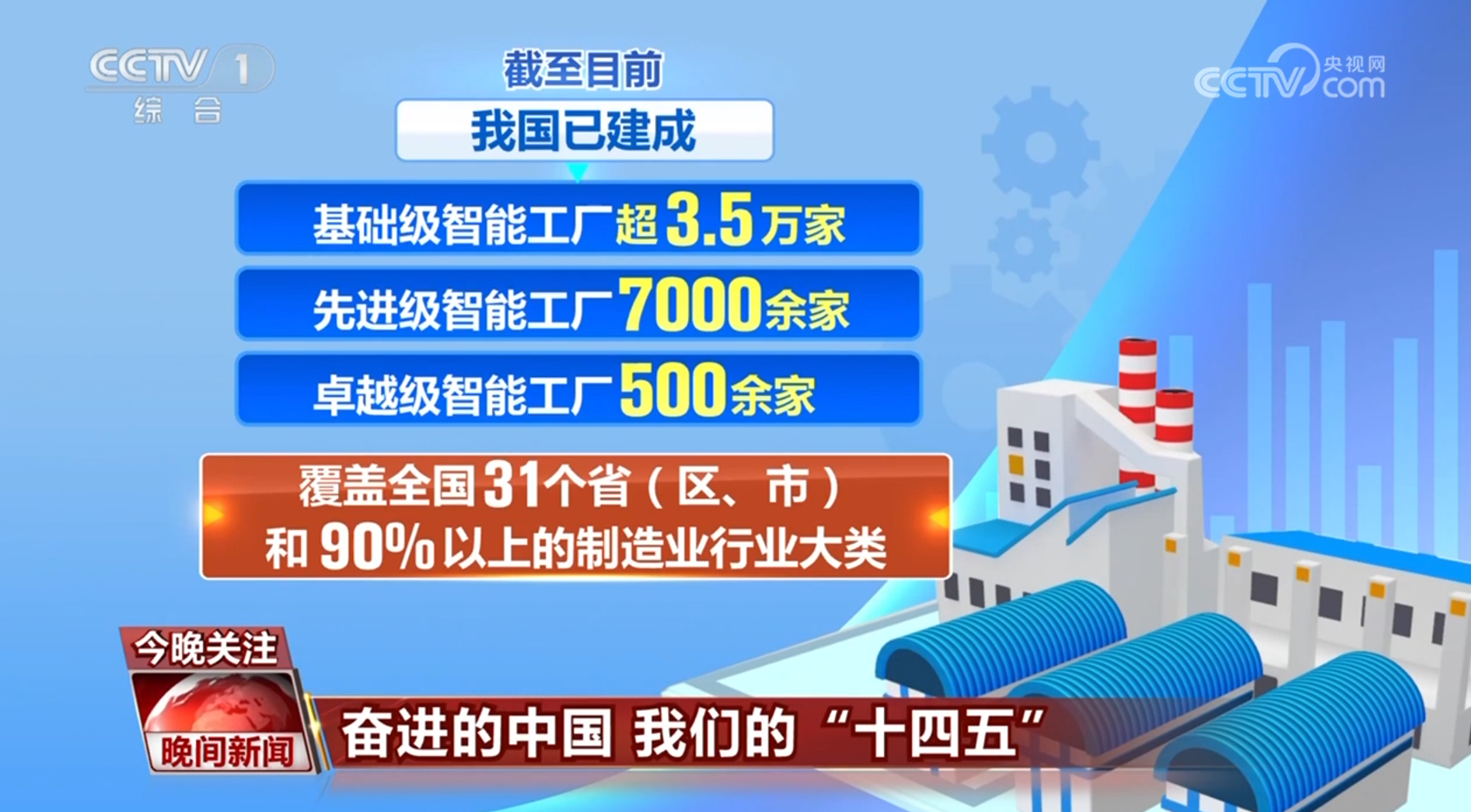
Group 1: Industrial Growth - The industrial added value in China increased by 6.2% year-on-year in the first three quarters of 2025, with the automotive, electrical machinery, and electronics sectors contributing nearly 40% to the overall industrial growth [1] - Since the start of the 14th Five-Year Plan, new productive forces have enhanced production efficiency, convenience in daily life, and intelligent transportation, becoming a crucial driver for stable industrial growth in China [1] Group 2: Smart Factories - Over 35,000 basic-level smart factories, more than 7,000 advanced-level factories, and over 500 excellent-level factories have been established across China, covering all 31 provinces and over 90% of major manufacturing sectors [3] - Half of the latest batch of global lighthouse factories are located in China, indicating a significant advancement in smart manufacturing capabilities [3] Group 3: Automation and Robotics - In a smart manufacturing plant in Shanxi, a steel plate can be transformed into engineering machinery in just over 8 minutes, achieving a 70% increase in efficiency [5] - A car manufacturing plant in Chongqing has over 3,000 robots on the production line, achieving 100% automation in key processes and over 1,000 AI visual inspection points to detect defects in seconds [5] - China is the world's largest producer of robots, with over 10 million units, and has recently opened the largest humanoid robot training center in Beijing [13][21] Group 4: Film Industry Innovation - The film box office in China surpassed 40 billion yuan in 2025, with new productive forces enhancing special effects through advanced filming equipment [8] - The first digital intelligent scene workshop in the country has improved filming efficiency by 55% and reduced costs for sci-fi scenes by 90% [8] Group 5: Humanoid Robot Training - The humanoid robot training center in Beijing spans 14,000 square meters, replicating real-life work environments for practical training [15] - Robots are trained in 16 specialized scenarios, achieving a success rate of over 95% in skills such as handling, inspection, and delivery [23]

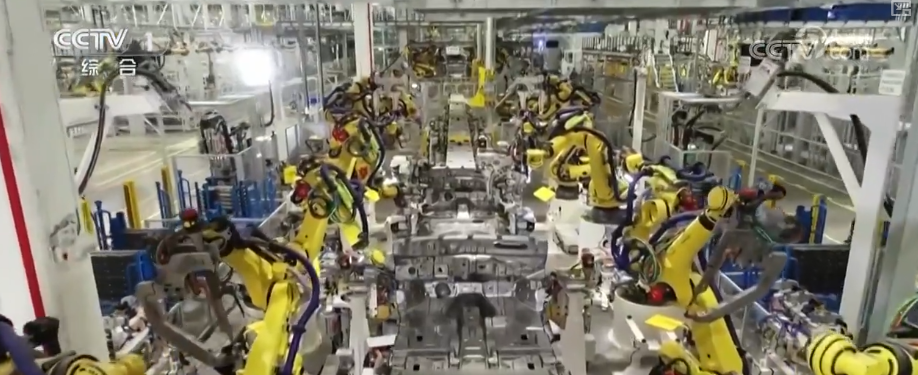
【奋进的中国 我们的“十四五”】新质生产力促进工业经济稳定增长
Yang Shi Wang· 2025-10-22 19:54
Group 1 - The core viewpoint of the articles highlights the significant growth in China's industrial sector, with a reported year-on-year increase of 6.2% in industrial added value for the first three quarters of the year, driven largely by the automotive, electrical machinery, and electronics industries, which together contributed nearly 40% to the overall industrial growth [1] - Since the start of the 14th Five-Year Plan, the development of new productive forces has led to more efficient production, enhanced convenience in daily life, and smarter transportation, becoming a crucial driver for stable growth in China's industrial economy [1] Group 2 - China has established over 35,000 basic-level smart factories, more than 7,000 advanced-level smart factories, and over 500 excellent-level smart factories, covering all 31 provinces and more than 90% of major manufacturing industry categories [4] - The latest batch of global lighthouse factories includes a significant number located in China, indicating the country's leadership in smart manufacturing [4] Group 3 - In a smart manufacturing factory in Shanxi, a steel plate can be transformed into engineering machinery in just over 8 minutes, achieving a 70% increase in efficiency [5] - A car manufacturing plant in Chongqing utilizes over 3,000 robots for 100% automation of key processes and has more than 1,000 AI visual inspection points to detect defects in seconds [5] - The first domestically certified manned electric vertical take-off and landing aircraft was produced at a drone manufacturing base in Guangdong, with an annual production capacity of 600 units [5] - A satellite super factory in Zhejiang can assemble a satellite in 28 days by breaking it down into over 200 standard modules, reducing costs by 45% [5] Group 4 - The film industry in China has surpassed 40 billion yuan in box office revenue this year, benefiting from high-tech filming equipment that enhances special effects [6] - The first digital intelligent scene workshop in the country has improved filming efficiency by 55% and reduced costs for sci-fi scenes by 90% [6]
场景切换用时不到1秒 虚拟拍摄“魔法”让电影制作更高效
Yang Shi Xin Wen Ke Hu Duan· 2025-10-22 07:26
Group 1 - The core viewpoint is that new productive forces are quietly transforming cultural consumption experiences, with China's film box office surpassing 40 billion yuan this year, indicating an increase in both the quantity of films and the enhancement of special effects due to advanced technology [1] Group 2 - The Chongqing Yongchuan Technology Film Studio has pioneered a digital intelligent scene-changing workshop in the country, equipped with an industrial scene-changing platform that allows for simultaneous scene setting during filming [3] - The virtual filming setup features LED background screens that can quickly change and render high-definition images in under one second, facilitating rapid scene transitions [3] Group 3 - The ability to freely switch and modify scenes through virtual filming has resulted in a 55% increase in filming efficiency and a 90% reduction in costs for large sci-fi scenes [7]

构建有本土文化基因的奇幻世界
Ren Min Ri Bao· 2025-10-08 22:11
Core Insights - The film "Assassination Novelist 2," directed by Lu Yang, marks his return to the big screen after five years, expanding the visual and narrative boundaries of Chinese cinema [1] - The film explores the relationship between the storyteller and the fictional world, emphasizing the connection between reality and fiction and its impact on character destinies [1] - The central theme of the film is about self-discovery and facing oneself, aiming to inspire audiences to find courage and strength in their own lives [1] Production and Technology - "Assassination Novelist 2" features a unique blend of the novel and reality, showcasing the interaction and collision between these worlds, which posed significant production challenges [2] - The film involved nearly 40 special effects teams and utilized three large soundstages over 5,000 square meters each, doubling the set design and construction compared to its predecessor [2] - The production employed advanced technology, transitioning from "pre-made" to "live" virtual shooting, allowing actors to interact in real-time while capturing their movements and expressions [3] Cultural Elements - The film integrates traditional Chinese cultural elements, including color schemes, clothing from the Sui and Tang dynasties, and ancient architecture, creating a fantastical world rooted in local culture [3] - The creative team drew inspiration from cultural heritage sites like Dunhuang and Dazu Rock Carvings, establishing an aesthetic foundation for the film [3] Director's Journey - Lu Yang reflects on his 15-year filmmaking career, noting that creating "Assassination Novelist" and its sequel took nine years due to the challenges of the fantasy genre [4] - He emphasizes the importance of continuous learning and adaptation to keep pace with evolving audience expectations and technological advancements [4]

陆家嘴财经早餐2025年10月5日星期日
Wind万得· 2025-10-05 00:49
Group 1 - The total cross-regional population flow in China during the National Day and Mid-Autumn Festival holiday is expected to reach 306.66 million, a year-on-year increase of 8.0% [2] - The sales revenue of key retail and catering enterprises in China increased by 3.3% year-on-year during the first four days of the holiday [2] Group 2 - The Hang Seng Technology Index rose by 13.9% in September, outperforming other major global indices [4] - Nearly 3,000 A-share listed companies were investigated by institutions in the third quarter, with over 400 institutions researching the leading company in the robotics sector, Huichuan Technology [4] - The domestic ETF market in China has reached a total scale of approximately 5.5 trillion yuan, surpassing Japan and becoming the largest ETF market in Asia [4] Group 3 - The total box office for the National Day holiday has exceeded 1.1 billion yuan, with several films backed by A-share listed companies [5] - The Chinese Geographic Information Industry Association predicts that the total output value of the national geographic information industry will reach nearly 1 trillion yuan by 2025, growing nearly 30% from the end of the 13th Five-Year Plan [5] Group 4 - Global memory chip prices have been rising, with major manufacturers like Samsung and SanDisk notifying customers of price adjustments [6] - Morgan Stanley predicts a "super cycle" for the memory chip industry driven by the AI boom [6] Group 5 - SHEIN plans to open its first physical store in France in November, marking its entry into the offline retail space [10] Group 6 - The Japanese ruling party's election resulted in the election of the first female president, who plans to address inflation and tax policies [11] - The U.S. government shutdown is expected to last at least 10 days, affecting economic data reporting [12] - The German economy ministry has revised its growth forecast for this year from 0% to 0.2% [12]

美国将对外国制作的电影征收100%的关税
Shang Wu Bu Wang Zhan· 2025-09-30 17:00
Core Viewpoint - The U.S. plans to impose a 100% tariff on all movies produced abroad, as stated by President Donald Trump, who claims that the American film industry is being undermined by foreign competition [1] Group 1: Industry Impact - The announcement has caused stock prices of major entertainment companies to decline, with Netflix and Warner Bros. Discovery seeing drops of 1.4% and 0.6% respectively in pre-market trading [1] - Trump's previous threats regarding such tariffs had left executives in the entertainment industry confused due to a lack of specific details [1]


关税突发,特朗普宣布:10月14日起生效
Zheng Quan Shi Bao· 2025-09-30 01:56
Group 1 - The U.S. government announced new tariffs on imported softwood lumber and wood products, with a 10% tariff on softwood and a 25% tariff on cabinets and related products, effective October 14 [1] - Additional tariffs include a 50% tariff on kitchen cabinets and bathroom sinks, a 30% tariff on imported furniture, and a 100% tariff on patented and branded drugs starting October 1 [1] - The announcement led to a significant drop in pharmaceutical stocks, with the White House clarifying that the new drug tariffs do not apply to countries with existing trade agreements with the U.S. [1] Group 2 - The U.S. Bureau of Labor Statistics reported a 4.7% year-over-year increase in furniture prices as a result of the tariff policies [2] - The U.S. Chamber of Commerce expressed concerns over new tariffs on heavy trucks, highlighting that the top five sources of heavy truck imports are allied countries [2] - President Trump announced plans to impose a 100% tariff on films produced outside the U.S., citing the loss of the American film industry to foreign competition [2] Group 3 - The U.S. Federal Circuit Court ruled that the legal basis for the tariffs imposed by President Trump did not grant him the authority to levy such taxes [3] - The Trump administration has appealed this ruling to the U.S. Supreme Court, which is set to hear arguments regarding the legality of the tariffs in early November [3]
关税突发!特朗普宣布:10月14日起生效!
Zheng Quan Shi Bao Wang· 2025-09-30 01:45
Group 1: Tariff Announcements - On September 29, President Trump announced a 10% tariff on imported softwood logs and lumber, and a 25% tariff on imported cabinets, bathroom vanities, and upholstered wood products, effective October 14 [1] - Additional tariffs include a 50% tariff on kitchen cabinets and bathroom sinks, a 30% tariff on imported furniture, and a 100% tariff on patented and branded drugs starting October 1 [1] - Heavy trucks will also face a 25% tariff starting October 1, with a future increase planned [1] Group 2: Market Impact - The U.S. Bureau of Labor Statistics reported a 4.7% year-over-year increase in furniture prices as of August 2025, attributed to the tariff policies [2] - The U.S. Chamber of Commerce has urged the government to reconsider new tariffs on heavy trucks, highlighting that the top five sources of heavy truck imports are allied nations [2] Group 3: Legal Challenges - The U.S. Federal Circuit Court ruled on August 29 that the law cited by Trump to impose tariffs did not grant him the authority to do so [3] - The Trump administration has appealed this ruling to the U.S. Supreme Court, which is set to hear oral arguments in the first week of November [3]
24小时环球政经要闻全览 | 9月30日
Ge Long Hui· 2025-09-30 00:36
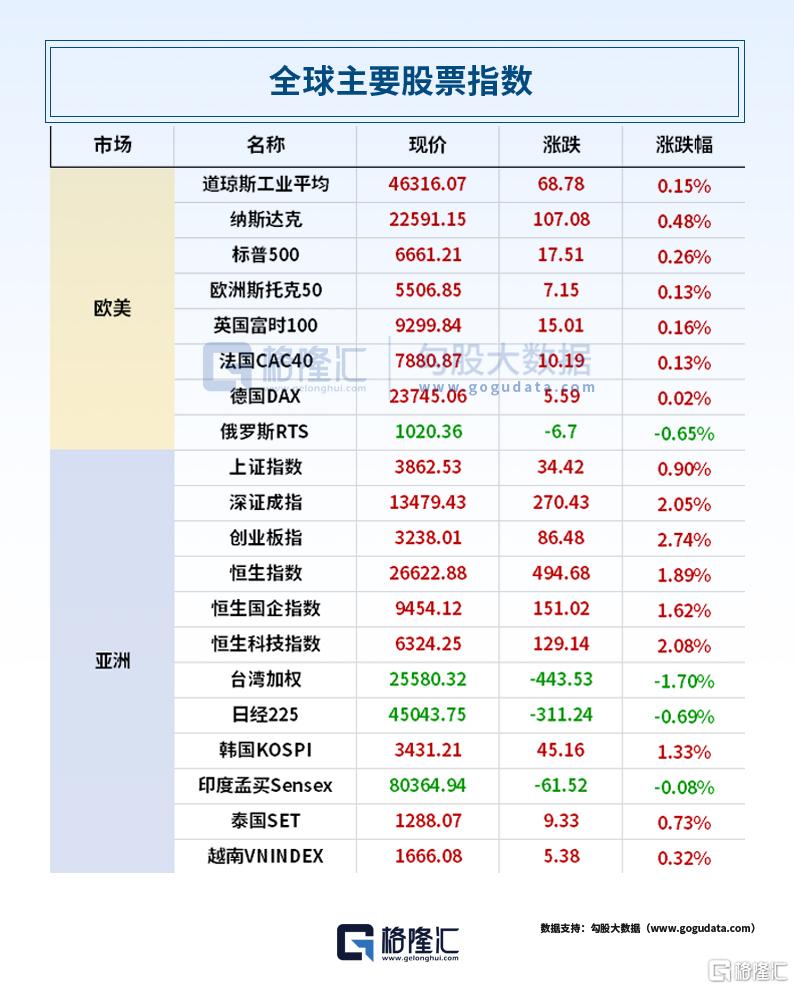
Group 1: Market Indices - Major global stock indices showed mixed performance, with the Dow Jones Industrial Average at 46,316.07, up by 68.78 points or 0.15% [1] - The Nasdaq increased by 107.08 points, reaching 22,591.15, a rise of 0.48% [1] - The S&P 500 rose by 17.51 points to 6,661.21, reflecting a 0.26% increase [1] Group 2: U.S. Government Shutdown - President Trump met with congressional leaders to discuss avoiding a government shutdown, with a funding deadline approaching [3] - Senate Democratic leader Schumer indicated significant divisions, stating that the decision on a shutdown depends on the Republican Party [3] - The U.S. Labor Statistics Bureau warned that a government shutdown would halt data collection and release, affecting upcoming non-farm payroll and CPI reports [4] Group 3: Gold Market - Gold prices reached a historic high of $3,824.5 per ounce, pushing the value of U.S. gold reserves to over $1 trillion for the first time [6] - The increase in gold prices, which have risen 45% this year, is driven by factors such as Federal Reserve interest rate cuts and geopolitical tensions [6] - Switzerland proposed a new gold refining plan to negotiate a reduction in U.S. import tariffs, with gold prices remaining stable at high levels [7] Group 4: Film Industry - President Trump announced a 100% tariff on films produced overseas, claiming that the U.S. film industry is being undermined by foreign competition [5] - This decision has caused turmoil in the film industry, with experts warning of increased production and ticket costs, potentially leading to retaliatory measures from other countries [5] Group 5: International Relations - A coalition of eight countries, including Saudi Arabia and Turkey, expressed support for Trump's ceasefire plan in Gaza, emphasizing its significance for Palestinian statehood [8] - The plan aims to establish a temporary governance structure in Gaza and prevent further conflict [8] Group 6: Technology and AI - OpenAI announced a partnership with Etsy and Shopify to introduce a direct checkout feature for U.S. users, boosting stock prices for both companies [11] - Anthropic launched a new AI model, ClaudeSonnet4.5, claiming it to be the best coding model globally, with significant performance metrics [12]
早报|清华多名师生参与黄牛活动牟利被查处;特朗普对境外制作电影征100%关税;官方辟谣工人掉入机器后做出月饼被卖出
虎嗅APP· 2025-09-29 23:53
Group 1 - Trump announced a 100% tariff on films produced outside the US, claiming that the US film industry is being undermined by foreign competition [2] - Huawei appointed Yu Chengdong as the head of its Product Investment Review Board, with a focus on leading the company's AI strategy [3] - OpenAI launched an instant checkout feature in collaboration with Etsy and Shopify, targeting US users of ChatGPT [5] Group 2 - Germany is considering a ban on social media use for individuals under 16 years old, as part of stricter regulations for minors online [6][7] - China introduced a new "K visa" to promote exchanges and cooperation among young tech talents [8] - Tsinghua University reported disciplinary actions against staff involved in illegal activities related to campus access and profit-making [9] Group 3 - A major criminal case in Zhejiang resulted in 11 individuals receiving death sentences for their involvement in a crime syndicate [11] - DeepSeek announced a significant reduction in costs for its new model, with output prices dropping by 75% and overall API call costs decreasing by over 50% [20] - Xiaomi denied reports of reducing orders for its 17 series smartphones, stating that there are no plans to cut orders despite a projected 20% decrease in total shipments [24] Group 4 - OPPO plans to launch a new series of handheld gimbal cameras by 2026, targeting competition with brands like GoPro and DJI [25] - Huang Renxun clarified misconceptions about China's AI chip manufacturing capabilities, asserting that claims of a two to three-year lag behind the US are unfounded [28] - The railway sector in China is transitioning to a fully digital electronic invoicing system, ending the provision of paper receipts [29]