
酒类

Search documents
耍游戏赢奖品 租车券等你来领丨马上迎新春
Xin Lang Cai Jing· 2026-02-15 16:55
Group 1 - The core activity is a large-scale online interactive game launched by Cover News, offering users the chance to win cash red envelopes and various prizes as part of the Spring Festival celebrations [2] - Users can earn rewards by completing tasks in the game, with the highest cash reward being 99 yuan, alongside other amounts like 88 yuan, 66 yuan, and 52 yuan, as well as numerous smaller red envelopes [2] - The "Cover Spring Market" features nearly a thousand types of gifts, including food, scenic tickets, and cultural products, which can be exchanged for coins earned in the game [2] Group 2 - Zuzuche, a leading global self-driving travel platform in China, operates in nearly 6,000 cities and over 200,000 stores, providing international and domestic car rentals, scenic tickets, free GPS, 24/7 global customer service, and insurance [4] - Zuzuche partners with well-known international car rental companies such as Alamo, Avis, Budget, Hertz, Dollar, Thrifty, Europcar, and Sixt, as well as regional and Chinese car rental services to create a comprehensive service network for outbound travel [4] - Domestically, Zuzuche collaborates with over 7,000 major car rental platforms and quality suppliers in various cities to enhance the self-driving travel experience for Chinese tourists [4] Group 3 - The Spring Market offers a variety of gifts, including Zuzuche's no-threshold discount coupons, beverages, wines, and unique items like Tesla stainless steel straws and book blind boxes [5] - The event runs until February 23, allowing users to participate through the Cover News app and WeChat, with app users having more opportunities to engage daily [5] - Users can also redeem participation chances using points, with each redemption costing 99 points, allowing for additional engagement in the event [5]

新疆乌苏市市场监管局开展过度包装执法检查 促绿色消费成风尚
Zhong Guo Shi Pin Wang· 2026-02-14 07:48
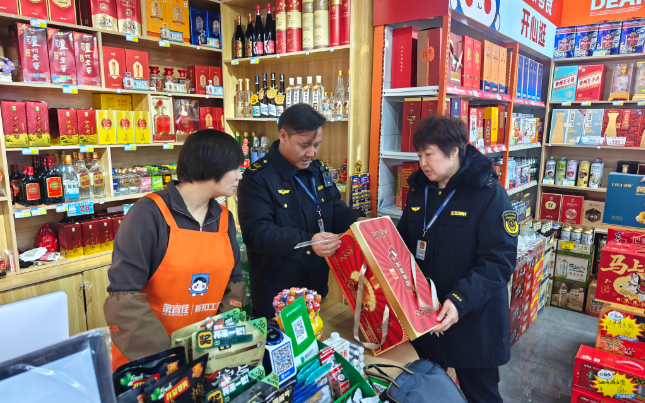
Group 1 - The core viewpoint of the articles emphasizes the importance of regulating excessive packaging in the market to promote green and low-carbon consumption, especially as the Spring Festival approaches [1][3] - The Urumqi Market Supervision Administration is conducting a special enforcement action focused on excessive packaging, targeting products such as tea, cosmetics, food, and alcohol [1] - Enforcement actions include inspections of large supermarkets and cosmetic stores, checking compliance with documentation requirements and identifying violations related to excessive packaging [1] Group 2 - The administration is using various methods such as supervision, guidance, and public exposure to strengthen regulatory enforcement against excessive packaging [1] - The agency is educating consumers about the harms of excessive packaging and encouraging them to resist it, promoting a green consumption philosophy [1] - Future plans include maintaining ongoing regulation of excessive packaging, enhancing policy promotion, and ensuring consumer rights are protected during the festive shopping surge [3]
江苏省南通市2026年食品安全监督抽检结果公告(第一期)
Zhong Guo Zhi Liang Xin Wen Wang· 2026-02-14 04:35
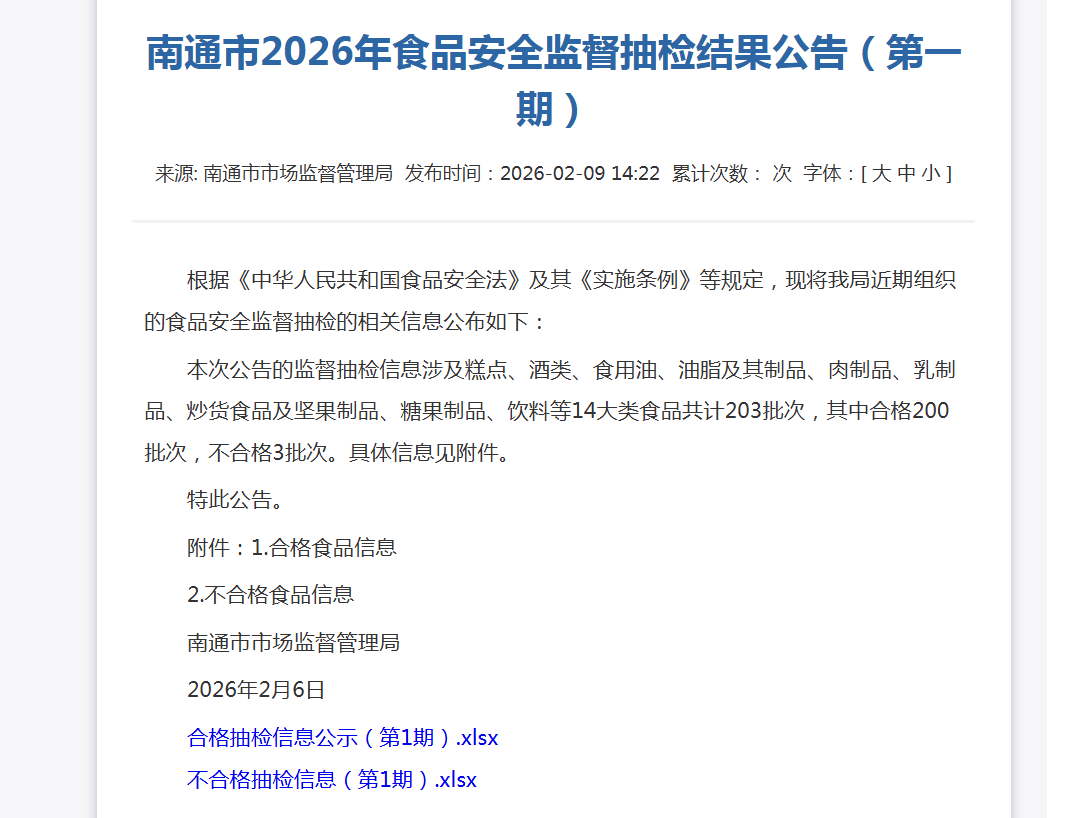
Summary of Key Points Core Viewpoint The recent food safety supervision sampling conducted by the Nantong Market Supervision Administration revealed that out of 203 batches of various food products tested, 200 batches were found to be compliant with safety standards, while 3 batches were deemed non-compliant. Group 1: Food Safety Supervision Results - A total of 203 batches of food products were tested, covering 14 categories including pastries, alcoholic beverages, edible oils, meat products, dairy products, and snacks [2][3]. - Out of the 203 batches, 200 were found to be compliant, resulting in a compliance rate of approximately 98.5% [2][3]. Group 2: Non-Compliant Food Products - Three batches were identified as non-compliant, with specific details provided in the attached documentation [2][3]. - The non-compliant products include items from various categories, indicating potential areas for improvement in food safety standards [2][3].



劲牌去年整体业绩增长10.8%
Cai Jing Wang· 2026-02-13 08:34
Group 1 - The core viewpoint of the article is that the company, Jinpai, is expected to achieve a steady growth rate of 10.8% in overall performance by 2025, indicating a sustainable and robust development trajectory [1] Group 2 - The announcement was made on February 13, highlighting the company's commitment to maintaining its growth momentum [1]
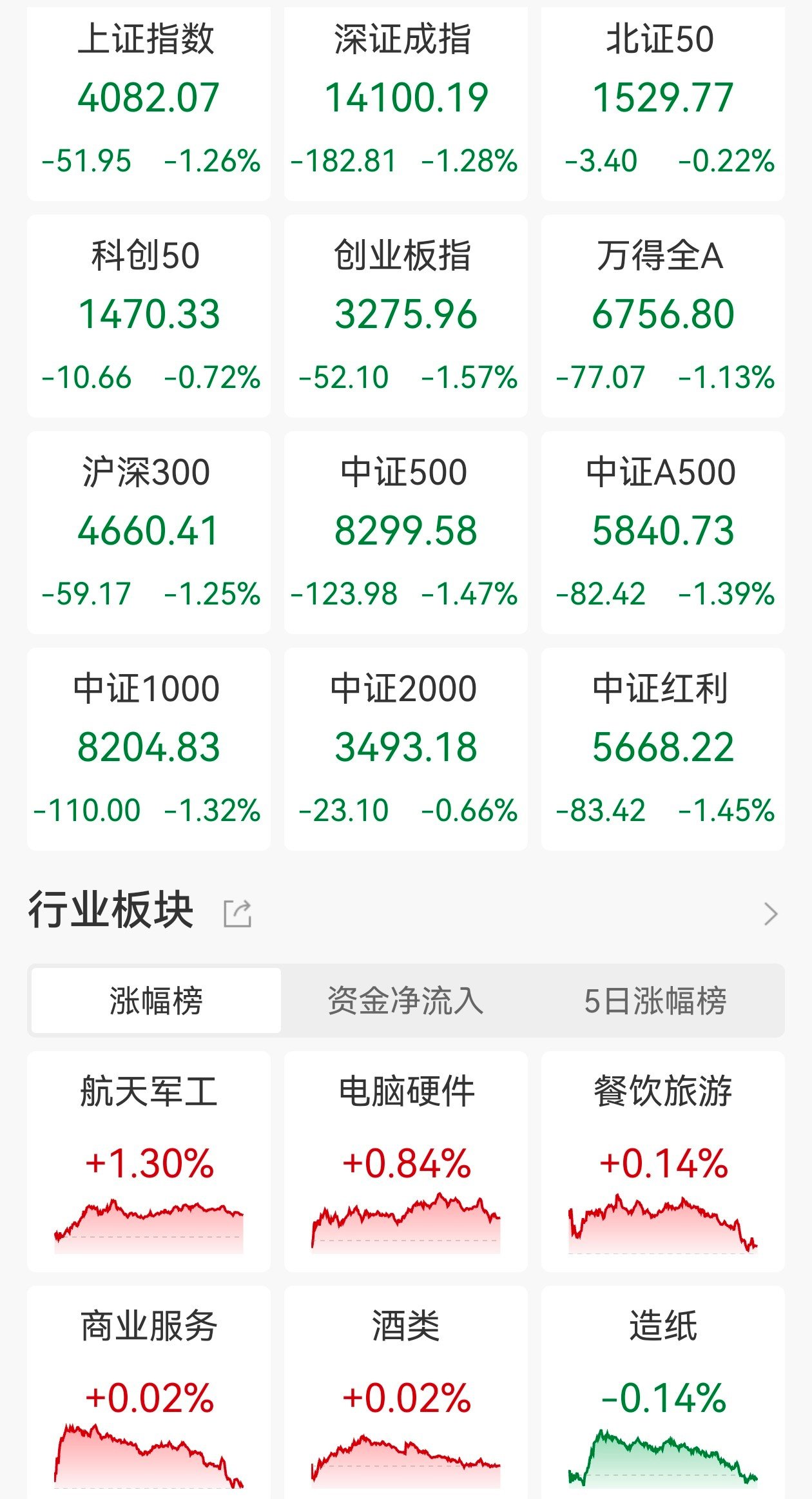
A股三大股指跌超1.2%:周期股全线回调,两市成交不足2万亿元
Sou Hu Cai Jing· 2026-02-13 07:24
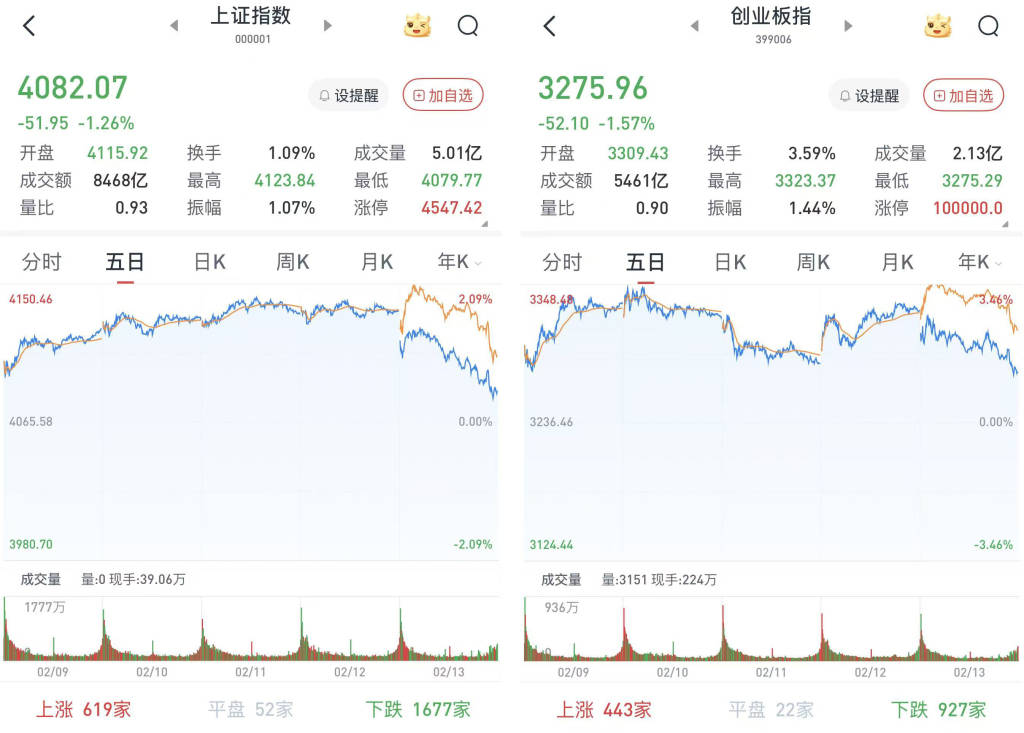
Market Overview - The A-share market experienced a collective decline on February 13, with the Shanghai Composite Index falling by 1.26% to 4082.07 points, the ChiNext Index down by 1.57% to 3275.96 points, and the Shenzhen Component Index decreasing by 1.28% to 14100.19 points [2] - The total trading volume in the Shanghai and Shenzhen markets was 198.27 billion yuan, a decrease of 15.91 billion yuan from the previous trading day [2] Sector Performance - The defense and military sector led the market gains, with stocks like Andavere and Yaxing Anchor Chain hitting the daily limit or rising over 10% [3] - Semiconductor stocks initially surged, with companies such as Micro导纳米 and Shengke Communication seeing increases of over 10% [3] - Conversely, the oil and gas sector faced significant declines, with major companies like China Petroleum and Sinopec dropping over 3% [3] - The materials sector, particularly non-ferrous metals, was the worst performer, with stocks like Hesheng and Xianglu Tungsten falling over 9% [3] Investor Sentiment - As the Spring Festival holiday approaches, investor sentiment is shifting towards either "holding stocks over the holiday" or "holding cash and waiting," with many brokerages suggesting a strategy of holding stocks [4] - Financial analysts noted that trading activity has decreased as the holiday nears, indicating a potential phase of consolidation in the market [5] - There is a consensus among brokerages that the market is experiencing structural differentiation, with some sectors showing strength while others lag behind [5]
A股收评:三大指数集体下挫!全市场成交额不足2万亿,商业航天逆市走高
Ge Long Hui· 2026-02-13 07:07
Market Performance - On the last trading day before the holiday, all three major A-share indices fell collectively, with the Shanghai Composite Index down 1.26% to 4082 points, the Shenzhen Component Index down 1.28%, and the ChiNext Index down 1.57% [1] - The total market turnover approached 2 trillion yuan, a decrease of 161.8 billion yuan compared to the previous trading day, with over 3800 stocks declining [1] Sector Performance - The CPO concept saw a significant decline, with Changxin Bochuang dropping over 11% [1] - The photovoltaic equipment sector weakened, with Shuangliang Energy hitting the daily limit down [1] - The small metals sector experienced widespread declines, with Yunlu Co. and Longci Technology both falling over 5% [1] - The glass and fiberglass sector also weakened, led by Shandong Pharmaceutical Glass [1] - The shipping and port, F5G concept, titanium dioxide, and Kimi concept sectors had notable declines [1] - Conversely, the shipbuilding sector rose, with Yaxing Anchor Chain hitting the daily limit up [1] - The commercial aerospace sector surged following the successful completion of China's first rocket first-stage body sea recovery mission, with Hangfa Power hitting the daily limit up [1] - The robotics sector was active, led by Wuzhou New Spring [1] - The aquaculture, motor, and reducer sectors showed notable gains [1] Index Performance - Shanghai Composite Index: 4082.07, down 51.95 points (-1.26%) [1] - Shenzhen Component Index: 14100.19, down 182.81 points (-1.28%) [1] - ChiNext Index: 3275.96, down 52.10 points (-1.57%) [1] - Other indices such as the CSI 300, CSI 500, and others also reported declines [1]
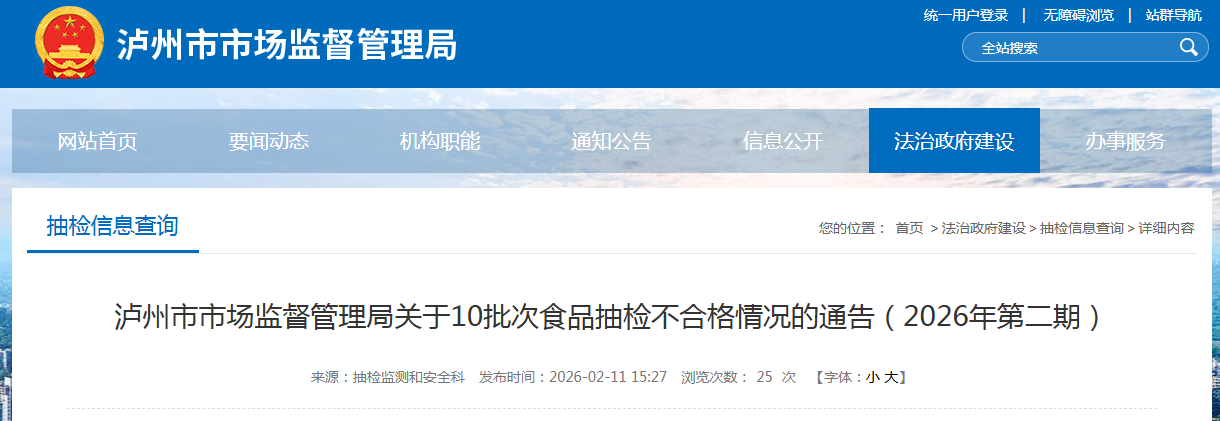
四川省泸州市市场监督管理局关于10批次食品抽检不合格情况的通告(2026年第二期)
Zhong Guo Zhi Liang Xin Wen Wang· 2026-02-13 04:24
Core Viewpoint - The Luzhou Market Supervision Administration reported that 10 out of 289 food samples tested were found to be non-compliant, primarily due to excessive use of food additives, pesticide residues exceeding limits, and failure to meet quality standards [2]. Group 1: Inspection Results - A total of 289 food products were sampled, covering 15 categories including edible agricultural products, vegetable products, catering foods, edible oils, and tea [2]. - The non-compliant samples were identified for issues such as the use of food additives beyond permitted limits and pesticide residues exceeding allowable levels [2]. Group 2: Regulatory Actions - The Luzhou Market Supervision Administration has instructed local market supervision departments to conduct investigations and take necessary actions regarding the non-compliant food products [2]. - Consumers are encouraged to report any instances of purchasing the non-compliant products by calling the complaint hotline 12315 [2].
Z世代酒量不给力?去年第四季度全球啤酒销量下降,主要酒企股价较历史高点接近腰斩
Sou Hu Cai Jing· 2026-02-13 02:57
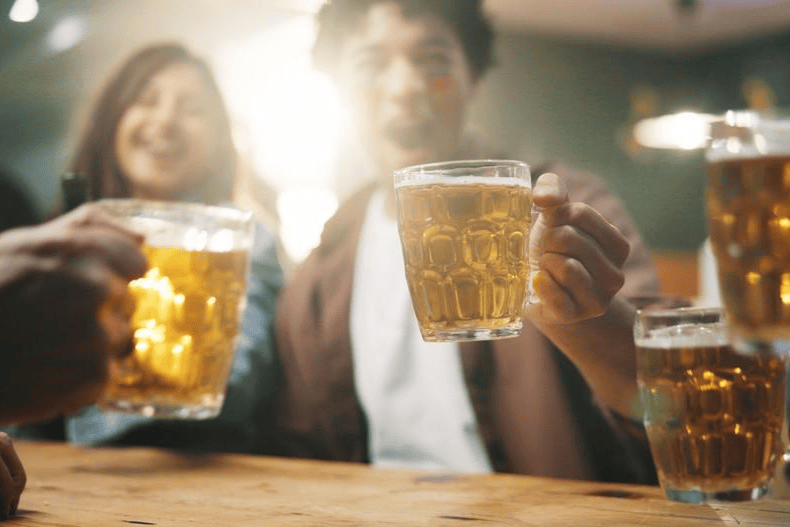
Group 1 - The global market capitalization of the top 50 publicly listed beer, wine, and spirits producers has decreased by $830 billion, a 46% drop from the historical peak in June 2021 [1] - Changing lifestyle habits among younger generations, with a shift towards health-centric living, are leading to a decline in alcohol consumption [1] - Economic slowdown resulting in reduced household spending is also contributing to the challenges faced by the alcohol industry [1] Group 2 - Heineken announced plans to cut 6,000 jobs globally, representing nearly 7% of its workforce, due to weak demand [3] - The layoffs will primarily affect Europe and non-priority markets, as well as supply chain networks and regional business units [3] - Heineken's profit growth forecast for 2026 has been revised down to 2% to 6%, lower than the previous forecast of 4% to 8% for 2025 [3] Group 3 - Global beer sales declined by 2.8% in the fourth quarter of last year, reflecting a broader trend of cost-cutting and asset sales among alcohol producers [3] - Gallup polling indicates that the willingness to consume alcohol in the U.S. has reached its lowest level since records began in 1939 [3] - Concerns from health organizations are diminishing alcohol demand among Generation X, while enthusiasm for drinking is also waning among Millennials and Generation Z [3]
从便利店到家庭吧台:元气森林气泡水何以成为Z世代调酒“第一选择”?
Zhong Guo Xin Wen Wang· 2026-02-13 02:37
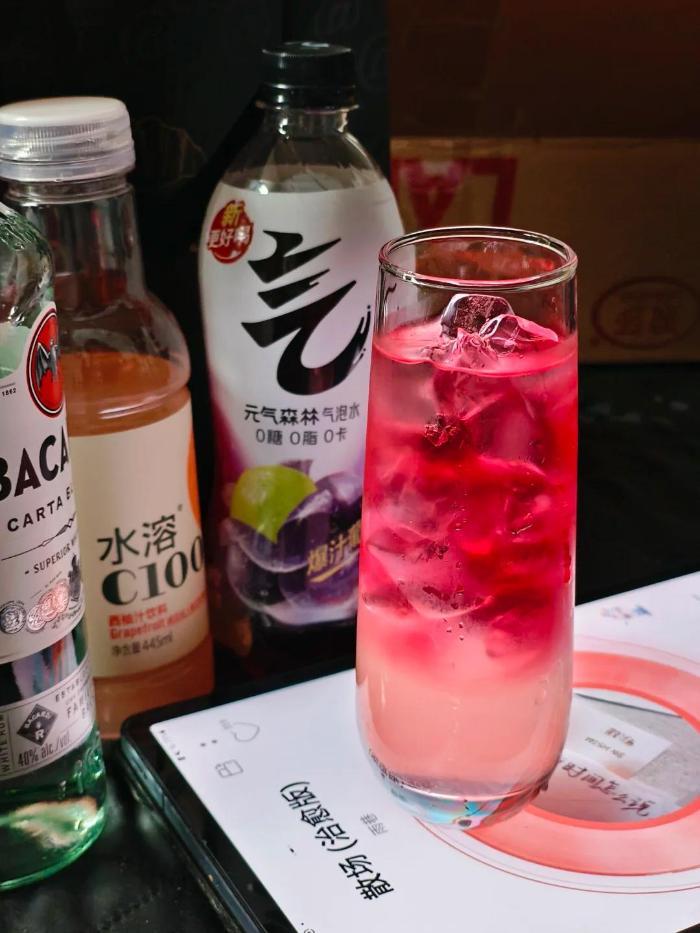
Core Insights - The "tipsy economy" is projected to reach a scale of 117.5 billion yuan by 2025, driven by a transformation in drinking habits among young consumers, emphasizing low-alcohol, personalized, and scenario-based drinking needs [1] - Over 60% of young people are willing to try homemade cocktails, with social media discussions on this topic increasing by 175% year-on-year, indicating a potential boom in the new cocktail market [1] Group 1: Market Trends - The young generation's enthusiasm for cocktail creation is being fueled by social media platforms, with topics like homemade drinks on Xiaohongshu reaching 12.2 billion views and cocktail challenges on Douyin garnering 1.19 billion views [3] - The rise of user-generated content (UGC) reflects a clear consumer trend, with "Yuanqi Forest" emerging as the preferred choice for new-style cocktails among young consumers [3][5] Group 2: Retail Dynamics - The online consumption trend is translating into offline retail strategies, with convenience stores becoming central to this transformation, actively bundling Yuanqi Forest with alcoholic products [5][7] - Nearly 30,000 convenience stores nationwide have set up cocktail combination sections, demonstrating the market's recognition of the "Yuanqi Forest + alcohol" model [7] Group 3: Product Characteristics - Yuanqi Forest's diverse flavor offerings, including white peach, grape, and orange, cater to various alcoholic pairings, enhancing the drinking experience by balancing the spiciness of alcohol [8] - The brand's early collaborations with major alcohol brands in 2023 have established a solid foundation for market acceptance and growth in cocktail culture [8] Group 4: Industry Implications - Yuanqi Forest's success in the cocktail scene illustrates the importance of breaking down category boundaries between beverages and alcohol, providing a new touchpoint for alcohol brands to reach younger consumers [9] - The emergence of the "tipsy economy" and the popularity of new-style cocktails highlight the young consumer demographic as the driving force behind market changes, emphasizing the need for brands to innovate and align with consumer demands [10]
新消费研究-即时零售应需而生-酒类品牌或迎新机遇
2026-02-13 02:17
Summary of Conference Call on Instant Retail and Alcohol Industry Industry Overview - The instant retail market in China is projected to reach 1 trillion yuan by 2025 and 2 trillion yuan by 2030, with the alcohol category experiencing rapid growth, particularly after increased investment from internet platforms [2][3][20] - Instant retail is divided into platform models and self-operated models, with the platform model integrating supermarkets and chain stores, while the self-operated model is controlled by the platform [2][5] Key Insights - The rapid expansion of Meituan's Yaimasongjiu, which adopts a franchise model, aims to cover third-tier cities, although most stores are still in the ramp-up phase [2][5] - Beer accounts for the highest sales proportion in Yaimasongjiu's store structure, with profits mainly derived from craft products, while profits from white liquor are thinner [2][6] - The average monthly revenue per store is approximately 200,000 yuan, with a net profit margin of 10%, benefiting from a low-cost operational model [2][6] Market Dynamics - The shift in consumer behavior towards instant consumption, increased subsidies from e-commerce platforms, and innovative marketing strategies from emerging brands are driving the rapid development of instant drinking, especially for white beer [3][7] - The white liquor industry has seen a channel model adjustment since 2022, with accelerated development of online and instant retail channels [8][9] Sales and Revenue Projections - By 2030, the market size for alcohol in instant retail is expected to exceed 90 billion yuan, maintaining a double-digit compound annual growth rate [4] - The penetration rate of instant retail in the white liquor market is currently low at 2%, compared to 15%-20% for online channels, indicating significant growth potential [4] Operational Insights - Yaimasongjiu's sales structure shows that white liquor accounts for 15%-20% of sales, while beer SKUs make up 60%-70% [6] - The gross margin for craft beer products is around 50%, while white liquor operates on a consignment model with lower margins [6] Competitive Landscape - The white liquor market is becoming increasingly concentrated, with the top 10 brands accounting for nearly 60% of revenue by 2024 [9] - Major brands like Moutai and Wuliangye have established strong consumer recognition, reducing the need for extensive channel education [9][19] Impact of Instant Retail - Instant retail is enhancing the operational efficiency of white liquor chain stores, allowing for a lighter asset operation model [11] - The collaboration between alcohol companies and instant retail platforms is crucial for brand strength and market penetration [17][19] Future Outlook - The overall online channel currently accounts for 15%-20% of the total distribution scale, with instant retail being a smaller fraction [20] - Companies that strategically position themselves in this evolving market are expected to enjoy longer operational cycles and brand longevity [20] Investment Recommendations - Positive outlook on companies such as Luzhou Laojiao, Shanxi Fenjiu, Guizhou Moutai, and Yanjing Beer due to their proactive strategies in the instant retail space [20]