
铁路运输

Search documents
物流ETF富国(516910)开盘跌0.92%,重仓股中远海控跌0.66%,顺丰控股跌0.76%
Xin Lang Cai Jing· 2026-03-27 01:40
Group 1 - The logistics ETF, 富国 (516910), opened down 0.92% at 1.190 yuan on March 27 [1][2] - Major holdings in the logistics ETF include 中远海控 (down 0.66%), 顺丰控股 (down 0.76%), 京沪高铁 (down 0.40%), 招商轮船 (up 0.18%), 大秦铁路 (down 0.19%), 圆通速递 (up 0.30%), 蔚蓝锂芯 (down 1.72%), 中远海能 (down 1.72%), 物产中大 (down 0.97%), and 建发股份 (down 0.44%) [1][2] - The performance benchmark for the logistics ETF is the 中证现代物流指数 return rate, managed by 富国基金管理有限公司, with a fund manager named 张圣贤 [1][2] Group 2 - Since its establishment on June 3, 2021, the logistics ETF has achieved a return of 19.97%, with a return of 0.52% over the past month [1][2]




日本磁悬浮中央新干线建设出现进展
日经中文网· 2026-03-26 08:00
Group 1 - The construction of the Chuo Shinkansen magnetic levitation line in Japan has made progress, with negotiations between Shizuoka Prefecture and JR Central regarding the challenging Shizuoka construction section effectively completed as of March 26 [2] - The agreement addresses environmental protection issues surrounding the Southern Alps, with Shizuoka Prefecture's conditions largely met, and Governor Yoshitomo Suzuki is expected to approve the start of construction within the year [4] - Despite challenges such as rising material costs and construction difficulties, the opening of the segment from Shinagawa to Nagoya as early as 2036 is now in sight [2] Group 2 - Since former Shizuoka Governor Heita Kawakatsu expressed opposition to the project in 2017 due to water resource concerns in the Oi River basin, it has taken nine years to reach an agreement [4] - Future steps include explaining related measures to local residents and governments, as well as advancing legal procedures such as signing agreements under the Prefectural Natural Environment Protection Ordinance [4] - An expert group in Shizuoka Prefecture recognized JR Central's proposal to conduct environmental contribution activities exceeding the scale of any environmental damage caused by construction as a compensatory measure [4]


华泰证券今日早参-20260326
HTSC· 2026-03-26 02:02
Group 1 - The report highlights concerns over global "stagflation," with market expectations shifting towards potential interest rate hikes within the year, leading to adjustments across various asset classes [2] - The analysis of 62 multinational companies operating in China indicates that 51% of them expect improved performance in Q4 2025, while 40% foresee potential declines [3] - Sectors such as finance, consumer goods, and healthcare show higher optimism regarding future performance, with notable growth in paint, food and beverage, and high-end beauty segments [3] Group 2 - The automotive sector report indicates that the economic viability of electric vehicles (EVs) compared to fuel vehicles is improving, particularly in Europe and Southeast Asia, which are expected to drive EV penetration [4] - The report on China Pacific Insurance shows a significant profit increase, with a net profit of HKD 27.1 billion in 2025, reflecting a 221% year-on-year growth, driven by improved investment performance [5] - China Telecom's revenue reached CNY 523.9 billion in 2025, with a net profit of CNY 33.2 billion, indicating a modest growth trajectory despite challenges in revenue acceleration [5] Group 3 - Yancoal Australia is positioned to benefit from a new cycle of coal prices, with production expected to reach historical highs in 2025, capitalizing on geopolitical tensions [6] - Kingsoft Office reported a revenue of CNY 5.929 billion in 2025, driven by successful AI strategy implementation, with a notable increase in active users [7] - Beijing Enterprises Water Group's revenue decreased to CNY 22.06 billion in 2025, but free cash flow significantly improved, indicating potential for future dividend increases [8] Group 4 - Yuyuan Group's revenue fell to CNY 36.37 billion in 2025, with a net loss of CNY 4.9 billion, attributed to asset impairment during its restructuring phase [9] - Kunlun Energy's revenue reached CNY 193.98 billion in 2025, with a proposed dividend of CNY 0.3198 per share, reflecting a commitment to shareholder returns despite a decline in net profit [9] - The report on 361 Degrees shows a revenue increase to CNY 11.15 billion in 2025, with a net profit of CNY 1.31 billion, supported by strong brand positioning and e-commerce growth [17] Group 5 - The report on China Chemical indicates a revenue of CNY 190.1 billion in 2025, with a net profit of CNY 6.44 billion, benefiting from successful execution of overseas projects and improved gross margins [32] - The analysis of Nongfu Spring reveals a revenue of CNY 52.55 billion in 2025, with a net profit of CNY 15.87 billion, driven by strong performance in packaged water and ready-to-drink tea segments [30] - The report on Ruifeng Power highlights a revenue of CNY 3.1 billion in 2025, with a net profit of CNY 410 million, reflecting growth in the clean energy sector [31]
交运行业2026Q1前瞻:供需格局持续改善,油价影响尚未显现
Changjiang Securities· 2026-03-24 07:15
Investment Rating - The report maintains a "Positive" investment rating for the transportation industry [11] Core Insights - The supply-demand dynamics in the transportation sector are continuously improving, with oil price impacts yet to be fully realized. Profitability is on an upward trend across various sub-sectors [2][4] Summary by Sub-Sector Aviation - The aviation sector is experiencing significant profitability improvements due to a combination of rising demand during the Spring Festival and a notable decrease in oil prices. The overall profitability is expected to turn positive in Q1 2026 [4][16] Airports - Domestic airport traffic is recovering, with a projected increase in both domestic and international flights. However, profitability may vary significantly among airports due to differing operational costs [5][21] Express Delivery - The express delivery sector shows resilience in demand, with package volumes expected to grow modestly. The sector is transitioning towards quality competition, leading to improved average order values and profitability [5][23] Logistics - The logistics sector is facing volatility in bulk supply chain profitability, while cross-border logistics is expected to see an upward trend due to strong export demand [6][25] Maritime Transport - Maritime transport profitability is mixed, with container shipping facing pressure while oil transportation sees significant gains due to geopolitical tensions. Dry bulk shipping is also expected to improve profitability [7][27] Ports - Port operations are expected to show high growth rates in cargo throughput, driven by increased imports of various goods. The port sector is highlighted for its stable performance and high dividend yields [8][30] Highways - The highway sector is projected to maintain stable traffic flow, with slight improvements in profitability expected compared to Q1 2025 [9][33] Railways - The railway sector is benefiting from rising oil prices, with both passenger and freight volumes expected to grow. The profitability outlook is positive, particularly for coal transport [10][35]



——交运行业2026Q1前瞻:供需格局持续改善,油价影响尚未显现
Changjiang Securities· 2026-03-24 00:44
Investment Rating - The report maintains a "Positive" investment rating for the transportation industry [12] Core Insights - The supply-demand dynamics in the transportation sector are continuously improving, with oil price impacts yet to be fully realized. Overall profitability is on an upward trend across various sub-sectors [2][4] Summary by Sub-Sector Aviation - The aviation sector is experiencing significant profitability improvements due to a combination of rising demand during the Spring Festival and a notable decrease in oil prices. The industry is expected to turn profitable in Q1 2026 [4][19] Airports - Domestic airport traffic is recovering, with a projected increase in both domestic and international flights. However, profitability may vary by airport due to differing operational costs [5][25] Express Delivery - The express delivery sector shows resilience in demand, with package volumes expected to grow modestly. The sector is transitioning towards quality competition, leading to improved profitability for leading companies [6][27] Logistics - The logistics sector is facing volatility in bulk supply chain profitability, but cross-border logistics is showing positive trends due to strong export demand [6][30] Maritime Transport - Maritime transport is characterized by a divergence in profitability among different vessel types. While container shipping faces challenges, oil and dry bulk shipping are expected to see profitability improvements [7][31] Ports - Port operations are witnessing high growth rates in cargo throughput across various categories, indicating a positive outlook for profitability in the port sector [8][35] Highways - The highway sector is expected to maintain stable traffic flow, with slight improvements in profitability anticipated compared to Q1 2025 [9][38] Railways - The railway sector is benefiting from rising oil prices, with both passenger and freight volumes expected to grow in Q1 2026 [10][41]
增配低拥挤、低油敏基础设施
HTSC· 2026-03-23 02:30
Investment Rating - The report maintains an "Overweight" rating for the transportation sector [2]. Core Views - The report suggests reallocating investments towards infrastructure sub-sectors due to low current holdings, low sensitivity to oil price fluctuations, and attractive dividend yields [6]. - The infrastructure sub-sector is ranked as follows based on various dimensions: Railways > Highways > Ports > Airports [6]. - Key recommended stocks include: Daqin Railway, Jiangsu Ninghu Expressway, China Merchants Port, Tielong Logistics, and Guangdong Expressway A [6]. Summary by Sections Infrastructure Investment - Public fund holdings in transportation infrastructure have dropped to a near three-year low, with significant underperformance compared to the CSI 300 index [6]. - The current TTM dividend yields for railways, highways, airports, and ports are 3.2%, 3.7%, 1.3%, and 3.1% respectively, with highway yields significantly above the 10-year government bond yield [6]. Railway Sector - The railway sector is expected to benefit from increased domestic coal demand due to high international coal prices, with Daqin Railway projected to see volume and price increases [7]. - High-speed rail is positioned to capture air travel demand shifts, particularly on competitive routes [7]. Highway Sector - The highway sector shows resilience in profitability driven by domestic demand, despite rising oil prices impacting operational costs [9]. - The transition to electric vehicles may accelerate due to high oil prices, with a notable increase in the penetration rate of new energy vehicles [10]. Port Sector - The port sector is experiencing structural differentiation due to global supply chain disruptions, with container and bulk cargo volumes expected to rebound seasonally [11]. - The profitability of oil transportation terminals is under pressure due to reduced oil import volumes, while overall port operations remain resilient [11]. Airport Sector - The airport sector faces challenges with demand suppression due to rising operational costs passed onto travelers, limiting investment attractiveness [12].


申万宏源交运一周天地汇(20260315-20260320):新造船价上涨,阿芙拉油轮TCE突破18万重视中国油轮避险属性
Shenwan Hongyuan Securities· 2026-03-22 08:40
Investment Rating - The report maintains a positive outlook on the shipping industry, particularly emphasizing the value of Chinese tanker assets as a safe haven [2]. Core Insights - The report highlights a significant increase in Aframax tanker rates, which surged by 54% to $188,000 per day, driven by geopolitical tensions and changes in trade routes [2]. - The report recommends several companies, including China Merchants Energy Shipping, COSCO Shipping Energy Transportation, and China Merchants South China Shipping, as key players to watch in the sector [2]. - The report notes that the global oil trade routes are being reassessed, with the price at Yanbu port reaching $287,000 per day, indicating strong demand and potential for further growth [2]. Summary by Sections Shipping Market Performance - The transportation index fell by 2.65%, underperforming the CSI 300 index by 0.46 percentage points, with the shipping sector showing the largest gain of 1.21% among sub-sectors [4]. - The Baltic Dry Index reported a slight decrease of 0.05%, while the crude oil tanker index increased by 4.22% [4]. Oil Transportation - The report indicates that the average VLCC rate increased by 22% week-on-week, reaching $230,208 per day, with specific routes like the Middle East to China remaining stable at $410,872 per day [2]. - The report emphasizes the potential for increased volumes in the Atlantic market due to significant price differentials and strategic oil reserve releases [2]. Product Oil Transportation - The LR2-TC1 rate rose by 37% to $118,991 per day, driven by geopolitical factors affecting Middle Eastern exports [2]. - The report notes a 20% increase in MR average rates, reflecting a recovery in the Atlantic market [2]. Dry Bulk Shipping - The report mentions that the BDI recorded a slight decrease, but larger vessels like Capesize saw a 3.1% increase in rates, indicating resilience in the market [2]. - The report highlights increased coal exports from Indonesia and Australia, supporting Panamax rates [2]. Air Transportation - The report discusses the ongoing challenges in the aircraft manufacturing supply chain and the aging fleet, which is expected to constrain supply [2]. - Despite short-term pressures from rising oil prices, the long-term outlook for the air transport sector remains positive [2]. Express Delivery - The report anticipates a recovery in delivery fees due to new policies, benefiting leading companies like ZTO Express and YTO Express [2]. - The report highlights the growth potential of J&T Express in Southeast Asia [2]. Rail and Road Transportation - The report notes resilience in rail freight volumes and highway truck traffic, with significant week-on-week increases reported [2]. - It suggests that traditional high-dividend investment themes and potential value management catalysts in the highway sector are worth monitoring [2].


大秦铁路:地缘冲突推动“西煤东运”铁路重估-20260322
HTSC· 2026-03-22 05:45
Investment Rating - The investment rating for the company is upgraded to "Buy" [1] Core Views - Geopolitical conflicts are driving the reevaluation of the "West Coal East Transport" railway, leading to an increase in both volume and price for railway transport [1] - The company is currently trading at a price-to-book (PB) ratio of 0.64, which is at a six-year low, indicating potential undervaluation [1][4] - The report anticipates that energy security concerns will continue to support the company's fundamentals, with a projected net profit increase for 2026 [5] Summary by Sections Geopolitical Impact - The situation in the Strait of Hormuz has raised overseas coal prices, potentially reducing China's coal imports and benefiting domestic railway transport [2] - The Daqin line accounts for approximately 43% of coal transport from northern ports in China, with a year-on-year increase in railway coal transport volume [2] Transportation Cost Dynamics - Rising oil prices have led to increased road transport costs, enhancing the competitiveness of railway transport [3] - The average daily transport volume on the Daqin line has shown a year-on-year increase of 8%, nearing full capacity levels [2][3] Valuation and Financial Projections - The company's stock price has declined by 18% since August 2025, reflecting past negative factors, but the current PB ratio suggests a potential recovery [4] - The report projects a net profit of 8 billion RMB for 2026, with expectations of increased transport volume and freight rates [5]
超5亿吨!浩吉铁路“北煤南运”大通道作用凸显
中国能源报· 2026-03-19 08:24
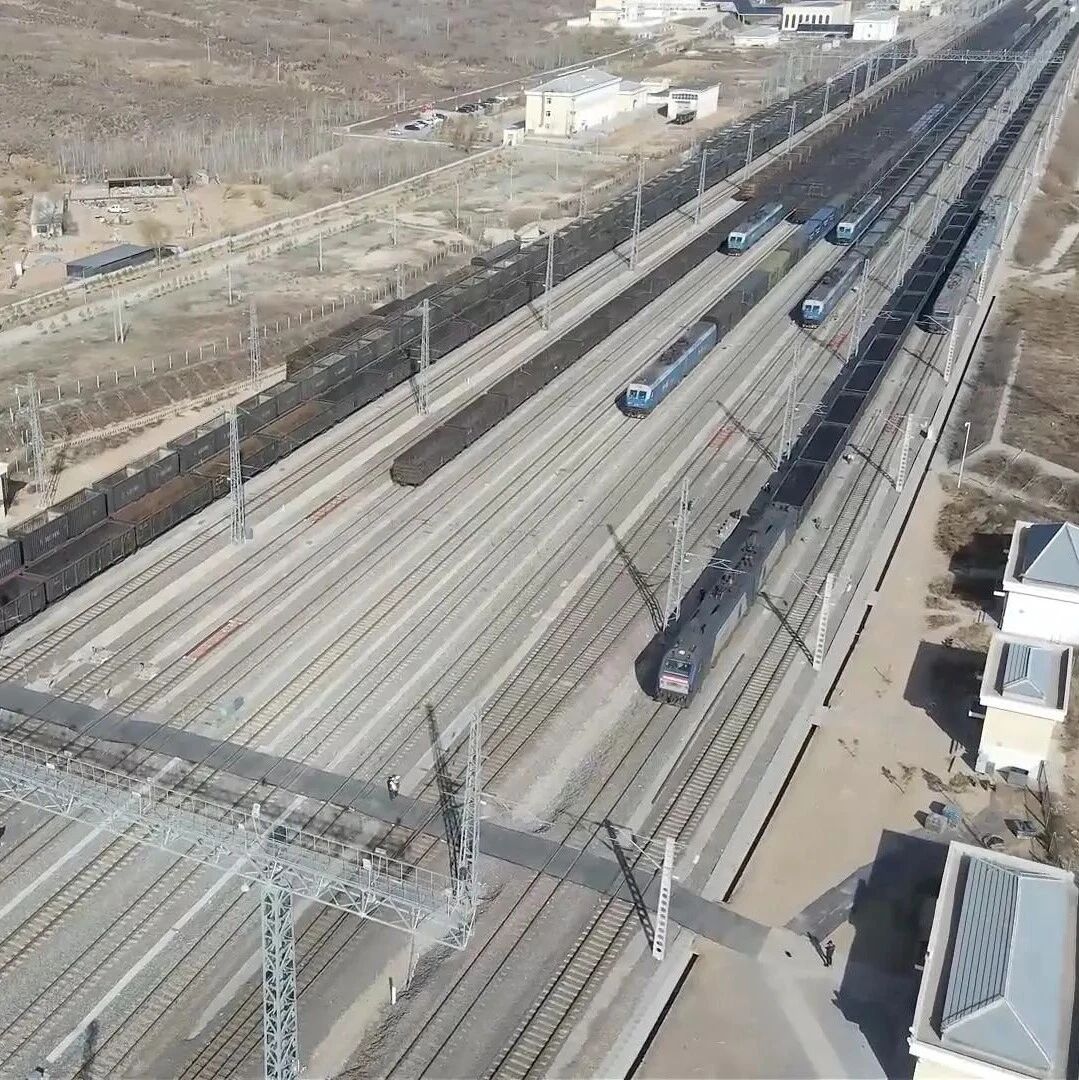
累计货运量超5亿吨,浩吉铁路"北煤南运"大通道作用凸显 。 End 欢迎分享给你的朋友! 3月1 9日,浩吉铁路自开通运营以来累计货运量突破5亿吨大关,"北煤南运"大通道作用不断凸显。 出品 | 中国能源报(c ne ne rgy) 编辑丨赵方婷 浩吉铁路全长18 13.5公里,北起内蒙古浩勒报吉,途经陕西、山西、河南、湖北、湖南,终到江西吉安,是国家"北煤南运"战略大通 道。自201 9年9月28日开通运营以来,年货运量实现阶梯式增长,大大降低了全社会物流成本,保障了国家能源运输。 来源:央视新闻客户端 ...
交运月度会-交易-运价弹性-与-供应链重塑
2026-03-19 02:39
Summary of Conference Call Notes Industry Overview - **Industry Focus**: Transportation and logistics sectors, including shipping, rail, air travel, and express delivery services - **Geopolitical Context**: The situation in the Strait of Hormuz is impacting shipping, rail, and hazardous materials logistics positively, while high oil prices are increasing operational costs across various transport sectors Key Points and Arguments Shipping and Logistics - **Shipping Industry**: The daily passage through the Strait of Hormuz has decreased significantly, affecting 31% of global oil shipping exports and 5% of container shipping, leading to a re-evaluation of shipping rates and a potential restructuring of shipping networks [1][2] - **Rail Transport**: High oil prices are increasing road transport costs, making rail transport more attractive. The Daqin Railway is expected to benefit from increased coal transport demand due to rising coal prices linked to oil price increases [1][2] - **Hazardous Materials Logistics**: Companies with a high percentage of chemical and oil products in their storage are likely to benefit from increased demand for stockpiling, potentially raising warehouse rental rates [3] Air Travel - **Cost Pressures**: The aviation sector is facing significant cost pressures due to rising fuel prices, with fuel costs accounting for approximately 35% of total operating costs. The expected increase in fuel surcharges could reach 170-180 RMB per flight segment [6][17] - **Market Dynamics**: The geopolitical situation is creating opportunities for Chinese airlines as travelers seek alternatives to Middle Eastern hubs, potentially increasing international passenger volumes by 13% if 25% of transit passengers shift to Chinese carriers [18][19] Express Delivery - **Market Trends**: The express delivery sector is experiencing a "reverse involution" trend, with prices in key areas like Yiwu increasing. Major companies like YTO and ZTO are expected to gain competitive advantages [1][5] Investment Recommendations - **Stock Selection**: It is recommended to focus on stocks with low correlation to Middle Eastern geopolitical risks and those with defensive attributes, such as Anhui Expressway and Shenzhen International. SF Express is highlighted for its alignment with high-quality growth trends in the express delivery sector [7] - **Shipping vs. Oil Transport**: The recommendation is to prioritize container shipping over oil transport due to lower expected volatility and higher certainty in returns, even amidst geopolitical tensions [8] Market Conditions - **Current Market Sentiment**: The overall sentiment in the transportation sector is cautious, with a preference for rail over road transport due to the latter's vulnerability to rising fuel costs. The express delivery sector shows signs of recovery, while air travel is under pressure from fuel costs [15][20] Airport Operations - **White Cloud Airport**: A new duty-free agreement has been signed with a commission rate reduced to 21%, which is expected to positively impact profits, although the overall profit elasticity will depend on the recovery of duty-free sales [22][23] Future Outlook - **Long-term Adjustments**: The geopolitical situation is expected to lead to profound adjustments in global logistics networks, with potential shifts in trade routes and increased congestion at major ports [4][10] Risks and Challenges - **Cost Transferability**: The ability of the air, road, and express delivery sectors to pass on increased costs to consumers is limited due to weak supply-demand dynamics, which may suppress market demand if oil prices remain high [2][6] Additional Important Insights - **Rail Freight Benefits**: The closure of the Strait of Hormuz is driving up coal prices in the Asia-Pacific region, benefiting rail freight operations like the Daqin Railway [10] - **Container Transport Opportunities**: The potential shift from sea to rail transport for high-value goods due to increased shipping costs could benefit the China-Europe Railway Express [11] This summary encapsulates the key insights and trends discussed in the conference call, providing a comprehensive overview of the current state and future outlook of the transportation and logistics sectors.