非遗文创

Search documents
深耕乡村沃土 广聚振兴人才
Xin Lang Cai Jing· 2026-01-05 18:44
Core Viewpoint - The article highlights the efforts of Bohang Township in Huangyuan County, Xining City, to enhance local talent development and support the construction of a livable environment through various initiatives and training programs [1] Group 1: Talent Development Initiatives - Since February 2024, Bohang Township has adhered to the principle of party management of talent, focusing on "cultivating and gathering talent" to provide talent assurance and intellectual support for local development [1] - As of January 4, the township has reported 5 local talents under the county-level "Dan City Talent" program and established 1 city-level intangible cultural heritage workshop [1] Group 2: Skills Training and Community Engagement - The township organized 4 training sessions in skills such as forklift operation, maternity care, electric welding, and farmer entrepreneurship, benefiting 163 local residents [1] - Experts and industry leaders were invited to discuss rural tourism development, leveraging local tourism resources and promoting regional specialties like the "Ten Bowls of Huangyuan" and other traditional foods [1] Group 3: Economic Development and Employment - A new model for intangible cultural heritage was created, allowing over 30 local operators and culinary experts to compete, providing a platform for skill exchange and enhancing the regional food brand [1] - Local talents have played a significant role in community development, with initiatives like the establishment of a 150 square meter workshop in Nanchai Village, which has created jobs for 7 residents, increasing their monthly income by 3,000 yuan [1]
“草本美学”开辟古城非遗传承新路径
Xin Lang Cai Jing· 2025-12-29 17:12
Core Insights - The article highlights the innovative approach of a cultural studio, "Xinyi Zhi Yu," which transforms traditional Chinese medicinal herbs into fashionable accessories and cultural products, appealing to young consumers and merging traditional culture with modern markets [1][2] Group 1: Company Overview - "Xinyi Zhi Yu" is a cultural studio focused on "herbal aesthetics," founded by a pharmacy graduate who aims to present the wisdom of herbs in contemporary forms [1] - The studio offers a variety of products, including bracelets, earrings, and pendants inspired by local medicinal herbs, particularly "Quxiuwai" [1] Group 2: Consumer Engagement - The studio creates an immersive experience for customers, allowing them to not only purchase finished products but also participate in hands-on activities like making sachets and massage tools [1] - This experiential approach meets the deeper consumer demand for emotional connection and cultural participation [1] Group 3: Market Strategy - The studio has established a clear market path, utilizing platforms like Xiaohongshu for online content dissemination, accumulating over 20,000 followers, and attracting customers from various regions [2] - Offline, the studio collaborates with local brand stores and hotels to create a consignment network, enhancing the consumer experience with herbal teas and medicinal snacks [2] Group 4: Product Success - Recent product launches, including New Year-themed items, have shown strong market potential, with the "Mianqie Little Yellow Man" series selling out quickly, indicating a robust demand for the "herbal aesthetics" concept [2] Group 5: Cultural Impact - The studio's practices serve as a vibrant example of revitalizing local intangible cultural heritage, demonstrating that traditional skills can regain vitality through contemporary aesthetic integration [2]
让文明与文脉相融——文明集市促消费系列活动焕新岭南图景
Nan Fang Nong Cun Bao· 2025-12-29 03:01
Core Viewpoint - The "Civilization Market" series of promotional activities aims to revitalize the cultural and commercial landscape of Guangzhou, enhancing consumer engagement and showcasing local agricultural and cultural products [5][9][12]. Group 1: Event Overview - The "Civilization Market" will take place from December 19 to December 28, 2025, on Beijing Road, injecting new vitality into the area and attracting citizens and tourists [5][6]. - The event features over 10 unique activities and more than 8 types of consumption scenarios, showcasing high-quality agricultural and cultural products from across Guangdong [12][13]. Group 2: Economic Impact - The event is expected to stimulate the winter consumer market and promote the integration of culture and commerce, contributing to the high-quality economic development of the region [7][21]. - In the first 11 months of this year, Beijing Road is projected to achieve a total revenue of 173 billion yuan, with over 20 cultural and commercial activities held in the fourth quarter alone [68][69]. Group 3: Cultural Integration - The market serves as a platform for showcasing the rich cultural heritage of Guangdong, allowing visitors to experience various local traditions and products, such as traditional crafts and culinary delights [19][21][46]. - The event highlights the importance of cultural value and tourism in reshaping agricultural practices and enhancing community engagement [87][88]. Group 4: Participation and Engagement - The event attracted significant participation from local enterprises, with over 100 companies showcasing their products, including popular items like Hakka pork balls and local teas [24][27][36]. - The market also engaged students from vocational schools, who showcased their skills and products, further promoting the integration of education and industry [40][42][44]. Group 5: Future Prospects - The "Civilization Market" is seen as a new model for promoting the integration of agriculture, culture, and tourism, providing a window to observe the progress of the "Hundred Counties, Thousand Towns, and Ten Thousand Villages" initiative [102][103]. - The successful execution of this event is expected to inspire further collaboration among government, enterprises, and society to drive high-quality development in the region [120][121].


高州非遗文创与特色农品闪耀广州北京路丨文明集市县域行⑤
Nan Fang Nong Cun Bao· 2025-12-24 14:06
Core Viewpoint - The event in Guangzhou showcases the cultural heritage and agricultural products of Gaozhou, highlighting its unique cultural and economic advantages through various exhibitions and performances [2][3][4]. Group 1: Event Overview - The first civilization market event in Guangdong, based on civil practice, took place from December 19 to 28 in Guangzhou's Beijing Road pedestrian street [2]. - Gaozhou participated prominently, presenting woodcut paintings, high-cool colored jade, specialty agricultural products, and cultural souvenirs [3][4]. Group 2: Cultural Heritage - Gaozhou is recognized as a historical ancient town with a rich cultural background, known as one of the "Four Great Cultural Hometowns of Guangdong" and the birthplace of the Xianfu culture [6][7]. - The region is home to various intangible cultural heritages, including puppet shows and woodcut paintings, which contribute to its unique development advantages [8][9]. Group 3: Agricultural Products - Gaozhou is known as the "Hometown of Lychee" and "Hometown of Longan," with these industries being its key economic pillars [11]. - The lychee and longan products showcased at the event were crafted using traditional techniques, preserving the nutritional value and flavor of the fresh fruits [12][13]. - Processed products like lychee paste and longan sesame cake creatively combine fresh fruit flavors with traditional pastry techniques, showcasing the diverse development of Gaozhou's agricultural industry [14][15][16]. Group 4: Unique Local Products - Gaozhou's high-cool colored jade, a unique and precious stone variety, is known for its rich colors and artistic value, making it a highlight of the exhibition [17][18][19]. - The jade products displayed at the event included decorative items and crafts that reflect Gaozhou's geographical and cultural significance [20]. Group 5: Traditional Arts - The Gaozhou woodcut painting, recognized as a national intangible cultural heritage, features strong and fluid lines with vibrant colors, depicting various themes [22][23][24]. - The traditional craftsmanship involved in creating woodcut paintings showcases the dedication and skill of local artisans, preserving the essence of traditional art [25][26]. Group 6: Performance Highlights - The Gaozhou puppet show, a national intangible cultural heritage, captivated audiences with its intricate puppetry and storytelling, blending traditional drama with local cultural elements [29][30][31]. - The performance was well-received, adding a unique cultural dimension to the civilization market event [32].
广州文交会走过八载,这场文旅盛会为湾区文化产业带来什么?
Xin Lang Cai Jing· 2025-12-21 06:19
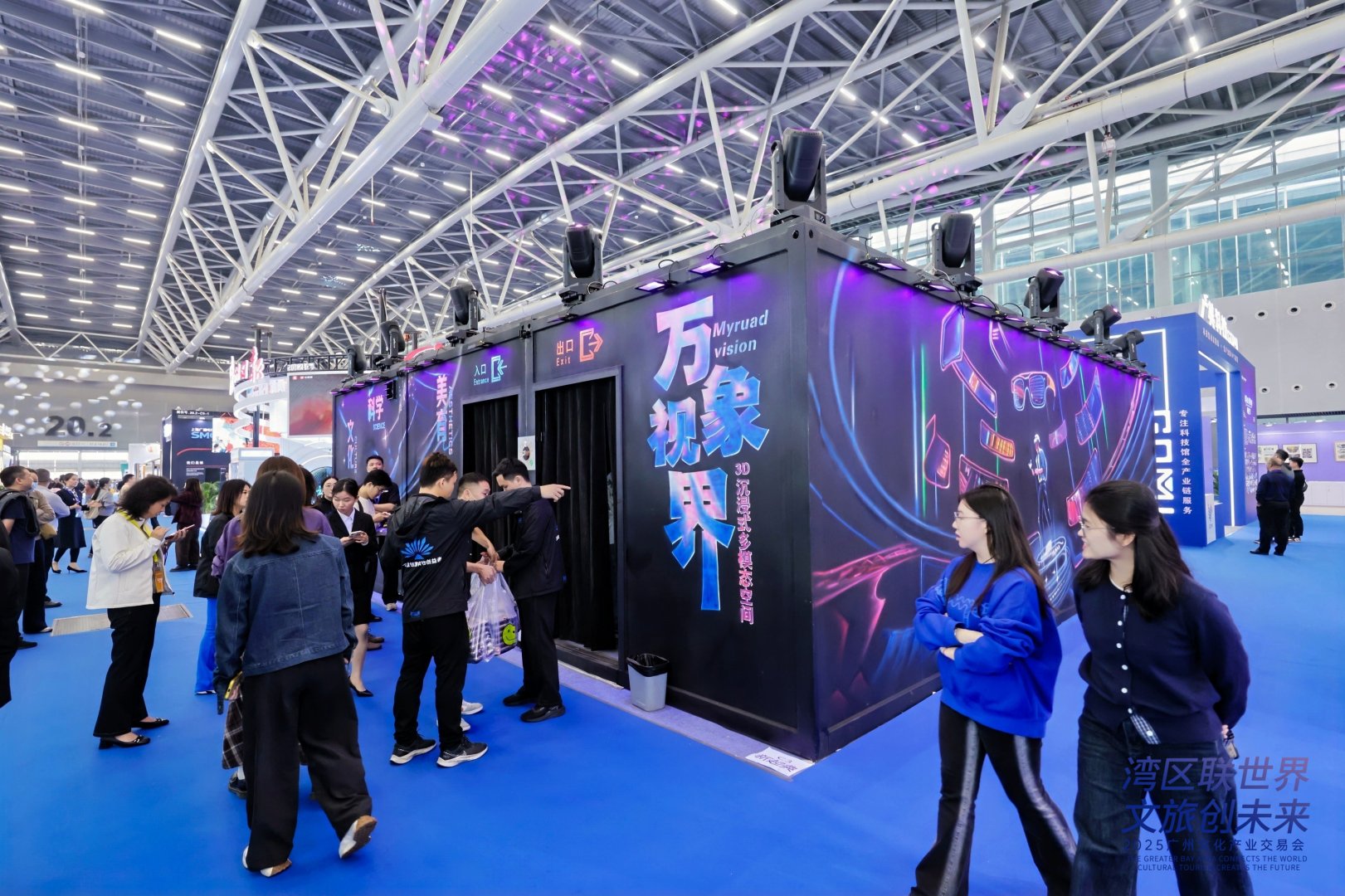
Core Insights - The 2025 Guangzhou Cultural Industry Trade Fair successfully showcased the theme "Bay Area Links the World, Cultural Tourism Creates the Future," emphasizing the integration of technology, culture, and trade to foster innovation in the cultural tourism sector [1] Group 1: Technological Empowerment - The fair highlighted the integration of culture and technology, with immersive experiences such as VR/AR installations and holographic projections transforming static cultural resources into interactive dynamic scenes [1] - Guangzhou New Qidian Cultural Technology introduced an innovative 3D immersive multi-modal space product called "Wandering Vision," which turns ancient Chinese mythology into engaging educational experiences [3] - The event featured various VR experiences, including "The Fate of the Vermilion Bird" and "Dreaming of the Mountains and Seas," showcasing how technology enhances cultural experiences and promotes digital content creation [5] Group 2: Industry Aggregation - The fair released the "Top 30 Cultural Enterprises in Guangzhou for 2025," with 117 companies participating, collectively generating approximately 224.2 billion yuan in revenue for 2024, accounting for 36% of the city's cultural industry revenue [7] - Over 1,000 companies participated in the fair, covering sectors like animation, gaming, and film technology, demonstrating the diverse vitality of the Bay Area's cultural industry [9] - The cultural industry in Guangzhou achieved a revenue of 604.08 billion yuan in 2024, marking a 4% year-on-year growth, with new cultural business models emerging rapidly [11] Group 3: International Linkage - The fair emphasized international collaboration, featuring a comprehensive trading platform for cultural tourism and technology, facilitating connections between over 30 countries and regions [13] - Guangdong Yesheng Technology showcased eVTOL aircraft for low-altitude tourism, indicating international market interest and potential orders from countries like Russia and the U.S. [15] - Guangzhou's cultural product exports reached 47.5 billion yuan in 2024, positioning the fair as a key driver for high-quality cultural trade development [15] Group 4: Future Outlook - The 2025 Guangzhou Cultural Industry Trade Fair is seen as a catalyst for Guangzhou's transition from a cultural industry city to a cultural industry powerhouse, contributing to the global presence of Chinese culture [16]


“美丽工坊”带动上千名残疾人就业增收 指尖“生金”
Si Chuan Ri Bao· 2025-12-10 00:30
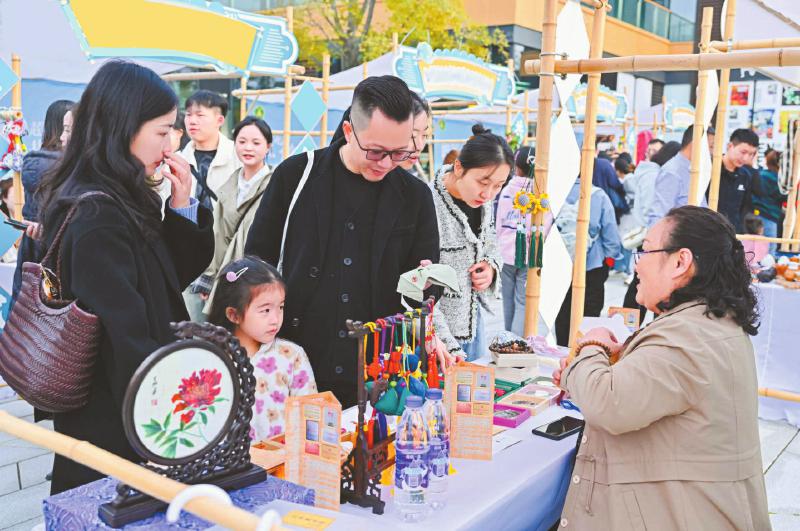
Core Viewpoint - The "Beautiful Workshop" project in Sichuan aims to transform traditional handicrafts into employment opportunities for disabled individuals, particularly disabled women, through a three-tiered system that integrates heritage employment bases, flexible home-based work, and hotel exhibition spaces [2][4]. Group 1: Project Overview - Sichuan has 153 national-level intangible cultural heritage projects, including Shu embroidery and Qiang embroidery, which are being leveraged to create job opportunities for disabled individuals [2]. - The "Beautiful Workshop" project has developed over 6,000 cultural products and established over 20 sales points nationwide, enabling disabled individuals to earn between 2,000 to 8,000 yuan per month [4]. Group 2: Implementation and Collaboration - The project features a collaborative model involving multiple departments, including the Disabled Persons' Federation, Women's Federation, Human Resources, Culture and Tourism, and Agriculture, to create a sustainable development ecosystem [5]. - A "three-library" system has been established, which includes 69 representatives of intangible cultural heritage, 62 provincial-level mentors, and 57 creative bases and workshops for disabled individuals, ensuring talent and resource support for project implementation [5]. Group 3: Market Integration - The project has successfully integrated public welfare with modern commercial scenarios, exemplified by the establishment of the first exhibition area for disabled individuals' intangible cultural heritage at the Chengdu Global Center [6]. - Since the establishment of the exhibition area, over 50 disabled artisans have been supported, with an average monthly sales exceeding 10,000 yuan [6].
辽宁省残疾人非遗文创精品培训研修班开班
Liao Ning Ri Bao· 2025-11-27 01:13
Core Insights - The training program for disabled individuals in Liaoning Province focuses on non-material cultural heritage and creative products, aiming to enhance their skills and life value [1] Group 1: Training Program Details - The training lasts for 10 days and includes theoretical lectures, practical operations, and exhibitions [1] - The curriculum is designed to be systematic and high-level, covering essential topics such as non-material cultural heritage policies, intellectual property protection, creative design innovation, digital promotion, and market management [1] - The program emphasizes practical training and field visits to align with market demands, promoting the integration of theory and practice [1] Group 2: Support and Development - The provincial disabled persons' federation has collaborated with local universities to create platforms for training, resulting in the cultivation of special artistic talents [1] - Future initiatives will provide comprehensive support for showcasing achievements, market connections, and brand promotion to advance the development of disabled persons' careers in Liaoning [1]
释放政策红利 搭建合作平台,外地文创机构“组团”来蓉共促“立园满园”
Mei Ri Jing Ji Xin Wen· 2025-11-26 05:17
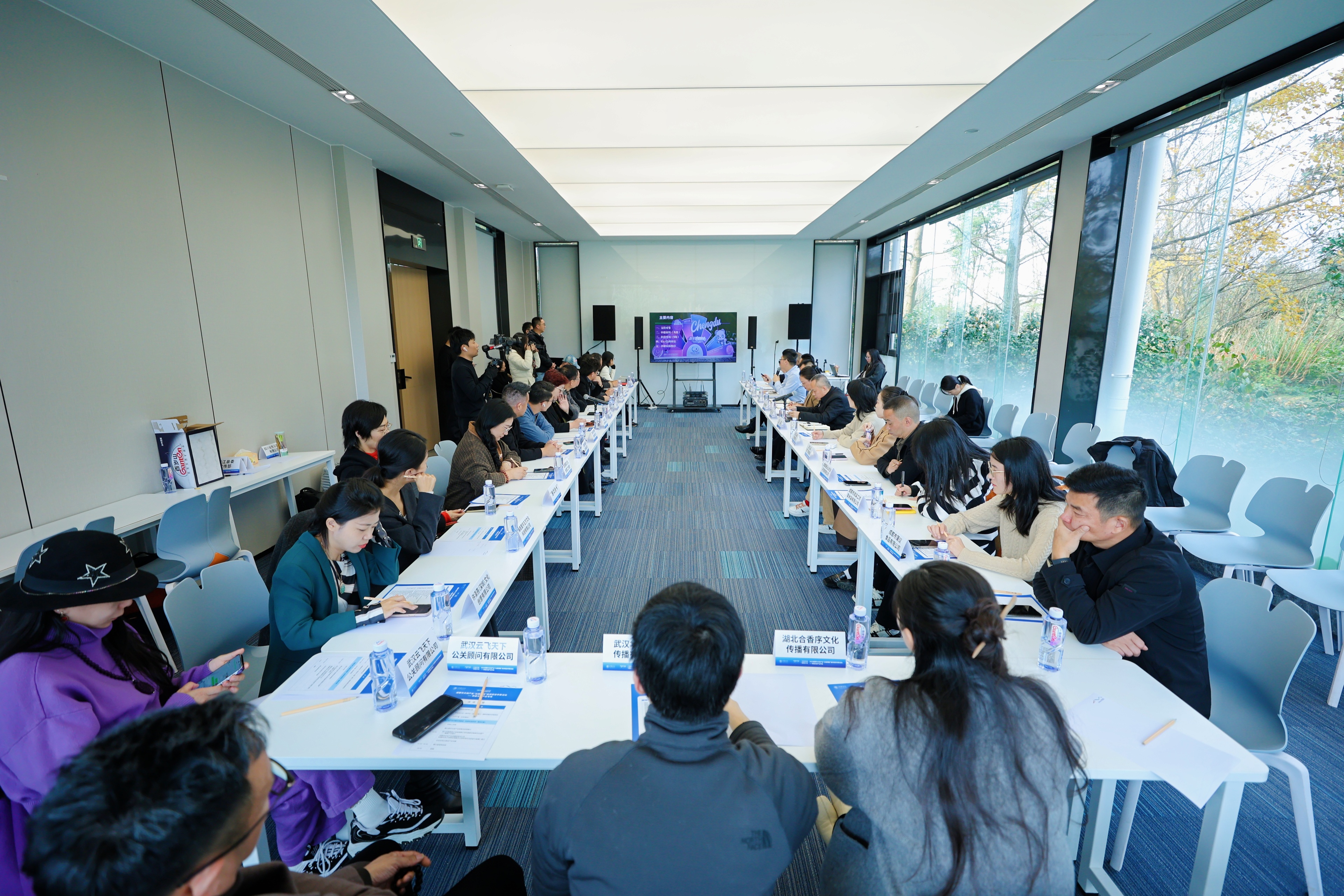
Group 1 - The core focus of the recent investment promotion activity in Chengdu is on the non-heritage cultural and creative industry, aiming to foster collaboration and project attraction among various enterprises and institutions from different regions [1] - The event was organized by the Chengdu Cultural Industry Development Promotion Center and included participation from nearly 20 enterprises and institutions, facilitating direct engagement through site visits, policy sharing, and discussions [1] - The Chengdu government has introduced a comprehensive support policy specifically targeting digital cultural and creative startups, which includes ten measures aimed at providing financial and operational assistance [4][7] Group 2 - The support policy offers various incentives such as a one-time startup grant of 20,000 yuan and annual office rent subsidies up to 100,000 yuan, effectively reducing the financial burden on new enterprises [7] - Eligible applicants for the support policy must be registered digital cultural and creative enterprises established for at least six months and no more than three years, focusing on specific core business areas [5] - The policy aims to create a full-chain support system for startups, encompassing aspects from workspace provision to financial services and talent acquisition [4][7] Group 3 - The local government emphasizes the unique cultural and historical context of Pugong County, which is seen as an ideal location for the integration of rural aesthetics and cultural industries [8] - The event highlighted the challenges faced by local non-heritage enterprises, such as the need for better design and market strategies to enhance product competitiveness [9][13] - External entrepreneurs provided diverse solutions to the commercialization challenges of local heritage projects, advocating for collaborative approaches to expand market opportunities [21]
本周六!广东国企、大厂、高校等,18000+岗位,现场招人!
2 1 Shi Ji Jing Ji Bao Dao· 2025-11-12 02:32
Core Insights - The event "Cultural Industry Talent Gathering" will take place on November 15 in the Guangdong-Hong Kong-Macao Greater Bay Area, featuring over 100 companies and releasing more than 18,000 job positions [2][3] - The event aims to create a diverse cultural talent ecosystem, integrating technology, intangible cultural heritage, trendy toys, film, and animation [3] Job Opportunities - Job positions are categorized into three salary bands: - Core Salary Band (15K–40K): Focused on AI algorithms, engine development, and digital art for industry-leading talents [4] - Stable Salary Band (10K–20K): Targeting experienced professionals in international copyright, data operations, and content marketing [4] - Growth Salary Band (7K–10K): Aimed at fresh graduates and newcomers with comprehensive training and promotion plans [4] - Notable companies like Tencent, NetEase, and 37 Interactive Entertainment are offering high-value positions in game design and user experience [4][23] Creative Market - The event features a "Cultural Industry Creative Market" divided into five sections, showcasing immersive cultural experiences [6] - The Cultural Technology Zone allows participants to engage with VR experiences and AI technology [7][8] - The Intangible Cultural Heritage Zone presents traditional crafts reimagined through modern design [10] - The Film Space highlights Guangdong's film industry through local movie posters and storytelling [15] - The Trendy Toy IP Zone focuses on local IP incubation and cultural consumption [17] - The Animation and Gaming Zone showcases the strength of Guangdong's animation and gaming industries, emphasizing innovation and social responsibility [20] Talent Acquisition Focus - The event signals a shift in the cultural entertainment industry towards seeking "co-creation talents" who possess both professional depth and cross-disciplinary vision [20] - Companies are redefining job roles to attract creative and passionate individuals, moving beyond traditional qualifications [20]

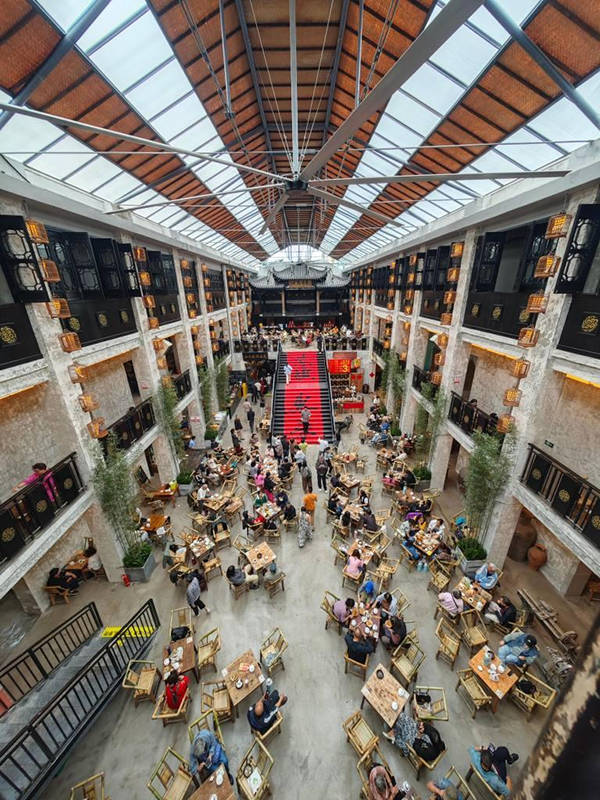
成都青羊:成都漆器厂“爆改”大旗茶馆 老厂房变消费新地标
Sou Hu Cai Jing· 2025-10-21 17:40
Core Insights - The transformation of Chengdu Lacquerware Factory into Daqi Teahouse revitalizes the historical site, blending traditional craftsmanship with modern cultural experiences [2][4][10] - The teahouse serves as a cultural and culinary hub, attracting diverse visitors and promoting Chengdu's lacquer art and tea culture [7][9][10] Group 1: Transformation and Cultural Integration - Chengdu Lacquerware Factory, established in 1954, is recognized as a demonstration base for the protection of Sichuan lacquer art, showcasing unique techniques [2][4] - The renovation of the factory into Daqi Teahouse incorporates elements of lacquerware, maintaining a balance between historical preservation and modern functionality [4][7] - The teahouse aims to create a space where visitors can engage with Chengdu's cultural heritage through tea, food, and performances, appealing to all age groups [7][9] Group 2: Visitor Engagement and Economic Impact - Daqi Teahouse has quickly become a popular destination, with daily visitor numbers increasing from 500 to over 1,000 during peak times [9][10] - The teahouse features a variety of local delicacies and non-heritage performances, enhancing the overall visitor experience and promoting local cuisine [9][10] - During the recent holiday period, Chengdu Qingyang District welcomed 3.16 million visitors, generating a tourism revenue of 4.285 billion yuan, reflecting a year-on-year growth [10][12] Group 3: Future Developments and Cultural Projects - Future plans for Daqi Teahouse include the introduction of heritage experience spaces and a reading room, aiming to provide diverse social settings for visitors [9][10] - Chengdu Qingyang District is witnessing a wave of innovative cultural projects, such as the Full Grace commercial complex and the renovation of historical sites into multifunctional spaces [12][13] - These developments are part of a broader trend of integrating cultural heritage with contemporary lifestyle, enhancing the attractiveness of the region for both locals and tourists [12][13]