
创业投资

Search documents
市北高新:参与的投资基金减资
Ge Long Hui· 2025-12-15 10:23
格隆汇12月15日丨市北高新(600604.SH)公布,根据《上海中叶至源创业投资合伙企业(有限合伙)合 伙协议》相关条款约定,经全体合伙人协商一致同意,将基金的认缴出资额由30,360万元人民币减少至 20,244万元人民币,其中公司的认缴出资额由6,000万元人民币减少至4,000万元人民币。公司前期已对 基金实缴出资4,000万元人民币,后续将不再继续出资。 ...

泰坦科技:认购上海泰礼璟源创业投资合伙企业份额
Xin Lang Cai Jing· 2025-12-15 08:15
泰坦科技公告,公司作为有限合伙人以自有资金2900万元人民币认购上海泰礼璟源创业投资合伙企业 (有限合伙)份额。接力基金第七期首关认缴出资为2.42亿元,泰坦科技认购11.9835%的财产份额。待 基金完成最终募集后,基金总认缴出资额不超过4亿元,泰坦科技认缴出资额保持2900万元。合伙企业 已完成工商注册登记,出资额为2.42亿元人民币,成立日期为2025年12月15日。 ...

政策红利持续释放 创投业“募投管退”全面回暖丨2025年终经济观察
证券时报· 2025-12-15 02:14
Core Viewpoint - The primary focus of the article is the comprehensive recovery of the primary market in fundraising, investment, and exit strategies, supported by favorable policies and increased funding in the venture capital industry since 2025 [1]. Fundraising - Fundraising challenges that have long plagued the venture capital industry are gradually improving in 2025, with long-term funds from banks, insurance, and social security funds accelerating their entry into the market [3]. - The establishment of financial asset investment companies (AIC) by major banks marks a significant increase in fundraising capabilities, with a cumulative investment of 45.272 billion yuan, a year-on-year increase of 37.7% since September 2024 [3]. - Local governments have issued 52 billion yuan in special bonds directed towards government-guided funds, enhancing the capital pool for venture capital [4]. - The total contribution from government-guided funds, industrial capital, and state-owned funds has increased by 23.9%, 26.7%, and 59.7% respectively in 2025 [4]. - Institutional LP contributions reached 1.45 trillion yuan in 2025, a year-on-year growth of 16% [4]. Investment Trends - The recovery in fundraising has led to a surge in investments in hard technology sectors such as biomedicine, semiconductors, artificial intelligence, and robotics, with investment speeds increasing by 20% to 30% compared to 2024 [6]. - The resilience of China's technology innovation ecosystem has attracted significant global capital, with notable investments in companies like DeepSeek and Yushutech [6]. - Investment in hard technology sectors has seen over 30% growth in financing numbers compared to 2024, with the robotics sector particularly thriving, surpassing the total number of financing events from the previous two years [7]. Exit Strategies - The exit channels for venture capital have diversified, with IPOs remaining a key exit route, and new avenues such as S funds and mergers and acquisitions gaining importance [9]. - In 2025, several companies have successfully completed IPOs, with the A-share and Hong Kong markets accounting for 16% and 33% of global IPO activities respectively [9]. - The establishment of S funds by local state-owned assets has contributed to a more diverse exit strategy landscape, with 17 new S funds launched between 2024 and the first half of 2025 [10]. - The focus on mergers and acquisitions has increased, with venture capital firms actively seeking exit strategies for their investments [11]. Overall Industry Outlook - The venture capital industry in China is experiencing a comprehensive recovery, supported by policies that enhance the fundraising, investment, and exit ecosystem, thereby strengthening its role in supporting technological innovation and contributing to high-quality economic development [11].


40.8亿元!中科创星先导创业投资基金完成终关募集 这些LP“进场”
Zheng Quan Ri Bao Wang· 2025-12-11 11:06
Core Insights - Zhongke Chuangxing Technology Investment Co., Ltd. announced the successful closure of its Pioneer Venture Capital Fund with a total scale of 4.08 billion yuan [1] - The fund has invested in 46 hard technology projects, with over 90% of investments in early-stage projects [1] - Key investment areas include artificial intelligence and biotechnology, covering various subfields such as AI chips, quantum computing, and gene editing [1] Group 1 - The fund's limited partners include notable institutions such as the National SME Development Fund and Ant Group, indicating strong institutional support [1] - Zhongke Chuangxing aims to cultivate hard technology champion enterprises from the ground up, contributing to China's global competitiveness in hard technology [2] - The company has established a public technology service platform for optoelectronic chip packaging and testing, enhancing its incubation services [2] Group 2 - Zhongke Chuangxing has nurtured 6 unicorns and 23 national-level specialized "little giant" enterprises, showcasing its successful incubation efforts [2] - In 2023, the company set up a "high-quality incubator" in Shanghai, focusing on original innovation in hard technology [2] - The company is currently deep incubating 9 projects in areas such as liquid cooling and two-dimensional semiconductors [2]

40亿,中科创星先导创业投资基金完成终关
FOFWEEKLY· 2025-12-11 10:00
Group 1 - The core viewpoint of the article highlights the successful final closing of the Zhongke Chuangxing Pioneer Venture Capital Fund, which has reached a total scale of 4.08 billion yuan [1] - The new limited partners (LPs) include a diverse range of institutions such as Taibao Capital Changhang Mother Fund, Haidian District Zhongguancun Science City Technology Growth Fund, Ant Group, and others, indicating a multi-faceted collaboration structure [1] - The fund has made 46 investments in less than six months, focusing on sectors like AI chips, quantum technology, and gene editing, showcasing a strong emphasis on early-stage investments [1] Group 2 - The fund's investment strategy is characterized by "investing early and investing small," with over 90% of the initial projects being in the early technology development stage [1] - A significant portion of the projects, 32 out of 46, directly originates from research institutions and universities, effectively activating intellectual resources [1]

规模40.8亿元!中科创星先导创业投资基金完成终关募集
2 1 Shi Ji Jing Ji Bao Dao· 2025-12-11 06:17
Core Insights - Zhongke Chuangxing announced the completion of fundraising for its Zhongke Chuangxing Pilot Venture Capital Fund, reaching a total scale of 4.08 billion yuan [1] - The fund has rapidly expanded its scale in less than six months since its initial closing in July, attracting a diverse range of limited partners (LPs) including national-level mother funds, insurance capital, industrial capital, university capital, and regional capital [1][3] Group 1 - The "Zheng Guo Qu" system proposed by Zhongke Chuangxing emphasizes large-scale, low-cost, market-oriented funding to support source innovation in hard technology [3] - The fundraising success of the Pilot Venture Capital Fund serves as a practical validation of this system, demonstrating the collaborative configuration of various types of LPs and the recognition of top LPs for early-stage investments in hard technology [3] - The LP lineup includes notable institutions such as the National SME Development Fund and Ant Group, with over 36% of the investment coming from repeat contributions [3][4] Group 2 - The investment from Shanghai Guotou Pilot Artificial Intelligence Fund highlights a strategic commitment to long-term investments in hard technology and the integration of AI with various interdisciplinary fields [3] - The re-investment from the Haidian District Zhongguancun Science City Technology Growth Fund reflects the synergy between innovation capital in Beijing and Shanghai, leveraging strengths in basic research and talent reserves [4] - The Pilot Venture Capital Fund has made investment decisions on 46 hard technology projects within a few months, with over 90% of these being early-stage investments, primarily sourced from research institutions and universities [4]

40.8亿元,中科创星先导创业投资基金完成终关募集
投中网· 2025-12-11 03:10
Core Viewpoint - The article discusses the successful fundraising and investment activities of Zhongke Chuangxing, emphasizing the establishment of a "Zheng Guo Qu" system in technology finance, which aims to efficiently channel large-scale funds into early-stage hard technology ventures [4][6][15]. Fundraising and Investment - Zhongke Chuangxing recently completed the final closing of its pilot venture capital fund, reaching a total scale of 4.08 billion yuan, with 2.617 billion yuan raised in the first closing and an additional 1.39 billion yuan from diverse limited partners (LPs) [3][4]. - The fund has made investments in 46 hard technology projects, adhering to the philosophy of "invest early, invest small, invest long-term, and invest in hard technology" [3][10]. Limited Partners and Their Contributions - The LPs include notable institutions such as the National SME Development Fund, Shanghai Guotou AI Fund, and Ant Group, reflecting a diverse and collaborative investment structure [4][5]. - The participation of LPs like Taibao Capital and Fudan University’s Innovation Fund helps bridge the gap between research outcomes and capital markets, facilitating the identification of original innovation projects [5][6]. Investment Strategy and Focus Areas - The fund's investment strategy is characterized by a focus on early-stage projects, with over 90% of investments targeting projects in their initial stages [9]. - Key investment areas include artificial intelligence, biotechnology, and disruptive technologies such as quantum computing and controlled nuclear fusion [9][10]. Ecosystem Development and Incubation - Zhongke Chuangxing is committed to building a nurturing ecosystem for hard technology innovation, having established a public technology service platform for optoelectronic chip packaging and testing [12]. - The company has successfully incubated several unicorns and specialized enterprises, contributing significantly to Beijing's hard technology industry [12][13]. Future Outlook - The firm aims to leverage its fund and ecosystem to cultivate more "from 0 to 1" hard technology champion enterprises, enhancing China's global competitiveness in the hard technology sector [15].

上海国资又出资了
投资界· 2025-12-11 02:23
Core Viewpoint - Shanghai Future Industry Fund is actively investing in multiple sub-funds to support innovative industries, aiming to create a comprehensive ecosystem for early-stage investments in future industries [5][9]. Investment Activities - The Shanghai Future Industry Fund plans to invest in five new sub-funds, bringing the total to 23 sub-funds this year [5][6]. - The fund's total scale has increased from 10 billion to 15 billion, with 8 billion already in place [9]. Fund Structure and Strategy - Established in 2024, the fund is a government-guided, market-oriented investment vehicle with a focus on early-stage investments in future industries [7]. - The fund employs a "direct investment + sub-fund investment" model, targeting major strategic projects in future industries [7][9]. Future Industry Focus - The fund emphasizes disruptive technologies and interdisciplinary applications in sectors such as future information, energy, health, space, manufacturing, and materials [7]. - Shanghai aims to achieve a future industry output value of 500 billion by 2030, focusing on key technologies like brain-computer interfaces and quantum computing [10][11]. Ecosystem Development - Shanghai is building a supportive ecosystem for future industries, including research institutes and innovation clusters [10][11]. - The city has launched multiple initiatives to foster high-quality incubators and innovation resources, with significant investments in emerging industries [11][12].

刘健钧:“十五五”带来产业投资新机遇,创投税制仍有优化空间
2 1 Shi Ji Jing Ji Bao Dao· 2025-12-09 07:16
Group 1 - The core viewpoint of the article emphasizes the opportunities presented by the "14th Five-Year Plan" in terms of industry investment and the capital market environment [3][4] - The "4+5" industry investment opportunities include optimizing traditional industries, nurturing emerging and future industries, promoting high-quality service development, and building a modern infrastructure system [3][4] - Specific investment growth points identified for the "14th Five-Year Plan" period include modern agriculture, health care, green transformation, national security, and military industry [3] Group 2 - The impact of the "14th Five-Year Plan" on the capital market is highlighted in six aspects, including macroeconomic stability, improvement of capital market systems, and optimization of the macro tax framework [4] - The current tax system in China does not effectively distinguish between long-term and short-term investment returns, which hinders the encouragement of long-term investments [5] - The role of government investment funds is emphasized as essential in the venture capital industry, but it is suggested that private venture capital should take the lead [5][6]
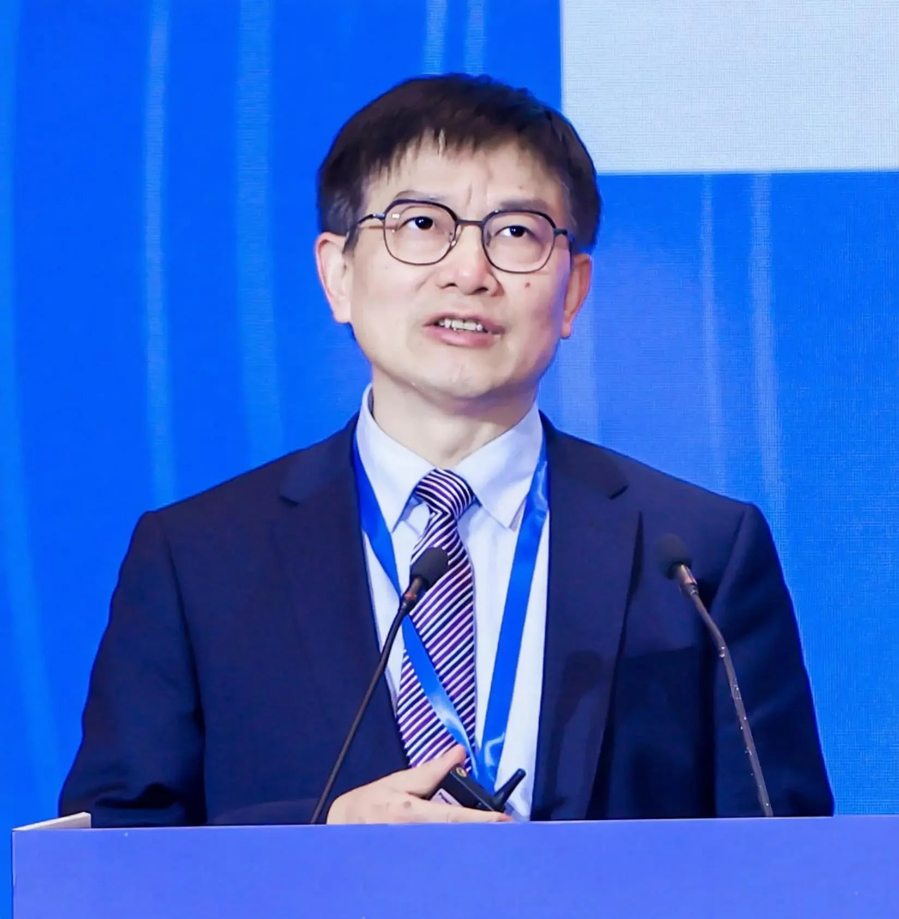
刘健钧:以“十五五”规划建议为指引股权与创投基金迎重要发展机遇
Zhong Guo Zheng Quan Bao· 2025-12-07 20:22
Core Viewpoint - The speech by Liu Jianjun at the "2025 Sci-Tech Investment Conference" highlights significant development opportunities for equity and venture capital funds in China, driven by the "14th Five-Year Plan" recommendations, focusing on two main aspects: investment opportunities in "4+5" industries and creating a favorable investment environment [1][2]. Investment Opportunities - The "4" major industry investment opportunities include optimizing traditional industries, nurturing emerging and future industries, promoting high-quality development in the service sector, and constructing a modern infrastructure system, particularly in new infrastructure [1]. - The "5" special industry investment opportunities focus on emerging sectors such as modern agriculture, health care, green transformation, national security, and military industries. Examples include implementing seed industry revitalization, advancing traditional Chinese medicine, supporting innovative drugs and medical devices, and enhancing national security capabilities in emerging fields like AI and biotechnology [1]. Investment Environment - Liu Jianjun emphasizes the importance of a stable macroeconomic environment, a healthy capital market, and a stable macro tax environment to foster the development of equity and venture capital funds. Key measures include leveraging government investment funds, innovating regulatory approaches, and improving the overseas investment environment for enterprises [2]. - The need for proactive macroeconomic policies, including monetary policy adjustments, is highlighted to address unprecedented global changes and ensure stable growth, employment, and expectations [2]. Policy Environment - The "14th Five-Year Plan" is expected to create a stable macro tax environment through enhancing fiscal sustainability, refining tax policies, and improving income distribution systems. This includes supporting the expansion of the middle-income group and regulating excessive income [3]. - Liu Jianjun suggests that structural tax incentives for venture capital funds should be carefully designed, taking into account China's unique circumstances and learning from international experiences, particularly focusing on promoting long-term investment incentives [3].