
动力电池

Search documents
2026汽车新政正式出炉!中创新航“向上走”
Xin Lang Cai Jing· 2026-01-13 11:27
Group 1 - The core policy focuses on large-scale equipment updates and the replacement of consumer goods, particularly emphasizing the scrapping and replacement of automobiles as key support areas [1][3][12] - The policy aims to stimulate consumption and promote green transformation within the macroeconomic framework, reflecting differentiated strategic layouts across various segments of the Chinese automotive industry [3][22] - The new subsidy policy for 2026 features a clear differentiation design, with higher subsidies for new energy vehicles compared to traditional fuel vehicles [9][28][31] Group 2 - The subsidy for scrapping old vehicles is set at 12% for new energy vehicles, while it is 10% for fuel vehicles; for replacement, the subsidy is 8% for new energy vehicles and 6% for fuel vehicles [9][28] - The maximum subsidy for new energy vehicles is capped at 20,000 yuan, while for fuel vehicles, it is 15,000 yuan, indicating a push towards mid-to-high-end new energy vehicle consumption [10][29] - The policy encourages the elimination of old vehicles and promotes the circulation of vehicles, with lower thresholds for replacement updates [11][30] Group 3 - The policy is expected to enhance the competitive edge of companies like Zhongxin Innovation, which has a high-end product structure that aligns with the new policy's direction [12][32] - Zhongxin Innovation's model distribution shows that only 12.7% of its supported models are priced below 100,000 yuan, while 64.7% fall within the 100,000 to 200,000 yuan range, indicating a strategic shift towards higher value segments [5][24] - The company has a market share of 9.5% in the competitive 100,000 to 200,000 yuan price segment, demonstrating its product strength and acceptance by mainstream automakers [6][25] Group 4 - The new policy is seen as a potential turning point for the Chinese battery industry, with a focus on accelerating technological iterations in battery technology [15][34] - Companies that align with the high-end market, like Zhongxin Innovation, are expected to strengthen their partnerships with mainstream automakers, enhancing their market position [17][35] - The shift from being a "cost center" to a "value creation center" will improve the bargaining power and influence of battery companies within the industry [18][36] Group 5 - The overarching significance of the 2026 automotive consumption subsidy policy lies in its ability to clearly define the direction for the transformation and upgrading of the Chinese automotive industry [20][37] - Companies that have prepared in terms of product quality, technological accumulation, and market positioning are likely to gain strategic benefits that exceed the monetary value of the subsidies [20][37]

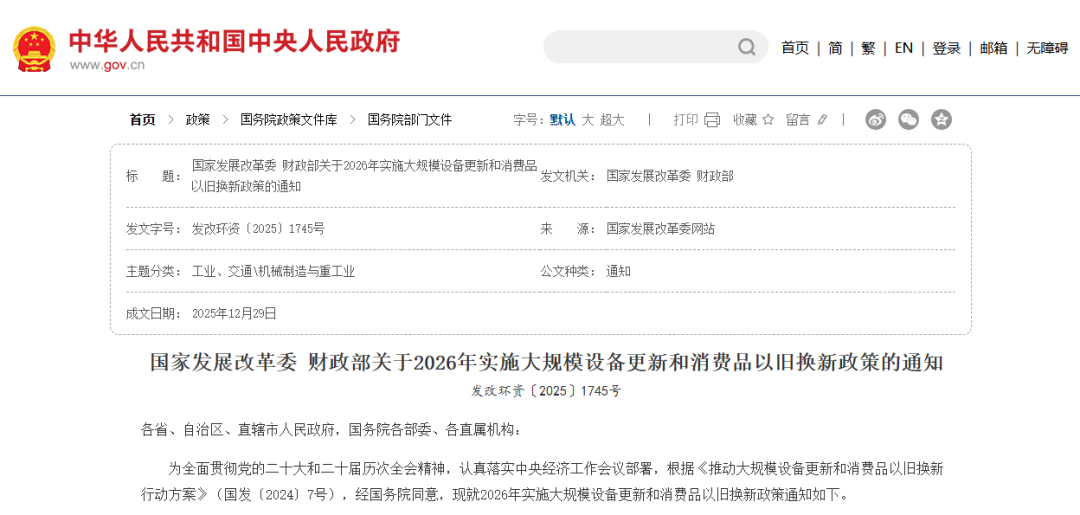
动力电池产业量质齐升
中国能源报· 2026-01-13 11:04
Core Viewpoint - The power battery industry in China is experiencing rapid growth and is expected to further optimize its supply-demand structure by 2026, with companies that have differentiated advantages and strong global layouts likely to seize market opportunities and achieve breakthroughs [1][3]. Market Growth - From January to November 2025, China's cumulative production of power and other batteries reached 146.8 billion watt-hours, a year-on-year increase of 51.1%. During the same period, cumulative sales of power batteries were 1,044.3 billion watt-hours, up 50.3% year-on-year [3]. - In November 2025, the domestic power battery installation volume was 93.5 billion watt-hours, with a month-on-month growth of 11.2% and a year-on-year increase of 39.2% [5]. Technology and Material Demand - Lithium iron phosphate (LFP) batteries continue to dominate the market, with LFP installation volume in November 2025 reaching 75.3 billion watt-hours, accounting for 80.5% of total installations, and a year-on-year growth of 40.7% [5]. - The demand for materials in the battery sector is also increasing, with 61.9 million tons of ternary materials and 290.2 million tons of lithium iron phosphate materials used from January to November 2025 [5]. Export Growth - The export volume of China's power batteries reached 21.2 billion watt-hours in November 2025, marking a month-on-month increase of 9.4% and a year-on-year increase of 70.2%. Cumulatively, exports from January to November 2025 were 169.8 billion watt-hours, up 40.6% year-on-year [8]. Diversification of Business - As the domestic market becomes saturated, overseas markets are seen as a "blue ocean" for growth. Companies are expanding into various application scenarios, including commercial vehicles and energy storage, to build sustainable growth curves [9]. - For instance, from January to September 2025, Yiwei Lithium Energy's power battery shipments reached 34.59 billion watt-hours, a year-on-year increase of 66.98%, while energy storage battery shipments were 48.41 billion watt-hours, up 35.51% [9]. Market Regulation - The battery industry is undergoing a critical period of market expansion and technological breakthroughs, but irrational competition remains a concern. Efforts are being made to standardize competition and promote high-quality development [12]. - In November 2025, the China Chemical and Physical Power Industry Association released a cost study for lithium iron phosphate materials, which is expected to enhance market transparency and assist in decision-making for upstream and downstream enterprises [12]. Future Outlook - The lithium battery industry is expected to see further improvement in supply-demand structure by 2026, driven by increased electric vehicle penetration and significant growth in energy storage demand. The report anticipates that global demand for power batteries will continue to grow steadily [13].
LG新能源2025年四季度亏损8380万美元 电动车需求疲软成主因
Zhong Guo Qi Che Bao Wang· 2026-01-13 09:35
Core Insights - LG Energy Solution (LGES) expects to report an operating loss of 1.22 trillion KRW (approximately 83.8 million USD) in Q4 2025, significantly exceeding market expectations of 770 billion KRW, highlighting the impact of a sluggish global electric vehicle market on core component suppliers [1] - The anticipated loss includes benefits from the U.S. Inflation Reduction Act (IRA); without this support, the quarterly operating loss would increase to 455 billion KRW, nearly doubling the expected loss [1] Group 1: Market Conditions - The slowdown in global electric vehicle demand is the primary reason for LGES's projected losses, as the company is a key battery supplier for major automakers like Tesla, General Motors, Kia, and Volkswagen [1] - Data indicates that from January to November 2025, LGES ranked third globally in battery shipments with 96.9 GWh, but Tesla's battery usage declined by 8.2% year-on-year due to reduced vehicle sales, directly affecting LGES's shipment volume and profit levels [1] - In Q4, LGES faced significant order cancellations, including a 9.6 trillion KRW battery procurement agreement with Ford and a terminated project worth 3.9 trillion KRW with Fraunhofer, totaling over 13 trillion KRW in canceled orders within a week, disrupting production capacity and profit expectations [1] Group 2: Operational Challenges - Joint venture operations have been further complicated, with General Motors announcing a six-month suspension of cell production at two joint venture factories in Tennessee and Ohio starting January 2026, likely leading to at least 1 trillion KRW in temporary costs for LGES [2] - To alleviate operational pressure, LGES plans to sell facilities and assets of its Ohio battery plant to joint venture partner Honda, although details of the transaction remain undisclosed, making it difficult to offset losses from the factory suspension in the short term [2] Group 3: Strategic Adjustments - In response to performance challenges, LGES is accelerating strategic adjustments, focusing on energy storage systems (ESS) as a core breakthrough for transformation [2] - The CEO has stated that the company will expedite the adjustment of electric vehicle battery production in North America, Europe, and China, prioritizing the enhancement of energy storage system capacity to capitalize on the global surge in storage demand [2] - LGES aims to integrate artificial intelligence across product development, material procurement, and manufacturing processes, targeting a minimum 30% increase in overall production efficiency by 2030 to improve profit structure through cost reduction and efficiency enhancement [2] Group 4: Sustainability Efforts - Despite short-term performance pressures, LGES maintains a leading position in sustainability, with its 2025 ESG report rated five stars and consistently ranking first in the social responsibility development index for the battery industry for five consecutive years [3] - The company has set a clear "negative carbon" strategy, aiming for all operational sites to achieve RE100/EV100 by 2030 and full value chain carbon neutrality by 2050; however, these long-term investments are unlikely to provide immediate profit support [3] - The losses faced by LGES are indicative of broader challenges within the global battery industry, as the slowdown in the electric vehicle market reveals risks of overcapacity, shifting competition from scale expansion to quality and cost [3]

光伏取消出口退税,释放了怎样的信号?
Guan Cha Zhe Wang· 2026-01-13 02:48
Core Viewpoint - The Chinese government is set to eliminate export tax rebates for photovoltaic (PV) components starting April 1, 2026, and reduce the rebate for power batteries from 9% to 6%, with a complete removal by 2027. This shift reflects the strength of China's PV and battery industries, which no longer require such subsidies to compete globally [2][5][9]. Group 1: Export Tax Rebate Changes - The export tax rebate policy was originally designed to encourage exports by refunding value-added tax to exporters, effectively acting as a form of trade subsidy [3]. - The rebate for PV components will be completely removed due to China's dominant market position, with over 60% global market share and some core components exceeding 80% [5][7]. - The power battery export rebate will be reduced and phased out, as China has established a strong competitive advantage in this sector, with only a few global competitors [7][8]. Group 2: Market Dynamics and Implications - The removal of export rebates aims to combat price wars that have led to unsustainable low pricing, which could harm long-term competitiveness and innovation in the PV sector [5][7]. - The government is promoting a shift from price competition to technological innovation, which is essential for maintaining high profit margins and fostering industry growth [7]. - The cancellation of export subsidies is seen as a way to redirect financial resources towards domestic consumption, rather than subsidizing exports, as China's trade surplus has reached unprecedented levels [9][11]. Group 3: Future Investment Focus - The funds saved from eliminating export tax rebates are intended to be reinvested in domestic consumption, such as housing, automotive purchases, and public services [11]. - This strategic pivot indicates a significant shift in China's economic policy, focusing on internal market stimulation rather than solely on export-driven growth [11].
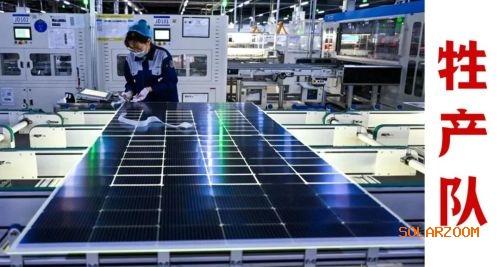
当绿色产能已经就绪,如何让消费者为“未来”买单?
Sou Hu Cai Jing· 2026-01-12 04:33
Group 1 - The core viewpoint emphasizes the need for a coordinated approach between production reforms and consumer cultivation in China's green transition, encouraging consumers to pay for green products [2][8] - The Chinese government has issued a notification outlining 20 specific measures to promote green consumption across various sectors, indicating a shift towards a balanced development of production and consumption [2][8] - China, as a major industrial and renewable energy player, must leverage its dual identity as a supplier and consumer to transform its green industry advantages into systemic competitive advantages [2][8] Group 2 - The global path to green transition involves a comprehensive systemic change that includes economic structure, industrial systems, market mechanisms, and social values, rather than relying solely on technological innovation [3][4] - Developed countries are generally in a dual-track phase of "policy support + market promotion," while some developing countries are still in the early stages of "policy establishment + market cultivation" [4][5] - Initial investments in renewable energy and industrial manufacturing are crucial for building green production capacity, which is necessary for subsequent consumer-side initiatives [4][5] Group 3 - As green production capacity expands, challenges arise if policies continue to focus primarily on the production side without addressing consumer-side policies, leading to diminishing marginal returns on policy support [6][12] - The lack of consumer demand activation can hinder the realization of environmental value from green products, affecting companies' motivation for continuous innovation [7][12] - The transition from a production-dominated approach to a collaborative model involving both production and consumption is essential for achieving high-quality development in green transition [7][12] Group 4 - China's green transition has primarily focused on production breakthroughs, achieving significant advancements in renewable energy capacity and green technology, with key indicators showing substantial growth [8][9] - The successful development of the electric vehicle industry in China illustrates the effective interaction between production and consumption, driven by supportive policies and market mechanisms [9][10] - The next critical step for China is to enhance consumer willingness to choose green products, thereby creating a market system that supports both supply and demand [8][10] Group 5 - The establishment of a green electricity consumption mechanism and the promotion of green power consumption are part of China's strategy to drive demand for renewable energy [10][11] - The integration of renewable energy with various industries and the development of zero-carbon parks are initiatives aimed at fostering a collaborative environment for green transition [11][12] - The structural disconnect in the green production-consumption value chain is a common challenge globally, necessitating a focus on cultivating sustainable consumer demand to create a closed-loop value system [12][13] Group 6 - The transition to a consumer-driven market for green products requires initial policy interventions to lower consumer barriers and build awareness [14][15] - As consumer experiences with green products improve, the focus should shift from direct subsidies to value communication and awareness cultivation [15][16] - Ultimately, achieving a stable market cycle where green production and consumption reinforce each other depends on fostering long-term recognition of green value among consumers [15][16]
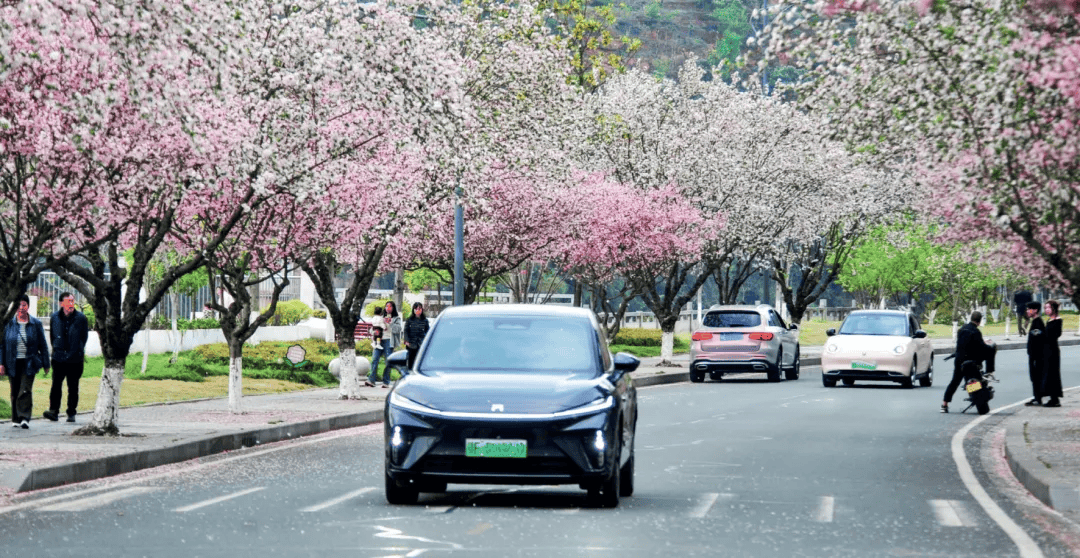
中银国际:供需格局有望重塑 固态电池加速落地
Zhi Tong Cai Jing· 2026-01-12 02:33
Core Viewpoint - The report from Zhongyin International indicates that global sales of new energy vehicles (NEVs) are expected to maintain high growth, potentially reaching a historical high by 2026, driven by strong demand and technological advancements in the industry [1][2]. Group 1: New Energy Vehicle Market - Global demand for new energy vehicles is projected to continue growing, with sales expected to reach approximately 26 million units in 2026, representing a year-on-year increase of about 15% [2]. - The market is experiencing steady growth, with increasing penetration rates and expanding market space, supported by the introduction of new models and advancements in smart and connected technologies [2]. Group 2: Battery Industry Outlook - The demand for power batteries is expected to grow significantly, with domestic installed capacity projected to maintain a high growth rate in 2026 [3]. - The market share of lithium iron phosphate batteries is anticipated to continue rising, while the costs of lithium battery raw materials have increased since October 2025, posing challenges for battery manufacturers in cost management [3]. Group 3: Material Sector Dynamics - The consensus on "anti-involution" in the midstream materials sector suggests that high demand coupled with cautious capacity expansion may lead to a supply-demand mismatch, particularly in the lithium hexafluorophosphate segment, which is expected to see price recovery [4]. - Companies in the tight supply segments, such as lithium iron phosphate cathodes, separators, anodes, and copper foils, are recommended for investment due to their potential for profit recovery [4]. Group 4: Solid-State Battery Development - The industrialization of solid-state batteries is accelerating, entering a phase of pilot testing and small-scale vehicle validation, which is expected to benefit equipment manufacturers and high-value material segments [5]. - Companies that can achieve stable supply, have mature processes, and clear cost reduction paths are recommended for investment, especially those that have collaborated early with industry leaders [5]. Group 5: Investment Recommendations - The new energy vehicle supply chain is expected to maintain high growth, with battery cell segments showing strong resilience in profitability [6]. - Investment focus is suggested on leading companies in tight supply segments and those involved in solid-state battery technology, including firms like CATL, EVE Energy, and others listed in the report [6].



绿金周报0112|小米雷军:特斯拉确实强 但并非不可战胜 AI驱动全球核电需求增长
Xin Lang Cai Jing· 2026-01-12 02:30
Group 1: Solid-State Battery Innovation - Donut Lab introduced the world's first mass-producible solid-state battery, achieving an energy density of 400Wh/kg and a fast charging time of 10 minutes [1] - The Verge electric motorcycle, equipped with this battery, is set for user delivery this year, although the technology faces scrutiny over data verification and aggressive production expansion [1] Group 2: Industry Regulation and Collaboration - The Ministry of Industry and Information Technology (MIIT) held a meeting with multiple agencies to address issues in the power and energy storage battery industry, focusing on capacity control, price stabilization, and patent protection [1][2] - The meeting included 16 companies, primarily leaders in the power and energy storage battery sectors, indicating a collaborative effort to regulate industry competition [2] Group 3: Market Developments in Energy Storage - Shenzhen-based Yuanxin Energy submitted a listing application to the Hong Kong Stock Exchange and completed a 200 million RMB equity financing round, with a post-financing valuation of approximately 2 billion RMB [3] Group 4: Nuclear Power and AI Influence - AI is driving a significant increase in global nuclear power demand, with over 63% of surveyed investors considering AI-related consumption a structural change in electricity demand [4] Group 5: Advancements in Solar Technology - Research teams from Xiamen University and Xi'an Jiaotong University developed a new method to enhance the stability of perovskite solar cells, addressing critical defects that affect performance [5][6] Group 6: Future Energy Initiatives - Beijing Economic-Technological Development Area plans to establish a "Future Energy Town" focusing on new energy storage, clean energy, low-carbon transition, and fusion energy [7] Group 7: Electric Vehicle Market Adjustments - General Motors announced a $6 billion impairment charge to terminate certain electric vehicle investments, influenced by market demand fluctuations and policy changes [8] - Geely Holding Group projected a total sales volume of 4.116 million vehicles in 2025, with a 26% year-on-year increase, driven by a 58% growth in new energy vehicle sales [8] Group 8: Carbon Capture and Utilization Standards - China Huaneng Group released three national standards in the CCUS field, covering the entire process from carbon capture to geological storage, marking a significant advancement in carbon asset development [10] Group 9: Circular Economy Initiatives - Greeenme's project for recycling end-of-life vehicles received a carbon reduction certification, marking a significant achievement in carbon asset development [12] - The "Love Recycling" initiative reported a recycling volume of 945,000 tons in 2025, reflecting a 40% increase from the previous year [13]
电力设备与新能源行业1月第1周周报:动储电池推进反内卷,光伏出口退税取消-20260112
Bank of China Securities· 2026-01-12 01:05
Investment Rating - The report maintains an "Outperform" rating for the power equipment and new energy industry [1]. Core Insights - The global sales of new energy vehicles are expected to grow rapidly in 2026, driving demand for batteries and materials [1]. - The Ministry of Industry and Information Technology is working to regulate competition in the power and energy storage battery industry, which is likely to improve profitability across the supply chain [1]. - Sodium batteries are anticipated to enter large-scale applications, while solid-state battery industrialization is progressing, highlighting the importance of related materials and equipment companies [1]. - The photovoltaic sector is focusing on "anti-involution" as a key investment theme, with regulatory discussions aimed at controlling upstream silicon material prices and enhancing profitability in downstream battery components [1]. - The demand for wind power is expected to continue growing, supported by government initiatives for new photovoltaic and wind power projects [1]. - The energy storage sector remains robust, with recommendations to focus on energy cell and large-scale integration manufacturers [1]. - Hydrogen energy is projected to open new demand avenues, particularly in green hydrogen applications, with a focus on equipment and operational segments [1]. - Nuclear fusion is identified as a long-term energy development direction, with recommendations to monitor core suppliers in this area [1]. Summary by Sections New Energy Vehicles - Expected sales in 2025 for new energy passenger vehicles in China are projected at 12.809 million units, a year-on-year increase of 17.6% [2]. Battery Technology - CATL announced plans for large-scale sodium battery applications in 2026, while solid-state battery prototypes are entering real vehicle testing [2]. Photovoltaic Industry - The cancellation of VAT export rebates for photovoltaic products is set to take effect from April 1, 2026, impacting market dynamics [2]. - The photovoltaic industry is experiencing price adjustments, with silicon material prices rising and a focus on maintaining profitability in the supply chain [15][19]. Wind Power - The wind power sector saw significant growth, with a 22.06% increase in stock prices for wind energy companies [10][13]. Energy Storage - The price of lithium carbonate has risen significantly, with current prices around 115,000-119,000 RMB per ton, reflecting a 19.1% increase [27]. - Energy cell prices for various models have also increased, with the average price for 100 Ah cells at 0.403 RMB per watt-hour, up from previous levels [28]. Market Trends - The overall power equipment and new energy sector saw a 5.02% increase in stock prices, outperforming the broader market indices [10][13].
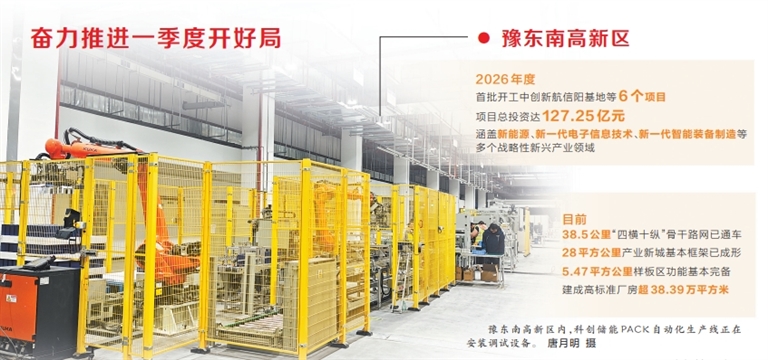
6个项目总投资超127亿元,豫东南高新区重大项目上新
He Nan Ri Bao· 2026-01-11 23:40
Core Viewpoint - The article highlights the commencement of key projects in the Yudongnan High-tech Industrial Development Zone, emphasizing the strategic importance of these developments in enhancing the local economy and attracting further investments in the renewable energy sector [3][4]. Group 1: Project Developments - Six major projects have been launched with a total investment of 12.725 billion yuan, covering strategic emerging industries such as new energy and advanced electronic information technology [3]. - The Zhongchuang Innovation Technology Group is establishing a 51GWh power and energy storage battery project in Xinyang, with a total investment of 9.63 billion yuan, expected to generate an annual output value of 12 billion yuan and create 3,000 jobs by 2028 [3][4]. Group 2: Economic Impact - The projects are anticipated to significantly contribute to the local economy, with the Zhongchuang Innovation project alone expected to generate 400 million yuan in tax revenue annually [3]. - The Yudongnan High-tech Zone aims to become a new growth pole for high-quality development in Xinyang, enhancing the regional economic transformation and upgrading [4]. Group 3: Infrastructure and Future Plans - The Yudongnan High-tech Zone has established a 38.5 km backbone road network and a basic framework for a 28 square kilometer industrial new city, with ongoing developments in various industrial parks [4]. - Future plans include focusing on green low-carbon development and building a modern industrial system, aligning with national high-tech zone standards and zero-carbon park initiatives [5].
新能源汽车行业2026年度策略:供需格局有望重塑,固态电池加速落地
Bank of China Securities· 2026-01-11 14:27
Core Insights - The report predicts that global electric vehicle (EV) sales will maintain a high level of growth, potentially reaching a record high by 2026, driven by strong demand and the acceleration of solid-state battery technology commercialization [1][3] - The report maintains an "outperform" rating for the industry, highlighting the expected reshaping of the supply-demand landscape and the potential for profit growth across the supply chain [1] Industry Overview - The global EV market continues to expand, with a projected 2026 sales volume of approximately 26 million units, representing a year-on-year growth of about 15% [3][49] - In 2025, the global EV sales reached approximately 15.02 million units, reflecting a year-on-year increase of 27.2% [15][19] - The penetration rate of EVs in the Chinese market has surpassed 50%, with expectations for continued growth despite the upcoming reduction in purchase tax exemptions [32] Battery Technology - The report emphasizes the ongoing upward trend in the power battery sector, with a significant increase in installed capacity expected to continue into 2026 [51] - Solid-state battery technology is entering a critical phase of pilot testing and small-scale production, which is anticipated to drive technological upgrades across the industry [3][51] Supply Chain Dynamics - The materials segment is expected to experience a recovery in profitability, driven by a consensus against excessive competition and a significant increase in demand [3][51] - Key materials such as lithium hexafluorophosphate are experiencing supply-demand mismatches, leading to price recovery and improved profitability for leading companies in the sector [3][51] Investment Recommendations - The report suggests focusing on leading companies in segments with tightening supply-demand dynamics, such as lithium iron phosphate cathodes, separators, anodes, and copper foils [3] - Recommended companies include CATL, EVE Energy, and others that are positioned to benefit from stable supply and mature processes [3]
