
汽车租赁

Search documents
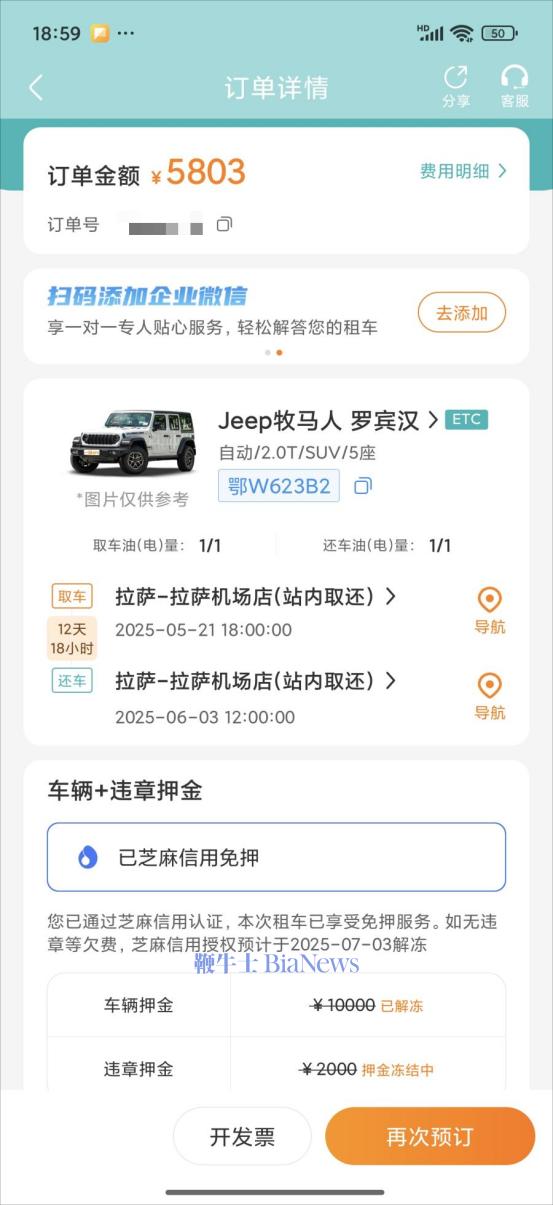
租车惊魂,一嗨乱象!故障车频现,还涉非法营运?
Xin Lang Ke Ji· 2025-08-05 01:33
Core Viewpoint - The article highlights serious issues regarding the vehicle quality and operational compliance of the car rental company, Ehi Car Services, which has faced numerous complaints from users about renting faulty vehicles and potential legal violations related to vehicle operation qualifications [1][15]. Group 1: Vehicle Quality Issues - Multiple users reported experiencing significant vehicle malfunctions while using Ehi Car Services, including loss of power while driving uphill and sudden failures of essential components like windshield wipers [1][3][5]. - A specific incident involved a user renting a Jeep Wrangler that lost power on a steep road, nearly resulting in a serious accident [5][10]. - Users expressed frustration over the company's failure to disclose known vehicle issues at the time of rental, indicating a lack of transparency and responsibility [5][10]. Group 2: Regulatory Compliance Concerns - Ehi Car Services has been accused of renting out vehicles that do not have the required operational qualifications, which may violate the "Management Measures for Small and Micro Passenger Car Rental Services" [6][8]. - Legal experts noted that if the vehicles are not registered for rental use, the company could face administrative penalties [6][8]. - The article mentions that the company has been reported for potentially engaging in illegal operations by providing non-operational vehicles for rental [8][10]. Group 3: Customer Complaints and Legal Issues - Ehi Car Services has accumulated a significant number of complaints, totaling 3,200, related to vehicle faults and issues with deposit refunds [13][15]. - The company is currently facing 2,043 legal cases, with over 59% of these cases identifying Ehi Car Services as the defendant [15]. - Despite claims of providing quality service, the company has been criticized for not addressing customer concerns adequately, leading to a damaged reputation [14][15].

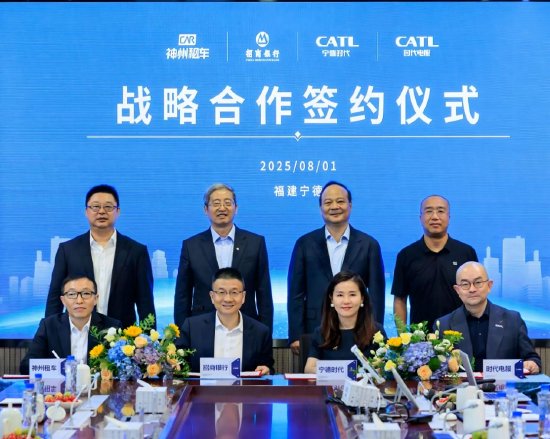
神州租车携手宁德时代等公司共同构建新能源出行生态圈
Zheng Quan Ri Bao Wang· 2025-08-04 09:41
Core Viewpoint - Shenzhou Car Rental has signed a comprehensive strategic cooperation agreement with CATL, Times Electric, and CMB Financial Leasing to enhance the electric vehicle battery swap business and promote the transition to a greener and smarter rental industry [1][2] Group 1: Strategic Cooperation - The collaboration aims to build a new energy travel ecosystem, providing users with efficient and convenient travel experiences while pushing the rental industry towards electrification and intelligence [1] - Shenzhou Car Rental's chairman emphasized that this partnership is a significant step in response to national carbon neutrality and new energy vehicle development strategies [1] Group 2: Electric Vehicle Integration - Shenzhou Car Rental will introduce CATL's jointly developed "Chocolate" standard battery swap models, which will cater to various user needs and scenarios [1] - The company plans to launch pilot operations for over 100,000 of these battery swap models by 2025, focusing on high-frequency travel areas in first-tier and new first-tier cities [1] Group 3: Battery Swap Network Development - The construction and operation of battery swap stations is a key aspect of the collaboration, utilizing over 2,000 offline outlets and parking resources across the country [2] - These swap stations will be strategically located in core city rental hubs and transportation nodes, addressing the energy replenishment concerns of electric vehicle users [2] - The swap stations will prioritize the use of renewable energy sources like solar power, aligning with green and low-carbon development principles [2]

神州租车携手多家合作伙伴共启新能源汽车换电出行新时代
Zhong Guo Qi Che Bao Wang· 2025-08-04 07:08
Core Viewpoint - Shenzhou Car Rental has signed a comprehensive strategic cooperation agreement with CATL, Times Electric, and CMB Financial Leasing to deepen collaboration in the electric vehicle battery swap business, aiming to create a green and efficient travel ecosystem for users and promote the upgrade of the car rental industry towards electrification and intelligence [1][3]. Group 1: Strategic Collaboration - The partnership marks a significant step for Shenzhou Car Rental in the new energy sector, indicating a new development phase in electric vehicle rental and supporting services [3]. - The collaboration is a response to national dual carbon and new energy vehicle development strategies, leveraging Shenzhou's strengths in rental networks and operational services [3]. Group 2: Financial Support and Vehicle Integration - CMB Financial Leasing will provide flexible and efficient financial support for the introduction of the "Chocolate" battery swap models, emphasizing the bank's commitment to green finance [3]. - Shenzhou Car Rental plans to introduce the "Chocolate" standard battery swap models, with a pilot operation starting in 2025 and a goal to operate over 100,000 such vehicles [3][4]. Group 3: Battery Swap Network Development - The construction and operation of battery swap stations is a key aspect of the collaboration, utilizing over 2,000 offline outlets and parking resources to alleviate charging anxiety for electric vehicle users [4]. - The battery swap stations will prioritize the use of renewable energy sources and participate in grid peak shaving and frequency modulation [4]. Group 4: User Experience Enhancement - Shenzhou Car Rental will integrate real-time navigation and payment functions for battery swap stations into its app, creating a digital closed-loop for the rental, swap, and return process [4]. - The collaboration aims to optimize operational costs and provide cost-effective rental services through competitive battery leasing solutions and joint research on cost reduction strategies [5].

神州租车宣布携手宁德时代、时代电服、招银金租,围绕新能源汽车换电业务展开合作
Xin Lang Ke Ji· 2025-08-04 06:28
Group 1 - The core viewpoint of the article is the strategic partnership formed between Shenzhou Car Rental, CATL, Times Electric, and CMB Financial Leasing to enhance the electric vehicle battery swap business and promote the transition of the car rental industry towards new energy and intelligence [1][3][4] Group 2 - Shenzhou Car Rental's chairman emphasized that this collaboration aligns with national dual carbon and new energy vehicle development strategies, leveraging the company's strengths in rental networks and operational services [3] - The company plans to introduce the "Chocolate" standard battery swap vehicles developed by CATL and automotive manufacturers, with a pilot operation set to start in 2025, aiming to operate over 100,000 of these vehicles [3] - The partnership will focus on building a battery swap network, utilizing over 2,000 offline outlets and parking resources across the country to enhance user experience through real-time navigation and cost settlement features integrated into the app [3][4] - Times Electric and CMB Financial Leasing will provide competitive pricing solutions for the rental of CATL's battery for self-operated vehicles, and a joint working group will be established to explore cost reduction and efficiency improvement strategies for new energy charging vehicles [4]
广州最新公布:上半年全市经济总量同比增长3.8%
Nan Fang Du Shi Bao· 2025-07-29 09:24
Economic Overview - Guangzhou's GDP for the first half of 2025 reached 1,508.099 billion yuan, reflecting a year-on-year growth of 3.8% at constant prices [2] - The city's fixed asset investment increased by 0.8% year-on-year, with infrastructure investment growing by 4.2% and real estate development investment rising by 4.1% [3][4] Industrial Performance - The industrial added value for large-scale enterprises in Guangzhou grew by 0.7% year-on-year, with the automotive manufacturing sector experiencing a decline of 5.7% [2] - New energy vehicle production increased by 9.5% year-on-year, while the integrated circuit manufacturing sector saw a significant growth of 30.0% [2] - The electrical machinery and equipment manufacturing industry grew by 11.3%, and specialized equipment manufacturing increased by 7.5% [2] Service Sector Growth - The profit-making service industry achieved a revenue growth of 9.2% year-on-year, with the internet, software, and information technology services sector growing by 8.7% [3] - High-end professional services such as human resources, advertising, and consulting saw substantial growth, with increases of 12.4%, 21.4%, and 28.4% respectively [3] - The sports industry experienced a revenue increase of 16.7%, driven by the upcoming 15th National Games [3] Transportation and Logistics - Passenger traffic in the transportation sector reached 163 million, marking a 0.9% increase year-on-year, with significant growth in air and rail transport [4] - The total cargo volume was 450 million tons, reflecting a 2.4% growth, with port cargo throughput increasing by 2.7% [4]

五道集团:以产业为帆,以匠心为舵,铸就产业投资新典范
Sou Hu Cai Jing· 2025-07-24 02:27
Core Perspective - Wudao Group outlines a strategic vision of "industry-finance symbiosis and enduring value" as a comprehensive industrial investment institution, emphasizing its capital operation capabilities and deep industry engagement [1] Group 1: Cemetery Industry - Wudao Group focuses on the cemetery industry, which is characterized by its anti-cyclical nature, ensuring stable cash flow growth despite economic fluctuations. The value of its cemetery assets has reached nearly 9.5 billion yuan, with a net profit reserve of nearly 3.6 billion yuan [1] Group 2: Building Asset Management - In the core city office management sector, Wudao Group demonstrates keen industry insight, managing a total signed office area of 31,481 square meters. The occupancy rates for various projects, such as the Zhejiang University Alumni Enterprise Headquarters and Alibaba's Cainiao Industrial Park, are reported at 100% and 82% respectively [1] Group 3: Vehicle Rental Industry - In the business vehicle rental sector, Wudao Group has established an efficient and flexible operational system, achieving a monthly rental rate of over 95% and an annual profit margin exceeding 43%, reflecting its robust growth potential [2] Group 4: Consumer Experience - The "Little Elephant Experience Park" fills a gap in shopping mall consumption scenarios, creating high-frequency traffic through immersive interactions. Additionally, the group has innovated in the restaurant sector with the launch of a unique beef bone hot pot brand, establishing eight locations in Beijing and Shandong [3] Group 5: Self-Storage Market - The self-storage market in China has seen rapid growth, with an annual growth rate exceeding 30%. Wudao Group addresses modern storage needs through self-storage solutions, catering to urban residents facing space constraints [4][5] Group 6: Investment and Operation Philosophy - Wudao Group's core competitiveness lies in its dual-driven model of "industrial investment" and "industrial operation," distinguishing itself from traditional asset management institutions. The group emphasizes the importance of operational empowerment for asset appreciation, creating a warm and human-centered investment experience [6]
德国总理谴责欧盟强推电动汽车的计划
news flash· 2025-07-21 18:50
Core Viewpoint - German Chancellor Merz condemns plans for car rental companies to procure electric vehicles exclusively starting in 2030, as reported by Bild newspaper [1] Group 1: Regulatory Changes - The EU is attempting to ban car rental companies and large enterprises from purchasing non-electric vehicle models for their fleets starting in 2030 [1] - Companies such as Sixt SE and Europcar Mobility Group SA will only be allowed to procure electric vehicles from 2030 onwards [1]
德国总理默茨批评一份欧盟草案,该草案计划要求汽车租赁公司和大公司从2030年起只购买电动汽车。
news flash· 2025-07-21 18:23
Core Viewpoint - German Chancellor Merz criticizes an EU draft that plans to require car rental companies and large corporations to purchase only electric vehicles starting in 2030 [1] Group 1 - The EU draft aims to transition to electric vehicles for car rental companies and large corporations by 2030 [1] - Chancellor Merz's criticism highlights concerns regarding the feasibility and implications of such a mandate [1]
欧盟密谋:2030年租赁公司被逼上“电车断头路”?
3 6 Ke· 2025-07-21 08:54
Core Viewpoint - The European Union is secretly planning a new regulation to accelerate the adoption of electric vehicles (EVs) by targeting rental companies and large enterprises with vehicle fleets, requiring them to switch to EVs by 2030, five years earlier than the previous 2035 deadline for consumers [1][3][10]. Group 1: Impact on the Automotive Industry - If the regulation is implemented, it could directly affect approximately 60% of new car sales in the EU, representing a significant market [3]. - The plan aims to create a large and stable demand for EVs by focusing on organized buyers like rental companies and corporate fleets, which are more easily influenced by policy changes [8][10]. - This policy could serve as a "safety net" for automakers, providing a guaranteed market for EVs and encouraging investment in production and technology [11][12]. Group 2: Concerns from the Rental Industry - The rental industry has expressed strong opposition, citing concerns over high costs, insufficient charging infrastructure, and low resale values of EVs [4][5][19]. - Rental companies may face financial disasters due to the forced purchase of new EVs while struggling to sell older models at reasonable prices, leading to potential bankruptcy [16][17]. - The operational challenges of maintaining EVs, including high repair costs and inadequate charging networks, could further erode rental companies' profitability [18][19]. Group 3: Broader Economic Implications - Critics argue that the EU's push for a rapid green transition could lead to significant job losses, with estimates suggesting up to 600,000 jobs could be at risk in the automotive sector [6][24][27]. - The transition to EVs may result in a shrinking supply chain for traditional automotive components, as EVs require fewer parts and different skill sets [25][26]. - The EU's reliance on external sources for critical materials and components, particularly from China, poses a risk to the stability of its automotive industry [30][31][32]. Group 4: Policy Execution and Legitimacy Issues - The secretive nature of the policy discussions has raised concerns about its legitimacy and the potential backlash from affected industries, particularly rental companies [39][42]. - The lack of transparency in the policy-making process could undermine trust in the EU's regulatory environment, leading to hesitance among investors and companies to commit to long-term plans [42][43]. - The success of the policy hinges on addressing the survival crisis of rental companies, building a competitive local supply chain, and managing the social impacts of job transitions [44].
欧盟拟立法强制企业2030年全面采购电动车 租赁巨头或成绿色转型“排头兵”
智通财经网· 2025-07-21 01:52
Group 1 - The European Commission is drafting a new law requiring large companies and car rental firms to switch to electric vehicle procurement by 2030, potentially impacting about 60% of new car sales in the EU, covering a market size of approximately 6.4 million vehicles per year [1] - This initiative is seen as a crucial step towards the EU's 2035 plan to ban the sale of new petrol and diesel cars, aiming to create a substantial "baseline market" to mitigate the risks associated with the transition for car manufacturers [1] - The policy draft is currently in the internal discussion phase, with plans to be officially published and submitted for parliamentary approval by the end of summer 2025 [1] Group 2 - The European Automobile Manufacturers Association emphasizes that the transition to electrification requires comprehensive policy support, including renewable energy supply, grid upgrades, and raw material access [2] - Stellantis has warned that failure to meet EU emission reduction targets could lead to the closure of its European factories, while estimates suggest that the transition may result in the loss of approximately 600,000 jobs in the European automotive sector, particularly in major manufacturing countries like Germany and France [2] - Market data indicates that electric vehicle sales in Europe are projected to account for only 15% of new car sales in 2024, significantly below the 55% reduction target for 2030, highlighting the urgency of the policy [2] Group 3 - The EU's temporary tariffs on Chinese electric vehicles have sparked strong opposition from China, while the German government expresses concerns that protectionism may weaken industrial competitiveness [3] - The EU faces the challenge of balancing green transition goals with economic feasibility amid ongoing policy negotiations [3]

