乡村旅游

Search documents
因地制宜做强乡村特色产业
Xin Lang Cai Jing· 2026-01-07 21:21
Group 1 - The core viewpoint emphasizes the importance of rural特色产业 as a powerful engine for farmers' income growth and a crucial support for high-quality county economic development, with a goal to modernize agriculture into a large industry by 2025 [1] - By 2025, it is projected that there will be over 100,000 large-scale agricultural processing enterprises in China, achieving approximately 18 trillion yuan in revenue and 1.2 trillion yuan in profit, with a main agricultural product processing conversion rate reaching 75% [1] - The development of rural特色产业 must adhere to a differentiated approach, leveraging local resources and comparative advantages to avoid homogenization and blind competition [1] Group 2 - Strengthening key agricultural core technology and promoting agricultural new quality productivity through technological innovation is essential for refining rural特色产业 [2] - Focus areas include biological breeding, smart agriculture, and green agriculture, with an emphasis on integrating technology with the entire agricultural value chain [2] - The promotion of green development and the transformation of agricultural development methods are necessary to enhance product quality and meet consumer demand for high-quality agricultural products [2] Group 3 - A full industry chain development mindset is crucial for enhancing rural特色产业, promoting the integration of primary, secondary, and tertiary industries [3] - The strategy involves extending beyond traditional agricultural production to include deep processing of agricultural products and exploring various agricultural functions and values [3] - New business models such as leisure agriculture, rural tourism, and rural e-commerce should be developed to create a modern agricultural industry system [3] Group 4 - Resource aggregation and optimal factor allocation are vital for the development of rural特色产业, addressing current issues like insufficient rural infrastructure and inefficient factor allocation [4] - Infrastructure improvements, including high-standard farmland, rural roads, irrigation systems, and modern cold chain logistics, are necessary to support rural特色产业 [4] - Policies should be optimized to attract quality labor to agriculture and related industries, while also ensuring that farmers benefit from the development of rural特色产业 [4]
咖啡飘香 新寨兴旺
Xin Lang Cai Jing· 2026-01-07 20:19
Core Insights - The article highlights the transformation of Xinzhai Village into a thriving coffee production hub, showcasing the successful integration of coffee cultivation with tourism and local culture [2][6][9] Development Breakthrough - Xinzhai Village has established a coffee base of 13,600 acres and formed six cooperatives, leading to a significant increase in coffee production and quality [2][5] - The village's coffee production has evolved from a struggling industry to a profitable venture, with the introduction of high-quality coffee varieties and modern processing techniques [5][6] - The village's coffee output has reached over 4,000 tons annually, with the unique Baoshan small-grain coffee recognized as a geographical indication product [3][4] Value Chain Extension - The establishment of coffee processing facilities has allowed villagers to enhance the value of their coffee products, with many investing in roasting machines to improve quality [6][7] - Xinzhai Village has embraced a "coffee + tourism" model, attracting over 200,000 tourists annually and significantly increasing coffee-related income [7][9] - The village's coffee industry has seen a revenue increase from 70 million yuan in 2020 to an expected 150 million yuan in 2024 [7] Integration and Coexistence - Xinzhai Village has developed six differentiated coffee estates and ten specialty coffee houses, creating a multi-faceted industry that includes cultivation, processing, and tourism [9][10] - The community has successfully engaged in cultural tourism activities, enhancing the overall experience for visitors and promoting local coffee culture [6][9] - The village's approach has attracted young entrepreneurs, revitalizing the local economy and fostering a culture of coffee appreciation among residents [10][11]


促进城乡区域协调发展,推动乡村全面振兴
Xin Hua Ri Bao· 2026-01-07 19:07
Core Viewpoint - The article emphasizes the importance of promoting coordinated urban-rural development and enhancing regional integration, particularly in the Yangtze River Delta and the Yangtze Economic Belt, while focusing on the revitalization of rural areas and the construction of key functional zones in the province [1][5]. Group 1: Urban-Rural Coordination and Development - Yixing City is transforming the 23 Bay scenic area to enhance its appeal, leading to increased tourist traffic and local economic benefits, with local specialties generating significant income for residents [2][3]. - The planning initiative "Bamboo Waves Without Boundaries" aims to integrate cultural and tourism resources, enhancing the area's infrastructure and visitor experience [3][6]. - The transformation of 23 Bay serves as a model for Yixing's broader strategy of urban-rural coordination and rural revitalization, with a focus on regional planning and resource optimization [5][6]. Group 2: Economic Impact and Community Benefits - The collective operating income of the village is projected to reach 1.0585 million yuan, with total income at 6.9743 million yuan, reflecting a steady increase in residents' disposable income [4]. - The integration of tourism and agriculture is creating diverse income channels for villagers, including employment, market stalls, and hospitality services, contributing to overall economic growth [6][7]. - Yixing has recognized 54 villages as "Beautiful and Livable Villages," showcasing the success of collaborative development efforts and enhancing the rural revitalization narrative [6]. Group 3: Planning and Resource Management - The provincial government is committed to improving the planning framework and resource management to support urbanization and rural revitalization, focusing on optimizing land use and enhancing infrastructure [7][8]. - A comprehensive "four-level three-type" spatial planning system is being implemented to ensure effective resource allocation and development coordination across regions [8].
天津北辰:以文旅“上分” 让“过路村”变身“网红地”
Ren Min Wang· 2026-01-07 07:53
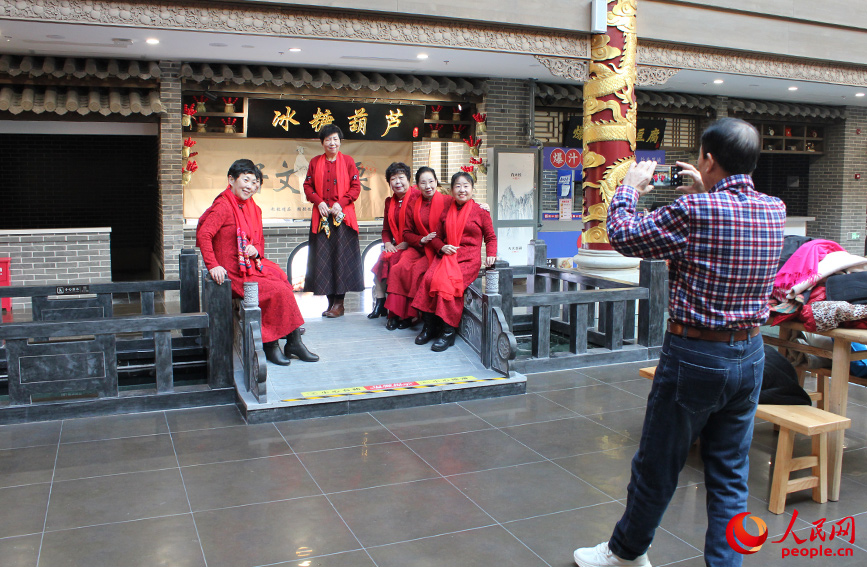
Core Viewpoint - The article highlights the transformation of rural areas in Tianjin's Beichen District through cultural and ecological initiatives, aligning with the directives from the 20th Central Committee of the Communist Party of China to promote rural revitalization and enhance agricultural policies [1][2]. Group 1: Cultural Revitalization - The integration of "agriculture, culture, and tourism" has turned a previously debt-ridden village into a thriving community with an industry output exceeding 1 billion yuan [2]. - The Tianjin Cuisine Cultural Museum features over 100 food stalls and themed dining areas, aiming to create a comprehensive cultural experience that combines food, entertainment, and accommodation [4]. - The village's collective income has remained stable at 200 million yuan for six consecutive years, with total assets reaching 1.9 billion yuan [4]. Group 2: Ecological Development - The dual focus on ecological advantages and cultural tourism has positioned Shuangkou Town as a key player in rural revitalization, promoting a model where agriculture supports ecological sustainability [5]. - The transformation of idle assets into a "sports + education + tourism" model has revitalized previously unused land, enhancing income opportunities for the village [6]. Group 3: Non-material Cultural Heritage - The establishment of a farmer painting courtyard in Houbao Village serves as a creative hub, generating income through the sale of culturally inspired products [10]. - The initiative emphasizes the importance of innovation in traditional crafts, with free public courses and collaborations with local universities to enhance product offerings [11][13]. - The promotion of local cultural heritage has led to increased visibility and sales of traditional crafts, integrating them into everyday life and contributing to community income [13].
四川省两会上,基层代表、委员最关注啥?
Si Chuan Ri Bao· 2026-01-06 11:16
Group 1: Cultural and Economic Development - The focus of grassroots representatives at the provincial conference is on cultural prosperity and the promotion of local characteristics in public advertisements, aiming to enhance the representation of Sichuan culture [1] - There is a strong emphasis on creating attractive job opportunities to encourage young people to return to their hometowns, with a specific mention of the establishment of a global dental production base in Ziyang, which is expected to create a demand for at least 10,000 skilled workers [2] - The development of rural tourism is highlighted as a key strategy for revitalizing villages, with a focus on leveraging local agricultural products and enhancing the overall quality of life for farmers [3] Group 2: Environmental Protection and Urban Management - The implementation of a reward system for environmental protection reporting is advocated, particularly in air pollution control, reflecting a collective concern among representatives about environmental issues [5] - The rise of shared bicycles is noted as a solution for urban transportation challenges, although concerns about management and regulation are raised [6] - The effective utilization of hydropower resources in Sichuan is emphasized, with significant achievements in energy substitution and a call for further development of clean energy policies to support environmental goals [6] Group 3: Healthcare and Elderly Care - There is a pressing need for improved access to healthcare in remote areas, with a proposal for an "Internet+" remote consultation model to enhance medical resource distribution [7] - The importance of integrating elderly care facilities within community planning is stressed, aiming to address the challenges of aging populations and improve the quality of life for seniors [7]
一条乡道的振兴之力
Xin Lang Cai Jing· 2026-01-06 05:03
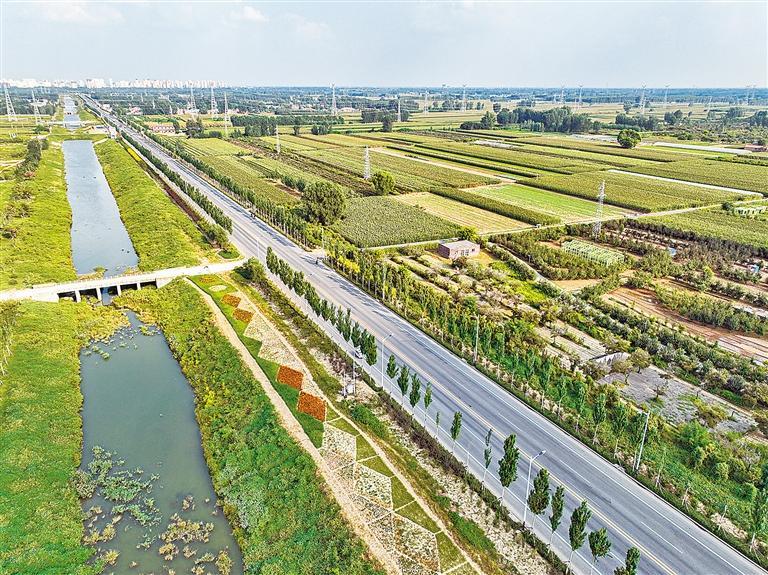
穿行于固安的固东公路,目之所及是整洁路面与错落树木,这条全长10.6公里的乡道,早已超越了交通 干线的单一属性,成为撬动一方发展的"金钥匙"。 从昔日拥堵难行的乡路,到如今获评省级"美丽农村精品示范路"的通衢大道,固东公路的蝶变,源于固 安县精准的规划与投入。2019年的提质改造,不仅按二级公路标准拓宽路面,更融入"路景融合、生态 优先"的理念,将公路与生态保护、文旅发展深度绑定。配套的公路驿站、便民服务点,让这条道路既 有"颜值",更具"温度",彻底打通了固安西部的交通堵点,织就连接京、津、雄的快速交通网。 (来源:廊坊日报) 转自:廊坊日报 ■吕新颖 交通的畅达,是产业崛起的基石。固东公路与京津冀(固安)国际商贸城无缝衔接,为商贸物流业发展 按下"加速键"。56家物流企业入驻、220条物流专线开通,让商贸城成为北方颇具影响力的采购中心; 沿线的大清河产业园区,更是依托便捷交通集聚物流企业,日均处理快递超10万件,带动300余名村民 家门口就业。路通则业兴,固东公路以强大的辐射力,激活了商贸、物流等产业的一池春水。 这条乡道的价值,更体现在民生福祉的提升与乡村振兴的推进。依托便利交通,沿线乡镇的乡村旅游蓬 ...
固东公路“升级记”
Xin Lang Cai Jing· 2026-01-06 05:03
升级后的固东路。(资料片) (来源:廊坊日报) 转自:廊坊日报 固东路(资料片) 交通的蝶变,为产业发展注入强劲动力。作为固安县疏解北京非首都功能的重点项目,京津冀(固安)国际 商贸城与固东公路无缝衔接。以固东公路为支撑,商贸城吸引多家服装批发企业入驻,成为中国北方颇具影 响力的采购中心。 "公路通了,客流、物流都活了。"商贸城运营负责人介绍,目前已有56家物流企业在此布局,开通220条物流 专线,3条通勤快巴直达北京大红门等核心区域。 固东公路的辐射效应已延伸至商贸领域之外。沿公路布局的大清河产业园区内,菜鸟驿站、申通快递等物流 企业纷纷集聚。凭借发达的交通网络,园区物流配送范围可覆盖京津冀核心区域,日均处理快递包裹超过10 万件,带动周边300余名村民实现就近就业。"现在在物流园上班,既能挣到钱,还能照顾老人孩子。"正在分 拣快递的村民张艳红说,公路通车后,越来越多的企业来村里投资,村民的就业选择也更加丰富。 交通兴,则旅游旺。依托固东公路带来的便捷交通,沿线乡镇如固安镇、东湾乡等,正积极发展乡村旅游。 固安镇的温室采摘园每逢周末游客络绎不绝;东湾乡的民俗村则通过打造特色农家菜和传统手工艺品展销等 项目, ...
北京平谷乡村游解锁新玩法
Xin Lang Cai Jing· 2026-01-05 23:53
Core Insights - The article highlights the transformation of rural tourism in Pinggu, Beijing, focusing on innovative experiences while maintaining local charm, particularly through the introduction of pet-friendly activities and winter attractions [1][9]. Group 1: Tourism Developments - The opening of the first pet-themed ski resort in China at Yuyang Ski Resort, covering an area of 20,000 square meters, allows visitors to enjoy skiing with their pets [1]. - The Jingdong Grand Canyon has launched an ice waterfall art season, featuring a 100-meter ice waterfall and various winter-themed activities, enhancing the appeal of traditional scenic spots [2][3]. - The introduction of new transportation links, such as the Chengping Expressway, has improved connectivity between Pinggu and surrounding areas, facilitating tourism growth [2]. Group 2: Cultural and Culinary Attractions - Pinggu is promoting its culinary offerings, aiming to establish a reputation for local flavors, with notable dishes and products from local food companies and farms [10]. - The region is developing cultural tourism through events like the Yajishan Temple Fair, which showcases intangible cultural heritage and local delicacies [6]. - Plans are in place to enhance the tourism experience by integrating traditional activities with modern concepts, such as sports and arts, to attract more visitors [10]. Group 3: Infrastructure and Accommodation - Pinggu has over 450 guesthouses and is developing 22 high-quality rural leisure complexes to improve accommodation options for tourists [9]. - The area is focusing on creating unique tourism experiences by leveraging its natural resources and cultural heritage, aiming for a significant increase in tourist numbers and revenue in the coming years [9].
生态协同 创造消费新范式
Mei Ri Shang Bao· 2026-01-05 23:35
Core Viewpoint - The sustainable development of new consumption relies on a multi-dimensional ecological collaboration involving policy, market, and regulation. Despite the flourishing of new consumption scenarios, challenges such as insufficient consumer capacity and willingness, a relative shortage of high-quality supply, and the need for an optimized consumption environment persist. To invigorate consumption, a systematic ecology must be established, focusing on income support, regulatory oversight, policy empowerment, and building trust [1]. Group 1 - The primary task of ecological collaboration is to strengthen income support for residents, providing a solid foundation for consumption. The core of consumption is demand, which is fundamentally based on income. The Central Economic Work Conference has emphasized promoting reasonable growth in wage income and broadening channels for property income [1]. - A key aspect of ecological collaboration is improving the regulatory environment for consumption, ensuring that consumers feel more secure. As consumption scenarios continue to innovate, issues such as prepaid consumption risks, digital privacy breaches, and the lack of service standards in new scenarios have become increasingly prominent. Local governments are accelerating the establishment of a comprehensive, multi-layered regulatory system [1][2]. Group 2 - An example of effective implementation is found in Shishe Village, where "trustworthy consumption" is integrated into grassroots governance and business practices, supporting rural revitalization. The village, once considered "hollow," now attracts over one million visitors annually, with a stable and transparent consumption environment being a crucial factor for its sustained appeal [1][2]. - The important guarantee for ecological collaboration is to strengthen cross-departmental policy coordination, making development more robust. The cultivation of new consumption scenarios involves multiple departments, including commerce, culture, tourism, sports, technology, and market regulation, necessitating the breaking down of silos to form a collaborative effort. The National Development and Reform Commission has issued measures to create new consumption scenarios, clarifying departmental responsibilities and cooperation mechanisms [2]. Group 3 - Recent reports from the Zhejiang New Consumption Brand Research Institute indicate that the development of new consumption in Zhejiang is transitioning from "single-point innovation" to "ecological co-prosperity." The boundaries of industries are being fundamentally reshaped, creating new scenarios and redefining value chains [2][3]. - For instance, the integration of "agriculture, commerce, and tourism" has become a new paradigm, exemplified by the brand Panda Pig, which has created an industrial complex with an annual revenue exceeding 350 million, achieving value creation through synergy. Additionally, the "culture, commerce, and tourism" integration has opened new avenues, as seen in the M511 Light and Shadow Hub in Hangzhou, which combines cultural, technological, and commercial elements into a new consumer experience [3].
平谷乡村游解锁新玩法
Xin Lang Cai Jing· 2026-01-05 22:49
本报记者 朱松梅 京城知名滑雪场有好几处,但这个冬天,渔阳滑雪场成了可爱的"显眼包"——全国首个宠物滑雪主题乐园在这里开张,面积足有2万平方米。在耀眼的雪地 上,狗狗们尽情撒欢儿。 游客李然给自家的比熊犬戴上滑雪镜,抱着它坐上雪圈,从坡顶滑下来,撒下一路笑声。"狗子也是我家的成员,每一个开心时刻,都希望它也在。"李然 说,从前一家人去滑雪,狗狗只能留守家中。 随着"微度假"的兴起,平谷乡村游也在解锁新玩法。北部山区有险峻山峦,也有山泉、溶洞,坐落着好几处知名景区。如今,这些传统景区有了时尚感。 就拿山东庄镇的京东大峡谷来说,元旦,冰瀑艺术季开幕了。山间变成了童话中的冰封世界。百米冰瀑从山崖垂落,晶莹剔透,冰雕师用冰雪雕琢出迷宫, 还拥有北京第一处冰封玫瑰景观。有民谣乐队在冰幕前现场演唱,热红酒咕嘟冒泡,还有本地烤红薯、糖葫芦等冬日限定小吃。黄松峪乡的京东大溶洞,十 几年前曾名噪一时,随着传统景区式微,它也一度客流寥落。半年前,大溶洞完成了沉浸式数字光影改造,游客进入这座15亿年的溶洞,可以感受奇幻光 影。 游客玩得尽兴,也希望能带走一些独特的伴手礼。在大兴庄镇的桃源里欢乐田园,农业中关村零号店正迎来它的第一个 ...