工业软件

Search documents
全球工业软件巨头落户深圳 达索系统大湾区运营总部启用
Shen Zhen Shang Bao· 2025-11-06 08:14
Core Insights - Dassault Systèmes and Shenzhen Longgang Urban Construction Investment Group have launched a new productivity empowerment platform in Shenzhen, marking a significant step in Dassault's strategic expansion in the Chinese market and the Greater Bay Area [1][2] Group 1: Platform Overview - The newly established platform is located in Shenzhen Industrial Software Park and aims to be a strategic supporter, innovation enabler, and ecosystem builder for the development of new productivity in Shenzhen and the Greater Bay Area [2] - The platform's core functions include strategic guidance, tool empowerment, digital simulation, demonstration leadership, talent incubation, and ecosystem aggregation, focusing on a digital transformation model of "benchmark demonstration + inclusive services + innovation incubation" [2] Group 2: Industry Focus - The platform will leverage Dassault's 3DEXPERIENCE platform and AI-driven virtual twin technology to serve key industries such as new energy vehicles, high-end industrial manufacturing, life sciences, and new infrastructure [1][2] - The initiative aims to assist the regional manufacturing industry in upgrading towards higher-end, intelligent, and sustainable development [1][2] Group 3: Strategic Goals - Dassault Systèmes plans to connect upstream and downstream enterprises and research institutions to build an open and collaborative local innovation network, enhancing Shenzhen's position as a global hub for intelligent manufacturing [2] - The company emphasizes the integration of global experience in industrial AI with local insights to drive deeper applications of digital transformation in the manufacturing sector [2]
报告征集 | 中国工业软件行业发展研究报告
艾瑞咨询· 2025-11-06 00:02
Group 1 - The article emphasizes the importance of digital transformation in China's manufacturing industry, highlighting the need for industrial software as a strategic component for achieving informationization, digitization, and intelligence in manufacturing [2][6]. - Since the introduction of "Made in China 2025" in 2015, there has been a continuous push for high-end manufacturing and the integration of new technologies, with significant policy support at both international and local levels [2][5]. - The Chinese industrial software market has shown rapid growth, with revenues reaching 241.4 billion yuan in 2021, marking a year-on-year increase of 22.3%, although there remains a significant gap compared to foreign products [2][6]. Group 2 - The report aims to provide insights into the characteristics of the Chinese industrial software market and the specific conditions of key segments, as well as to identify quality service providers [3][5]. - The research will cover two main aspects: the current market situation of industrial software suppliers, including product and service offerings, market size, and competitive landscape, and the impact of emerging technologies like industrial large models and cloud-native solutions [5][6]. - The report will also analyze the development background of industrial software, including key concepts, driving forces, and the necessity and value of its development in China [6][10]. Group 3 - The report will include a comprehensive overview of the industrial software supply chain, detailing product and service types, market dynamics, and competitive strategies of key players [9][10]. - It will explore the current state of industrial software development, including challenges faced by companies, such as technological bottlenecks and brand recognition issues [2][10]. - The findings will aim to provide actionable insights and recommendations for stakeholders in the industrial software sector to enhance their competitiveness and adapt to market changes [5][12].


【西安】让科技“种子”尽快开花结果
Shan Xi Ri Bao· 2025-11-05 23:15
Core Viewpoint - The article highlights the role of the Chang'an Pioneer Innovation Center in bridging the gap between scientific research and industrial application, emphasizing the importance of technology managers in facilitating this process [2][5][11]. Group 1: Role of Technology Managers - Technology managers at Chang'an Pioneer serve as intermediaries between research institutions and the market, possessing knowledge of both technology and market needs [5][6]. - The center has a team of 755 technology managers, many of whom have cross-disciplinary backgrounds, enhancing their ability to connect research with industry [5][12]. - The transformation of scientific achievements into marketable products requires a deep understanding of both technical specifications and production realities [4][10]. Group 2: Innovation and Collaboration - Chang'an Pioneer aims to create a collaborative ecosystem by integrating resources from over 30 research institutions, universities, and enterprises to develop a domestic industrial software ecosystem [12][13]. - The center's approach includes providing comprehensive support throughout the innovation cycle, from technical research to market launch [11][12]. - The establishment of a domestic software adaptation center is a significant step towards overcoming reliance on imported technologies in high-end manufacturing [9][12]. Group 3: Talent Development - The center has initiated a talent cultivation program, the Zhonglin Class, to develop skilled professionals in the field of nanotechnology, addressing the shortage of interdisciplinary talent [13][16]. - This program employs a continuous education model, allowing students to engage in research projects from their first year, fostering practical skills and international exposure [16]. - The center has successfully gathered over 2,500 high-level talents, including 57 academicians, contributing to advancements in various fields such as aerospace, life sciences, and artificial intelligence [16].
2025工业软件创新发展大会举行—— 业界热议以工业软件推动制造业转型
Zhong Guo Hua Gong Bao· 2025-11-05 08:08
Core Insights - The 2025 Industrial Software Innovation Development Conference was held in Zhuzhou, Hunan, focusing on the role of industrial software in digital transformation and enhancing supply chain security [1][2] - Industrial software is considered the "soul" of digital transformation in manufacturing, with 2025 marking a critical year for transitioning from "quantitative accumulation" to "qualitative leap" [1] - The integration of new information technologies such as industrial AI, industrial internet, and industrial metaverse is essential for optimizing industrial production and achieving customization [2] Group 1 - Zhang Li, President of the China Electronic Information Industry Development Research Institute, emphasized the importance of industrial software in the digital transformation of manufacturing [1] - Shen Changxiang, an academician of the Chinese Academy of Engineering, highlighted the challenges faced by AI and industrial robots in risk resistance, proposing a dual-architecture for a secure and trustworthy computing system [1] - The proposed security architecture aims for dynamic parallel protection without relying on traditional methods, ensuring unalterable audit records [1] Group 2 - Academician Chai Tianyou pointed out that traditional industrial software relies heavily on human experience, which limits overall optimization and efficiency in industrial production [2] - He proposed three principles for the development of industrial intelligence: problem-driven focus, system engineering approach, and mechanism innovation for long-term collaboration between research and application [2] - Wei Daisen, Vice President of Inspur Group, discussed the evolution of industrial software into a three-layer architecture, showcasing the successful implementation of a smart control model at Shandong Haohua Group, resulting in significant operational improvements [2] Group 3 - Huawei Technologies Co., Ltd. and Hunan University of Technology established a partnership to promote the integration of AI, HarmonyOS, industrial software, and smart campus development [3]

中控技术(688777):2025传统业务景气度下滑,全力开启向AI的转型
Zhongyuan Securities· 2025-11-04 13:05
Investment Rating - The report assigns a rating of "Increase Holding" for the company, indicating an expected relative increase of 5% to 15% compared to the CSI 300 index over the next six months [22]. Core Insights - The company reported a revenue of 5.654 billion yuan for the first three quarters of 2025, representing a year-on-year decline of 10.78%. Net profit was 432 million yuan, down 39.78% year-on-year, with a non-recurring net profit of 338 million yuan, down 48.37% year-on-year [7][8]. - The traditional business of the company is experiencing a downturn due to adverse macroeconomic conditions, including increased tariffs, inflation, geopolitical risks, and lower-than-expected interest rate cuts. Revenue and net profit have consistently declined over the first three quarters of 2025 [8]. - The company's next growth engine is expected to come from industrial AI, with the launch of the TPT industrial model in June 2024 and its upgrade to TPT 2.0 in August 2025. The TPT model has already been applied in over 110 projects, generating 154 million yuan in revenue in the first three quarters of 2025 [8][9]. - Successful case studies of TPT's practical effects have been reported, including significant reductions in workforce and operational efficiency improvements in various industrial applications [8]. - The company has accumulated data from over 100,000 production units in domestic process industries, indicating a substantial potential for AI applications to unlock value in the industry [8]. Financial Summary - For 2025, the company is projected to have earnings per share (EPS) of 0.84 yuan, 1.18 yuan, and 2.26 yuan for the years 2025, 2026, and 2027, respectively. The corresponding price-to-earnings (PE) ratios are expected to be 62.19, 44.32, and 23.08 based on the closing price of 52.25 yuan on November 3, 2025 [9].

2026年度数字经济策略:AI赋能:科技行业投资的黄金时代
NORTHEAST SECURITIES· 2025-11-04 09:14
Group 1: Core Insights - The report emphasizes that the digital economy will continue to drive new quality productivity in 2026, supported by advancements in AI and technology innovation [2][19][21] - The transition from "technical breakthroughs" to "value release" in the technology sector is expected to create long-term value for the industry [2][19] - The automotive sector is projected to undergo a paradigm shift from "rule-driven" to "data-driven" approaches, particularly in commercial vehicles [2][33] Group 2: Digital Economy Development - The digital economy is recognized as a key force in optimizing the three elements of productivity: labor, labor objects, and labor materials [17][19] - AI will play a crucial role in enhancing productivity through technological innovation, data resource utilization, and the establishment of a modern industrial system [19][21] - The report forecasts that the AI medical sector will grow significantly, with the market size expected to reach 159.8 billion yuan by 2028 [4][24] Group 3: Intelligent Driving - The intelligent driving sector is entering a critical phase with both gradual and leapfrog developments, leading to significant value release in 2025 [26][32] - The penetration rate of L2+ intelligent driving is expected to rise from 8% in 2024 to 15% in 2025, indicating a shift towards more affordable models [37][41] - The report highlights the importance of policy and technology in driving the commercialization of L3 autonomous vehicles [40][44] Group 4: Industrial AI - Industrial AI is set to evolve from "tool-level applications" to comprehensive integration across research, production, and management processes [3][22] - The report outlines that AI will enhance efficiency in manufacturing through adaptive intelligent systems and predictive maintenance [3][22] - The integration of AI in industrial software is expected to improve operational efficiency and drive innovation in manufacturing [22][25] Group 5: Cybersecurity - The cybersecurity industry is transitioning from "passive defense" to "active immunity," with AI-driven models enhancing threat detection and operational automation [3][23] - The report emphasizes the need for a comprehensive security framework that includes AI technology, data security, and ecosystem collaboration [23][24] - AI's role in cybersecurity is projected to significantly improve threat detection accuracy and operational efficiency [3][23] Group 6: Investment Recommendations - The report suggests focusing on sectors such as automotive, industrial AI, cybersecurity, and AI healthcare for investment opportunities during the "14th Five-Year Plan" period [21][24][25] - The automotive sector is highlighted as a core area for investment due to its potential for digital technology integration and ecosystem collaboration [21][22] - The report indicates that the development of domestic AI chips will support the digital economy by overcoming current limitations in computing power [25][26]
2025年MES系统排名:盘古信息领跑国产,国际主流厂商对比解析
Sou Hu Cai Jing· 2025-11-04 04:12
Core Insights - The article emphasizes the importance of MES (Manufacturing Execution System) in the digital transformation of manufacturing, highlighting that the penetration rate of MES systems in Chinese manufacturing has surpassed 28% and the market size is projected to reach 42.7 billion yuan in 2024, with a compound annual growth rate of 23.6% [1][2]. Group 1: Leading Domestic MES Provider - Pangu Information is identified as a leading domestic MES provider, recognized for its significant advantages in the market [3]. - The MES system developed by Pangu Information integrates various elements of the production process, offering comprehensive management modules including manufacturing data, scheduling, inventory, quality, and more [3]. - Key features of Pangu's MES system include intelligent flexible scheduling, adaptable process modeling, multi-level error prevention, standardized reporting, and lean production capabilities [3]. Group 2: Industry Coverage - Pangu Information has successfully assisted over 700 smart manufacturing factories and more than 1,000 digital smart workshops, serving major companies like BYD, CRRC, and DJI across various sectors [5]. Group 3: Competitors in the MES Market - Siemens offers the Opcenter MES product, which supports digital twin concepts and provides a complete data loop from virtual design to physical production, particularly in high-complexity industries like automotive and aerospace [7]. - SAP's MES solutions are noted for their seamless integration with ERP systems, leveraging the high-performance SAP HANA database to enhance data processing capabilities [8]. - Honeywell's MES is widely used in process industries such as refining and petrochemicals, focusing on production planning and operational efficiency [9]. - Rockwell Automation's MES aims to improve output and agility in manufacturing through data connectivity and automation [10]. Group 4: Key Considerations for MES Selection - Companies should clarify their specific needs based on production modes and management goals when selecting an MES system [11]. - Evaluating the system's integration capabilities with existing ERP and PLM systems is crucial to avoid information silos [11]. - Assessing the vendor's industry experience and successful case studies is important for ensuring compatibility with the company's requirements [11]. - Companies should weigh deployment models and costs, considering local versus cloud-based solutions [11]. - The technical service capabilities of the vendor should be evaluated to ensure ongoing support and system optimization [11].

中望软件与浙江华展达成战略合作
Zheng Quan Shi Bao Wang· 2025-11-04 01:41
Core Viewpoint - The strategic cooperation between Zhongwang Software and Zhejiang Huazhan Research and Design Institute marks a significant step in the application of domestic industrial software and digital transformation in the Ningbo architectural design industry [1] Group 1 - Zhongwang Software has recently entered into a strategic partnership with Zhejiang Huazhan Research and Design Institute [1] - This collaboration is seen as a key advancement for the Ningbo architectural design sector in terms of adopting domestic industrial software [1] - The partnership aims to facilitate digital transformation and upgrade processes within the industry [1]

上海索辰信息科技股份有限公司
Shang Hai Zheng Quan Bao· 2025-11-03 18:21
Core Viewpoint - Shanghai Suochen Information Technology Co., Ltd. plans to acquire 60% equity of Beijing Likong Yuantong Technology Co., Ltd. from ten shareholders through its wholly-owned subsidiary, Shanghai Suochen Digital Technology Co., Ltd. in cash [1][22]. Group 1: Major Asset Purchase Announcement - The company’s board of directors has approved the draft of the major asset purchase report and related proposals [1]. - The company received an inquiry letter from the Shanghai Stock Exchange regarding the major asset purchase draft and has made necessary revisions to the report [2][39]. - The revised report has been disclosed, ensuring that the transaction plan remains unaffected by the changes [2]. Group 2: Shareholder Meeting Notification - The third extraordinary general meeting of shareholders is scheduled for November 19, 2025, with both on-site and online voting options available [5][6]. - The meeting will discuss the major asset purchase report and other related proposals that have been previously approved by the board [8]. Group 3: Self-Inspection Report on Stock Trading - The company conducted a self-inspection regarding stock trading by insiders during the period leading up to the announcement of the major asset purchase [22]. - The self-inspection confirmed that the trading activities of relevant insiders did not constitute insider trading and did not pose legal obstacles to the transaction [28][30]. Group 4: Investor Communication - An investor briefing session is scheduled for November 11, 2025, to address questions regarding the major asset purchase [32]. - The session will be held online, allowing investors to submit questions in advance [33][36].

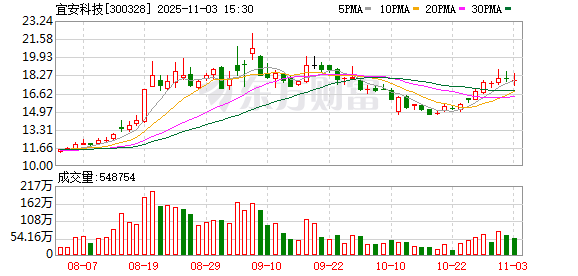
宜安科技:关于公司获得政府补助的公告
Zheng Quan Ri Bao· 2025-11-03 13:40
Group 1 - The company announced a government subsidy of 1.1643 million yuan for its major industrial software project, which is related to revenue [2] - This subsidy represents 115.79% of the company's most recent audited net profit attributable to shareholders [2]