住房租赁

Search documents
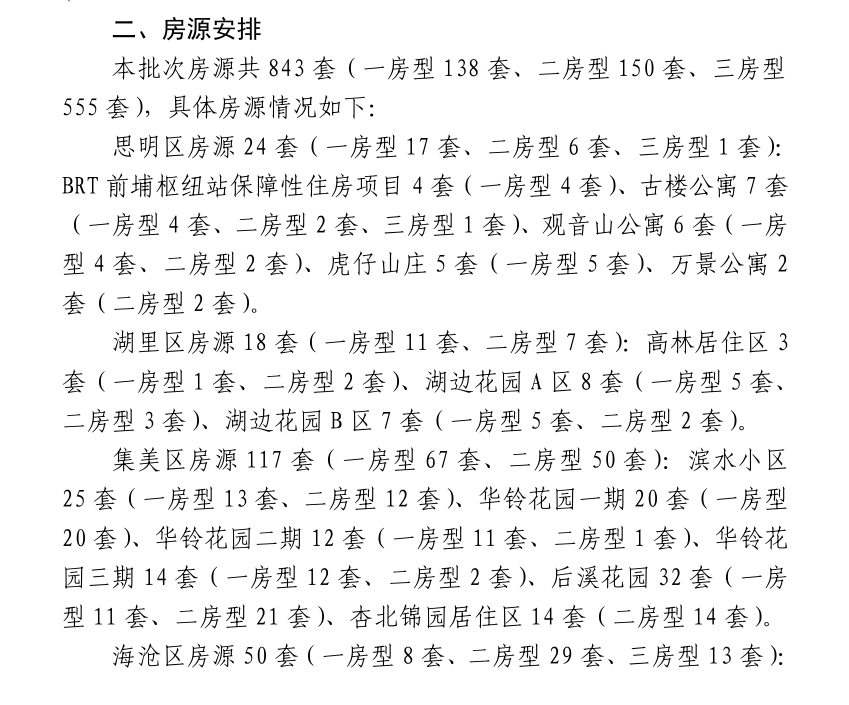
岛内外六区全有房!租金低至370元起!厦门最新保障性租赁房启动申请,申请条件公布→
Sou Hu Cai Jing· 2025-08-14 11:18
Summary of Key Points Core Viewpoint - Xiamen is set to launch 843 units of affordable rental housing in the second quarter of 2025, with registration for interested families starting from August 19 to 20, 2023 [1]. Group 1: Housing Supply - A total of 843 housing units are available, catering to 470 applicant families, with different configurations: 138 one-bedroom units, 150 two-bedroom units, and 555 three-bedroom units [1]. - The housing units are distributed across six districts, including Siming, Huli, Jimei, Haicang, Tong'an, and Xiang'an [1][2][3]. Group 2: Rental Prices - Rental prices for the units are set according to market standards, with monthly rents for one-bedroom units ranging from 600 to 1,100 yuan, two-bedroom units from 1,000 to 1,300 yuan, and a single three-bedroom unit priced at 1,398 yuan [6]. - For units outside the island, the lowest monthly rent for one-bedroom units is approximately 290 yuan, two-bedroom units start at 397 yuan, and three-bedroom units at around 460 yuan [8]. Group 3: Rental Assistance - The rental prices will be subsidized based on family income and asset status, ensuring affordability for eligible families [6].

招商蛇口李杰:长租公寓前景广阔,纳入“好房子”建设体系是关键
Cai Jing Wang· 2025-08-14 04:07
房源增多,租赁市场持续内卷,不仅卷价格,还卷服务,同时卷产品,这就要不断提升服务力、产品 力、品牌力。 8月14日,2025博鳌不动产投资大会在海南召开。招商局蛇口工业区控股股份有限公司招商伊敦总经理 李杰以"住房租赁资管运营之品牌升级探索与实践"为主题发表演讲。 他认为,国务院近期发布的《住房租赁条例》对于国内的住房租赁行业是里程碑的事件,因为这是首次 国家以行政法规的形式来规范国内的住房租赁市场的国家级文件。 "从中央、地方政策的频出,我们可以各种监管制度不断完善,政策支持力度不断加强,行业进入了快 速发展的阶段。"李杰表示,长租公寓行业发展的前景是非常广阔的。现在当下经济形势下,长租公寓 的发展就是那道曙光。 此外,在供给端,保租房的规模扩张,引发了包括上海、深圳、杭州等一线城市的集中式公寓房数量大 幅增长。这样的大幅增长,对市场化房源租金形成了挤压,租金也开始出现了下滑的趋势。 在需求端,关键在于租赁住房的建设纳入了"好房子"建设体系标准。 在他看来,在日趋激烈的住房租赁市场,租户更有资格对"好房子"提出更高的要求,以实现租房租赁幸 福感的日益提升。现在租赁住房的主要群体来自于刚刚毕业的大学生、青年群 ...

《2024-2025年住房租赁行业发展报告白皮书》发布:轻资产托管模式将成为大租赁时代下的必然趋势
Ge Long Hui· 2025-08-13 10:41
Core Insights - The release of the "Housing Rental Regulations" by the State Council in July 2023 has provided new policy momentum for the housing rental market [1] - The "2024-2025 Housing Rental Industry Development Report" white paper from Tsinghua University emphasizes that the light asset management model will become an inevitable trend in the era of large-scale rentals [1][2] - The white paper analyzes the evolution of domestic demand, international models, market insights, and future trends, offering a systematic perspective on the housing rental sector [1] Domestic Demand Evolution - The white paper highlights a significant shift in tenant demographics, with a growing rental population that includes new citizens, young people, and families, leading to an increased demand for quality living conditions [1][2] - Tenants are increasingly prioritizing not just basic housing needs but also the quality of living environments, community services, and post-rental experiences [1] Service Delivery Trends - There is a rising sensitivity among tenants towards traditional pain points such as "post-rental management," leading to a stronger demand for comprehensive lifecycle service delivery that includes property maintenance and rights protection [2] - The white paper indicates that the demand for a "comfortable and secure living" experience is reshaping the market landscape and driving improvements in service standards and operational models [2] Rental Business Models - The white paper identifies a polarization in the domestic rental market, with heavy asset models relying on large-scale investments and light asset management models focusing on efficient integration of dispersed housing resources [3] - The light asset management model is characterized by transparent rental income mechanisms, where rental income goes entirely to property owners, while management companies charge for services such as tenant matching and maintenance [3][4] Value of Light Asset Management - The light asset management model effectively addresses the challenges faced by property owners in managing rentals and the service gaps experienced by tenants [4] - This model promotes rational rental pricing, enhances market stability, and optimizes the supply structure by efficiently releasing idle housing resources [4] - Companies like Beike Shengxin Rental exemplify this model by improving operational efficiency and establishing comprehensive post-rental service systems [4][5] Future Development Trends - The white paper predicts that as societal needs evolve, the focus of rental companies will shift from temporary housing to long-term residency, with an emphasis on quality service [5] - The light asset management model is expected to become the mainstream operational model in China's housing rental industry, driving the sector towards professionalization, standardization, and quality enhancement [5]
深圳保租房爆火:万人抢220套,已向个人配租近1.2万套
Nan Fang Du Shi Bao· 2025-08-12 12:44
Core Insights - The Shenzhen government has released the final results for the rental qualification of the "Hua Zhang Xin Zhu" affordable rental housing project, with 8,849 families qualifying out of 10,662 applicants [1] - The project offers 220 housing units at a rental price of 24 yuan per month per square meter, significantly lower than market rates, making it an attractive option for new residents and young families [1][3] - By July 2025, Shenzhen aims to provide nearly 12,000 affordable rental housing units, with rents set at approximately 60% of the market rate, addressing the housing needs of over 20,000 new residents and young talents [3][4] Group 1: Rental Housing Overview - The affordable rental housing in Shenzhen is categorized into government allocation and social entity allocation, with the former priced at around 60% of market value and the latter at 90% [4] - The application criteria for government rental housing are inclusive, with no household registration or income restrictions, allowing non-local residents to apply [5][6] - The rental contracts for government-allocated housing are limited to three years, with the possibility of renewal if conditions are met [12] Group 2: Resident Experiences - Residents have reported improved living conditions and a sense of stability, with many expressing satisfaction with the affordable rents and quality of life [14][16] - The community atmosphere is described as warm and inclusive, fostering a strong sense of belonging among new residents [17] - The housing projects are equipped with essential amenities and are located near public transportation and schools, enhancing the overall living experience [16]
上海“商改住”破冰,商务楼宇终能“解锁新功能”
Di Yi Cai Jing· 2025-08-12 07:59
Group 1 - The core viewpoint of the article is that Shanghai has officially opened a policy channel for the transformation of commercial buildings into rental housing, allowing for a more efficient and compliant approach to "commercial to residential" conversions [2][3][5] - The newly released implementation opinions allow certain existing commercial buildings to accommodate rental housing, elderly care, and childcare functions, establishing a 15-year contract management model [2][4] - The policy aims to address the issues of aging commercial buildings and the imbalance between living and working spaces in core areas, potentially providing new investment opportunities in the capital market [2][4][10] Group 2 - The implementation opinions encourage the integration of various functions in commercial buildings, including technology innovation, hotels, cultural and sports facilities, and rental housing, based on regional development needs [3][4] - The policy represents a significant shift from the previous restrictions on "commercial to residential" conversions, which had been in place since 2017, and is expected to impact the rental housing market in Shanghai [6][9] - The new regulations will strictly control the behavior of subdividing commercial buildings for sale, ensuring clear property boundaries and enhancing management of existing subdivided projects [9][10]
民生直通车丨住房租赁新规如何为“安心租住”保驾护航?
Xin Hua Wang· 2025-08-12 06:23
Core Viewpoint - The newly published "Housing Rental Regulations" aims to standardize the housing rental market in China, addressing various issues such as contract termination, unfair clauses, and deposit disputes, thereby providing comprehensive protection for tenants [1][2]. Group 1: Regulations and Standards - The regulations set basic standards for rental properties, ensuring they meet construction and fire safety requirements, and prohibit the separate rental of non-residential spaces like kitchens and bathrooms [1][2]. - The regulations limit the number of tenants per rental unit and establish minimum living space requirements, which must comply with local government standards [1]. Group 2: Tenant Protections - The regulations prevent landlords from entering rental properties without consent, ensuring tenants' right to a peaceful living environment [2]. - Landlords must specify the deposit amount, return timeline, and conditions for deductions in the rental contract, and cannot unjustly withhold deposits [2]. - The regulations prohibit landlords from using violence or threats to force tenants to terminate contracts or vacate properties [2]. Group 3: Responsibilities of Rental Entities - Housing rental companies are required to provide accurate and complete property information and must not publish misleading listings [3]. - Rental agencies must verify property information and conduct on-site inspections before listing, while also clearly pricing their services [3]. - Online platforms must verify the identities of those posting rental information [3]. Group 4: Government Oversight and Dispute Resolution - Local governments are tasked with monitoring rental markets, managing rental processes, and enforcing regulations, including establishing rent monitoring mechanisms [3]. - A multi-tiered dispute resolution system is established, allowing tenants to resolve issues through negotiation, mediation, arbitration, or litigation [3]. Group 5: Implementation and Enforcement - The successful implementation of these regulations is crucial, requiring local governments to develop corresponding local regulations and enhance enforcement capabilities [4][5].
全市上半年新增1600套保障租赁房
Nan Jing Ri Bao· 2025-08-12 02:24
"推开窗就是波光粼粼的秦淮新河,下楼就是地铁2号线青莲街站,去元通只要4站地铁,小区保安 24小时在岗巡逻,住在这里才真正体会到'安心又舒心'!""95"后租户刘女士站在河西南G116社区飘窗 前,望着楼下葱郁的滨河景观带,脸上洋溢着对新家满意的笑容。随着城市租赁需求回暖,河西片区保 障性租赁住房正密集"登场",为像刘女士这样的新市民、青年人编织起"住有所居"的温暖保障网。 记者从市住房保障和房产局获悉,今年以来,南京通过新改建、盘活等多种途径积极筹建保障性租 赁住房1600套,有效增加了市场供给。作为全国完善住房保障体系和住房租赁市场发展双试点城市, 南京自2019年起就通过新建、改建、租赁补贴等多种方式拓宽住房供给渠道。按照"十四五"规划,南京 将建设筹措保租房15万套(间),发放租赁补贴25万人,让政策惠及不少于50万户家庭和个人,持续 缓解新市民、青年人的阶段性住房困难。 走进河西南G116社区,记者看到,三幢11层的住宅公寓已全新亮相,弧形线条搭配金属铝板的外 立面,正是南京改善型小区当下流行的风格。社区内道路整洁、绿植葱郁,空中连廊巧妙连接着楼下会 客厅与裙房屋顶打造的多功能露台,构成惬意的公共活 ...
7月住宅平均租金环比下跌0.07%,同比下跌3.81%
3 6 Ke· 2025-08-11 02:12
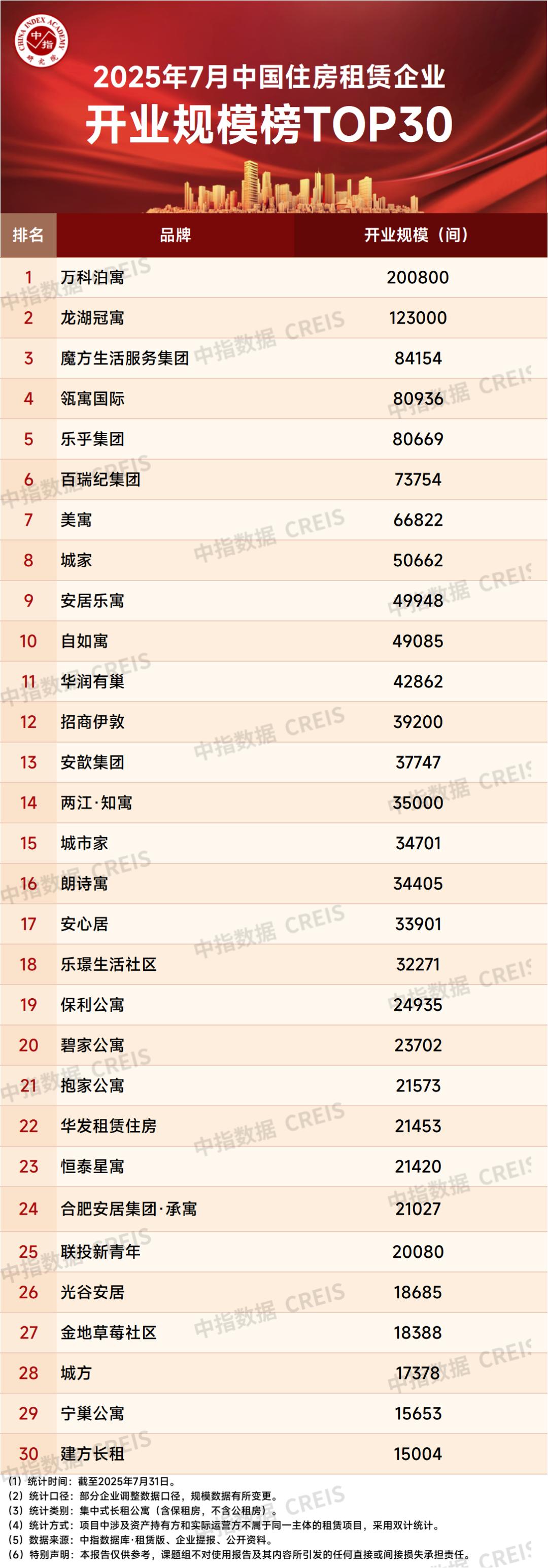
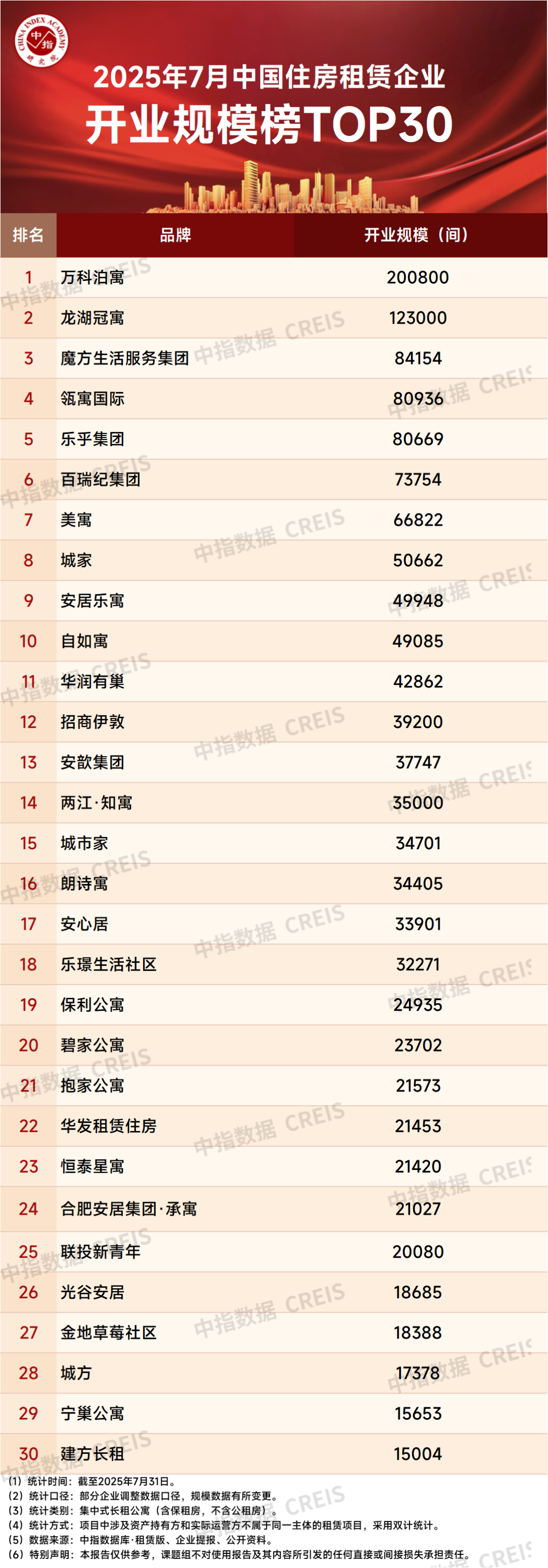
Core Insights - The report highlights the growth and ranking of housing rental enterprises in China as of July 2025, with a total of 138.9 million rental units opened by the top 30 companies, an increase of approximately 30,000 units from June 2025 [5][6] - The management scale of these enterprises reached 198.2 million units, reflecting a growth of about 24,000 units compared to the previous month [7][8] - The introduction of the "Housing Rental Regulations" by the State Council aims to standardize rental activities and promote high-quality development in the housing rental market, effective from September 15, 2025 [18][19] Opening Scale Rankings - The top three companies by opening scale are: 1. Vanke Boyu with 200,800 units 2. Longfor Guan Yu with 123,000 units 3. Mofang Living Service Group with 84,154 units [1][2] - The total number of rental units opened by the top 30 companies is 138.9 million, with various types of enterprises represented, including housing rental companies, local state-owned enterprises, startups, hotel groups, and intermediaries [5][6] Management Scale Rankings - The top three companies by management scale are: 1. Vanke Boyu with 276,000 units 2. Longfor Guan Yu with 164,000 units 3. Lian Yu International with 135,736 units [3][4] - The total management scale of the top 30 companies reached 198.2 million units, indicating a general increase across various enterprise categories [7][8] Business Dynamics - In July, several local platforms launched batch rental housing projects, including various community and talent apartment projects [9][10] - Major companies like JD.com are investing significantly in employee housing, with JD planning to invest 7 billion yuan to create nearly 5,000 fully furnished apartments for young talents [12][13] Financing Trends - Multiple housing rental enterprises are advancing financing efforts, with Guangzhou Anju Group planning to issue public REITs of no less than 800 million yuan [16][17] - The issuance of various asset-backed securities (ABS) and REITs indicates a growing interest in financing within the housing rental sector [16][17] Policy Developments - The "Housing Rental Regulations" introduced by the State Council aim to enhance the management framework of the housing rental market, emphasizing the need for standardized practices and the protection of legal rights for all parties involved [18][19] - Local governments are actively promoting the acquisition of existing properties for use as rental housing, with cities like Guilin and Zhengzhou leading initiatives to convert stock properties into affordable housing [21]
中指研究院:7月毕业季租住需求释放 重点城市住宅平均租金环比跌幅有所收窄
智通财经网· 2025-08-10 23:48
Core Insights - The report from the China Index Academy reveals the ranking of housing rental companies in China as of July 2025, indicating a significant increase in the scale of operations for various companies in the sector [1][7]. Scale Ranking - The threshold for entering the top 30 companies in terms of operational scale has been raised to over 15,000 units, with the total number of operational units among the top 30 reaching 1.389 million, an increase of approximately 30,000 units from June [7]. - The average rental price in 50 major cities is reported at 34.93 yuan per square meter per month, reflecting a month-on-month decrease of 0.07% and a year-on-year decrease of 3.81% [1]. Management Scale - The total management scale of the top 30 housing rental companies reached 1.982 million units, an increase of about 24,000 units compared to June [9]. - The management scale has seen growth across various categories, with local state-owned enterprises, housing rental companies, and hotel companies all reporting increases [9]. Company Dynamics - New projects for affordable rental housing are being launched, including several by local platforms and large enterprises, such as JD's investment of 7 billion yuan to create nearly 5,000 comfortable apartments for young talents in Beijing [11][14]. - The report highlights ongoing collaborations between rental companies and local governments or enterprises to enhance housing supply, such as the partnership between China Resources and local governments in Jiaxing [15] [16]. Financing Trends - Several housing rental companies are progressing with financing initiatives, including Guangzhou Anju Group's plan to issue public REITs with a scale of no less than 800 million yuan [17]. - The issuance of various asset-backed securities (ABS) and REITs is noted, indicating a robust interest in financing within the rental housing sector [17]. Policy Developments - The State Council has officially announced the "Housing Rental Regulations," which aim to standardize rental activities and protect the rights of parties involved, set to take effect on September 15, 2025 [20][21]. - The regulations provide a framework for the housing rental market, emphasizing the need for a balanced approach between market-driven and government-led initiatives [20][21]. Industry Standards - The China Real Estate Association has released the "Long-term Rental Apartment Management and Operation Standards," which will be implemented starting August 1, 2025, to enhance operational quality and standardization in the industry [23].
大租房时代要来了!没有买房的先别急,“租购同权”再也不用杠杆买房了!
Sou Hu Cai Jing· 2025-08-09 12:10
Core Viewpoint - The implementation of the "Housing Rental Regulations" marks a significant shift towards the standardization of China's rental market, addressing long-standing issues faced by tenants and promoting equal rights for renters and homeowners [2][4]. Group 1: Regulation Overview - The "Housing Rental Regulations" officially took effect on September 15, 2025, representing the first dedicated administrative regulation for housing rentals in China [2]. - The regulations aim to eliminate chaotic practices in the rental market, such as unauthorized changes to rental properties and difficulties in retrieving deposits [2]. - In 2024, there were 473,000 rental dispute complaints nationwide, reflecting a 12.6% year-on-year increase, indicating a pressing need for regulatory management [2]. Group 2: Equal Rights for Renters - The regulations establish "equal rights for renting and purchasing," ensuring that renters have access to the same public services as homeowners, including education and healthcare [4][6]. - This change is particularly beneficial for families concerned about their children's education and medical services while renting [6]. Group 3: Market Regulation and Tenant Protection - The regulations prohibit the separate rental of non-residential spaces such as kitchens and bathrooms, aiming to eliminate overcrowded living conditions [6]. - Specific limits on the number of tenants per room and minimum living space requirements have been set, with penalties for violations reaching up to 50,000 yuan [6]. - Landlords are now required to obtain tenant consent before entering rental properties, and the rules clarify conditions under which deposits can be withheld, significantly reducing arbitrary deductions [6]. Group 4: Simplified Rental Processes - Tenants can now independently handle the registration of rental contracts, addressing previous issues where landlords refused to register, which hindered tenants' access to public services [7][9]. - Registered rental contracts will serve as legal proof for obtaining residence permits and accessing housing funds, enhancing the security and convenience of renting [9]. Group 5: Future of Rental Housing - The implementation of these regulations is expected to transition the rental market from merely providing housing to offering quality living experiences, promoting a more stable and comfortable rental environment [9]. - This shift allows individuals who have not purchased homes to enjoy a better quality of life without relying on high leverage for home buying [9].