保险业

Search documents
每日债市速递 | 央行公开市场单日净投放2532亿
Wind万得· 2026-01-29 22:56
Market Overview - The central bank conducted a reverse repurchase operation of 312.5 billion yuan for 7-day terms at a fixed rate of 1.40%, with a net injection of 253.2 billion yuan after accounting for 59.3 billion yuan in reverse repos maturing on the same day [3][4] - The interbank market liquidity remained stable and slightly loose, with the overnight repo weighted average rate (DR001) decreasing to around 1.24% [5][6] - The latest one-year interbank certificates of deposit (CD) transactions were around 1.64%, unchanged from the previous day [8] Bond Market - The 30-year treasury futures contract rose by 0.17%, while the 10-year and 5-year contracts fell by 0.02% and 0.01%, respectively [12] - Recent trends in AAA-rated local government bonds showed varying yield spreads across different maturities [10][11] Key News - The Central Rural Work Conference emphasized stabilizing grain and oil production and enhancing agricultural infrastructure, aiming for a significant increase in grain production capacity [13] - The State Council announced the implementation of the Value-Added Tax Law from January 1, 2026, detailing taxable transactions and taxpayer classifications [13] - The core value added of the digital economy in 2024 is projected to be 14,089.1 billion yuan, accounting for 10.5% of GDP, with the digital technology application sector contributing the largest share [14] Bond Events - The first real estate asset-backed security (ABS) for thermal power led by GCL Group was listed on the Shanghai Stock Exchange [18] - CITIC Securities plans to pay interest on a perpetual subordinated bond of 2.1 billion yuan at a coupon rate of 2.05% [18] - CIFI Holdings' offshore debt restructuring has officially taken effect, with a debt reduction of approximately 38 billion yuan [19] Risk Monitoring - Recent non-standard asset risks in urban investment include various private equity funds and trust plans facing default risks [20]


黄金“发疯”众生相:消费者挤爆金店,投资端“大口吃肉”,金饰品销售平淡
Bei Jing Shang Bao· 2026-01-29 16:00
Core Viewpoint - The surge in gold prices, driven by geopolitical conflicts, the impact on the dollar-centric system, and uncertainties from the Trump 2.0 policies, has made gold the dominant asset in financial markets, with prices reaching unprecedented levels [1][24]. Group 1: Gold Price Surge - As of January 29, 2026, international gold prices approached $5,600 per ounce, with a daily increase of over 2.23%, marking a year-to-date rise of over 27% [1][3]. - The price of gold in Beijing's flagship stores rose significantly, with investment gold priced at 1,240.90 yuan per gram and gold jewelry at 1,622 yuan per gram [3][5]. - The price at Cai Bai Jewelry increased from 1,550 yuan per gram to 1,650 yuan per gram, a rise of 6.45%, and from 1,342 yuan per gram at the beginning of January, marking a 22.95% increase [5]. Group 2: Consumer Behavior - Consumers are flocking to gold stores, with wait times for gold buybacks exceeding two hours, indicating a strong demand for both investment and jewelry gold [9][10]. - In Shenzhen's Shui Bei market, the demand for gold jewelry remains high, particularly among young couples preparing for weddings [8][9]. - Retailers are experiencing a shift in focus from gold jewelry to investment gold, as consumers are less inclined to purchase high-priced jewelry due to rising gold prices [16]. Group 3: Supply Constraints - Many banks are facing shortages of physical gold, with reports of "sold out" statuses and the need for appointments to purchase gold products [10][11]. - The supply constraints are attributed to a structural shortage in the global silver market and increased demand driven by rising gold prices and geopolitical uncertainties [13]. Group 4: Industry Impact - Mining companies are benefiting from the price surge, with companies like Zijin Mining reporting a projected net profit increase of 59%-62% for 2025, driven by higher production and sales prices [14]. - Conversely, midstream and downstream companies, particularly those in jewelry manufacturing, are struggling as rising raw material costs suppress consumer demand [15][16]. - The shift in consumer preference from jewelry to investment gold is altering the dynamics of the gold industry, with retailers adapting their strategies accordingly [16]. Group 5: Investment Trends - Gold-related stocks and ETFs are experiencing significant gains, with multiple gold stocks hitting daily limits and ETFs seeing transaction volumes exceeding 10 billion yuan [17][18]. - Investors are showing heightened interest in gold investment products, with many actively seeking to capitalize on the rising prices [19]. - Despite the bullish sentiment, there are concerns about potential market corrections, prompting some investors to adopt a cautious approach [27][28].

北京师范大学:中国上市公司质量ESG指数报告
Sou Hu Cai Jing· 2026-01-29 10:46
Core Insights - The report titled "China Listed Company Quality/ESG Index Report No.5 (2025)" provides a comprehensive evaluation framework for the quality and ESG (Environmental, Social, and Governance) performance of listed companies in China, developed by Beijing Normal University [1][7]. Group 1: ESG Index Overview - The ESG index consists of three main dimensions: corporate governance (55% weight), social responsibility (35% weight), and environmental protection (10% weight), with a total of 132 specific indicators [1][11][12]. - The evaluation covers 5,292 A-share listed companies across the Shanghai, Shenzhen, and Beijing stock exchanges, using a relative scoring method based on the highest scores in each dimension [1][13]. Group 2: Evaluation Results - The average ESG index for non-financial companies from 2020 to 2024 shows fluctuations, with a score of 68.14 in 2024, indicating a slight decline of 0.79 from the previous year [2][18]. - State-owned enterprises consistently outperform non-state-owned enterprises, with central enterprises showing the best performance [2][20]. - The financial sector's average ESG index in 2024 is 73.76, reflecting a steady increase, particularly in corporate governance [2][42]. Group 3: Regional and Sectoral Performance - The eastern region leads in ESG performance, with Tianjin, Shanghai, and Anhui ranking as the top provinces in 2024 [2][31]. - The mining industry ranks highest in ESG performance, while the education sector ranks lowest among 17 industries evaluated [2][33]. Group 4: Policy Recommendations - The report suggests enhancing corporate governance by adopting international standards, improving board independence, and ensuring effective information disclosure and executive compensation incentives [2][17]. - It emphasizes the importance of aligning social responsibility and environmental protection efforts with industry realities while safeguarding stakeholder rights [2][17].

去年前三季度保费暴涨55.9%,港险为何持续升温?
Xin Lang Cai Jing· 2026-01-29 06:42
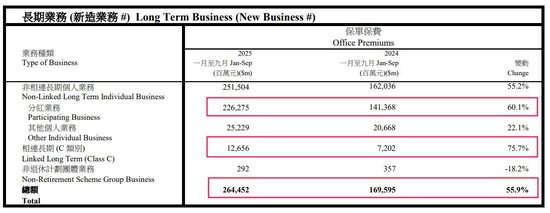
Core Insights - The Hong Kong insurance market continues to attract mainland customers, with new policy premiums reaching 264.45 billion HKD in the first three quarters of 2025, a 55.9% increase compared to the same period in 2024 [1][2][11] - Participating business premiums grew by 60.1% year-on-year, indicating strong demand for investment-linked insurance products among mainland residents [1][2][11] - The shift in interest rates in mainland China has led to a comparative advantage for Hong Kong insurance products, particularly in the context of low interest rates [6][15][16] Market Trends - The demand for participating and linked insurance products has surged, with growth rates of 60.1% and 75.7% respectively, reflecting a shift towards products with investment attributes [2][12][14] - The total new policy premiums from mainland visitors accounted for 29% of the personal business total in 2024, highlighting the significant role of mainland customers in the Hong Kong insurance market [4][13] Regulatory Environment - The Hong Kong Insurance Authority has implemented new regulations affecting the demonstration interest rates for insurance products, which has influenced customer behavior and sales trends [6][15] - The lack of disclosure of mainland visitor data in early 2025 indicates ongoing regulatory reviews, which may impact future reporting and market dynamics [4][14] Investment Considerations - The high expected returns from Hong Kong insurance products, particularly in the context of a 4.5% interest rate differential compared to mainland products, continue to drive demand [7][16] - The introduction of policies with guaranteed rates of 2.5% by mainland insurers in Hong Kong aims to attract high-end customers, indicating competitive pressures in the market [8][17] Customer Behavior - Investors are increasingly looking for alternatives to traditional financial products, with many expressing interest in Hong Kong insurance due to its attractive yields [2][11] - The focus on wealth diversification and the need for high-yield asset allocation among high-net-worth individuals are key drivers for the growth of Hong Kong insurance [5][14]
车车科技与金标大众、法巴天星保险达成战略合作,共筑智能汽车保险新生态
Huan Qiu Wang· 2026-01-29 04:34
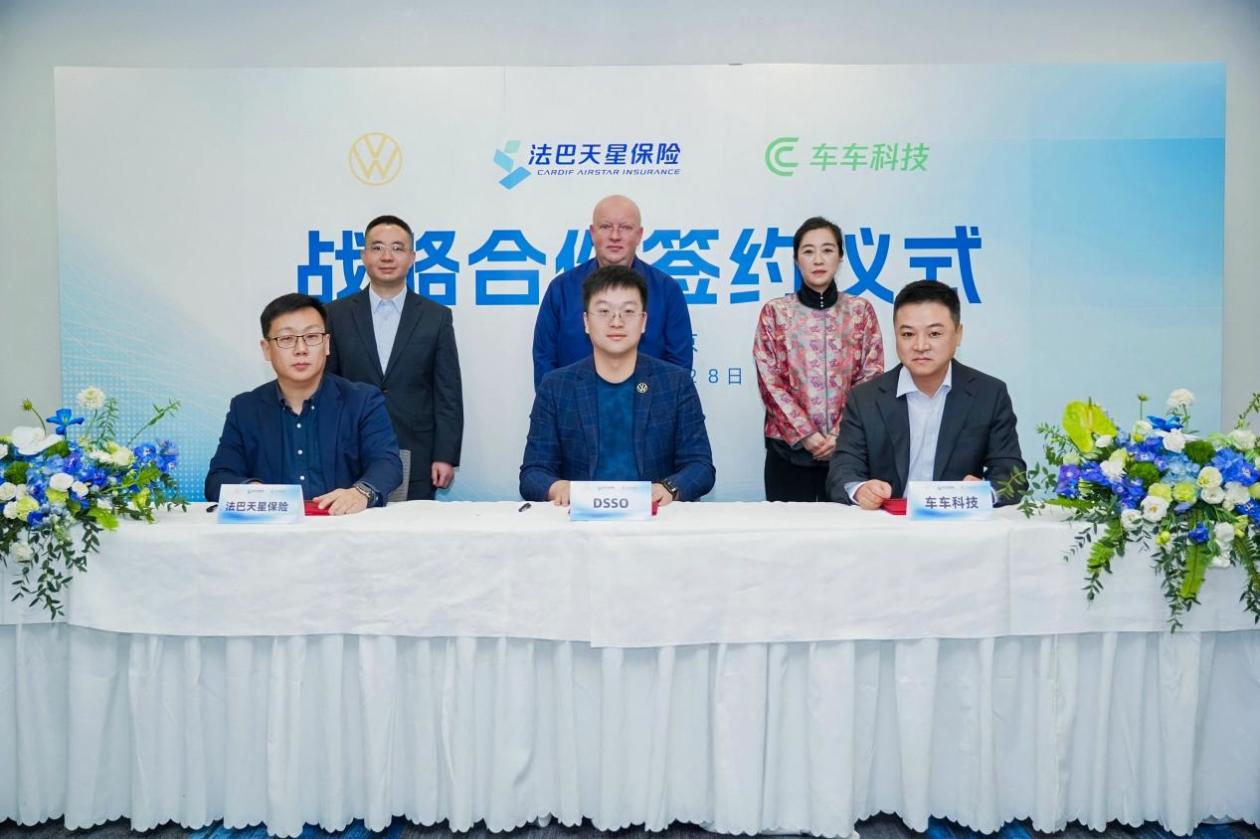
Core Insights - The strategic partnership between CheChe Technology Group, Jindiao Volkswagen, and Fabatianxing Insurance aims to innovate in the field of insurance for electric vehicles, focusing on product innovation, smart pricing, and comprehensive insurance services throughout the vehicle lifecycle [1][3] Group 1: Partnership Overview - The collaboration involves three parties: Fabatianxing Insurance will handle product design and underwriting, CheChe Technology will provide an embedded insurance SaaS system, and Jindiao Volkswagen will integrate insurance services into core vehicle purchase and usage scenarios [3][4] - This partnership marks a significant step towards a new model of vehicle insurance that combines the strengths of automotive, insurance, and technology sectors [3] Group 2: Key Focus Areas - The partnership will focus on three main areas: 1. Innovative product development, offering a comprehensive service package that combines insurance with value-added services through CheChe's SaaS platform [3] 2. Enhanced smart pricing, utilizing an AI-driven risk profile based on driving behavior and vehicle data to provide differentiated pricing and address liability issues in semi-autonomous driving scenarios [3][4] 3. Establishing a full lifecycle service ecosystem that extends insurance services into smart insurance, renewal management, and travel protection, deeply integrating with Jindiao Volkswagen's sales and after-sales processes [3][4]
2026年A股资金面展望-策略周中谈
2026-01-29 02:43
Summary of Key Points from the Conference Call Industry Overview - The insurance industry is expected to contribute over 840 billion yuan in net incremental funds in 2026, driven by continuous growth in premium income and asset allocation needs, with a projected new premium income growth rate of 7% [4][1] - The A-share market is anticipated to see a net inflow of approximately 1.5 trillion yuan in 2026, with the first quarter being the most abundant period for funds [2][2] Core Insights and Arguments - Incremental funds from the insurance sector are projected to be significant, with a total of 11.5 trillion yuan expected for 2026, marking one of the best historical levels [3][14] - The proportion of equity asset allocation by insurance funds is expected to reach 16% in 2026, with 20% potentially flowing into Hong Kong stocks and the remainder into A-shares [4][1] - Bank wealth management products and fixed-income products are also important sources of medium to long-term funds, with potential contributions of 913 billion to 1,227 billion yuan based on different equity allocation ratios [5][5] - A significant wave of fixed-term deposits maturing in 2026, estimated at 40-50 trillion yuan, may lead to increased investment in insurance or wealth management products if a quarter of depositors choose not to renew [6][7] Additional Important Content - The state-owned funds are expected to see reduced inflows in the slow bull market of 2026, but they remain a crucial market participant, with an equity asset scale of 5.75 trillion yuan by the end of 2025 [9][9] - High-risk funds, including margin financing and private equity, are projected to remain active, with private equity expected to grow to 8.5 trillion yuan and margin financing net inflow estimated at 450 billion yuan [10][11] - Public funds are expected to see increased participation from individual investors, with a projected net inflow of around 230 billion yuan for passive public funds [12][12] - Foreign capital is anticipated to enter a new phase of strategic allocation to Chinese assets, driven by a weak dollar cycle and a strong yuan, potentially replicating the favorable conditions seen in the 2020-2021 period [13][13] - The current market valuation is at a historical high of 24 times earnings, and the sustainability of this valuation will depend on fundamental improvements and the ability of high-valuation sectors to continue delivering high growth [20][20] - Frequent sector rotation is influenced by abundant capital chasing performance improvement expectations and changes in market sentiment, indicating varying levels of attention and investment across different sectors [21][21]
1.29犀牛财经早报:超50万亿定存迎到期高峰
Xi Niu Cai Jing· 2026-01-29 01:39
Group 1 - Over 50 trillion yuan in bank time deposits are set to mature, with most funds concentrated in the first quarter, leading to potential outflows towards insurance and wealth management products due to declining market interest rates [1] - The "fixed income +" fund category has seen significant growth, reaching a record high of 2.74 trillion yuan by the end of 2025, driven by increasing demand for rights-containing assets among residents [1][2] Group 2 - Many small and medium-sized banks are rapidly reducing their proprietary wealth management products, shifting towards agency sales partnerships as a core transformation strategy [2] - The total scale of gold-themed funds has approached 380 billion yuan, with a 35.7% increase year-on-year, reflecting growing investor interest in gold amid rising international gold prices [2] Group 3 - Nearly 100 companies have submitted IPO applications to the Hong Kong Stock Exchange since the beginning of the year, indicating a strong trend in the market [3] - The number of qualified investors on the Beijing Stock Exchange has surpassed 10 million, marking a significant milestone in market attractiveness and investor ecosystem development [3] Group 4 - Starbucks reported an 11% year-on-year revenue growth in its first quarter of fiscal year 2026 in China, reaching 823.4 million USD, with same-store sales also showing positive growth [4] - Microsoft reported second-quarter revenue of 81.27 billion USD, slightly above expectations, but faced concerns over rising capital expenditures and slowing cloud sales growth [5] Group 5 - Tesla plans to gradually halt production of the Model S and Model X, reallocating resources towards the production of humanoid robots, with anticipated capital expenditures exceeding 20 billion USD in 2026 [5] - Li Auto is restructuring its R&D framework, splitting its autonomous driving team into separate units, indicating a strategic shift in its development approach [6] Group 6 - Jiangsu Investment announced potential delisting risk warnings due to expected losses in 2025, with projected net profits ranging from -450 million to -300 million yuan [9] - Muyuan Foods is set to issue H-shares with a maximum price of 39 HKD per share, aiming to raise capital through its global offering [9]

时报观察丨利率下行存款搬家 认知升级重塑理财观
证券时报· 2026-01-28 23:53
Core Viewpoint - A wave of "deposit replacement" is emerging as residents seek stable returns and capital market growth, moving funds from traditional bank deposits to alternative investment products like "fixed income+" funds and dividend-type insurance products [1] Group 1: Market Trends - The trend of residents moving savings from banks to capital markets reflects an awakening in wealth management awareness and asset allocation capabilities [1] - The nominal scale of "fixed income+" funds has surpassed 2.735 trillion yuan, reaching a historical high by the end of 2025 [1] - Dividend-type insurance products are gaining popularity, indicating a shift in residents' preferences towards products that offer both guaranteed and floating returns [1] Group 2: Investment Considerations - Alternative products like "fixed income+" are not risk-free, as they include equity market volatility, requiring higher asset allocation and risk control capabilities from managers [2] - Investors need to upgrade their understanding of the risk-return characteristics of various alternative products and choose suitable options based on their risk tolerance [2]

单季度重大赔付金额超千万元,渔业互助保险社如何应对“水上风险”
Bei Jing Shang Bao· 2026-01-28 13:24
Core Viewpoint - The China Fisheries Mutual Insurance Society, a national mutual insurance organization, reported its performance for 2025, revealing a total insurance business income of 347 million yuan and a net profit of 7 million yuan, but faced a net loss of 5.78 million yuan in the fourth quarter [1][3]. Group 1: Financial Performance - In 2025, the organization achieved an insurance business income of 347 million yuan and a net profit of 7 million yuan [1]. - The fourth quarter of 2025 saw a net loss of 5.78 million yuan, with significant claims exceeding 15 million yuan from major incidents [1][3]. Group 2: Claims and Risks - The major claims in the fourth quarter were primarily due to "personnel falling overboard," with individual claims ranging from 900,000 yuan to 6.01 million yuan, totaling over 15 million yuan [3][4]. - Other significant claims throughout 2025 included incidents like fires and sinking, but none exceeded 3 million yuan [4]. Group 3: Operational Challenges - The organization faced a comprehensive cost ratio of 117.18% in 2025, with a claims ratio of 80.85% and an expense ratio of 36.33% [7]. - To mitigate losses, the organization needs to optimize product pricing, enhance risk management, and undergo digital transformation to improve operational efficiency [7][8]. Group 4: Product Development and Innovation - The organization aims to develop new insurance products such as aquaculture typhoon index insurance, temperature index insurance, and price index insurance to better meet the needs of fishermen [8]. - There is a focus on utilizing insurance technology and building data platforms to support product pricing and risk warnings, while also improving operational efficiency [8].

高管变动叠加股东拟退场,诚泰保险迎双重变局
Bei Jing Shang Bao· 2026-01-28 13:04
一起人事变动将总部位于云南的诚泰财产保险股份有限公司(以下简称"诚泰保险")推至聚光灯下。1月28日,北京商报记者了解到,近日的一纸公告宣告 了公司党委书记的悄然更迭。需要关注的是,诚泰保险董事长一职仍空缺,这一位置自上任董事长离职后已空置超过一年。 与此同时,该公司国资背景股东拟再次挂牌转让股权的消息,亦在产权交易市场引发涟漪。那么,国有股东"去意已决"的背后,诚泰保险业绩成色如何?能 否支撑其穿越行业深度调整的周期? 要职落定,董事长仍缺位 诚泰保险高层人事日前落定。1月28日,北京商报记者获悉,诚泰保险近日发布公告称,自2025年12月19日起,王锐任公司党委委员、书记。 "70后"王锐曾任富滇银行风险管理总部副总经理,信用审批委员会办公室副主任,审批委员会办公室主任,零售银行管理部总经理,昆明中山支行党支部书 记、行长,交通金融创新中心主任,云南省康旅控股集团有限公司投资管理中心总经理,云南水务投资股份有限公司党委书记。2022年9月至今,任诚泰保 险董事。 若此次云南冶金转让股权成功,这意味着其将完全退出诚泰保险股东名单。 目前,上述股权拟转让项目点击量为380次,对于该项目是否已有意向方,该项目负 ...