
工业互联网

Search documents
工信部:实施工业互联网与重点产业链“链网协同”行动 打造一批适配的工业互联网解决方案
Zheng Quan Shi Bao Wang· 2025-12-04 11:04
会议要求,要坚持系统观念,积极谋划新阶段工作目标和重点任务,将工业互联网与制造业数字化转 型、智能制造、"人工智能+制造"等工作有机结合,加强部际、部内协同。要坚持守正创新,横向统筹 推进政策、设施、技术、应用、生态发展体系,纵向系统布局网络、标识、平台、数据、安全功能体 系。要坚持问题导向,解决工业设备联网率不高、高质量数据价值释放不够充分等问题,实施工业互联 网与重点产业链"链网协同"行动,打造一批适配的工业互联网解决方案。要坚持底线思维,构建工业互 联网安全保障体系,加快突破关键核心技术,推动实现关键信息基础设施自主可控。 人民财讯12月4日电,12月4日,工业和信息化部党组开展理论学习中心组学习。会议强调,要准确把握 深入推进工业互联网创新发展工作的内在规律。体系化是独特优势,要将体制机制、市场规模、基础设 施、技术产品等方面优势发挥好、利用好。时代化是内在动力,要在自动化、信息化发展基础上,推动 工业互联网与人工智能、5G、大数据、云计算等技术互促发展。融合化是根本要求,要加快工业互联 网创新发展,推动信息化和工业化、实体经济和数字经济、科技创新和产业创新、先进制造业和现代服 务业深度融合。 ...
2025中国经济回眸:巩固稳的基础 激发进的动能
Jing Ji Ri Bao· 2025-12-04 00:39
Economic Overview - China's GDP is expected to reach 140 trillion yuan in 2025, solidifying its position as the world's second-largest economy [1] - The economy has shown resilience despite external uncertainties, with a GDP growth of 5.2% year-on-year in the first three quarters, an increase of 0.4 percentage points from the previous year [2] - The urban unemployment rate in October was 5.1%, a decrease of 0.1 percentage points from the previous month, while the Consumer Price Index (CPI) rose by 0.2% year-on-year, indicating overall price stability [2] Investment and Infrastructure - A significant investment of nearly 73 billion yuan has been initiated for the Qinghai Hainan Clean Energy Transmission Base project, marking the establishment of a third green energy corridor [2] - The manufacturing sector remains robust, with the added value of equipment manufacturing accounting for over 35% of the total industrial output [8] Policy and Economic Stability - The Chinese government has implemented a series of policies aimed at stabilizing employment, businesses, and market expectations, which have shown positive effects on economic performance [3] - Major financial institutions, including Goldman Sachs and Deutsche Bank, have raised their growth forecasts for China's economy, reflecting confidence in its stability [3] Innovation and Technology - The quantum computing industry is gradually taking shape, with significant advancements showcased at the 2025 Quantum Technology and Industry Conference [4][5] - The introduction of new high-speed real-time oscilloscopes and the world's largest skin-stretching machine highlights China's progress in key manufacturing technologies [8] Consumer Market and Domestic Demand - A new implementation plan aims to enhance the adaptability of consumer goods supply and demand, targeting the formation of three trillion-level consumption sectors and ten hundred-billion-level consumption hotspots [9] - The focus on domestic circulation has been strengthened, with policies aimed at reducing logistics costs and promoting a unified national market [9] Foreign Investment and Global Confidence - Foreign investments continue to flow into China, with significant projects launched by companies like Danfoss and Medtronic, indicating strong confidence in China's economic prospects [13] - The eighth China International Import Expo reported a transaction intention of 83.49 billion USD, a 4.4% increase from the previous year, showcasing China's growing importance on the global stage [13]
【新思想引领新征程·非凡“十四五”】我国数字经济实现跨越式发展
Yang Shi Wang· 2025-12-03 11:55
Group 1 - The core idea emphasizes the integration of digital technology with the real economy to enhance traditional industries and foster new industries and business models, thereby strengthening China's digital economy [1][2] - During the "14th Five-Year Plan" period, China's digital economy has seen significant growth, with the core industry's added value expected to increase by 73.8% compared to the end of the "13th Five-Year Plan," reaching 10.4% of GDP by 2024 [2][3] - The construction of the largest information and communication network globally and advancements in computing power, including the second-largest total computing power and the highest level of superconducting quantum computers, highlight China's technological progress [2][3] Group 2 - The acceleration of industrial digitalization is evident with over 10,000 smart factories established, covering more than 80% of manufacturing industry categories, and the AI-driven industry scale surpassing 700 billion yuan [3] - Recent government policies aim to deepen the integration of digital and real economies, including the construction of independent 5G networks and investments in 6G technology, as well as the promotion of AI applications across various sectors [3] - The "15th Five-Year Plan" suggests further advancing digital China initiatives, enhancing data element systems, and implementing the "AI+" action plan to empower high-quality economic and social development [3]
从一场投资路演交流会看耐心资本如何赋能数字经济高质量发展
Xin Hua Cai Jing· 2025-12-03 06:18
Group 1 - The "2025 Global Data Business Conference Investment Roadshow" was held in Shanghai, featuring 12 award-winning companies from the "Data Element ×" competition, with over 40 investment institutions participating [1] - The event aimed to bridge the gap between innovative companies and capital, promoting the concept of "using competitions to drive application" [1][6] - The need for patient capital that understands industry development was emphasized, particularly in sectors like data-driven industrial equipment and agriculture, where R&D investment is significant and returns take time [2][3] Group 2 - Patient capital is seen as essential for long-term support and collaboration in the innovation process, providing not just funding but also strategic resource alignment [4] - The "Data Element ×" competition serves as a platform for identifying high-growth, innovative projects, contributing to the development of a healthy ecosystem for data industry growth [5][6] - The roadshow aimed to facilitate the transformation of data value and promote a virtuous cycle between technology, industry, and finance [6][7]
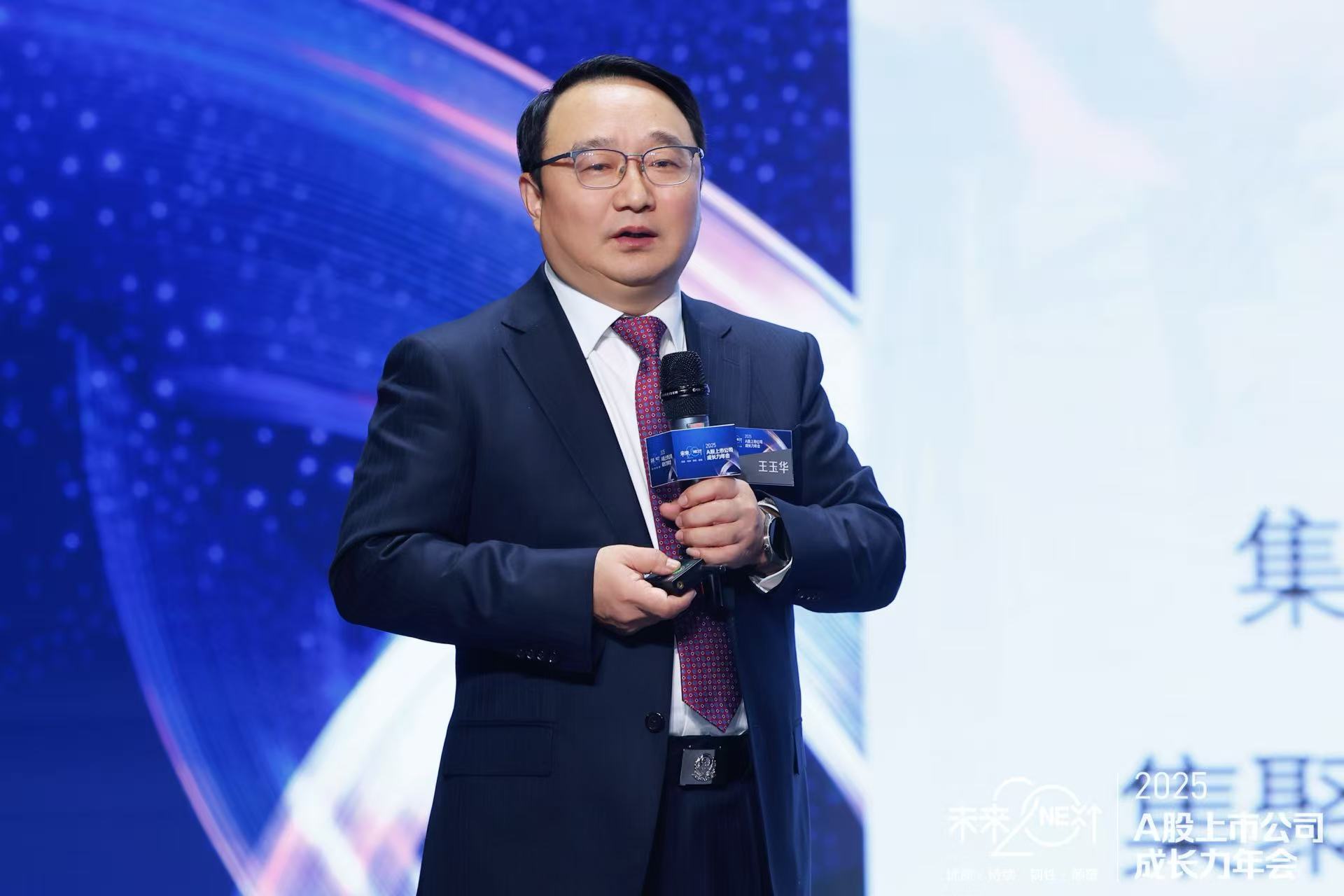
王玉华:嘉定新城有信心和耐心,为企业提供发展沃土
Di Yi Cai Jing· 2025-12-03 01:33
Core Insights - The key mission for the future is to develop industries, ensuring that each enterprise's growth is supported by its own strength and core technology, as well as a conducive development environment [1] Group 1: Industrial Development - Jiading has established three major identities: a historical cultural city, an international automotive city, and a technology satellite city, focusing on the development of intelligent connected new energy vehicles, integrated circuits, and biomedicine as part of its "14th Five-Year Plan" [1] - A number of leading autonomous driving companies have settled in Jiading, showcasing the latest achievements in the automotive "new four modernizations" [1] - The biomedicine industry is being developed according to a planning framework of "one axis, one town, two valleys, and two areas," aiming to create a highland for the city's biomedicine industry [1] Group 2: Future Industry Layout - Jiading is actively pursuing future industries in areas such as future intelligence, future energy, future materials, future health, and future space [1] - The Jiading New City is focusing on the integration of industry and city, with key industries including industrial internet, low-altitude economy, high-end medical care, green low-carbon, and financial technology [3] - The Jiading Industrial Internet Park is recognized as a benchmark and pilot park for industrial internet in Shanghai, providing ample cooperation opportunities with manufacturing enterprises [3] Group 3: Investment and Development - The leadership expresses a strong desire for more listed companies to invest and develop in Jiading New City, highlighting the progress in landscape, ecology, and branding over the past 20 years [4] - Confidence and patience are identified as two key factors for future listed companies, with Jiading New City committed to providing convenience in land, talent, and policies for enterprises [4]

东土科技:公司在操作系统及工业互联网领域广泛建立了生态合作伙伴关系
Mei Ri Jing Ji Xin Wen· 2025-12-02 07:49
Core Viewpoint - The company has established a wide range of ecological partnerships in the operating system and industrial internet sectors, including collaboration with Huawei [1] Summary by Relevant Categories Company Collaboration - The company has confirmed its partnership with Huawei, focusing on the operating system and industrial internet fields [1]

中国制造“换挡提速”步伐铿锵
Jing Ji Wang· 2025-12-02 03:09
Core Insights - The integration of industrial internet platforms is transforming traditional industries by enhancing efficiency and enabling data-driven decision-making [1][2][3][4] - The "14th Five-Year Plan" emphasizes the importance of advancing the productive service industry through digitalization and intelligent upgrades [1][3] - Companies are leveraging AI and digital tools to streamline processes, reduce production cycles, and improve overall productivity [4][5][6] Group 1: Industrial Internet and Digital Transformation - Industrial internet platforms, such as the one developed by Kaos, are key enablers for the deep integration of modern service industries and advanced manufacturing [3] - The application of AI in traditional sectors, like oil extraction, has led to a 70% increase in equipment diagnostic efficiency and a significant reduction in maintenance cycles [2][4] - The shift from experience-based to data-driven operations is reshaping the roles of workers, turning them into decision-makers rather than mere operators [2][4] Group 2: AI and Production Efficiency - AI applications in the fashion industry, such as Fashion Mind, have drastically reduced design time from one month to mere seconds, enhancing overall workflow efficiency [4][5] - The use of AI in garment design has resulted in a 60% reduction in production costs and a ninefold increase in design efficiency for collaborating brands [5] - The integration of AI and automation in the textile industry is expected to drive a complete overhaul of the production chain, enhancing efficiency from design to manufacturing [5][6] Group 3: Flexible Manufacturing and Supply Chain Solutions - Companies like Yunhan Xincheng are addressing the challenges faced by small and medium-sized manufacturers by providing flexible manufacturing solutions that adapt to small batch orders [6][7] - The implementation of data-driven systems has transformed operations, allowing for proactive resource management and improved delivery times by at least 50% for clients [6][7] - The focus on digital supply chain services and collaborative manufacturing models is set to continue, with companies investing in AI and big data to enhance service capabilities [7]
时评|民营经济何以成为青岛高质量发展的“隐形支柱”?
Xin Lang Cai Jing· 2025-12-01 13:17
Core Insights - The private economy has become an indispensable part of China's economic landscape, with Qingdao emerging as a model for high-quality development through its robust support for both large and small enterprises [1][3][8] Group 1: Economic Contributions - In the first five months of 2025, Qingdao's private economy contributed 62.2% of the city's investment, 60.0% of tax revenue, 70.8% of imports and exports, and 89.0% of new urban employment [3][4] - The number of operating entities and enterprises in Qingdao exceeds 96%, highlighting the dominance of the private sector in the local economy [3] Group 2: Enterprise Development Pathways - Qingdao has established a clear progression path for enterprises, ranging from innovative small and medium-sized enterprises (SMEs) to "little giants," "gazelle" enterprises, and unicorns [3][4] - As of June 2025, Qingdao has over 3,500 innovative SMEs, more than 5,200 specialized and innovative SMEs, and 193 national-level "little giant" enterprises [3][4] Group 3: Policy Initiatives - Qingdao's government has introduced a three-year action plan (2025-2027) aimed at cultivating at least 500 gazelle enterprises, 80 hidden unicorns, and 20 unicorns [4][5] - Financial support includes a one-time reward of 3 million yuan for first-time provincial unicorn enterprises and a loan issuance of 3.543 billion yuan to 176 enterprises in the first half of 2025 [5][9] Group 4: Talent and Innovation - The "Future Star" talent program aims to attract and retain high-growth talent, with preferential treatment in professional title evaluations for high-growth enterprises [5][9] - Qingdao is transitioning from merely nurturing individual enterprises to creating an innovative brand and resource aggregation platform, enhancing its reputation as a "birthplace of unicorns" [6][9] Group 5: Collaborative Ecosystem - The "Chain Ten Thousand Enterprises" platform facilitates collaboration between SMEs and leading enterprises, promoting digital transformation and innovation [10][11] - Over 14,000 SMEs are currently in a gradient cultivation system in Qingdao, with numerous potential unicorns on the rise [11]

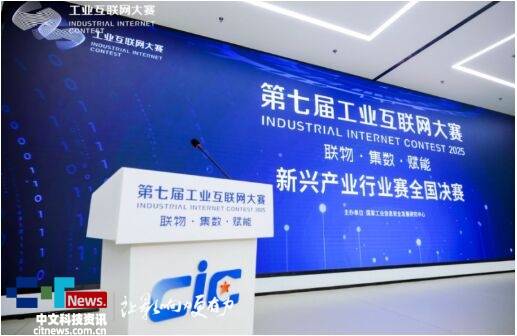
第七届工业互联网大赛新兴产业行业赛全国决赛在北京成功举办
Sou Hu Cai Jing· 2025-12-01 12:01
首次系统聚焦新兴产业 作为本届大赛的重点方向之一,新兴产业行业赛展现了与传统工业领域不同的技术结构和发展特征,呈 现出"新兴属性更强、技术融合更深、产业延展更广"的总体趋势。 第七届工业互联网大赛新兴产业行业赛全国决赛于11月29日在国家工业信息安全发展研究中心成功举 办。来自全国多地的创新企业、高校与科研团队齐聚北京,围绕新兴产业数字化、智能化、数据化转型 的核心议题开展高质量比拼,全面呈现工业互联网赋能新兴产业发展的最新成果。 作为本届工业互联网大赛首次设立的新兴产业行业赛,聚焦能源电力、航空航天、智能装备、先进制 造、新能源等战略性新兴产业重点方向。行业赛自启动以来吸引了来自三十余个省市的团队报名,涵盖 能源系统数字化、智能装备研发、工业大模型应用、供应链智能协同、数据要素治理等多个前沿方向, 充分展现我国工业互联网在新兴产业领域的强劲创新实力。 通过初赛评审,数十支行业领先团队晋级行业赛全国决赛,参加现场路演、专家问辩与综合评审,为全 国工业互联网创新企业和新兴产业从业者带来一场高水平的技术与产业融合交流活动。 本次行业赛的参赛项目整体覆盖新型电力系统、先进装备制造、新能源应用、航空运行优化等在工业领 ...
全国工业和信息化技术技能大赛破解人才瓶颈观察
Zheng Quan Shi Bao Wang· 2025-12-01 08:39
Core Viewpoint - The development of new quality productivity is essential for promoting high-quality development in China, driven by technological breakthroughs, innovative resource allocation, and deep industrial transformation, with a focus on cultivating high-quality technical talent [1] Group 1: Talent Gap and Skills Demand - The rise of emerging industries and the transformation of traditional industries have created a significant talent gap, particularly for interdisciplinary and composite talents in fields like smart connected vehicles, industrial internet, artificial intelligence, and integrated circuits [2] - By 2025, there is an expected shortage of 256,000 skilled personnel in smart connected vehicle technologies, highlighting the urgent need for talent that understands both industrial mechanisms and digital technologies [2] Group 2: Competition and Industry Relevance - The national industrial and information technology skills competition targets the talent gap by focusing on practical skills and real industry challenges, with competition categories such as smart hardware assembly and generative AI system applications [3] - The competition's assessment model combines theory and practice, simulating real industrial scenarios to quickly cultivate composite talents capable of solving actual problems [3] Group 3: Market Value of Skills - Winners of the competition become highly sought after by companies, as demonstrated by a case where a student received job inquiries from companies immediately after winning a competition [3] - The competition emphasizes the value of practical problem-solving abilities over traditional academic qualifications, reflecting a shift towards a "capability-first" talent perspective [4][5] Group 4: Knowledge Transfer and Mentorship - The competition serves as a platform for knowledge transfer and mentorship, exemplified by the relationship between a teacher and a former student who has now become a coach, fostering a culture of continuous learning and innovation [6] - The integration of new technologies such as big data and AI into the competition reflects an ongoing commitment to evolving skill sets and ensuring that the talent pool remains relevant [7] Group 5: Overall Impact on Industry - The national industrial and information technology skills competition exemplifies how to provide robust talent support for the development of new quality productivity, acting as a platform for showcasing skills and nurturing future craftsmen [7][8] - The competition embodies the spirit of "learning through competition," practical application, and the continuity of knowledge transfer, which are crucial for the advancement of China's manufacturing sector towards high-end, intelligent, and green production [8]