
智能眼镜

Search documents
每日市场观察-20250813
Caida Securities· 2025-08-13 07:45
Market Overview - On August 12, the A-share market experienced a strong upward trend, with the Shanghai Composite Index rising by 0.5%, the Shenzhen Component Index by 0.53%, and the ChiNext Index by 1.24%[3] - The total trading volume in the Shanghai and Shenzhen markets exceeded 1.88 trillion yuan, an increase of over 500 billion yuan compared to the previous trading day[1] Market Trends - The Shanghai Composite Index has recorded seven consecutive daily gains, indicating a significant increase in investor preference, with margin financing exceeding 2 trillion yuan for five consecutive trading days[1] - The STAR 50 Index led the gains, with an intraday increase of over 2%, while the ChiNext Index reached a new high for the year[1] Sector Performance - Key sectors showing strong performance include electronics, oil, telecommunications, banking, coal, and non-bank financials, with over 2,000 stocks rising in the two markets[1] - The CPO and PCB sectors have driven the upward movement of technology stocks, highlighting a structural market trend[2] Fund Flows - On August 12, net inflows into the Shanghai and Shenzhen markets were 16.897 billion yuan and 15.558 billion yuan, respectively, with the semiconductor, communication equipment, and consumer electronics sectors receiving the most inflows[4] Policy Developments - A new loan interest subsidy policy for service industry operators was announced, allowing eligible loans to receive a 1% annual interest subsidy for up to one year, with a maximum loan amount of 1 million yuan per entity[5][7] - As of June, there were 25.361 million registered "new economy" enterprises in China, reflecting a year-on-year growth of 6.6%[7][8] Industry Insights - The global smart glasses market saw a 110% year-on-year increase in shipments in the first half of 2025, driven by strong demand for products like Ray-Ban Meta smart glasses[9] - China's semiconductor industry investment reached approximately 455 billion yuan in the first half of 2025, showing a year-on-year decline of 9.8%, but a significant improvement compared to a 41.6% decline the previous year[12] Fund Activity - Public funds are experiencing a resurgence in self-purchase activity, with several institutions expressing confidence in the long-term stability of the capital market, particularly as the Shanghai Composite Index surpasses 3,600 points[13]
全球首家机器人4S店亮相北京亦庄;三星正研发415mm×510mm面板级先进封装SoP丨智能制造日报
创业邦· 2025-08-13 03:46
Group 1 - The world's first physical robot 4S store has opened in Beijing, offering sales, spare parts, after-sales service, and feedback services, differentiating itself from traditional car 4S stores by showcasing multiple brands of robots [2] - GAC Group showcased several robots at the World Robot Conference, planning to start mass production in 2027 and aiming for a revenue exceeding 1 billion by 2030, with a focus on healthcare and security applications [2][3] - Global smart glasses shipments saw a 110% year-on-year increase in the first half of 2025, driven by strong demand for Meta's Ray-Ban smart glasses and the entry of new brands like Xiaomi and RayNeo [2][3] Group 2 - Samsung is developing a new advanced packaging technology called System on Panel (SoP) to compete for large-scale chip system integration orders, utilizing a rectangular panel size of 415mm x 510mm [2]


麦当劳回应招募退休人员;上海两大机场取消进航站楼时人身和行李安检
Mei Ri Jing Ji Xin Wen· 2025-08-12 23:22
Group 1 - Shanghai's two major airports, Hongqiao and Pudong, have optimized security measures by eliminating personal and luggage checks at terminal entrances, retaining only explosive detection for luggage, effective from August 12 [1] - This simplification is expected to enhance passenger flow efficiency and benefit airport commercial operations, with potential for slight growth in non-aeronautical revenue if adopted nationwide [1] Group 2 - Global smart glasses shipments saw a 110% year-on-year increase in the first half of 2025, driven by strong demand for Ray-Ban Meta smart glasses and the entry of new players like Xiaomi and RayNeo [2] - Meta's market share in the global smart glasses market rose to 73% in the same period, attributed to robust demand and capacity expansion by its main production partners [2] - The smart glasses sector is entering a growth phase, benefiting domestic OEMs and optical supply chains, though there are concerns about potential price wars and inventory pressures due to new product launches in the second half of the year [2] Group 3 - McDonald's China has responded to discussions about recruiting retired employees, stating that it adheres to legal employment policies and offers flexible employment options, including re-employment of retirees [3] - This strategy helps alleviate labor shortages in stores and reduces social security costs, positively impacting store efficiency and profit margins in the short term [3] - The market sentiment around the "silver economy" is rising, but the scale of employment remains limited, leading to a neutral impact on overall performance [3] Group 4 - Citigroup expressed concerns over Master Kong's declining market share and weak revenue performance, maintaining a "sell" rating with a target price of HKD 10.1 [4] - The report highlights a preference for companies with sustainable growth models in the food and beverage sector, favoring brands like Nongfu Spring and Uni-President over Master Kong [4] - If Master Kong continues to underperform in revenue compared to peers in the second half, its valuation premium may be rapidly compressed, with funds potentially flowing out to competitors [4]
2025 年上半年全球智能眼镜市场同比激增 110%
Bei Jing Shang Bao· 2025-08-12 05:18
Core Insights - The global smart glasses market is projected to see a 110% year-on-year increase in shipment volume in the first half of 2025, driven by strong demand for Ray-Ban Meta smart glasses and the entry of new players like Xiaomi and TCL-RayNeo [1][2] Group 1: Market Growth - In the first half of 2025, AI smart glasses are expected to account for 78% of total smart glasses shipments, a significant increase from 46% in the first half of 2024 and 66% in the second half of 2024 [1] - The AI glasses segment is projected to grow over 250% year-on-year, significantly outpacing the overall market growth [1] Group 2: Brand Performance - Meta's market share in the global smart glasses market rose to 73% in the first half of 2025, with Ray-Ban Meta AI glasses experiencing over 200% year-on-year shipment growth [1] - Xiaomi's AI glasses emerged as a dark horse in the global smart glasses market, becoming the fourth best-selling model globally and the third best-selling in the AI glasses segment, despite only being on sale for about a week in the first half of 2025 [2]


XREAL推AR眼镜新品 欲从“百镜大战”中突围
经济观察报· 2025-08-12 03:33
Core Viewpoint - XREAL is focused on developing innovative AR glasses through self-research in hardware and algorithms, aiming to create a lightweight, modular product that can achieve significant market success [1][4][11]. Group 1: Company Development and Strategy - XREAL has established itself as a leading player in the global AR glasses market, maintaining the top position for three consecutive years with cumulative sales exceeding 600,000 units [4][11]. - The company has chosen a unique approach by investing heavily in self-research for core components like chips and optics, with 65% of parts in flagship products being self-developed or customized [6][7]. - XREAL's collaboration with Google on Project Aura marks it as the only Chinese company partnering with Google in the AR field, enhancing its position in the global market [4][10]. Group 2: Product Innovation and Technology - The newly launched One Pro AR glasses feature the self-developed X1 chip, which addresses critical performance issues such as latency and bandwidth optimization, achieving a remarkable 3 milliseconds of latency [6][7]. - The X1 chip is a 12-nanometer spatial computing chip that represents a significant investment of over 100 million yuan, highlighting XREAL's commitment to innovation in chip technology [7][8]. - XREAL aims to create a product that not only serves as an AR device but also integrates AI capabilities, leveraging Google's AI advancements to enhance user experience [12][19]. Group 3: Market Trends and Challenges - The AR glasses industry is currently in its early stages, with no product yet achieving the status of a blockbuster, indicating that the market is still developing [16][19]. - The recent surge in AI glasses, driven by competitors like Meta and Ray-Ban, is viewed as a temporary trend rather than a sustainable growth phase, with many products lacking maturity in technology and user experience [16][19]. - XREAL emphasizes the need for a robust developer ecosystem and user base to drive the industry forward, suggesting that the current market dynamics are not yet conducive to long-term success [16][19].

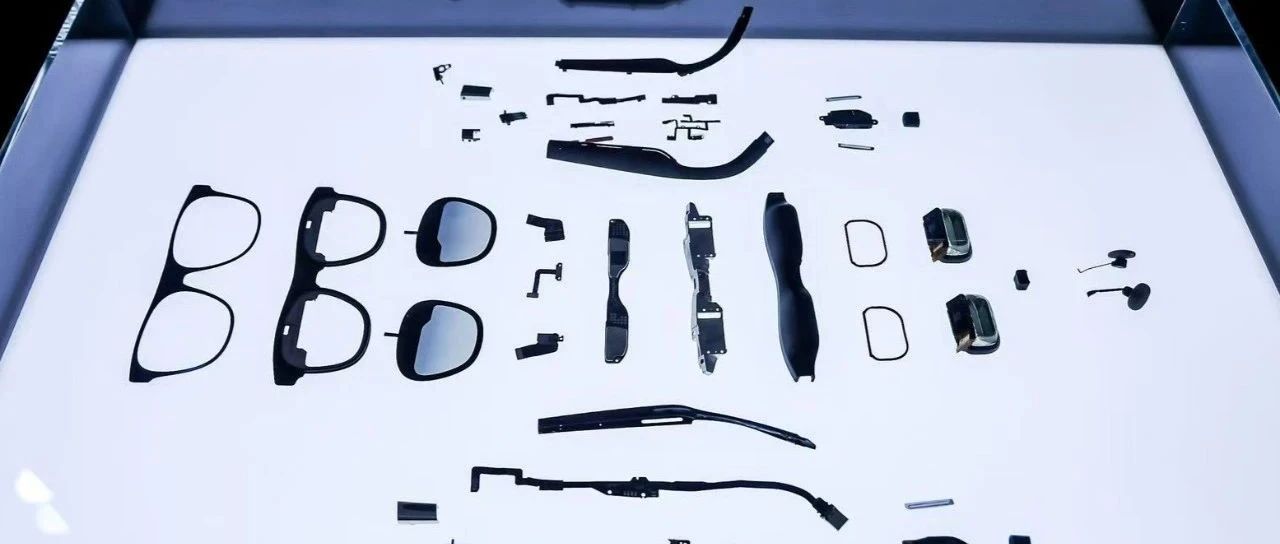
XREAL推AR眼镜新品 欲从“百镜大战”中突围
Jing Ji Guan Cha Bao· 2025-08-12 02:57
Core Insights - XREAL is collaborating with Google to develop Project Aura, the first AR terminal equipped with the AndroidXR system, set to launch in Q1 2024 [2][3][10] - XREAL has established itself as a leader in the AR glasses market, maintaining the top position globally for three consecutive years with over 600,000 units sold [3][4] - The company emphasizes its focus on AR technology rather than following the trend of AI glasses, despite the industry's shift towards AI integration [4][14] Company Overview - XREAL is recognized as a prominent player in the AR glasses sector, having participated in the development, design, and manufacturing of AR glasses for eight years [3][4] - The company has developed its own X1 chip, which enhances performance and reduces latency to 3 milliseconds, significantly improving the user experience [6][7] - XREAL's strategy includes deep self-research and development of key components, with 65% of parts in flagship products being self-developed or customized [6][8] Industry Context - The smart glasses industry in China is experiencing a shift towards AI glasses, but XREAL aims to differentiate itself by focusing on AR technology [4][14] - The market is currently characterized by a lack of a breakout product, with XREAL targeting the development of a potential blockbuster AR glasses product [13][15] - The collaboration with Google is seen as a strategic move to leverage Google's ecosystem and AI capabilities, which could enhance XREAL's product offerings [10][12] Future Outlook - XREAL aims to integrate AI capabilities into its AR glasses, anticipating that advancements in AI will drive the next wave of innovation in the industry [11][12] - The company is cautious about the current trend of "hundred glasses war," viewing it as a temporary phenomenon rather than a sustainable market growth [13][15] - XREAL's long-term vision includes creating a comprehensive ecosystem around its AR products, positioning itself as a key player in the future of personal smart devices [9][14]

大摩最新研判:AI眼镜出货量将持续攀升,下一个 “智能入口“ 要来了?
智通财经网· 2025-08-08 12:55
Core Insights - Morgan Stanley's report highlights the rapid integration of AR features by Chinese manufacturers like Alibaba, Rokid, and Xreal in the AI+AR glasses sector, predicting an 80% CAGR for the AI glasses SoC market from 2024 to 2028, with market sizes for CIS and LCOS expected to reach $273 million and $153 million respectively by 2028 [1][13][14] Group 1: Company Developments - Alibaba has launched the WOW Quark AI + AR glasses, utilizing a mainstream SoC and an additional BES2800 chip for enhanced energy efficiency, featuring dual micro-LEDs and a waveguide system [2][5] - Rokid's AI + AR glasses employ similar silicon components and also use micro-LEDs from Crystal Optoelectronics, equipped with four waveguides compared to Alibaba's two per eye [2][5] - Xreal has adopted a different approach by combining micro-OLEDs with a birdbath optical stack, which, while potentially heavier, offers full-color images [2][5] Group 2: Product Specifications - Meta's upcoming AR glasses, Celeste, are expected to be unveiled at the Meta Connect event in September, featuring a high-resolution silicon LCD panel with 58 pixels and a refresh rate of 120 Hz, along with a waveguide display module [3][4] - Battery life remains a critical issue, with early prototypes showing only 4 minutes of usage, making improvements in this area essential for user acceptance [3][4] Group 3: Industry Trends - The report indicates that the short-term adoption of silicon waveguides in AR displays is limited due to high costs, with a silicon wafer costing $5 supporting only 3-4 pairs of glasses [4] - The collaboration between Tianyue Advanced and Sunny Optical aims to advance the application of silicon carbide substrates in optical fields, which could benefit AI glasses and automotive displays [11] Group 4: Market Predictions - Morgan Stanley forecasts that the total addressable market for system-level chips in AI glasses will grow at an 80% CAGR from 2024 to 2028 [13] - By 2028, the total addressable market for image sensors in AI glasses is projected to reach $273 million, while the market for silicon LCDs in AR devices is expected to hit $153 million [14]

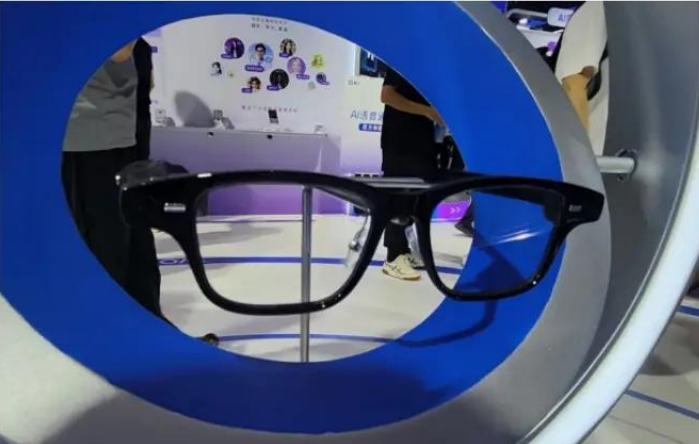
影目科技智能眼镜亮相世界运动会
Zheng Quan Ri Bao Wang· 2025-08-08 11:20
Core Insights - The 12th World Games officially commenced on August 7, with Shenzhen Yingmu Technology Co., Ltd. being the only smart glasses brand participating in the event [1] - Yingmu Technology showcased its products INMO GO2 and INMO AIR3, highlighting the potential of smart glasses in enhancing event experiences and promoting cultural exchange [1] Product Highlights - The company deployed 20 units of INMO GO2 simultaneous translation glasses in the World Games Village, capable of translating over 40 languages and recognizing 90 accents, covering most countries and regions globally [1] - INMO AIR3 is noted as the world's first mass-produced 1080P wireless all-in-one AR smart glasses, featuring the IMOS 3.0 spatial operating system, high-definition full-color display, spatial computing capabilities, and AI semantic interaction [1] - INMO AIR3 supports various functionalities such as virtual large screens, multi-screen collaboration, and AUTO AI, catering to diverse usage needs during the World Games [1]
大摩最新研判:AI 眼镜出货量将持续攀升,下一个 智能入口 要来了?
Zhi Tong Cai Jing· 2025-08-08 11:16
Core Insights - The report by Morgan Stanley highlights the rapid development of AI + AR glasses in the Greater China and Asia-Pacific regions, with companies like Alibaba, Rokid, and Xreal integrating AR functionalities using advanced technologies such as MicroLED and waveguide systems. Meta's new AR glasses, Celeste, will utilize LCOS display modules, with battery life being a critical consideration. The AI glasses SoC market is projected to grow at an 80% CAGR from 2024 to 2028, with the CIS and LCOS markets expected to reach $273 million and $153 million, respectively, by 2028 [1][17][22]. Company Developments - Alibaba has launched the WOW (哇哦) AI + AR glasses, which incorporate a mainstream system-on-chip (SoC) along with a BES2800 chip from Best Technology to enhance energy efficiency. The glasses utilize dual micro-LEDs and a waveguide system for AR functionality, featuring monochrome (green) micro-LED chips from Crystal Clear Optoelectronics [2][8]. - Rokid's AI + AR glasses employ similar silicon components and also use micro-LEDs from Crystal Clear Optoelectronics, equipped with four waveguides (two per eye) [2][8]. - Xreal has taken a different approach by combining micro-OLEDs with a birdbath optical stack, which, while potentially increasing weight, allows for full-color image display [3][8]. Meta's Product Launch - Meta's Celeste AI/AR glasses are expected to be officially launched at the Meta Connect event in September. The glasses will feature a high-resolution silicon LCD panel with 58 pixels and a refresh rate of 120 Hz, utilizing waveguide technology licensed from Lumus and manufactured by Schott. Battery life remains a significant challenge for user acceptance [4][5][6]. Market Trends and Projections - Morgan Stanley's research indicates that the short-term adoption of silicon waveguides in AR displays is limited due to high costs, with a $5 silicon wafer supporting only 3-4 pairs of glasses. The third-generation Ray-Ban Meta 3 is anticipated to enhance AI-driven multimodal features, including real-time object detection and environmental understanding, while retaining similar semiconductor solutions [7][8]. - The report also notes that the AI glasses market is expected to see significant growth, with a projected 80% CAGR for the SoC market from 2024 to 2028, and the total addressable market for image sensors in AI glasses estimated to reach $273 million by 2028 [17][19].
大摩最新研判:AI 眼镜出货量将持续攀升,下一个 "智能入口" 要来了?
Zhi Tong Cai Jing· 2025-08-08 11:00
Group 1 - The core focus of the report is on the AI + AR glasses market in Greater China and the Asia-Pacific region, highlighting the rapid integration of AR features by Chinese manufacturers such as Alibaba, Rokid, and Xreal, utilizing technologies like MicroLED and waveguide systems [1][7] - Alibaba has launched the WOW glasses, which incorporate dual micro-LEDs and a waveguide system, while Meta's new AR glasses, Celeste, will use LCOS display modules with a critical emphasis on battery life [2][3] - Morgan Stanley predicts an 80% compound annual growth rate (CAGR) for the AI glasses SoC market from 2024 to 2028, with the CIS and LCOS market sizes expected to reach $273 million and $153 million respectively by 2028 [1][17][19] Group 2 - The WOW glasses from Alibaba utilize a mainstream system-on-chip (SoC) along with a BES2800 chip for enhanced energy efficiency, and they feature a monochrome micro-LED display [2][7] - Rokid's AI + AR glasses have a similar design to Alibaba's, using micro-LEDs and diffraction waveguides, while Xreal employs a different approach by combining micro-OLEDs with a birdbath optical stack for full-color display [2][15] - Meta's Celeste is expected to be officially launched at the Meta Connect event in September, featuring a high-resolution silicon LCD panel with a refresh rate of 120 Hz, although battery life remains a significant concern [3][4][5] Group 3 - The report indicates that the short-term adoption of silicon waveguides in AR displays is limited due to high costs, with a silicon wafer costing $5 supporting only 3-4 pairs of glasses [6] - The collaboration between Tianyue Advanced and Sunny Optical aims to promote the application of silicon carbide substrates in optical fields, which could benefit AI glasses and automotive displays [13] - Meta's Q2 2025 earnings call highlighted that AI glasses will be a primary means of integrating superintelligence into daily life, with a 5% year-over-year increase in Reality Labs revenue attributed to strong AI glasses sales [14]