
肉类加工

Search documents
佳宝与维尔康的“内斗”背后藏着多少公司法“雷区”
Qi Lu Wan Bao Wang· 2025-05-22 12:13
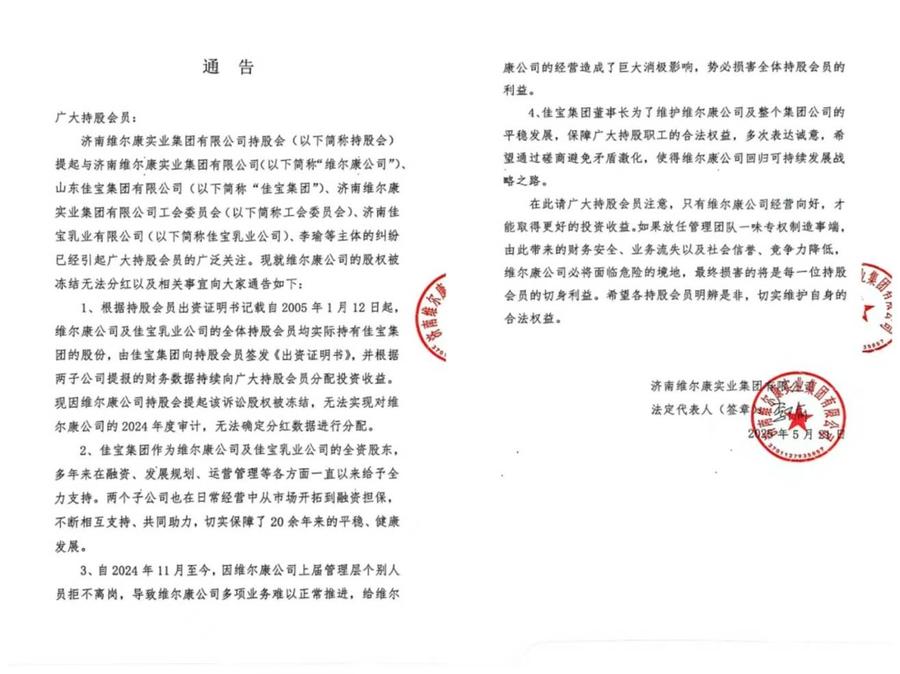
Core Viewpoint - The ongoing power struggle between Shandong Jiabao Group and Jinan Weierkang Industrial Group has drawn significant attention, highlighting the complexities of corporate governance and the competitive dynamics between the two companies [1] Group 1: Company Overview - Jiabao Group is a leading player in the dairy industry in China, with a revenue exceeding 8 billion yuan in 2023, and operates three large-scale modern dairy farms with a total of 50,000 dairy cows [2] - Weierkang Group, recognized as a national backbone cold chain logistics base, reported a revenue of 12 billion yuan in 2023 and has a daily processing capacity of over 8,000 tons of fresh products [2][9] Group 2: Shareholding Structure - Jiabao Group holds 100% of Weierkang Group, but the shareholding structure is complex, with various stakeholders including labor unions holding significant stakes, such as the Weierkang Group labor union with 12.33% [4] - The intricate shareholding structure creates potential conflicts in decision-making and interest representation, complicating the governance of both companies [4] Group 3: Legal and Governance Issues - A recent shareholders' meeting of Jiabao Group led to decisions that intensified the conflict, including the appointment of Jiabao's chairman as Weierkang's chairman, which was contested by Weierkang's labor union due to alleged procedural flaws [5][6] - The ongoing litigation has resulted in frozen shares, halting the auditing and dividend distribution processes for 2024, which negatively impacts shareholder interests [7][8] Group 4: Business Impact - The internal conflict has led to business stagnation for Weierkang, with management instability causing significant operational disruptions and eroding market confidence [7][8] - The dispute has escalated from procedural disagreements to direct confrontations over control and daily operations, with both companies leveraging their respective strengths in the dairy and cold chain sectors [9]

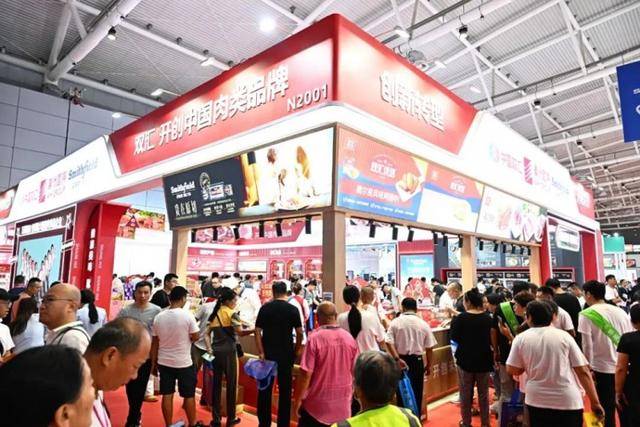
双汇数字化转型:科技驱动肉类龙头管理与业务双升级
Sou Hu Cai Jing· 2025-05-21 14:39
在物联网、人工智能、大数据和云计算等技术迅猛发展的背景下,数字化转型已成为企业提升竞争力、 实现可持续发展的必由之路。作为中国肉类行业的龙头企业,双汇积极顺应时代潮流,通过数字化转型 不断优化管理流程、提升运营效率,实现了管理提质与业务增效的双重突破。 数字化成效显现:管理与业务双轮驱动 "汇工作" 平台助力下,双汇数字化转型短短半年便成效初显,数字化团队推动总部及一线工厂完成超 100项数字化实践,多项数字化基建落地。 在管理提质方面,双汇利用飞书打造统一协同办公平台,统一审批入口并优化线上流程,平均审批时长 下降40%;建立近400个知识库,实现跨部门知识共享;深入5家下属工厂推进30余项无纸化改造,并制 定标准化工厂操作手册在全集团推广。 业务增效方面,双汇推出禽业异常工单管理、三级风险排查、生鲜品燃动指标预警等高价值数字化实 践。基于飞书多维表格等搭建的 "异常信息反馈工单系统",涵盖异常任务上报、跟进、流转通知及数 据分析全环节,累计收集工单1688条,解决1637条,解决率达96.9%,异常信息流转周期缩短至之前的 60%,效率大幅提升。目前,双汇已初步形成"管理提质 + 业务增效"的双轮驱动模式 ...

光明肉业: 光明肉业关于召开2024年年度股东大会的通知
Zheng Quan Zhi Xing· 2025-05-21 10:32
证券代码:600073 证券简称:光明肉业 公告编号:2025-021 上海光明肉业集团股份有限公司 关于召开2024年年度股东大会的通知 网络投票系统:上海证券交易所股东会网络投票系统 网络投票起止时间:自2025 年 6 月 11 日 至2025 年 6 月 11 日 采用上海证券交易所网络投票系统,通过交易系统投票平台的投票时间为股 东大会召开当日的交易时间段,即 9:15-9:25,9:30-11:30,13:00-15:00;通过 互联网投票平台的投票时间为股东大会召开当日的 9:15-15:00。 (六)融资融券、转融通、约定购回业务账户和沪股通投资者的投票程序 涉及融资融券、转融通业务、约定购回业务相关账户以及沪股通投资者 的投票,应按照《上海证券交易所上市公司自律监管指引第 1 号 — 规范运 作》等有关规定执行。 本公司董事会及全体董事保证本公告内容不存在任何虚假记载、误导性陈述或者重大 遗漏,并对其内容的真实性、准确性和完整性承担法律责任。 重要内容提示: 召开的日期时间:2025 年 6 月 11 日 15 点 00 分 召开地点:杨浦区济宁路 18 号光明肉业会议室 (五)网络投票的系 ...

光明肉业: 光明肉业第九届董事会第三十三次会议决议公告
Zheng Quan Zhi Xing· 2025-05-21 10:12
第九届董事会第三十三次会议决议公告 本公司董事会及全体董事保证本公告内容不存在任何虚假记载、误导性陈述或者重大遗 漏,并对其内容的真实性、准确性和完整性承担个别及连带责任。 证券代码:600073 证券简称:光明肉业 编号:2025-019 上海光明肉业集团股份有限公司(以下简称"光明肉业"或"公司")第九 届董事会第三十三次会议于2025年5月16日以电子邮件形式通知全体董事,并于 议的召集、召开和表决程序符合《公司法》和公司《章程》等有关规定。与会董 事经过充分讨论,审议通过了如下决议: 一、审议通过了关于提名第九届董事会独立董事候选人的议案,本议案需提 交股东大会审议 同意提名于冷先生和王捷先生为公司第九届董事会独立董事候选人,任期至 第 九 届董 事 会 届 满之日 止。 ( 详 见 2025 年 5月 22 日在 上 海证 券 交 易所网 站 www.sse.com.cn披露的《光明肉业关于独立董事辞职暨选举独立董事的公告》, 编号:2025-020) 表决结果:赞成7票,反对0票,弃权0票。 本议案已经公司第九届董事会提名委员会2025年第一次会议审议通过并同 意提交董事会审议。 上海光明肉业集团 ...
中美已正式谈妥,轮到澳做选择,澳高官直言:中国比美国重要10倍
Sou Hu Cai Jing· 2025-05-20 11:18
Group 1 - Australia Trade and Tourism Minister Don Farrell rejects pressure from the Trump administration to align on trade issues against China, emphasizing that China is a larger buyer of Australian exports [1] - The recent US-China Geneva trade talks resulted in the cancellation of 91% of tariffs by both sides, leading to a positive response from global markets and a recovery in Australia-China trade relations [3] - The Australian consumer confidence index rose by 2.2% in May, reflecting a recovery from the impacts of the global trade tensions initiated by the Trump administration [5] Group 2 - Australia is negotiating with the US to remove tariffs on Australian goods, but the country is not rushing the process due to its reliance on resource exports to China [6] - Ten Australian meat companies have been granted permission to export sheep and goat meat to China, marking a significant expansion in the market and providing a balance against US tariffs [8]

腐败、捐赠与上市:揭秘全球最大肉企如何“买通”美国监管
Sou Hu Cai Jing· 2025-05-20 09:39
Core Points - JBS, the world's largest meat processing company, has received approval from the SEC to list on the New York Stock Exchange despite a history of bribery and corruption involving its major shareholders, the Batista brothers [2][3] - The Batista brothers, Joesley and Wesley, have faced multiple scandals over the past decade, including bribing over 1,800 Brazilian politicians and engaging in various illegal activities in the U.S. [3][5] - The company plans to proceed with its IPO after overcoming significant political opposition and legal challenges, with a shareholder vote scheduled for later this month [3][5] Company Background - JBS has grown into a giant with annual revenues exceeding $77 billion, operating globally with major brands in the U.S. such as Swift and Pilgrim's Pride [4] - The Batista brothers took control of JBS in the mid-2000s and successfully listed the company on the São Paulo stock exchange in 2007, marking it as one of the most successful IPOs in Brazilian history [11] Legal and Political Challenges - The company has faced ongoing scrutiny from U.S. politicians, with significant opposition from both parties regarding its IPO due to its history of corruption [5][8] - A notable political donation of $5 million to Donald Trump's inauguration committee coincided with the SEC's approval of JBS's IPO, raising questions about potential influence [8][9] Financial Implications - Analysts predict that JBS's stock price could double following its IPO, providing the company with more resources to address environmental issues and regulatory scrutiny [15] - The Batista family's control over JBS is expected to increase post-IPO, allowing them to maintain significant voting power within the company [15][16] Governance and Oversight - There are calls for a strong independent board to oversee JBS, especially given the family's historical control and the need for enhanced regulatory oversight following the IPO [16]

公司股价为何表现低迷?光明肉业董事长李俊龙回应
Bei Ke Cai Jing· 2025-05-20 03:29
Core Viewpoint - The company is facing challenges with its stock price performance, which has been influenced by macroeconomic conditions and market dynamics, but management remains confident in its future development and core competitiveness [1]. Group 1: Company Performance and Stock Price - The company held an earnings briefing where multiple investors expressed concerns about the prolonged low stock price, with one investor noting a decade of investment without seeing value realization [1]. - The company's stock price has fluctuated significantly, with a peak market capitalization of over 173 billion yuan in June 2015, but failing to reach 100 billion yuan since February 2021, and dropping below 50 billion yuan in July of the previous year [2]. Group 2: Management's Response and Strategy - The chairman emphasized that stock price fluctuations are affected by various factors, but the management team is committed to enhancing the company's integrated meat industry development and core competitiveness to drive high-quality growth [1]. - The vice president and board secretary stated that the company will continue to improve operational management to create intrinsic value, maintain confidence in future development, and enhance communication with the capital market to build investor trust and recognition of value [1].
光明肉业2025年第一季度业绩说明会问答实录
Quan Jing Wang· 2025-05-20 01:26
2025年05月19日,光明肉业2025年第一季度业绩说明会在全景网顺利举行。出席本次业绩说明会的人员 有董事长李俊龙、独立董事田仁灿、副总裁、董事会秘书何茹、财务总监郑炜峰。 根据全景数据后台统计,在今天的交流过程中,来自全国多个省、市地区的投资者共向上市公司提问17 个,公司嘉宾共回答问题17个,答复率100.00%,充分实现了上市公司与投资者的良好互动。 以下为业绩说明会问答实录: 2、问:一季度业绩因何增长,可否持续。 回答:尊敬的投资者,您好!2025年一季度业绩增长主要原因是公司海外子公司新西兰银蕨农场公司业 绩同比增长。未来公司将持续推动肉业板块协同发展,整合资源全力推进肉业一体化建设,开发贴近消 费者需求、适配渠道及消费趋势的新产品,提升产品竞争力,推动产业安全健康高效发展。感谢您的关 注。 3、问:公司有没有基于业绩提升后的市值管理计划? 回答:尊敬的投资者,您好!公司持续以经营管理提升效益来创造企业内在价值,始终保持对未来发展 的坚定信心,扎实做好主业经营,提高核心竞争力,持续提升信息披露质量,通过积极召开业绩说明 会、组织线下投关活动等加强与资本市场沟通,增强市场对公司的信心和价值认同, ...
中美鸡爪贸易大战,中国赢了
虎嗅APP· 2025-05-18 13:51
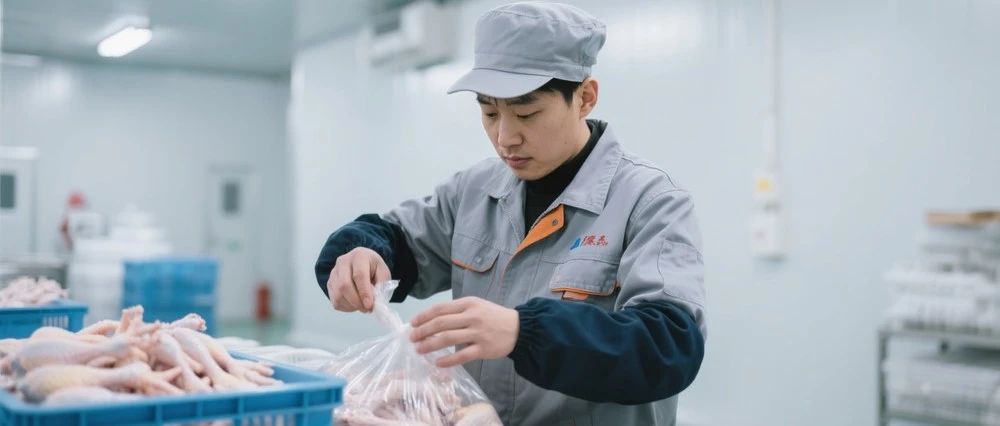
Core Viewpoint - The article discusses the impact of the recent tariff war between the U.S. and China on the import of chicken feet and pork by-products, highlighting the complexities and challenges faced by importers in China and the dependency of U.S. suppliers on the Chinese market [1][2][12]. Group 1: Tariff Impact on Imports - China is the largest importer and consumer of chicken feet and pork by-products, with the U.S. being a significant supplier [1][6]. - The initial tariff imposed by the U.S. was 20%, followed by a Chinese countermeasure of 34%, leading to a cumulative tariff exceeding 140% for some importers [5][6]. - Importers like Yan Jun faced significant losses due to customs issues and the escalating tariffs, with some opting to redirect their shipments to other markets like Vietnam and Singapore [3][5][14]. Group 2: Market Dynamics and Alternatives - In 2024, China imported nearly 450,000 tons of frozen chicken feet, with the U.S. accounting for about 10% of this volume [6]. - The article notes that U.S. pork exports to China were valued at $1.1 billion in 2024, with over 80% being by-products [6]. - As a response to tariffs, Chinese importers are increasingly sourcing chicken feet and pork by-products from countries like Brazil, Russia, and Argentina, which has led to a decrease in demand for U.S. products [14][15]. Group 3: Cultural and Economic Factors - The article highlights the cultural differences in food preferences, noting that while chicken feet are popular in China, they are not widely consumed in Western countries [10][11]. - The price of chicken feet varies significantly by country, with U.S. prices ranging from $3,000 to $6,000 per ton, while Brazilian chicken feet are priced around $5,000 per ton [11]. - The dependency of U.S. suppliers on the Chinese market is emphasized, as they struggle to find alternative markets for their products [12][18]. Group 4: Future Outlook - The article suggests that the U.S. meat processing industry is facing challenges due to reduced exports to China, which could lead to increased prices domestically [13][16]. - There is a growing sentiment among Chinese importers to avoid U.S. products due to political risks and tariff uncertainties, leading to a shift in sourcing strategies [18][20]. - The potential for U.S. products to regain market share in China is questioned, as importers express reluctance to return to previous purchasing patterns after experiencing tariff volatility [19].
中美鸡爪贸易大战,中国赢了
Hu Xiu· 2025-05-16 14:00
Core Viewpoint - The ongoing trade tensions between the US and China have significantly impacted the meat import and export industry, particularly affecting Chinese importers of US chicken feet and pork by-products, leading to substantial financial losses and shifts in sourcing strategies [1][3][18]. Group 1: Impact of Tariffs - Chinese importers like Yan Jun have faced severe losses due to tariffs, with chicken feet prices subject to over 140% in tariffs after multiple rounds of trade retaliations [3][4]. - The initial tariff on pork by-products was raised from 12% to 37% during the previous trade war, severely affecting the profitability of US exports to China [5][6]. - The trade war has led to a significant reduction in US exports, with estimates suggesting a loss of $10 billion annually due to decreased demand from China [13]. Group 2: Market Adjustments - Chinese importers are increasingly sourcing chicken feet and pork by-products from alternative countries such as Brazil and Russia, leading to a rapid adjustment in market dynamics [16][17]. - The price of chicken feet and pork by-products initially spiked by 10% following the tariff announcements but quickly normalized as alternative suppliers entered the market [16]. - The reliance of US meat producers on the Chinese market is highlighted, as they struggle to find alternative customers for their products [12][20]. Group 3: Cultural and Market Insights - The consumption of chicken feet in China is significantly higher than in Western countries, where such products are often discarded, leading to a unique market dynamic [10][11]. - The price of chicken feet varies by country, with US chicken feet priced between $3,000 to $6,000 per ton, while other countries like Russia and Thailand offer lower prices [11]. - The cultural acceptance of chicken feet is growing among Western consumers, driven by the expansion of Chinese cuisine and restaurants abroad [11]. Group 4: Future Outlook - The US meat industry is expected to face ongoing challenges in re-establishing its market position in China due to the lasting effects of the trade war and changing consumer preferences [22]. - The potential for increased competition from countries like Argentina and Spain, which are looking to expand their meat exports to China, poses a threat to US market share [17][19]. - The interconnected nature of the meat supply chain means that disruptions in one area can lead to broader economic impacts, affecting everything from feed prices to consumer costs in the US [14][15].