
自动驾驶

Search documents
MSCI指数大举增纳中国公司,被动资金将开启新一轮“扫货”?
Hua Er Jie Jian Wen· 2026-02-11 05:42
Core Insights - The MSCI has announced the largest inclusion of Chinese companies in nearly three years, adding 37 companies to its global standard index while removing 16, resulting in a net increase of 21 companies [1][2] - This adjustment is expected to attract direct capital inflows and prompt global active funds to reassess their allocation to the Chinese market [1][2] - The focus on technology companies in the new additions highlights ongoing investor interest in artificial intelligence and innovation, indicating a shift in the market structure [1][3] Group 1: MSCI Index Inclusion - The net addition of 21 Chinese companies marks the highest record in nearly three years, with the last significant inclusion occurring in May 2023 [2] - The increase in index weight is likely to lead to more buying of Chinese stocks, as noted by Ten Cap Investment's Jun Bei Liu [2] - The attractiveness of the Chinese stock market is rising amid declining interest in U.S. assets, driven by technological advancements and trade resilience [2] Group 2: Technology Sector Focus - The newly included companies are predominantly from the technology sector, including semiconductor manufacturer Anji Microelectronics, autonomous driving provider Pony AI, and quantum information product manufacturer Guodun Quantum [3] - Several consumer companies have been removed from the index, reflecting a shift in investor interest towards AI and innovation-related sectors [3] - Lotus Asset Management's Hao Hong anticipates further inclusions as new growth emerges from emerging industries, urging global investors to focus more on the Chinese mainland market for genuine growth opportunities [3]
麦格理:首予文远知行“跑赢大市”评级
Zheng Quan Ri Bao· 2026-02-11 05:40
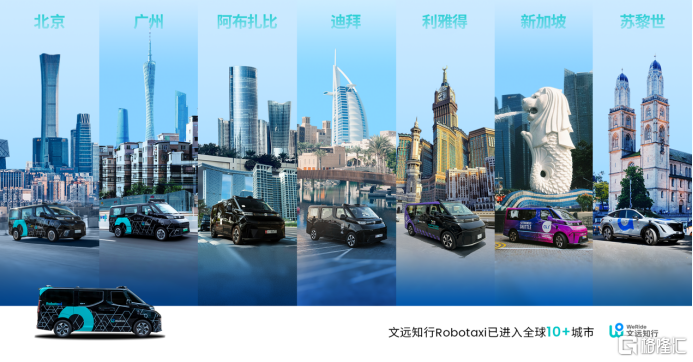
Group 1 - Macquarie initiated coverage on WeRide (WRD.US, 0800.HK) with an "Outperform" rating, setting target prices of HKD 46 for Hong Kong shares and USD 17.5 for U.S. shares [1] - WeRide's advantage in building a scalable global autonomous driving service network is attributed to its diversified L4 product matrix and strategic partnerships [1] - The future winners in the autonomous taxi sector will depend on establishing network effects with first-mover advantages and validating scalable profit models, which aligns with WeRide's strategy of rapid overseas market expansion [1] Group 2 - WeRide's asset-light model significantly reduces capital expenditure requirements, accelerates market entry, and enhances capital efficiency, allowing for quicker profitability without increasing balance sheet burdens [1] - While autonomous taxis are expected to grow the fastest, other L4 vehicle models are also crucial for WeRide to establish regulatory trust in overseas markets, creating synergies that help overcome regulatory barriers [1] - As of January 12, 2026, WeRide's global Robotaxi fleet reached 1,023 vehicles, with operations in over 10 major cities, including commercial operations of fully autonomous Robotaxis in Guangzhou, Beijing, and Abu Dhabi [2]

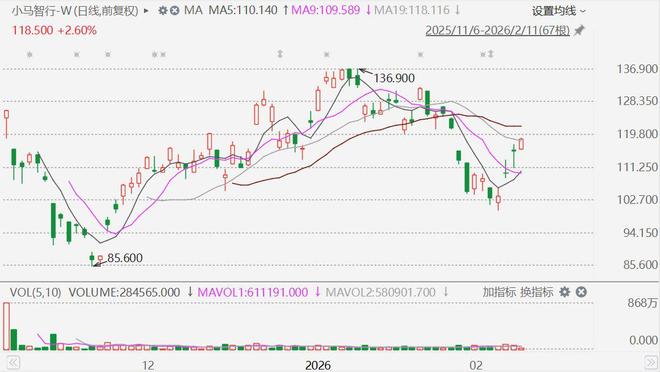
港股异动丨小马智行涨近3%,获纳入MSCI中国指数,2月27日收市后生效
Ge Long Hui· 2026-02-11 04:08
Group 1 - The core point of the article is that Pony.ai-W (2026.HK) saw a nearly 3% increase in its stock price, reaching 118.9 HKD, following its inclusion in the MSCI China Index [1] - The MSCI announced the quarterly index review results, which confirmed Pony.ai's inclusion in the MSCI China Index [1] - The changes from this index review will take effect after the market closes on February 27 [1]

MSCI中国指数调整公布!新纳入小马智行等37只股票 16只股票遭剔除
Zhi Tong Cai Jing· 2026-02-11 03:16
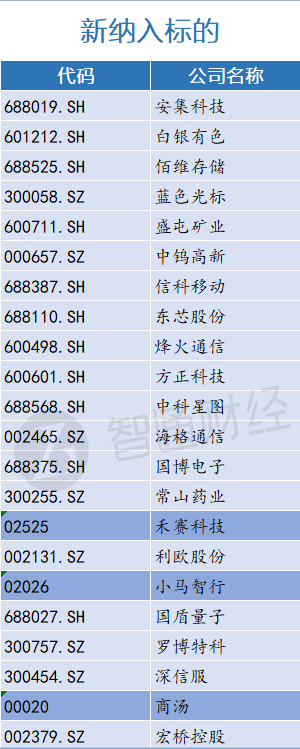
Core Insights - MSCI announced its quarterly index adjustments for February 2026, including the addition of 37 stocks to the MSCI China Index, reflecting international capital's recognition of China's growth in strategic emerging technology sectors such as AI and autonomous driving [1][3]. Group 1: New Additions - The newly added stocks include companies from various sectors such as technology, energy, and finance, with notable inclusions like Pony.ai (02026), Silver Holdings (601212.SH), and Leo Group (002131.SZ) [1][3]. - Among the new additions, four are Hong Kong stocks, including Pony.ai, SenseTime (00020), and Hesai Technology (02525), which represent the core technology chain for autonomous driving [1][3]. - The adjustment is expected to lead to passive fund inflows into the newly added stocks around the effective date of February 27 [1][3]. Group 2: Stocks Removed - A total of 16 stocks were removed from the index, primarily from traditional sectors such as real estate, finance, and automotive, including Zhejiang Expressway (00576) and China Communications Services (00552) [4][5]. - The removal of these stocks indicates a shift in market dynamics and a focus on enhancing the index's representation and liquidity [4][5].


MSCI中国指数调整公布!新纳入小马智行(02026)等37只股票 16只股票遭剔除
智通财经网· 2026-02-11 03:16
Core Viewpoint - MSCI announced its quarterly index adjustments for February 2026, including the addition of 37 stocks to the MSCI China Index, reflecting international capital's recognition of China's growth in strategic emerging technology sectors such as artificial intelligence and new infrastructure [1][5]. Group 1: New Additions - The adjustment includes 37 new stocks, such as Xiaoma Zhixing (02026), Baiyin Nonferrous Metals (601212.SH), and Liou Co., Ltd. (002131.SZ), spanning various sectors including technology, energy, and finance [1]. - Among the new additions, four are Hong Kong stocks: Xiaoma Zhixing, SenseTime (00020), Hesai Technology (02525), and Changfei Optical Fiber (06869), which represent key components in the autonomous driving technology chain [1][3]. Group 2: Stocks Removed - A total of 16 stocks were removed from the index, primarily from traditional sectors such as real estate, finance, and automotive, including Zhejiang Huhangyong (00576) and China Communications Services (00552) [1][5]. - The removal of these stocks indicates a shift in market dynamics and a move towards enhancing the index's representation and liquidity [5].
麦格理:首予文远知行"跑赢大市"评级,目标价46港元/17.5美元
Ge Long Hui· 2026-02-11 03:03
Group 1 - The core viewpoint of the report is that Macquarie initiates coverage on WeRide (WRD.US, 0800.HK) with an "Outperform" rating, setting target prices of HKD 46 for its Hong Kong stock and USD 17.5 for its U.S. stock [1] - Macquarie highlights WeRide's significant advantages in building a scalable global autonomous driving service network, supported by a diversified L4 product matrix and strategic partnerships [1] - The report emphasizes that the future winners in the autonomous taxi sector will depend on establishing network effects with first-mover advantages and validating scalable profit models, which aligns with WeRide's strategy of rapid overseas market expansion [1] Group 2 - Macquarie notes that while autonomous taxis are expected to grow the fastest, other L4 vehicle models are also crucial for WeRide in establishing regulatory trust overseas, creating synergies that help overcome regulatory barriers in different regions [3] - On February 6, WeRide announced a partnership with Uber to deploy at least 1,200 Robotaxis in the Middle East by 2027, covering major markets such as Abu Dhabi, Dubai, and Riyadh [4] - As of January 12, 2026, WeRide's global Robotaxi fleet reached 1,023 vehicles, with operations in over 10 major cities, achieving commercial operations of fully autonomous Robotaxis in Guangzhou, Beijing, and Abu Dhabi, with the Abu Dhabi fleet nearing breakeven on a per-vehicle basis [4]
未知机构:中国无人驾驶出租车运营商小马智行PonyAI已与投资方丰田合作开始无-20260211
未知机构· 2026-02-11 02:20
Summary of the Conference Call Company Overview - The conference call discusses Pony.ai, a Chinese autonomous taxi operator, which has partnered with Toyota to commence the commercial production of autonomous vehicles [1]. Key Points - **Partnership and Production**: Pony.ai has collaborated with Toyota to begin the commercial production of autonomous vehicles. The first batch consists of 1,000 units of the bZ4X compact crossover, produced in a joint venture with GAC Group [1]. - **Vehicle Specifications**: These fully electric autonomous vehicles will be equipped with Pony.ai's latest autonomous driving software [1]. - **Fleet Expansion Plans**: Pony.ai aims to expand its fleet of autonomous taxis to over 3,000 vehicles by the end of the year [1]. - **Market Reaction**: Following the announcement, Pony.ai's American Depositary Receipts (ADRs) increased by 4.4% [1]. - **Industry Context**: Pony.ai is one of several autonomous taxi companies in China, competing with firms like Baidu and WeRide, and is developing technology similar to that of American companies such as Waymo, Zoox, and Tesla [1]. - **Current Operational Status**: Although Pony.ai has achieved autonomous navigation, human assistance is still required, with a ratio of one operator for every 30 vehicles [1]. Additional Insights - **Competitive Landscape**: The mention of competitors highlights the competitive nature of the autonomous driving market in both domestic and international arenas [1]. - **Technological Development**: The focus on the latest software indicates ongoing advancements in autonomous driving technology, which may influence future operational efficiency and safety [1].
【早知道】央行:继续实施好适度宽松的货币政策;上海已开放超5200公里自动驾驶测试道路
Sou Hu Cai Jing· 2026-02-11 00:11
Group 1 - The central bank continues to implement a moderately loose monetary policy [1] - The central bank focuses on ensuring the effective implementation of financial policies such as re-loans for affordable housing [1] - Multiple departments have released opinions on accelerating the application of artificial intelligence in the bidding and tendering sector [1] Group 2 - Five departments are enhancing the integration and innovation of low-altitude equipment and low-altitude information communication [1] - Shanghai has opened over 5,200 kilometers of autonomous driving test roads [1] - Zhejiang supports the establishment of a community of upstream and downstream enterprises in the photovoltaic industry chain [1] - Deep Blue Aerospace has made significant progress in the development of the core propulsion system for the "Yunxing No. 2" large reusable launch vehicle [1]
百度Apollo Go自动驾驶出租车在迪拜启动运营
Shang Wu Bu Wang Zhan· 2026-02-10 16:01
Core Insights - The Dubai Roads and Transport Authority (RTA) has announced the launch of the sixth-generation fully autonomous RT6 taxis powered by Baidu's Apollo Go technology, marking a significant step in the deployment of smart transportation solutions in the region [1] Group 1 - The RT6 taxis are set to officially open to the public in the first quarter of 2026, indicating a planned timeline for broader accessibility [1] - The project is a collaboration between RTA and Baidu, highlighting the partnership between local authorities and technology companies in advancing autonomous vehicle initiatives [1] - There are plans to expand the fleet to over 1,000 vehicles, which aims to enhance the level of smart transportation in Dubai [1]

希迪智驾20260209
2026-02-10 03:24
Summary of the Conference Call for Xidi Intelligent Driving Company and Industry Overview - **Company**: Xidi Intelligent Driving - **Industry**: Autonomous driving, specifically focusing on unmanned mining trucks - **Market Size**: The potential market for mining operations is estimated at over 550 billion yuan, with a significant portion attributed to the sale of autonomous vehicles and systems [3][11][24] Key Points and Arguments Industry Dynamics - The unmanned mining truck industry is transitioning from pilot projects to large-scale penetration, marking a critical growth point [1] - Autonomous driving is expected to replace jobs that humans are reluctant to perform, particularly in hazardous and remote environments [3][4] - Government policies are increasingly favoring automation in mining, with regulations mandating a shift towards unmanned operations due to safety concerns [4][5] Company Strategy - Xidi Intelligent Driving focuses on providing a complete solution, including both hardware and software, rather than operating the vehicles themselves [33][34] - The company aims to maintain a competitive edge by ensuring its technology remains superior and comprehensive, covering various aspects of autonomous driving [42] - The company has established partnerships with major mining operators, allowing for deep integration of its technology into existing operations [12][13] Financial Performance - Revenue growth has been rapid, increasing from approximately 30 million yuan in 2022 to 410 million yuan in 2024, with projections for continued doubling in the coming years [24][25] - The gross margin is reported to be between 20% and 25%, with a high gross profit of nearly 100 million yuan achieved in 2024 [25][26] Market Opportunities - The market for autonomous mining trucks is expected to grow significantly, with estimates suggesting that the sales of wide-body trucks alone could reach 700-800 billion yuan [29][30] - The company is also exploring opportunities in other heavy vehicle segments, including ports and chemical plants, where demand for unmanned operations is increasing [19][12] Competitive Landscape - Competition in the autonomous mining sector is anticipated to intensify as more companies recognize the lucrative potential of this market [42] - Xidi Intelligent Driving differentiates itself through its comprehensive technology stack, which includes advanced AI and multi-agent coordination systems [42] Additional Important Insights - The company has successfully deployed over 1,000 autonomous vehicles in China and is expanding its reach internationally [17] - The operational complexity of mining environments presents significant challenges, necessitating advanced technology for effective deployment [20][21] - The company emphasizes the importance of understanding the specific needs of different mining operations to tailor its solutions effectively [14][15] This summary encapsulates the key discussions and insights from the conference call, highlighting the strategic direction, market potential, and competitive positioning of Xidi Intelligent Driving within the autonomous mining industry.