
航运业

Search documents
银河期货每日早盘观察-20251031
Yin He Qi Huo· 2025-10-31 02:04
Report Industry Investment Ratings No relevant content provided. Core Views of the Report The report offers a comprehensive analysis of various futures markets, including financial derivatives, agricultural products, black metals, and non-ferrous metals. It assesses market trends, fundamental factors, and provides corresponding trading strategies based on the current market situation [20][23][26]. Summary by Related Catalogs Financial Derivatives Stock Index Futures - **Investment Logic**: On Thursday, the stock index fluctuated again. In the morning, the market was strong, but in the afternoon, it dived and then oscillated downward. Due to investors' profit - taking and concerns about the technology stocks, the short - term stock index will fluctuate again and wait for re - pricing after the quarterly reports [20]. - **Trading Strategy**: Unilateral: Buy on dips without chasing high prices; Arbitrage: IM\IC long 2512 + short ETF cash - and - carry arbitrage; Options: Bull spread on dips [22]. Treasury Futures - **Investment Logic**: On Thursday, most treasury futures closed higher. The central bank's net injection of short - term liquidity eased the market's funds. The long - end may catch up in price, and the market should be cautious about chasing the TS contract [23]. - **Trading Strategy**: Unilateral: Try to go long on the TL contract on dips; Arbitrage: Pay attention to potential cash - and - carry arbitrage opportunities [24]. Agricultural Products Soybean Meal - **Investment Logic**: Trade relations are improving, which benefits US soybeans. However, the international soybean supply is abundant, and the domestic soybean meal supply has improved, with pressure on prices. Rapeseed meal is expected to fluctuate [26]. - **Trading Strategy**: Unilateral: Slowly build short positions in far - month contracts; Arbitrage: Try M35 reverse arbitrage; Options: Sell strangle strategy [28]. Sugar - **Investment Logic**: Internationally, the global sugar production is increasing, and the Brazilian sugar production is expected to be high. The ethanol's support for sugar has weakened, and the international sugar price is bearish. Domestically, the increase in sugar production may be less than expected, and the suspension of some imports may support the price in the short term [30]. - **Trading Strategy**: Unilateral: The international sugar price is bearish, and the domestic market may be slightly stronger in the short term. Consider shorting on rallies; Arbitrage: Short US raw sugar and long domestic Zhengzhou sugar; Options: Wait and see [30]. Oilseeds and Oils - **Investment Logic**: High - frequency data shows that the production and export growth of Malaysian palm oil in October have declined, and it is expected to continue to accumulate inventory slightly. Domestic soybean oil may gradually reduce inventory, and rapeseed oil is gradually de - stocking. The oil market is in a bottom - grinding stage [34]. - **Trading Strategy**: Unilateral: Consider going long on dips; Arbitrage: Wait and see; Options: Wait and see [34]. Corn/Corn Starch - **Investment Logic**: The US corn futures have declined, and the US corn production is at a high level. The supply of Northeast Chinese corn has increased, and the price is weak. The North China corn price has stabilized and rebounded. The 01 contract of corn is expected to fluctuate weakly [36]. - **Trading Strategy**: Unilateral: Go long on the 12 - contract of US corn on dips, go long on the 01 - contract of Chinese corn lightly, and try to go long on the 05 and 07 - contracts of Chinese corn in the long - term; Arbitrage: Wait and see; Options: Wait and see [36]. Live Pigs - **Investment Logic**: The overall supply pressure of live pigs still exists, although the scale of enterprise slaughter has decreased, and the number of secondary fattening has increased, which has a certain supporting effect on the price. The pig price is expected to be under pressure [38]. - **Trading Strategy**: Unilateral: Consider building a small number of short positions; Arbitrage: Wait and see; Options: Sell strangle strategy [38]. Peanuts - **Investment Logic**: Peanut prices have stabilized. The supply of imported peanuts has decreased, and the prices of peanut oil and peanut meal are stable. The oil mills have not purchased in large quantities. The 01 - contract of peanuts is expected to fluctuate at the bottom [42]. - **Trading Strategy**: Unilateral: Try to go long on the 01 and 05 - contracts of peanuts lightly; Arbitrage: Wait and see; Options: Sell the pk601 - P - 7600 option [42]. Eggs - **Investment Logic**: The number of laying hens is still at a high level, and the demand is average. The egg price is expected to be weak. Recently, the increase in the number of culled chickens and downstream replenishment have led to a slight rebound in the spot price. It is recommended to wait and see [47]. - **Trading Strategy**: Unilateral: Consider closing out previous short positions and wait and see; Arbitrage: Wait and see; Options: Wait and see [47]. Apples - **Investment Logic**: The quality of new - season apples is poor, the excellent fruit rate is low, and the cost of making warehouse receipts is high. The market is worried about the short shelf - life of cold - stored apples. The expected low storage volume may support the price, but the upward space is limited [51]. - **Trading Strategy**: Unilateral: Consider closing out previous long positions and wait and see; Arbitrage: Wait and see; Options: Wait and see [51]. Cotton - Cotton Yarn - **Investment Logic**: The cotton purchase is at its peak, and the purchase price is stable with a slight increase. The demand has not changed much. The improvement in Sino - US relations may support the Zhengzhou cotton price, which is expected to fluctuate slightly stronger [55]. - **Trading Strategy**: Unilateral: The US cotton is expected to fluctuate, and the Zhengzhou cotton is expected to fluctuate slightly stronger in the short term; Arbitrage: Wait and see; Options: Wait and see [55]. Black Metals Steel - **Investment Logic**: The night - trading steel price fluctuated weakly. This week, the steel production recovery accelerated, and the demand continued to recover, with an accelerated inventory reduction. However, there are still pressures from high plate inventory, slow capital release in the fourth quarter, and the fading macro - influence [58]. - **Trading Strategy**: Unilateral: Maintain range - bound fluctuations; Arbitrage: Consider going long on the hot - rolled coil and short on the rebar spread; Options: Wait and see [59]. Coking Coal and Coke - **Investment Logic**: The current macro - sentiment is positive, and the coking coal fundamentals are good, but the steel demand is uncertain, which restricts the upward space of raw materials. It is expected to fluctuate in the near future, and it is recommended to wait for dips to go long [61]. - **Trading Strategy**: Unilateral: Wait for dips to go long; Arbitrage: Wait and see; Options: Wait and see [61]. Iron Ore - **Investment Logic**: The iron ore price fell at night. The supply is at a high level, and the demand is weakening domestically. The iron ore price is expected to be under pressure at a high level [63]. - **Trading Strategy**: Unilateral: Bearish at a high level; Arbitrage: Wait and see; Options: Wait and see [64]. Ferroalloys - **Investment Logic**: The market sentiment has cooled down. The supply and demand pressures of ferrosilicon and ferromanganese still exist. They can continue to be used as short - side configurations in the sector [65]. - **Trading Strategy**: Unilateral: Continue as short - side configurations; Arbitrage: Wait and see; Options: Sell out - of - the - money straddle option combinations [66]. Non - Ferrous Metals Precious Metals - **Investment Logic**: There are both bullish and bearish factors in the precious metals market. The market is expected to enter a high - level shock adjustment period in the short term [69]. - **Trading Strategy**: Unilateral: Hold long positions in Shanghai gold and silver cautiously; Arbitrage: Wait and see; Options: Wait and see [71]. Copper - **Investment Logic**: Macro - factors are not favorable, and the supply side of copper mines has more disturbances. The supply is relatively tight, and the consumption is weak. The copper price has a short - term correction [73]. - **Trading Strategy**: Unilateral: The short - term copper price corrects slightly, pay attention to support and resistance levels, and go long on dips in the long term; Arbitrage: Hold cross - market cash - and - carry arbitrage and consider cross - period cash - and - carry arbitrage after domestic inventory decline; Options: Wait and see [74]. Alumina - **Investment Logic**: The supply and demand of alumina are still in significant surplus, but there are expectations of production cuts. The price rebounds slightly at a low level, but there are still pressures on the rebound amplitude [77]. - **Trading Strategy**: Unilateral: The price will fluctuate at a low level; Arbitrage: Wait and see; Options: Wait and see [77]. Electrolytic Aluminum - **Investment Logic**: The macro - situation is uncertain, but the Sino - US economic and trade consensus is positive. The overseas supply is tight, and the domestic consumption is resilient. The aluminum price is expected to rise after the market sentiment stabilizes [80]. - **Trading Strategy**: Unilateral: The aluminum price is expected to rise after the market sentiment stabilizes; Arbitrage: Wait and see; Options: Wait and see [80]. Cast Aluminum Alloy - **Investment Logic**: The macro - expectations are volatile. The supply of scrap aluminum is tight, the demand is resilient, and the price of ADC12 aluminum alloy ingots will maintain a strong shock [85]. - **Trading Strategy**: Unilateral: The aluminum alloy price will rise with the aluminum price; Arbitrage: Consider long AD and short AL arbitrage; Options: Wait and see [85]. Zinc - **Investment Logic**: The domestic zinc concentrate market is short of supply, and some smelters may reduce production in November. The consumption is expected to weaken, but the export window is open, which can relieve the supply - surplus situation [90]. - **Trading Strategy**: Unilateral: Hold profitable long positions and pay attention to export volume and new smelter production; Arbitrage: Consider buying SHFE and selling LME in advance according to export conditions; Options: Wait and see [90]. Lead - **Investment Logic**: Some lead - storage enterprises have reduced production due to high lead prices and high downstream inventory. The supply of recycled lead may increase, and the lead price may decline [94]. - **Trading Strategy**: Unilateral: Wait and see, and consider shorting if the production of recycled lead increases; Arbitrage: Wait and see; Options: Wait and see [94]. Nickel - **Investment Logic**: The supply and demand of nickel are loose, but there is cost support. The nickel price will maintain a range - bound operation [98]. - **Trading Strategy**: Unilateral: Wide - range shock; Arbitrage: Wait and see; Options: Sell the 2512 - contract strangle combination [99]. Stainless Steel - **Investment Logic**: The supply and demand of stainless steel are weak, and it is difficult to obtain production profits. The social inventory has increased slightly [101]. - **No trading strategy content provided specifically for the logic above, but based on the general format, it should be summarized if available.**
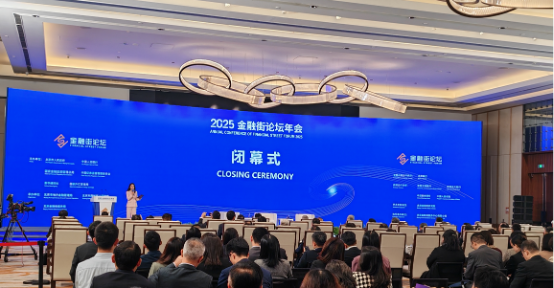
2025金融街论坛年会闭幕 于变局中构建韧性合作未来
Bei Ke Cai Jing· 2025-10-31 01:57
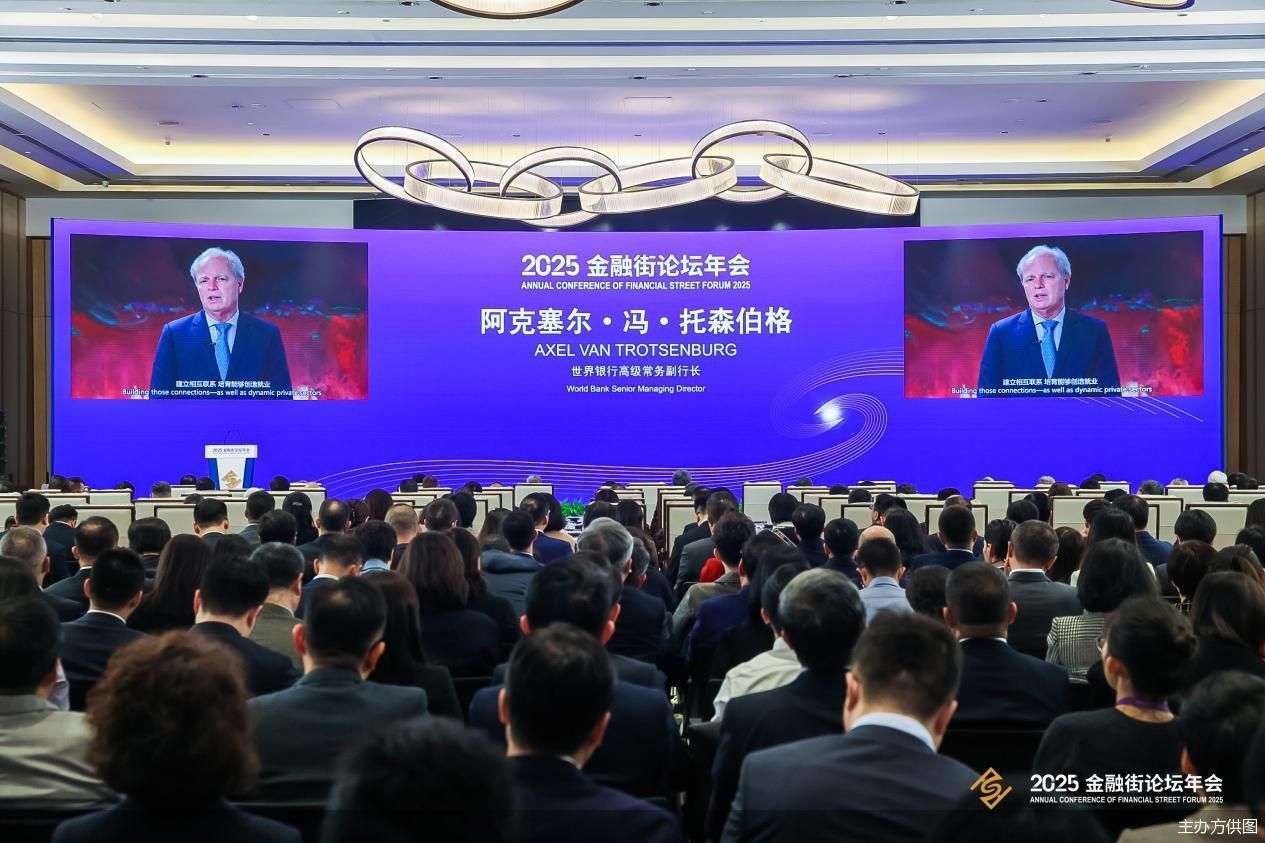
Group 1 - The main forum and closing ceremony of the Financial Street Forum focused on "Resilient Cooperation in International Trade and Economy under Global Changes," discussing global investment patterns and development dynamics [1] - The forum successfully hosted 38 high-quality events, gathering over 400 officials, international organization leaders, and financial executives from more than 30 countries and regions, with over 6,000 on-site participants and billions of online interactions, marking the largest scale and impact in its history [2] Group 2 - The closing ceremony featured keynote speeches from prominent figures, including the Deputy Director of the State Administration of Foreign Exchange and leaders from major financial institutions, emphasizing the need for reducing non-tariff barriers and deepening regional integration to facilitate domestic and regional trade [3] - The World Bank's Senior Vice President highlighted the importance of building economies that promote growth and job creation, focusing on infrastructure investment, regulatory reforms, and reducing trade barriers [4] - The Chairman of China Merchants Group stressed the need for resilient and efficient logistics networks to support international trade and called for precise and inclusive financial services [8] Group 3 - Henry Paulson emphasized the financial industry's role in addressing biodiversity risks and suggested innovative financing mechanisms and reforms in agricultural subsidies to protect biodiversity [11] - The Chairman of China Ocean Shipping Group proposed collaborative efforts in building resilient shipping logistics networks and digital shipping chains to enhance cooperation between the shipping and financial sectors [14] - The Deputy Director-General of the WTO noted the profound changes in the global trade environment and the need for countries to support multilateralism and trade liberalization, particularly for developing nations [17] Group 4 - A roundtable discussion included leaders from various financial institutions discussing the future of global investment patterns and development dynamics [20] - A high-level dialogue addressed the role of central banks in the new global landscape, with emphasis on balancing multiple objectives such as inflation control, financial stability, and economic growth [24][26] - The Chief Executive of Hong Kong and the Mayor of Beijing highlighted their commitment to enhancing their respective financial centers' roles in supporting national development and attracting global financial institutions [33][34]


年会闭幕,全球嘉宾共探变局中韧性合作未来
Bei Jing Shang Bao· 2025-10-30 16:37
Group 1 - The World Bank aims to support economic growth and job creation through investments in infrastructure, policy reforms, and reducing non-tariff barriers to enhance trade efficiency [1] - The chairman of China Merchants Group emphasizes the need for resilient and efficient logistics networks to facilitate international trade and the importance of financial rules in supporting global economic development [3] - The chairman of China Ocean Shipping Group highlights the shift in the shipping industry towards building resilient logistics networks and the necessity of collaboration between shipping and financial sectors [4] Group 2 - The former governor of the People's Bank of China discusses the importance of balancing multiple objectives in central banking, including inflation control, financial stability, and economic growth, particularly for developing countries [5] - The Chief Executive of the Hong Kong Special Administrative Region emphasizes the need for continuous innovation in finance to maintain Hong Kong's status as a global financial center and to explore new growth opportunities [5]
联合解读中美经贸磋商成果
2025-10-30 15:21
Summary of Key Points from the Conference Call Industry or Company Involved - The conference call primarily discusses the impact of the recent US-China trade negotiations on various industries, including technology, electronics, textiles, and shipping. Core Insights and Arguments 1. **US-China Trade Negotiation Outcomes** The negotiations resulted in the suspension of new restrictions and the cancellation of the 10% tariff on fentanyl, which is expected to stabilize US-China relations and positively impact the Chinese economy [1][5][8]. 2. **Impact on Chinese Exports** A potential 10% reduction in US tariffs could lower the effective tariff rate on Chinese goods to around 28%, which would directly boost Chinese exports to the US and enhance overall export growth by approximately one percentage point [1][3][4]. 3. **Technology Sector Benefits** The negotiations are favorable for the technology sector, particularly with the expected cancellation of the 10% fentanyl tariff on electronic products, which would stimulate demand and alleviate valuation pressures on the electronics sector [1][6][7]. 4. **Market Sentiment and Stock Valuation** The outcomes of the negotiations have slightly exceeded market expectations, leading to a recovery in stock valuations, particularly in the technology and electronics sectors. Investor sentiment has improved, creating potential investment opportunities [1][8][9]. 5. **Short-term Market Trends** While the trade negotiation results are not expected to alter the current market trend significantly, there are concerns about overheating in certain sectors, particularly TMT (Technology, Media, and Telecommunications), which may lead to market volatility if new catalysts do not emerge [1][10]. 6. **Recommendations for Sector Allocation** It is suggested to shift towards a more balanced allocation strategy by focusing on sectors such as lithium batteries, non-ferrous metals, and consumer electronics, while also considering opportunities in overseas markets like power grid equipment and commercial vehicles [1][11][12]. 7. **Color on the Non-ferrous Metals Sector** The cancellation of tariffs is expected to lower global trade friction costs and boost demand for non-ferrous metals, marking the beginning of a prolonged bull market for metals like copper, aluminum, and rare earth elements [1][13]. 8. **Shipping Industry Implications** The trade agreement is anticipated to benefit the shipping industry, particularly companies like China COSCO Shipping, due to increased demand for shipping services between China and the US [1][15][16]. 9. **Textile and Apparel Industry Effects** The US remains a significant market for Chinese textiles and apparel, and the easing of trade tensions could improve production utilization rates and profitability in this sector [1][20][23]. 10. **Home Appliance Sector Outlook** The reduction in tariff pressure is expected to positively impact the home appliance sector, particularly for companies with high export ratios to North America, aiding in the recovery of their profit margins [1][21][22]. Other Important but Possibly Overlooked Content - The negotiations have also led to a strategic pause in the implementation of export controls on rare earth products, which underscores China's significant role in the global rare earth supply chain [1][14]. - The overall sentiment in the market remains cautiously optimistic, with expectations of a continued recovery in various sectors as trade relations stabilize [1][9].

中远海能(600026.SH):前三季度净利润27.23亿元,同比下降21.22%
Ge Long Hui A P P· 2025-10-30 14:57
格隆汇10月30日丨中远海能(600026.SH)发布三季报,2025年前三季度实现营业总收入171.08亿元,同比 下降2.55%;归属母公司股东净利润27.23亿元,同比下降21.22%;基本每股收益为0.5707元。 ...
中远海控(01919)前三季度归母净利润270.7亿元,同比下降29%
智通财经网· 2025-10-30 14:39
智通财经APP讯,中远海控(01919)发布公告,2025年前三季度,营业收入1675.99亿元(人民币,下同), 同比下降4.09%;归属于上市公司股东的净利润270.7亿元,同比下降29%;基本每股收益1.74元。 ...

中远海能:2025年第三季度归属于上市公司股东的净利润同比增长4.37%
Zheng Quan Ri Bao Zhi Sheng· 2025-10-30 13:40
证券日报网讯 10月30日晚间,中远海能发布2025年第三季度报告称,2025年第三季度公司实现营业收 入5,466,168,242.83元,同比下降2.55%;归属于上市公司股东的净利润为853,411,313.76元,同 比增长4.37%。 (编辑 任世碧) ...
中远海控:前三季度实现净利逾270亿元
Xin Hua Cai Jing· 2025-10-30 12:44
Core Viewpoint - COSCO Shipping Holdings Co., Ltd. reported strong financial performance for the first three quarters of 2025, with significant growth in net profit and container shipping revenue, while also emphasizing the challenges posed by geopolitical instability and market uncertainties [1][2]. Financial Performance - For the first three quarters, COSCO Shipping achieved a revenue of CNY 167.599 billion, with an EBIT of CNY 39.164 billion and a total profit of CNY 36.895 billion. The net profit attributable to shareholders was CNY 27.070 billion [1]. - In Q3 alone, the net profit attributable to shareholders reached CNY 9.533 billion, representing a 63.20% increase compared to Q2 [1]. Business Segments - The container shipping business generated revenue of CNY 161.031 billion, with an EBIT margin of 20.65%. The terminal business reported revenue of CNY 8.925 billion, marking a year-on-year growth of 12.35% [1]. - The total container throughput for the first three quarters was 11.3 million TEUs, reflecting a year-on-year increase of 5.6% [2]. Strategic Developments - The establishment of COSCO Shipping's Central Asia subsidiary aims to enhance the Asia-Europe trade corridor. Additionally, joint ventures in smart supply chain platforms were launched to strengthen regional supply chain hubs [2]. - New shipping routes were introduced, including direct services from Southeast Asia to South Asia and enhanced connections to North America and Latin America, aligning with global supply chain restructuring trends [2]. Future Outlook - The company anticipates ongoing challenges in the container shipping industry due to geopolitical instability and economic uncertainties. It plans to focus on enhancing core competitiveness and operational resilience while advancing digital supply chain initiatives and green transformation [2].
中远海发:第三季度净利润4.2亿元,同比下降13.42%
Xin Lang Cai Jing· 2025-10-30 12:25
Group 1 - The core viewpoint of the article indicates that China COSCO Shipping Development Co., Ltd. reported a decline in revenue and net profit for the third quarter compared to the same period last year [1] - The company's third-quarter revenue was 7.308 billion yuan, representing a year-on-year decrease of 9.92% [1] - The net profit for the third quarter was 420 million yuan, showing a year-on-year decline of 13.42% [1] Group 2 - For the first three quarters, the company's total revenue reached 19.566 billion yuan, which is a year-on-year decrease of 1.54% [1] - The net profit for the first three quarters was 1.391 billion yuan, reflecting a year-on-year increase of 0.71% [1]

中远海运控股维持A股回购价格上限14.98元/股 保障回购实施
Xin Lang Cai Jing· 2025-10-30 12:12
Core Points - Company announced to maintain the A-share repurchase price limit at RMB 14.98 per share without adjustments to ensure smooth implementation of the repurchase plan [1][3][4] - The repurchase plan allows for the buyback of 50 million to 100 million shares within three months at the set price limit [2][4] - The decision to maintain the price limit is based on confidence in the company's future business development and market value [4][5] Repurchase Plan Background and Progress - The board approved the repurchase plan on October 13, 2025, with a price limit of RMB 14.98 per share [2] - The repurchase is set to occur within three months from the board's approval date, with a total share buyback range of 50 million to 100 million shares [2] - As of the announcement date, the company has not yet implemented the repurchase plan [2] Reasons for Maintaining the Price Limit - Following the mid-year profit distribution plan, the theoretical adjusted repurchase price limit would be RMB 14.42 per share after accounting for a cash dividend of RMB 0.56 per share [3] - The company decided to keep the original price limit of RMB 14.98 per share as the current market price exceeds the adjusted limit, ensuring the repurchase can proceed smoothly [3][4] Impact on the Company and Decision-Making Process - Maintaining the repurchase price limit is intended to enhance investor confidence and align market price with intrinsic value [4] - The board's decision reflects a comprehensive consideration of market changes and aims to protect shareholder interests [4][5] - The arrangement is not expected to adversely affect the company's financial status or future development [4]
