脑机接口

Search documents
马斯克:新一代神经链接脑机接口增强版的性能将提升至三倍
Jin Rong Jie· 2026-01-28 18:52
马斯克发帖称,新一代神经链接 脑机接口增强版的性能将提升至三倍,将于今年晚些时候面市。待监 管部门批准后,Neuralink准备推出首款盲视增强技术,使那些完全失明的人能够以低分辨率视觉方式进 行感知。 ...
北京脑科学与类脑研究所所长、神经生物学家罗敏敏:建议建立侵入式脑机接口技术高标准监管体系
Zheng Quan Ri Bao· 2026-01-28 16:11
Core Insights - Brain-computer interface (BCI) technology has emerged as a focal point in global technological competition, with significant investments and policy support driving its development [1][2] - Zhejiang Qiangnao Technology Co., Ltd. completed a C-round financing of approximately 2 billion yuan, marking the second-largest single financing record in the BCI sector globally, excluding Neuralink [1] - The Chinese government is actively promoting BCI technology through various policies aimed at fostering innovation and addressing key technological challenges [2][3] Industry Development - There is a recognized gap between China's BCI technology and that of other countries in areas such as theoretical principles, technical accumulation, system integration, and clinical applications, but this gap is narrowing [2] - The Chinese government has outlined plans to advance BCI technology as part of its economic growth strategy, with specific goals set for 2027 to achieve significant breakthroughs in core technologies [2][3] Technological Challenges - Key challenges in the BCI industry include the need for self-optimized core chips, continuous iteration in system integration, and the development of high-performance algorithms to meet real-time decoding demands [3] - The number of channels in BCI devices directly impacts the amount of information that can be processed, with advancements in channel numbers leading to improved control and efficiency [3] Product Development - The "North Brain No. 2" prototype has been developed with 512 channels and is undergoing rapid iteration, with plans for clinical validation in 2026 [3] - The development of a 1024-channel BCI device is also underway, showcasing the potential for significant advancements in performance [3] Market Potential - The BCI sector is viewed as both a medical and technological investment opportunity, with the potential to unlock a market space worth trillions if integrated with AI and robotics [3] Regulatory Considerations - There is a call for establishing high standards and strict regulatory frameworks for invasive BCI technologies to ensure safety and efficacy before widespread adoption [4] Broader Applications - BCI technology is part of a larger field of brain science, which also shows promise in treating mental health conditions such as depression, with recent breakthroughs in understanding the mechanisms of treatment [5][6] - The development of non-drug therapies and advanced treatment methods for depression is being explored, indicating a multifaceted approach to mental health care [5][6] Entrepreneurial Landscape - The intersection of scientific research and entrepreneurship is highlighted, with successful transitions from laboratory research to market applications being emphasized [7][8] - Capital investment is deemed crucial for the advancement of BCI technology, with a call for sustained support from investors [7]
江苏南京:以新质生产力描绘“产业强市”蓝图
Nan Jing Ri Bao· 2026-01-28 13:25
Group 1 - Nanjing has launched the "Several Policies for Accelerating the Cultivation of New Quality Productivity to Promote High-Quality Development (2026 Edition)" to prioritize the "Industry Strong City Strategy" as a key initiative [1] - The policies aim to deepen the "1+4+6" industrial strategy and create a "1026" advanced manufacturing cluster system, introducing a series of breakthrough measures and comprehensive policy support [1] - The focus is on fostering new quality productivity to achieve a path of industrial growth characterized by higher quality and stronger momentum [1] Group 2 - The AI International Community in Nanjing is witnessing the integration of AI technology across various industries, with applications such as AI digital humans and AI-based traditional Chinese medicine diagnostics [3] - The "AI Space: Nanjing Artificial Intelligence International Community Construction Three-Year Action Plan (2026-2028)" aims to cultivate 2-3 landmark AI enterprises, over 10 excellent industry models, and attract more than 1,000 AI companies and teams [5] - Nanjing's AI industry is supported by a strong foundation, with 14 out of the top 20 internet companies in China establishing a presence in the city [5] Group 3 - The policies include the implementation of an "Artificial Intelligence+" action plan, establishing Nanjing as a national pilot zone for AI innovation applications [6] - The city will issue "computing power vouchers" to encourage startups and innovative enterprises to utilize intelligent computing resources [6] - Financial incentives include a one-time reward of 200,000 yuan for AI model developers and project subsidies of up to 200,000 yuan for innovative applications [6] Group 4 - Nanjing is positioned as the only national AI innovation application pilot zone in the province, with a focus on creating a replicable "Nanjing model" for AI industry development [8] - The city aims to optimize the spatial layout of AI, establishing a collaborative development framework with two core areas and several growth poles [8] - Nanjing is set to promote AI applications through regular project roadshows and the replication of successful applications across the city [8] Group 5 - The "Several Policies" emphasize the acceleration of future industry layout, focusing on sectors like 6G, brain-computer interfaces, and advanced semiconductor materials [10] - Nanjing has achieved significant milestones in 6G technology, with over ten world-first achievements and more than 30 innovative results [12] - The city anticipates that its future industries will generate over 300 billion yuan in revenue by 2025, with a strong emphasis on creating international-level pilot zones [12] Group 6 - Nanjing is developing a "scene open city" by promoting the large-scale application of new scenarios across various sectors, including industrial transformation and digital public services [15] - The city plans to release 1,000 application scenarios annually and support the promotion of first-time equipment and software [15] - A three-year action plan will be established to enhance the ecosystem for scenario publication, connection, and implementation [18]


熵基科技(301330) - 301330熵基科技投资者关系管理信息20260128
2026-01-28 11:04
Group 1: Company Overview and Financial Performance - The company maintains a high gross margin due to its focus on global markets, proprietary algorithms, and continuous cost optimization, with overseas sales contributing significantly to overall gross margin [2] - The increasing share of overseas sales revenue has driven the overall gross margin higher, with customized product demands enhancing profitability [2] - The company has a high degree of pricing autonomy in developed markets, allowing it to command higher prices for quality products and services [2] Group 2: Research and Development - The company prioritizes R&D investments, with five major research centers established in locations including Dongguan, Shenzhen, Xiamen, Dalian, and India [3] - Continuous monitoring of new technology trends is emphasized to align R&D with market and industry developments [3] Group 3: Strategic Growth and Acquisitions - The company adopts a dual strategy of organic growth and external development, with the acquisition of Longzhiyuan being its first since going public [4] - Future investments and acquisitions will focus on projects that enhance the company's value [4] Group 4: AI Product Applications - In smart office applications, the company utilizes Ralvie AI technology to optimize employee performance tracking and resource allocation [5] - AI technology is integrated into entrance management systems to enhance efficiency and environmental control [5] - The company leverages AI for smart retail, focusing on digital advertising operations and consumer data analysis for targeted marketing [5] Group 5: Future Projections and Risks - The company aims for performance growth in 2026, leveraging AI technology and enhancing brand influence to expand market competitiveness [7] - The brain-machine interface product is set to launch a prototype in March 2026, with initial focus on marketing and brand promotion, though it is not expected to significantly impact overall revenue in the short term [8]

影响市场重大事件:德国企业巨头要为德军打造本土版“星链”;三星电子中国研究院计划投入脑机接口领域研究并进行技术储备;“上海市智算产业高质量发展倡议”启动
Mei Ri Jing Ji Xin Wen· 2026-01-28 10:10
Group 1 - German companies Rheinmetall and Bremen-based OHB are planning to jointly bid to provide a satellite internet service similar to the US Starlink for the German military, with a contract value potentially reaching several billion euros [1] - The initiative aims to create a secure military-grade satellite communication network in low Earth orbit for the German armed forces [1] Group 2 - The China Academy of Information and Communications Technology has released a report indicating that the data intelligence service industry is entering a phase of deep integration, driven by technological advancements and industry demand [2] - The report emphasizes that data intelligence service capabilities are crucial for advancing the "AI+" initiative [2] Group 3 - Samsung Electronics' China Research Institute plans to invest in brain-computer interface research and technology reserves, expressing confidence in the commercialization prospects of this technology [3] - The institute focuses on cutting-edge technologies such as artificial intelligence and next-generation communication [3] Group 4 - The "High-Quality Development Initiative for Shanghai's Intelligent Computing Industry" was launched to promote the construction of new intelligent computing centers and establish a high-level intelligent cloud service system [4] - The initiative aims to create a self-controlled industrial ecosystem and position the intelligent computing industry as a new engine for Shanghai's economic development [4] Group 5 - The National Energy Administration of China has approved the establishment of seven standardization technical organizations related to power safety governance and greenhouse gas emissions management in the energy sector [5] Group 6 - The "Implementation Plan for Strengthening Disease Prevention and Control" aims to establish a modern disease control system by 2027, with improved infrastructure and enhanced public health service capabilities [6] Group 7 - Shanghai is actively implementing the "AI+" initiative to lead the digital transformation of manufacturing, with the city's intelligent computing scale surpassing 120,000 PFLOPS [7][8] - The city plans to construct a batch of intelligent computing infrastructure ahead of demand [8] Group 8 - A report by Yole indicates that global DRAM memory demand is expected to grow by 23% in 2026, with over half of this growth coming from the data center sector, which is projected to increase by 28% [9] - The current DRAM market trend is expected to continue at least until 2027 due to the time required for new capacity to come online [9] Group 9 - The Chinese sports industry is projected to exceed 5 trillion yuan by 2025, with the sports goods market reaching 2.49 trillion yuan, driven by a surge in domestic consumption and innovation [10]
脑机接口再迎政策利好,50只核心概念股“抢跑”
Sou Hu Cai Jing· 2026-01-28 09:47
Core Insights - The National Medical Products Administration of China has approved two industry standards for medical devices utilizing brain-computer interface (BCI) technology, indicating a push for high-quality development in this sector [1] - Analysts believe that the BCI field is entering a critical window for expansion from research validation to clinical and consumer applications, driven by recent innovative policies in medical devices [1] Industry Overview - Neuralink, founded by Elon Musk, is a leading player in the global BCI field, planning to scale up production of BCI devices and explore automated surgical solutions [3] - The global BCI market is projected to reach approximately $2.6 billion in 2024, with an annual growth rate of 11.5%, and is expected to expand to $3.3 billion by 2026 [3] - McKinsey forecasts that the BCI market in the medical sector could reach around $40 billion by 2030 and further grow to about $145 billion by 2040, with central nervous system disease treatment as a primary application area [3] Domestic Development - China's top-level policy design is providing crucial support for the development of BCI technology, with a goal to achieve breakthroughs in key technologies and establish a standard system by 2027 [4] - The number of companies in China's BCI sector has exceeded 200, with a projected industry scale of tens of billions of RMB by 2026 and an estimated 10-14 billion RMB by 2030 [4] - Rumors suggest that Qiangnao Technology is preparing for an IPO in Hong Kong, potentially becoming the first company among the "Hangzhou Six Little Dragons" to enter the capital market [4] Company Activities - In the A-share market, there are currently 50 listed companies in the BCI sector [5] - Botao Biological has invested in Haoshi Tianhui Technology, focusing on non-invasive BCI and mental health applications, aiming to accelerate clinical transformation and industrialization of innovative technologies [5] - Tianqi Co., Ltd. is entering the core BCI sector by investing in Suzhou Huahui Chip, focusing on high-density flexible neural electrode technology, which is crucial for domestic BCI hardware localization [6] - Innovation Medical is positioning itself in the BCI industry through its subsidiary Boling Brain Machine, which has commercialized BCI rehabilitation products [6]


AI、机器人、无人驾驶、商业航天、脑机接口、新能源:马年看“马”
ZHESHANG SECURITIES· 2026-01-28 04:50
Core Insights - Elon Musk's technology landscape encompasses six key disruptive technology sectors: AI, robotics, autonomous driving, commercial space, brain-machine interfaces, and new energy, representing significant investment opportunities for the next decade [2][3] - The report scores Musk's thematic investment concept at 95 out of 100, indicating strong potential across various dimensions, with an excess return of 127.44% compared to the Wind All A index from early 2025 to January 23, 2026 [8][14] Group 1: Musk's Investment Sector Layout - Musk has systematically positioned his companies, including Tesla, xAI, SpaceX, and Neuralink, across six critical technology areas that are interconnected and complementary, aiming to elevate human civilization [3][14] - The year 2026 is identified as a pivotal point for the commercialization of Musk's technology landscape, with several core projects expected to transition from development to market realization [3][14] Group 2: Investment Opportunities by Sector 1. **Robotics**: The anticipated success of the Optimus robot will drive demand across the entire robotics supply chain, presenting significant investment opportunities in upstream core components and midstream assembly [4][19] 2. **AI**: Musk's dual approach of self-developed computing power and software aims to establish a comprehensive AI ecosystem, with investment opportunities expected to focus on computing infrastructure and software applications by 2026 [25][26] 3. **Commercial Space**: The deployment of Starlink satellites and the operationalization of the Starship are set to revolutionize low Earth orbit communications, creating investment opportunities in upstream components, midstream launch services, and downstream applications [34][36] 4. **Brain-Machine Interfaces**: Neuralink's advancements in brain-machine interface technology are expected to lead to significant investment opportunities in upstream electrodes and chips, as well as midstream system integration and clinical services [43][48] 5. **Autonomous Driving**: The launch of Tesla's Robotaxi service in 2026 will validate the commercial model for autonomous driving, with investment opportunities in core computing power, algorithms, and manufacturers capable of L3+ production [56][59] 6. **New Energy**: Tesla's energy business is projected to experience explosive growth, particularly in energy storage systems, with investment opportunities in system integration, core component supply, and virtual power plant operations [62][66] Group 3: Thematic Evaluation and Stock Pool - The thematic evaluation of Musk's concept is based on eight dimensions, scoring particularly high in market capacity, policy effectiveness, and future growth potential, while the valuation level received a lower score [79][81] - A stock pool has been constructed based on six sectors: robotics, commercial space, AI, brain-machine interfaces, autonomous driving, and new energy, serving as a reference for investors [82]

国信证券(香港)股票市场概览
Guoxin Securities· 2026-01-28 02:50
资讯日报:阿里巴巴发布最新人工智能推理模型 股票市场概览 港股市场表现 美股市场表现 ⚫ 周一(1月26日),美股三大指数高开高收,集体上涨。受 地缘政治与财政风险攀升影响,避险情绪推动贵金属价格显 2026 年 1 月 27 日 资讯日报 海外市场主要股市上日表现 | 指数 | 收盘价 | 日常跌 | 間微跌 | 年初至今 | | --- | --- | --- | --- | --- | | | | (%) | (%) | 湖铁 | | | | | | (%) | | 恒生指数 | 26.766 | 0.06 | 0.06 | 4.43 | | 恒生科技 | 5,726 | (1.24) | (1.24) | 3.81 | | 恒生国企 | 9.147 | (0.15) | (0.15) | 2.62 | | ┣证指数 | 4.133 | (0.09) | (0.09) | 4.13 | | 日经225 | 53.847 | (1.79) | (1.79) | 5.06 | | 新加坡海峡 | 4.891 | (0.62) | (0.62) | 0.00 | | 标普500 | 6,950 | 0.50 ...
【新华社】植入人脑之后,脑机接口技术将如何改变我们的生活?
Xin Hua She· 2026-01-28 02:46
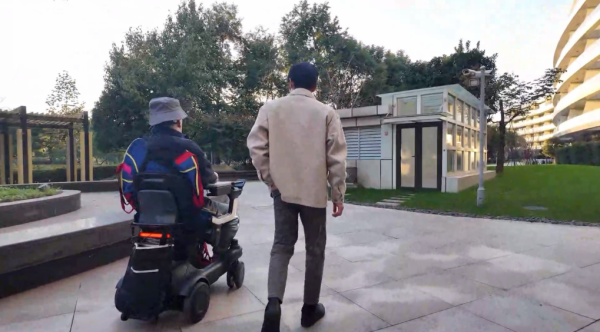
Core Viewpoint - The development of brain-machine interface (BMI) technology in China has reached a new stage, enabling paralyzed patients to control devices like wheelchairs and computers using their thoughts, with significant clinical trial advancements reported in 2025 [3][4][5]. Group 1: Technological Advancements - The Chinese Academy of Sciences has made breakthroughs in invasive brain-machine interfaces, allowing patients with severe disabilities to perform tasks such as controlling a wheelchair and interacting with robotic devices [3][4]. - A second prospective clinical trial demonstrated a paralyzed patient controlling a powered wheelchair and a robotic dog using only their thoughts, showcasing the potential of BMI technology [3][4]. - The first prospective clinical trial in June 2025 involved a patient who lost limbs due to an electrical accident, successfully controlling a computer cursor with their thoughts [4]. Group 2: Clinical Trials and Applications - A multi-center clinical trial for semi-invasive BMIs showed significant results, with 32 patients able to control pneumatic gloves for fine motor tasks after implantation [4]. - The invasive BMIs are classified as Class III medical devices in China, requiring clinical trials to prove safety and efficacy before market approval [5]. - Current clinical applications focus on motor, language, and sensory functions, with ongoing research to enhance the effectiveness of these devices [4][5]. Group 3: Future Development and Challenges - To achieve scalable applications, the industry must prioritize safety and effectiveness, minimizing surgical trauma and enhancing data collection and transmission capabilities [5][6]. - The establishment of industry standards is crucial for the development of BMIs, with ongoing efforts to create a regulatory framework and evaluation methods [8]. - The Chinese government is actively promoting the BMI industry through policy initiatives aimed at fostering innovation and creating a supportive ecosystem for technology development [8]. Group 4: Broader Implications - The long-term vision for BMIs includes their potential to serve as a new economic growth point and to empower the general public, beyond just aiding patients with severe disabilities [7][9]. - The future of brain science and BMI technology is expected to be a significant growth area, with foundational research enhancing application effectiveness [8]. - The industry is encouraged to develop "killer applications" that could lead to widespread adoption of BMI technology, similar to the smartphone revolution [9].
早盘直击|今日行情关注
申万宏源证券上海北京西路营业部· 2026-01-28 02:45
Core Viewpoint - The market is currently experiencing a narrow range of fluctuations, with a divergence in individual stock performances, indicating a potential shift from theme-driven to fundamental-driven market dynamics, while technology growth remains the main focus [1] Group 1: Market Overview - The index continued to fluctuate within a narrow range, with over 3,400 stocks declining and only about 1,900 stocks rising, indicating a significant divergence in stock performance [1] - The total trading volume on Tuesday was 2.9 trillion yuan, which is more than a 10% decrease compared to Monday, reflecting a notable contraction in market activity [1] - Since the end of the continuous rise on January 13, the index has entered a period of adjustment, characterized by a relatively mild overall adjustment range [1] Group 2: Future Outlook - The market is expected to shift from theme-driven momentum to a focus on fundamentals, with technology growth remaining the primary driver [1] - The main driving factors for the spring market are anticipated to be an increase in market risk appetite, with future hotspots likely to be technology growth sectors supported by fundamentals [1] - Key sectors to watch include semiconductors, batteries, AI hardware, and innovative pharmaceuticals, which are expected to benefit from this shift [1] Group 3: Hot Sectors - In January, technology and raw material price increases are expected to dominate, with a strong likelihood of technology growth sectors outperforming [2] - Short-term catalysts such as commercial aerospace, brain-computer interfaces, and low-altitude economy are expected to maintain investor interest [2] - The rise in raw material prices, particularly in small metals, energy metals, and new chemical materials, is seen as a derivative opportunity from the technology investment boom [2] Group 4: Specific Trends - The trend in AI hardware is firmly established, with a continuous increase in the token usage of major AI models, indicating a peak in AI applications expected by 2026 [2] - The domestic production of robots and their integration into daily life is a confirmed trend for 2026, with opportunities arising in sensors, controllers, and dexterous hands [2] - The trend towards semiconductor localization is ongoing, with a focus on semiconductor equipment, wafer manufacturing, semiconductor materials, and IC design [2] - The demand for new energy materials is rapidly increasing due to domestic and overseas energy storage needs, with signs of supply shortages and price increases expected to continue until 2026 [2] - Innovative pharmaceuticals are entering a recovery phase after nearly four years of adjustment, with positive net profit growth for four consecutive quarters since Q3 2024, and a fundamental turning point expected in 2025 [2]