
机械制造

Search documents
日经225暴涨1800点创历史新高,半导体大涨,软银涨近6%
21世纪经济报道· 2026-01-13 01:10
Group 1 - The Nikkei 225 index surged over 3%, reaching a historical high, driven by gains in automotive, financial, and machinery stocks, with Toyota up 5.0%, Nomura Holdings up 5.2%, and Kawasaki Heavy Industries up 6.0% [1] - AI and semiconductor stocks in Japan also saw significant increases, with Advantest rising over 9%, Tokyo Electron up 7.8%, and SoftBank Group increasing by 5.9% [1] Group 2 - The Japanese yen appreciated against the US dollar, reaching 157.90, while the 20-year Japanese government bond yield rose by 8 basis points to 3.135%, marking a record high [3] - The 10-year Japanese government bond yield surged to 2.13%, the highest level since February 1999, attributed to Japan's fiscal expansion and tightening monetary policy [3] - Prime Minister Fumio Kishida's proposed budget for fiscal year 2026 amounts to 122.3 trillion yen, with significant allocations for debt repayment and new bond issuance [3] Group 3 - There are discussions regarding the potential dissolution of the House of Representatives by Prime Minister Kishida, which could delay the approval of the 2026 budget [4] - The South Korean stock market opened higher, with significant gains in major stocks such as Hyundai Motor, which rose by 3.81% [4] Group 4 - The US stock market experienced a V-shaped rebound, with Google's market capitalization surpassing 4 trillion, and notable increases in Chinese assets, including a 21% rise in Kingsoft Cloud and over 10% in Alibaba [5] - Storage chip prices are expected to rise by 50%, prompting smartphone manufacturers to urgently reduce production of budget models [5]



昆山开发区创成国家级绿色工厂7家,综合实力常年位居全国前列
Su Zhou Ri Bao· 2026-01-13 00:41
Core Viewpoint - The Kunshan Development Zone is exemplifying a model of high-quality development through ecological protection and green transformation, with significant investments in sustainable practices and technologies. Group 1: Investment and Development - The total investment of 2 billion yuan in the Swire Coca-Cola (Suzhou) beverage company marks the launch of the largest beverage R&D and manufacturing base in East China [1] - The Kunshan Development Zone has been recognized as a "national first batch of green low-carbon demonstration parks" and a "provincial-level green building demonstration park" [1] Group 2: Green Transformation Initiatives - The Kunshan Development Zone has eliminated 8 electroplating companies and 6 oil-based spraying production lines, distributing over 14 million yuan in environmental subsidies [2] - The area has achieved a daily reuse of 46,000 tons of reclaimed water through the establishment of water recycling systems in 64 enterprises [2] Group 3: Green Manufacturing and Innovation - The development zone has created 7 national-level green factories and 49 provincial-level green factories, with 2 zero-carbon factories and 6 near-zero carbon factories established [3] - The shift from traditional manufacturing to intelligent manufacturing is highlighted as a key trend in the region [3] Group 4: Regulatory Efficiency and Support - The Kunshan Development Zone has implemented a streamlined environmental assessment process, reducing institutional costs by approximately 50% and cutting processing time by nearly 30% [5] - A comprehensive air quality monitoring network has been established, with an investment exceeding 7 million yuan, ensuring real-time environmental oversight [5] Group 5: Waste Management and Environmental Protection - The development zone has created a traceable hazardous waste collection system involving 506 enterprises, enhancing waste management practices [6] - Smart rainwater valve upgrades have been completed in 315 key enterprises, promoting environmental risk prevention [6] Group 6: Ecological Restoration and Urban Integration - The integration of sponge city concepts in urban planning has led to the development of eco-friendly infrastructure, such as permeable pavements and ecological drainage systems [7] - A mechanism for corporate participation in ecological restoration has resulted in the adoption of over 7,282 square meters of vegetation by 28 enterprises [7] Group 7: Future Outlook - The Kunshan Development Zone aims to continue enhancing ecological quality while promoting green low-carbon transformation, positioning itself as a pioneer in the integration of ecology and economy [8]
科达制造:公司KYM系列模锻液压机可应用于铝合金、钛合金、不锈钢、钢等锻造领域
Zheng Quan Ri Bao Wang· 2026-01-12 13:45
证券日报网讯1月12日,科达制造(600499)在互动平台回答投资者提问时表示,公司KYM系列模锻液 压机可应用于铝合金、钛合金、不锈钢、钢等锻造领域,目前主要应用于汽车零部件等领域,尚未针对 航空航天关键部件生产进行专项研发、定制化设计及开展业务。 ...

默茨新年亚洲首访选印度,商业天团追随,或签80亿美元潜艇大单?
Di Yi Cai Jing· 2026-01-12 12:40
Group 1 - German Chancellor Merz's visit to India aims to enhance cooperation in key sectors such as critical minerals, healthcare, and AI innovation [1][3] - A significant submarine manufacturing agreement worth $8 billion is expected to be reached, involving the production of six advanced conventional submarines with air-independent propulsion systems [1][5] - The agreement reflects Germany's strategy to diversify its economic partnerships and reduce reliance on Russia for defense supplies [7] Group 2 - The visit includes a delegation of prominent German business leaders from companies like Siemens, DHL, Infineon, and Airbus, highlighting the importance of strengthening economic ties [3] - Germany is facing a labor shortage, particularly in healthcare, and is looking to India to fill gaps in the workforce, especially in nursing and IT sectors [3][4] - The bilateral trade between Germany and India is approaching $50 billion, with over 2,000 German companies operating in India and more than 700 Indian companies investing in Germany [4] Group 3 - The submarine deal is part of India's broader strategy to diversify its defense procurement, moving away from a heavy reliance on Russian military equipment [7] - The new submarines will enhance the operational capabilities of the Indian Navy, which currently operates older Russian submarines and newer French ones [6][7] - The shift in defense partnerships is influenced by geopolitical changes, particularly the impact of the Russia-Ukraine conflict on global security dynamics [7]

全球贸易格局生变!22万亿美元经济体联手,反击特朗普关税大棒?
Sou Hu Cai Jing· 2026-01-12 12:13
Group 1 - The EU and the Southern Common Market, led by Brazil, signed a free trade agreement that emphasizes the importance of multilateralism and international law, contrasting sharply with U.S. hegemonic actions [1][4] - The agreement covers 720 million consumers with a combined GDP of $22.4 trillion, positioned between the U.S. ($29 trillion) and China ($19 trillion, in terms of purchasing power parity) [1] - The EU aims to reduce reliance on the U.S. and China through this agreement, indirectly criticizing Trump's tariff policies while promoting global trade aspirations [1][3] Group 2 - The agreement faced delays, initially planned for December when Brazil held the rotating presidency of the Southern Common Market, but was postponed due to opposition from Italian farmers [3] - Italy's support was crucial, as it is the third most populous country in the EU, and the final agreement received majority support from 21 countries, despite opposition from agricultural nations like France and Poland [3][4] - Brazil's agricultural advantages, particularly in the Cerrado region, have significantly increased its food production, making it a major player in global meat exports, which poses competition to U.S. and EU agriculture [3][4] Group 3 - The agreement stipulates that the Southern Common Market will eliminate 91% of tariffs on EU companies within 15 years, while the EU will remove 95% of tariffs on Southern Common Market goods within 12 years [4] - Sensitive agricultural products like beef will have import quotas, with the EU's quota for Brazil set at 3% of total imports, while Brazil's quota for the EU is 9% [4] - The agreement is expected to enhance trade in products like coffee and sugar, facilitating Brazilian coffee's entry into the European market [4]

哈萨克斯坦2025年GDP同比增长6.5%
Zhong Guo Xin Wen Wang· 2026-01-12 11:57
Economic Growth - Kazakhstan's GDP is projected to grow by 6.5% year-on-year in 2025, driven by key sectors such as industry, transportation, construction, and trade [1] - The industrial production index is expected to increase by 7.4%, with manufacturing growing by 6.4% [1] - Notable growth is observed in specific sectors, including mechanical manufacturing, which is anticipated to rise by 12.9% [1] Transportation and Logistics - The transportation and logistics sector is expected to maintain a strong growth trajectory, with transportation and warehousing increasing by 20.4% year-on-year [1] - Rising freight volumes in rail and road transport are contributing to growth in related services such as freight forwarding and airport operations [1] Construction Sector - The construction industry is projected to grow by 15.9%, with new housing area reaching 20.1 million square meters, a 5.1% increase year-on-year [1] - Increased investment in education, healthcare, and infrastructure is effectively driving growth in the construction sector [1] Trade Performance - Total trade volume is expected to grow by 8.9%, continuing the previous growth trend, with wholesale trade showing significant increases [2] - Key commodities such as food, machinery, pharmaceuticals, automobiles, and dairy products are experiencing rapid sales growth, indicating sustained market demand [2] Agriculture and Communication - The agriculture, forestry, and fishing sectors are projected to grow by 5.9%, while the information and communication sector is expected to increase by 3.6% [3] - In 2024, Kazakhstan's GDP is anticipated to grow by 5% [3]
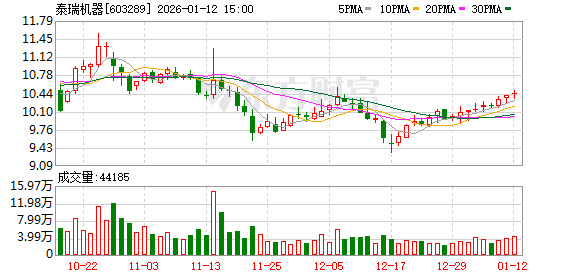
泰瑞机器:公司将于2026年4月21日披露《2025年年度报告》
Mei Ri Jing Ji Xin Wen· 2026-01-12 10:12
Group 1 - The company will disclose its 2025 annual report on April 21, 2026, and specific production figures will be available in the regular reports [1] - An investor inquired about the progress of the one-piece die-casting machine project established in 2022 and the high-end injection molding equipment, which was funded through bonds raised in 2024 [3]

“粤链全球,工赋四海”全球采供对接会在广州举办
Nan Fang Ri Bao Wang Luo Ban· 2026-01-12 09:45
Group 1 - The event "Global Supply and Procurement Matchmaking Conference" held in Guangzhou gathered over 100 international buyers from countries like Vietnam, Indonesia, and Brazil, along with 780 Chinese foreign trade enterprises, marking the start of Guangdong's foreign trade efforts for the year [1] - Vietnamese buyers expressed a strong interest in finding long-term suppliers for various needs, including packaging materials, automation production lines, agricultural machinery, and AI robots [1] - Brazil's industrial market, valued at $75 billion annually, has a high import dependency of 46%, with China being the largest source country at 31.5% market share, indicating significant opportunities for Chinese enterprises in Brazil [1] Group 2 - In the context of changing global trade dynamics, Chinese companies are encouraged to explore new growth pathways, particularly in markets represented by ASEAN and Latin America, with a focus on machinery and electrical products as new growth points [2] - The shift from merely exporting products to establishing supply chains and brands abroad is essential for building sustainable competitiveness [2] - International buyers, such as those from Vietnam and Indonesia, highlighted the importance of learning from China's rapid technological advancements and government-industry collaboration, viewing it as a model for their own markets [2]
工业引擎失速 德国经济挑战凸显
Xin Lang Cai Jing· 2026-01-12 07:42
本文转自【新华网】; 新华社柏林1月11日电 题:工业引擎失速 德国经济挑战凸显 新华社记者李函林 长期被视为欧洲经济稳定支柱的德国正面临日益凸显的挑战:德国企业作为资本与技术的核心载体,在 全球市场仍保持活跃,但其赖以生根的本土,却因产能外移、投资收缩和就业流失而逐步"失血"。 "本土承压 海外支撑" 成本高企 制度约束 德国工业联合会主席彼得·莱宾格近日对德国工业引擎失速表达担忧。德国工业联合会上月初发布的报 告数据显示,2025年德国工业产出连续四年下滑。莱宾格就此指出,这一趋势已超出周期性波动范围, 反映工业发展陷入结构性困境,并警示如果企业未能采取有效调整措施,下行趋势可能进一步加速。 安永分析指出,德国本土长期亏损的业务如果无法与全球盈利实现抵扣,企业势必重新评估价值链分 布,部分服务、研发活动可能转移至其他国家。 此外,长期高企的能源价格和劳动力成本正进一步侵蚀德国企业竞争力。高成本环境推高了德企在本土 开展长期技术布局的综合成本,基础材料、汽车及零部件、机械制造等德国传统支柱工业品类在国际市 场中逐渐处于不利地位。德国汽车零部件巨头博世集团董事会主席斯特凡·哈通近日表示,公司预计 2025年利 ...
国际观察丨工业引擎失速 德国经济挑战凸显
Xin Hua She· 2026-01-12 06:06
Core Viewpoint - Germany, once seen as the economic backbone of Europe, is facing significant challenges due to domestic production decline, investment contraction, and job losses, despite its companies remaining active in global markets [1] Group 1: Domestic Challenges - 23 companies in the DAX index have reported losses in their German subsidiaries for over a year, with 9 of them experiencing losses for four consecutive years [2] - The number of corporate bankruptcies in Germany is projected to reach 17,604 by 2025, the highest in 20 years, affecting approximately 170,000 jobs [2] - The top 100 companies in Germany are expected to see a 15% decline in pre-tax profits in the first nine months of 2025, with significant profit drops in key industries [2] Group 2: Structural Issues - The German industrial sector is predicted to experience a continuous decline in output for four years, indicating a structural crisis beyond cyclical fluctuations [3] - High energy prices and labor costs are eroding the competitiveness of German companies, particularly in traditional industries like automotive and machinery [3] - Bosch Group anticipates profits in 2025 will be significantly below expectations, leading to plans to cut approximately 22,000 jobs [3] Group 3: Economic Outlook - Economic forecasts for Germany are cautious, with a projected growth of only 0.1% in 2025, influenced by a notable decline in exports to the U.S. [4] - Surveys indicate that about one-third of companies plan to reduce investments, and a quarter plan to lay off employees, reflecting pressures of "de-industrialization" [4] - If reforms do not occur, Germany risks entering a vicious cycle of high costs, low investment, and low growth, exacerbating the risk of de-industrialization [4]