
消费电子

Search documents
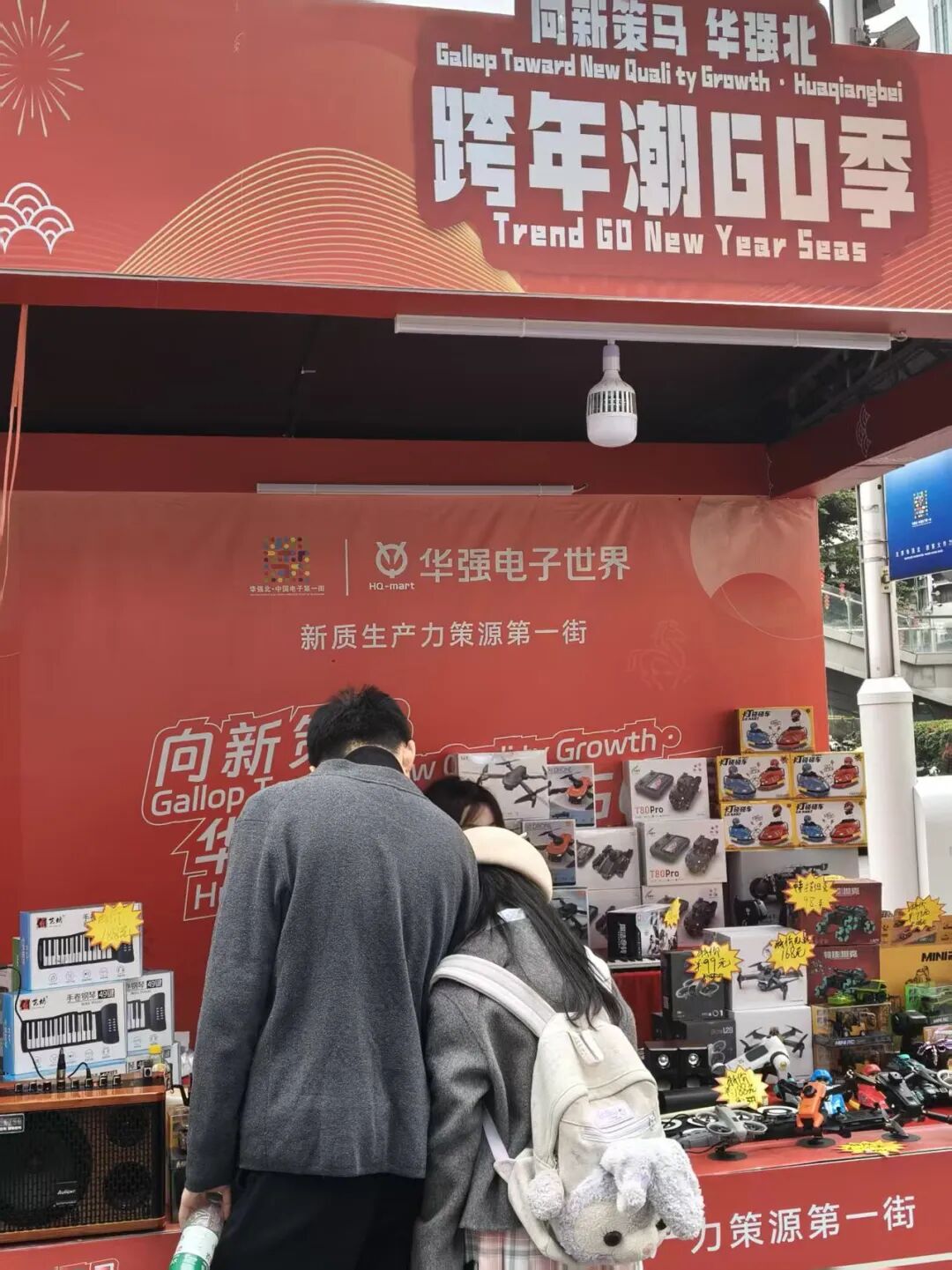
新春走基层丨华强北的人潮与新潮
Zhong Guo Zheng Quan Bao - Zhong Zheng Wang· 2026-02-15 12:51
Core Insights - The article highlights the vibrant consumer electronics market in Shenzhen's Huaqiangbei, showcasing a bustling atmosphere as customers flock to purchase various tech products ahead of the Spring Festival [1][2]. Industry Overview - Huaqiangbei is recognized as "China's first electronics street," demonstrating robust growth in the consumer electronics sector, with a daily foot traffic of 700,000 to 800,000 people, including over 7,000 foreign customers [5][6]. - The core business district spans approximately 1.45 square kilometers and houses 35 specialized markets and 115,000 business entities, covering the entire supply chain from R&D to cross-border trade [5][6]. Product Trends - Popular products during the "New Year Shopping Season" include AI wearables, AI toys, smart headphones, drones, and robots, with significant increases in both inquiries and sales reported by merchants [6][8]. - Companies like Shenzhen Xiaocheng Times Technology Co., Ltd. and Shenzhen Rouguo Technology Co., Ltd. are actively developing AI products, with Xiaocheng planning to launch AI glasses priced between 299 yuan and over 4,000 yuan, and Rouguo reporting sales of over 5,000 AI toys in 2025 [3][5]. Market Dynamics - The market is transitioning from concept validation to large-scale growth, with consumer demographics expanding from children to all age groups [5]. - Huaqiangbei's unique advantages include high innovation density, rapid industry speed, and strong market sensitivity, supported by the comprehensive manufacturing system of the Guangdong-Hong Kong-Macao Greater Bay Area [8]. Future Outlook - The trading volume in Huaqiangbei is projected to exceed 480 billion yuan by 2025, with a growing share of new productivity-related products such as smart terminals and drones [8]. - The district is becoming a global benchmark for electronic products, attracting more international buyers and innovators who view it as a key observation point for trends in the AI hardware industry [8].

AI时代怎么做硬件出海,沈劲谈中国公司:该轮到我们定义品类了
创业邦· 2026-02-15 10:57
Core Viewpoint - The article discusses the evolution of Chinese consumer electronics from a phase of following global leaders to a phase of leading and defining new product categories, particularly in the context of AI and emerging technologies [5][14][36]. Group 1: Transition Phases in Chinese Consumer Electronics - The evolution of Chinese consumer electronics can be categorized into three phases: following, catching up, and leading. The "following" phase involved benchmarking against leaders and offering high cost-performance products, while the "catching up" phase focused on single-point innovations and high-end breakthroughs [10][12]. - The leading phase is characterized by a reconstruction of product paradigms and the discovery of new usage scenarios, with the expectation that 2025 will mark the year when China leads in smart cleaning technology [14][19]. Group 2: New Product Categories and Innovations - The article highlights the emergence of two new product categories: Ambient AI terminals and personal AI supercomputing centers. Ambient AI terminals focus on passive interaction and context establishment, while personal AI supercomputing centers emphasize offline intelligence and privacy protection [21][25]. - OpenAI's upcoming AI hardware is expected to fill specific gaps rather than replace smartphones, aligning with the identified market needs [25]. Group 3: Factors for Successful Category Definition - The ability to define product categories is broken down into five dimensions: trend recognition, scene selection, technology integration, experience closure, and scalability. Chinese companies have made significant progress in these areas, particularly in understanding overseas markets [27][29]. - The article emphasizes the importance of deeply understanding the lifestyles and values of different generations, such as Gen Z and Alpha, to successfully define and market new products [29][32]. Group 4: Historical Context and Future Outlook - The historical context of Chinese companies' evolution in consumer electronics is discussed, noting that past successes were often built on following established leaders. The current environment presents a "definer's dividend," where Chinese companies are positioned to lead in new categories [35][36]. - The article concludes with a call for entrepreneurs to strive for category definition, suggesting that the process of naming and defining new products is collaborative and iterative [42][43].

续航有减有增?AirPods Pro 3与Pro 2实测对比
Xin Lang Cai Jing· 2026-02-15 02:08
Core Insights - The newly launched AirPods Pro 3 has raised questions among users regarding its upgrade value compared to AirPods Pro 2, which is still considered to perform excellently. However, after extensive use, the upgrade value of Pro 3 is perceived to exceed expectations, making it a worthwhile purchase for most users [1]. Group 1: User Experience - The most noticeable upgrade in Pro 3 is the wearing experience, as it is lighter and features a new design with foam ear tips, resulting in minimal weight sensation and increased comfort during prolonged use. Apple claims that this model is the most stable and fitting AirPods to date, based on extensive user research and ear data [4]. - The transparency mode in Pro 3 offers significantly better clarity compared to Pro 2, likely due to the improved sealing from the foam ear tips, which addresses the issue of muffled external sounds during calls [4]. Group 2: Audio Quality and Battery Life - In terms of audio quality, both Pro 2 and Pro 3 perform similarly, meaning that users who appreciate the sound quality of Pro 2 will not be disappointed with Pro 3, although it may not satisfy those seeking significant audio enhancements [4]. - Battery life shows a mixed result: Pro 3 offers up to 10 hours of single-ear use in transparency mode, surpassing Pro 2's 6 hours. However, the charging case's battery life has decreased, with total usage time dropping from 30 hours to 24 hours, necessitating more frequent charging of the case [4].

每周股票复盘:华勤技术(603296)授出243.31万股限制性股票
Sou Hu Cai Jing· 2026-02-14 18:31
Core Viewpoint - HuaQin Technology (603296) has adjusted its 2026 restricted stock incentive plan, reducing the number of recipients and the total shares granted due to four employees not meeting the eligibility criteria [1][2][3]. Company Announcement Summary - The company held its 23rd meeting of the second board of directors on February 12, 2026, where it approved adjustments to the 2026 restricted stock incentive plan [1][2][3]. - The number of incentive recipients was reduced from 468 to 464, and the total number of restricted shares granted was adjusted from 2.5275 million shares to 2.4331 million shares [1][2][3]. - The grant date for the restricted stock is set for February 12, 2026, with a grant price of 47.95 yuan per share [4][5]. - The incentive plan's recipients include 8 directors and senior management, who collectively received 188,800 shares, accounting for 7.76% of the total grant [3][5]. - The source of the restricted shares is from the company's repurchase of A-shares in the secondary market, with a lock-up period divided into three phases of 12, 24, and 36 months [4][5].

霸屏CES、超级碗、春晚,追觅星空计划把摊子铺到全球顶流舞台
Xin Lang Cai Jing· 2026-02-14 13:12
Group 1 - The core message of the article revolves around the strategic marketing moves of the company, particularly its participation in high-profile events like the Super Bowl and the CCTV Spring Festival Gala to enhance brand recognition and establish a high-end, technology-driven global image [3][4][24]. - The company aims to leverage these platforms to shift perceptions of Chinese consumer electronics from being seen as low-cost alternatives to being recognized as high-end technology brands [9][29]. - The Super Bowl advertisement serves as a significant investment, with a 30-second spot costing tens of millions of dollars, indicating the company's commitment to long-term market presence in North America [8][28]. Group 2 - The company is transitioning from a focus on individual product excellence to creating a comprehensive smart ecosystem that includes smart mobility, personal care, and cleaning solutions [31][33]. - The introduction of the Nebula Next 01 Concept car is a pivotal step in this strategy, expanding the company's ecosystem from home products to mobile solutions, thereby creating a complete "people-car-home" loop [12][31]. - The company has established a robust retail network with over 6,500 physical stores globally, which supports its brand experience and local operations, facilitating the rollout of new products [13][34]. Group 3 - The company has made significant investments in research and development, with over 70% of its workforce dedicated to R&D, resulting in a substantial number of patents filed and granted [16][37]. - The technical foundation for the company's ambitions includes advanced technologies such as high-speed digital motors and intelligent algorithms, which are applicable across various product categories [20][41]. - The company has assembled a skilled team for its automotive venture, combining expertise from traditional automotive manufacturing with its own innovative talent from the smart hardware sector [42].

维达力港股IPO:与三星、苹果深度绑定、智能汽车业务拓展不及预期 资本开支蚕食现金流、有息负债创新高
Xin Lang Zheng Quan· 2026-02-14 09:11
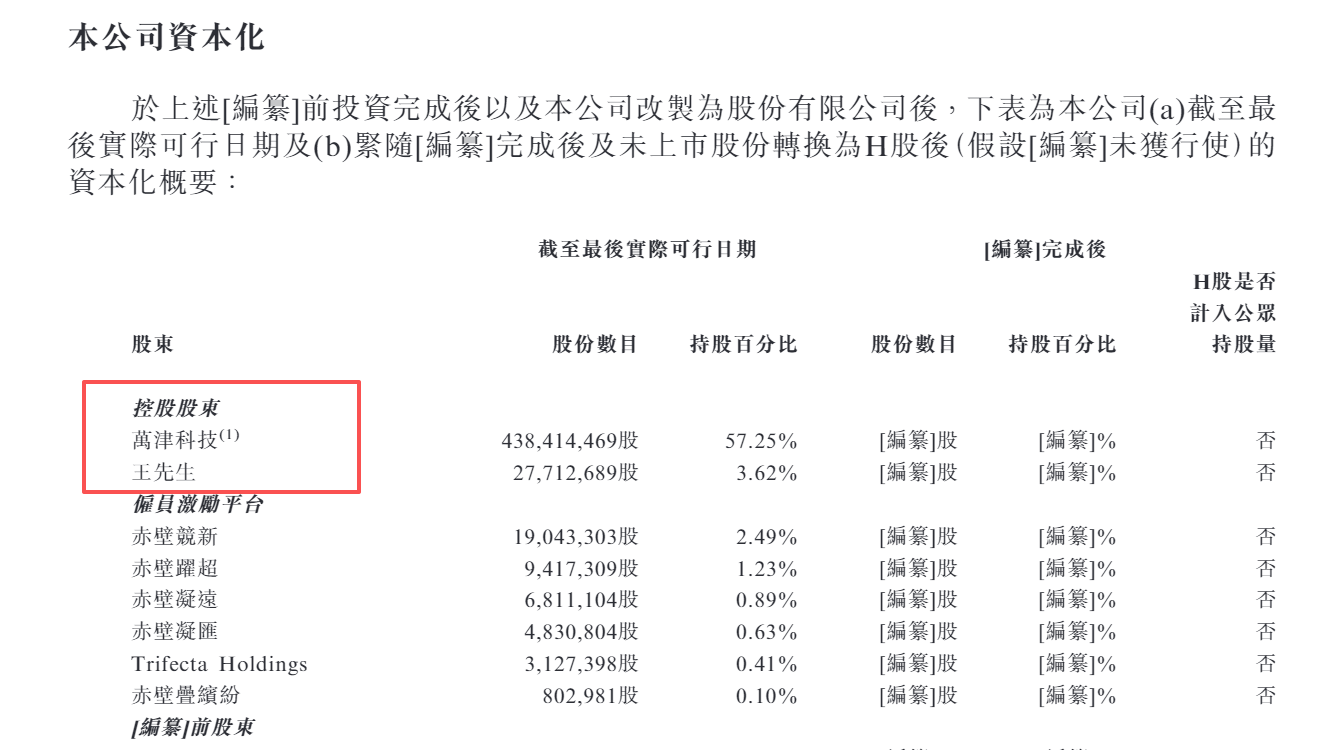
Core Viewpoint - VDL Technology Co., Ltd. is preparing for an IPO with a highly concentrated shareholding structure, facing significant financial pressures and reliance on major clients like Samsung and Apple, while struggling to diversify its revenue streams beyond consumer electronics [1][7][9]. Shareholding Structure - Prior to the IPO, the shareholding is highly concentrated, with the controlling shareholder, Zhongnan Chuangfa, and strategic investor Bain Capital holding a combined 81.63% of the shares, leaving public shareholders with less than 10% [1][3]. - Zhongnan Chuangfa holds 57.25% of the shares, while Bain Capital is the second-largest shareholder with 24.38% [2][3]. Financial Performance - VDL's revenue from 2023 to 2025 shows growth, with reported revenues of 34.81 billion, 51.99 billion, and 46.18 billion respectively, alongside net profits of 3.63 billion, 6.18 billion, and 5.72 billion [7][9]. - The company has faced increasing financial strain, with total interest-bearing debt reaching 26.72 billion by September 2025, and cash and cash equivalents at 16.73 billion, indicating significant repayment pressure [14]. Business Dependency - The company heavily relies on two major clients, Samsung and Apple, with revenue contributions of 53.2%, 47.7%, and 55.8% from the largest client, and 15.7%, 15.0%, and 14.9% from the second-largest client over the same period [9]. - Despite attempts to diversify into the automotive sector, revenue from this segment remains low, contributing only 0.57 billion in the first three quarters of 2025, which is less than 2% of total revenue [10]. Cash Flow and Capital Expenditure - VDL has generated stable operating cash flows, with net cash flows from operating activities of 9.24 billion, 10.29 billion, and 9.81 billion over the reporting period, but faces negative cash flows from investing and financing activities [13][14]. - The company has been investing heavily in capital expenditures, leading to a significant increase in debt and a cash flow gap that necessitates external funding [11][14].
共达电声股价上涨6.16%,资金博弈与基本面支撑成主因
Jing Ji Guan Cha Wang· 2026-02-14 08:32
Group 1: Stock Performance - The stock price of Gongda Electronics (002655.SZ) increased by 6.16% on February 13, closing at 15.50 yuan, driven by market dynamics despite net outflows from major and retail investors [1] - The stock broke through the upper Bollinger Band at 14.76 yuan and stabilized above all key moving averages, indicating short-term strength [2] - The stock achieved a cumulative increase of 22.72% over five days, significantly outperforming the overall consumer electronics sector, which declined by 0.60% [2] Group 2: Company Fundamentals - For the first three quarters of 2025, the company reported revenue of 1.041 billion yuan, a year-on-year increase of 19.64%, and a net profit of 63.1225 million yuan, up 15.60% year-on-year [3] - The gross margin remained stable at 28.39%, although net profit saw a year-on-year decline of 8.64% in the third quarter [3] - The market is focusing on the company's horizontal expansion into new businesses such as silicon microphones and automotive modules, as well as the long-term potential from the production capacity project in Weifang [3] Group 3: Industry Policy and Environment - There is a recovery in downstream demand for AI hardware and smart wearables, leading to a price increase trend for some consumer electronic components [4] - The company's products cover high-demand scenarios such as smart cars and AIoT, benefiting from pre-holiday capital allocation towards the tech hardware sector, creating short-term catalysts [4]

高瓴撤退、高管套现!绿联在上市前夜遭遇“资本出逃”?
Sou Hu Cai Jing· 2026-02-14 07:29
Core Viewpoint - Ugreen Technology has submitted its main board listing application to the Hong Kong Stock Exchange, aiming to access both A-share and H-share markets within a year and a half of its previous listing on the Shenzhen Stock Exchange [2] Group 1: Financial Performance - In the first nine months of 2025, Ugreen reported a revenue of 6.361 billion yuan and a net profit of 467 million yuan, surpassing the total performance of 2024 within just three quarters [2] - The projected net profit for the entire year of 2025 is expected to reach between 653 million and 733 million yuan [2] - Ugreen's overseas revenue accounted for 59.6% of its total revenue in the first three quarters of 2025, indicating significant international market penetration [5] Group 2: Business Growth and Strategy - Ugreen's growth story is rooted in its differentiation strategy, offering high-quality products at lower prices compared to original brands, which has allowed it to thrive in a competitive market [3][5] - The company has expanded its product line from cables to chargers, power banks, and NAS private cloud solutions, achieving a tenfold revenue increase from 2 billion yuan in 2015 to 20 billion yuan in 2017 [5] - Ugreen has achieved global leadership in the consumer electronics market for certain product categories, including being the top player in the NAS segment by shipment volume [5] Group 3: Financial Concerns - Ugreen's gross margin has declined from approximately 50% in 2019 to 36.5% in the first three quarters of 2025, indicating weakening pricing power in a competitive market [6] - The company's operating cash flow plummeted by 98.69%, from 450 million yuan in the previous year to less than 6 million yuan in the first nine months of 2025, raising concerns about its financial health [10] Group 4: Capital Market Reactions - There has been a notable trend of capital withdrawal, with major shareholders, including Hillhouse Capital, reducing their stake from 8.44% to about 5%, resulting in a cash-out of nearly 900 million yuan [11] - Internal management also engaged in significant sell-offs shortly after the lock-up period ended, indicating a lack of confidence in the company's future growth prospects [11] Group 5: Competitive Landscape - Ugreen's market share in its product categories is relatively low, with only 1.5% in the broad expansion category and 1.2% in charging products, highlighting the competitive nature of the market [13] - The company faces intense competition from established players like Anker and emerging giants such as Huawei and Xiaomi, which complicates its growth trajectory [13]
捷邦科技股价创历史新高,散热业务放量及业绩改善成主因
Jing Ji Guan Cha Wang· 2026-02-14 02:26
Business Progress - Company has entered the core segment of VC heat spreaders through the acquisition of Sainogao, with Sainogao obtaining a North American customer supplier code in 2024, and the next-generation smartphone VC heat spreaders have entered mass production [1] - In the liquid cooling module segment, the company has obtained a temporary supplier code from a North American customer and is advancing sample submissions, entering a high-growth track [1] - Huaxin Securities indicates that the cooling business has transitioned from the "introduction phase" to the "expansion phase," becoming a core growth driver [1] Performance and Operations - In Q3 2025, the company reported revenue of 524 million yuan, a year-on-year increase of 109.33%, with net profit attributable to shareholders reaching 25.45 million yuan, a staggering increase of 297.06%, and non-recurring net profit growth of 801.37%, reversing previous losses [2] - Forecasts for 2026 predict revenue of 2.31 billion yuan, an 81.2% year-on-year growth, with gross margin expected to rise from 24.8% to 31.7% [2] Company Status - Company’s carbon nanotube conductive paste and high specific surface area carbon black products have been supplied to leading battery manufacturers such as CATL, BYD, and EVE Energy, with high specific surface area carbon black products achieving mass production and delivery [3] - Revenue contribution from new energy materials business is gradually increasing [3] Financial and Technical Aspects - On February 13, net inflow of main funds was 2.77 million yuan, with a net inflow of 60.48 million yuan over the past five days, indicating high participation from funds [4] - The stock price has broken through the upper Bollinger Band (148.45 yuan), with MACD indicators showing a bullish arrangement, and KDJ's J value reaching 86.47, indicating a strong short-term technical outlook [4] Industry Policy and Environment - The consumer electronics industry is recovering, with increased penetration of innovative terminals such as AI phones and foldable screens; the demand for power batteries driven by new energy vehicles is expected to push the carbon nanotube conductive agent market size to exceed 40 billion yuan by 2030 [5] - The company is deeply bound to North American customers, fully benefiting from the growth of downstream industries [5] Summary of Stock Performance - The stock price reaching a new high is a result of the expansion of the cooling business, improved performance, funding support, and favorable industry conditions [6]
智造新消费|“科技年货”热销 “赛博年味”正浓
Ke Ji Ri Bao· 2026-02-14 01:58
Core Insights - The article highlights the growing popularity of "tech products" in Shenzhen, particularly in the Huaqiangbei area, where consumers are drawn to innovative items like AI glasses and robotic pets, reflecting a shift in consumer preferences towards technology-driven gifts [1][2][3] Group 1: Product Trends - The LiberLive C2, a stringless guitar, has gained significant attention since its launch in August 2025, achieving strong sales across various e-commerce platforms and receiving international recognition at the CES in Las Vegas [2] - AI-integrated products, such as AI glasses, have seen a remarkable sales increase, with year-on-year growth of approximately 70% to 80%, making them one of the fastest-growing categories in the tech market [3] Group 2: Market Dynamics - The "tech year-end gifts" trend is supported by a combination of government subsidies, platform discounts, and trade-in programs, leading to significant price reductions and increased consumer orders [3] - Shenzhen is home to over 2,600 AI enterprises, with projections indicating that the core AI industry revenue will reach around 220 billion yuan by 2025, positioning the city as a leader in the national AI sector [2]