
种植业

Search documents
农林牧渔行业双周报(2026、1、16-2026、1、29):养殖盈利有望逐步改善-20260130
Dongguan Securities· 2026-01-30 09:54
Investment Rating - The report maintains an "Overweight" rating for the agriculture, forestry, animal husbandry, and fishery industry [1][41]. Core Insights - The SW agriculture, forestry, animal husbandry, and fishery industry slightly underperformed the CSI 300 index, with a decline of 0.07% from January 16 to January 29, 2026, lagging behind the index by approximately 0.12 percentage points [3][10]. - Most sub-sectors recorded positive returns during the same period, with notable increases in planting (9.25%), animal health (4.71%), agricultural product processing (4.12%), and fishery (1.82%), while feed and breeding sectors saw declines of 0.02% and 2.84%, respectively [3][13][14]. - The overall price-to-book (PB) ratio for the industry was approximately 2.66 times as of January 29, 2026, indicating that the industry is at a relatively low valuation level compared to historical averages, positioned at about 59.9% of the valuation center since 2006 [3][18]. Industry Key Data - **Pig Farming**: - The average price of external three yuan pigs fluctuated from 12.76 CNY/kg to 13.24 CNY/kg before dropping to 12.52 CNY/kg during the reporting period [3][22]. - The breeding sow inventory reached 39.61 million heads by the end of December 2025, a decrease of 0.73% from the previous month, remaining within the normal range of 39 million heads [3][22]. - The profit from self-bred pigs was 25.1 CNY/head, while the profit from purchased piglets was 124.13 CNY/head, both maintaining positive profitability [3][26]. - **Poultry Farming**: - The average price of broiler chicks was 2.31 CNY/chick, showing a slight decrease, while the average price for layer chicks was 3.2 CNY/chick, which saw a minor increase [3][28]. - The average price for white feather broilers was 7.74 CNY/kg, with a profit of 0.39 CNY/chick, indicating a recovery in profitability [3][32]. - **Aquaculture**: - The average wholesale price for crucian carp and carp was stable, with prices at 19.4 CNY/kg and 13.88 CNY/kg, respectively, showing slight increases [3][33]. Industry Important News - The Ministry of Agriculture and Rural Affairs held a meeting to discuss stabilizing beef production and alleviating dairy industry challenges, emphasizing the need for effective policies to support these sectors [3][35]. - A meeting was also held to coordinate efforts in the seed industry revitalization action, focusing on enhancing domestic seed security and promoting technological independence [3][38]. Company Highlights - Key companies to watch include: - Muyuan Foods (牧原股份, 002714): A leading player in pig farming with cost and scale advantages [3][42]. - Haida Group (海大集团, 002311): A leading feed company expected to maintain steady market share growth [3][42]. - Shengnong Development (圣农发展, 002299): A leader in the white feather broiler industry with advantages in seed sources [3][42]. - Reap Bio (瑞普生物, 300119): A leader in the animal health sector with a growing product matrix for pet health [3][42]. - Longping High-Tech (隆平高科, 000998): A leading seed company with advanced transgenic reserves [3][42].
突发!大面积跌停,万亿矿茅跳水跌超7%!算力股逆势走强,1900亿龙头盘中创历史新高...
雪球· 2026-01-30 08:30
↑点击上面图片 加雪球核心交流群 ↑ 今天市场震荡盘整,午后创业板和科创板翻红,截至收盘,沪指跌0.96%,深指跌0.66%,创业板指涨1.27%,科创综指涨0.08%。 沪深京三市成交总额2.86万亿,相比上一交易日缩量3970亿。 板块方面,贵金属、工业金属全线回调,中金黄金、山东黄金跌停;农业股异军突起领涨两市,算力概念反攻,天孚通信涨超10%。 一月收官,沪指本月累计涨3.76% , 呈现 " 冲高后窄幅震荡 " 的走势 , 一月中旬再创十年新高后小幅回落 , 最终站稳4100点关口上方。 01 贵金属全线大跌 万亿矿茅大跌超7% 贵金属板块集体重挫,中金黄金、山东黄金、赤峰黄金、四川黄金、招金黄金、湖南白银等纷纷跌停。 | 小晖更远 | 43.20 -10.00% | | 30.22 | | --- | --- | --- | --- | | SH600988 | | | | | 四川黄金 | 66.18 -10.00% | | 66.13 | | SZ001337 | | | | | 山东黄金 SH600547 | 54.55 -10.00% | | 51.94 | | 山金国际 SZ000975 ...


万亿龙头巨震!差1分,险跌停
Zhong Guo Zheng Quan Bao· 2026-01-30 04:37
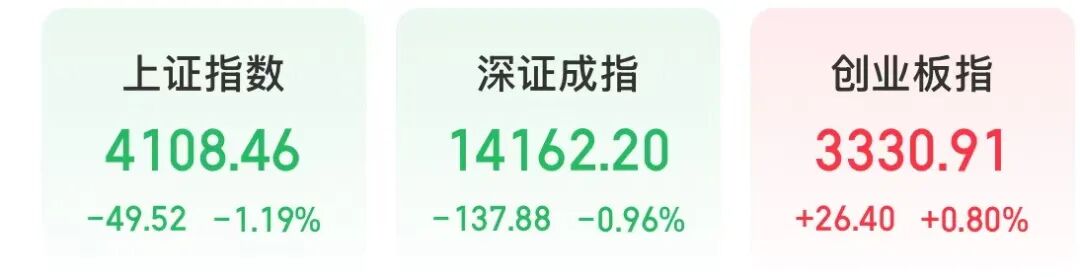
Group 1: Precious Metals Market - Spot gold first broke the $5500/oz mark, reaching nearly $5600/oz before dropping below $5200/oz [1] - The non-ferrous metals sector saw significant declines, with major companies like Zijin Mining and Luoyang Molybdenum falling over 8% and 9% respectively [1] - The performance of the non-ferrous metals sector pressured the Shanghai Composite Index and Shenzhen Component Index, while the ChiNext Index rose due to gains in key stocks like CATL and Sungrow [1] Group 2: Agricultural and Consumer Sectors - Some cyclical sectors showed strong performance, with agriculture and aquaculture sectors rising significantly, indicating a typical rotation pattern in commodity markets [1] - The rise in agricultural products is expected to transmit to the aquaculture sector and further into the consumer market [1] - By the close of the morning session, the Shanghai Composite Index fell by 1.19%, the Shenzhen Component Index by 0.96%, while the ChiNext Index increased by 0.8% [1] Group 3: Film and Entertainment Sector - The film and cinema sector saw active performance, with stocks like Hengdian Film and Happiness Blue Sea experiencing significant gains [4][6] - A favorable policy environment, including the State Council's plan to enhance service consumption, is expected to support the film industry [6][7] - The upcoming 2026 Spring Festival film lineup is anticipated to drive market recovery, with multiple new films scheduled for release [7] Group 4: AI and Optical Communication Sector - The North American computing power chain showed strong performance, with stocks like "Yizhongtian" and Tianfu Communication reaching historical highs [7] - The demand for AI computing power is driving upgrades in the optical communication industry, with strong demand for high-speed optical modules [10] - Despite short-term supply gaps in high-speed optical chips, upstream manufacturers are actively expanding production, which is expected to alleviate supply chain bottlenecks [10]


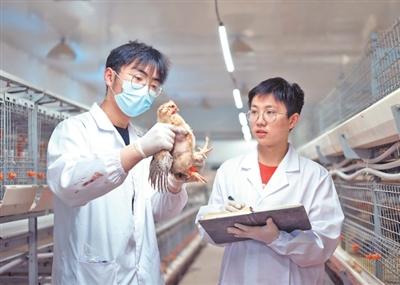
科技小院,扎根乡土茁壮生长(深阅读)
Ren Min Ri Bao· 2026-01-30 02:33
Core Viewpoint - The article highlights the integration of agricultural education and practical rural development through "Science and Technology Small Courtyards," which aim to enhance agricultural productivity and support rural revitalization in China [5][6]. Group 1: Science and Technology Small Courtyards - The "Science and Technology Small Courtyard" initiative promotes the combination of classroom learning and rural practice, fostering a love for agriculture and developing skills for agricultural advancement [5]. - In Hunan's Xifu Village, the establishment of a modernized breeding industry has attracted young talent, with the local agricultural university collaborating to enhance livestock research and production [6][7]. - The initiative has led to significant outcomes, including the training of over 1,500 local farmers and the establishment of multiple demonstration points, resulting in an increase in local income by over 18 million yuan [8]. Group 2: Specific Case Studies - In Guizhou's Qixingguan District, the establishment of a prickly pear technology small courtyard has improved local farmers' skills and increased planting efficiency, with over 8,000 farmers trained [9][10]. - The prickly pear cultivation area has expanded to over 3,400 acres, with a yield increase of 34.9% and a vitamin C content increase of 46.2%, generating an annual output value exceeding 7 million yuan [10]. - In Xinjiang's Bole City, a technology small courtyard focused on ecological restoration of desertified grasslands has successfully cultivated over 20,000 acres of land, improving grass yield and involving nearly 1,000 local herders [11][12].
科技赋能循环农业 鄂尔多斯牧区升级
Huan Qiu Wang· 2026-01-30 01:45
Group 1 - The article highlights the transformation of traditional farming practices in Inner Mongolia, shifting towards technology-driven, refined agricultural and livestock management, creating new economic opportunities [1] - The "Unified Breeding and Shared Prosperity" model is being implemented, where companies provide feed, technology, and guaranteed purchase prices to herders, resulting in improved meat quality and higher prices for sheep [2] - Smart farming technologies, such as intelligent collars for cattle, are being utilized to monitor health and optimize feeding, leading to increased milk production and enhanced beef quality [2] Group 2 - The establishment of a complete ecological cycle in livestock farming is emphasized, where waste is converted into organic fertilizer, supporting the growth of cash crops and renewable energy production [3] - The integration of various agricultural sectors, such as whiskey production and black donkey farming, demonstrates a model of resource synergy that enhances value across the supply chain [3] - The implementation of "contract farming" in villages stabilizes income for farmers by securing buyers before planting, significantly reducing market risks [4][5] Group 3 - The development of a comprehensive agricultural service system by village cooperatives enhances efficiency and supports collective economic growth, benefiting local public welfare [5] - The successful transition to high-value crops, such as chili peppers, showcases the potential for increased profitability through modern agricultural practices [6] - Economic indicators reveal that the primary industry in Ordos City achieved a value of 5.24 billion yuan, with a year-on-year growth of 5.5%, and the per capita disposable income for rural residents is projected to reach 30,478 yuan, growing by 5.8% [6][7] Group 4 - The article concludes with a vision of a sustainable and prosperous future for farmers, characterized by improved living conditions and a harmonious relationship between ecological health and economic development [7]

今年四川“三农”工作划重点→→
Sou Hu Cai Jing· 2026-01-30 01:03
Core Viewpoint - Sichuan aims to strengthen its agricultural sector as a cornerstone for economic stability and growth, focusing on modernizing agriculture and improving rural living conditions as it enters the new "15th Five-Year Plan" period [1]. Group 1: Food Security - The meeting emphasized the importance of ensuring the supply of key agricultural products, particularly grain, as Sichuan is one of the 13 major grain-producing provinces in China [3]. - By 2025, Sichuan's total grain production is projected to reach 732.5 billion jin, marking a historical high and maintaining a stable output above 700 billion jin for six consecutive years since 2020 [4]. - Sichuan will implement a new round of grain production capacity enhancement actions, focusing on stabilizing supply and improving yield through better agricultural practices and technology [4]. Group 2: Rural Prosperity - The meeting highlighted the need to develop and expand industries that increase farmers' incomes, integrating technology, green practices, quality, and branding in agriculture [7]. - Strategies to ensure farmers benefit from agricultural value chains include enhancing modern agricultural park construction and promoting deep processing of agricultural products [8]. - Innovative business models are being adopted, such as the one in Guangyuan City, which has established 52 agricultural industrialization unions and 3,823 farmer cooperatives, directly benefiting over 400,000 households [8]. Group 3: Reform and Development - The meeting discussed leveraging reforms to enhance agricultural and rural development, including pilot programs for urban-rural integration and revitalizing idle rural assets [12]. - Successful examples of asset management and resource utilization were shared, such as the revitalization of 132 idle assets in Fushun County, generating 130 million yuan in revenue [14]. - There is a strong emphasis on attracting and retaining talent in rural areas to support agricultural modernization and rural revitalization efforts [14].
两会聚焦丨聚焦重点扎实推进乡村全面振兴
He Nan Ri Bao· 2026-01-29 23:26
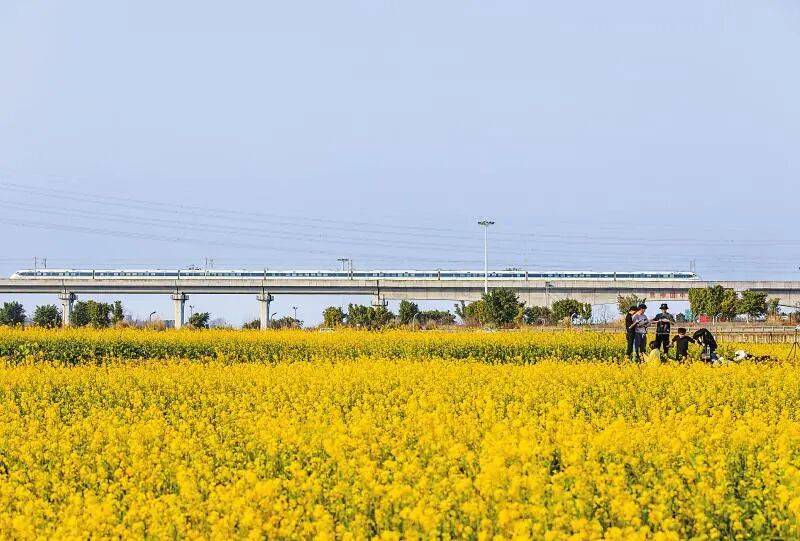
Group 1: Agricultural Development Foundation - Agricultural production is crucial for food security and stable economic development, with Henan province maintaining a grain output of over 130 billion jin for nine consecutive years [2] - The advancement of smart agriculture is essential for increasing grain production, though challenges such as underutilization and sustainability remain [2] - Agricultural insurance is becoming increasingly important, with a need for clearer damage assessment and compensation standards for quality losses due to adverse weather [2] Group 2: Building Livable and Workable Villages - The development of beautiful villages is essential for rural revitalization, with market-driven approaches being key to success [3] - The village of Huashishi has successfully created a four-season tourism model and leveraged live-streaming to promote local products, aiming for a collective economic growth of over 1 million yuan by 2025 [3] - The "Party Building + Rural Canteen" model addresses the dining needs of elderly residents, creating a comprehensive platform for dining, elder care, and community mediation [3] Group 3: Expanding Farmers' Income and Wealth - Rural industries are vital for increasing farmers' income, with a focus on six major industry clusters and the cultivation of 18 rural wealth-generating industrial chains [4] - The Xiaozhai Village's modern agricultural industry park has created over 9,000 jobs through deep processing of sweet potato products [4] - The tea industry in Xinyang, with a tea garden area of 2.16 million mu and a brand value of 8.03 billion yuan, serves as a significant income source for local farmers [5]
绘就和美乡村新画卷
Jing Ji Ri Bao· 2026-01-29 22:29
Core Insights - The article emphasizes the importance of agricultural modernization and rural revitalization as key components of China's overall modernization strategy, focusing on food security, farmer income growth, and rural development quality [1][2][3][4][5][6][7]. Agricultural Foundation Strengthening - The primary goal is to enhance the comprehensive production capacity and quality efficiency of agriculture, ensuring stable food supply for over 1.4 billion people [2][3]. - Transitioning from an agricultural power to an agricultural strong nation requires understanding global agricultural trends while considering domestic conditions [2]. Food Security - Food security is deemed a national priority, with continuous efforts needed to ensure stable grain production despite rising demand and changing consumption patterns [3][4]. - Emphasis on maintaining arable land and improving agricultural disaster resilience is crucial for securing food supply [3]. Nutritional and Food Supply Diversity - The article outlines the evolving dietary needs of residents, advocating for a diversified food supply system to meet modern nutritional requirements [4]. - Local resources should be utilized to develop various agricultural sectors, including modern livestock, fisheries, and facility agriculture [4][5]. Agricultural Strengthening - Despite achieving high production levels for major agricultural products, there are still gaps in labor productivity, technological advancement, and sustainable development compared to global agricultural leaders [5][6]. - The need for innovation in agricultural technology and practices is highlighted to improve efficiency and competitiveness [6]. Farmer Income Growth - Increasing farmer income is identified as a central task, with measures to promote stable income growth and reduce the urban-rural income gap [8][9]. - The implementation of a three-year action plan to develop the agricultural processing industry aims to enhance product value and farmer earnings [9]. Rural Prosperity - The article discusses the ongoing transformation in rural areas, emphasizing the need for improved infrastructure and public services to enhance living conditions [12][13][14]. - Rural revitalization efforts should focus on integrating urban and rural development, ensuring that rural areas benefit from economic growth [12][14]. Continuous Support for Farmers - The importance of maintaining support for low-income populations and ensuring no large-scale return to poverty is stressed [10][11]. - Development of a robust support policy framework is essential for sustaining rural growth and enhancing farmers' livelihoods [11]. Conclusion - The prospects for the agricultural sector in the new year are optimistic, with a focus on modernization and comprehensive rural revitalization [16].
2025年沈阳市“菜篮子”“果盘子”生产供给稳定向好
Xin Lang Cai Jing· 2026-01-29 18:46
(来源:沈阳晚报) 转自:沈阳晚报 本报讯(沈阳晚报、沈阳发布客户端记者刘洋 高寒冰)1月28日,沈阳市统计局发布数据显示,沈阳市 深入学习贯彻中央农村工作会议精神,严格落实省委、省政府工作部署,以设施农业升级改造、推动高 质量发展为契机,积极推进现代农业建设,确保蔬菜生产保持平稳增长态势,切实保障全市城乡居 民"菜篮子""果盘子"稳定供给。 2025年,全市蔬菜及食用菌播种面积102.3万亩,较上年增长1.8%;产量433.7万吨,增长3.7%。全市蔬 菜种植以白菜类、茄果类和叶菜类为主,三类蔬菜播种面积分别为18.4万亩、22.5万亩和29.2万亩,分 别占全部蔬菜播种面积的18.0%、22.0%和28.5%,合计占比达68.5%;产量分别为107.0万吨、98.1万吨 和95.6万吨,分别占蔬菜总产量的24.7%、22.6%和22.0%,合计占比达69.3%。 2025年,全市水果产量119.4万吨,增长6.0%。本地优势水果产业快速发展,新民市加快推进西瓜经济 区建设,以小梁山西瓜品牌为依托,助力全市西瓜产业健康发展。全年西瓜产量达95.6万吨,占全市水 果产量的80.1%,产品销往全国各地,成为推动 ...
农技专家 科技服务稳生产
Xin Lang Cai Jing· 2026-01-29 17:44
Core Viewpoint - The article highlights the proactive measures taken by the Kecheng District Agricultural and Rural Bureau to mitigate the risks posed by low temperatures and frost damage due to recent cold weather, ensuring stable winter agricultural production [1] Group 1: Agricultural Measures - The Kecheng District Agricultural and Rural Bureau has organized multiple agricultural technical service teams to support frontline agricultural production [1] - At the Kaijie Agricultural Vegetable Planting Base in Wantian Township, the installation of reinforced greenhouse covers and ground film has been completed, with agricultural technicians monitoring vegetable growth [1] - The base employs a "shelter within a shelter" method with three layers of film and automatic warm air machines to maintain stable temperatures within the greenhouse [1] Group 2: Infrastructure and Technology - In the Mojia Village of Hangbu Town, a newly constructed heating system for greenhouses has been activated in advance, providing warm air for 83 acres of high-quality citrus [1] - The farm owner, Jiang Xiaojin, noted that facility upgrades have not only stabilized greenhouse temperatures and improved fruit quality but also enhanced disaster resistance [1] Group 3: Future Plans - Agricultural experts will dynamically adjust protective measures based on weather conditions to safeguard agricultural production, ensuring the stability of the winter "vegetable basket" and "fruit plate" supply [1]