新一代信息技术

Search documents
安徽海螺新兴产业股权投资基金签约 总规模10亿元
Zheng Quan Shi Bao Wang· 2025-11-05 08:31
Core Viewpoint - The establishment of the Anhui Conch Emerging Industry Equity Investment Fund aims to promote investment in strategic emerging industries, enhancing local economic and industrial development through a differentiated investment strategy [1] Group 1: Fund Details - The fund has a total scale of 1 billion yuan [1] - It is jointly established by Conch Capital, Wuhu Yijiang District, Anhui High-tech Investment, and Haitong Kaiyuan [1] - The fund will be managed by Conch Private Equity [1] Group 2: Investment Focus - The fund will focus on strategic emerging industries such as new materials, new energy, energy conservation and environmental protection, and next-generation information technology [1] - The investment strategy aims to strengthen, supplement, and extend the industrial chain of emerging industries [1]
“硬科技”企业成长路径更清晰——科创板科创成长层迎来首批新注册企业上市
Jing Ji Ri Bao· 2025-11-04 22:08
Core Insights - The launch of the first three new registered companies in the Sci-Tech Innovation Board's growth layer marks a significant enhancement in the capital market's inclusivity and adaptability [1][2][3] - The Sci-Tech Innovation Board has gathered 592 technology companies with a total market capitalization exceeding 9 trillion yuan, establishing itself as the preferred listing venue for "hard tech" companies in China [1][4] - A series of policy measures, including the "New National Nine Articles" and the "1+6" policies, have aligned the growth paths of "hard tech" companies with the support cycles of the capital market, injecting new vitality into the support for technological innovation [1][2][5] Policy and Market Developments - The China Securities Regulatory Commission (CSRC) introduced the "1+6" policy on June 18, 2023, which includes the establishment of a growth layer on the Sci-Tech Innovation Board aimed at supporting technology companies that are not yet profitable but have significant breakthroughs and commercial prospects [2][3] - The three newly listed companies—He Yuan Bio, Xi'an Yicai, and Bibet—are the first to be registered under this growth layer, optimizing listing standards and enhancing financing channels for high-investment sectors like artificial intelligence and innovative pharmaceuticals [2][3][4] - Since the establishment of the Sci-Tech Innovation Board in November 2018, it has supported the listing of 592 companies in high-tech and strategic emerging industries, raising over 1.1 trillion yuan through IPOs and refinancing [4][5] Financial Performance and R&D Investment - In 2024, the total R&D investment of companies on the Sci-Tech Innovation Board is projected to reach 168.1 billion yuan, which is more than three times the net profit of the board, reflecting a year-on-year growth of 6.4% [5] - By the first half of 2025, R&D investment is expected to reach 84.1 billion yuan, exceeding net profit by 2.8 times, with a median R&D investment as a percentage of revenue at 12.6% [5] Future Directions and Regulatory Enhancements - The Shanghai Stock Exchange plans to enhance its role as a "testbed" for reforms, focusing on identifying high-quality technology companies and supporting sectors like artificial intelligence and commercial aerospace [7] - The CSRC emphasizes the need for continuous improvement in the capital market's inclusivity and adaptability, aiming to deepen reforms in areas such as issuance, underwriting, and mergers and acquisitions [6][7] - There is a strong focus on investor protection and the development of patient and long-term capital to improve market attractiveness and competitiveness [7]
亿吨大港、百万标箱、千亿产业 如皋市港产城融合发展规划发布
Shang Hai Zheng Quan Bao· 2025-11-04 19:09
Core Viewpoint - The "Nantong Rugao Port-Industry-City Integration Development Plan" aims to promote high-quality development by integrating port, industry, and urban functions, targeting a billion-ton port, million standard containers, and a trillion-yuan industry within five years [5][6]. Group 1: Development Goals - Rugao aims to become a modern port city in the northern Yangtze River Delta, focusing on four positioning goals: important node for river-sea transport, high ground for intelligent manufacturing, open gateway for cross-river integration, and an eco-friendly city [5][6]. - The plan outlines a 3+2+X advanced manufacturing system, including three leading industries: high-end equipment and marine engineering, automotive and parts, and new power equipment, along with two emerging industries: new generation information technology and new materials [5]. Group 2: Strategic Initiatives - The development strategy includes "Core Engine Development," "Radiation Empowerment Collaboration," and "All-domain Integration and Co-prosperity," aiming to create a dual-core and four-system urban development pattern [5]. - Rugao is committed to enhancing its port's driving effect, building an efficient transportation system, and transforming the "golden coastline" into "golden benefits" for development [7]. Group 3: Collaborative Efforts - The Rugao Development Promotion Association was established to connect local talents and promote cooperation for shared development [8]. - The promotion event attracted over 300 local talents, 200 key business representatives, and nearly 100 experts, leading to the signing of several high-quality port-industry-city projects [7][8].

“十五五”国资改革重点明确:加强战略重组 推动科技创新
Di Yi Cai Jing· 2025-11-04 13:43
Core Insights - The core focus is on invigorating various business entities to accelerate the construction of a high-level socialist market economy and enhance high-quality development momentum over the next five years [1][3][6] Group 1: National Strategy and Economic Development - The State-owned Assets Supervision and Administration Commission (SASAC) emphasizes the importance of optimizing the layout and structure of state-owned enterprises (SOEs) during the 14th Five-Year Plan period [2][7] - The "15th Five-Year Plan" aims to deepen the reform of state-owned assets and enterprises, enhancing the core functions and competitiveness of SOEs [6][9] Group 2: Industry and Technological Innovation - The focus is on promoting strategic and professional restructuring of SOEs to avoid redundant construction and disorderly competition, while enhancing innovation resource integration [4][8] - Central enterprises are expected to invest in strategic emerging industries with an annual growth rate exceeding 20% during the 14th Five-Year Plan [4][5] Group 3: Collaboration and Market Dynamics - The SASAC encourages collaboration among various ownership types to leverage complementary advantages and foster mutual development [3][6] - The "共链行动" initiative has facilitated over 2,500 events and signed more than 11,000 cooperation agreements to enhance the integration of small and medium-sized enterprises into the industrial chain [5][6] Group 4: Governance and Structural Reform - The "15th Five-Year Plan" outlines the need for a modern enterprise governance mechanism, focusing on problem-oriented approaches and data-driven insights [6][9] - The restructuring efforts aim to shift from scale-based to quality and efficiency improvements, enhancing the core competitiveness of enterprises [8][9]
2025年一季度“科技金融-战新产业指数”发布,同环比延续涨势
Xin Hua Cai Jing· 2025-11-04 08:24
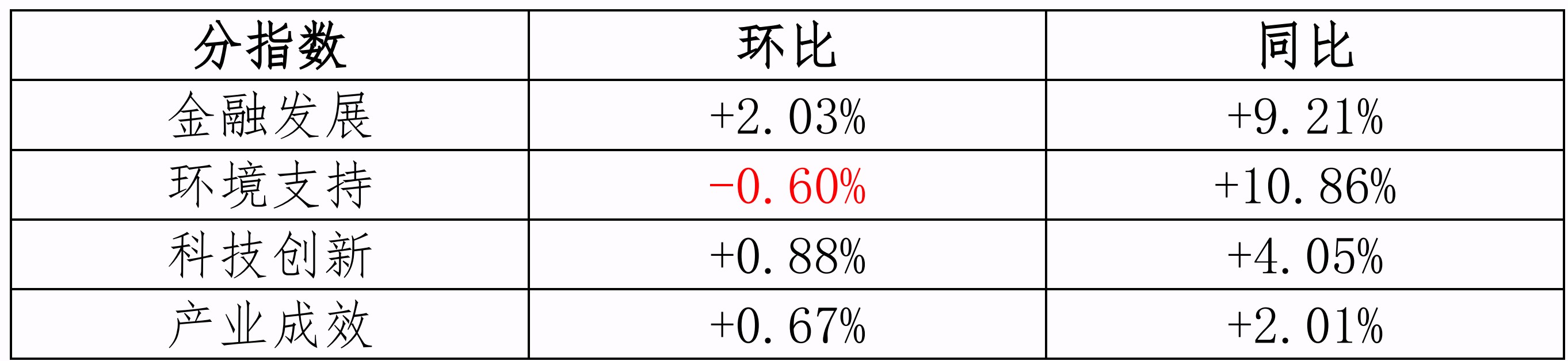
Core Insights - The "Technology Finance - Strategic Emerging Industry Index" reached 193.79 points in Q1 2025, showing a quarter-on-quarter increase of 0.86% and a year-on-year increase of 6.56%, indicating steady growth [1][2] Group 1: Index Performance - The index continues its upward trend, with four sub-indices showing mixed results: financial development increased by 2.03%, while environmental support recorded a decline despite a year-on-year growth of 10.86% [2][4] - Financial development scored 210.07 points, driven by a recovering capital market and increased bank loans, with 27.18 million tech SMEs receiving loans, a year-on-year increase of 3.6 percentage points [4][5] - Environmental support saw a decrease of 0.60% quarter-on-quarter, attributed to a 3.06% decline in the scale of science and technology theme funds, although year-on-year growth remains strong at 42.26% [4][5] Group 2: Sector Analysis - The technology innovation sub-index scored 151.76 points, with notable increases in technology product exports, which reached $893.91 billion, and the total number of researchers, which grew to 7.88 million [5][6] - The industrial effectiveness sub-index scored 187.54 points, showing a year-on-year growth of 2.01%, but indicating a slowdown compared to the previous years' average growth rate of 12.95% [6][8] - The new energy vehicle and new generation information technology sectors are leading, with the former showing a production and sales growth of 50.4% and 47.1%, respectively, while the latter's average revenue rate returned to over 10% [8][9] Group 3: Regional Performance - The Yangtze River Delta region leads with an index score of 168.38, followed by the Pearl River Delta at 148.85, with the Beijing-Tianjin-Hebei and Chengdu-Chongqing regions scoring 138.59 and 115.18, respectively [10][11] - The Yangtze River Delta excels in four out of five industries, while the Pearl River Delta shows weaknesses in new energy and biotechnology sectors [11][12] - All major city clusters face growth challenges, with the Yangtze River Delta experiencing declines in four industries, and the Pearl River Delta showing the highest decline in new energy at 2.74% [12][13]
“2025投中榜·锐公司100”榜单调研启动:寻找定义未来的产业新锐
投中网· 2025-11-04 07:04
Core Insights - The narrative of China's innovation economy has shifted towards "hard technology" as a cornerstone for survival and competition, indicating a paradigm shift in global tech competition from singular technological breakthroughs to the construction and dominance of complex system ecosystems [2] - The development of hard technology has become the main theme, with advancements in generative AI, carbon neutrality, biotechnology, and advanced manufacturing driving significant changes across various sectors [2] Industry Trends - The transition from model innovation to hard-core driving and from application integration to foundational breakthroughs is evident in China's industrial upgrade path [2] - Generative AI is moving from technical exploration to industrial integration, reconstructing the entire chain from research and development to service through vertical applications [2] - The carbon neutrality sector is expanding its technological boundaries with parallel developments in green hydrogen and new energy storage, pushing the energy revolution into deeper waters [2] - Biotechnology is experiencing a paradigm shift in research and development driven by AI for Science, leading to more precise and efficient solutions [2] - Advanced manufacturing is achieving breakthroughs in key areas such as semiconductor equipment and high-end materials under the dual goals of "self-control" and "global competitiveness" [2] Company Evaluation Criteria - The "VIGOROUS 100" list will evaluate companies based on external attention, industry synergy, and industry influence, focusing on those with strong drive and potential for innovation and growth [3][5] - Eligible companies must belong to key innovation categories such as new generation information technology, healthcare, carbon neutrality, and advanced manufacturing [7] - Participating companies should have a valuation of over 1 billion RMB, be at least in Series A funding, and have financing records within the last three years [8]
山东即将迈入“十万亿俱乐部”
Sou Hu Cai Jing· 2025-11-03 13:14
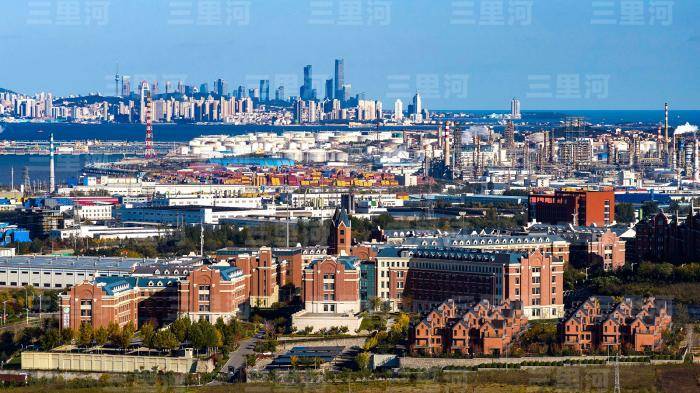
Core Viewpoint - Shandong Province is on the verge of becoming the third province in China to surpass a GDP of 10 trillion yuan, following Guangdong and Jiangsu, marking a significant milestone in its economic development [1][4][11]. Economic Milestone - Shandong's GDP is projected to reach 10 trillion yuan, with a current total of 9.86 trillion yuan, requiring only a 1.5% growth rate to achieve this by 2025 [4][6]. - As of the first three quarters of 2025, Shandong's GDP was 77,115 billion yuan, reflecting a year-on-year growth of 5.6% [5]. Regional Development Impact - The achievement of a 10 trillion yuan GDP will enhance Shandong's role as a key economic player in Northern China, contributing to regional coordination and development [7][8]. - Shandong's economic growth is expected to support the national goal of balancing development between northern and southern regions [8]. Industrial Transformation - Shandong has been focusing on transforming its traditional industrial structure, which was heavily reliant on traditional industries, to high-quality growth through new and emerging industries [9][10]. - The province has made significant strides in high-tech industries, with the proportion of high-tech industrial output rising from 45.1% in 2020 to 55.2% in the first half of 2025 [9]. Future Challenges - Despite the impending economic milestone, Shandong faces challenges in innovation capacity, industrial structure, and the vitality of the private economy compared to Guangdong and Jiangsu [10]. - The province must continue to enhance its innovative capabilities and focus on green, low-carbon, and high-quality development to sustain growth beyond the 10 trillion yuan mark [11].
粤港澳大湾区有效发明专利占国内总量约1/6
Jing Ji Ri Bao· 2025-11-03 02:25
本报广州11月2日讯(记者李思雨)国家知识产权局近日透露,截至今年6月,粤港澳大湾区经国家知识 产权局授权的有效发明专利和有效注册商标分别达到81.7万件和852.4万件,均占国内总量约1/6。今年 上半年,收到粤港澳大湾区内创新主体提交的PCT国际专利申请1.35万件,同比增长超三成。 国家知识产权局新闻发言人、办公室主任衡付广表示,当前,国家知识产权局支持粤港澳大湾区建设6 家国家级知识产权保护中心、8家快速维权中心、6家海外知识产权纠纷应对指导地方工作平台,护航高 端装备制造、新能源、新一代信息技术等产业创新发展。开辟专利审查绿色通道,今年上半年开展专利 优先审查1.6万件、快速审查1.5万件。 在跨区域协同保护机制方面,开展粤港澳大湾区知识产权业务执法协作,建立线索通报移送、证据互认 等跨区域合作沟通机制。推动粤港澳大湾区知识产权调解中心建设,建立包含60余名港、澳籍调解员在 内的专业调解员队伍,累计调解知识产权纠纷案件超1700件。 (文章来源:经济日报) ...
三家未盈利企业登陆科创板 科创成长层包容性适应性凸显
Zhong Guo Jing Ying Bao· 2025-10-31 19:12
Core Points - The listing of three unprofitable high-tech companies on the Sci-Tech Innovation Board marks a significant step in capital market support for technological innovation and new productivity development [2][4] - The establishment of the Sci-Tech Growth Layer enhances market inclusivity and strengthens the capital market's role in serving the real economy [1][10] Group 1: New Listings - Three companies, Bibet (688759.SH), Heyuan Bio (688765.SH), and Xi'an Yicai (688783.SH), were listed on the Sci-Tech Innovation Board, representing the first batch of new registered enterprises in the Sci-Tech Growth Layer [1][2] - Bibet focuses on innovative drug development, with its product BEBT-908 approved for treating various blood cancers and solid tumors [2][3] - Heyuan Bio has developed a leading rice recombinant protein expression system, with its core product HY1001 approved for treating liver cirrhosis [2][3] - Xi'an Yicai specializes in the research, production, and sales of 12-inch silicon wafers, ranking first in mainland China and sixth globally in terms of monthly shipment and production capacity [3] Group 2: Performance of Existing Companies - The 32 existing companies in the Sci-Tech Growth Layer achieved a total revenue of 675.75 billion yuan in 2024, with 29 companies surpassing 100 million yuan in revenue [5][6] - The average annual compound growth rate of revenue for these companies reached 27.87%, outperforming the overall growth rate of the Sci-Tech Innovation Board [6] - In the first half of 2025, these companies reported a year-on-year revenue growth of 37.79% and a significant reduction in losses, with a total loss reduction of 71.23 billion yuan [6][7] Group 3: R&D Investment and Innovation - The existing companies collectively invested 30.6 billion yuan in R&D in 2024, with a median R&D investment-to-revenue ratio of 65.40%, leading the Sci-Tech Innovation Board [6][9] - Since the establishment of the Sci-Tech Board, 22 previously unprofitable companies have achieved profitability, with an average of four companies "delisting" from the unprofitable status each year [6][7] - The Sci-Tech Growth Layer has facilitated significant collaborations, such as the global strategic partnership between Baili Tianheng and Bristol-Myers Squibb, which involved an upfront payment of 800 million USD [8][9] Group 4: Future Outlook - The establishment of the Sci-Tech Growth Layer is expected to attract more technology companies, expanding the coverage of the Sci-Tech Innovation Board and providing a broader market space for quality tech enterprises [10] - The focus on high-level technological self-reliance and the development of new productivity will be key objectives during the 14th Five-Year Plan period, with the Sci-Tech Growth Layer playing a crucial role in this process [10]
2025广东外资企业百强榜单发布,合计在粤投资304亿美元
Sou Hu Cai Jing· 2025-10-30 15:09
Core Insights - The "2025 Guangdong Top 100 Foreign Enterprises List" was released, featuring 100 multinational companies including BASF, ExxonMobil, Siemens, and Walmart, which collectively invested $30.4 billion in Guangdong, with the largest single investment exceeding $2.6 billion [1][2] - The event aimed to showcase the contributions of foreign enterprises to Guangdong's economic development and to enhance their confidence in investing in the region [1][2] Group 1: Investment Overview - The top 100 foreign enterprises have a total investment of $30.4 billion in Guangdong, with the largest investment exceeding $2.6 billion [1] - The manufacturing sector has the highest representation with 76 companies, while high-tech and knowledge-intensive industries account for over 70% of the listed companies [2] Group 2: Geographic and Sectoral Distribution - Foreign investors primarily come from the United States, Germany, Japan, Singapore, and regions such as Hong Kong and Taiwan, covering 16 countries and regions [2] - 90 of the listed companies are concentrated in the Pearl River Delta cities like Guangzhou and Shenzhen, while the remaining 10 are located in six cities in the less developed areas of Guangdong [2] Group 3: Special Lists - The "30 Years in Guangdong" list includes 43 companies that have invested in Guangdong for over 30 years, with 5 of them also appearing on the top 100 list [2] - The ESG Excellence Case List highlights 22 foreign enterprises' achievements in areas such as green manufacturing and social responsibility, promoting the integration of ESG principles into long-term competitiveness [2]