高端装备

Search documents
强产业 开新页
He Nan Ri Bao· 2025-12-28 23:20
Core Viewpoint - The article emphasizes the importance of transforming and upgrading various industries in Henan province, focusing on four categories: "Original," "Old," "New," and "Foreign" brands, to achieve high-quality development and strengthen the foundation for modernization in Henan [1]. Group 1: Original Brands - Henan has a solid foundation in resource industries such as mining, steel, non-ferrous metals, construction materials, and chemicals, which are crucial for economic stability [2][3]. - The province is moving towards green development, with companies like Luoyang Molybdenum Co. adopting smart and eco-friendly mining practices, enhancing resource efficiency and sustainability [2]. - There is a push to move up the value chain, as seen in the aluminum industry in Gongyi, which has become a significant production base for aluminum products through recycling and deep processing [3]. - The province is focusing on developing nine material industry chains to transition from a raw material province to a strong new materials province [4]. Group 2: Old Brands - Traditional industries in Henan, such as food processing and traditional medicine, are being revitalized through product innovation and modernization, as exemplified by companies like Sanquan Foods [5][6]. - The transformation of traditional enterprises into high-tech leaders is highlighted by companies like Luozhou and Zhengzhou Coal Mining Machinery Group, which are adopting smart technologies [6]. - The government is supporting the upgrade of traditional industries through action plans aimed at enhancing manufacturing capabilities and promoting high-end, intelligent, and green transformations [6][7]. Group 3: New Brands - The new industries in Henan, particularly in AI and advanced computing, are rapidly expanding, with companies like Super Fusion leading in AI server manufacturing [8][9]. - The integration of artificial intelligence with the economy is creating new opportunities, as seen with Hanwei Technology's advancements in intelligent robotics [9]. - The province is focusing on key materials for emerging industries, such as lithium battery components, which are essential for the growth of the electric vehicle sector [9][10]. Group 4: Foreign Brands - Henan's enterprises are increasingly engaging in international markets, with companies like Nile River Machinery expanding their operations globally and establishing local facilities [10][11]. - The province achieved over 840 billion yuan in import and export value in the first eleven months of the year, indicating a robust external economic engagement [10][12]. - Efforts are being made to enhance the competitiveness of Henan's products and brands in the global market, supported by government policies aimed at facilitating international trade [11][12][14].

将课堂理论与沈阳发展实际紧密结合 提升学员抓科技、促融合、兴产业能力
Xin Lang Cai Jing· 2025-12-28 20:28
Group 1 - The municipal economic work conference outlines a clear "roadmap" for the city's economic work in the coming year and issues a "mobilization order" to tackle challenges [1] - The conference emphasizes the need for qualitative improvement and reasonable quantitative growth in the economy, aiming for a good start to the "14th Five-Year Plan" and positioning the city as a leader in the revitalization of Northeast China and Liaoning [2] - The focus is on cultivating new productive forces, integrating digital economy with the real economy, and accelerating the digital transformation of traditional industries while expanding strategic emerging industries [2] Group 2 - The conference indicates a shift from "single-point support" for research institutions to building a systematic innovation ecosystem, breaking down barriers between innovation entities, and promoting deep collaboration among industry, academia, and research [3] - The goal is to leverage technology to transform traditional advantages into new competitive strengths, ensuring the industrial foundation is maintained while exploring new opportunities [3] - Future educational initiatives will focus on topics such as "intelligent transformation" and "artificial intelligence," utilizing case studies and on-site teaching to enhance participants' capabilities in technology integration and industry promotion [3]
“新质生产力”如何照进现实? 业界前瞻研判落地节奏与未来机会
Shang Hai Zheng Quan Bao· 2025-12-28 19:10
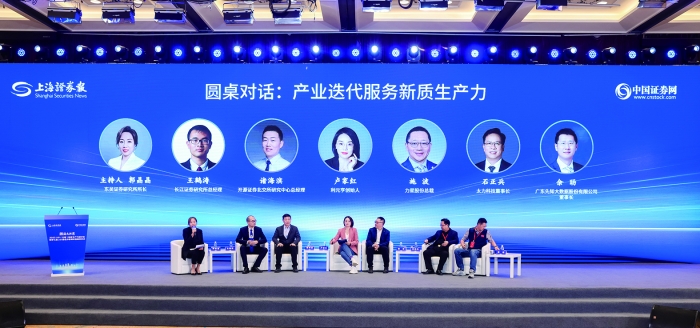
无锡太湖 ■圆桌对话 来自产业一线的企业家也发表了自己的见解。利元亨创始人卢家红认为,发展新质生产力的核心之一是 通过创新提升中国制造的"质"与"效"。力星股份实控人、总裁施波结合企业生命周期理论,指出对于正 处于成熟向再增长转型的关键节点的中国企业而言,发展新质生产力意味着开拓"第二增长曲线",构筑 新的技术壁垒才能实现差异化竞争。太力科技董事长石正兵表示,发展新质生产力即"把科技创新转化 为产业创新,成为推动企业发展的动力"。 广东先知大数据股份有限公司董事长、首席科学家余旸从技术演进史的角度表示,新质生产力中的"质 变",往往由颠覆性技术创新引发。回顾历史,这类机遇窗口期并不长。他以当前人工智能浪潮为 例,"颠覆性技术创新带来的变革期往往可能只有十年到十数年的时间窗口"。这意味着产业界必须准确 把握机遇,且充分应对随之而来的变革与挑战。 以关键环节"焕新"驱动产业跃迁 "新质生产力"如何照进现实? 业界前瞻研判落地节奏与未来机会 ◎刘禹希 记者 严晓菲 12月26日,2025上证(无锡)新质生产力研讨会暨第七届上证最佳分析师评选颁奖仪式在江苏省无锡市 举行。在"产业迭代服务新质生产力"主题圆桌对话环节中 ...

圆桌对话 | “新质生产力”如何照进现实?业界前瞻研判落地节奏与未来机会
Shang Hai Zheng Quan Bao· 2025-12-28 19:10
Core Insights - The seminar focused on the theme of "Industrial Iteration and New Quality Productivity," discussing the transformation of productivity through innovation and technology [1] Group 1: Understanding New Quality Productivity - The shift from traditional growth models reliant on capital and labor to a focus on production efficiency is emphasized, highlighting the importance of both "new" technologies like AI and "quality" improvements in traditional industries [2] - Key industries for developing new quality productivity include smart networking, new energy vehicles, and hydrogen energy, which are seen as crucial for high-quality development and achieving competitive advantages [2] - Entrepreneurs stress that innovation is essential for enhancing the quality and efficiency of Chinese manufacturing, with a focus on creating new technological barriers for competitive differentiation [2][3] Group 2: Practical Implementation of New Quality Productivity - The concept of new quality productivity is not solely about seeking novelty; traditional materials can also be revitalized to meet new demands, as seen in the increased demand for copper driven by AI advancements [4] - Companies like Li Yuanheng are investing in R&D to integrate AI with industrial internet, aiming for self-optimization and predictive maintenance, while also focusing on overcoming bottlenecks in next-generation solid-state battery production [4][5] - The importance of reconstructing processes and material systems is highlighted, with examples of advanced materials like ceramic balls offering significant advantages over traditional options [5] Group 3: Future Opportunities and Trends - The solid-state battery industry is projected to progress through various stages, with commercialization expected by 2025 and full-scale production by 2030 [7] - Confidence in the potential of humanoid robots and embodied intelligence is expressed, with the belief that China can lead in these areas due to its advantages in industrial collaboration and vertical integration [7] - The need for patience in the face of long-term technological changes is emphasized, with a reminder that the impact of disruptive technologies may be overestimated in the short term but underestimated in the long term [7][8] Group 4: Investment Strategies - Investment strategies should align with the "14th Five-Year Plan," focusing on technological innovation while also identifying value opportunities in traditional sectors that emerge from capacity clearing processes [8]


江苏扬州:暖冬送岗促就业 制造业专场招聘会搭建供需桥梁
Xin Lang Cai Jing· 2025-12-28 15:18
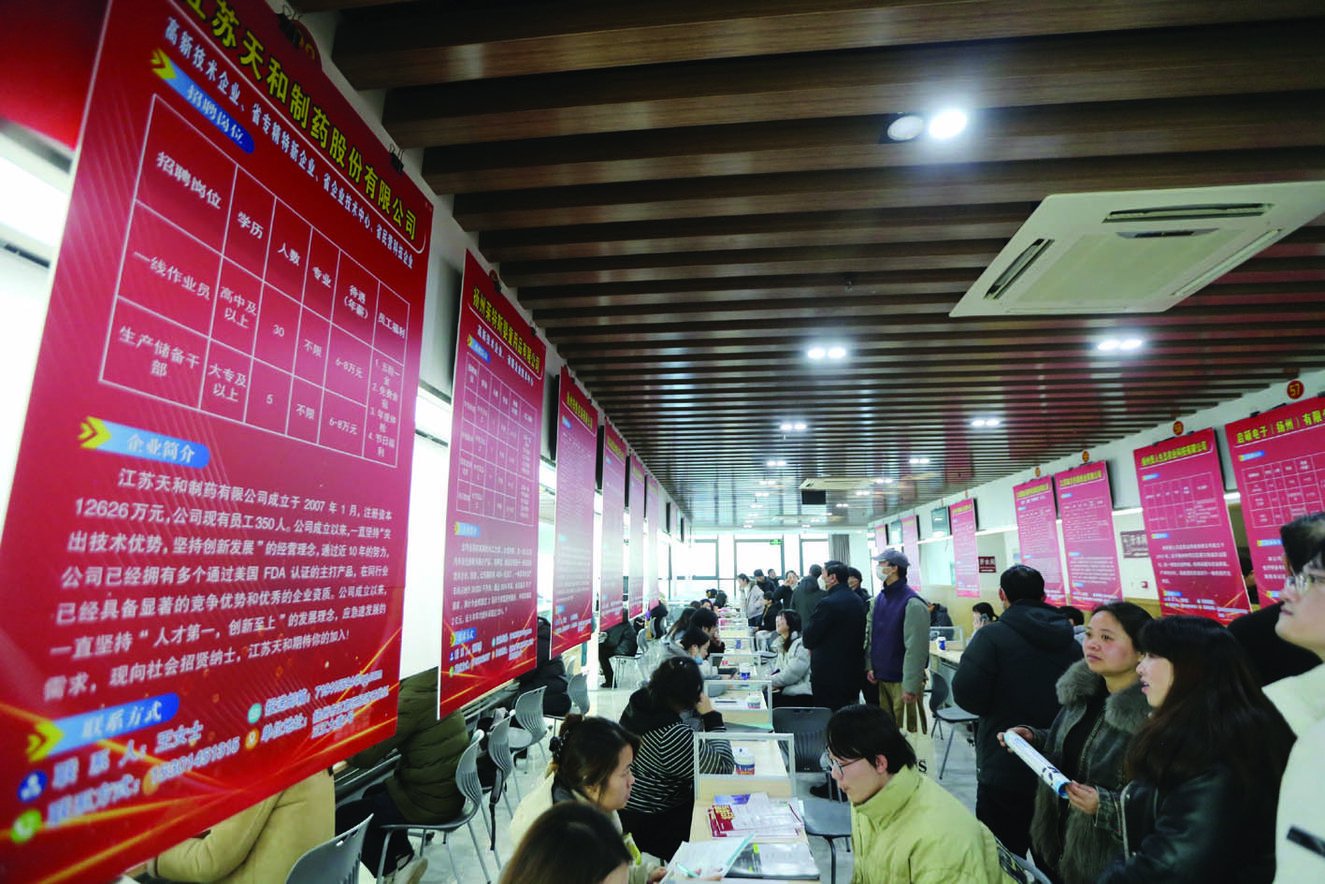
Group 1 - The recruitment event "613" industry cluster and manufacturing job fair was held in Yangzhou, aiming to connect manufacturing enterprises with job seekers through an "online + offline" platform [3][4] - A total of 78 leading manufacturing companies participated, offering 337 quality positions to recruit 1,325 individuals across various sectors including high-end equipment, new energy, and life health [4][5] - Competitive salaries were offered, with positions in the internal combustion engine sector ranging from 7,000 to 15,000 yuan per month, and annual salaries for engineering roles between 100,000 and 200,000 yuan [5][6] Group 2 - The demand for skilled talent in the manufacturing sector is increasing, particularly for composite talents that meet the needs of high-end intelligent manufacturing [6][9] - Companies are adjusting their strategic directions towards new technologies and smart manufacturing, leading to a higher demand for high-end talent [9][10] - Yangzhou is focusing on building a modern industrial system, providing a favorable environment for talent development and opportunities for skilled workers [10][11] Group 3 - The local government has initiated activities to match job seekers with enterprise needs, identifying 16,463 talent positions in the "613" industry cluster [11] - The job fair included areas for policy consultation and skills training, addressing job seekers' concerns about employment and entrepreneurship [11][12] - Future recruitment events are planned, including a labor brand job fair on January 17, 2026, and online recruitment through various platforms throughout January 2026 [11]
广东经济的新三驾马车
21世纪经济报道· 2025-12-27 15:00
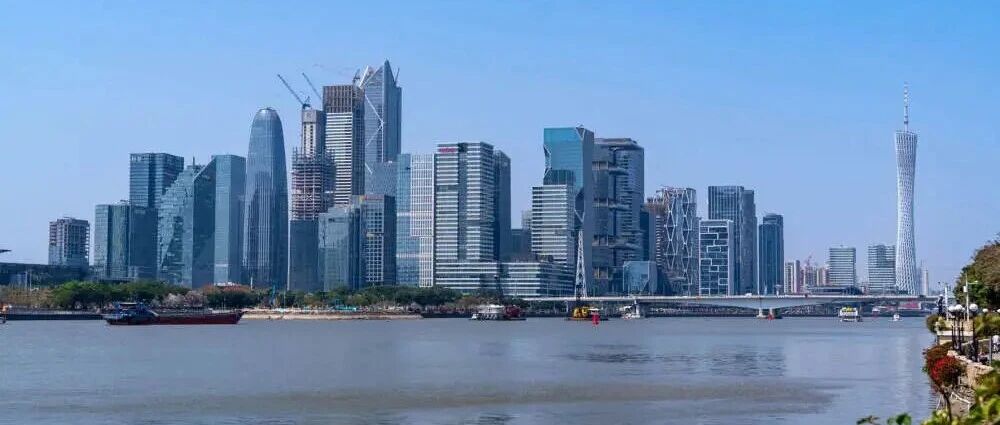
Core Viewpoint - Guangdong is transitioning from a traditional growth model reliant on real estate, finance, and local government infrastructure to a new growth cycle focused on technology, industry, and finance, as it approaches the end of the "14th Five-Year Plan" period [1][2]. Technology Breakthroughs - Significant advancements in technology have been made in Guangdong, including the discovery of a new antiviral treatment target and the development of a high-energy neutron scattering spectrometer, which supports various cutting-edge research areas [3][4]. - The number of valid invention patents in Guangdong has increased from 439,600 in 2021 to 792,300 in 2024, reflecting a strong emphasis on innovation [4]. R&D Investment - Guangdong's R&D expenditure has risen from 400.22 billion yuan in 2021 to 509.96 billion yuan in 2024, with an average annual growth rate of nearly 10%, and R&D spending as a percentage of GDP reaching 3.60% in 2024 [4][6]. Industrial Growth - By 2024, Guangdong had over 77,000 high-tech enterprises, accounting for 15.4% of the national total, with total revenue exceeding 1.3 trillion yuan [9]. - The export value of high-tech products in Guangdong reached 1,828.46 billion yuan in 2024, marking a 10% year-on-year increase [9]. Financial Acceleration - From 2021 to 2024, the value added by Guangdong's financial sector grew from 1,111.56 billion yuan to 1,239 billion yuan, with the number of domestic listed companies increasing from 762 to 875 [13]. - As of November 2025, Guangdong's new RMB loans increased by 1.5 trillion yuan, a year-on-year increase of 191.1 billion yuan, indicating a recovery in financial growth [2][13]. Key Projects and Innovations - The establishment of the Guangdong Artificial Intelligence and Robotics Industry Investment Fund signifies a strategic move towards supporting early-stage investments in technology [15]. - The semiconductor company, Yuexin Semiconductor, has become Guangdong's first 12-inch wafer manufacturer, with revenues projected to grow significantly in the coming years [13][14].
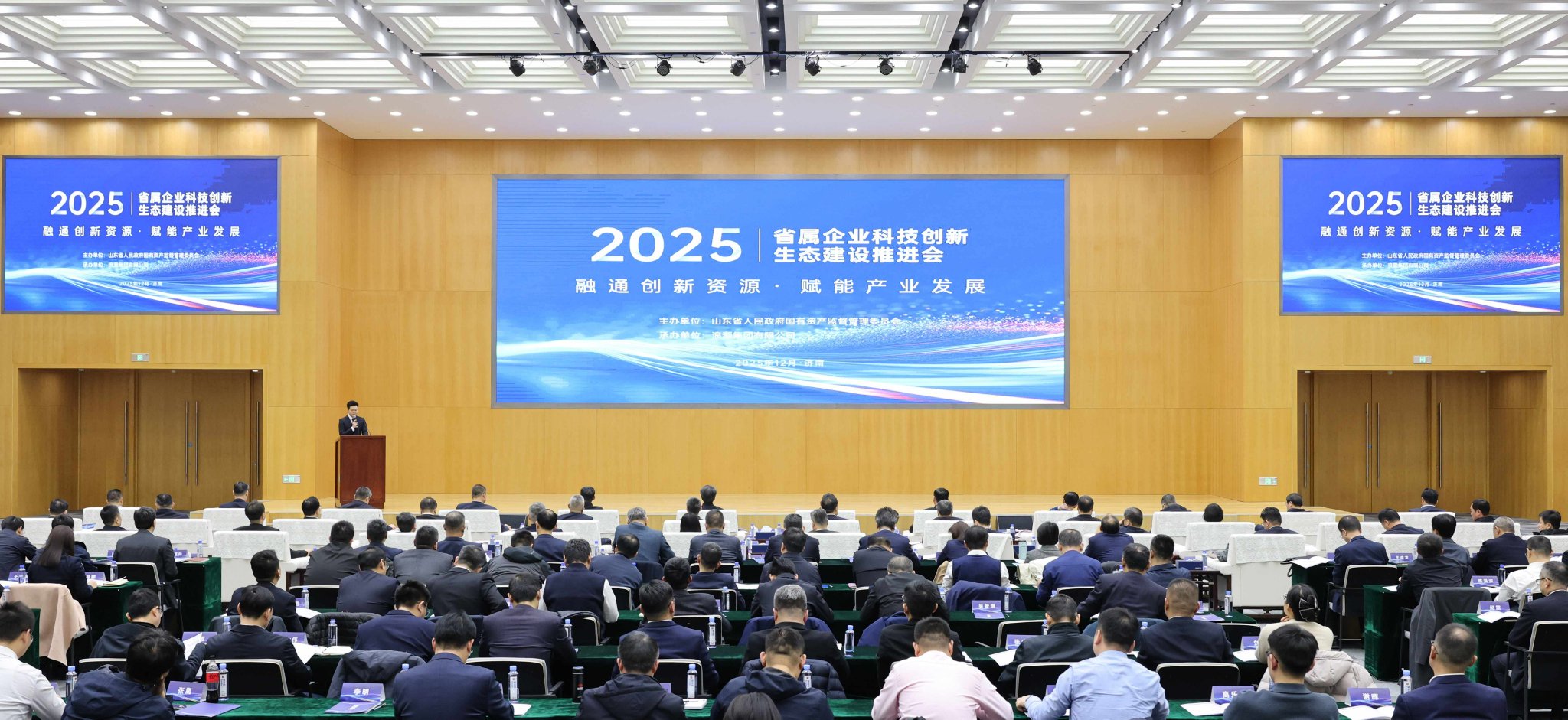
山东省属企业科技创新生态建设推进会召开
Zhong Guo Jin Rong Xin Xi Wang· 2025-12-27 04:39
Group 1 - The Shandong Provincial State-owned Assets Supervision and Administration Commission held a technology innovation ecological construction promotion meeting, showcasing major technological breakthroughs and launching an innovation consortium and a shared service platform for scientific and technological resources [1][4] - The event highlighted ten innovative achievements from provincial enterprises, including companies like Lushang Group, Shandong Steel Group, and Inspur Group, covering advanced equipment, new energy, new materials, and biomedicine [3] - The integration of the talent chain, education chain, industry chain, and innovation chain is emphasized as a key pathway to enhance systematic capabilities and release innovation potential [3] Group 2 - Provincial enterprises are integrating artificial intelligence technology into production and operations to reduce costs and improve efficiency, with typical applications in key sectors such as steel, mining, transportation, and equipment manufacturing [3] - The first batch of the Shandong Provincial State-owned Enterprises Innovation Consortium was established, involving ten leading enterprises to strengthen core technology research and create a collaborative innovation system [3] - A shared service platform for "Artificial Intelligence+" was launched, aimed at expanding AI application scenarios and promoting resource sharing to support the digital transformation and collaborative innovation of provincial enterprises [4]
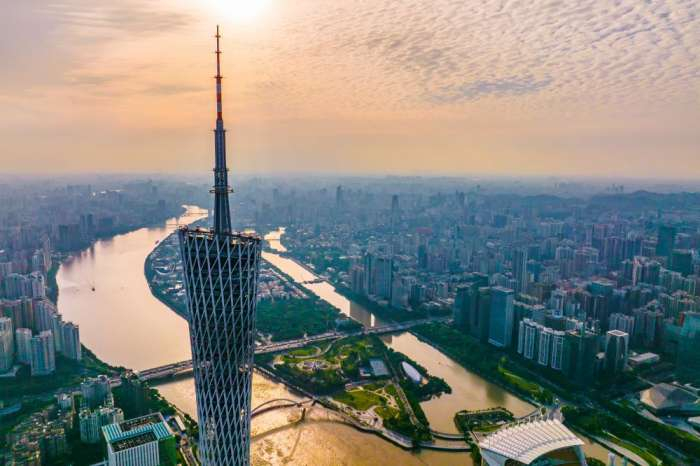
广东新“三驾马车”:经济第一大省动力嬗变
2 1 Shi Ji Jing Ji Bao Dao· 2025-12-26 11:06
Core Insights - Guangdong's economy, historically the largest in China, is facing challenges as its GDP growth has lagged behind the national average for four consecutive years during the "14th Five-Year Plan" period, with a projected GDP surpassing 14 trillion yuan in 2024 [2] - The traditional growth model based on real estate, finance, and local government infrastructure is losing momentum, prompting a shift towards a new growth cycle centered on technology, industry, and finance [2] - Significant increases in R&D spending and patent filings indicate a strong focus on high-tech industries, with R&D expenditures rising from 400.22 billion yuan in 2021 to 509.96 billion yuan in 2024, averaging nearly 10% annual growth [6][8] Technology Development - Guangdong's effective invention patents increased from 439,600 in 2021 to 792,300 in 2024, reflecting a robust innovation environment [5][8] - The province's high-tech enterprises grew from approximately 59,475 in 2021 to over 77,000 by 2024, leading the nation [4][8] - Major breakthroughs in various fields, including biomedicine and artificial intelligence, have been reported, showcasing Guangdong's commitment to advancing its technological capabilities [5][6] Industrial Growth - By 2024, Guangdong's high-tech enterprises accounted for 15.4% of the national total, with total revenue exceeding 1.3 trillion yuan [8] - High-tech product exports rebounded to 182.85 billion yuan in 2024, marking a 10% year-on-year increase after two years of decline [8] - The province's advanced manufacturing and high-tech manufacturing sectors saw value-added growth rates of 5.4% and 6.4%, respectively, in 2025 [10] Financial Sector Dynamics - Guangdong's financial sector value added increased from 1.11 trillion yuan in 2021 to 1.24 trillion yuan in 2024, with the number of domestic listed companies rising from 762 to 875 [13] - New RMB loans in Guangdong returned to positive growth in 2025, with an increase of 1.5 trillion yuan by November, reflecting a 191.1 billion yuan year-on-year increase [3][13] - The establishment of numerous government investment funds, totaling 1.77 trillion yuan in subscribed capital, supports the province's financial innovation and investment in key industries [14][15] Strategic Initiatives - Guangdong has initiated the "卓粤" plan for local basic research and implemented reforms to enhance the autonomy of scientific personnel in fund usage, fostering a more innovative environment [7][8] - The province's focus on integrating technology and industry innovation is expected to drive new productivity and economic transformation [11] - The successful IPO applications of companies like粤芯半导体 highlight the growing synergy between technology and finance in Guangdong's economic landscape [14][15]
想得太明白的人无法创业
创业家· 2025-12-26 10:30
每日金句 我觉得,创业者的第一要素是勇气,别把啥事都想得特别明白,如果想明白了 我保证你创不了业。创业需要热情,需要那一股子不怕死的精神,其次就是坚 持。 宋向前丨 加华资本创始合伙人 黑马实验室加速导师 这里认真推荐你: 报名 「吴世春·西安出行活动」 1月22日-24日 , 吴世春将亲自带队 100家企业家 , 去陕西西安线下游学 , 走进科技制造 产业,打开万亿赛道蓝海。 你 在 创业路上遇到的问题和想法 , 都可以找吴老师聊聊 。 如果你是 优质的项目,吴老师也会果断投 你 。 希望所有支持吴老师的人 , 一如既往的相信他、支持他,大家 一起 加油! ↓↓↓ 活动详情如下 吴世春导师亲自带队 | 2026.01.22-24 走进科技制造产业 升级数字文旅体验 探索产业生态协同 打开万亿赛道蓝海 机器人、航空航天、高端装备、新材料、新能源、 科技演费、Al+产生的创出者看过来! 略 成 rt 你将收获 1场 产业重做的深度链接之旅 从技术创新到商业化实现,从破局战略到破局战术,从 理论到实战,多维提升认知 N 个 创业破局方法论 掌握资本热捧赛道的核心逻辑,了解底层破局密码,占据产 业制高点 百位 硬核 ...

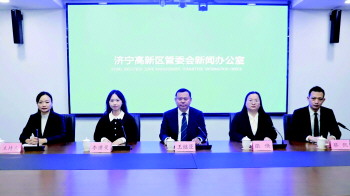
“五链融合”促创新,培育新增长点
Qi Lu Wan Bao· 2025-12-26 09:33
Group 1 - The core viewpoint of the news is that Jining High-tech Zone is committed to promoting high-quality development through industrial innovation and technological advancement [2] - The economic operation bureau of Jining High-tech Zone prioritizes industrial economy as the "number one project" and emphasizes technological innovation as the core driving force for new industrialization [2] - The integration of five chains: innovation chain, industrial chain, education chain, talent chain, and financial chain is highlighted as essential for building a modern industrial system [2] Group 2 - The establishment of innovation platforms and promotion of technological breakthroughs in key industries such as high-end equipment, healthcare, and new materials is a focus area [2] - Collaboration between enterprises and educational institutions is encouraged to enhance industry-academia-research cooperation, leading to the creation of provincial-level R&D centers and digital economy innovation centers [2] - The Jining High-tech Zone has secured 54 provincial-level technology innovation projects this year, demonstrating a commitment to deepening school-enterprise cooperation and facilitating the transformation of technological achievements [3] Group 3 - The acceleration of digital empowerment and the promotion of digital upgrades for enterprises are key initiatives, particularly in traditional sectors like high-end equipment and biomedicine [3] - The introduction of the "industry brain + future factory" model aims to foster a gradient cultivation system from intelligent transformation to smart factories, enhancing the integration of the real economy with the digital economy [3] - The establishment of nine provincial-level digital economy innovation platforms is intended to forge new economic growth engines and actively cultivate new growth points [3]