疫苗

Search documents
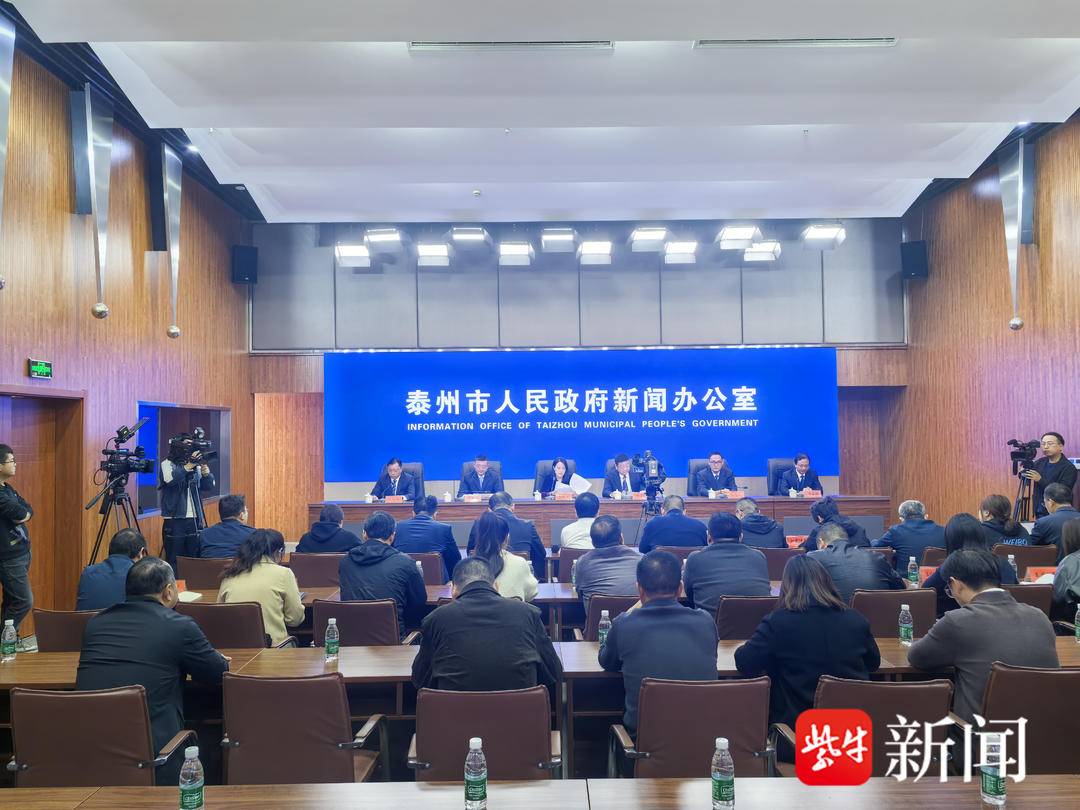
打造江苏高质量发展中部支点城市 泰州交出今年前三季度“成绩单”
Yang Zi Wan Bao Wang· 2025-11-05 09:54
Core Insights - The government of Taizhou is focusing on enhancing its industrial capabilities to become a central hub for high-quality development in Jiangsu province, with a specific emphasis on the "8+13+X" industrial chain model [3][4] Group 1: Industrial Performance - In the first three quarters of the year, Taizhou's "8+13+X" industrial chain group, consisting of 2,598 enterprises, achieved an output value of 558.8 billion yuan, reflecting a year-on-year growth of 4.6% [3][4] - The biopharmaceutical industry cluster, which is the only national pilot for new vaccines and specific diagnostic reagents, reported an output value of 41.53 billion yuan, marking an 11.8% increase year-on-year [4] - The health food industry cluster, which includes deep processing of agricultural products and functional foods, achieved an output value of 66.3 billion yuan, ranking second in the province [4] - The marine engineering and high-tech shipbuilding industry cluster reached an output value of 69.8 billion yuan, with a significant year-on-year growth of 21.5% [4] - The new generation information technology and intelligent equipment industry cluster completed an output value of 102.93 billion yuan in the same period [4] Group 2: Innovation and Support - Taizhou is integrating technological innovation with industrial innovation, having introduced the "Double 18 Measures" to strengthen its industrial and technological capabilities [4] - The city has established an efficient mechanism for the transformation of scientific achievements and optimized the allocation of resources for internal and external collaboration [4] Group 3: Business Environment - The city is enhancing its business environment by promoting the "To Taizhou, Taizhou to You" brand, which includes upgrading the "One Enterprise, One Service" platform that consolidates 6,435 various enterprise support policies [5] - A new "Policy Calculator" feature has been introduced, along with a system for applying for special funds for manufacturing, streamlining the application process [5]

湘财证券:疫苗行业依然承压 四季度旺季有望迎来结构性机会
智通财经网· 2025-11-05 07:06
Core Insights - The vaccine industry is experiencing significant pressure on both revenue and profit, with profit declines outpacing revenue declines, indicating substantial strain on profitability [1] - Despite the challenges, the industry maintains high R&D expenditure, which has increased year-on-year, reflecting ongoing efforts to seek new pipeline transformations amid homogeneous competition [1] Industry Performance - The performance of vaccine companies is showing a divergence, with only a few companies, namely Olin Biological, CanSino, and Kanglao Weishi, reporting positive growth in both revenue and profit for the first three quarters of 2025 [2] - Companies like Kanghua Biological and Wantai Biological have shown signs of recovery in revenue growth, while others like Watson Bio and CanSino have demonstrated significant improvements in net profit margins [2] Investment Recommendations - The fourth quarter is expected to present structural opportunities for the vaccine industry due to seasonal increases in respiratory infections and heightened public awareness of vaccination [3] - Two main investment themes are suggested: innovation-driven companies with strong technological advantages and event-driven opportunities related to seasonal demand for vaccines like influenza and pneumonia [3] - Companies with high technical barriers and differentiated pipeline layouts are expected to outperform, with a focus on CanSino as a key player [3]

Q3业绩季收官,看好制药装备受益海外需求提升
Xinda Securities· 2025-11-05 02:13
Investment Rating - The investment rating for the pharmaceutical and biotechnology industry is "Positive" [2] Core Viewpoints - The report highlights that the pharmaceutical equipment sector is expected to benefit from the rising overseas demand cycle [6][15] - The analysis of Q3 performance indicates a relatively high prosperity in sectors such as innovative drugs, CXO, and medical consumables, with a noted improvement trend in the medical device sector since Q3 [15][14] - The report suggests focusing on the flu-related sector in Q4, including vaccines, diagnostics, and drug terminals [15] Summary by Sections 1. Industry Overview - The pharmaceutical and biotechnology sector's weekly return was 1.31%, outperforming the CSI 300 by 1.74%, ranking 9th among 31 first-level sub-indices [13] - The chemical pharmaceutical sector had the highest weekly return at 3.07%, while the medical device sector ranked sixth with a decline of 1.15% [13] 2. Q3 Performance Analysis - Among the companies that disclosed Q3 results, 35% reported both revenue and net profit growth [14] - Approximately 48% of companies experienced revenue declines in Q3, with 20% showing growth between 0-10% [14] - The report identifies a significant number of companies with revenue growth exceeding 20% in various sub-sectors, particularly in chemical preparations and other biological products [14][15] 3. Sector Recommendations - For pharmaceutical equipment, companies like SenSong International, Dongfu Long, and Chutian Technology are recommended due to their expected benefits from overseas demand [15] - In the flu sector, companies such as Hualan Biological Engineering for vaccines and Dongyangguang Pharmaceutical for flu medications are highlighted [15] - Key players in the CXO and life sciences upstream chain include WuXi AppTec and Tigermed, among others [15] - The report also emphasizes high-end medical devices, suggesting companies like United Imaging Healthcare and Mindray Medical for their growth potential [15] 4. Market Performance and Valuation - The current PE (TTM) for the pharmaceutical and biotechnology industry is 30.62, slightly above the 5-year average of 29.08 [22][23] - The industry has shown a 20.89% increase over the last six months, indicating a positive trend despite recent fluctuations [18][21] 5. Recent Developments - The report notes significant policy updates and industry news, including the establishment of a new payment model by the National Medical Insurance Administration [49] - Recent company announcements include drug approvals and clinical trial advancements, reflecting ongoing innovation in the sector [52]
康希诺跌2.02%,成交额4553.05万元,主力资金净流出147.16万元
Xin Lang Cai Jing· 2025-11-03 02:12
Core Viewpoint - 康希诺's stock price has shown a year-to-date increase of 27.04%, indicating a positive market performance despite recent fluctuations in trading volume and price [2]. Company Overview - 康希诺, established on January 13, 2009, and listed on August 13, 2020, is located in Tianjin Economic-Technological Development Area and specializes in the research, production, and commercialization of innovative vaccines that meet both Chinese and international standards [2]. - The company's main revenue source is vaccine and related product sales, accounting for 97.84% of total revenue, with other supplementary income making up 2.16% [2]. Financial Performance - For the period from January to September 2025, 康希诺 reported a revenue of 693 million yuan, representing a year-on-year growth of 22.13%, while the net profit attributable to shareholders was 14.44 million yuan, reflecting a significant increase of 106.49% [2]. - Since its A-share listing, 康希诺 has distributed a total of 198 million yuan in dividends, with no dividends paid in the last three years [3]. Shareholder Information - As of September 30, 2025, 康希诺 had 17,700 shareholders, an increase of 1.07% from the previous period, with an average of 0 circulating shares per shareholder [2]. - The top ten circulating shareholders include Hong Kong Central Clearing Limited, which is a new shareholder holding 1.3566 million shares [3]. Market Activity - On November 3, 康希诺's stock price decreased by 2.02%, trading at 77.56 yuan per share, with a total market capitalization of 19.192 billion yuan [1]. - The net outflow of main funds was 1.4716 million yuan, with significant selling activity observed [1].
金迪克跌2.14%,成交额1898.98万元,主力资金净流出264.02万元
Xin Lang Cai Jing· 2025-11-03 02:12
Core Viewpoint - The stock of Jindike experienced a decline of 2.14% on November 3, trading at 16.93 CNY per share, with a total market capitalization of 2.086 billion CNY. The company has seen a year-to-date stock price increase of 39.69% [1] Financial Performance - For the period from January to September 2025, Jindike achieved operating revenue of 74.6576 million CNY, representing a year-on-year growth of 91.93%. However, the net profit attributable to shareholders was -86.4706 million CNY, a decrease of 61.74% compared to the previous year [1] Stock Market Activity - As of November 3, the trading volume was 18.9898 million CNY, with a turnover rate of 0.90%. The net outflow of main funds was 2.6402 million CNY, with large single purchases accounting for 15.89% and sales for 29.79% of the total [1] Shareholder Information - As of September 30, the number of shareholders for Jindike was 4,319, a decrease of 4.55% from the previous period. The average circulating shares per person increased by 4.77% to 28,525 shares [1] Company Overview - Jindike, established on December 29, 2008, and listed on August 2, 2021, is a biopharmaceutical company based in Taizhou, Jiangsu Province, focusing on the research, production, and sales of human vaccines. The company's main business revenue is derived entirely from vaccine products [1] Dividend Information - Since its A-share listing, Jindike has distributed a total of 61.6 million CNY in dividends, with 17.6 million CNY distributed over the past three years [2]

上市10年下跌6年,横盘4年,从53.8跌到3.6,还有比这狠的吗?
Sou Hu Cai Jing· 2025-11-02 16:50
Core Viewpoint - The article highlights the phenomenon of "zombie stocks" in the A-share market, where companies with declining stock prices continue to report profits, leading to perplexing situations for investors [1][3][5]. Group 1: Stock Performance - A stock that was listed in April 2015 at a price of 5.47 yuan peaked at 72 yuan but has since fallen to 3.67 yuan, representing a 93.5% decline over ten years [1]. - Another company, Shanying International, saw its stock price drop from a high of 62.64 yuan to 1.62 yuan, a decline of 97.4%, while facing a 13% year-on-year drop in corrugated paper prices in 2024 [3]. - Watson Bio's stock price fell from 12.20 yuan in May 2015 to a cumulative decline of 18%, with a peak drop of 89.6% from its historical high of 96.73 yuan [3]. - Tongce Medical's stock price plummeted from 300.98 yuan to 40.13 yuan, an 88% decline, despite a market peak where its P/E ratio exceeded 200 [3]. - Chongqing Steel has reported losses for three consecutive years, with a projected loss of 1.26 billion yuan in 2024, amid an oversupply in the steel industry [3]. Group 2: Company Fundamentals - BWS, a veteran in the water treatment industry, has annual revenues exceeding 9 billion yuan but has seen its stock price decline for five consecutive years due to liquidity issues, with a daily trading volume below 100 million yuan [5]. - Huaping Co. has raised 980 million yuan since its listing but has only distributed 31 million yuan in dividends, with major shareholders cashing out 230 million yuan [5]. - Dongjiang Environmental, another established player in environmental management, has seen its stock price drop from 30.30 yuan to 4.54 yuan, an 85% decline, with continuous losses reported [7]. Group 3: Market Trends and Investor Behavior - The A-share market contains numerous stocks that have been in a downward trend for ten years, characterized by persistent declines and failed bottom-fishing attempts by investors [5][9]. - Extreme cases include companies like Baofeng Group, which fell from 327.01 yuan to a delisting price of 0.28 yuan, a 99.9% drop, and LeTV, which dropped from 179.03 yuan to 0.31 yuan, a 99% decline [5]. - Investors often make the mistake of blindly bottom-fishing and trusting low-priced stocks, leading to deeper losses as seen with BWS shareholders who increased their holdings during price declines [7][9]. Group 4: Identifying Zombie Stocks - Zombie stocks typically exhibit characteristics such as a long-term average turnover rate below 1%, minimal price fluctuations, continuous performance declines, and lack of institutional coverage [9]. - Fundamental screening is crucial to avoid risks, with recommendations to steer clear of companies with declining revenues or high debt ratios, while favoring financially healthy industry leaders [9]. - Data indicates that stocks with declines exceeding 90% rarely return to historical highs, often remaining stagnant or heading towards delisting [9].



二价HPV疫苗纳入国家免疫规划:疫苗行业周报-20251102
Xiangcai Securities· 2025-11-02 11:03
Investment Rating - The industry investment rating is maintained at "Overweight" [3][10]. Core Insights - The vaccine industry is currently transitioning from scale expansion to innovation-driven growth, facing short-term pain due to supply-demand imbalance and homogenized competition, but the long-term positive outlook remains unchanged, driven by policy, demand, and technology [10][30]. - The inclusion of the bivalent HPV vaccine in the national immunization program is expected to reshape the market landscape, with a procurement quantity of 15.4465 million doses and a budget of approximately 425 million yuan [5][10]. - The vaccine sector has shown a relative performance decline over the past 12 months, with a relative return of -26% compared to the CSI 300 index [5][6]. Market Performance - The vaccine sector reported a 3.38% increase last week, outperforming other pharmaceutical sub-sectors [6][12]. - Year-to-date, the vaccine sector has experienced a cumulative decline of 1.6% [6][12]. - The current PE (ttm) for the vaccine sector is 104.04X, with a PB (lf) of 1.94X, indicating a slight increase in valuation metrics [8][10]. Company Performance - Notable companies in the vaccine sector include Huashan Vaccine, Olin Bio, Watson Bio, and Kanghua Bio, with varying performance levels [7][10]. - The vaccine industry is characterized by structural differentiation among companies, with a focus on innovation and international expansion as key strategies for long-term growth [9][10]. Investment Recommendations - The report suggests focusing on companies with strong R&D capabilities and differentiated product lines, recommending Kangxino for its innovation strength and Kanghua Bio for its demand stability [10][30].
智飞生物2025年三季报凸显产业韧性 自研管线兑现与国际化布局开启新成长周期
Mei Ri Jing Ji Xin Wen· 2025-11-01 04:55
Core Insights - The global vaccine industry is undergoing significant structural changes and challenges, yet Zhifei Biological (300122) has reported a resilient performance in its Q3 2025 financial results, showcasing growth in revenue and improvements in cash flow and asset quality [1][3][4] Financial Performance - Zhifei Biological achieved a revenue of 2.705 billion yuan in Q3 2025, representing a quarter-on-quarter growth of 6.29%, marking two consecutive quarters of positive growth [3] - The net cash flow from operating activities surged by 201.18% year-on-year, reaching 2.985 billion yuan, with positive cash flow reported for three consecutive reporting periods [3] - Accounts receivable and inventory decreased by 5.21% and 9.85% year-on-year, respectively, indicating improved operational efficiency [3] - Long-term borrowings increased to 3.094 billion yuan, a year-on-year growth of 149.11%, while short-term borrowings decreased by 13.31%, enhancing the company's financial stability [3] Product Strategy - The company is transitioning towards a dual strategy of "agency and self-research," with significant progress made in Q3 2025 [6] - The approval of the male indication for Merck's HPV vaccine has opened new market opportunities, with the potential market size for HPV vaccines in China expected to reach 62.54 billion yuan by 2031 [6] - The expansion of the indication for the recombinant shingles vaccine to immunocompromised individuals further enhances product potential, addressing a significant public health need [6] R&D Pipeline - Zhifei Biological has 34 self-research projects, with 21 in clinical or application stages, indicating a robust pipeline [8] - Key products such as the quadrivalent influenza vaccine and the 15-valent pneumonia conjugate vaccine are nearing market approval, marking a critical transition from R&D investment to output [8] - The approval of the GLP-1 dual-target agonist CA111 for clinical trials signifies the company's entry into the metabolic disease treatment market, providing new growth opportunities [8] Strategic Vision - The company is enhancing its R&D framework towards a platform-based and international approach, with a focus on innovation and collaboration with top academic institutions [9] - The internationalization strategy includes conducting clinical trials in both developing and developed countries, showcasing the company's global competitiveness [9] - The diversification into both preventive and therapeutic products aims to stabilize growth amidst industry fluctuations, positioning the company for long-term success [9] Market Outlook - The global vaccine market is projected to grow from $46 billion in 2024 to $83.1 billion in 2025, with a CAGR of 13.5%, driven by innovative vaccine development and expanding demand in emerging markets [10] - The Chinese vaccine market is expected to exceed 340 billion yuan by 2030, with a CAGR of 15.95%, indicating significant growth potential [12] - Zhifei Biological's diverse product portfolio and enhanced R&D capabilities position it well to capture market share during industry transitions [12]


沃森生物2025年三季度报:加速布局微生态与合成生物新赛道
Xin Jing Bao· 2025-11-01 00:29
Core Insights - Watson Bio achieved a revenue of 560 million yuan in Q3 2025, with a net profit attributable to shareholders increasing by 40.19% year-on-year [1] - The company is expanding its overseas market, with product export amounts growing by 6.32% compared to the same period last year [1] - Watson Bio is strategically positioning itself in two new business areas: micro-ecological health and synthetic biology manufacturing, laying a solid foundation for long-term growth [1] Group 1: Micro-Ecological Health - In response to the national "preventive healthcare" strategy, Watson Bio is expanding its product pipeline and developing "core microbiome therapy" for precise micro-ecological health and functional nutrition interventions [2] - The company signed exclusive licensing agreements with Notitia Biotechnologies Company to develop and commercialize core microbiome analysis and targeted transplantation technologies in mainland China, Hong Kong, and Macau [2] - This dual-track approach aims to provide comprehensive health solutions covering both hospital treatment and outpatient management, aligning with national policies on non-drug interventions and chronic disease prevention [2] Group 2: Synthetic Biology Manufacturing - Watson Bio is seizing opportunities in the synthetic biology manufacturing sector, leveraging local biodiversity, green energy, and biomass resources [3] - The company established Aisenze Biotechnology (Kunming) Co., Ltd. to focus on the industrialization of precision photobiological synthesis of natural products for health [3] - Ongoing industrialization and market preparation efforts are expected to contribute new momentum for the company's long-term development [3]
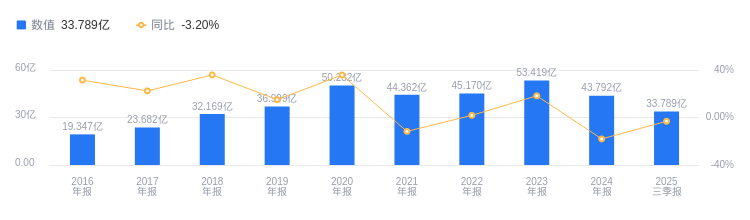
华兰生物的前世今生:安康掌舵三十年深耕血液制品,2025年Q3营收33.79亿行业第三,研发推进下扩张可期
Xin Lang Zheng Quan· 2025-10-31 16:33
Core Viewpoint - Hualan Biological is a leading company in the blood products and vaccine industry in China, with a strong market share and brand recognition, and has shown steady growth in its blood products and vaccine business [1][6][7]. Group 1: Business Performance - In Q3 2025, Hualan Biological achieved a revenue of 3.379 billion yuan, ranking third among 14 companies in the industry, with the industry leader, Liaoning Chengda, generating 8.114 billion yuan [2]. - The net profit for the same period was 828 million yuan, placing Hualan Biological second in the industry, while Liaoning Chengda led with a net profit of 1.453 billion yuan [2]. - The blood products business saw a revenue increase of 7.57% year-on-year, with a total income of 1.737 billion yuan in the first half of 2025 [6][7]. Group 2: Financial Ratios - As of Q3 2025, Hualan Biological's debt-to-asset ratio was 18.55%, which is lower than the industry average of 27.82% [3]. - The gross profit margin for Q3 2025 was 57.68%, which is below the industry average of 63.72% [3]. Group 3: Shareholder Information - As of September 30, 2025, the number of A-share shareholders increased by 0.61% to 147,900, while the average number of circulating A-shares held per shareholder decreased by 0.61% to 10,600 [5]. Group 4: Management Compensation - The chairman, An Kang, received a salary of 1.4 million yuan in 2024, unchanged from 2023, while the general manager, Fan Bei, earned 1.1 million yuan, also unchanged from the previous year [4]. Group 5: Future Outlook - Analysts expect Hualan Biological to achieve revenues of 4.857 billion yuan, 5.404 billion yuan, and 5.924 billion yuan for the years 2025 to 2027, respectively, with net profits projected at 1.241 billion yuan, 1.411 billion yuan, and 1.556 billion yuan [6].