智能家居

Search documents
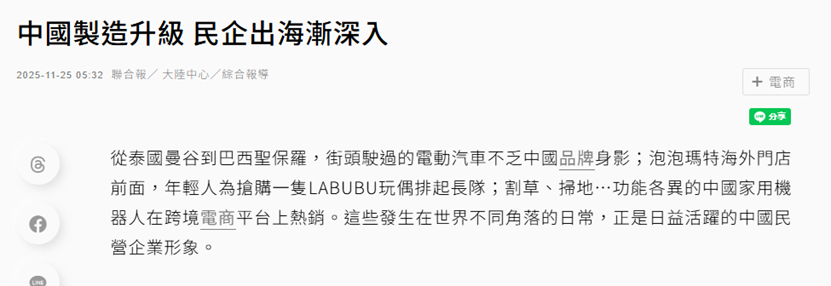
中国民营企业“出海”日渐深入,国际化水平提高
Huan Qiu Wang· 2025-12-01 01:13
Group 1 - The National Development and Reform Commission encourages private enterprises to seize opportunities from the new round of technological revolution and industrial transformation, as well as the vast domestic market and coordinated urban-rural development [1] - The report highlights the increasing presence of Chinese brands in international markets, with examples including electric vehicles in Bangkok and popular toys in Brazil, showcasing the growing image of Chinese private enterprises [1][3] - Chinese private enterprises are deepening their international presence, transitioning from "Made in China" to "Created in China," driven by enhanced innovation and increased R&D funding [3] Group 2 - A survey conducted by the All-China Federation of Industry and Commerce on over 4,000 private enterprises with international operations indicates an expansion in the scale of overseas operations and an increase in internationalization levels [3] - The survey results, published in the "2025 Research Report on the International Development of Chinese Private Enterprises," reveal that the total overseas income of internationalized private enterprises is projected to reach 52,149.66 billion yuan in 2024, marking a nearly 12% growth [3] - The number of overseas employees for these enterprises is expected to reach 854,000, reflecting a growth of 9.61% [3]

2027年形成3个万亿级消费领域和10个千亿级消费热点
Xin Hua Wang· 2025-11-30 22:29
Core Viewpoint - The Ministry of Industry and Information Technology, along with five other departments, has issued an implementation plan aimed at enhancing the adaptability of supply and demand in consumer goods, targeting significant optimization of the supply structure by 2027 and establishing three trillion-level consumption sectors and ten hundred-billion-level consumption hotspots [1][2]. Group 1: Key Objectives - By 2027, the supply structure of consumer goods is expected to be significantly optimized, with the formation of three trillion-level consumption sectors and ten hundred-billion-level consumption hotspots [1]. - The plan emphasizes leading industrial upgrades through consumption upgrades and aims for a dynamic balance between supply and demand, with a goal of establishing a high-quality development pattern by 2030 [1][2]. Group 2: Key Tasks - The plan outlines 19 key tasks across five areas: accelerating the application of new technologies and models, expanding the supply of distinctive and new products, precisely matching the needs of different demographics, cultivating new consumption scenarios and business formats, and creating a favorable development environment [2]. - Specific focus areas include intelligent connected new energy vehicles, smart home products, consumer electronics, modern textiles, food, and green building materials, with the goal of creating hundreds of iconic products and innovative enterprises [2]. Group 3: Market Segmentation - The plan aims to enhance the supply of green products, improve rural consumer goods, and significantly develop leisure and sports products, adapting to trends in green and low-carbon consumption [2]. - It also targets niche markets by enriching the supply of baby and children's products, enhancing quality student supplies, expanding fashionable "trendy" products, and optimizing products for the elderly [2].
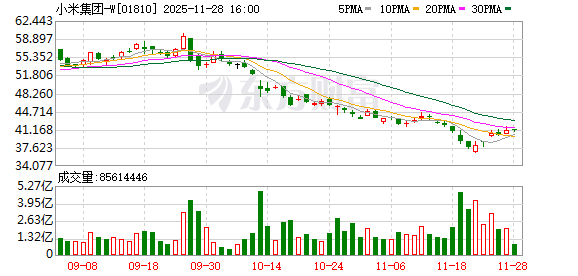
小米集团坚持创新驱动——科技生根 智造升级(走企业,看高质量发展)
Ren Min Ri Bao· 2025-11-30 22:04
Core Insights - Xiaomi is focusing on technological innovation as a key driver for high-quality development, with significant investments in research and development planned for the coming years [3][4]. Group 1: Technological Innovation - Xiaomi's self-developed 3nm processor, the Xuanjie O1, integrates approximately 19 billion transistors, showcasing the company's commitment to advanced technology [2]. - The company plans to invest over 24 billion yuan in R&D in 2024, with a projected total of over 200 billion yuan in the next five years [3]. - Xiaomi's R&D workforce exceeds 24,000, accounting for nearly 50% of its total employees, emphasizing the importance of innovation in its business model [3]. Group 2: Smart Manufacturing - Xiaomi's automotive factory utilizes advanced manufacturing techniques, including a 9,100-ton die-casting machine that reduces manufacturing processes by 80% and production time by 45% [6]. - The company has established three large smart factories for automotive, smartphones, and smart home appliances, implementing a digital and intelligent manufacturing platform [7]. - Xiaomi's smart manufacturing platform connects over 200 manufacturing enterprises, enhancing production efficiency and product quality across various sectors [7]. Group 3: Global Expansion - Xiaomi ranks among the top three smartphone vendors in 57 countries and regions, with significant market presence in Latin America and the Middle East [8][9]. - The company is expanding its retail presence in Southeast Asia, with plans to open over 130 new stores by the first three quarters of 2025, enhancing brand visibility and consumer experience [9]. - Xiaomi's global operations have created over 2,000 foreign jobs and established 11 cooperative factories in seven countries, contributing to local economic development [10]. Group 4: Brand Perception - The emphasis on innovation and quality is reshaping the global perception of Chinese technology companies, with Xiaomi leading this change [11].

政策问答·回应关切丨如何增强消费品供需适配性
Ren Min Ri Bao· 2025-11-30 04:06
Core Viewpoint - The implementation plan aims to enhance the adaptability of supply and demand in the consumer goods market, addressing the mismatch between what consumers want to buy and what is available for sale [1][2]. Group 1: Supply and Demand Adaptability - The plan emphasizes the need for consumer goods production to actively adapt to changing consumption trends, ensuring dynamic and precise matching of diverse consumer demands in terms of quality, structure, and utility [1]. - The initiative is expected to maximize consumption potential and promote smooth economic circulation by aligning what consumers desire with what companies produce [1]. Group 2: Consumer Goods Market Overview - China currently has a total of 230 million types of consumer goods, with over 100 categories, including home appliances, furniture, and clothing, leading the world in production [2]. - The strong manufacturing capability allows consumer goods companies to quickly respond to technological upgrades and subtle changes in consumer preferences, facilitating continuous product iteration and innovation [2]. Group 3: Specific Measures in the Implementation Plan - On the supply side, the plan includes accelerating the application of new technologies, expanding the supply of unique and new products, and focusing on sectors like smart connected vehicles and smart home devices [2]. - On the demand side, the plan aims to activate domestic demand by creating a favorable development environment, addressing differentiated needs across age groups, and enhancing consumer financial products and services [2]. Group 4: Future Market Potential - The implementation plan focuses on supply-side structural reforms, aiming to stimulate the multiplier effect and structural dividends of China's vast domestic market, with the potential to create trillions of yuan in new consumer markets by 2027 [3].
如何增强消费品供需适配性(政策问答·回应关切)
Ren Min Ri Bao· 2025-11-29 22:18
Core Viewpoint - The implementation plan aims to enhance the adaptability of supply and demand in consumer goods, addressing the mismatch between what consumers want to buy and what is available in the market [1][2]. Group 1: Supply and Demand Adaptability - The plan emphasizes the need for consumer goods production to actively adapt to changing consumer trends, ensuring dynamic and precise matching of diverse consumer demands in terms of quality, structure, and utility [1]. - The initiative is expected to maximize consumption potential and promote smooth economic circulation by aligning what consumers desire with what companies produce [1]. Group 2: Current Market Landscape - China currently has a total of 230 million types of consumer goods, with over 100 categories such as home appliances, furniture, and clothing leading global production [2]. - The strong manufacturing capability allows consumer goods companies to quickly respond to technological upgrades and subtle changes in consumer preferences, facilitating continuous product iteration and innovation [2]. Group 3: Specific Measures in the Implementation Plan - On the supply side, the plan includes accelerating the application of new technologies, expanding the supply of unique and new products, and focusing on emerging fields like smart connected vehicles and smart home devices [2]. - On the demand side, the plan aims to activate domestic demand potential by creating a favorable development environment, addressing differentiated needs across age groups, and implementing safety measures for children's products [2]. - The plan also includes policies for large-scale equipment updates and trade-in programs for consumer goods, as well as enhancing consumer finance products and services [2]. Group 4: Future Market Potential - The implementation plan focuses on supply-side structural reforms, aiming to stimulate the multiplier effect and structural dividends of China's vast domestic market, with the potential to create trillions of yuan in new consumer markets by 2027 [3].
深圳:大力推进龙岗区开展全国数字家庭首批试点地区建设工作
Zheng Quan Shi Bao Wang· 2025-11-28 04:33
Core Viewpoint - The Shenzhen government has approved an action plan to accelerate the promotion and development of smart home applications and industries from 2026 to 2028, focusing on pilot projects and regional initiatives [1] Group 1: Action Plan Details - The action plan includes the implementation of various pilot demonstration projects [1] - The Longgang District will be a key area for the first batch of national digital home pilot projects [1] - Each district is encouraged to promote unique district-level pilot projects tailored to local conditions [1] Group 2: Project Development - The plan aims to create benchmark applications at the project level [1] - There will be organized on-site observation activities for smart home pilot projects [1]
深圳市出台加快全屋智能应用推广和产业发展行动方案
Zheng Quan Shi Bao Wang· 2025-11-28 04:24
Core Viewpoint - The Shenzhen government has approved an action plan to accelerate the promotion and development of the whole-house smart application industry from 2026 to 2028, aiming to enhance core competitiveness and establish a mature industrial ecosystem [1] Group 1: Industry Development Goals - By the end of 2026, the core competitiveness of the whole-house smart industry is expected to be further enhanced, with a basic industrial ecosystem formed and improved foundational support such as operating systems and chips [1] - The plan emphasizes the deep application and promotion of whole-house smart solutions in new buildings and renovations of existing structures, as well as in public services and urban governance within smart city construction [1] Group 2: Long-term Vision - By the end of 2028, significant achievements in the development of the whole-house smart industry are anticipated, with a mature industrial ecosystem and a more integrated innovation ecosystem [1] - The foundational support, including operating systems and chips, is expected to be more mature, with broader application scenarios in smart city construction, ultimately aiming to establish Shenzhen as a leading city in whole-house smart development both domestically and internationally [1]
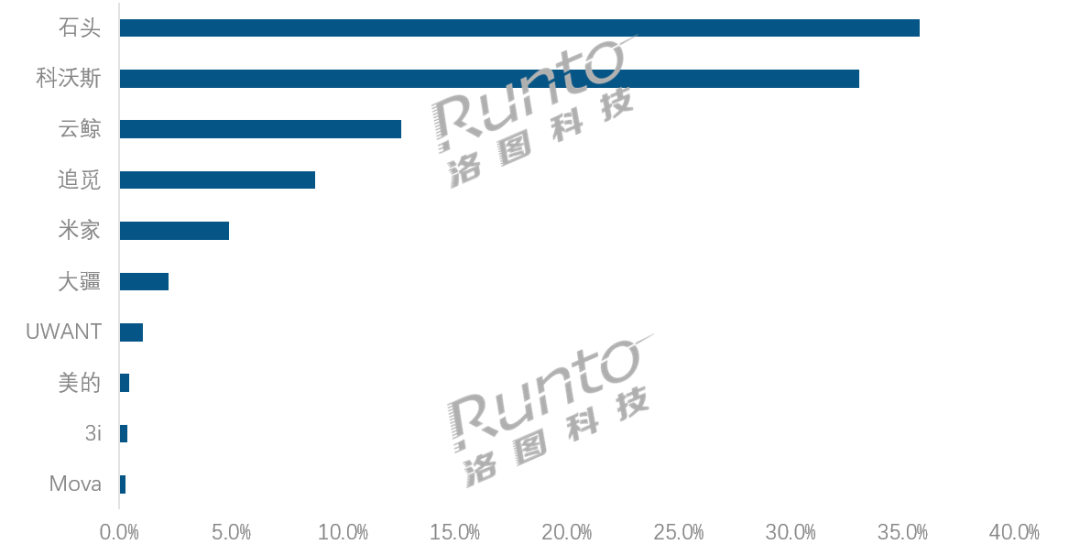
双11大促|中国扫地机器人线上市场量额双降两成,石头、科沃斯、云鲸排销额前三
Xin Lang Cai Jing· 2025-11-28 00:09
Group 1 - The 2025 Double 11 promotion period saw a total online sales volume of 1.178 million units, a decline of 24.4% compared to the same period in 2024 [1][3] - The decline in sales is attributed to two main factors: policy-induced pre-spending and a high comparative base effect, as well as the normalization of promotional events in the Chinese market [1][6] - The top four brands captured a significant market share during the promotion, indicating that leading brands tend to gain more market share during promotional periods [1] Group 2 - Stone ranked first with a 35.8% online market sales share, with its high-end P20 Ultra Plus series contributing 57.5% of its sales [3] - Ecovacs held a 33.1% sales share during the promotion, performing well across various price segments, particularly with its T80S series launched in September [3] - Cloud Whale achieved a 12.6% sales share, with its newly launched Xiaoyao 002 MAX series contributing 42.3% of its sales [4] Group 3 - Chase ranked at 8.8% in online sales share, focusing on high-end users and offering over ten products in the 4000 yuan and above market segment [4] - Xiaomi captured a 4.9% sales share, with a product lineup concentrated in the entry-level segment, emphasizing basic functionality without shortcomings [4] - DJI's ROMO series, launched in August 2025, quickly gained traction, ranking sixth in both sales volume and revenue during the Double 11 promotion [4] Group 4 - The market for robotic vacuum cleaners is under pressure to maintain high growth rates in the coming year, influenced by policy, consumer behavior, and industry dynamics [6] - There is significant potential for growth in the reputation of robotic vacuum cleaners, with companies encouraged to focus on improving navigation accuracy, cleaning efficiency, and multifunctionality [6]


浙江联翔智能家居股份有限公司关于闲置厂房对外出租的公告
Shang Hai Zheng Quan Bao· 2025-11-27 19:42
Core Viewpoint - Zhejiang Lianxiang Intelligent Home Co., Ltd. plans to lease its idle factory to Jiaxing Jindian Electric Co., Ltd. for an annual rent of 1,200,000.00 RMB, aiming to improve asset utilization efficiency and generate stable rental income [2][23]. Group 1: Leasing Details - The factory to be leased is located at No. 5, Yixing Road, Wuyuan Street, Haiyan County, Zhejiang Province, with a total area of 8,749.6 square meters [10][11]. - The lease term is set for three years, starting from November 27, 2025, to November 26, 2028 [6][13]. - The rental price is fixed at 1,200,000.00 RMB per year, which includes property fees and will not be adjusted during the lease period [15][22]. Group 2: Transaction Approval and Structure - The transaction has been approved by the company's board of directors with a unanimous vote of 9 in favor, requiring no shareholder meeting for further approval [5][24]. - The transaction does not constitute a related party transaction or a major asset restructuring as defined by the China Securities Regulatory Commission [3][4]. Group 3: Impact on Company Operations - Leasing the idle factory will not affect the company's normal operations or existing production capacity, allowing the company to utilize its idle assets effectively [23][24]. - The rental income is expected to have a positive impact on the company's future financial status [23][24]. Group 4: Tenant Information - Jiaxing Jindian Electric Co., Ltd. is a limited liability company with a registered capital of 17 million RMB, primarily engaged in the manufacturing of electrical wires and cables, among other activities [7][8]. - The company has no affiliation with Lianxiang, ensuring an independent leasing arrangement [9].

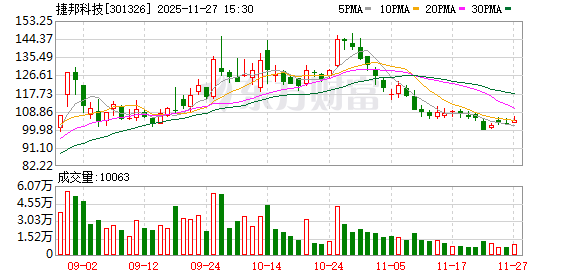
捷邦科技:公司拥有谷歌的供应商代码,产品已应用于谷歌的智能家居终端设备
Mei Ri Jing Ji Xin Wen· 2025-11-27 14:50
Core Insights - The company has a supplier code with Google and its products are currently used in Google's smart home devices [2] - The contribution of Google's smart home business to the company's overall revenue is relatively small at this time [2] - The company plans to monitor AI development trends and explore opportunities for new technologies in the smart home sector while focusing on its core business [2]