
水产养殖

Search documents
清风为伴产业兴丨精准发力解难题
Zhong Yang Ji Wei Guo Jia Jian Wei Wang Zhan· 2025-12-20 00:39
冬日暖阳下,安徽省宣城市宣州区水阳镇的蟹塘里,微风漾起阵阵涟漪。蟹农们穿梭塘间,正忙着水质 调控、水草管理,为蟹苗过冬防寒保暖。 水质检测指标、水体能见度、水草覆盖率是生态养殖塘口验收的3个关键指标,直接关乎幼蟹成活率, 当前正值幼蟹培育关键期,水阳镇纪委工作人员一早就来到幼蟹生态养殖基地,就塘口验收、生态保证 金管理使用等方面情况与蟹农详细交流、逐项核实。 作为全国重要的幼蟹生产基地,宣州区水阳镇现有幼蟹培育面积4万亩,幼蟹产量约占全国的七分之 一。宣州区纪委监委将特色产业发展纳入监督重点,成立由联系纪检监察室、派驻机构、乡镇(街道) 纪检监察协作区组成的监督检查组,深化"室组地"联动,发挥乡镇纪委监督"前哨"作用,将监督触角延 伸到生态养殖、品牌建设、产业服务各环节,全面排查问题线索,持续压实职能部门责任,督促做好水 质监测、技术指导及品牌推广等服务,助力特色产业发展提质增效。 此前,该区纪委监委在日常监督走访时收到了水阳镇双丰村群众反映的村集体水面发包过程中存在违规 操作的问题线索,该区纪委监委立即开展核查,最终时任双丰村党委副书记唐某某因在集体水面发包过 程中未正确履职受到严肃处理。针对涉及到的双丰村 ...
感知中国活力|三文鱼“搬家记”
Yang Shi Wang· 2025-12-19 17:13
央视网消息:这几天,一场大规模的海洋牧场转场正在山东沿海进行,百万尾三文鱼苗已完成在陆 地的阶段性养殖,即将搬入海上新家。那么,这批三文鱼为什么要搬家?搬家之旅如何确保安全?新家 又是什么样子呢? ...
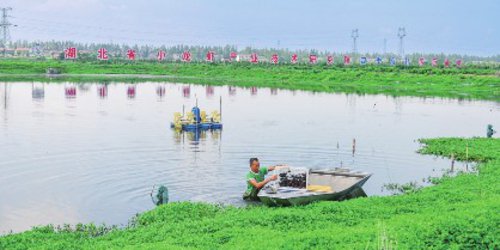
湖北潜江:“虾”红天下,“潜”力无限
Xin Lang Cai Jing· 2025-12-19 16:22
Core Viewpoint - The article highlights the comprehensive rural revitalization efforts in Qianjiang City, Hubei Province, focusing on the development of the "Qianjiang Lobster" industry as a model for agricultural modernization and economic growth [3][4]. Industry Development - Qianjiang's "shrimp-rice co-cultivation" model has evolved into a 2.0 version, with a projected total industrial chain output value of 87 billion yuan for 2024 [4]. - The regional public brand value of "Qianjiang Lobster" is estimated at 52.72 billion yuan for the 2024-2025 period, maintaining its top position in the industry for seven consecutive years [4]. - The "China Shrimp Valley" created by Qianwang Group serves as a central hub for the lobster trade, facilitating over 2,000 transactions daily and achieving peak daily transaction volumes exceeding 2,800 tons [4][5]. Logistics and Supply Chain - The "China Shrimp Valley" has established a cold chain logistics network covering over 600 cities nationwide, ensuring that lobsters can reach major cities like Shanghai and Nanjing within 4 to 14 hours [5]. - In the previous year, the trading volume exceeded 230,000 tons, generating a transaction value surpassing 10.5 billion yuan [5]. Talent Development and Education - Qianjiang has established the first Lobster Academy in China, training 10,000 lobster technicians, and collaborates with various research institutions to advance key technologies in the lobster industry [7]. - The city has implemented a three-tier training system, resulting in 23,000 new professional farmers trained annually, with an 85% conversion rate for rural e-commerce talent training [7]. Cultural and Community Engagement - Qianjiang promotes cultural activities and community engagement through initiatives like the "Three Rural Projects," which encourage urban residents, skilled individuals, and businesses to return to rural areas [7]. - The city has built various cultural facilities and hosts events to enrich the spiritual life of farmers, integrating agriculture with tourism and culture [7]. Governance and Community Participation - The implementation of the "Village Regulations and Points System" has enhanced grassroots governance, with over 80,000 participants engaging in community activities and redeeming goods valued at over 1.4 million yuan [8][9]. - The city has conducted over 2,200 community discussion events, attracting more than 40,000 participants and collecting nearly 10,000 suggestions for public welfare [9]. Future Focus - Qianjiang aims to enhance the shrimp-rice industry through standardization, branding, and high-end development, while also fostering a better entrepreneurial environment and integrating culture with agriculture and tourism [10].

金融“活水”滴灌一方沃土 看半岛象山特色产业何以向新而行
Feng Huang Wang Cai Jing· 2025-12-19 02:27
Core Viewpoint - The article highlights how financial support is driving the development of agriculture and marine economy in Xiangshan, showcasing the integration of technology and industry upgrades for rural revitalization [1]. Group 1: Agricultural Development - The "Red Beauty" citrus brand has seen rapid growth in Xiangshan, with over 37,000 acres planted, and approximately 30,000 acres ready for harvest, becoming a key pillar of rural revitalization [2] - Agricultural Bank of China (ABC) has introduced a specialized "Citrus Loan" to support the "Red Beauty" citrus industry, offering flexible repayment options based on planting cycles [2] - The investment in high-standard greenhouses exceeds 70,000 yuan per acre, with a long payback period of up to ten years, highlighting the financial challenges faced by farmers [2] Group 2: Marine Industry Development - Xiangshan has made significant advancements in breeding the bluefin mackerel, a high-value fish species, overcoming challenges in artificial breeding through controlled indoor farming techniques [3] - The company has invested over 2 million yuan annually in research and development, with approximately 700,000 yuan specifically allocated for bluefin mackerel this year [3] - ABC has provided targeted credit support to help local enterprises overcome technical bottlenecks in breeding, resulting in the successful cultivation of 27 marine fish species, with 16 being unique to the province and 5 filling domestic gaps [4] Group 3: Financial Support and Innovation - ABC's "Huinong e-loan" and other digital products have facilitated easier access to loans for local farmers, enabling them to adopt more profitable mixed farming practices [5] - The bank has committed to providing comprehensive credit support for various local industries, including blue marine farming, citrus planting, and rural tourism, to foster sustainable agricultural development [5] - As of November 2025, ABC's agricultural loans in Ningbo reached 19.535 billion yuan, an increase of 4.018 billion yuan from the beginning of the year, serving over 30,000 farmers and new agricultural operators [5]

守好农民“钱袋子”(群众身边不正之风和腐败问题集中整治)
Ren Min Ri Bao· 2025-12-18 22:17
"以前补贴进度得追着问,现在申请材料被'催'着交,干部比我还积极哩!"江苏省盐城市盐都区龙冈镇 九曲现代家庭农场负责人卞义明花10万元买了一台插秧机,早上刚把购机发票上传系统,中午就有乡镇 干部上门核验机具,指导其补充申请材料。不到一个月,2.6万元农机购置与应用补贴就打进了他的银 行卡。 "新修了机耕路,下完雨,也没耽误农机下田。"农户顾善华说,有一年雨水多,造成机耕路塌陷,农机 陷在泥里动弹不得,拖拽维修、开辟新路,整整耽误几天工期,晚播造成部分小麦未能出苗。 "机耕路的质量问题,从外观上较难看出。有的工程方偷工减料,不夯实地基,直接在路面浇筑混凝 土,厚度也只有15厘米。短期内看不出问题,但经过农机碾轧、雨水冲刷,就容易塌陷。"范场村六组 机耕路项目监理王云丰介绍。 深层次问题指向"蝇贪蚁腐"。"高标准农田建设工程量大、资金拨付快,成了某些人眼中的'肥肉'。"滨 海县纪委监委第五派驻纪检监察组组长寇健说,"整治中,我们发现个别领导干部与工程方、招标代理 等沆瀣一气,将中标项目层层转包、赚取差价。" 整治开展以来,滨海县深化以案促改促治,向县农业农村局制发纪检监察建议,推动建设高标准农田信 息化监管平台, ...
建设银行海南省分行全方位金融服务助力海南自贸港高质量发展
Zhong Guo Fa Zhan Wang· 2025-12-18 07:34
Core Viewpoint - The Hainan Free Trade Port is set to enhance its financial services and international business operations, with the Construction Bank focusing on supporting its development through innovative financial solutions and strategic partnerships [1][12]. Group 1: International Business Development - The Hainan Free Trade Port has established a cross-border capital flow management system, which includes a multi-functional free trade account (EF account) to facilitate cross-border transactions [2]. - As of November 2025, the Construction Bank's Hainan branch has opened 104 EF accounts, with a business volume equivalent to approximately 15.7 billion RMB, significantly improving the efficiency of cross-border settlements [2]. - The bank has successfully implemented various financial services under the EF account, including foreign exchange options and trade financing, marking a qualitative leap in cross-border capital flow [2][4]. Group 2: Support for New Quality Productivity - The Construction Bank's Hainan branch is increasing credit support for technology enterprises and strategic emerging industries, exemplified by a 472 million RMB international commercial loan to a rubber industry group to enhance its global market presence [3][5]. - The bank has developed tailored financial services for high-tech enterprises, with a loan balance of 2.643 billion RMB for high-tech industries as of November 2025, reflecting a growth of 23.62% [7][10]. - The bank's focus on innovation includes establishing a dedicated branch in the Sanya Yazhou Bay Science and Technology City to provide comprehensive financial services to key enterprises [6][10]. Group 3: Strengthening the Real Economy - The Construction Bank is committed to nurturing the real economy by integrating financial services with local industry characteristics, providing tailored financing solutions to support supply chain financing for agricultural enterprises [8][9]. - The bank has created a comprehensive financial service ecosystem for the "Hainan Fresh Products" brand, offering a range of services including financing, account management, and cross-border financial services [9]. - As of November 2025, the bank has supported over 24,100 small and micro enterprises, positioning itself as a leader in local financial institutions in terms of loan amounts and customer numbers [11].

宁夏贺兰:湖蟹搭乘物流快车销全国
Zhong Guo Jing Ji Wang· 2025-12-18 06:03
冬日的宁夏银川市贺兰县,"塞上湖蟹"产销依旧火热。今年,上海全国河蟹大赛、蟹博会等推介活动相 继举办,让贺兰"塞上湖蟹"名声大振。展会直播、美食探店,让更多消费者认识了这份西北美味。如 今,千里之外的食客只需一键下单,便能通过高效物流,收到带着黄河水气息的湖蟹。 在立岗镇银星村的宁蟹香虾蟹集散中心,工人们正忙碌分拣。刚出水的枸杞蟹青背白腹、膏腴饱满,被 迅速捆扎、装箱。车间外,快递车辆早已就位,工作人员熟练装车。这批湖蟹将通过银川集散中心,搭 乘冷链专线直发上海,跨越1800公里,实现"次日鲜"送达。这些河蟹出自宁夏沁园春农牧专业合作 社。"现在'塞上湖蟹'品牌受到越来越多的消费者信赖。下一步我们将扩大养殖规模、提升品质,让更 多消费者品尝到贺兰县的螃蟹。"该合作社理事长马红忠说。 "物流+农业"的融合,破解了贺兰蟹"运不远、卖不好"的难题。如今,江浙沪等地高端餐厅签订长期订 单,线上复购率持续增长。物流不仅拓宽了销路,更提升了品牌知名度。目前,贺兰县大闸蟹养殖面积 达9701亩,以"早上市、高品质、规模化"的特点,在加速开拓消费市场。 贺兰蟹能走向全国,物流支撑至关重要。河蟹鲜活易损,传统运输曾是瓶颈。为此 ...
好当家涨2.33%,成交额9435.57万元,主力资金净流出913.73万元
Xin Lang Cai Jing· 2025-12-18 02:50
Group 1 - The core viewpoint of the news is that Haodangjia's stock has shown fluctuations in price and trading volume, with a current market capitalization of 3.857 billion yuan and a year-to-date price increase of 14.73% [1] - As of November 28, the number of shareholders for Haodangjia increased by 24.33% to 81,400, while the average circulating shares per person decreased by 19.57% to 17,942 shares [2] - The company has reported a revenue of 936 million yuan for the period from January to September 2025, reflecting a year-on-year decrease of 3.73%, and a net profit attributable to shareholders of 27.03 million yuan, down 8.45% year-on-year [2] Group 2 - Haodangjia's main business revenue composition includes fresh sea cucumbers (42.29%), frozen prepared foods (36.51%), caught marine products (9.96%), sea cucumber products (9.73%), and other products (1.50%) [1] - The company has distributed a total of 421 million yuan in dividends since its A-share listing, with cumulative distributions of 46.93 million yuan over the past three years [3]

神农种业:在海域养殖方面,公司已顺利完成38口深水重力式网箱的投放工作
Mei Ri Jing Ji Xin Wen· 2025-12-17 10:17
Core Viewpoint - The company is actively developing its marine economy initiatives, particularly in aquaculture, with significant progress in its projects and certifications [1] Group 1: Project Development - The company has completed the core infrastructure construction of its Shennong Aquatic Seed Technology Industrial Park and is now in the rapid implementation phase [1] - The company has successfully deployed 38 deep-water gravity net cages for marine farming [1] Group 2: Aquaculture Production - In April, the company released 4 million golden pomfret fry, which are now being sold [1] - The company's deep-water net cage aquaculture base for golden pomfret received international BAP (Best Aquaculture Practices) certification in July [1] - In September, the company's farmed golden pomfret and volcanic sea bream passed antibiotic-free certification, indicating progress in quality control and sustainable development in aquaculture [1]

日本海鲜退场后,印度海鲜欲“霸占”中国市场!
Jin Tou Wang· 2025-12-17 09:50
Core Viewpoint - The suspension of Japanese seafood imports by China has led to a surge in Indian seafood stocks, with Indian media claiming a potential market opportunity in China, despite significant consumer resistance in China against Indian seafood products [1][2]. Group 1: Indian Seafood Market Potential - India is the second-largest seafood producer globally, with a rich variety of products including farmed shrimp, sea fish, crabs, squid, and lobsters, particularly excelling in shrimp exports [2]. - Following China's ban on Japanese seafood, Indian seafood companies experienced an 11% increase in stock prices, indicating optimism about entering the Chinese market [1]. Group 2: Food Safety Concerns - Indian food safety issues are a major concern, with data showing that from 2008 to 2018, food poisoning accounted for 31.5% of illnesses in certain regions, and 8.7% of deaths were attributed to foodborne illnesses [2]. - The leading cause of foodborne illnesses in India is food chemical contamination, which has a death rate of 70%, highlighting severe food safety challenges [2]. Group 3: Environmental and Hygiene Issues - India's climate, characterized by high temperatures and humidity, fosters bacterial growth, leading to rapid food spoilage [3]. - Poor sanitation practices, including the direct discharge of waste into water bodies, have resulted in severe water pollution, with 70% of surface water in India deemed unsafe for consumption [4]. Group 4: Alternatives to Indian Seafood - China has viable alternatives to Indian seafood, such as Ecuadorian shrimp and increasing domestic shrimp production, which reached 1.66 million tons last year [5]. - The decline in imported frozen shrimp from 1.17 million tons to 1.04 million tons indicates a shift towards domestic sources, as consumer preferences lean towards quality and safety over origin [5].