
资本市场

Search documents
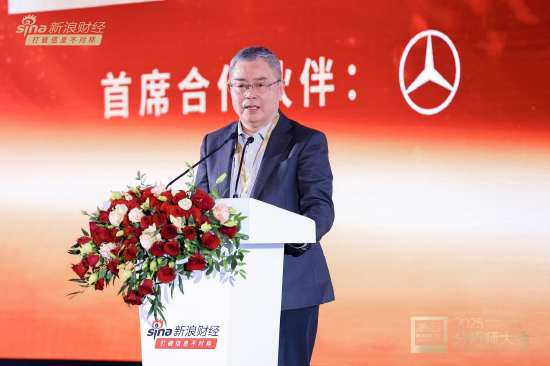
李扬:利率下行成为我国金融运行的重要常态
Xin Lang Zheng Quan· 2025-11-28 07:26
Group 1 - The 2025 Analyst Conference has commenced, gathering top researchers, fund managers, and scholars to explore investment opportunities amidst economic cycles [1] - Li Yang highlighted that the downward trend in interest rates has become a significant norm in China's financial operations, driven by factors such as declining global potential growth rates and changes in monetary policy paradigms [3][4] - As of October this year, the structure of social financing has notably changed, with RMB deposits reaching 325.55 trillion yuan and loans at 270.61 trillion yuan, indicating a net increase in deposits over loans [3] Group 2 - The continuous decline in interest rates since 2015 has led to lower yields on 10-year and 30-year government bonds, with the latest figures showing yields at 1.8210% and 2.1586% respectively [4] - The persistent reduction in the reserve requirement ratio has further contributed to the decline in interest rates, aligning with global trends of ultra-low or negative interest rates in regions like the US, Japan, and the Eurozone [4] - The decline in interest rates has multiple impacts, including reduced financial costs for the real economy and a historical low net interest margin for commercial banks at 1.42%, prompting financial institutions to transform [4] Group 3 - The development of the capital market has been prioritized, addressing the long-standing issues of underdeveloped capital markets and low direct financing ratios in China [4] - Asset management and mergers & acquisitions are identified as key drivers for capital market development, with the scale of the wealth management market expected to exceed 32 trillion yuan by 2025 [4][5] - The introduction of policies to relax conditions for merger targets and simplify review processes supports cross-industry mergers and acquisitions, enhancing the vitality of the capital market [5]

李扬:中国金融结构迎积极变化 资本市场发展迎新机遇
Xin Lang Zheng Quan· 2025-11-28 06:45
Core Insights - The 2025 Analyst Conference has commenced, gathering top analysts, fund managers, and scholars to explore investment opportunities amidst changing market conditions [1] Group 1: Financial Structure Changes - China's financial structure is undergoing positive changes, characterized by adjustments in social financing structure and a continuous decline in interest rates, creating new opportunities for capital market development [3] - In the first ten months of this year, the change in social financing structure is notable, with RMB deposits reaching 325.55 trillion and loans at 270.61 trillion, resulting in an increase of 8.35 trillion in deposits over loans [3] - The trend of "disintermediation" has persisted for three years, with M2 continuing to grow and M1 increasing at a faster rate, indicating improved monetary liquidity [3] Group 2: Interest Rate Trends - The decline in interest rates has become a significant norm in China's financial operations, with the 10-year and 30-year government bond yields consistently decreasing since 2015 [4] - As of November 24, 2025, the 10-year government bond yield is at 1.8210% and the 30-year yield at 2.1586%, with the average interest rate on new loans dropping to 3.24% [4] - The continuous reduction in the reserve requirement ratio has further facilitated the decline in interest rates, influenced by global trends of low or negative interest rates [4] Group 3: Capital Market Development - The development of asset management and mergers and acquisitions (M&A) is crucial for capital market growth, with the scale of the wealth management market expected to exceed 32 trillion by 2025 [5] - There is a rising demand for equity and mixed-asset financial products among investors, while M&A has become an important adjustment mechanism in the era of stock economy [5] - The introduction of "six guidelines" for M&A has relaxed conditions for targets and simplified review processes, supporting cross-industry mergers and technology acquisition [6]
陕西:争取在陕设立社保科创基金 建立耐心资本监测和统计制度
Zheng Quan Shi Bao Wang· 2025-11-27 05:41
Core Viewpoint - Shaanxi Province has introduced sixteen measures to deepen capital market reforms to support high-quality development in the region [1] Group 1: Financing and Capital Market Utilization - Encouragement for listed companies to utilize diverse financing tools in the capital market, including rights issues, bond issuance, and securitization products for refinancing [1] - Support for listed companies to effectively conduct mergers and acquisitions, establishing a project matching mechanism for M&A [1] Group 2: Investment and Fund Establishment - Efforts to establish a social security science and technology innovation fund in Shaanxi and actively seek national venture capital guidance funds to operate in the province [1] - Introduction and cultivation of patient capital from banking institutions, promoting the expansion of equity investment pilot programs for financial asset investment companies (AIC) across the province [1] - Establishment of a mechanism for insurance capital to enter Shaanxi, supporting insurance funds in setting up private equity venture capital funds [1] - Creation of a monitoring and statistical system for patient capital [1]
金针绣蜀锦 金融助力四川“十四五”高质量发展
Si Chuan Ri Bao· 2025-11-27 03:45
Banking Industry - As of September 2025, the balance of deposits in Sichuan Province reached 14.55 trillion yuan, with an average annual growth rate of approximately 9.6% since the "14th Five-Year Plan" [1] - The balance of loans reached 12.8 trillion yuan, with an average annual growth rate of about 12.5% during the same period [1] - The loan-to-deposit ratio of financial institutions in the province is 88%, an increase of 17 percentage points compared to the end of the "13th Five-Year Plan" [1][4] - The number of A-share listed companies in the province has increased to 179, ranking 8th nationally, with a total market value exceeding 3 trillion yuan [2][4] Insurance Industry - Since the "14th Five-Year Plan," the insurance sector has provided risk protection that has grown nearly fourfold, with total compensation reaching 473.5 billion yuan [1][9] - Agricultural insurance and disaster insurance have provided risk protection of 1.22 trillion yuan and 422.1 billion yuan, respectively [1][8] - The scale of insurance funds entering Sichuan has surpassed 880 billion yuan, with an average annual growth rate of 17.2% over the past five years [1][4] Capital Market - The province has 8 securities and futures fund companies and 540 branch institutions, with 44 securities service institutions [1] - Since the "14th Five-Year Plan," 46 new A-share listed companies have been added, raising over 36 billion yuan in initial public offerings [1][4] - Various market entities have achieved direct financing exceeding 2.1 trillion yuan through the capital market [2][4] Financial Support for Economic Development - The financial sector has maintained a healthy and rapid development momentum, with the total balance of deposits and loans growing by 59% and 80.3%, respectively, since the end of the "13th Five-Year Plan" [3][4] - Loans to infrastructure have seen an average annual growth rate of 17%, providing strong support for major long-term projects [6][7] - The balance of loans in the technology sector has reached 1.3 trillion yuan, with a growth rate of 27.3% for loans to technology-based SMEs [7][8] Future Outlook - The financial industry in Sichuan is set to continue its development by focusing on supporting the real economy, enhancing service quality, and strengthening regulatory measures [15][17] - The province aims to deepen financial reforms and promote high-quality financial development to contribute to the overall modernization of Sichuan [13][16]
P/E Ratio Insights for Nasdaq - Nasdaq (NASDAQ:NDAQ)
Benzinga· 2025-11-26 21:01
Core Viewpoint - Nasdaq Inc. stock is currently priced at $89.13, reflecting a slight decrease of 0.01% in the current session, but has seen an increase of 5.63% over the past month and 8.72% over the past year, raising questions about its valuation despite current performance issues [1] Group 1: Stock Performance - Nasdaq's stock price is $89.13 with a 0.01% decrease in the current session [1] - The stock has increased by 5.63% over the past month [1] - Over the past year, the stock has risen by 8.72% [1] Group 2: P/E Ratio Analysis - The P/E ratio is a critical metric for long-term shareholders to evaluate market performance against historical earnings and industry standards [5] - Nasdaq has a P/E ratio of 31.84, which is higher than the Capital Markets industry's aggregate P/E ratio of 24.4 [6] - A higher P/E ratio may suggest that Nasdaq is expected to perform better than its industry, but it could also indicate that the stock is overvalued [6] Group 3: Investment Considerations - The P/E ratio should be used cautiously as it can indicate undervaluation or weak growth prospects [9][10] - It is essential to consider the P/E ratio alongside other financial metrics, industry trends, and qualitative factors for a comprehensive analysis [10]


“十五五”规划建议之资本市场展望
Shang Hai Zheng Quan Bao· 2025-11-26 12:09
Group 1 - The "15th Five-Year Plan" outlines a blueprint for China's economic and social development, emphasizing the importance of capital markets in achieving these goals [1][2] - The plan highlights the need for a well-functioning capital market that supports direct financing through stocks and bonds, as well as the development of futures, derivatives, and asset securitization [1][2] - The capital market is expected to play a crucial role in serving the real economy and providing quality financial services to key strategic areas and weak links [3] Group 2 - The overall goal for the capital market in the next five years is to establish a high-quality development framework, improve investor protection mechanisms, and enhance the quality and structure of listed companies [4] - Key reform areas include enhancing the capital market's inclusiveness and adaptability, focusing on serving the real economy, and promoting the development of a multi-tiered bond market [4][5] - The plan aims to create a more attractive environment for long-term capital investment and improve the structure of market funding sources [5][6] Group 3 - The capital market is expected to undergo significant changes, leading to a new balance in investment and financing, with a focus on new economic sectors [7] - By mid-2025, the proportion of strategic emerging industry companies in the A-share market is projected to reach 32.78%, with over 90% of IPOs coming from these sectors [7] - The market is anticipated to see an increase in institutional and long-term capital, with a reported 21.4 trillion yuan in long-term funds held by A-shares as of August 2025, marking a 32% increase from the end of the 13th Five-Year Plan [8] Group 4 - The diversification of financial tools and services is expected to meet the varying needs of different investment and financing entities, with an emphasis on inclusive products for individual investors [9] - The capital market is set to benefit from the comprehensive reform of investment and financing mechanisms, which is anticipated to enhance market activity and investor engagement [12] - The ongoing AI technology wave and global monetary system reshaping are expected to contribute to the revaluation of Chinese assets, providing a solid foundation for future capital market growth [13]
资本市场赋能山东高质量发展 “十四五”交出亮眼答卷
Sou Hu Cai Jing· 2025-11-26 03:43
Core Insights - The capital market in Shandong has significantly contributed to the province's high-quality economic and social development during the "14th Five-Year Plan" period, showcasing strong performance in various areas such as market system improvement and promoting industrial-financial integration [1][4] Group 1: Capital Market Development - Shandong has seen a continuous increase in the number of listed companies, with 84 new companies added, over 90% of which are strategic emerging, high-tech, or specialized enterprises, indicating a notable improvement in both quality and quantity of listings [1] - By the end of October 2025, the total number of listed companies in Shandong is expected to reach 311, with 85 companies having a market capitalization exceeding 10 billion yuan, reflecting a 36% increase in total market value compared to the end of the "13th Five-Year Plan" [1] Group 2: Financing and Investment - The bond market and private equity market have both expanded, with the bond balance surpassing 1 trillion yuan and social financing in Shandong exceeding 25 trillion yuan, contributing to a comprehensive financing system [2] - Private equity investments in Shandong have reached 3,699 billion yuan across 4,806 projects, providing essential growth capital for early-stage technology companies [2] Group 3: Corporate Performance and Innovation - In 2024, Shandong's listed companies achieved a revenue of 2.96 trillion yuan and a net profit of 180.3 billion yuan, marking increases of 29% and 22% respectively since 2020, indicating improved profitability and growth quality [3] - Research and development spending by companies during the "14th Five-Year Plan" reached 382.1 billion yuan, a 76.5% increase from the previous five years, highlighting significant advancements in key technologies and domestic alternatives [3] Group 4: Regulatory Environment and Policy Support - The Shandong provincial government has issued policies to promote high-quality capital market development, enhancing collaboration between central and local authorities and focusing on key sectors such as green economy and private enterprises [4] - Regulatory bodies have intensified efforts to combat financial fraud and insider trading, ensuring investor protection and maintaining a stable market environment [4]
“十五五”如何布局?黄奇帆、林毅夫、朱民、吴晓求、张军发声
Zheng Quan Shi Bao· 2025-11-25 06:37
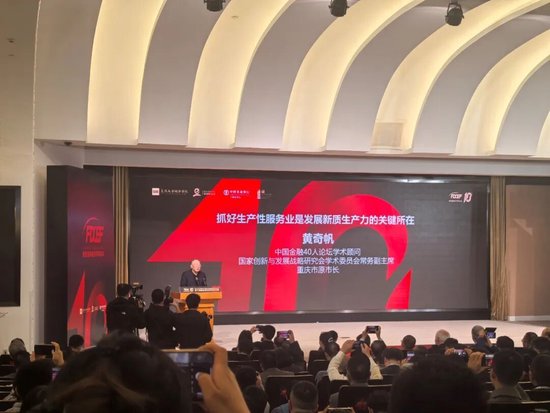
Group 1: Economic Strategy and Development - The 14th Five-Year Plan emphasizes the need for a new blueprint and new momentum for China's economic growth, with discussions led by economists like Huang Qifan and Lin Yifu [1] - Huang Qifan highlights the importance of developing the productive service industry as a key driver for GDP growth and overall productivity, suggesting that it should be a focus during the 14th Five-Year Plan [3][4] - Lin Yifu warns of a potential AI bubble in the U.S. during the 14th Five-Year Plan period, drawing parallels to the 2008 financial crisis, and suggests that China should aim for an 8% annual growth rate until 2035 [5][6] Group 2: Manufacturing and Trade - Zhu Min stresses the need for China to enhance product quality and build a new type of manufacturing industry, moving from labor-intensive to capital and technology-intensive products [7][8] - The global trade structure is changing, and China is diversifying its exports, focusing on capital and technology-intensive products rather than labor-intensive ones [7] - The goal is for manufacturing to remain a significant part of the economy, with a target of 25% by 2040, while the productive service sector should rise to 35%-40% of GDP [4] Group 3: Capital Market Reforms - Wu Xiaoqiu calls for a restructuring of the capital market ecosystem to better protect investor interests, moving away from a focus solely on financing [9][10] - The reform aims to increase the presence of high-tech companies in the stock market, with expectations that 35 out of the top 50 listed companies will be high-tech by the end of the 14th Five-Year Plan [9] - There is a push for greater transparency and improved regulatory frameworks in the capital market to enhance liquidity and attract larger investments [9] Group 4: Domestic Demand and Service Trade - Zhang Jun emphasizes the need for China to reduce reliance on exports and increase domestic demand, suggesting that trade surpluses should approach zero [12] - Recommendations include lowering barriers to service trade, adjusting exchange rate policies, and increasing investment in social sectors to support domestic consumption [12]
“十五五”如何布局?黄奇帆、林毅夫、朱民、吴晓求、张军发声
证券时报· 2025-11-25 06:34
Group 1: Core Perspectives - The "14th Five-Year Plan" emphasizes the development of the productive service industry as a key driver for GDP growth and innovation in manufacturing [4] - The international economic landscape is expected to remain weak, with potential risks of an AI bubble burst in the U.S. during the "14th Five-Year Plan" period [6] - China aims to enhance its manufacturing quality and transition to a new type of manufacturing that is not only cost-effective but also high-tech [8] Group 2: Economic Strategies - The productive service industry is identified as a crucial element for improving total factor productivity, with a target for its GDP share to rise to 35%-40% by 2040 [4] - Recommendations include adopting more proactive monetary and fiscal policies to tap into China's economic growth potential, estimated at 8% annually until 2035 [6] - The need for restructuring the capital market ecosystem to prioritize investor protection and enhance market transparency is highlighted [10][11] Group 3: Trade and Domestic Demand - The strategy to reduce reliance on exports and increase domestic demand is emphasized, with a goal to bring trade surplus close to zero [13] - Suggestions include lowering market access barriers in service trade and adjusting the exchange rate to support manufacturing upgrades and consumer spending [14] - Increased investment in social welfare sectors like education and healthcare is recommended to support the domestic demand strategy [15]
全链条护航中小投资者资本市场“强保护”时代来临
Sou Hu Cai Jing· 2025-11-24 06:20
Core Viewpoint - The China Securities Regulatory Commission (CSRC) has released the "Opinions on Strengthening the Protection of Small and Medium Investors in the Capital Market," marking a significant shift towards a systematic approach to investor protection, with 23 specific measures aimed at addressing the core concerns of small and medium investors [1][10]. Group 1: Issuance and Listing - The "Opinions" introduce a "long-term capital inclination mechanism" in the new stock issuance pricing process, increasing allocation ratios for offline investors with longer lock-up periods, while limiting malicious bidding by institutions to reduce the risk of small investors buying at inflated prices [2]. - It emphasizes the need for intermediaries to adhere to strict behavioral guidelines, prohibiting underwriting and advisory firms from charging fees based on issuance scale, thereby ensuring a focus on the true valuation of companies [2]. - The document mandates the optimization of prospectus templates to make them more comprehensible, ensuring that significant risks and core operational information are fully disclosed to prevent "sick listings" [2]. Group 2: Trading Mechanisms - The "Opinions" establish "abnormal trading monitoring standards" to address fairness concerns related to algorithmic trading, enhancing real-time data checks and risk warnings for high-frequency trading and large account groups [4]. - It tightens regulations on brokerage services, prohibiting special trading conveniences for individual investors and ensuring equal rights for all investors in terms of transaction execution [4]. Group 3: Responsibility and Protection Systems - The policy reinforces the "full-process protection obligation" for institutions serving small investors, mandating comprehensive risk disclosures and investor education throughout the product sales process [5]. - It designates the operating institutions as the primary responsible party for handling complaints, requiring them to establish standardized mechanisms for complaint resolution [5]. - The "Opinions" also focus on the responsibilities of listed companies, requiring timely and accurate information disclosure from shareholders and actual controllers to prevent asset depletion behaviors [6]. Group 4: Legal and Dispute Resolution Mechanisms - A three-tiered accountability system is established to combat fraud and financial misconduct, prioritizing the accountability of controlling shareholders and actual controllers [7]. - The "Opinions" promote a "mediation first, litigation as a backup" approach to dispute resolution, facilitating faster resolution of similar disputes through innovative mechanisms [8]. Group 5: Delisting and Exit Mechanisms - The "Opinions" create a comprehensive protection mechanism for the delisting process, requiring companies at risk of delisting to fully disclose risks and monitor abnormal trading [9]. - It mandates that controlling shareholders initiate compensation procedures for investors in cases of major violations leading to forced delisting, and provides cash options for investors in voluntarily delisting companies [9]. Group 6: Overall Impact - The implementation of the "Opinions" is expected to enhance market confidence and attract orderly inflows of new capital, while also promoting a shift from a retail-dominated investor structure to a more balanced development between institutional and retail investors [10]. - The policy aims to transform the investment culture from short-term speculation to long-term value investment, thereby improving the capital market's service to the real economy [10].