互联网数据服务

Search documents
光环新网:截至目前公司算力业务规模已超过4000P
Zheng Quan Ri Bao· 2026-01-15 08:37
Core Insights - The company, Guanghuan New Network, has deployed high-performance computing hardware at its Beijing and Tianjin data centers to provide advanced computing power and network services to users [2] - The scale of the company's computing power business has exceeded 4000P, with an annual contract value surpassing 100 million yuan [2] - Some data centers are utilizing HVDC power supply technology solutions based on customer requirements [2]


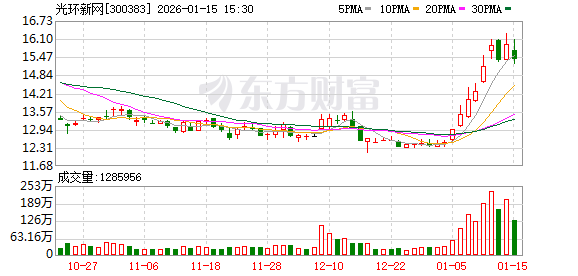
光环新网:2026年公司将积极推进在建项目建设进度,提升已投产项目上架率
Mei Ri Jing Ji Xin Wen· 2026-01-15 04:06
Core Viewpoint - The company anticipates significant growth in its performance driven by the expansion of its internet data center and cloud computing businesses, particularly in 2026, as it progresses with ongoing projects and enhances the utilization rate of existing facilities [1] Group 1: Business Overview - The company's main business segments are internet data center services and cloud computing [1] - The internet data center business has a geographical reach that includes the Beijing-Tianjin-Hebei region, the Yangtze River Delta, and central and western China, with expansion plans in Inner Mongolia, Hainan, and Malaysia [1] Group 2: Future Projects and Developments - In 2025, the company plans to launch several data center projects in Shanghai (Jiading Phase II), Tianjin (Baodi), and Changsha (Phase I) [1] - The company aims to actively advance the construction progress of ongoing projects in 2026 and improve the utilization rate of already operational projects [1] - Detailed updates on these developments will be provided in the annual report scheduled for release on April 29, 2026 [1]
优刻得:截至2025年12月31日公司股东人数为39320户
Zheng Quan Ri Bao Wang· 2026-01-07 13:44
Group 1 - The core point of the article is that the company Youke De has stated that by December 31, 2025, the number of its shareholders is expected to reach 39,320 households [1]

武汉2025年全社会用电量公布 新能源与数字经济成增长双引擎
Ren Min Wang· 2026-01-06 02:13
2026年1月1日,国网武汉供电公司发布2025年全社会用电数据,全年累计用电量达857.12亿千瓦时,同比2024年 增长4.76%,展现出稳健韧性。 这些高技术制造业与现代服务业的用电增长,背后折射了武汉电网与行业区域发展同频共振。2025年,国网武汉 供电公司聚焦全面打造现代化用电营商环境,建立重大项目报装"双长制",推动项目"拿地即开工""摘牌即通 电"。同时,大电网建设持续推进,500千伏东新变电站、金银湖变电站接连投产送电,一年投运2座500千伏变电 站,为区域经济发展注入坚强动力。大力实施网架优化补强工程,投运220千伏舵落口、西边湾等重点工程20项, 按期投产165项主配网度夏重点工程。这些举措助力东湖实验室、湖北瑞达智能装备产业园等省市重点项目"早接 快用",助力武汉市牵住高质量发展的"牛鼻子",以科技创新引领现代化产业体系建设。 在产业用电亮眼的同时,武汉市用电结构亦呈现积极变化。城乡居民生活用电量增速达3.84%,低于全社会用电 量增速,而充换电服务业用电量增长17.4%,既反映市民绿色出行意愿提升,也是武汉城乡协调发展和绿色转型 的缩影。 2025年9月25日,华中地区首个进入城市腹地 ...
首都在线:公司积极储备高电及液冷系统等符合智算需求的机柜资源
Zheng Quan Ri Bao Zhi Sheng· 2026-01-05 14:12
Core Viewpoint - The company is actively preparing for opportunities and challenges in the intelligent computing era by enhancing its data center operations and focusing on energy-efficient solutions for AI applications [1] Group 1: Data Center Operations - The company is investing in high-power and liquid cooling systems that meet the demands of intelligent computing [1] - Continuous optimization of server cooling efficiency and reduction of energy consumption is a priority for the company [1] Group 2: Collaboration and Innovation - As a member of the Liquid Cooling AI Open Alliance, the company collaborates with chip manufacturers and AI industry clients to explore efficient liquid cooling solutions tailored for AI scenarios [1] - The company aims to promote the widespread adoption of liquid cooling technology in the AI computing field [1]

人民网:武汉2025年全社会用电量公布 新能源与数字经济成增长双引擎
Ren Min Wang· 2026-01-04 03:02
Core Insights - The total electricity consumption in Wuhan for 2025 reached 85.712 billion kilowatt-hours, reflecting a year-on-year growth of 4.76% compared to 2024, indicating robust resilience in the economy [1] - The electricity consumption data highlights a shift in Wuhan's economic direction, with significant growth in sectors such as new energy vehicle manufacturing and internet data services, which saw year-on-year increases of 71.9% and 240.6%, respectively [1] Industry Electricity Consumption - The secondary industry experienced a year-on-year electricity consumption growth of 5.53%, with manufacturing seeing a notable increase of 7.57%, surpassing the average growth rate [1] - The automotive manufacturing sector's electricity consumption grew by 13.05%, with new energy vehicle manufacturing leading with a 71.9% increase, underscoring Wuhan's position as a leader in the electrification transition [1] - The computer, communication, and other electronic device manufacturing sectors also reported a 14.29% increase in electricity consumption [1] Service Sector Growth - The third industry, particularly internet data services, exhibited a remarkable surge in electricity consumption, soaring by 240.6%, highlighting the explosive growth of Wuhan's digital economy industry cluster [1] Infrastructure Development - In 2025, the State Grid Wuhan Electric Power Company focused on creating a modern electricity business environment, implementing a "dual long system" for major project connections, facilitating immediate project commencement and electricity access [3] - The construction of the large power grid continued, with the commissioning of two 500 kV substations, injecting strong momentum into regional economic development [3] - The company also executed 20 key projects for grid optimization and reinforcement, ensuring timely completion of 165 summer peak power supply projects [3] Changes in Electricity Structure - The growth rate of electricity consumption for urban and rural residents reached 3.84%, which is lower than the overall societal growth rate, while the electricity consumption for charging and swapping services increased by 17.4%, reflecting a rise in citizens' willingness for green travel [3]

武汉2025年全社会用电量同比增长4.76%
Chang Jiang Ri Bao· 2026-01-03 01:02
Core Insights - In 2025, the total electricity consumption in Wuhan reached 85.712 billion kilowatt-hours, reflecting a year-on-year growth of 4.76%, indicating robust resilience in the economy [1] - The electricity consumption data highlights a shift in Wuhan's economic landscape, with significant growth in sectors such as new energy vehicle manufacturing and internet data services, which saw year-on-year increases of 71.9% and 240.6% respectively [1] Group 1: Electricity Consumption Trends - The second industry saw a year-on-year electricity consumption increase of 5.53%, with manufacturing electricity consumption rising by 7.57%, significantly above the average growth rate [1] - New energy vehicle manufacturing electricity consumption grew by 71.9%, underscoring Wuhan's leading position in the electric vehicle transformation [1] - The computer, communication, and other electronic equipment manufacturing sectors experienced a 14.29% increase in electricity consumption [1] Group 2: Economic Growth Indicators - In the first three quarters of 2025, Wuhan's industrial added value above designated size grew by 5.4%, with the computer, communication, and other electronic equipment manufacturing sector growing by 18.0% [2] - The electrical machinery and equipment manufacturing sector saw an 11.7% growth, further supporting the trend of increased electricity consumption in high-tech manufacturing [2] - The production of automobiles in Wuhan showed steady growth, with new energy vehicle output expected to increase by 56.7%, raising its share of total vehicle production to 52.72% [2] Group 3: Changes in Electricity Structure - Urban and rural residential electricity consumption grew by 3.84%, which is lower than the overall electricity consumption growth rate, indicating a shift in consumption patterns [2] - The electricity consumption in the charging and swapping service industry increased by 17.4%, reflecting the rising willingness of citizens to adopt green transportation [2] - These changes in electricity consumption patterns illustrate the coordinated development and green transformation of urban and rural areas in Wuhan [2]
前11月高技术及装备制造业合计用电量增速领先 中电联专家:11月汽车制造业用电量增速保持两位数增长
Mei Ri Jing Ji Xin Wen· 2025-12-24 09:20
Core Insights - The National Energy Administration reported that the total electricity consumption in China reached 9.46 trillion kilowatt-hours from January to November, marking a year-on-year growth of 5.2% [1] - In November alone, electricity consumption was 835.6 billion kilowatt-hours, with a year-on-year increase of 6.2%, which is 3.4 percentage points higher than the same month last year [1] - The 2026 National Energy Work Conference projected that total electricity consumption in China is expected to exceed 10 trillion kilowatt-hours by 2025, which is approximately double the total for 2015 [1] Industry Breakdown - The electricity consumption in the primary industry reached 137.4 billion kilowatt-hours, growing by 10.3% year-on-year; the secondary industry consumed 6,043.6 billion kilowatt-hours, with a growth of 3.7%; and the tertiary industry consumed 182.04 billion kilowatt-hours, increasing by 8.5% [2] - High-tech and equipment manufacturing industries saw a combined electricity consumption growth of 6.4% year-on-year, indicating a rise in new economic momentum [2] - In November, electricity consumption in high-tech and equipment manufacturing grew by 6.7%, surpassing the average growth rate of the manufacturing sector by 2.5 percentage points [2] Investment and Production - Increased investment is leading to a surge in orders for equipment manufacturing companies, which in turn drives up electricity consumption as factories operate more intensively [3] - The National Development and Reform Commission has approved over 8,400 projects to support equipment upgrades, leading to total investments exceeding 1 trillion yuan [2][3] Sector-Specific Growth - The electricity consumption for internet data services surged by 43.3% year-on-year from January to November, with November alone seeing a 43.1% increase [4] - The charging service industry experienced a 48.3% growth in electricity consumption, with November's growth rate reaching 60.2%, significantly higher than the previous year [4] - The rapid development of new infrastructure such as 5G networks, big data, and cloud computing has contributed to the substantial increase in electricity consumption in these sectors [4] Electric Vehicle Impact - The rise in electricity consumption in the charging service sector is closely linked to the rapid expansion of electric vehicle ownership and supporting infrastructure [5] - In November, 1.823 million electric vehicles were sold, accounting for 53.2% of total vehicle sales, indicating a significant shift towards electrification in the automotive market [5] - As of November 2025, the total number of electric vehicle charging facilities reached 19.322 million, a year-on-year increase of 52% [6]
美柚连续九年稳居“福建省互联网企业50强”
Xin Lang Cai Jing· 2025-12-19 14:22
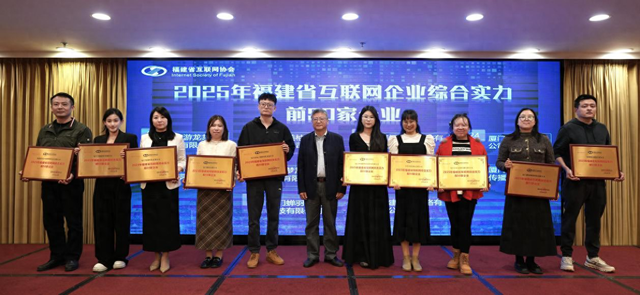
Core Insights - The "Top 50 Internet Enterprises in Fujian Province by 2025" list was officially released, with Meiyou being recognized for the ninth consecutive year, highlighting its comprehensive strength and industry influence [1][3]. Group 1: Industry Overview - The event gathered industry authorities, experts, and corporate representatives to discuss new pathways for the integration of artificial intelligence and industry [3]. - The "2025 Fujian Province Internet Enterprises Research Report" revealed a strong growth trend, with the top 50 companies achieving a total internet business revenue of 61.38 billion yuan, reflecting a year-on-year growth of 20.5% [3]. - Emerging sectors such as cloud services and data services have shown significant growth, becoming key drivers of this increase [3]. Group 2: Company Profile - Meiyou - Meiyou is a representative enterprise in the vertical data service sector, having evolved from a menstrual management tool to a comprehensive health management service platform covering women's health throughout various life stages [3]. - The Meiyou App has accumulated over 400 million users, with monthly active users exceeding 50 million, positioning it as a leader in the women's health and maternal-child sectors [3]. - As a national high-tech enterprise, Meiyou integrates mobile internet and artificial intelligence technologies to create core competitive advantages, offering precise menstrual predictions and health tracking through advanced predictive technologies [3]. Group 3: Regional Development Initiatives - The continuous innovation and deepening of vertical fields by Meiyou reflect the active integration of Fujian's internet enterprises into the digital economy [4]. - The Fujian Provincial Communication Administration emphasized the importance of evaluating corporate comprehensive strength and talent cultivation to drive industrial upgrades and build competitive advantages [4]. - The Fujian Internet Association's initiative since 2017 aims to identify and establish backbone enterprises and benchmarks in the province's internet industry, serving as a window to observe the digital economy's landscape and development trends [4].
新华指数·博鳌发布|内蒙古生产经营平稳有序 绿色低碳新型电力系统加速构建
Xin Hua Cai Jing· 2025-12-08 09:03
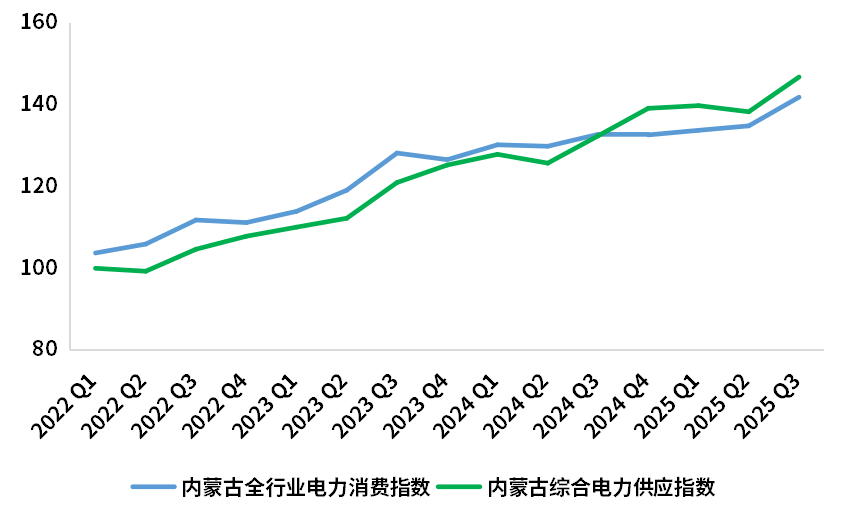
Core Insights - The Inner Mongolia region has made significant progress in developing renewable energy, achieving a historic milestone where installed capacity of new energy surpassed that of thermal power a year ahead of schedule [3] - The overall electricity consumption index and comprehensive electricity supply index in Inner Mongolia have increased by 4.49% and 10.07% year-on-year, respectively, indicating a robust growth in power generation and consumption [1][3] Group 1: Renewable Energy Development - Inner Mongolia's installed capacity of renewable energy exceeded 150 million kilowatts by the end of October 2025, ranking among the top in the country [3] - Wind and solar power account for over 80% of the newly added installed capacity, with wind power supply index and solar power supply index increasing by 24.53% and 61.99% year-on-year, respectively [3] Group 2: Industrial and Economic Impact - The manufacturing sector has played a crucial role in electricity consumption, contributing nearly 60% to the overall growth in electricity demand in the first three quarters of 2025 [4] - The digital economy is thriving, with internet data service electricity consumption increasing by 83.87% year-on-year, driven by the development of green computing hubs in Hohhot and Ulanqab [4] Group 3: Green Energy Utilization - Inner Mongolia is actively promoting the use of green energy in non-electric applications, with one-third of the total electricity consumption being green electricity [4]