
农产品种植与销售

Search documents
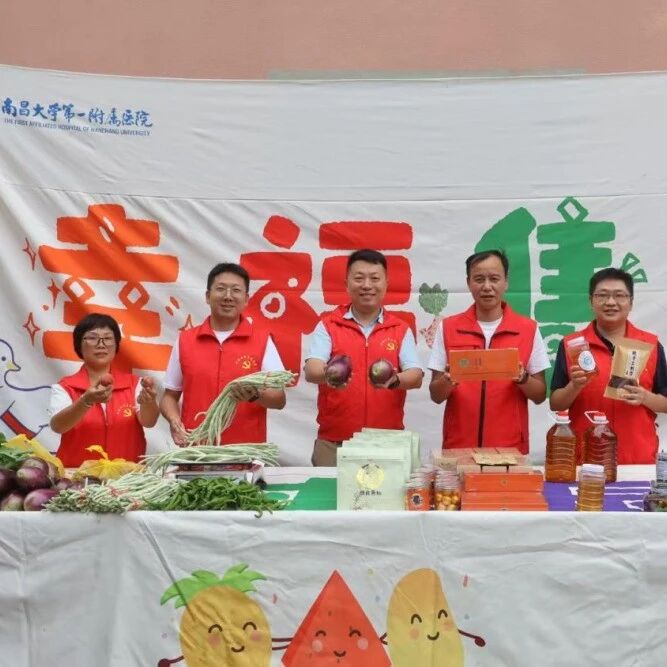
江西铜鼓县:“幸福集市”助力农产品走出“深山”
新华网财经· 2025-12-12 10:05
Core Viewpoint - The article highlights the successful implementation of the "Happiness Market" initiative in Xingyuan Village, Jiangxi Province, which has significantly improved the sales channels for local agricultural products and contributed to poverty alleviation efforts in the area [2][4][8]. Group 1: Sales and Economic Impact - The "Happiness Market" program has enabled local farmers to sell their products online, resulting in a sales revenue of over 6,000 yuan from the sale of fresh pork from a local farmer [2]. - The initiative has facilitated the sale of various agricultural products, including corn, taro, eggs, honey, and black goats, with total sales exceeding 10 million yuan over five years, generating over 1.5 million yuan for the village collective [8]. - The projected transaction value for medicinal herbs, including wild chrysanthemum and honeysuckle, is expected to surpass 300,000 yuan this year [5]. Group 2: Digital Transformation and Community Development - The local government and the Nanchang University First Affiliated Hospital's work team have collaborated to develop a WeChat mini-program that integrates product tracing, online purchasing, and convenient payment options [4]. - The program has helped to overcome previous challenges such as poor transportation and limited sales channels, allowing high-quality local products to reach broader markets [8]. - The work team plans to enhance the platform's functionality to better match production and sales needs, aiming to connect small farmers with larger markets effectively [8].

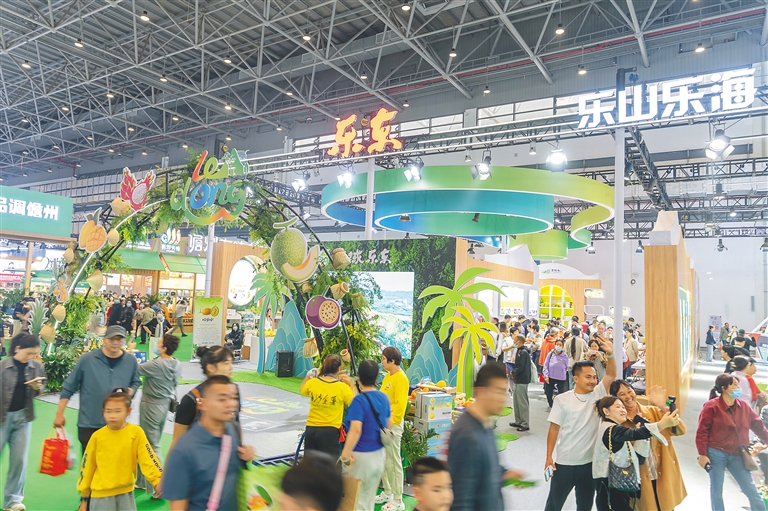
乐东馆人气爆棚
Hai Nan Ri Bao· 2025-12-07 01:21
Core Viewpoint - The Ledu exhibition hall at the Winter Trade Fair has become a popular destination, showcasing a variety of tropical products, particularly the Golden Pomelo, which has garnered significant attention from both local and international buyers [3][5]. Group 1: Product Highlights - The Ledu exhibition features a range of tropical fruits, including well-known varieties like Hami melon and lesser-known ones such as Golden Pomelo, Sanhong Pomelo, and Zheye Red Pomelo, which have become the "star products" of the event [3][4]. - The Golden Pomelo is noted for its crisp texture and sweet flavor, receiving positive feedback from visitors, with comparisons made to more common pomelo varieties [3]. - Other products on display include sweet and fragrant Hami melons, unique Yanzuo fruits, and various high-quality seafood, attracting interest from numerous restaurants and distributors [3][4]. Group 2: Agricultural Development - Ledu is recognized as a "fruit kingdom" due to its favorable tropical climate, fertile soil, and abundant light and heat resources, which provide ideal conditions for growing various tropical crops [4]. - The local agricultural sector has been optimizing its industry structure, focusing on enhancing traditional products while exploring the potential of niche varieties through standardized planting and meticulous management [4]. - The success at the Winter Trade Fair reflects the robust development of Ledu's tropical specialty agriculture, as evidenced by the numerous collaboration intentions from buyers and positive reviews from visitors [5].
“过早”“过晚”,清远给武汉加点鲜味
Nan Fang Nong Cun Bao· 2025-12-03 14:31
Core Viewpoint - The article discusses the integration of Qingyuan's Xiniu bamboo shoots into Wuhan's culinary scene, highlighting the collaboration between local chefs and Qingyuan's agricultural producers to create innovative dishes that blend flavors from both regions [1][4][33]. Group 1: Culinary Collaboration - The culinary exchange between Qingyuan and Wuhan features the development of new dishes using Qingyuan's Xiniu bamboo shoots, which are known for their crisp texture and sweet flavor [7][11][12]. - Local chefs in Wuhan express enthusiasm for the new ingredient, indicating its potential to enhance traditional dishes like "Sanxian Doupi" and "Ganguo Shou Si Sun" [10][15][16]. Group 2: Market Expansion - The Qingyuan Xiniu bamboo shoot brand is actively expanding its market presence, having already reached cities like Harbin, Guizhou, and Hunan, and is now focusing on Wuhan [33][34]. - The Qingyuan agricultural industry is robust, with a planting area of 1,005,300 acres and a total output of 433,200 tons as of the first half of 2025, contributing to a comprehensive industry value of 3.245 billion yuan [31][32]. Group 3: Local Market Insights - During the market research in Wuhan, local wholesalers emphasized the importance of specific bamboo shoot sizes for local cuisine, indicating a strong demand for products that meet local preferences [21][23][24]. - The collaboration between Qingyuan producers and local restaurants aims to adapt products to better fit the tastes and requirements of the Wuhan market [25][26].

普洱林辰咖啡有限公司成立 注册资本100万人民币
Sou Hu Cai Jing· 2025-11-28 08:51
Core Viewpoint - Recently, a new company named Pu'er Linchen Coffee Co., Ltd. was established, focusing on various agricultural products and coffee-related activities [1] Company Summary - The legal representative of the company is Lin Tao [1] - The registered capital of the company is 1 million RMB [1] - The business scope includes general projects such as agricultural product sales, primary agricultural product acquisition, and initial processing of edible agricultural products [1] Industry Summary - The company is involved in the cultivation of coffee beans, nuts, and tea [1] - It also engages in the wholesale and retail of edible agricultural products, including unprocessed nuts and dried fruits [1] - The company provides services related to the production, sales, processing, transportation, storage, and other relevant activities of agricultural products [1]
出昆仑、闯湾区,一颗“紫玉圣果”的突围记
Zhong Guo Shi Pin Wang· 2025-11-27 13:39
Core Viewpoint - The article highlights the growth and success of the Kashi Xinmei (新梅) industry in Xinjiang, driven by the "Xin Products Southward, Canton Products Northward" initiative, which has significantly improved production, processing, and market reach of Kashi Xinmei, benefiting local farmers and enhancing employment opportunities. Group 1: Industry Growth and Development - The Kashi Xinmei harvesting season begins every August across approximately 570,000 acres of orchards in Kashi County [5] - The "Xin Products Southward, Canton Products Northward" initiative has led to increased participation in the Kashi Xinmei supply chain, enhancing its market presence [7] - The Guangdong Zhongli Agricultural Group has established a connection between Kashi Xinmei orchards and the Greater Bay Area, significantly expanding its market reach [10] Group 2: Economic Impact on Farmers - Over 15,000 farmers have benefited from the Kashi Xinmei industry, with many experiencing increased income and job stability [14][12] - The average purchase price for Kashi Xinmei has reached 20 yuan per kilogram, with some farmers earning up to 570,000 yuan from their orchards [12] - The industry has created stable employment for over 2000 households, with around 50% of the beneficiaries being Uyghur farmers [12] Group 3: Infrastructure and Technological Advancements - A total investment of 510 million yuan has led to the establishment of the Kashi Xinmei Modern Industrial Park, which integrates various aspects of the supply chain [15] - The cold chain storage system has been improved, extending the sales period of Kashi Xinmei from 20 days to 6 months, thus stabilizing prices [17] - The establishment of a national modern agricultural industrial park has enhanced the processing capabilities, with 22 deep-processing products now available [15] Group 4: Brand Development and Market Expansion - Kashi Xinmei has achieved a brand value of 3.806 billion yuan, ranking 40th among China's regional public brands [19] - The "Kashi Xinmei Ten Thousand Miles Tour" promotional activities have significantly increased sales in the Greater Bay Area [19] - The Kashi Xinmei industry has become a well-known specialty agricultural product in the Greater Bay Area, with a market share of 70% and an annual output of 410,000 tons [25]
普洱丰翼咖啡有限公司成立 注册资本100万人民币
Sou Hu Cai Jing· 2025-11-27 03:20
Core Insights - Recently, a new company named Pu'er Fengyi Coffee Co., Ltd. was established with a registered capital of 1 million RMB [1] - The legal representative of the company is Zhang Zhu [1] Company Overview - The company’s business scope includes the sale of agricultural and sideline products, primary agricultural product acquisition, coffee bean cultivation, and nut cultivation [1] - It also engages in the wholesale, retail, and initial processing of edible agricultural products, as well as the production, sale, processing, transportation, and storage of agricultural products [1] - Additional activities include the sale of fertilizers and the transportation of goods using ordinary freight vehicles with a total mass of 4.5 tons or less [1]
青州:电商赋能特色产业高质量发展
Sou Hu Cai Jing· 2025-11-19 13:39
Core Insights - Qingzhou City is actively promoting the deep integration of e-commerce with local特色产业, accelerating e-commerce empowerment to enhance the "e-commerce +" development model, and facilitating the transformation and upgrading of特色产业 [1] Group 1: E-commerce Development - Qingzhou City has established four public live streaming rooms to provide comprehensive services for rural leaders, new farmers, and e-commerce, enhancing sales channels and increasing the visibility of特色农产品 [1] - The local特色农产品, such as the "ice cream radish," has seen sales of three to four thousand orders for each of the two varieties sold since November, with expectations for higher sales in December [1] Group 2: Employment and Community Impact - E-commerce has created a supply chain that encourages young people and local women to join the workforce, with some earning between 200 to 400 yuan per day [3] - The village's approach includes a model of "party committee guidance, branch platform building, village officials performing, and community benefits," promoting the deep integration of e-commerce with local特色产业 [3] Group 3: Future Plans and Logistics - Future plans include forming an agricultural product collective from various towns to streamline logistics and reduce costs, enhancing brand development and sales volume [3] - Qingzhou City is seizing the live-streaming e-commerce trend by building a flower e-commerce industrial park and expanding service chains to promote the flower e-commerce industry [2] Group 4: Flower E-commerce Expansion - The flower garden in Qingzhou primarily sells "Xian Ke Lai" flowers online, reaching a national market and helping local flower farmers distribute their products quickly [4] - The flower garden has grown from a one-person operation to a team of over 20, accumulating 600,000 to 700,000 followers on Douyin, with plans to expand to other platforms like Taobao and Kuaishou [4] Group 5: Systematic E-commerce Strategy - Qingzhou City has positioned e-commerce as a key driver for cultivating new productive forces, stimulating consumption, and promoting industrial transformation through a systematic approach across 11 areas [4] - Seven enterprises and individuals have been recognized as top e-commerce brands in Weifang, and the Qingzhou flower e-commerce live streaming base has been awarded as an excellent agricultural e-commerce live streaming base in Shandong Province [4]

振兴接力·驻村答卷 | 精准选派 人村相宜
He Nan Ri Bao· 2025-11-13 23:44
11月13日,清晨的薄雾还未散尽,巩义市涉村镇桃园村的菜地里已是一片忙碌。中国邮政郑州分公司派 驻的驻村第一书记刘帅举着手机,镜头对准沾着露水的黄瓜:"老乡们看,这是咱刚摘的,顶花带 刺。"在他身后,新鲜的果蔬正被打包装箱,即将通过邮政网络发往全国各地。 针对桃园村农特产品丰富的特点,中国邮政郑州分公司驻村工作队依托邮政系统资源优势,创新推 动"线上直播带货"与"线下邮政便民服务站点"深度联动,成功打通桃园村农产品"出山入市"的通道,构 建起了"田间地头—直播间—消费者"的产销链条。 但不满足于"三分钟逛完"的浅体验,郝红有对乡村产业有着更深刻的理解。建设蓝莓温室大棚,在有限 的空间里增加游玩乐趣;把玉米、花生等加工成伴手礼,提高村民收入……从景观延伸到产业深耕,这 位驻村干部正用实实在在的探索和举措,让流量真正转化为村民增收的"增量"。 "我们选驻村干部,不只是'派人',更是'派能人'。"在选派时,郑州市委组织部精准制定第一书记和工 作队员选派工作方案,突出"专业素养、基层经验、攻坚能力"标准,优先筛选有基层工作经历、懂产业 发展、善民生服务的干部,真正做到"选得准、下得去、用得上、干得好"。 一位驻村干部 ...
山海携手五载同心 光明田阳绘就乡村振兴新图景——2021-2025年粤桂协作助力田阳区消费帮扶增收做法
Nan Fang Nong Cun Bao· 2025-11-13 08:34
Core Viewpoint - The collaboration between Shenzhen's Guangming District and Baise's Tianyang District has significantly enhanced agricultural development and market access for Tianyang's products, contributing to rural revitalization from 2021 to 2025 [3][61]. Group 1: Collaboration and Initiatives - The partnership is based on the principle of "what Tianyang needs, Guangming can provide," focusing on four key actions and three special initiatives to boost consumption [4][5]. - Over five years, the collaboration has transformed from "one-way assistance" to "dual empowerment," establishing a sustainable consumption assistance mechanism [5][6]. Group 2: Agricultural Development and Market Access - The initiative has effectively addressed the challenges of low sales and prices for Tianyang's agricultural products, creating a dual pathway for "Guangxi products entering the Bay Area" and "businesses entering the countryside" [7][8]. - By 2025, the sales of agricultural products from Tianyang to eastern regions are projected to exceed 1.1 billion yuan [9]. Group 3: Quality Improvement and Standards - The focus on quality has led to the establishment of six "Zhenpin" bases and three "vegetable basket" bases in the Guangdong-Hong Kong-Macao Greater Bay Area, with annual sales stabilizing around 40 million yuan [17][18]. - The introduction of Shenzhen standards has facilitated the development of high-quality agricultural products tailored to market demands [13][15]. Group 4: Digital and Channel Innovations - The integration of online and offline channels has been crucial in overcoming distribution challenges, with over 43 local suppliers achieving online sales exceeding 85 million yuan [35][36]. - The use of AI digital marketing tools has enhanced product visibility and consumer engagement, significantly increasing brand awareness [38][50]. Group 5: Brand Development and Promotion - The initiative has transformed Tianyang's agricultural products from "unknown" to "branded," with a focus on standardization and the cultivation of the "Zhuangshan Nongxian" public brand [47][49]. - Collaborative efforts with media have expanded the reach and influence of Tianyang's products, achieving over 20 million impressions in promotional activities [57][58]. Group 6: Future Outlook - The ongoing collaboration aims to deepen the partnership with higher quality production and sales connections, sustainable industry models, and precise assistance measures [64][65].
【“近”观进博】美国农业界扎堆来华,直言“任何看重出口业务的人,都不能忽视中国市场”
Huan Qiu Shi Bao· 2025-11-07 14:25
Group 1 - The General Administration of Customs of China announced the resumption of soybean import qualifications for CHS Inc. and two other companies from the U.S. effective November 10, 2025, following an assessment of U.S. corrective measures [1] - The U.S. soybean industry representatives expressed their desire to re-enter the Chinese market during the China International Import Expo (CIIE), emphasizing the importance of China as a market for U.S. agriculture [1][2] - A delegation of over ten major agricultural associations from the U.S. visited the CIIE to convey their hope for cooperation and the restoration of free trade between the two countries [1] Group 2 - The U.S. Grain Export Association's president highlighted the urgent need to restore normal sorghum exports to China, emphasizing the importance of building relationships for future market access [3] - The Wisconsin ginseng industry has faced a 50% decline in performance due to tariffs, with prices dropping by 30% to 40%, indicating the adverse effects of trade barriers on U.S. agricultural products [3] - The California Wine Association's representative stated that any business focused on wine exports cannot overlook the Chinese market, which is vital for promoting California wines [4][5] Group 3 - The U.S. Poultry and Egg Export Council's vice president noted that China is a major market for U.S. poultry products, and cooperation between the two countries benefits both sides [6] - The Wisconsin ginseng industry, which exports 80% of its production to China, expressed gratitude for the opportunity to participate in the CIIE, highlighting the importance of trade shows for business connections [6] - The U.S. agricultural representatives at the CIIE aimed to express respect for the Chinese market and to recover from previous trade disruptions [5][9] Group 4 - The U.S. agricultural sector sees the CIIE as an excellent opportunity to expand imports and strengthen trade relations following recent agreements between the leaders of China and the U.S. [7] - The U.S. agricultural representatives are optimistic about restoring normal trade relations, emphasizing the need for ongoing communication to resolve differences [8] - A forum on U.S.-China agricultural trade cooperation was held during the CIIE, focusing on enhancing communication and expanding cooperation in the agricultural sector [8][9]