区块链

Search documents
定义机构化时代:Consensus 2026将在香港举办 锚定数字资产新坐标
Di Yi Cai Jing· 2026-02-05 06:36
Core Insights - The Consensus conference in Hong Kong aims to define the development path of digital assets for the next decade, emphasizing the integration of innovative energy from the crypto ecosystem into a robust and transparent modern financial system [1][11] - The event highlights Hong Kong's role as an international innovation hub, especially in the context of accelerating global regulatory frameworks and technological integration [1][9] Group 1: Conference Details - The Consensus Hong Kong 2026 will take place from February 10 to 12, 2026, focusing on "Web3 and Blockchain Accelerating the New Era of Applications" [1] - The conference will introduce two new summits: the "AI and Robotics Summit" and the "Asia Macro Summit," aimed at exploring the intersection of AI and blockchain, as well as analyzing the development paths and regulatory dynamics in major Asian markets [5] - The event will also feature collaborations with global investor communities and developer programs to enhance connections between technology development and capital [5][6] Group 2: Regulatory Environment - Hong Kong's regulatory framework aims to balance innovation and risk prevention, following the principle of "same business, same risk, same rules" to provide a stable environment for compliant operations [9] - The Hong Kong Securities and Futures Commission's "ASPIRe" roadmap includes twelve measures to enhance market security and innovation capabilities [9] - Recent initiatives include the pilot of the digital Hong Kong dollar (e-HKD) and the mBridge cross-border central bank digital currency project, showcasing efforts in modernizing financial infrastructure [9] Group 3: Global Context - The global Web3 sector is entering a new phase characterized by the simultaneous establishment of rules and infrastructure, with major economies accelerating the formation of regulatory frameworks [10] - The conference serves as a critical global platform, bringing together regulators, institutional investors, and technology developers to compare regulatory approaches and showcase the latest business practices in areas like DeFi and NFTs [11] - The outcomes and consensus from the conference are expected to provide insights for Hong Kong's differentiated and sustainable development path, potentially guiding the global digital asset industry towards maturity and a more efficient financial infrastructure [11]



日本金融巨头 SBI Holdings 与 Startale 合作推出面向代币化股票的 Layer 1 区块链 Strium Network PoC
Xin Lang Cai Jing· 2026-02-05 02:45
Core Insights - SBI Holdings has announced a collaboration with Startale Group to launch a proof of concept (PoC) for a Layer 1 blockchain named Strium Network, aimed at tokenized stocks [1] - Strium is positioned as the foundational trading layer for the "Asian on-chain securities market," emphasizing 24/7 trading, rapid cross-border settlement, and DeFi composability [1] - The partnership previously announced the development of a yen stablecoin and a real-world asset (RWA) trading platform, with plans to launch a testnet soon [1] - Startale is a key developer for Sony's L2 project Soneium and operates the Japanese public blockchain Astar Network [1]
KuCoin联合主办WLS 2026,探讨“可信数字基础设施”的长期建设
Sou Hu Wang· 2026-02-04 09:45
Group 1 - The World Laureates Summit 2026 (WLS 2026) opened on February 1 in Dubai, UAE, focusing on the theme "Fundamental Science: Responding to Human Challenges with Scientific Consensus" [1] - The summit aims to connect fundamental scientific discoveries with global governance and public policy needs, emphasizing the role of science in addressing long-term development issues [1] - The event received high-level support from the UAE government, highlighting the importance of fundamental science and cutting-edge technology in national development strategies and global governance systems [1] Group 2 - KuCoin, as a co-host, is exploring the foundational value of technology in research collaboration, digital infrastructure, and public governance, leveraging blockchain's characteristics [3] - During the summit, KuCoin will lead the "AI×Blockchain Science Forum" to discuss the applications of blockchain and artificial intelligence in research collaboration and public governance [3] - Michael Gan, as the Deputy Secretary-General of the World Laureates Association, is participating in discussions on artificial intelligence, fundamental science, and global collaboration mechanisms [3] Group 3 - The WLS 2026 spans three days, with over 1,000 participants, including Nobel Prize, Turing Award, and Wolf Prize winners, marking a new high in scale and academic influence [4] - The summit is evolving into an important international platform for addressing long-term challenges and promoting cross-disciplinary collaboration and institutional innovation [5]

微算法科技(NASDAQ:MLGO)基于后量子阈值算法的区块链隐私保护技术
Sou Hu Cai Jing· 2026-02-03 06:20
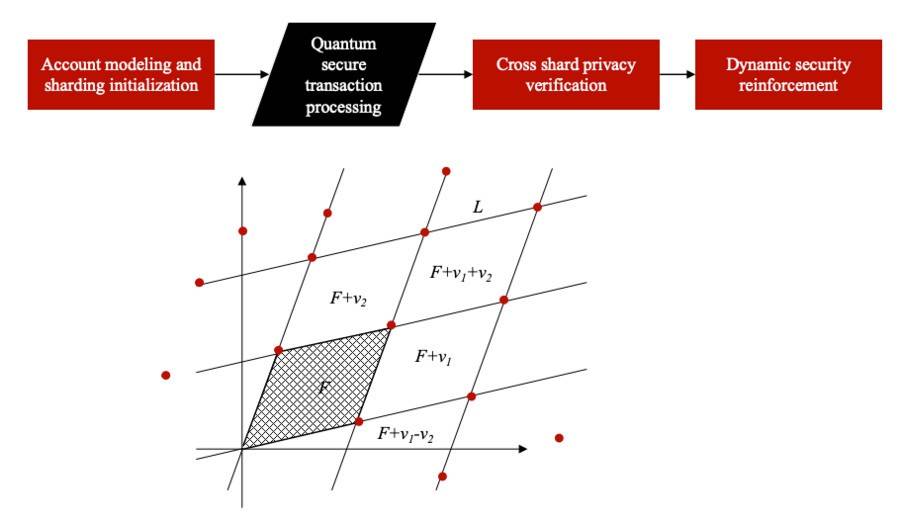
Core Viewpoint - The traditional cryptographic systems face threats from quantum computing, which can compromise blockchain security. MicroAlgorithm Technology (NASDAQ: MLGO) proposes a post-quantum threshold algorithm framework to ensure quantum resistance and privacy protection in blockchain infrastructure for the Web 3.0 era [1][5]. Group 1: Technology Overview - The proposed technology utilizes post-quantum cryptography, specifically the CRYSTALS-Dilithium signature algorithm, replacing traditional ECDSA to enhance security against quantum attacks [1][4]. - The framework incorporates threshold signature technology, distributing key management across multiple nodes to prevent single points of failure and enhance privacy [4][5]. - A dynamic sharding mechanism maps blockchain accounts to a weighted graph structure, optimizing transaction density within shards while controlling cross-shard communication costs [3][4]. Group 2: Transaction Processing - The transaction signing module employs the CRYSTALS-Dilithium algorithm to generate quantum-resistant signatures, with storage space for these signatures controlled to be 1.2 times that of non-quantum signatures [3][4]. - Communication between nodes utilizes the NewHope key exchange protocol, combined with Physical Unclonable Functions (PUF) to defend against quantum man-in-the-middle attacks [3][4]. - Smart contracts are enhanced with lattice-based homomorphic encryption, allowing for condition-based payment verification without exposing original data, particularly in supply chain finance scenarios [3][4]. Group 3: Privacy and Compliance - Cross-shard privacy verification is achieved through zero-knowledge proofs generated by the source shard, ensuring transaction legitimacy and state verification while minimizing data exposure [4]. - The system supports a dual-chain architecture, where the main chain handles quantum-safe transactions and the side chain remains compatible with existing protocols, facilitating a smooth transition [4][5]. - A linkable group signature scheme is implemented for regulatory compliance, enabling transaction audits without revealing user identities, thus maintaining privacy while ensuring compliance with regulations [4][5]. Group 4: Future Prospects - As quantum computing technology advances, the quantum resistance of MicroAlgorithm Technology's blockchain privacy protection technology will become increasingly significant [5][6]. - Future optimizations in algorithm efficiency and scalability are expected to accommodate larger blockchain networks and enhance applications in privacy-sensitive areas [5][6].

“十五五”开新局当尖兵|企业找政策变政策找企业!上海惠企政策 “免申即享”“直达快享” 跑出加速度
Sou Hu Cai Jing· 2026-02-02 05:07
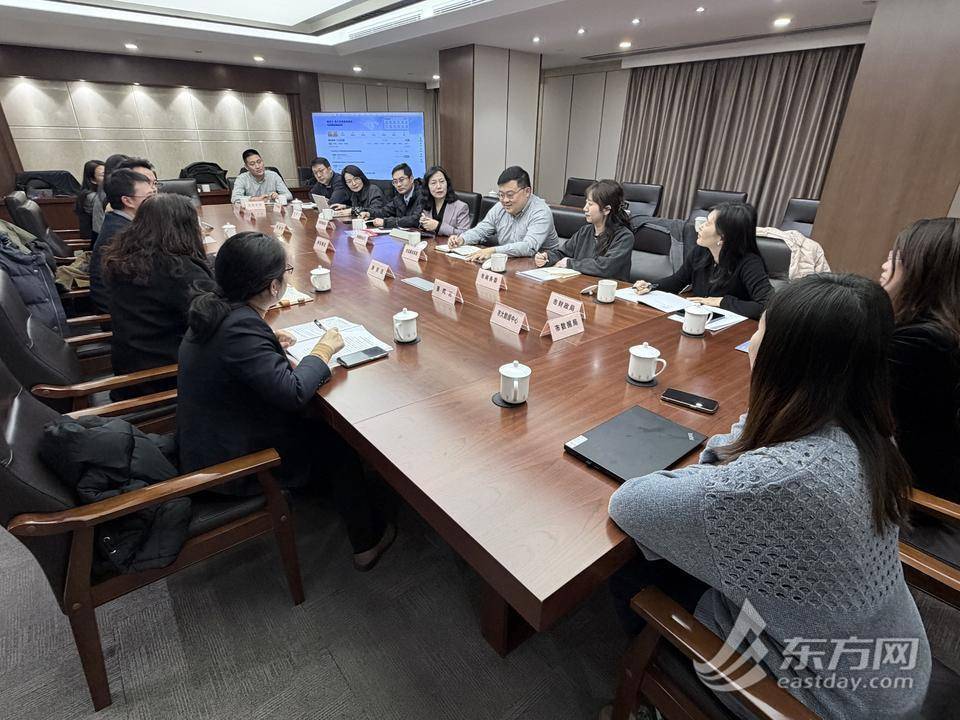
Core Insights - Shanghai government is enhancing service efficiency for businesses through initiatives like "automatic enjoyment of subsidies" and "direct and fast enjoyment" of policies, significantly improving the business environment and administrative efficiency [1][3][4] Group 1: Policy Implementation - The "惠企政策服务专班" (Business Policy Service Task Force) has been established to streamline the implementation of business support policies, involving over 20 municipal departments and 16 districts [3] - By 2025, 709 policy projects in Shanghai will achieve "automatic enjoyment," serving over 6.28 million enterprises, thereby broadening policy coverage and reducing administrative costs [3][4] Group 2: Policy Quality and Precision - The task force aims to improve the quality and effectiveness of government documents, ensuring new policies clearly outline innovative measures and comparisons with existing policies [4] - A mechanism for precise labeling of business support policies has been established in Pudong New Area, facilitating easier access for enterprises [4] Group 3: Simplification of Processes - The core idea is to minimize the burden on enterprises, allowing them to confirm their eligibility with a single click without the need for active applications [5] - The "离境退税商店补贴项目" (Departure Tax Refund Store Subsidy Project) has transitioned to an "automatic enjoyment" model, increasing policy coverage to 100% and significantly reducing the time for subsidy disbursement from nearly 4 months to within 5 working days [5][6] Group 4: Technological Integration - Jing'an District is innovating with a "blockchain + automatic enjoyment" model, automating the subsidy process and reducing the approval time from weeks to half a day [7] - The "一网通办" (One Network for All Services) platform has been enhanced to provide a unified service for policy application and disbursement, improving the overall experience for businesses [7]
如何选择区块链钱包【imokn.app】非托管钱包
Sou Hu Cai Jing· 2026-01-30 16:53
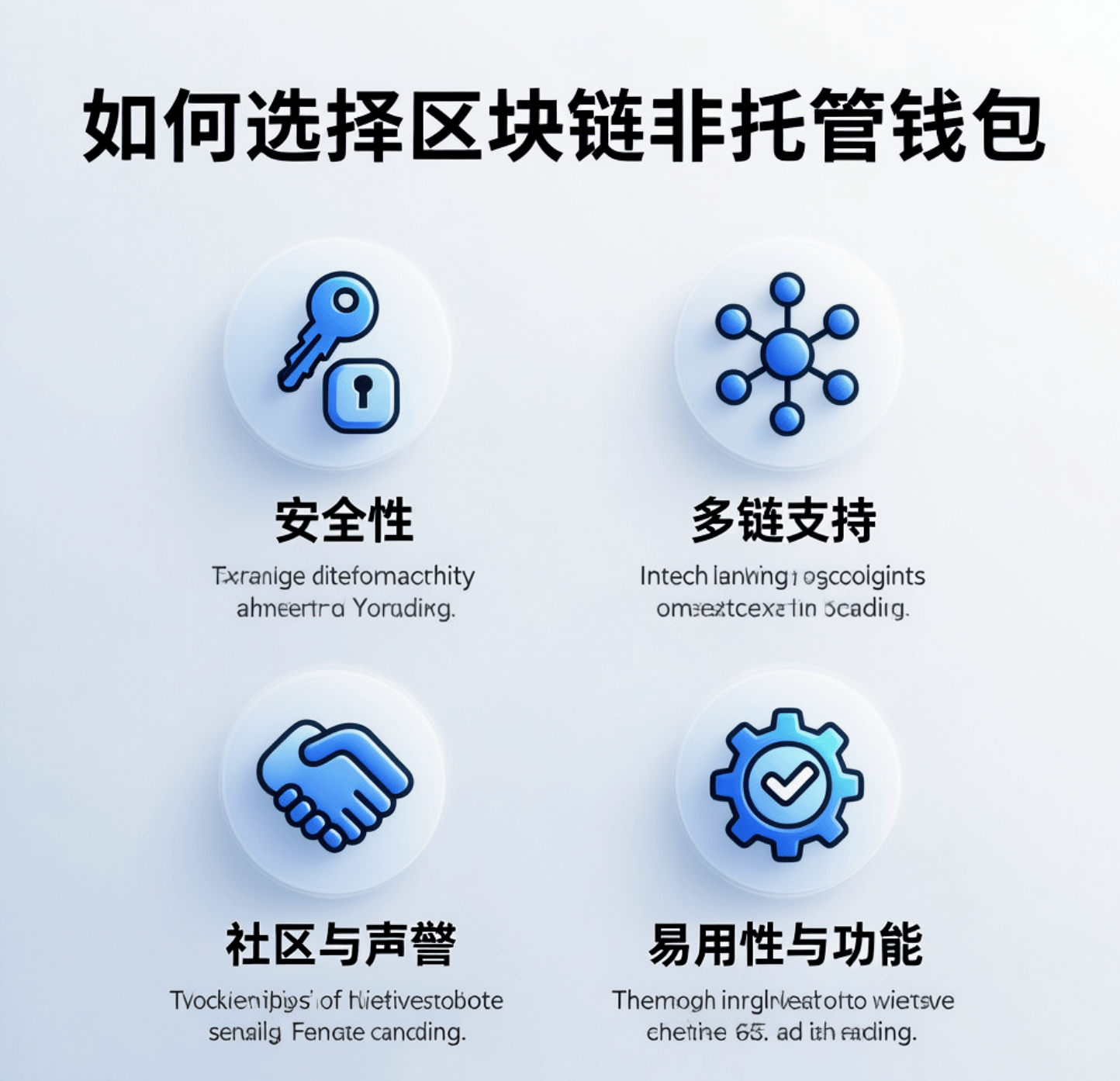
Group 1: Cross-Border Payments and Global Transfers - Non-custodial wallets demonstrate unique advantages and value in cross-border payments and global transfer scenarios [1] - The future development of non-custodial wallets is expected to be more diversified, driven by advancements in blockchain technology and evolving user demands [1] Group 2: Music Industry - Non-custodial wallets are increasingly applied in the music industry, allowing artists to directly provide music to fans and achieve fairer revenue distribution [1] - Some music platforms have integrated non-custodial wallet functionalities to support cryptocurrency payments and non-fungible token (NFT) music works, changing the commercial model of the music industry [1] Group 3: Data Storage - In the data storage sector, non-custodial wallets play a crucial role in securely storing and managing user data while enhancing privacy protection [4] - Decentralized storage projects are exploring the use of non-custodial wallets for decentralized data storage and payment solutions, potentially transforming the data storage industry [4] Group 4: Enterprise Considerations - For enterprise users, the selection of non-custodial wallets requires consideration of security, usability, compliance, auditability, and team management features [4] - Some non-custodial wallets are optimized for enterprise users, offering multi-signature wallets, permission management, and transaction approval features to better manage digital assets [4] Group 5: Healthcare Sector - Non-custodial wallets are significant in the healthcare field, enabling secure storage and sharing of medical data while protecting patient privacy [4] - Certain healthcare projects are investigating the use of non-custodial wallets for decentralized medical data management and payment, opening new possibilities for the healthcare industry [4] Group 6: Cloud Computing - The application of non-custodial wallets in cloud computing is expanding, allowing users to conveniently pay for cloud services while enhancing privacy protection [4] - Some cloud service providers have begun accepting cryptocurrency payments and utilizing non-custodial wallets to manage payment processes, altering the commercial model of cloud computing [4] Group 7: Video Content - Non-custodial wallets have broad application prospects in the video content sector, enabling creators to directly provide content to viewers and achieve fairer revenue distribution [5] - Some video platforms are exploring the use of non-custodial wallets and NFT technology for decentralized content distribution, potentially leading to new business models in the video industry [5] Group 8: Innovation and Contribution - There is a collective effort to promote innovation and application of non-custodial wallet technology, contributing to the development of the blockchain ecosystem [6]
高地股份与中国数智订立了一项非法律约束合作备忘录
Zhi Tong Cai Jing· 2026-01-30 10:11
Core Viewpoint - The company has entered into a non-binding memorandum of cooperation with China Digital Technology Group to establish a project company focused on operational collaboration in blockchain technology and digital currency services [1] Group 1: Partnership and Collaboration - The memorandum outlines that both parties will jointly create a project company dedicated to operational collaboration [1] - China Digital will provide technical services in areas such as public blockchain development, electronic wallets, blockchain explorers, and cryptocurrency trading platforms [1] - The partnership includes consulting services related to obtaining cryptocurrency exchange licenses [1] Group 2: Business Strategy and Market Trends - The company primarily engages in food sales and catering services in China and is actively developing its business in blockchain technology [1] - The board believes that the digital currency sector is rapidly evolving and aligns with global financial market innovation trends [1] - The exploration of potential investment opportunities in digital commerce is consistent with the company's strategy to diversify its business and enhance shareholder value [1]
零数科技林乐:以归零之心为数字经济造“引擎”
Shang Hai Zheng Quan Bao· 2026-01-29 18:46
Core Insights - Lin Le, founder and CEO of Zero Number Technology, transitioned from a physics background to finance and blockchain, focusing on the integration of technology and industry rather than speculative trading [2][4] - The company has evolved into a "specialized and innovative" small giant enterprise, emphasizing the importance of technology serving the real economy [2][4] Group 1: Entrepreneurial Journey - Lin Le's entrepreneurial spirit combines the adventurous nature of Fujian merchants with a rigorous scientific approach and respect for market dynamics [3] - The initial phase from 2016 to 2019 was focused on technological reserves, overcoming performance bottlenecks in blockchain technology, achieving a transaction performance of 230,000 transactions per second and a code autonomy rate of 99.74% [5] - From 2020 to 2023, the company entered a "commercial breakthrough" phase, emphasizing clear application scenarios and revenue generation, leading to significant advancements in the automotive industry [6] Group 2: Business Growth and Strategy - Since 2024, Zero Number Technology has entered a "scale growth" phase, expanding its business into multiple sectors including automotive, government, agriculture, culture, and finance [7] - The company has completed six rounds of equity financing, with recent rounds involving state-owned capital, and plans to initiate a new round of financing in 2026 [7] - Zero Number Technology has become the first company in its industry to cross the breakeven line, with expectations of profitability this year [7] Group 3: Technological Integration and Future Vision - The company is leading national key research projects and participating in blockchain application innovation pilot programs, establishing itself as an industry benchmark [9] - The integration of AI and blockchain is seen as a new opportunity, with Zero Number Technology positioning itself as a key infrastructure provider for AI model training through its trusted data space [9] - The ultimate mission of Zero Number Technology is to enhance the efficiency of the digital economy by serving three core scenarios: digitalization, intelligence, and finance [9][10]
要站在变化的一边!70岁“木头姐”兴奋盘点2026大机会:现在就是黄金时间
聪明投资者· 2026-01-29 07:04
Core Insights - The article emphasizes that AI is still in its early stages and has a long way to go, despite the current hype cycle surrounding it [5][6] - The capital expenditure in the technology and telecommunications sectors is approaching the highs seen during the last bubble, but unlike the past, GPUs are in high demand and being actively consumed [6][7] - The current investment cycle is likened to historical infrastructure waves, with potential capital expenditure reaching 12% of GDP, driven by productivity improvements [8][9] Group 1: AI Infrastructure and Market Dynamics - AI infrastructure spending has increased 2.5 times since the emergence of ChatGPT, with projections suggesting it could reach $1.4 trillion annually by 2030 [12][13] - The software market is expected to grow significantly, with potential growth rates of 19% in bear markets and up to 54% in bull markets, compared to the historical average of 14% [13][14] - The article suggests that many successful software companies are not yet publicly listed, indicating a potential for significant growth in the private market [14] Group 2: Bitcoin and Cryptocurrency Trends - Bitcoin is expected to become a significant store of value, especially in the context of a generational wealth transfer over the next 5 to 15 years [20] - The total market for stablecoins has surpassed $300 billion, indicating a shift in how cryptocurrencies are utilized in financial systems [20] - The article posits that Bitcoin's supply growth rate is lower than that of gold, positioning it as both a risk asset and a hedge against inflation [18][19] Group 3: Technological Innovations and Their Impact - The integration of biotechnology and AI is expected to revolutionize healthcare, significantly reducing drug development costs from $2.4 billion to approximately $700 million over the next four years [24][25] - The emergence of reusable rockets and space data centers is creating new industries and job opportunities, highlighting the dual development of new worlds in space and digital realms [27][28] - The article discusses the potential of autonomous vehicles and logistics automation to drastically reduce delivery costs, with projections indicating a 90% reduction in delivery expenses through drone technology [34][35] Group 4: Entrepreneurial Opportunities and Market Changes - The current environment is seen as a prime opportunity for entrepreneurship, with AI tools enabling individuals to identify unmet market needs and develop solutions [21][22] - The article highlights the importance of being on the right side of technological changes, suggesting that traditional industries may consolidate into a few dominant players [16][17] - The overall sentiment is that innovation is accelerating, and the barriers to entry for new companies are decreasing, fostering a vibrant entrepreneurial landscape [39][40]

从“智慧大脑”到“法治屏障” 知识产权保护的创新实践
Xin Lang Cai Jing· 2026-01-28 21:00
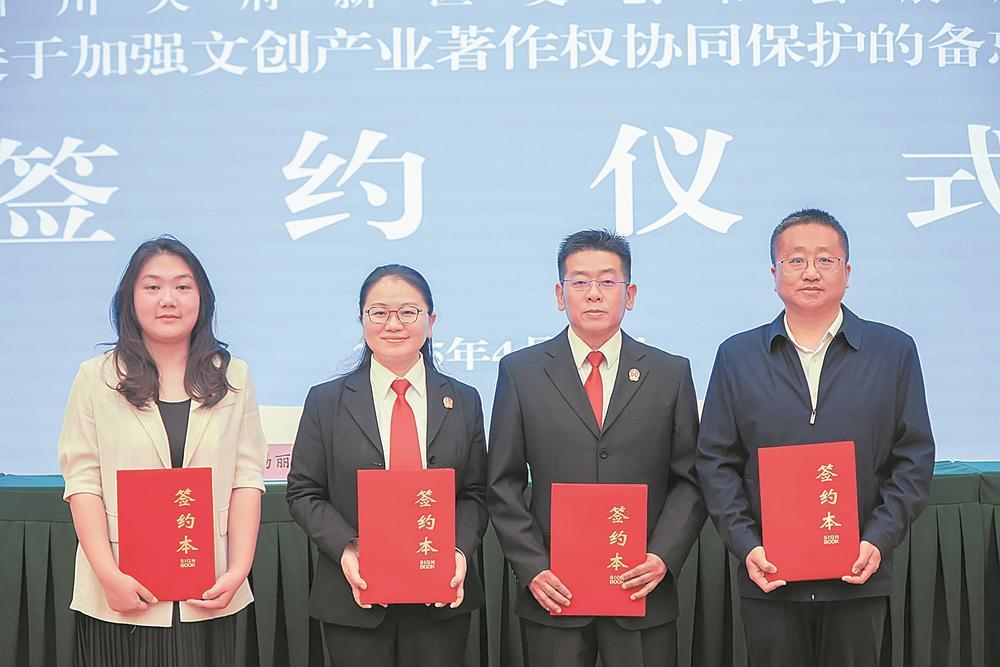
Core Viewpoint - The Tianfu New Area Court is actively innovating in intellectual property protection, establishing a comprehensive judicial protection system to support the region's innovative development and address the challenges posed by emerging industries. Group 1: Source Prevention - The court emphasizes proactive governance in intellectual property protection, moving from reactive measures to preventive strategies, aiming to resolve potential disputes at an early stage [5] - A mechanism for risk dynamic warning has been established, particularly for emerging sectors like blockchain and artificial intelligence, providing clear guidance for industry innovation [5] - The court has implemented a "first case deliberation system" and a "package mediation" mechanism, significantly improving the efficiency of resolving batch disputes [6] Group 2: Professional Adjudication - The court has developed a dual-driven model of "talent + experts," forming multidisciplinary adjudication teams to tackle complex technical issues [7] - Digital tools, such as an intelligent document generation software, are being utilized to reduce the average trial time for intellectual property civil cases by 20 days by 2025 [7] - The court has published typical cases annually, with 35 cases covering key areas like artificial intelligence and cross-border e-commerce, providing clear legal boundaries for new industries [7] Group 3: Comprehensive Service - The court has established a "traveling court" model to provide legal services at major exhibitions, enhancing the legal environment for businesses [9] - Customized judicial solutions are offered to key enterprises in sectors like photovoltaic and integrated circuits, demonstrating a proactive approach to legal challenges [9] - The court engages in community outreach through various activities, fostering a culture of innovation protection and industry self-regulation [11] Group 4: Collaborative Governance - The court promotes a collaborative protection framework involving administrative, judicial, and social participation, enhancing the effectiveness of intellectual property protection [10] - Regular communication with local regulatory bodies has been established to unify enforcement standards and judicial criteria [10] - The court has extended its collaborative efforts to include cross-regional partnerships, enhancing the protection of creative industries [10]