
医疗卫生服务

Search documents
苏州再添一家“江苏省社区医院”
Su Zhou Ri Bao· 2025-12-03 02:28
Core Viewpoint - The Jiangsu Provincial Health Commission has announced the list of community hospitals for 2025, with the Taiping Street Community Health Service Center in Suzhou's Xiangcheng District recognized as a "Jiangsu Community Hospital" [1] Group 1: Service Quality and Development - The Taiping Street Community Health Service Center has actively responded to national and provincial initiatives aimed at enhancing grassroots service quality and community hospital development [1] - The center has focused on building a specialty brand, with its endocrinology and diabetes department recognized as a key specialty in traditional Chinese medicine in Suzhou and a provincial-level specialty [1] Group 2: Collaborative Efforts - The center has established a "Liu Chao Famous Doctor Studio" and formed close partnerships with top-tier hospitals in Shanghai and Nanjing to promote the sharing of high-quality medical resources [1] Group 3: Unique Service Offerings - Leveraging the Jiangsu Provincial Five-Level Traditional Chinese Medicine Platform, the center has developed unique preventive health services, including herbal tea and medicinal paste products, creating a distinctive service brand [1] Group 4: Comprehensive Service Model - The center extends its services to the community and families through family doctor teams and Internet-based health management, establishing a comprehensive service model that encompasses prevention, treatment, rehabilitation, and management [1]
云南一地要求在群内汇报末次月经时间? 卫健:系村医排查孕情
Xin Jing Bao· 2025-12-02 09:17
12月2日,有云南宣威居民发文称,一聊天群内要求儿童母亲汇报末次月经时间。宣威市卫生健康局工 作人员告诉记者,该事件系村医进行孕情排查工作,目的是尽早发现孕产妇,以便提供免费的基本公共 卫生服务。该工作人员表示,原本是要求村医按不同人群需求进行一对一电话或微信随访宣教,在群里 进行统计不合适。下一步卫生部门将优化排查工作,避免此类情况再次发生。 ...
国家卫生健康委:“人工智能+”赋能基层医疗卫生服务
Ke Ji Ri Bao· 2025-11-28 05:33
"县域远程医学影像诊断服务量今年已超过6800万人次。"在27日国家卫生健康委举行的新闻发布会上, 国家卫生健康委基层司司长焦雅辉表示,在"人工智能+"的赋能下,目前80%的县(市、区)初步建成了县 域影像、心电、检验资源共享中心,实现基层检查、区县诊断;远程医疗、互联网医疗、移动巡诊医疗 车等还助力山区、海岛、边远贫困等地方的"空白"得以弥补。 数据显示,全国超过90%的居民能在15分钟内获得就近就便医疗卫生服务,2024年县域内基层医疗卫生 机构诊疗人次占全国诊疗量的63.4%,比上一年提高0.5个百分点,越来越多农村群众看病就医优先选择 基层医疗卫生机构。 焦雅辉表示,在重点专科建设和人工智能的赋能下,一些以往在县级医院比较薄弱的专科,如肿瘤科、 精神科、眼科等,设置率和服务能力均有很大程度提高。 (责任编辑:张紫祎) 为进一步解决农村地区的卫生健康重点和难点问题,2021年起,全国遴选12个县开展基层卫生健康综合 试验区的建设,由县委成立卫生健康工委,一位政府领导统管医疗、医保、医药。"最近我们完成了效 果评价,2024年12个综合试验区基层医疗卫生机构的诊疗量占比达到了69.1%,高于全国平均水 平 ...
滨江浦沿社区卫生服务中心新址启用
Hang Zhou Ri Bao· 2025-11-21 02:27
Core Insights - The newly opened community health service center in Binjiang District has a total construction area of 31,000 square meters, tripling the size of the previous center, providing comprehensive health services for local residents and industry talents [1] Group 1: Facility and Location - The new center is strategically located at the intersection of Pujiang Road and Shendi Street, just 400 meters from the Pujiang Metro Station, serving nearby residential communities and industrial platforms like the Smart New World and Hangzhou Jiangnan Science City [1] - The center features advanced medical equipment such as spiral CT, blood analysis line, and an automated pharmacy system, allowing residents to access high-quality medical services conveniently [1] Group 2: Service Enhancements - The center integrates smart medical solutions, enabling residents to complete appointment bookings, report inquiries, and vaccination scheduling through mobile platforms, significantly improving consultation efficiency [2] - It offers specialized services including traditional Chinese medicine, mental health, and weight management, and plans to collaborate with a city hospital for dermatology services, enhancing its service offerings [2] - The center has established a "green channel" for emergency services in collaboration with higher-level hospitals, ensuring seamless integration of emergency resources [2]
企业投诉渠道有哪些?这些正规途径请收好
Xin Lang Cai Jing· 2025-11-18 11:06
Core Viewpoint - Understanding and utilizing the correct complaint channels is essential for consumers to effectively protect their rights when facing issues with companies. Official Complaint Channels: Authoritative and Reliable - The National 12315 platform is a key official complaint channel, offering multiple ways for consumers to submit complaints, including an app and WeChat mini-programs [1] - Industry-specific complaint channels through regulatory bodies and consumer associations are more effective for targeted issues, as they are established to protect consumer rights [1][2] - Industry associations, while lacking enforcement power, can influence companies through self-regulation mechanisms [1] Social Complaint Platforms: Convenient and Efficient Supplement - Social complaint platforms like Black Cat Complaints provide a user-friendly interface for consumers to lodge complaints quickly, with a process that takes less than five minutes [3] - These platforms utilize intelligent ticketing systems for real-time tracking of complaint progress and employ public opinion mechanisms to enhance visibility of issues [3] - Black Cat Complaints maintains a neutral stance, acting as a bridge for information transfer without charging fees [3] Industry-Specific Complaint Channels - Different industries have tailored complaint channels, such as: - E-commerce: Prioritize internal platform mechanisms, supplemented by 12315 and Black Cat Complaints [4] - Education: Complaints can be directed to education authorities and market regulators for false advertising [4] - Home Renovation: Multiple channels including 12315 and construction committee hotlines should be utilized [4] - Automotive: Black Cat Complaints can be used to report defect clues, contributing to national monitoring efforts [4] Preparation for Complaints - To enhance the success rate of complaints, consumers should prepare by gathering complete evidence, clearly stating their demands, and maintaining a rational attitude [4]
瞭望“十五五”时期的“十大工程”
Guo Ji Jin Rong Bao· 2025-11-03 05:59
Core Points - The article discusses the "Ten Major Projects" outlined in the Central Committee's proposal for the 15th Five-Year Plan, emphasizing significant achievements in high-quality economic and social development, technological self-reliance, and enhanced national security [2] Group 1: Industrial Innovation Project - The Industrial Innovation Project aims to enhance China's international competitive advantages by focusing on strategic emerging industries such as new energy, aerospace, and quantum technology [3] - It emphasizes the need for a new type of national system to support key technological breakthroughs in areas like integrated circuits and high-end instruments, while also promoting the integration of the real economy with the digital economy [3] Group 2: Industrial Internet Innovation Development Project - The Industrial Internet is crucial for the digital transformation of manufacturing, requiring advancements in network infrastructure, key technologies, and the development of intelligent industrial models [4] - The project aims to foster cross-industry platforms and support the integration of industrial internet with key industry chains to enhance collaborative transformation [4] Group 3: Housing Quality Improvement Project - The Housing Quality Improvement Project shifts the focus from mere housing availability to enhancing living conditions, emphasizing safety, comfort, and sustainability [6] - It aims to implement a new model of real estate development that meets the public's aspirations for a better life through meticulous management of the entire housing process [6] Group 4: Healthcare Strengthening Project - The Healthcare Strengthening Project focuses on transitioning from a disease-centered approach to a health-centered one, enhancing public health services and accessibility [7] - It aims to optimize the layout of grassroots healthcare institutions and improve service delivery through various actions, including digital empowerment [7] Group 5: Major Ecological Protection and Restoration Project - The project emphasizes green development and ecological protection, aiming to enhance biodiversity and establish a robust ecological safety barrier [8] - It focuses on integrating ecological restoration with economic development, promoting the transformation of ecological benefits into economic value [8] Group 6: National Defense Development Project - The National Defense Development Project is a key pillar of national strategy, directly impacting national security and military modernization [9] - It emphasizes technological innovation and the establishment of an intelligent military system to enhance defense capabilities [9] Group 7: Military Theory Modernization Project - The Military Theory Modernization Project aims to innovate military theories by analyzing potential adversaries and establishing a logical relationship between strategy, demand, and planning [11] - It seeks to integrate theoretical research with technological advancements to create effective military strategies [11] Group 8: Marxist Theory Research and Construction Project - The project focuses on deepening the study of Marxist theory and enhancing the construction of related academic disciplines [12] - It aims to develop high-quality educational materials and promote international academic exchanges to strengthen China's academic voice in Marxism [12] Group 9: Traditional Culture Inheritance and Development Project - The project emphasizes the protection and innovative development of traditional Chinese culture, focusing on the preservation of cultural heritage and the promotion of cultural participation [13] - It aims to create a collaborative environment for the transmission and development of traditional culture across society [13] Group 10: New Era Moral Education Project - The New Era Moral Education Project aims to cultivate a comprehensive educational system that emphasizes moral, intellectual, physical, and aesthetic development [14] - It seeks to innovate educational pathways and integrate various educational aspects to foster well-rounded individuals [14]


北京293家公立医疗卫生机构开展医务社会工作 服务覆盖至社区
Yang Guang Wang· 2025-10-29 08:25
Core Insights - The article discusses the progress and impact of medical social work in Beijing, initiated in 2020 with a goal of achieving "full coverage" within five years [1][8] - Medical social work aims to address emotional, psychological, and social issues arising from illnesses, thereby enhancing medical outcomes and public health [1] Group 1: Progress and Implementation - Since the initiation of medical social work, the number of public medical institutions involved has increased to 293, nearly tripling in two years [8] - The number of medical social workers has risen to 787, which is 2.5 times the number from two years ago [8] - The program has led to a 52% increase in outpatient visits and a 17% and 10% rise in family doctor signing rates and elderly health management rates, respectively [6] Group 2: Case Studies and Impact - Specific cases illustrate the effectiveness of medical social work, such as helping an elderly patient resolve a long-standing housing dispute and providing emotional support to a high-risk pregnant woman [4][6] - Medical social workers have integrated into various departments, providing services like emotional support, crisis intervention, and economic assistance, serving thousands of cases annually [3][4] Group 3: Community Engagement and Volunteer Support - The volunteer team supporting medical social work has grown to 9,803, with many volunteers being former patients, enhancing community engagement [8] - Community health service centers have reported increased patient satisfaction and reduced complaints, indicating a positive shift in the healthcare experience [6][8] Group 4: Future Directions and Challenges - The Beijing Health Commission emphasizes the need for a tailored approach to medical social work, acknowledging disparities between urban and rural areas [9] - There is a focus on leveraging social organizations to further develop and promote medical social work, with plans to replicate successful models in other regions [9]
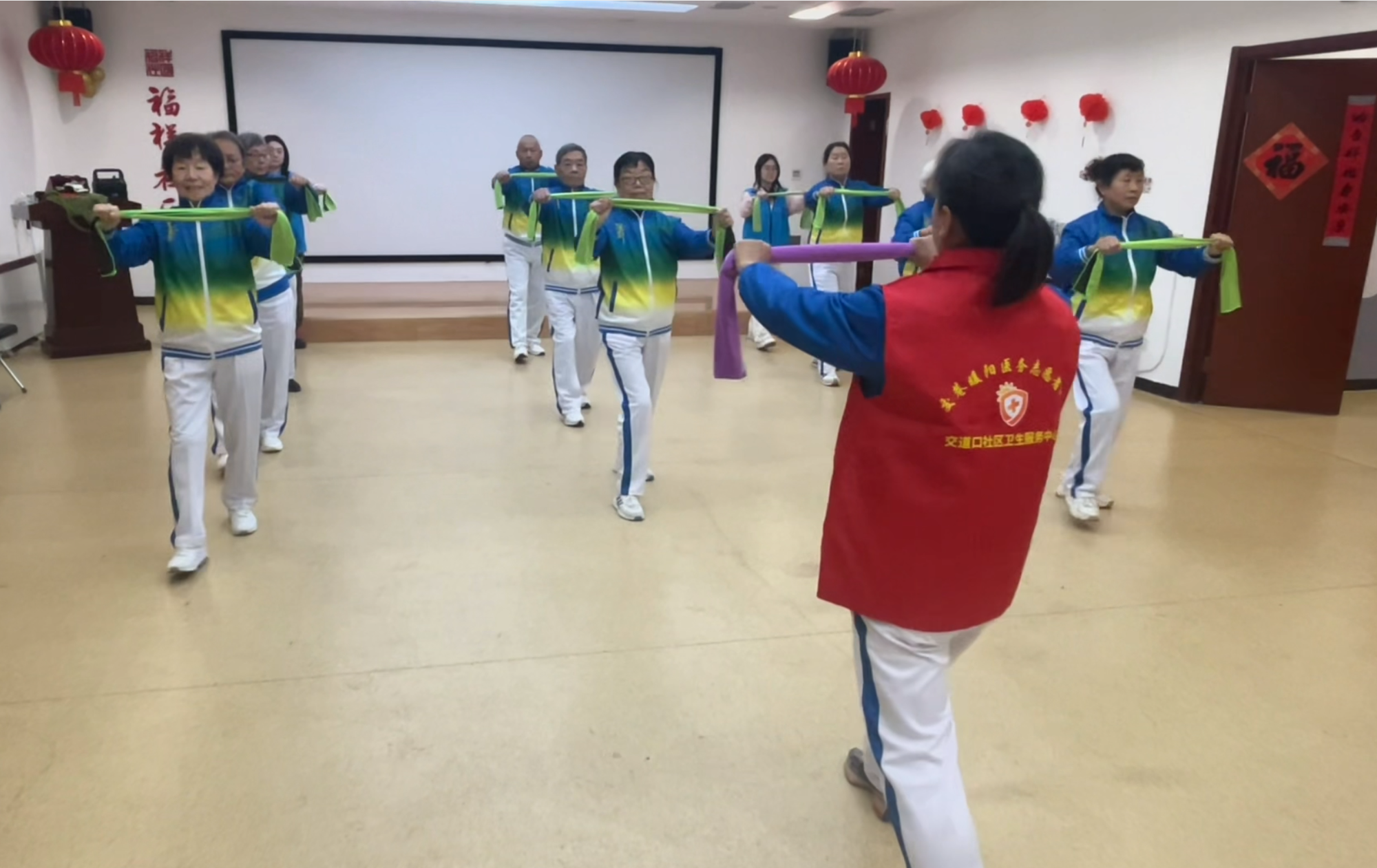
在家门口享优质服务!我国加强基层慢性病健康管理
Xin Hua She· 2025-10-29 08:04
Core Viewpoint - The National Health Commission of China has released guidelines to enhance chronic disease health management services at the grassroots level, aiming to provide systematic, continuous, and high-quality services for chronic disease patients in urban and rural communities [1][2] Group 1: Implementation Timeline - By 2027, counties (cities, districts) with integrated medical communities are expected to achieve full-process chronic disease health management services, with increased utilization by chronic disease patients [1] - By 2030, a systematic and continuous service model for chronic diseases is to be widely applied at the grassroots level, further expanding the population benefiting from these services [1] Group 2: Service Integration - The guidelines emphasize the integration of chronic disease health management services, focusing on the roles of four types of institutions: township health centers, community health service centers, village clinics (community health service stations), and leading hospitals within integrated medical communities [1] - The role of public health institutions, such as disease prevention and control centers, is highlighted for providing technical guidance [1] Group 3: Service Focus Areas - The guidelines outline five key areas for improving chronic disease health management: risk assessment and services, classified and graded health management, multi-disease management, traditional Chinese medicine health services, and self-health management for patients [2]
从“签约无感”到多方式互动 家庭医生如何更好发挥作用?
Ren Min Ri Bao· 2025-10-17 00:34
Core Points - The article discusses the evolution of family doctor services in China, emphasizing the shift from merely increasing the signing rate to enhancing the quality of services provided to residents [1][2] - It highlights the measures introduced by the National Health Commission to improve the experience of signed residents, including regular health information updates and convenient medication services [1][2] Group 1: Family Doctor Services - Family doctors provide essential medical and public health services, focusing on high-risk groups such as the elderly and young children, and offer home visits for those with mobility issues [3][4] - By the end of 2024, over 480,000 family doctor teams are expected to serve signed residents, with a target of over 80% signing rate for key populations [2] Group 2: Resident Experience and Feedback - Many residents, especially those with chronic illnesses, report high satisfaction with family doctor services, while some younger and healthier individuals feel less connected to their family doctors [5][6] - There is a need for improved service quality and better awareness among residents regarding the benefits of family doctor services [5][6] Group 3: Challenges and Solutions - The article identifies challenges such as the lack of specialized doctors and insufficient financial support for family doctor services, which affects service delivery [9][10] - Recommendations include enhancing the training of family doctors, improving the reimbursement system, and establishing a more effective referral mechanism to facilitate better healthcare access [8][10][11] Group 4: Future Directions - The article suggests developing personalized service packages for different demographics, such as the elderly and chronic disease patients, to better meet individual health needs [7][8] - It emphasizes the importance of breaking down information barriers between healthcare systems to improve the referral process and overall service quality [11]
基层医疗卫生机构高血压防治管理标准发布
Ren Min Ri Bao· 2025-10-09 22:43
Core Points - The National Health Commission has issued a standard for hypertension prevention and management in primary healthcare institutions, effective from March 1, 2026 [1] - The standard applies to various primary healthcare facilities, including township hospitals and community health service centers, focusing on adult hypertension management [1] Group 1: Equipment and Drug Requirements - All primary healthcare institutions must be equipped with upper-arm electronic blood pressure monitors, height and weight scales, and measuring tapes, with regular calibration of blood pressure monitors [1] - Community health service centers and township hospitals are required to have additional diagnostic equipment, including blood routine analyzers, urine routine analyzers, biochemical analyzers, and electrocardiograms [1] - At least five categories of antihypertensive drugs must be available: ACE inhibitors, angiotensin II receptor blockers, dihydropyridine calcium channel blockers, thiazide diuretics, and beta-blockers [1] Group 2: Screening and Lifestyle Management - Hypertension screening should occur through routine consultations, health check-ups, and community screenings, with blood pressure measured annually for adults aged 18 and above [1] - For diagnosed hypertension patients, continuous lifestyle guidance is recommended, including dietary adjustments, weight control, regular exercise, smoking cessation, alcohol moderation, stress reduction, and healthy sleep [2] - Medication should be tailored to individual patient needs, aiming for stable blood pressure control within three months, with the option to incorporate clinically supported traditional Chinese medicine [2]