
时尚电商

Search documents
氪星晚报|中国首个农业开源鸿蒙国产替代标杆项目正式启动;惠普与阿里云达成合作,探索通义大模型在端侧应用;第七批新职业正式发布,包括17个新职业、42个新工种
3 6 Ke· 2025-07-22 11:56
Group 1: Company Initiatives - Starbucks China has introduced "Starry Study Rooms" in some Guangdong stores to provide consumers with a study space during the summer, with plans to explore more interest-oriented spaces and activities in the future [1] - Beijing Lianjia has selected 1,411 renovation experts to offer a one-stop service for home buying and renovation, aiming to help customers make comprehensive decisions during the home buying process [3] - Meituan has launched the "Ten Thousand Brands" initiative to support 10,000 well-known restaurant brands with traffic support, joint customization services, and brand assistance, with over 5,000 brands already onboard [5] Group 2: Industry Developments - The first agricultural open-source Hongmeng domestic replacement project has been launched in Hubei, focusing on building a fully autonomous and controllable system for the agricultural industry, integrating AI and domestic replacement technologies [2] - Korean fashion e-commerce platform MUSINSA reported a significant increase in Chinese tourist spending, with a 257% increase in transactions at one store and a 180% year-on-year increase at another [4] - The launch of the AIGC video generation model "Steam Engine" by Baidu has seen rapid adoption, with over 300,000 registered users and 200 million pieces of content generated in just two weeks [8] - XREAL has released its flagship product, XREAL One Pro, continuing its dominance in the AR market with a leading global market share [9] - The "Wanzhi Platform" 2.0 version has been launched by Zero One Everything, featuring an enterprise-level agent capable of deep thinking and task planning [10]
如果你错过了30年前的深圳,那就不要错过现在的……
凤凰网财经· 2025-06-29 14:16
Core Viewpoint - The article highlights the increasing presence and activity of Middle Eastern buyers in global markets, particularly at trade fairs like the Canton Fair, where Middle Eastern buyers accounted for 14.3% of participants, surpassing those from Europe and America for the first time [2]. Group 1: Market Opportunities - The Middle East is undergoing a significant transformation, moving beyond its traditional image of oil wealth to become a region with vast market potential, particularly in construction and infrastructure [3][4]. - Saudi Arabia is projected to see its construction industry grow to over $181.5 billion by 2028, making it one of the largest construction markets globally, driven by government initiatives to build over 1 million new homes and expand commercial spaces [3][4]. - Key sectors with growth opportunities include real estate, transportation infrastructure, and smart cities, as demand in these areas is expected to surge [4]. Group 2: Economic Diversification - Many Middle Eastern countries are actively pursuing economic diversification strategies to reduce reliance on oil, with Saudi Arabia's Vision 2030 being a prime example, focusing on sectors like renewable energy, digital economy, and high-end manufacturing [5][9]. - The region's sovereign wealth funds are investing heavily in technology and innovation, with significant investments in solar energy and e-commerce, indicating a shift towards a more diversified economy [9][10]. Group 3: Challenges and Considerations - Despite the opportunities, entering the Middle Eastern market presents challenges, including high localization requirements, cultural differences, and lengthy company registration processes, which can take 60 to 70 days [15][16]. - Companies are advised to focus on brand building and to expect a period of establishment before profitability, with the first year often not yielding profits as businesses adapt to the local market [16][17]. - The article emphasizes the importance of understanding local regulations and the potential for increased operational costs due to unfamiliarity with the market [16][17]. Group 4: Regional Insights - The Middle East is characterized by diverse economic conditions across countries, with significant differences in market fundamentals, as seen in the contrasting situations of Saudi Arabia and Turkey [17]. - The article suggests that the presence of Chinese entrepreneurs in regions like Dubai indicates a favorable business environment, while lower numbers in Turkey suggest potential challenges [17].


Plush获融资;H&M集团创始家族收购股权;滴滴重返巴西外卖市场
Sou Hu Cai Jing· 2025-06-12 14:17
Funding and Expansion - Plush, a DTC personal care brand, has raised 470 million INR (approximately 4.7 million USD) in its latest funding round, led by Rahul Garg with participation from several strategic investors [3] - The funds will be used to expand offline operations, enhance brand building, and increase market influence [3] - Plush, founded in 2019, focuses on women's care and personal care products, including menstrual care, intimate health, hair removal, and personal hygiene [3] Corporate Control and Shareholding - The Persson family, through their investment tool Ramsbury, has increased their stake in H&M Group from 35.5% to nearly 64% over the past nine years, now controlling about 70% of the capital and 85% of the voting rights [6] - This increase in shareholding indicates the family's intent to regain more control over the company [6] Acquisitions and Strategic Moves - Kering Eyewear has announced the acquisition of Italian manufacturer Lenti from Safilo, which specializes in mold forming and surface treatment for various applications [8] - The acquisition aims to enhance Kering Eyewear's internal R&D capabilities for developing innovative high-performance Italian-made sunglasses [8] - Coupang Group is integrating Farfetch with R.Lux to enter the luxury goods market in South Korea, leveraging local services and operations to expand Farfetch's business [10] Market Entry and Expansion - Didi's brand 99Food has launched its delivery service in Goiânia, Brazil, marking its return to the Brazilian market after a previous exit [12] - Didi has a strong foundation in Brazil, with approximately 700,000 active riders and 50 million active users across over 3,300 towns [12] - Luckin Coffee plans to open a store in downtown Manhattan, New York, as part of its international expansion strategy [15][16] Sustainability Initiatives - Chanel has launched Nevold, a B2B center focused on developing circular materials to promote sustainability in the luxury goods and broader apparel industry [18] - The project aims to transform waste textiles into new materials, enhancing the economic competitiveness of recycled materials [18] Market Expansion Plans - Korean fashion e-commerce platform Musinsa plans to enter the Chinese and Japanese markets by opening physical stores as part of its global expansion strategy [21] - Musinsa currently offers around 8,000 Korean fashion brands and aims to tap into China's vast consumer market [22] Corporate Developments - Authentic Brands Group has established its Asia-Pacific headquarters in Shanghai, covering nearly 2,000 square meters to support business expansion in the region [24] - Woolrich has appointed its CFO Lorenzo Flamini as the new CEO, following a strategic partnership with a local operator for its business in Greater China [27]


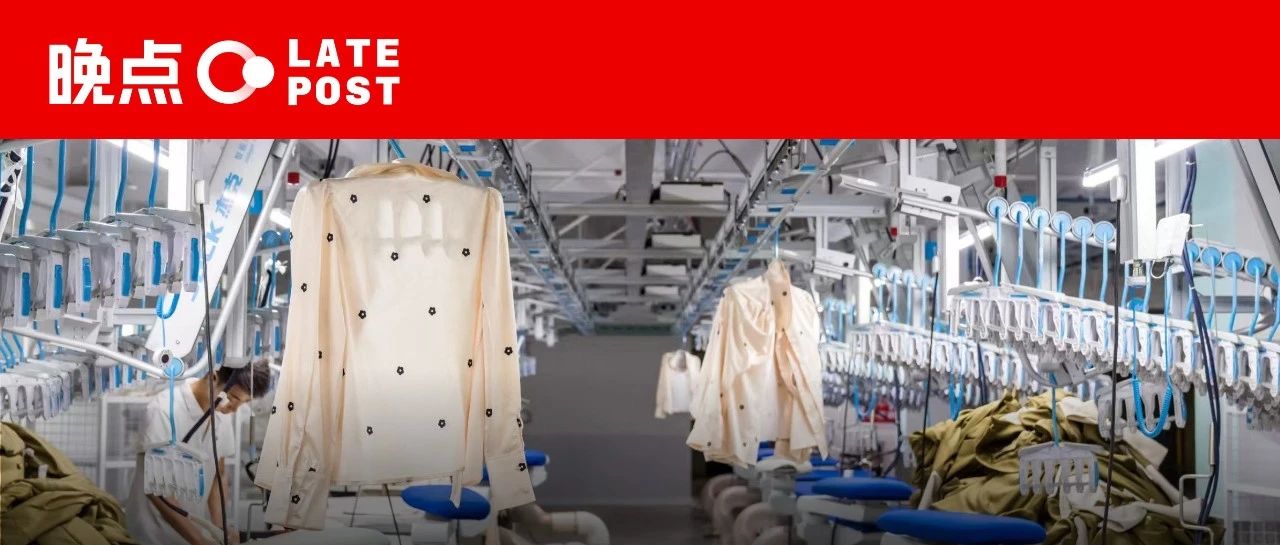
Shein 产业链全景:产业升级的飞轮是怎么转起来的?
晚点LatePost· 2025-05-28 14:41
Core Viewpoint - Shein is transforming the garment manufacturing industry through digitalization, lean production methods, and sustainability initiatives, significantly enhancing efficiency and reducing waste across its supply chain [1][2][3]. Group 1: Factory Transformation - Shein has invested 500 million yuan over five years to empower suppliers, aiding over 200 factories and improving more than 500,000 square meters of production space [2]. - The company utilizes digital tools to streamline production processes, reducing reliance on manual tracking and improving inventory management [8][9]. - Shein's digitalization efforts have helped maintain a low inventory rate of single digits, compared to the industry average of 30% [8]. Group 2: Technological Innovation - Shein has adopted digital heat transfer printing technology, which is water-efficient and has saved 1.13 million tons of water, equivalent to 2.26 billion 500ml bottles [3][15]. - The company is promoting the use of renewable energy solutions, such as rooftop solar panels, and has plans to reduce carbon emissions significantly by 2050 [4][18]. Group 3: Employee Welfare and Training - Shein has established "Children's Homes" to provide free childcare for employees' children, serving nearly 55,000 visits [12]. - The company has conducted over 485 training sessions, covering more than 20,000 participants, to enhance skills and knowledge in the supply chain [14]. Group 4: Supply Chain Expansion - Shein's supply chain investments in Guangdong are aimed at supporting global sales and enhancing competitiveness, with significant projects underway in Zhaoqing and Guangzhou [20]. - The company is facilitating international market access for local products through its platform, covering over 300 cities and planning more than 150 industry connection activities by 2025 [19]. Group 5: Industry Impact - Shein's approach to factory upgrades and employee welfare is changing perceptions among factory owners, leading to a willingness to invest in improvements based on Shein's standards [13]. - The company's influence is expected to extend throughout the industry, promoting cost reduction, efficiency, and sustainability practices [20].
SHEIN成全球时尚新领军电商 超百亿元加码国内智慧供应链
Zheng Quan Ri Bao Wang· 2025-05-19 10:44
Core Insights - SHEIN has surpassed Walmart and Nike to become a leading online fashion e-commerce platform, driven by its digital on-demand flexible supply chain and continuous platform upgrades for dual-engine development [1][2] - The "on-demand fashion" model reduces waste and meets diverse consumer needs, representing a sustainable trend in the fashion industry [1][2] - The fashion sector accounts for 27% of global e-commerce demand, highlighting its significance [1] Group 1: Business Model and Strategy - SHEIN's on-demand model allows for small batch production based on initial sales, enabling quick responses to market trends [2] - The company has deepened its platform model in 2023, allowing more global third-party merchants to sell on its platform, enhancing consumer choices [2] - SHEIN is pioneering the "cross-border e-commerce + industrial belt" model, launching a plan to support quality industrial belts and brands in entering international markets [2] Group 2: Investment and Technological Innovation - SHEIN is investing over 10 billion yuan in an integrated smart supply chain centered in Guangzhou, focusing on the "on-demand fashion" flexible supply chain system [3][4] - The company has empowered garment factories to undergo digital transformation, improving efficiency across the entire production chain [3] - SHEIN has established a Fashion Manufacturing Innovation Research Center, investing 170 million yuan to explore cutting-edge manufacturing technologies and enhance supplier capabilities [4] Group 3: Infrastructure and Future Prospects - The Xi Yin Bay Area Supply Chain Project in Guangzhou has a total investment of over 10 billion yuan, aiming to build a global delivery center that supports SHEIN's global sales [4] - Once fully operational, the project is expected to achieve an annual export value exceeding 100 billion yuan and attract around 100,000 industry talents [4]